Buyer Fit Snapshot
| Best fit | Branded Corrugated Shipping Tubes for Sustainable Brands projects where brand print, material claims, artwork control, MOQ, and repeat-order consistency need to be specified before quoting. |
|---|---|
| Quote inputs | Share finished size, material target, print colors, finish, packing count, annual reorder estimate, ship-to region, and any compliance wording. |
| Proofing check | Approve dieline scale, logo placement, barcode or warning zones, color tolerance, closure strength, and carton packing before bulk production. |
| Main risk | Vague material claims, crowded artwork, missing packing details, or unclear freight terms can make a low unit price expensive after revisions. |
Fast answer: Branded Corrugated Shipping Tubes for Sustainable Brands should be specified like a repeatable production item. The safest quote records material, print method, finish, artwork proof, packing count, and reorder notes in one written spec.
Production checks before approval
Compare the actual filled-product size with the drawing, then confirm tolerance on folds, seals, hang holes, label areas, and retail display edges. Reserve space for logos, QR codes, warning copy, and material claims before decorative graphics fill the panel.
Quote comparison points
Review material grade, print process, finish, sampling route, tooling charges, carton quantity, and freight assumptions side by side. A quote is only useful when the supplier can repeat the same color, closure quality, and packing count on the next order.
A plain carton can move a poster from point A to point B, but branded corrugated shipping tubes do more than carry a rolled product. They protect the contents, signal attention, and give a long-format item a more deliberate first impression the moment it leaves the warehouse. That combination matters in ecommerce shipping, order fulfillment, and any brand that wants package protection without sending out a box that feels oversized for the job.
The appeal is practical as much as visual. A tube uses corrugated fiber for structure, limits unnecessary void fill, and can be printed, labeled, or sleeved so the exterior contributes to the brand rather than disappearing into the background. For sustainable brands, that often translates into a cleaner transit packaging story with fewer mixed materials, less wasted air, and a package that is easier to explain to customers who care about shipping materials and end-of-life recyclability.
There is a quieter advantage too. Branded corrugated shipping tubes can reduce edge damage on rolled prints, keep posters from bending at the corners, and create a premium first impression without jumping to a rigid mailer or a large folding carton. I once reviewed a subscription poster program where complaints about crushed corners dropped sharply after the tube diameter was tightened and the closure was changed. Not glamorous work, maybe, but it moved the numbers. If you are comparing formats, treat this as a buyer’s map: how the structure works, what drives price, how long production takes, and where ordering mistakes usually show up.
Branded corrugated shipping tubes: why the format stands out
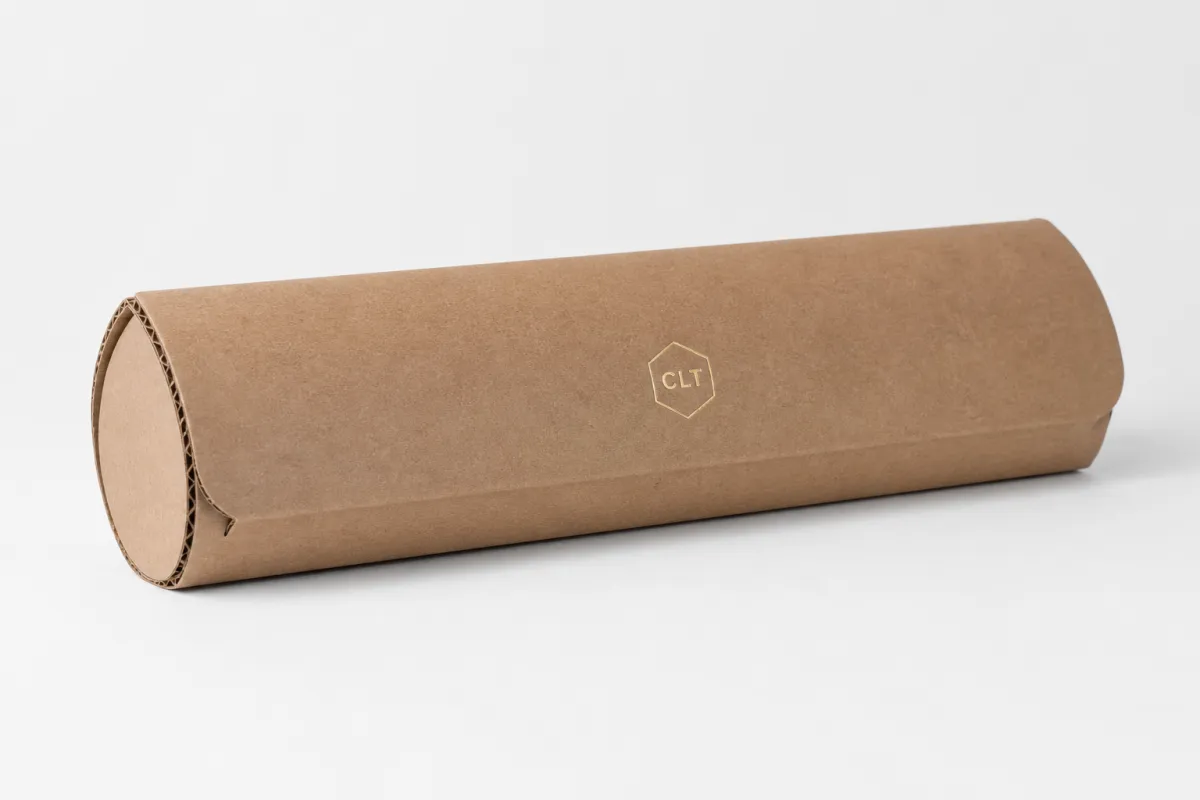
Round mailers are usually associated with posters, prints, and banners. That association is earned. The shape is familiar, and familiarity helps. What often surprises teams is how well branded corrugated shipping tubes can work outside that narrow use case. On a shelf, in a pop-up, or at the receiving desk of a wholesale buyer, a branded tube feels more intentional than a plain kraft cylinder or a generic carton. It does not need much decoration to look organized, and that restraint often reads as quality.
The construction is simple enough to explain without losing the point. You have a corrugated tube body, plus end closures that may be friction-fit caps, paper ends, or another closure system matched to the product and the shipping lane. The exterior can carry direct print, a pressure-sensitive label, a wrap, or a sleeve, turning a basic transit package into something that supports the brand story instead of hiding it. That is one reason branded corrugated shipping tubes keep showing up in premium ecommerce, event merchandising, and promotional kits.
There is a sustainability angle here, though it deserves a measured read. Corrugated fiber is widely recyclable in many markets, and the tube shape usually helps brands avoid oversized cartons and excess void fill. Less empty space often means less total shipping material, better cube utilization, and fewer awkward package dimensions that can push a parcel into a more expensive rate band. The EPA has long pointed out that containers and packaging are a major slice of the municipal waste stream in the United States, which is one reason brands keep revisiting paper-based formats. If the design stays simple, branded corrugated shipping tubes can support an honest eco message without piling on complicated mixed materials.
Another reason the format stands out is flexibility. Posters are the obvious fit, but so are art prints, architectural drawings, textile rolls, banners, labels, inserts, and some retail promotions that need to arrive intact and feel finished. In those cases, the tube becomes part of the product experience, not just a container. That matters for brands that care about presentation as much as package protection.
- Visual impact: a branded tube looks intentional on arrival and on display.
- Material efficiency: less dead space than an oversized carton.
- Protection: strong against side crush and edge scuffing when sized correctly.
- Operations: easy to pack, easy to label, and friendly to order fulfillment lines.
Branded corrugated shipping tubes also work well for brands that want to avoid the disposable feel that comes with cheap shipping materials. A simple print treatment, a clean logo placement, and a thoughtful closure choice can make the package feel like part of the brand system. Customers usually see the package before they ever touch the product. The tube is already communicating before it starts protecting, so you might as well let it say the right thing.
How branded corrugated shipping tubes work in transit
The tube shape is not only a visual choice. It changes how the package handles pressure. A curved profile spreads force more evenly than a flat wall, and corrugated board adds stiffness without making the structure unnecessarily heavy. That means branded corrugated shipping tubes can resist side compression better than a flimsy mailer, especially when the board grade and wall thickness match the product load. The strongest part of the design is side-load resistance; the weakest point is usually the end closures, where a poor fit can let the contents shift or let the package take damage during impact.
That is why internal sizing matters so much. If the inside diameter is too loose, the rolled product can move, unroll slightly, or pick up edge wear during parcel handling. If the diameter is too tight, the operator on the packing line wastes time forcing the insert, and the product may curl or crease. The best branded corrugated shipping tubes feel snug without being punishing. In practical terms, the product should seat cleanly, the closure should lock without excessive force, and the assembly should survive vibration, drop, and compression across the normal shipping route.
Tube body, walls, and closures
Single-wall tubes work well for lighter posters, prints, and textiles where the main risk is bending rather than heavy stacking. Double-wall constructions add more compression strength and can be useful for longer tubes, heavier contents, or lanes where the package may be stacked in bulk. For branded corrugated shipping tubes, the right build depends on product weight, tube length, and whether the shipment will move through parcel networks, palletized freight, or a warehouse environment where cartons sit for days before release.
“If the fit is loose, the package behaves loose.”
That idea applies to closures too. End caps and friction-fit ends do a lot of work. They need to stay put through handling, and they also need to be practical for operators who may be packing hundreds or thousands of units per shift. I’ve seen a closure with a nice clean look add three seconds per pack because it took too much thumb pressure to seat. Multiply that by 20,000 units and you are not dealing with a tiny inconvenience anymore. For branded corrugated shipping tubes, the closure should support speed, protection, and a clean customer experience at the same time.
Branding methods that actually hold up
Direct print usually delivers the most integrated look. It keeps the surface clean and gives the tube a consistent brand treatment, especially with one or two colors. Labels are flexible and often more budget-friendly for shorter runs, while sleeves can give you a richer look if the tube needs more coverage or variable artwork. Spot varnish, emboss-like effects, or selective coverage can add depth, but each finish brings more setup and more cost. With branded corrugated shipping tubes, print coverage shapes appearance, production time, and budget together.
Branding also has an operational side. Barcode placement, seam location, and return-address labeling all matter. If the logo sits on a seam or the ship label covers the main artwork, the package starts to look improvised. Good branded corrugated shipping tubes make room for real-life handling, not just a polished mockup. That is especially true for ecommerce shipping, where scanability and carrier compliance can matter as much as the design itself.
For a quick reference on construction choices, this comparison helps frame the discussion:
| Option | Best for | Protection level | Brand impact | Cost effect |
|---|---|---|---|---|
| Single-wall tube | Light posters, prints, textile rolls | Good for basic transit protection | Clean, simple branded look | Usually the lowest |
| Double-wall tube | Heavier contents, longer lanes, stacked storage | Higher crush resistance | Same branding options, more substantial feel | Moderate to higher |
| Direct print | Steady artwork, medium to large runs | Depends on board spec | Integrated, premium appearance | Setup can be higher, unit cost can improve at scale |
| Pressure-sensitive label | Short runs, variable promotions, fast launches | Depends on tube construction | Flexible and easy to change | Often lower setup, but may cost more per unit |
The takeaway is simple: branded corrugated shipping tubes work best when the structure and the graphic treatment are designed together. A good tube is not just a cylinder with a logo. It is transit packaging with a specific job, and the graphics should support that job rather than fight it.
Key factors that shape design, durability, and cost
Every tube specification starts with dimensions. Diameter, length, wall thickness, flute type, and board grade all affect how branded corrugated shipping tubes perform in transit and how much they cost to produce. A 3-inch-diameter tube for a light art print is a very different object from a 5-inch tube carrying a heavier textile roll. The larger the format, the more attention you need to give to compression strength and dimensional weight, because parcel carriers often price by the greater of actual weight or billed volume.
Shipping method changes the recommendation quickly. A tube that moves well through a parcel network may need more structure if it will be palletized, stored in a humid warehouse, or shipped in bulk for retail distribution. Hot and humid conditions can soften some board performance over time, and that matters if the package waits in transit before it reaches the customer. For branded corrugated shipping tubes, environment is part of the spec, not an afterthought.
Material choices and sustainability goals
Many teams now ask about recycled content, FSC-certified fiber, and recyclability in the same conversation. That is sensible. A tube made from responsibly sourced corrugated fiber can support a cleaner story, especially if the design avoids unnecessary laminations, plastic caps, or decorative layers that complicate disposal. If you want a solid reference point on recycling principles and packaging waste reduction, the EPA recycling guidance is a useful starting place. It will not tell you how to spec a tube, but it does help frame what end-of-life claims should and should not say.
There is a trade-off here, and it should be stated plainly. A highly decorative package can still be recyclable in some situations, but mixed materials make the conversation harder. If your sustainability goal is simple and believable, branded corrugated shipping tubes usually do better with straightforward paper-based construction, limited coatings, and graphics that do not require excessive ink coverage. In many programs, the biggest environmental gain comes from reducing size and keeping the material mix clean.
Protection, presentation, and the real cost equation
Cost is not only about the per-unit quote. A slightly better fit can reduce damage claims, and a cleaner tube size can lower dimensional weight charges. A simple print layout can also save money on setup while improving readability. That is why the cheapest quote is not always the best value. For branded corrugated shipping tubes, the right build often reduces waste in other places: fewer inserts, less void fill, fewer returns, and less time spent reworking cartons that do not quite behave on the line.
To make the design conversation easier, here is a practical way to think about the most common choices:
- Use single-wall for lighter products and lower crush risk.
- Use double-wall for heavier rolls, longer storage, or stacked shipping.
- Keep print coverage focused if cost and speed matter more than full-wrap decoration.
- Match diameter closely so the product does not slide around inside the tube.
- Check closure behavior on a sample, not just in a drawing.
If your packaging scope is broader than one tube line, it helps to compare the project against other formats in your system. A lot of brands use Custom Shipping Boxes for mixed-SKU programs and keep tubes for rolls, prints, or narrow goods that deserve a different fit. Others browse the wider range of Custom Packaging Products to align shipping, retail, and promotional packaging under one visual language. That comparison usually clarifies whether branded corrugated shipping tubes belong in a dedicated program or a larger packaging refresh.
Process and timeline for branded corrugated shipping tubes
The production path is usually more predictable than buyers expect, but only if the inputs are clear. Most projects for branded corrugated shipping tubes move through discovery, dimensional review, artwork prep, dieline approval, proofing, sample creation, and final manufacturing. Each stage can move quickly or slowly depending on how much the customer knows at the start. If the dimensions are settled, the print layout is approved, and the closure style is already chosen, the schedule tightens up nicely. If those pieces are still open, the calendar stretches.
Discovery is where the team should answer three questions: what is being shipped, how is it moving, and how branded does it need to look? That sounds simple, yet a lot of delays begin here. A tube for a poster subscription may need a different closure and a different print approach than one used for a retail promotion or a design studio’s sample roll. Branded corrugated shipping tubes should be spec’d around the real use case, not the prettiest mockup.
Step-by-step production flow
- Dimensional review: confirm inner diameter, usable length, closure depth, and any tolerance needed for product variation.
- Artwork prep: place logos, copy, barcodes, and seam-aware graphics in the correct positions.
- Dieline approval: verify the structural layout before any print plates or setup work begins.
- Proofing: check color, placement, legibility, and line quality in a controlled proof.
- Sample or prototype: test the physical fit, closure feel, and visual finish with actual product.
- Manufacturing: run the approved specification at scale, then pack for freight or pallet shipment.
That process sounds standard, yet it is where a lot of teams either save time or lose it. The biggest shifts in lead time usually come from custom sizing, multiple print colors, special coatings, and structural testing. If a brand wants branded corrugated shipping tubes with a very specific internal diameter or unusual closure behavior, there is a fair chance the project needs a sample cycle before production locks in. That sample is rarely wasted time. It is insurance against returns, rework, and ugly surprises on the pack line.
Lead time also depends on how the shipment is staged after production. A factory can finish the tubes, but pallet quantities, carton packs, freight routing, and destination scheduling may add days to the total project calendar. For high-volume order fulfillment, it is smart to ask for the production timeline and the freight handoff timeline separately. One tells you when the tubes are made; the other tells you when they actually land at your site.
Ask for the sample before the rush. A 15-minute fit check now usually saves a 15-day headache later.
For brands that want evidence of how packaging choices perform in real programs, the examples in Case Studies can be a useful reference point. You are not looking for a copy-paste solution; you are looking for clues about material choices, print coverage, and how different branded corrugated shipping tubes behave once they are actually moving through ecommerce shipping and parcel handling.
For performance testing, many packaging teams also look to the ISTA testing standards as a framework for understanding drop, vibration, and compression expectations. Not every project needs a full lab program, but the standards give you a practical vocabulary for package protection and transit risk.
Branded corrugated shipping tubes cost and pricing factors
Pricing for branded corrugated shipping tubes comes down to a handful of levers, and the more clearly you see them, the easier it is to compare quotes. Board grade, custom size, print complexity, quantity, closure style, and whether the order uses stock tooling or a made-to-spec format all affect the unit price. A simple 3-color tube at a healthy run size can be efficient. A large tube with full-wrap coverage, specialty closures, and a short run usually costs more than people expect. That is not a markup trick; it is the cost of setup, material, and process complexity.
MOQ, or minimum order quantity, matters because setup costs need to be spread across enough pieces to make the run economical. If a brand only needs 250 units for a launch or seasonal drop, the unit price will usually be higher than it would be at 2,500 or 5,000. That does not mean short runs are wrong. It means the pricing structure is working the way manufacturing usually works. For branded corrugated shipping tubes, the best quote is the one that matches your volume reality without forcing you into inventory you do not need.
There are also costs outside the base tube itself. Freight can swing the final landed price, especially if the tubes are bulky but relatively light, because dimensional weight affects billing. Tooling, proofs, and samples may be separate lines. If labeling or bundling is done as a secondary operation, that should appear somewhere in the quote. A buyer who only compares the base tube price may miss the real total. The full landed cost is what matters.
Here is a simple comparison that usually helps teams compare bids without getting distracted by the lowest headline number:
| Quote element | What it affects | What to ask |
|---|---|---|
| Board grade and wall thickness | Protection, stackability, and shipping performance | Is this enough for parcel handling and storage? |
| Print method and coverage | Appearance, setup time, and unit cost | Is the artwork direct print, label, or sleeve? |
| Quantity | Setup amortization and MOQ impact | What happens at 500, 1,000, and 5,000 units? |
| Freight | Landed cost and delivery timing | Is shipping included, and to which destination? |
| Sample or tooling | Upfront project cost | Are proofs, plates, or prototype samples separate? |
For rough planning, many teams see a simple branded tube land in a broad range that starts low for small, light, one-color runs and climbs as size, coverage, and structural demands increase. A small quantity with basic branding can feel expensive on a per-unit basis, while a larger production run often drops the unit cost meaningfully once setup is spread across more pieces. I would treat any quote below or above the expected range as a signal to ask better questions, not as proof that the supplier is good or bad.
Branded corrugated shipping tubes should be evaluated like any other transit packaging decision: does the price support the product, the channel, and the brand promise? If the answer is yes, a slightly higher unit price can be justified by fewer damages, stronger presentation, and a cleaner handoff in ecommerce shipping.
Common mistakes when ordering branded corrugated shipping tubes
The most common mistake is loose sizing. A tube that leaves too much room around the contents creates movement, and movement creates scuffing, curl, and a less polished unboxing moment. It also makes the package feel cheaper than it is. With branded corrugated shipping tubes, fit is not just a structural issue; it is a presentation issue. If the product rattles inside, the customer notices that before they notice the logo.
A second mistake is treating print as decoration only. Seam placement, barcode visibility, shipping label placement, and return-address clarity all matter. A beautiful tube that cannot be scanned cleanly or has artwork hidden by a carrier label is not working as intended. Good branded corrugated shipping tubes are designed with operations in mind. That means the graphics, panel breaks, and handling marks need to support actual warehouse behavior.
A third mistake is ignoring how the tube will move through the supply chain. Parcel networks can be rough. Bulk fulfillment can stack cartons. Warehouses can expose shipping materials to humidity, heat, and repeated handling. If the tube is going to travel in those conditions, the board, closure, and print finish should reflect that. A design that looks fine in a studio mockup may not survive real transit packaging pressures if it was never tested against the route.
Sustainability claims create another trap. It is easy to say a package is recyclable; it is harder to say that truthfully in every market and every scenario. If the tube mixes paper with plastic closures, heavy coatings, or other materials, local recycling rules may vary. That does not mean the package is a bad choice. It means the claim should be precise. Branded corrugated shipping tubes are strongest when the sustainability story stays practical, plainspoken, and backed by the actual construction.
- Avoid oversized tubes that inflate dimensional weight and waste material.
- Avoid overprinting if a simpler layout would do the job better.
- Avoid weak closures that pop open under handling.
- Avoid mixed-material clutter unless the benefits are clearly worth it.
- Avoid skipping a sample when the product fit is tight or the print is critical.
It is also worth remembering that branded corrugated shipping tubes are not the answer to every packaging problem. Sometimes a flat mailer, a rigid carton, or one of the Custom Poly Mailers will be more appropriate for the item, the margin, or the route. Good packaging decisions are not about forcing one format to do everything; they are about matching the format to the product and the channel.
Expert tips and next steps for branded corrugated shipping tubes
If you want a smoother quote process, collect three things before you reach out: the finished product dimensions, the shipping method, and the level of branding you actually need. That alone eliminates a surprising amount of back-and-forth. For branded corrugated shipping tubes, a clear brief makes the supplier’s job easier and gives you a more useful quote the first time around.
Order a sample or prototype whenever the product fit is specific, the print matters, or the tube will ship at scale. A sample lets you test closure performance, check color and logo placement, and feel how the package behaves in hand. You can also see whether the tube feels premium, sturdy, or a little too fragile for the product. In packaging, that tactile read is real information. It is not cosmetic fluff.
A short internal approval checklist helps too. Keep it simple, but include artwork, sustainability goals, target unit Cost, Lead Time, and sign-off from operations or marketing. If the team agrees on those points before production starts, branded corrugated shipping tubes are much less likely to stall halfway through the project. That matters for launches, seasonal programs, and any order fulfillment schedule that cannot absorb avoidable delays.
Here is the sequence I recommend most often:
- Compare samples and confirm fit.
- Lock pricing and timeline with freight included.
- Run a small production batch if the program is new.
- Review damages, packing speed, and customer feedback.
- Scale only after the tube proves itself in the real lane.
If you are building a broader packaging system, it is worth looking at the whole family of shipping and retail formats rather than only the tube itself. The best programs keep the visual language consistent across products while still matching each format to the job it performs. That is how branded corrugated shipping tubes become part of a packaging line that feels coordinated, practical, and easy to run.
For brands that care about sustainability, presentation, and package protection at the same time, the best path is usually the boring one in the best sense: right-size the tube, keep the material mix simple, test the closure, and print only what supports the brand. Do that, and branded corrugated shipping tubes can become one of the most useful pieces of transit packaging in the whole system, especially for ecommerce shipping and long-format products that deserve to arrive looking as good as they did when they left the plant.
Frequently asked questions
What products are best suited for branded corrugated shipping tubes?
They work especially well for long, narrow, or rollable items such as posters, prints, banners, textiles, calendars, and select retail promotions that need cylindrical transit packaging. They are also useful when you want a stronger presentation than a plain mailer without moving to a larger folding carton. For many brands, branded corrugated shipping tubes are the cleanest way to combine package protection with a premium look.
How much do branded corrugated shipping tubes usually cost?
Pricing depends on diameter, length, board strength, print coverage, closure style, and order quantity, so two tubes that look similar on a screen can land at very different unit costs. Smaller runs usually cost more per unit, while larger runs reduce the price once tooling and setup are spread across more pieces. The safest way to evaluate branded corrugated shipping tubes is to compare landed cost, not just the base unit number.
What is the typical lead time for custom shipping tubes?
Lead time usually includes artwork approval, proof review, and production, so the schedule depends on how quickly each approval step moves. Custom dimensions, multiple print colors, and special finishing can extend turnaround, which is why it helps to confirm timing before a launch date is locked. If your schedule is tight, ask early about samples and freight so the timeline for branded corrugated shipping tubes is realistic from the start.
Can branded corrugated shipping tubes be recycled?
In many cases, yes, because corrugated fiber is broadly recyclable, but recyclability can depend on local collection rules and whether the tube uses mixed materials. Keep the construction simple when possible and avoid unnecessary plastic components if your sustainability messaging depends on easy end-of-life disposal. That is one reason branded corrugated shipping tubes are often a strong fit for brands that want a straightforward paper-based package story.
What files and information do I need for printed tube artwork?
Prepare vector artwork when possible, along with logo files, color references, print dimensions, and any barcode or compliance details that need clear placement. You should also share the exact tube size and seam location so the printer can lay out the artwork correctly and avoid surprises during production. The more complete the brief, the easier it is to spec branded corrugated shipping tubes that look right and run well on the packing line.


