Buyer Fit Snapshot
| Best fit | Custom Poly Mailers for Swimwear projects where brand print, material claims, artwork control, MOQ, and repeat-order consistency need to be specified before quoting. |
|---|---|
| Quote inputs | Share finished size, material target, print colors, finish, packing count, annual reorder estimate, ship-to region, and any compliance wording. |
| Proofing check | Approve dieline scale, logo placement, barcode or warning zones, color tolerance, closure strength, and carton packing before bulk production. |
| Main risk | Vague material claims, crowded artwork, missing packing details, or unclear freight terms can make a low unit price expensive after revisions. |
Fast answer: Custom Poly Mailers for Swimwear: Sizing, Cost, Lead Time should be specified like a repeatable production item. The safest quote records material, print method, finish, artwork proof, packing count, and reorder notes in one written spec.
Production checks before approval
Compare the actual filled-product size with the drawing, then confirm tolerance on folds, seals, hang holes, label areas, and retail display edges. Reserve space for logos, QR codes, warning copy, and material claims before decorative graphics fill the panel.
Quote comparison points
Review material grade, print process, finish, sampling route, tooling charges, carton quantity, and freight assumptions side by side. A quote is only useful when the supplier can repeat the same color, closure quality, and packing count on the next order.
Custom Poly Mailers for swimwear solve a problem that looks small until the monthly ship report lands on your desk. The product is soft, light, and easy to fold, yet the package still has to protect presentation, resist light moisture, and keep labor from creeping up in the background. If the mailer feels flimsy or generic, the brand gets downgraded before the customer has even touched the fabric. A good mailer has to do more than close a parcel. It needs to make the shipment feel deliberate, keep the item clean in transit, and move fast enough that the fulfillment team is not paying for packaging drama one order at a time.
That balance is why swimwear brands often end up comparing Custom Poly Mailers for swimwear against cartons, tissue-only wraps, and plain envelopes. The best choice usually depends on the product mix and the fulfillment pace, not a trend deck or a mood board. For broader sourcing, the Custom Packaging Products lineup is useful as a starting point, and the Custom Poly Mailers page is the cleaner place to narrow in on sizes, print options, and material choices without wading through unrelated packaging.
Why custom poly mailers for swimwear matter at all
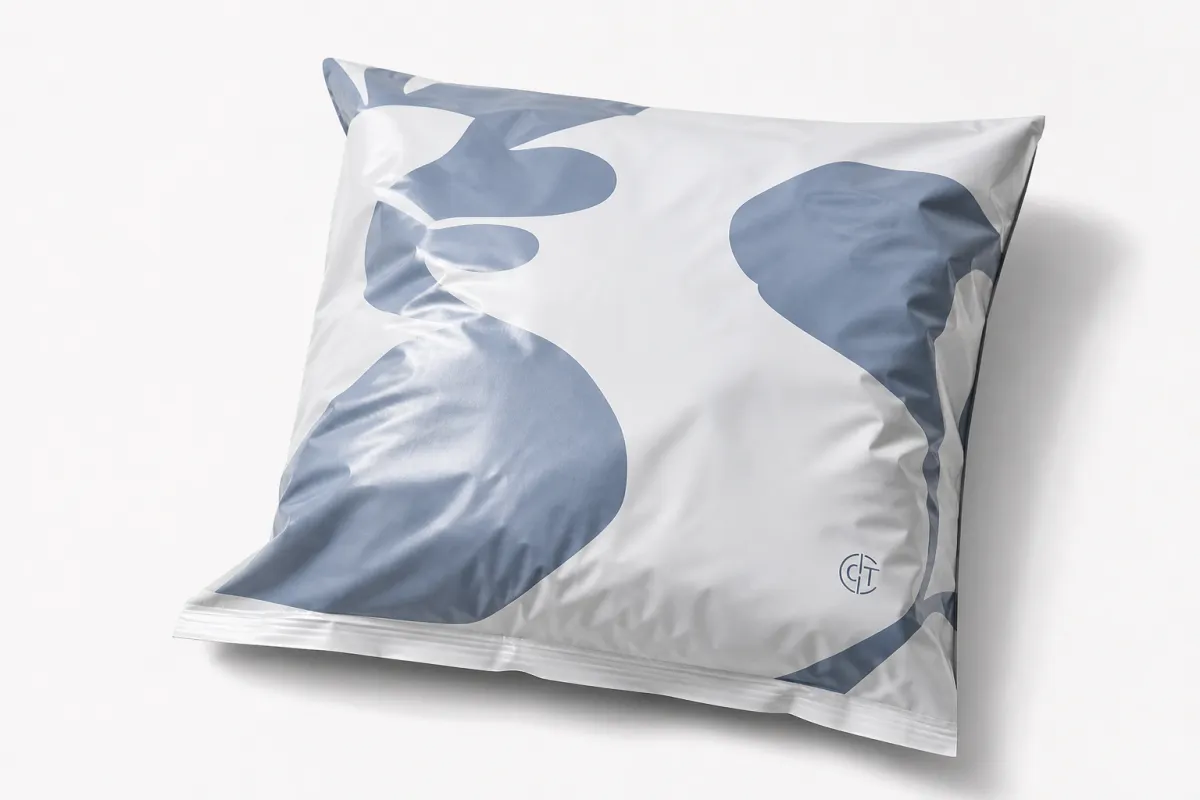
Swimwear lives in an awkward middle ground. It is compact enough that buyers expect shipping costs to stay low, but valuable enough that the package cannot look like it came from the bargain bin. That is exactly where Custom Poly Mailers for swimwear make sense. A bikini set or a pair of trunks does not need a carton large enough to survive a warehouse fall, and it certainly does not need extra corrugate just to look "premium" in a spreadsheet.
The practical benefits come first. Custom Poly Mailers for swimwear create a branded outer layer, keep folds tidy, and let packing crews work faster than they usually do with rigid boxes. A box needs more handling. It needs storage space. It often needs tape. A mailer needs less bench room and less warehouse space, which sounds unremarkable until labor costs show up line by line. In a facility shipping thousands of units, even a few seconds saved per order adds up. Ten extra seconds across 2,000 shipments is more than five and a half hours of labor. That is not a theory problem. That is payroll.
Perception matters just as much. A $44 swimsuit in a plain, bent mailer can read like a discount item even if the garment itself is well made. Put that same product in custom poly mailers for swimwear with crisp artwork, a clean finish, and a color palette that feels intentional, and the package suddenly supports the price point instead of undercutting it. The garment did not change. The packaging changed the story around it.
Moisture resistance is another reason custom poly mailers for swimwear keep getting chosen. They are not a substitute for waterproof gear, and nobody should pretend otherwise, but they do give soft goods a barrier against light rain, dust, and general grime while parcels move through sorting centers and delivery vans. They also reduce scuffing compared with paper envelopes, which matters if the order includes satin trims, printed inserts, or delicate tags that can get roughened easily.
There is a quieter reason too. Custom poly mailers for swimwear give a brand more control over how the product enters the shipping system, how it leaves the warehouse, and how it looks if a return comes back. Control over cost. Control over presentation. Control over speed. Control over the next touchpoint after the customer opens the parcel. That sort of control rarely looks dramatic from the outside, which is exactly why it gets overlooked.
For labels that also ship inserts, bundles, or gift kits, the packaging decision starts to connect with wider retail packaging choices. A swimwear brand may not need custom printed boxes for the main shipment, but it might still use them for launch kits, wholesale presentations, or press mailers. Packaging works best as a system. The strongest brands usually treat it that way. The weak ones treat every item like a one-off and then act surprised when the numbers stop lining up.
How custom poly mailers for swimwear work in the packing process
Custom poly mailers for swimwear are usually made from polyethylene film, which is a flexible plastic envelope with a sealed body and an adhesive closure. Some are opaque. Some are frosted. Some are printed edge to edge, which gives the branding more room to carry the message. The finish changes the visual tone, but the basic workflow stays familiar.
The pack-out process is fast. A folded swimsuit goes in, an insert card or tissue stays flat, the flap seals, and the parcel is ready for label application or direct sorting. That flow is a big part of why custom poly mailers for swimwear usually beat cartons on speed. Boxes add folding steps, more touchpoints, and more storage pressure. A mailer stays close to the action and keeps the bench uncluttered.
Branding is where the package stops being purely functional. Custom poly mailers for swimwear can carry a logo, a repeat pattern, a short line of copy, or a solid color field that makes the parcel identifiable before it is opened. A strong design can make a small order feel intentional without adding weight, bulk, or shipping complexity. That matters in e-commerce, where the outer package often becomes the first physical brand moment the customer remembers. I have sat in packing-line reviews where a tiny change in print contrast made the whole room say, "Okay, this feels more expensive." That reaction is real, even if it sounds a little unglamorous.
Protection is practical, not theatrical. Custom poly mailers for swimwear help block light moisture, lower surface abrasion, and keep garments from being crushed the way they might be in an oversized carton with too much empty space. They work well for folded suits, wraps, and soft cover-ups. They are a poor match for rigid accessories, glass, or anything that needs crush resistance. If the product can snap, dent, or break, the mailer is only one piece of the answer.
The operational upside is easy to miss until the packing line gets busy. Custom poly mailers for swimwear stack neatly, weigh almost nothing, and store close to the station without stealing shelf space from higher-value items. That does not sound glamorous. It sounds boring, kinda the point. Boring is often profitable. A team that can grab one size, seal it cleanly, and move on keeps the line flowing. A team that has to think about every parcel slows the whole room.
For brands weighing format choices, the tradeoff is straightforward. Custom poly mailers for swimwear are better for speed and low dimensional weight. Custom printed boxes give a more structured feel, but they cost more to ship and usually take longer to process. Neither format wins by default. The right answer depends on the product mix, the margin target, and how much the brand needs the package to do beyond basic shipping. A resort label with premium pricing may accept heavier packaging; a volume-driven DTC brand usually will not.
Key factors to choose before ordering custom poly mailers for swimwear
Size comes first, and it is the easiest place to make an expensive mistake. Measure the folded garment, then add room for an insert card, tissue, or any accessory card you plan to include. Custom poly mailers for swimwear should fit flat and close with confidence. A package that balloons out because the size was "close enough" wastes film, wastes money, and looks undisciplined. If the mailer looks overfilled, the brand is gonna pay for it in dimensional weight and awkward presentation.
For many swimwear shipments, the useful size range lands somewhere around 9 x 12 inches to 12 x 15 inches for single units. Bigger formats work better for sets and bundles. If you ship a two-piece suit with a cover-up or a heavier insert, increase the footprint before you increase thickness. A mailer that is too tight can crease the fabric and strain the seal. A mailer that is too loose looks careless and leaves too much room for the contents to shift in transit.
Film thickness matters almost as much. Thinner film lowers unit cost, but it can feel flimsy, show wear sooner, and split more easily under rough handling. Sturdier film costs more, though it usually gives a better seal and a cleaner surface for printing. For many custom poly mailers for swimwear, a range around 2.5 mil to 3.5 mil is a useful starting point, with heavier builds reserved for premium branding or high-return programs. The exact spec should track the product, not the supplier's default inventory.
Print strategy is where the visual identity locks in. One-color logos are usually the most economical. Two-color graphics add personality without pushing the budget too hard. Full-coverage art can look striking, but it brings more setup complexity and makes registration issues easier to spot. White ink on dark film can look sharp if the supplier knows how to handle the substrate. If the print system is weak, the result looks dull instead of elevated, and custom poly mailers for swimwear lose their edge fast.
Closure style deserves more attention than it gets. A strong adhesive strip creates a better first seal, and a double-seal or tear-open design can help with returns. If the customer may reuse the mailer, ask whether the adhesive peels cleanly enough for a second trip. That question matters because swimwear returns are common. Size issues happen. Color exchanges happen. Packaging that ignores returns is only half-finished.
Sustainability claims need precision. Customers notice vague eco language almost immediately, and most of them have seen enough marketing fluff to be skeptical on sight. If the mailer contains recycled content, name the percentage. If it is recyclable, state the recycling stream and acknowledge that local acceptance can vary. Brands that keep the claim plain usually earn more trust than brands trying to dress ordinary plastic in heroic language. That is especially true for custom poly mailers for swimwear, where the product itself already lives in water and outdoor settings.
If you want a simple filter, use this: beach brands usually want bold color and quick packing, resort labels usually want cleaner print and a more refined finish, and price-sensitive online stores usually want low unit cost with enough branding to avoid looking generic. Custom poly mailers for swimwear can support all three, but not with the same spec. Packaging has to follow the brand position, not the mood board.
Practical rule: choose the smallest flat size that fits the heaviest SKU, then decide whether you need stronger film or better print quality. People often reverse that order and pay for it later.
Custom poly mailers for swimwear: cost, pricing, MOQ, and quote basics
Cost starts with five variables: size, thickness, print coverage, number of colors, and quantity. Add closure style, special finishes, and any return-friendly features, and the number moves again. That is why custom poly mailers for swimwear do not have one honest standard price. The quote depends on what the mailer is expected to do.
For planning, a lower-volume run of custom poly mailers for swimwear may land around $0.45 to $0.90 per unit before freight if the artwork is simple and the size is modest. Once a brand moves into larger runs, say 3,000 to 5,000 pieces, the same spec may drop closer to $0.18 to $0.35 per unit before freight. Full-color or full-coverage print usually raises the number. A premium build can push above that range. None of that is unusual.
The minimum order quantity is another lever. Many suppliers want 500 to 1,000 pieces for a truly custom run, while the better unit economics often show up around 3,000 to 5,000 pieces because setup costs get spread more efficiently. For a swim label testing a new collection, MOQ can feel annoying. For a brand with steady sell-through, MOQ is simply the cost of getting the right economics.
Quotes should show more than the mailer itself. Ask for artwork setup, plate or screen charges if they apply, sample or proof fees, bulk production, packing, and freight. A supplier that gives only a unit price is not giving you a full answer. It is giving you the headline. The landed cost for custom poly mailers for swimwear is what matters, because that is the number that touches margin.
| Mailer Spec | Typical MOQ | Typical Unit Cost Before Freight | Best Fit | Tradeoff |
|---|---|---|---|---|
| 1-color print, 2.5 mil film | 500-1,000 | $0.45-$0.90 | Budget swimwear launches | Lowest cost, simpler look |
| 2-color print, 3.0 mil film | 1,000-3,000 | $0.28-$0.55 | Core DTC swimwear | Better branding, moderate setup |
| Full-coverage print, 3.0-3.5 mil film | 3,000-5,000 | $0.35-$0.75 | Premium label launches | Stronger shelf presence, higher setup |
| Recycled-content film with custom print | 3,000+ | $0.32-$0.68 | Sustainability-focused brands | Needs careful claim language |
Those numbers are planning ranges, not promises. Freight, seasonal resin pricing, and artwork changes can move them. The ranges still matter because they stop a buyer from comparing a tiny test order with a large production quote and pretending the math is the same. It is not. A quote for 500 pieces and a quote for 5,000 pieces live in different cost worlds, even when the product name is identical.
False savings are common in packaging. A cheap mailer that tears, prints badly, or slows the packing line is not cheap. It is just a quieter headache with a lower invoice. A brand that ships 2,000 swimwear orders each month can burn through the so-called savings from a bad spec in labor, rework, and customer complaints faster than most buyers expect. Custom poly mailers for swimwear should be judged on total cost, not the sticker number sitting at the top of the quote.
If you want a simple decision rule, use this: high-margin swimwear can justify better print and a better hand feel, while volume-driven basics should stay lean and efficient. Both can use custom poly mailers for swimwear well. They just do not need the same finish.
A mailer that saves four cents but slows pack-out is not savings. It is just a quieter way to lose money.
Production steps, process, and turnaround for custom poly mailers for swimwear
The production path is simple enough to describe, but the details decide whether the order lands on time. It starts with artwork submission and dieline confirmation, then moves to proofing, sample approval, bulk production, inspection, packing, and shipment. Custom poly mailers for swimwear move faster when the brand sends clean files and a clear spec sheet. They slow down the moment someone uploads a logo in the wrong format and expects the factory to fix it.
A first proof can often come back in 1 to 3 business days once the supplier has the files. Sample production may add another 5 to 10 business days, depending on the method and how complex the print is. Bulk production for custom poly mailers for swimwear often lands in the 10 to 15 business day range after approval for standard jobs, though larger or more complex runs can take longer. First orders almost always take more time than repeat orders because setup, review, and revisions happen upfront.
Repeat orders are where the process becomes easier. Once the size, print layout, and film spec are locked, the supplier does not need to rebuild the job from scratch. That is one reason many brands keep the same mailer across several drops. Reordering the same custom poly mailers for swimwear prevents tiny delays from turning into a launch problem, and it also keeps the packing team from learning a new flow every month.
Delays usually appear in the same places. Missing dielines. Blurry artwork. Pantone expectations that do not match the actual film. Slow feedback from the brand side. A sales team that keeps asking for one more tweak. None of that is rare. It is routine. That is exactly why the schedule should assume some friction and build room for it.
If you want to shorten the timeline, make the job simpler. Use fewer print colors. Avoid unusual film sizes unless the product truly needs them. Approve the sample quickly. Keep the artwork files organized. Ask for a sample before placing a large purchase order if the brand is new to custom poly mailers for swimwear. One sample can prevent a pallet of almost-right packaging from showing up at the dock and eating space for days.
For serious testing, some brands follow the spirit of ISTA transit test methods and run the mailer through actual pack-out and shipping conditions with real folded garments, labels, and inserts. That tells you more than a flat proof on a screen ever will. A sample can look perfect on a laptop and still behave badly once it is folded, sealed, labeled, and stacked in a real packing station.
It helps to think about the schedule in layers. There is the artwork timeline, the production timeline, and the shipping timeline. Those are different clocks. A brand can approve the sample on Monday and still miss a Friday launch because freight was not booked, labels were not ready, or the packing team was never briefed on the new mailer. Custom poly mailers for swimwear only work smoothly when the whole handoff is mapped out.
Common mistakes when buying custom poly mailers for swimwear
The first mistake is picking the wrong size. A too-small mailer can crease the product, strain the seam, and make sealing awkward. A too-large mailer wastes film and creates a floppy parcel that looks unplanned. Custom poly mailers for swimwear need to fit flat and close cleanly. If the package looks overstuffed, the brand pays for it in shipping efficiency and presentation.
The second mistake is underestimating print limits on dark film. Fine lines can disappear. Tiny text can blur. Bright colors can look dull if the substrate and ink system are not matched correctly. Plenty of brands fall in love with artwork that shines on a screen, then discover that real film has its own opinion. Custom poly mailers for swimwear reward bold, simple graphics more often than intricate decoration.
The third mistake is forgetting the return path. Swimwear gets returned often enough that the outbound mailer should not fail when the customer needs to send it back. If the adhesive tears the film, the buyer gets frustrated. If the mailer cannot survive a second use, the brand loses part of the value it hoped to get from the original packaging. Custom poly mailers for swimwear should support the real customer journey, not just the outbound trip.
The fourth mistake is overbuying because the forecast looked optimistic. That happens constantly. Buyers see the lower unit price at a bigger quantity and jump early. Then the line sells more slowly than expected, and the warehouse ends up storing packaging for a collection that has not proven itself yet. That is not a packaging victory. That is inventory bloat wearing a polished expression.
The fifth mistake is comparing quotes without normalizing the details. One supplier includes setup. Another leaves it out. One folds freight into a number that looks lower. Another quotes ex-works and lets the landed cost surface later. With custom poly mailers for swimwear, the sticker price is often less useful than the small print underneath it. Quote comparisons need the same size, the same quantity, and the same freight assumptions.
One more issue shows up on the packing floor. A mailer that sticks to itself, stacks badly, or places the label zone in an awkward position slows the line every day. That is why packaging design should be tested inside an actual fulfillment workflow, not only approved on a screen. Beautiful product packaging is not useful if it frustrates the people shipping the orders. I have seen this bite teams that were otherwise disciplined: a good-looking mailer with a sticky finish can turn a tidy bench into a minor mess in under an hour.
Rule of thumb: if the mailer cannot be packed quickly, labeled cleanly, and returned without drama, it is not ready yet.
Actionable next steps for ordering custom poly mailers for swimwear
Start with the product list. Write down every swimwear SKU that needs to ship, then measure the folded dimensions of the largest and most awkward item. Do not guess. Do not eyeball it. If a suit has thick padding or comes bundled with a cover-up, measure that version too. Custom poly mailers for swimwear should be chosen from real product data, not hopeful memory.
Next, request three quotes using the exact same spec. Same size. Same film thickness. Same print colors. Same quantity. That makes the comparison useful. If one supplier prices a one-color run and another prices a full-coverage version, you are not comparing suppliers. You are comparing different jobs. Custom poly mailers for swimwear become far easier to source once the spec stops moving.
Then order a sample or a short proof run. Put an actual folded garment inside. Add the insert card if you plan to use one. Seal it. Label it. Stack it. Move it around the room. Let the fulfillment team try it if possible, because they are the ones who will feel every annoyance you missed in planning. A sample is not a formality. It is the cheapest mistake you can make.
Check the pack-out time. Time it, actually. Seal, label, and stage ten units, then compare that number with your target order volume. A pretty mailer that slows the line by six seconds per unit sounds harmless until that delay gets multiplied across thousands of orders. Custom poly mailers for swimwear should support speed, not fight it.
Think about the long game too. Keep a reorder buffer so peak season does not catch you short. Save the art files in the correct formats. Store the approved spec sheet where someone can find it without digging through old email threads. If the brand expects repeat launches, consistent custom poly mailers for swimwear make the operation calmer and the packaging line easier to manage.
If the packaging plan needs a broader system - tissue, hang tags, inserts, or launch kits - compare those pieces together instead of treating the mailer as an isolated purchase. That is where branded packaging becomes efficient rather than decorative. A strong package ecosystem usually comes from a series of practical decisions, not one dramatic item.
Quick checklist:
- Measure folded SKUs before asking for quotes.
- Choose the smallest flat size that fits the heaviest item.
- Compare unit price and landed cost, not just the headline number.
- Test seal strength, label area, and return usability.
- Keep one approved spec on file for fast reorders.
The bottom line for custom poly mailers for swimwear
Custom poly mailers for swimwear are a strong fit when the product is soft, lightweight, and shipping-heavy. They keep costs in check, make packing faster, and give the brand a cleaner first impression than a plain envelope ever will. That said, they only work well if the size, film, print, and closure all match the actual product and the actual fulfillment flow.
For most brands, the right answer is not the fanciest mailer. It is the one that keeps the parcel neat, protects the garment, supports returns, and does not create chaos in the warehouse. That is the practical test. If custom poly mailers for swimwear pass it, they are doing real work, not just looking good in a mockup.
For environmental claims, stay precise and verify what you say. If you are using recycled content or making sourcing claims around supporting materials, FSC is one of the better reference points for understanding responsible fiber sourcing. For material choices, transit testing, and packaging performance, industry standards matter more than whatever a supplier puts in a glossy quote.
So if you are about to place an order, do the boring part first: measure, sample, compare, and confirm the landed cost. Then run one real folded suit through the mailer, seal it, label it, and check whether it still looks clean after handling. That is the point where custom poly mailers for swimwear stop being an idea and start being a workable system.
Frequently Asked Questions
What size custom poly mailers for swimwear should I choose?
Measure the folded garment first, then add room for tissue, an insert card, or a small accessory if you ship one. In most cases, the smallest mailer that still closes flat is the best choice because oversized mailers waste money and look sloppy. If you ship sets or bundled pieces, test the heaviest order, not the lightest one. That is the size that decides whether custom poly mailers for swimwear actually work in real packing.
Are custom poly mailers for swimwear strong enough for shipping?
Yes, for soft goods they are usually more than strong enough if the film thickness and seal quality are right. They are best for folded swimwear, not for hard accessories or anything that needs crush protection. The smartest move is to test a sample with the actual product and run it through your normal packing and shipping flow. That tells you more than a spec sheet ever will.
How much do custom poly mailers for swimwear usually cost?
Cost depends on size, thickness, print coverage, and order quantity. Smaller runs cost more per unit, while larger runs usually improve pricing once setup is spread out. Freight, sample fees, and artwork prep can change the true landed cost more than people expect, so compare total cost rather than just the quoted unit price. That is the only honest way to budget custom poly mailers for swimwear.
What is the typical turnaround for custom poly mailers for swimwear?
Simple orders move faster than custom sizes, heavy print coverage, or specialty finishes. Artwork approval and sample signoff are usually the biggest timeline variables. For first orders, build in extra time so launch dates are not held hostage by packaging. Once the spec is approved, repeat runs of custom poly mailers for swimwear are usually easier to schedule.
Can custom poly mailers for swimwear be used for returns?
Yes, if you choose a strong adhesive and a mailer that can reopen without tearing apart too badly. Returns work better when the branding is clean and the closure is reliable, because the customer sees the package twice. If returns are frequent, test the mailer from outbound shipping through the return cycle before you commit to a large run. For brands that expect exchanges, custom poly mailers for swimwear can do both jobs if the adhesive and film are chosen correctly.

