Buyer Fit Snapshot
| Best fit | Branded Eco Mailer Boxes projects where brand print, material claims, artwork control, MOQ, and repeat-order consistency need to be specified before quoting. |
|---|---|
| Quote inputs | Share finished size, material target, print colors, finish, packing count, annual reorder estimate, ship-to region, and any compliance wording. |
| Proofing check | Approve dieline scale, logo placement, barcode or warning zones, color tolerance, closure strength, and carton packing before bulk production. |
| Main risk | Vague material claims, crowded artwork, missing packing details, or unclear freight terms can make a low unit price expensive after revisions. |
Fast answer: Branded Eco Mailer Boxes: Film, Print, MOQ, and Carton Packing should be specified like a repeatable production item. The safest quote records material, print method, finish, artwork proof, packing count, and reorder notes in one written spec.
Production checks before approval
Compare the actual filled-product size with the drawing, then confirm tolerance on folds, seals, hang holes, label areas, and retail display edges. Reserve space for logos, QR codes, warning copy, and material claims before decorative graphics fill the panel.
Quote comparison points
Review material grade, print process, finish, sampling route, tooling charges, carton quantity, and freight assumptions side by side. A quote is only useful when the supplier can repeat the same color, closure quality, and packing count on the next order.
Branded eco mailer boxes do real work before anyone sees the product inside. They carry the parcel, set the tone at the doorstep, and tell a customer a lot about how carefully a brand handles materials, presentation, and waste. A plain brown shipper can absolutely get the job done, but branded eco mailer boxes bring intention to that first touchpoint, turning delivery into part of the brand experience instead of a forgettable handoff.
Packaging buyers tend to focus on this category because it sits right between logistics and identity. Branded eco mailer boxes combine shipping strength with recycled, recyclable, or responsibly sourced fiber content, then add print in a way that supports the structure instead of working against it. The result is practical packaging that still feels considered. That matters for apparel, beauty, subscription kits, gifts, and any product where the outer carton shapes the customer's first impression before the item is even opened.
The demand has grown for a simple reason: customers pay closer attention to packaging waste than they used to. Oversized cartons, too much filler, glossy coatings, and mixed materials can make a sustainability claim feel thin fast. By contrast, well-made branded eco mailer boxes can reduce empty space, make pack-out easier, and still create a polished reveal. The strongest versions are not trying to look eco-friendly by force; they are built from the right material, sized correctly, and printed with enough restraint to let the box do its job.
I have seen brands spend more on tissue, stickers, and void fill than they would have spent on a better mailer in the first place. That route can work, but it usually feels a little cobbled together. A better-sized box with clean graphics and a good lock style tends to read as more mature, and it is often easier on the fulfillment team too. The difference shows up in the warehouse and on the customer's doorstep.
Two launch plans make the contrast pretty clear. One team starts with a plain shipper and piles on extra layers to create personality. Another team chooses branded eco mailer boxes sized to the product, uses measured graphics, and builds the structure to handle real transit conditions. The second approach usually runs cleaner, packs faster, and leaves the customer with a stronger sense that the brand knows what it is doing. That is where the value shows up: not in decoration, but in the coordination between product, brand, and shipping.
For brands that want to see how packaging decisions translate into real outcomes, the Case Studies page is a useful place to start, and the wider Custom Packaging Products catalog helps teams compare formats before settling on one direction. The sections that follow break down how branded eco mailer boxes are built, what they typically cost, how long they take to produce, and which details matter most before an order is placed.
What branded eco mailer boxes are and why they matter
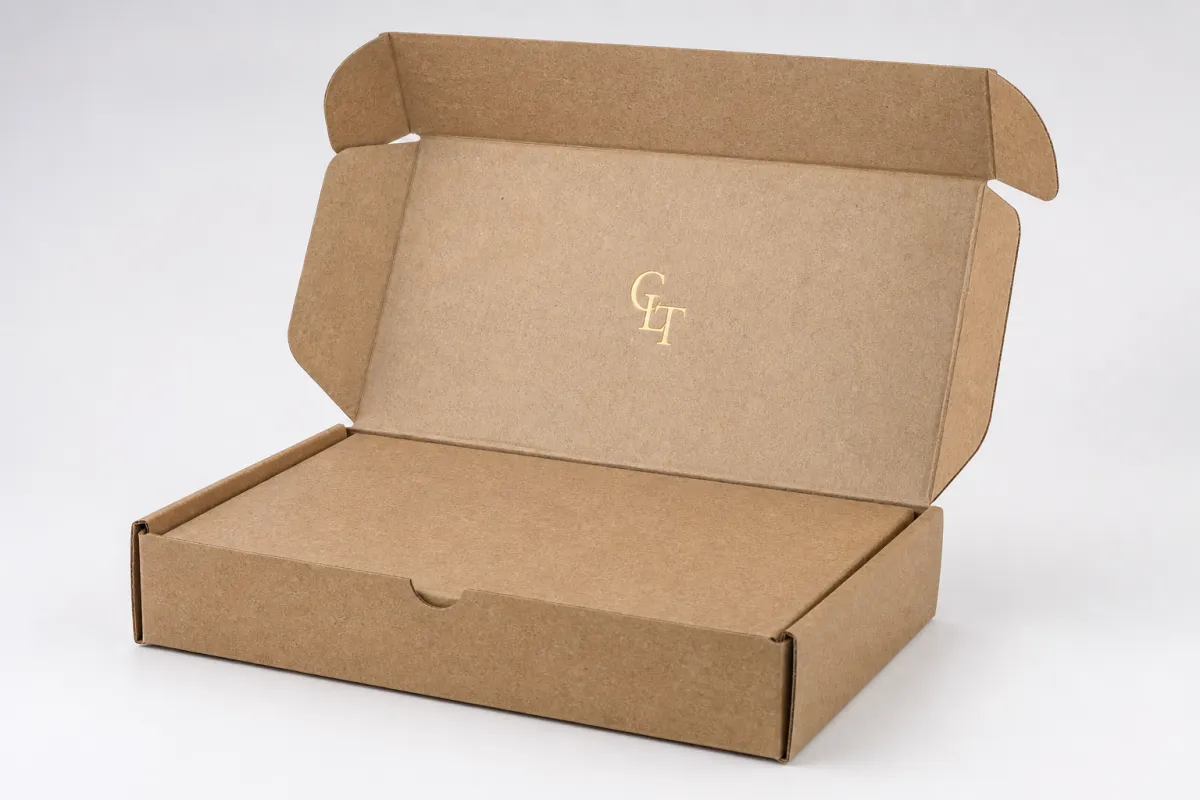
Branded eco mailer boxes are shipping cartons made from fiber-based materials such as recycled paperboard or corrugated board, then printed with logos, colors, patterns, or messaging that still keeps the package recoverable at the end of its life. They are meant to function as mailers first and brand carriers second, though in practice they do both at the same time. That balance matters because ecommerce packaging is often the first physical interaction a customer has with a company, and that first impression arrives before the product itself is fully revealed.
The difference between branded eco mailer boxes and generic mailers is not just visual. A plain carton can protect what is inside, but it rarely communicates much beyond shipment and address. A branded version can communicate care, consistency, and a more mature approach to operations. The box tells the buyer that the company thought about the packaging system rather than treating it as filler around the product. For a buyer responsible for both cost and presentation, that is not a minor detail. It affects perceived value, repeat purchase behavior, and whether the carton feels worth keeping around for another use before it heads to recycling.
Packaging waste is visible in a way many other operational choices are not. Customers may never know the flute profile, board weight, or print method, but they notice a carton that is too large, too shiny, or packed with unnecessary material. Branded eco mailer boxes help align the outside of the shipment with a cleaner material story. Right-sized dimensions, fiber-based construction, and water-based inks can support a more straightforward recovery path, provided the design avoids add-ons that complicate disposal.
Branding does not have to mean a loud exterior. Inside panels, minimal line art, restrained typography, and a thoughtful opening sequence can make branded eco mailer boxes feel distinctive without adding clutter. That restraint often reads as confidence. Premium packaging does not need to be crowded to feel intentional, and a calmer package often does more to suggest quality than a carton that tries to fill every surface with graphics.
The logistics side matters just as much. A mailer that is built correctly can reduce void fill, stack more predictably, and speed up packing. Fewer adjustments on the line usually mean fewer chances for damage and less friction during fulfillment. A box that is only attractive becomes a burden; a box that performs in the warehouse becomes part of the system. That is why experienced buyers tend to treat branded eco mailer boxes as a production decision, not simply a design decision.
Branded eco mailer boxes are especially useful when the shipment itself is part of the brand promise. Beauty products, apparel, curated gifts, and subscription programs all benefit because the package carries emotional weight as well as product protection. Even utilitarian shipments gain something from a better fit and a more credible sustainability message. Customers may not praise the box out loud, yet the carton still shapes how the product is judged.
A packaging buyer usually has two jobs at once: protect the product and protect the brand story. Branded eco mailer boxes are one of the few formats that can do both without requiring extra filler, a second outer pack, or a complicated assembly process.
For sourcing standards, it helps to compare materials and claims against recognized references. FSC-certified paper can support responsible sourcing language, while EPA recycling guidance is useful when checking how a fiber-based package fits into end-of-life recovery. When transit performance matters, the ISTA test family gives packaging teams a practical way to think about vibration, shock, and compression. Those references do not replace judgment, but they keep the conversation grounded.
How branded eco mailer boxes work from design to delivery
The path behind branded eco mailer boxes starts long before printing begins. Material selection, structural design, print method, folding style, and sealing behavior all shape how the finished carton performs in the warehouse and how it feels when the customer opens it. A box that folds cleanly, stays closed under handling, and resists scuffing in transit can save time and headaches once the order volume starts moving.
Material choice usually comes first. Recycled corrugated board offers more crush resistance and works well for heavier products. Lighter board structures suit apparel, kits, and smaller retail items that do not need the same level of impact protection. The goal is not to pick the most virtuous option in the abstract; it is to match the fiber structure to the product load. Branded eco mailer boxes should be strong enough for the real item inside, yet not so overbuilt that they waste material for no clear benefit.
Construction details matter in day-to-day use. Self-locking tabs can speed assembly, which is useful when a fulfillment line needs to move quickly. A tear-strip opening can improve the unboxing moment without adding a separate layer of packaging. Interior print can create a memorable reveal, though it works best when the exterior already carries the main branding. The strongest branded eco mailer boxes often pair a quiet exterior with a more expressive interior, giving the customer one moment of surprise without asking the package to do too much.
Print application affects both look and recovery. Water-based inks and low-coverage graphics usually keep the material simpler to handle after use than heavy lamination or mixed-material finishes. That does not mean the box has to feel plain. It means the design needs intention. If the brand wants earthy, minimalist, premium, or editorial, the print system should support that direction without making disposal harder. For many teams, this is the point where branded eco mailer boxes stop being a concept and become a packaging standard.
Right-sizing is one of the clearest wins in the whole category. A carton that fits the product closely often uses less void fill, which cuts material use and makes pack-out more efficient. The box also tends to hold its shape better because the contents shift less in transit. In practice, right-sized branded eco mailer boxes can lower shipping cost, reduce the chance of damage, and make the presentation feel more controlled. That is a better trade than using a larger box simply because it leaves more room for graphics.
The customer experience chain is easy to underestimate. The outer shipper is the first touchpoint. The closure style changes how satisfying the opening feels. Interior graphics affect the sense of effort. Product fit influences whether the package feels premium or loose. Those are not separate concerns. They are connected, and they shape the overall impression together. When branded eco mailer boxes are planned well, the customer gets a smoother opening and the brand gets a more believable packaging story.
Branded eco mailer boxes also need to hold up in transit, not just in photographs. Compression strength, board grade, flute profile, and edge integrity all affect whether the carton survives stacking and handling. A box can look excellent on a screen and still fail once it is mixed into a warehouse flow. That is why teams that care about performance usually build samples early and test them with actual product weight, actual inserts, and actual packing conditions.
One small detail that often gets overlooked is how the box behaves after a few handoffs. A carton that starts to crease at the flap, scuff at the corners, or warp around the closure will look tired long before the product is damaged. That is not the kind of thing a buyer forgets once returns start showing up. A sturdy, well-fitted mailer buys a little more confidence every time it changes hands.
Branded eco mailer boxes cost, pricing, and MOQ basics
Pricing for branded eco mailer boxes usually comes down to a small group of variables that appear quickly in a quote. Board type, print coverage, color count, size, folding complexity, coatings, and order quantity all affect the final number. A box made from recycled corrugated board with one-color branding will usually land at the lower end. A box with full-coverage graphics, custom inserts, or premium finishing moves higher. That progression is normal, and it is one reason "cheap packaging" can stop being cheap once the real production details are visible.
MOQ, or minimum order quantity, is another piece buyers should understand before comparing suppliers. Smaller runs often carry a higher unit cost because setup, proofing, and production overhead are spread across fewer boxes. Larger runs generally improve efficiency and stabilize pricing. The tradeoff is straightforward: more units can lower the cost per box, but they also increase the inventory commitment. For branded eco mailer boxes, the right MOQ is the one that fits sales pace, storage capacity, and launch risk.
Hidden costs show up more often than people expect. Sampling, structure development, freight, storage, and any secondary packaging used to protect the boxes in transit can all affect the total number. If artwork is not print-ready, the proof cycle can stretch. If dimensions change late, the structure may need another round of work. Buying branded eco mailer boxes is less about chasing one number and more about keeping the variables honest from the start.
| Box option | Typical use | Indicative unit cost at 5,000 units | Notes |
|---|---|---|---|
| Recycled kraft mailer, 1-color print | Apparel, lightweight ecommerce, starter programs | $0.35-$0.60 | Simple structure, lower setup, practical for basic branding |
| Full-color printed corrugated mailer | Beauty, gifts, subscription boxes | $0.55-$0.95 | Better visual impact, more print coverage, still fiber-based |
| Mailer with insert or special finish | Premium launches, kit packaging, retail gifting | $0.85-$1.40 | Higher complexity, often more setup and tighter approval control |
The numbers above are directional rather than fixed. Size, board grade, freight lane, print method, and finishing choices can move the cost quite a bit. The table still helps because it shows the tradeoff clearly: branded eco mailer boxes are not all priced the same, and the lowest unit cost is not always the most economical if damage rates climb or the package undermines the brand story.
Value is easier to judge when the full use case is in view. A box that costs a little more but reduces breakage, trims void fill, and improves retention can outperform a cheaper carton quickly. That is especially true for subscription programs and giftable products, where packaging is part of the product experience. If the outer carton feels flimsy, customers are gonna assume the rest of the program was handled the same way. Branded eco mailer boxes help avoid that mismatch.
For buyers comparing formats, it helps to look beyond cartons entirely. In mixed-shipping programs, Custom Poly Mailers may be a better fit for lightweight, non-fragile items, while mailer boxes are reserved for goods that need more structure and presentation. A split strategy like that can keep packaging costs in line without forcing every product into the same category. The goal is not to box everything. The goal is to Choose the Right package for each job.
Production steps, timeline, and lead time for branded eco mailer boxes
The production path for branded eco mailer boxes usually follows a familiar sequence: brief, structure, artwork, sampling, approval, production, finishing, packing, and shipment. The sequence looks neat on paper, though the real process often has overlap. Artwork may shift while samples are being reviewed. A dieline may need one more adjustment. Sustainability language may need checking before signoff. Strong projects are built by teams that expect iteration rather than automation.
Artwork readiness causes delays more often than people expect. A design can look polished in a presentation and still be unsuitable for print if the file setup is wrong, the color management is inconsistent, or the dieline is ignored. Dimension changes also create trouble. If the product size shifts late, the box may need resizing, which can affect fit, print layout, and the shipping carton plan. For branded eco mailer boxes, late changes are costly because they ripple through the entire build.
Timeline depends on several variables: tooling complexity, material availability, print method, coating choice, and whether the order is a first run or a repeat. A repeat job with approved artwork and an unchanged structure usually moves faster than a new package. A first-time order tends to take longer because the sample stage matters more. Typical lead times often land around 12-15 business days from proof approval for straightforward runs, though that range can stretch when the box is highly customized or freight timing is tight. That is why branded eco mailer boxes should be planned well before launch rather than after the launch date is already close.
Production time and lead time are different measures. Production time is the time spent making the boxes. Lead time includes the full path from project kickoff to boxes arriving where they need to go. The distinction sounds small, yet it causes confusion in many purchasing conversations. A team may hear that production takes two weeks and assume the order can be ready in two weeks, while sampling, approval, and freight add several more days. Clear definitions keep branded eco mailer boxes projects from drifting.
Sampling deserves the extra effort. A physical sample shows how the board folds, how the closure behaves, how the print reads under actual light, and whether the product fits the way it should. It is also the stage where hidden problems usually surface. A carton that looked fine on screen can reveal a weak lock tab, an off-center logo, or too much movement around the contents. For branded eco mailer boxes, the sample is not a luxury item in the process; it is the least expensive way to avoid a production run that misses the mark.
Freight planning needs attention as well. A box that passes review but arrives too late is still a problem. Seasonal volume, port congestion, domestic transit time, and warehouse intake schedules all affect the calendar. Smart teams build buffer time into the project, especially if the packaging is tied to a new collection or a promotional window. The box should arrive before the campaign begins, not while the campaign is already in motion. That kind of planning is part of what makes branded eco mailer boxes dependable.
If transit validation is part of the process, use established methods instead of guesswork. ISTA procedures, along with ASTM standards such as D4169, give packaging teams a shared language for shock, vibration, and compression performance. That matters because branded eco mailer boxes are expected to look good and perform under stress. A box that only survives on a desk is not ready for commerce.
Key factors to compare before ordering branded eco mailer boxes
The clearest way to compare branded eco mailer boxes is to look at the full system rather than one feature at a time. Material, print, size, sourcing claims, and operational fit all affect one another. A box with great graphics and weak board is still a problem. A box with strong structure but vague sustainability language creates another kind of problem. The right choice balances protection, budget, and brand story without putting extra strain on the fulfillment team.
Material is the first place to look. Kraft paperboard, recycled corrugated, and fiber-rich mailer structures each bring different strengths. Kraft usually gives a natural look. Corrugated offers more protection and often suits heavier products. Recycled content can support sustainability goals, but the fiber mix should be checked before any environmental claim is made. That matters especially if packaging copy says the boxes are recyclable or responsibly sourced. For accurate language, many teams reference FSC chain of custody standards or align with the EPA recycling guidance at EPA recycling resources.
Print method comes next. Flexographic printing often works well for simpler graphics and larger runs. Digital printing can be a better fit for shorter runs or variable artwork. Lithographic approaches can deliver richer image quality, though they may increase cost and complexity. Water-based inks are commonly preferred in eco-oriented packaging because they help preserve the fiber-based recovery path. For branded eco mailer boxes, the best method is the one that supports the design without overbuilding the package.
Sizing is where many teams leave money on the table. A box that is even slightly too large can require more filler, allow product movement, and make the final package feel less considered. A well-sized box reduces wasted space and often improves packing speed because the team spends less time adjusting the contents. If a product line has a few clear size tiers, it can make more sense to order a small family of branded eco mailer boxes than to force every SKU into one oversized format.
Branding layout deserves more strategy than it usually gets. Logo placement, message hierarchy, and inside-panel graphics should all be reviewed as a sequence. The exterior can stay minimal and calm while the interior carries a thank-you note, care instructions, or a short brand statement. That kind of restraint often feels more premium than filling every surface. With branded eco mailer boxes, the design should tell the story in a way that feels deliberate rather than noisy.
Claims and compliance matter more than many marketing teams expect. If the box is described as recyclable, recyclable in most curbside programs, or made from responsibly sourced fibers, the statement should match the actual material specification. Unsupported sustainability language is risky because customers are increasingly checking for consistency between the message and the package in their hands. If the carton is heavily laminated or includes non-fiber components, the claim needs to reflect that reality. That is where branded eco mailer boxes can build trust or quietly damage it.
Testing is the final comparison point, and it is the one most teams rush past. A packaging sample should be packed with the real product, sealed the way the warehouse will seal it, and handled the way the parcel will actually move through the network. A basic drop test, compression check, and pack-out trial with the fulfillment team can reveal problems early. The more the sample is treated like a live order, the more useful the test becomes. Branded eco mailer boxes are only as good as their performance under real conditions.
There is a practical lesson in all of this. A brand can often improve perception more by removing one unnecessary layer than by adding another effect. The box feels cleaner, the waste stream gets simpler, and the process becomes easier to run. That is a strong argument for keeping the structure focused, especially for teams that want packaging to feel current without becoming fussy. In many cases, the best branded eco mailer boxes stop one step earlier than the first draft suggested.
Common mistakes with branded eco mailer boxes
The first mistake is designing for appearance alone. A carton can look excellent in a mockup and still fail once it enters the field if the board is too light, the closure is weak, or the dimensions leave too much empty space. That kind of failure can erase any sustainability benefit because damaged goods, replacement shipments, and extra filler all add waste back into the system. Branded eco mailer boxes should be judged by performance first and appearance second.
The second mistake is overprinting. Heavy ink coverage, glossy coatings, and mixed-material finishes can make a box harder to recycle and more expensive to produce. They can also push the design toward visual clutter, which often weakens the premium feel the brand was trying to create. Sustainable packaging is not automatically better if it is overloaded with effects. With branded eco mailer boxes, restraint often looks more credible than decoration.
The third mistake is ignoring dimensional accuracy. A half-inch may not sound like much, yet it can affect product movement, packing consistency, and the customer's first impression. If the product rattles, the box feels less considered. If the fit is too tight, the pack line becomes awkward. Good branded eco mailer boxes are sized for the product plus only the clearance needed for protection and reliable closure.
The fourth mistake is vague sustainability language. Customers notice packaging claims that sound greener than the material really is. If a box uses recyclable fiber, say that clearly and accurately. If it uses a specific source certification, name it properly. If the finish complicates recycling, acknowledge that rather than hiding it. Branded eco mailer boxes earn trust when the language matches the carton in hand.
The fifth mistake is a loose approval cycle. Late artwork edits, incomplete proof review, and unclear responsibility between design, purchasing, and operations can all push the order out. Packaging projects fail quietly when no one owns the timeline. That becomes a serious problem when branded eco mailer boxes are tied to launches, promotions, or seasonal demand. If the packaging arrives late, the campaign starts at a disadvantage.
The sixth mistake is skipping real-world testing. A box that fits in a rendering might still perform poorly once it is stacked, dropped, and handled by a fulfillment line that is trying to move quickly. Test the sample with the actual product weight, the actual closure method, and the actual storage conditions. That is where the truth shows up. Branded eco mailer boxes should be validated under the conditions they will actually face.
A solid packaging brief saves money twice: first by preventing bad quotes, then by reducing revisions. For branded eco mailer boxes, vague instructions are one of the fastest ways to invite cost creep.
Expert tips and next steps for branded eco mailer boxes
Start with one clearly defined use case. That sounds simple, but it is the fastest way to avoid a box that tries to satisfy every SKU, every shipping method, and every brand mood at once. Build the first version of branded eco mailer boxes around the actual product size, the likely handling conditions, and the customer moment that matters most. Once the first format is working, expanding the range becomes much easier.
Request samples from at least two or three material and print combinations. Side-by-side comparison is more useful than any screen mockup because it shows how the board feels, how the ink sits, and whether the structure closes correctly. A box can look slightly different in person than it does in a PDF, and that matters. The tactile impression of branded eco mailer boxes often decides whether they feel earthy, premium, lightweight, or utilitarian.
Write a short packaging brief before asking for quotes. Include exact dimensions, product weight, whether the item ships with inserts, target order volume, sustainability priorities, and the launch date. If the brand wants a specific finish or FSC-linked material, say so early. A clean brief speeds up quoting and reduces the back-and-forth that inflates cost. For branded eco mailer boxes, clarity usually beats a clever idea that is difficult to manufacture.
Test the box in the real world. Pack it on the fulfillment line. Drop it. Stack it. Ship a few units through normal channels if possible. A sample that survives the test tells you far more than a display mockup ever will. If the product shifts, if the closure opens under stress, or if the print scuffs too easily, fix those issues before the run begins. That is the practical discipline behind dependable branded eco mailer boxes.
It also helps to look at packaging as a system rather than a set of isolated parts. A box, an insert, and an outer shipping method all affect total cost and customer experience. If a separate mailer or secondary pack is doing more work than it should, the program may need to be rebalanced. Sometimes the smarter move is to simplify the shipper and let branded eco mailer boxes carry more of the experience on their own. Other times, a hybrid setup is cleaner. The product and the route should decide.
Before seasonal demand picks up, lock the production window. Lead times can feel manageable until a launch compresses everything at once. Build in proof review, sample signoff, and freight time so the boxes are ready when the product is ready. That is one of those quiet decisions that keeps a project from slipping into last-minute friction. For brands that want packaging to feel consistent, branded eco mailer boxes work best as part of a planned calendar rather than an emergency purchase.
If you are still choosing between formats, a broader review of Custom Packaging Products can help frame the tradeoffs. A packaging partner can also show how branded eco mailer boxes compare with other shipping options, including lighter formats for lower-weight items. The key is to choose the package that protects the product, supports the sustainability claim, and fits the economics of the channel. That is the long view, and it usually holds up best.
Branded eco mailer boxes are not a novelty and not a checkbox. They are a long-term packaging system that can lower waste, sharpen presentation, and make the shipping moment feel more deliberate. For brands that want the parcel to carry the same standards as the product inside, branded eco mailer boxes are one of the most practical places to begin.
Frequently asked questions
What are branded eco mailer boxes made from?
They are usually made from Recycled Paperboard or corrugated board with recyclable fiber content. Some versions use water-based inks and minimal coatings to keep the recycling path simpler. The right material depends on product weight, shipping distance, and the finish you want.
How much do branded eco mailer boxes usually cost?
Pricing depends on size, material, print coverage, finishing, and order quantity. Lower quantities usually cost more per box because setup and production efficiency are spread across fewer units. Request a quote with exact dimensions and print specifications to get a realistic unit cost.
What is the typical lead time for eco mailer boxes with branding?
Lead time depends on artwork readiness, sampling, production capacity, and freight method. Custom structures and first-time orders usually take longer than repeat runs. Build in extra time for proof approval and shipping if the boxes are needed for a launch date.
Are branded eco mailer boxes recyclable?
Many are recyclable if they are made from fiber-based materials and avoid problematic mixed components. Heavy lamination, non-fiber inserts, or excessive coatings can make recycling less straightforward. Always check the exact material spec before making recycling claims on-pack.
How do I choose the right size for branded eco mailer boxes?
Measure the product with any protective packaging, then allow only the clearance needed for a secure fit. Right-sizing reduces void fill, improves protection, and makes shipping more efficient. If you sell multiple products, consider a small box range instead of one oversized format.
If you are choosing branded eco mailer boxes right now, start with the product dimensions, the real shipping weight, the closure style, and the print coverage you can actually manufacture well. Then order one physical sample and run it through the same pack-out, drop, and transit conditions the finished carton will face. That sequence is the most reliable way to keep the box practical, credible, and ready for production without wasting time on avoidable revisions.


