Buyer Fit Snapshot
| Best fit | Branded Edge Protectors Bulk Pricing for Packaging projects where brand print, material claims, artwork control, MOQ, and repeat-order consistency need to be specified before quoting. |
|---|---|
| Quote inputs | Share finished size, material target, print colors, finish, packing count, annual reorder estimate, ship-to region, and any compliance wording. |
| Proofing check | Approve dieline scale, logo placement, barcode or warning zones, color tolerance, closure strength, and carton packing before bulk production. |
| Main risk | Vague material claims, crowded artwork, missing packing details, or unclear freight terms can make a low unit price expensive after revisions. |
Fast answer: Branded Edge Protectors Bulk Pricing for Packaging should be specified like a repeatable production item. The safest quote records material, print method, finish, artwork proof, packing count, and reorder notes in one written spec.
Production checks before approval
Compare the actual filled-product size with the drawing, then confirm tolerance on folds, seals, hang holes, label areas, and retail display edges. Reserve space for logos, QR codes, warning copy, and material claims before decorative graphics fill the panel.
Quote comparison points
Review material grade, print process, finish, sampling route, tooling charges, carton quantity, and freight assumptions side by side. A quote is only useful when the supplier can repeat the same color, closure quality, and packing count on the next order.
Branded Edge Protectors Bulk Pricing for Packaging
A crushed corner can erase the savings on an entire pallet. I have seen that happen in a plant audit where the packaging team had trimmed cents from the protector and then paid for it in rework, freight claims, and a very long afternoon with a repacking crew. That is why branded edge protectors bulk pricing deserves real attention. The right protector holds strap tension, limits corner damage, and keeps the load looking deliberate rather than improvised. The cost per piece stays modest. The cost of skipping it can climb quickly.
Buyers usually notice the economics after a few repeat shipments, not after the first quote. Once dimensions, board grade, and print layout are fixed, branded edge protectors bulk pricing becomes easier to forecast. Forecasting matters because it turns a small packaging item into a stable budget line instead of a moving target that changes with every rush order, every new SKU, and every freight lane adjustment.
That predictability carries operational weight. Many damage claims begin with a load that shifted, flexed, or picked up abrasion during handling. The fix is often a change in corrugated protection rather than a full redesign of the packout. For many programs, branded edge protectors bulk pricing is where function and presentation meet without forcing a tradeoff between the two.
Branded edge protectors bulk pricing: why the real savings show up fast
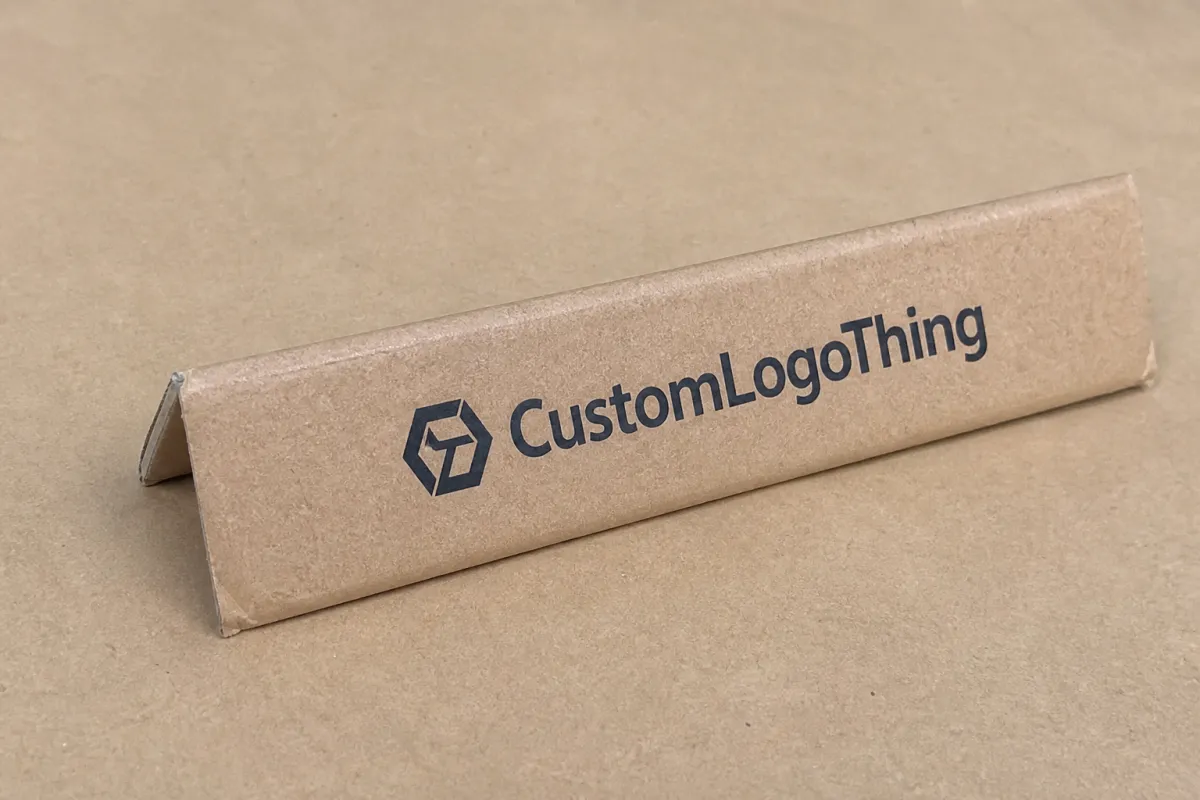
The savings tend to appear in the warehouse long before they show up in a spreadsheet. One rework, one claim, one repacked pallet can cost more than the edge protection on the whole load. That is why branded edge protectors bulk pricing often pays back sooner than procurement teams expect, especially when the same carton size or pallet footprint moves week after week.
The value is partly mechanical and partly administrative. A printed edge protector helps receiving teams identify product families faster, keeps pallet edges tidy, and gives the packout a more disciplined look. It still does the physical job first: resisting crush where stretch wrap, banding, and stacking pressure concentrate on the corners. That combination is the reason branded edge protectors bulk pricing belongs in a packaging discussion, not only a branding discussion.
Bulk buying changes the cost structure in ways that are easy to miss if you only stare at the unit price. Setup charges, print prep, and freight planning get spread across a larger run, which lowers cost per piece in a meaningful way. Small orders and emergency buys do the opposite. They reward speed, not economy. Planned replenishment is where branded edge protectors bulk pricing starts to look sensible on a landed-cost basis.
Quality benefits show up too. A repeating specification makes warehouse training easier, and it gives operations a package profile they already know how to handle. Leg depth, board thickness, and print position all affect how the protector sits against the carton or pallet edge. Even a small variation can change performance. A stable program makes branded edge protectors bulk pricing easier to defend because the outcome is more consistent from one run to the next.
Branded edge protectors bulk pricing is especially useful for shippers that do one or more of the following:
- Ship the same carton size or pallet footprint every week.
- Need stronger edge crush resistance during wrapping and banding.
- Want printed identification for sorting, brand control, or handling instructions.
- Deal with recurring freight damage tied to corners and strap pressure.
- Need a packaging upgrade that improves appearance without reworking the whole line.
A low-cost protector is expensive if it fails under load, and a better protector can be cheaper if it prevents repacking, protects product, and keeps the truck on schedule.
For teams comparing suppliers, the useful question is not, “What is the lowest quote?” It is, “What is the best value at our actual volume?” That is the point where branded edge protectors bulk pricing becomes decisive. Once the order size is large enough, the gap between one-off buying and planned sourcing can be wide, especially when artwork is already approved and the dimensions are standard.
What branded edge protectors do for pallets, cartons, and freight
Edge protectors are rigid or semi-rigid board profiles used to reinforce vulnerable edges during strapping, stretch wrapping, stacking, and transit handling. Most are formed from layered paperboard or corrugated board in an L-shape. Some programs call for heavier board, moisture-resistant treatments, or custom cut lengths. The job is straightforward: keep the corners straight, spread pressure, and reduce localized crush.
On palletized freight, they help the load stay square while wrap tension tightens around the product. On carton shipments, they reduce abrasion and edge damage where straps or banding would otherwise cut in. On export loads, they matter even more because long routes, humidity swings, and multiple handoffs all raise the risk of corner failure. A good spec supports the freight, the carton, and the brand image at the same time.
Branded edge protectors bulk pricing becomes more compelling when one component is doing three jobs. It reinforces the edge, carries printed branding or product identification, and helps operations standardize packout. That means the piece is more than a consumable. It becomes part of the package architecture, visible at the dock and visible to the customer. Buyers who treat it that way usually get more from the spend.
Branding options vary by program. Some use a logo mark or product code. Others add a color block, handling icon, recycled-content message, or warehouse identification code. The strongest versions keep the artwork readable and the print coverage efficient. Heavier ink coverage and more colors usually add cost without improving protection. That is one of the practical reasons branded edge protectors bulk pricing rewards disciplined spec decisions.
Compatibility is one reason adoption is so straightforward. Edge protectors work with corrugated shippers, stretch film, banding, tape, and slipsheets. They do not require a full packaging redesign. For buyers who want a cleaner packaging line without disrupting the process, that matters. A protector that fits the current packout is easier to roll out, and branded edge protectors bulk pricing lowers the barrier even more.
Visible printing can also reduce confusion at the dock. When multiple SKUs or customer programs move through one facility, color coding and clear branding help teams stage, sort, and load freight with fewer mistakes. That sounds minor until the wrong pallet gets staged for the wrong customer. A small printed detail can prevent a costly scramble later in the day.
For teams evaluating broader packaging decisions, the same logic shows up across the rest of the system. You can review recurring purchasing models in our Wholesale Programs, and examples of real packaging applications are available in our Case Studies. Those pages help buyers compare a one-time purchase with a planned, repeatable supply approach.
For standards-minded buyers, the testing side matters too. The ISTA library is useful for understanding distribution hazards, while the FSC framework helps teams evaluate responsible fiber sourcing. Neither replaces a product spec, but both add useful context for package choices that have to hold up in transit and in audits.
Branded edge protectors bulk pricing by specification
The fastest way to understand branded edge protectors bulk pricing is to look at the specification points that actually move cost. Length matters. Leg depth matters. Board thickness, board grade, print coverage, ink count, and moisture resistance matter too. A standard profile may quote well. A custom size with heavier board and full-color branding will cost more because it requires more controlled production steps.
Light-duty options are usually chosen for carton stabilization or modest pallet support. Midweight versions are common for general shipping and warehouse banding. Heavy-duty profiles make more sense for export loads, tall stacks, or products under high strap tension. As the load becomes tougher, the buyer pays for stronger board and tighter tolerances. That is not waste. It is a direct response to what the freight demands.
Branded edge protectors bulk pricing tends to improve fastest when the spec is stable and the artwork stays simple. A single-color logo on a standard profile usually prices better than a full-coverage design with multiple inks and custom geometry. Buyers who know the load profile can often save money by choosing the nearest standard dimension instead of insisting on a custom build that does not improve performance enough to justify the extra tooling or setup.
| Specification tier | Typical use | Common material profile | Illustrative cost per piece at 5,000 pcs | Notes |
|---|---|---|---|---|
| Light-duty | Carton reinforcement, lower strap tension | Standard paperboard, modest leg depth | $0.08-$0.14 | Suitable for lower-compression loads and tidy warehouse handling |
| Midweight | General pallet protection, retail freight | Heavier board, wider face, optional single-color print | $0.14-$0.24 | Often the best balance of protection and branded edge protectors bulk pricing |
| Heavy-duty / export | Tall stacks, export routes, high strap tension | Thicker board, tighter spec control, moisture-resistant options | $0.26-$0.45 | Used where edge crush and humidity exposure are major concerns |
Those numbers are illustrative, not universal. Freight distance, print method, pack count, and order quantity can all shift the final landed cost. Still, the pattern holds: as load requirements rise, cost per piece rises with them. That is why branded edge protectors bulk pricing should be compared against the load risk, not against a generic “cheap protector” category.
Print coverage changes the result as well. A narrow logo panel may add very little to the quote. Full-surface branding, multiple ink passes, or special color matching usually add more. If the goal is identification rather than advertising, a clean high-contrast logo or handling mark often gives the best return. Buyers trying to hold unit cost down can usually save money there without losing the branded effect.
Material choice changes the picture too. Standard recycled board can suit many programs, while higher-performance board with moisture resistance may be the better option for export or humid storage. In those cases, the added performance can justify the higher price. The mistake is buying the thinnest option just because the quote looks lower. A protector that fails under strap load or edge compression ends up costing more through claims and labor. That is why branded edge protectors bulk pricing works best as a fit-for-purpose decision.
Buyers should ask for a written spec sheet showing dimensions, thickness, print method, pack count, and material description. That makes supplier quotes comparable and helps prevent hidden changes later. A quote without those details is hard to trust and even harder to use for annual planning. A clean spec sheet is one of the simplest ways to keep branded edge protectors bulk pricing honest.
Cost, pricing, and MOQ: what changes the quote
Most buyers ask about price first, but the real answer usually starts with quantity. Quantity determines how setup charges are spread, how many changeovers are needed, and whether the run can be scheduled efficiently. That is why MOQ matters so much. A smaller run may be perfectly valid, but the unit price is usually higher because the fixed costs are divided over fewer pieces. With branded edge protectors bulk pricing, larger orders more often produce the better quote.
Tooling fees can matter too. If the job needs a custom die, an unusual cut profile, or a new print layout, those costs may sit outside the per-piece price. The same is true for special requirements such as staged releases or split shipments. Buyers often fixate on the printed unit cost and overlook freight, carton packing, palletizing, and delivery method. That creates blind spots. Landed cost is the number that affects budget, not the headline quote by itself.
For many programs, the biggest savings come from reducing complexity. Use a standard dimension if it fits the load. Simplify the artwork if the protector only needs one color. Consolidate SKUs where possible. Order before inventory becomes a fire drill, because rush fees can erase savings fast. These moves do not weaken the product. They remove friction. In branded edge protectors bulk pricing, simple often wins because simple is easier to make, easier to ship, and easier to repeat.
There is a real difference between buying for the next shipment and buying for a steady annual program. If the need repeats, the supplier can often offer better tiers because the production plan is clearer. If the need is one-off, the quote is usually higher. Ask for price breaks at several quantities, such as 1,000, 5,000, and 10,000 pieces. Once the breakpoints are visible, it becomes easier to judge where branded edge protectors bulk pricing starts to create meaningful value.
Below is the kind of comparison that helps procurement teams make a clean decision:
- Unit cost: The per-piece price before freight and ancillary charges.
- Cost per piece: The same idea, often easier to compare across tiers and pack counts.
- MOQ: The minimum order quantity needed to run the job efficiently.
- Setup charges: Fixed costs tied to prep, print plate work, or machine adjustment.
- Tooling fees: One-time or low-frequency costs for custom geometry or dedicated cutting.
- Landed cost: The total delivered cost, including freight and all applicable charges.
That list matters because the best quote is rarely the one with the lowest unit cost alone. A low per-piece price can still produce a high landed cost if freight is inefficient or the minimum order is too small. Buyers who compare the full picture usually get a more reliable answer from branded edge protectors bulk pricing, and they avoid the trap of choosing the cheapest line item only to pay more later through delays or repacking labor.
One practical rule helps. If the load profile is stable and the volume is predictable, bulk pricing usually makes sense. If the spec is still changing every month, settle the dimensions and print layout before trying to optimize cost. That sequence saves time and avoids premature quotes that do not survive real production. Once the spec is stable, branded edge protectors bulk pricing becomes much easier to manage.
Process and timeline: from art approval to shipment
A smooth order usually follows a simple path. First comes the spec review: dimensions, board preference, print requirements, and delivery expectations. Then the supplier recommends a material and print method, confirms pricing, and requests artwork. After that, a proof is issued, the buyer approves placement and spelling, and production gets scheduled. That sequence is straightforward, but it works best when the request is complete from the start. Branded edge protectors bulk pricing moves faster when the spec is not changing every other message.
Prepress is where many delays appear, and most are avoidable. A vector file is better than a low-resolution image. Clear Pantone or color callouts are better than “match our logo.” If the protector needs to sit in a specific place on the load or if the print must face outward, that should be stated early. Small clarifications save time. They also reduce the chance of a proof loop that drags out the job. For recurring work, that is one of the easiest ways to keep branded edge protectors bulk pricing from drifting upward through avoidable revisions.
Production usually moves through board conversion, printing, cutting, drying or curing depending on the process, bundling, and final pack-out. The exact timeline depends on board availability, order size, seasonality, and the number of colors in the art. A simple single-color run may move quickly once approval is in hand. A larger custom order with moisture-resistant board takes more time because more steps have to be held to a tighter standard. That is not unusual. It is the reality of made-to-order packaging.
Typical lead times vary, but a clean standard job often lands in the 12-15 business day range after proof approval if materials are available and freight is straightforward. Larger or more customized programs can take longer, especially if the order needs special packing, multiple ship dates, or a sample approval cycle. The useful takeaway is simple: the earlier the buyer shares the ship date, the easier it is for the supplier to fit the job into production. That helps keep branded edge protectors bulk pricing aligned with the schedule instead of turning it into a rush premium.
From a buyer's standpoint, three habits give the best timeline control:
- Send complete dimensions and artwork together.
- Confirm whether the order is one-time or recurring.
- State the actual receiving window instead of a rough target.
Those details let the supplier quote more accurately and plan more cleanly. They also reduce the risk of a quote that looks good on paper but slips once production starts. That matters in packaging procurement because timing and cost are tied together. A delayed order can cost more than the packaging line item itself. Good planning keeps branded edge protectors bulk pricing from turning into a last-minute scramble.
For buyers managing broader sourcing programs, it helps to think of the protector as part of a larger system rather than an isolated purchase. Freight lane, warehouse storage, carton spec, and brand presentation all affect the final result. A program that connects those pieces tends to be easier to repeat, and repeatability is where branded edge protectors bulk pricing performs best.
Why choose us for consistent branded edge protectors
Good sourcing is not only about getting a quote back quickly. It is about getting a quote that reflects the real load and can be repeated without surprises. That is the standard we aim for at Custom Logo Things. Buyers need clear specs, honest pricing, and consistent product output, not vague promises. For that reason, our approach to branded edge protectors bulk pricing starts with repeatability and then looks at price, because a low number that does not hold up is not useful.
Technical consistency lives in small details that are easy to overlook. Board caliper should stay stable. Print registration should be clean. Cut dimensions should match the drawing. Pack counts should arrive as expected so the warehouse can stage and use the product immediately. Those points may sound basic, but they are the difference between a protector that fits the workflow and one that creates friction. Buyers who have been through a few production runs know how much time those details can save.
We also think packaging advice should improve the outcome, not just the invoice. If a lighter board grade is enough, we will say so. If the load needs heavier reinforcement or a moisture-resistant spec, that should be clear too. A recommendation should match the freight profile, not push a buyer toward a more expensive choice by default. That is how branded edge protectors bulk pricing should be handled: practical, direct, and tied to the shipping condition.
Communication matters too. A buyer managing production schedules, promotion calendars, or replenishment programs cannot afford slow answers on artwork, sample approval, or ship date changes. Fast, clear communication keeps the order moving. It also helps the buyer decide whether to tighten the spec, simplify the artwork, or adjust the quantity to hit a better price tier. Those are the decisions that make branded edge protectors bulk pricing more efficient over time.
Our goal is to reduce surprises. That means no hidden assumptions buried in the quote, no unclear pack counts, and no confusion about what is included. If freight is separate, that should be stated. If there is a sample step, that should be stated. If the quote reflects a specific board grade or print count, that should be stated plainly. Transparent pricing is not a luxury in packaging procurement; it is the only way to compare suppliers fairly. Buyers looking at branded edge protectors bulk pricing should expect that level of clarity.
For recurring buyers, a wholesale-style program can be especially efficient because it supports replenishment without rebuilding the quote every time. If your packaging demand is steady, or if you want a standing spec for multiple facilities, our Wholesale Programs are built for that cadence. If you want to see how a similar packaging decision played out in a real operational setting, our Case Studies offer useful context.
The best feedback is rarely that the package looked attractive on a shelf. It is that the warehouse team had fewer problems, the product arrived cleaner, and the purchase process was easy to repeat. That is the standard we try to support every time a buyer asks about branded edge protectors bulk pricing.
Next steps for a fast, accurate quote
The fastest way to get a dependable quote is to send complete information up front. Start with finished dimensions, expected annual volume, board or thickness preference, print requirements, destination ZIP or freight lane, and any moisture, export, or compression concerns. If you have artwork, include that too. A complete request usually leads to a better answer on branded edge protectors bulk pricing because the supplier can price the job against the real production path instead of guessing.
Ask for a tiered price table. That is one of the easiest ways to see how the unit cost changes as the order grows. It also makes the value of bulk buying visible, which matters if you are trying to justify inventory planning or a larger forecast order. For many buyers, the sweet spot appears once the order moves into a higher production tier, and that is where branded edge protectors bulk pricing can improve sharply.
If the load is new, the artwork is changing, or the protector has to fit into a tighter packing workflow, request a sample or proof. A small approval step can prevent a much larger problem later. It is better to catch a fit issue before production than after the entire order is complete. That is especially true on custom sizes, where even a small dimension change can affect how the protector rides on the carton or pallet edge.
Compare quotes on the same basis. Check dimensions, board grade, print method, pack count, freight assumptions, and lead time. A lower unit price is not useful if the quote excludes freight or assumes a different spec. The buyer who compares apples to apples usually gets the right answer faster, and that makes branded edge protectors bulk pricing a practical procurement tool instead of a guessing game.
If you already know your load profile, artwork needs, and reorder cadence, send the full request in one shot and ask for the best quantity breakpoints. That gives the supplier enough detail to quote accurately and helps you see where volume actually pays off. For most repeat programs, that is the cleanest path to branded edge protectors bulk pricing that fits both the warehouse and the budget.
Branded edge protectors bulk pricing works best when the spec is stable, the artwork is clear, and the order is sized for repeat use. If those three pieces are in place, the cost per piece becomes easier to control, the freight package looks more professional, and the protection does its job without adding unnecessary complexity. The practical takeaway is to lock the dimensions first, ask for tiered pricing on the same spec, and judge the quote by landed cost rather than unit price alone. That is how packaging teams keep the load safe and the budget honest.
What drives branded edge protectors bulk pricing the most?
Quantity is usually the biggest factor because setup charges are spread over more units as the order grows. Material grade, thickness, print coverage, and special finishes can raise the unit price even when the size stays the same. Freight, packaging method, and rush scheduling can also affect the landed cost, so always compare quotes on the same assumptions. In many cases, branded edge protectors bulk pricing improves most when the order is planned instead of rushed.
What MOQ should I expect for branded edge protectors bulk pricing quotes?
MOQ varies by size, print method, and whether the job is standard or custom, but larger runs almost always improve the unit rate. If the artwork is simple and the dimensions are standard, the MOQ may be lower than a highly customized run. Ask for price breaks at several quantities so you can see where the best value begins. That is the easiest way to judge branded edge protectors bulk pricing for your own program.
Can branded edge protectors bulk pricing include custom printing?
Yes, most bulk programs can include logos, color blocks, product IDs, or handling marks. More print colors and larger coverage areas usually add cost, so simplifying the design can help control the quote. Provide vector artwork and clear placement notes to avoid proof delays and rework. That keeps branded edge protectors bulk pricing closer to the target and reduces approval time.
How long does production usually take after approval?
Lead time depends on board availability, order size, print complexity, and whether a sample or proof cycle is needed. Clean artwork and confirmed specs usually move faster than jobs that need revisions or special finishing steps. If timing matters, share your ship date up front so the schedule can be matched to your receiving window. That helps preserve the value of branded edge protectors bulk pricing without a rush premium.
What should I send for the most accurate branded edge protectors bulk pricing quote?
Send dimensions, quantity, load weight, application details, and the environment the shipment will face. Include artwork files, print expectations, destination, and whether you need sample approval before full production. The more complete the request, the faster the quote and the fewer surprises in pricing or lead time. A complete brief is the best starting point for branded edge protectors bulk pricing that actually fits the job.


