Buyer Fit Snapshot
| Best fit | Branded Folding Cartons for Cosmetics projects where brand print, material claims, artwork control, MOQ, and repeat-order consistency need to be specified before quoting. |
|---|---|
| Quote inputs | Share finished size, material target, print colors, finish, packing count, annual reorder estimate, ship-to region, and any compliance wording. |
| Proofing check | Approve dieline scale, logo placement, barcode or warning zones, color tolerance, closure strength, and carton packing before bulk production. |
| Main risk | Vague material claims, crowded artwork, missing packing details, or unclear freight terms can make a low unit price expensive after revisions. |
Fast answer: Branded Folding Cartons for Cosmetics: Board, Finish, Dieline, and Unit Cost should be specified like a repeatable production item. The safest quote records material, print method, finish, artwork proof, packing count, and reorder notes in one written spec.
Production checks before approval
Compare the actual filled-product size with the drawing, then confirm tolerance on folds, seals, hang holes, label areas, and retail display edges. Reserve space for logos, QR codes, warning copy, and material claims before decorative graphics fill the panel.
Quote comparison points
Review material grade, print process, finish, sampling route, tooling charges, carton quantity, and freight assumptions side by side. A quote is only useful when the supplier can repeat the same color, closure quality, and packing count on the next order.
Branded Folding Cartons for Cosmetics: Design Basics
Two serums can sit side by side and still read like different price points. Branded folding cartons for cosmetics create that gap fast, because shoppers size up structure, print quality, and finish in seconds, long before they compare an ingredient list or twist open the cap.
That is why branded folding cartons for cosmetics are not decoration with a shipping address. They are the first physical brand touchpoint, a protection layer for delicate products, and a compact carrier for claims, directions, barcodes, and compliance copy. For a buyer sorting through dozens of launches, the carton is often the quickest clue about whether a line feels clean, clinical, botanical, or luxury-led. A useful benchmark appears in many custom carton case studies: the strongest packs are rarely the loudest. They are the most precise.
From a packaging professional’s point of view, the carton has to do three jobs at once. It must sell, survive handling, and keep the legal copy under control. When those jobs are handled well, branded folding cartons for cosmetics can make a $24 serum feel more credible without adding much material or weight.
Branded Folding Cartons for Cosmetics: why the first impression sells
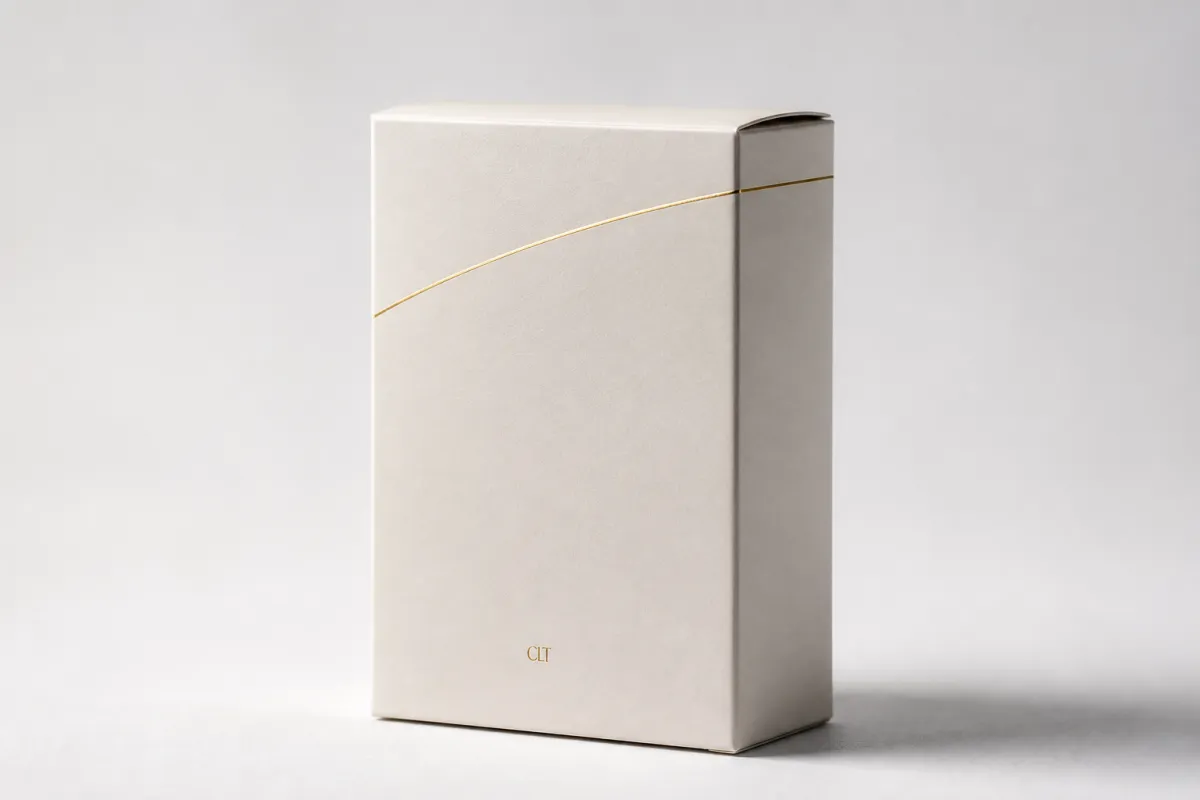
Branded folding cartons for cosmetics often do more selling than the formula itself at shelf level. That sounds blunt, yet it matches how retail behaves. Shoppers give a brand a few seconds, sometimes less, and the carton is where they decide whether the product feels premium, trustworthy, or forgettable. A crisp structure, controlled color, and a tactile coating can change how the same bottle is read in hand.
Picture two identical dropper bottles. One sits in a plain white box with weak color contrast and thin board that bows at the edges. The other uses well-registered print, a firm folding carton, and a restrained spot finish that catches light without shouting. Same bottle. Very different price expectation. Branded folding cartons for cosmetics are often the reason one launch looks like a commodity and the other looks ready for a prestige shelf.
"If the carton feels flimsy, the brand feels less careful." That is the kind of judgment buyers make in the aisle, even if they never say it out loud.
There is a practical side that gets ignored when teams focus only on design. Branded folding cartons for cosmetics protect delicate jars, tubes, and glass bottles from scuffing and reduce the odds of shelf wear before the product ever reaches the customer. They also create room for the copy that the primary pack cannot hold comfortably: ingredients, warnings, directions, country-of-origin details, barcode placement, and distributor information.
Good cartons can communicate a brand position in a single glance. A matte, low-contrast system with generous whitespace can signal clinical performance. Kraft-like or recycled board can suggest natural ingredients and lower-impact sourcing. Foil accents, embossing, and soft-touch coatings push a more luxurious reading. The trick is restraint. The strongest branded folding cartons for cosmetics usually pick one message and say it clearly rather than stacking every possible effect onto the box. Less noise, more intent.
For teams building a launch range, the carton often becomes the visual system that holds everything together across SKUs. That is one reason branded folding cartons for cosmetics deserve the same attention as the primary container. When the outer pack is right, the inner product gains the confidence it needs to stand out.
How branded folding cartons for cosmetics work
At a structural level, branded folding cartons for cosmetics are built from paperboard, cut with a dieline, folded, glued, and packed flat for efficient shipping. The mechanics are simple. The details are not. Board caliper, grain direction, tuck style, dust-flap size, locking tabs, and glue zones all affect whether the carton feels clean in hand or frustrating at the filling line.
The best starting point is product fit. A carton that is too loose can shift in transit and look cheap on shelf; one that is too tight can slow the packing line or warp after gluing. For a slim lip balm, a lighter board may be enough. For a glass serum or prestige cream, heavier board is often the better call because it adds crush resistance and a more substantial hand feel. In many projects, branded folding cartons for cosmetics sit somewhere in the 300gsm to 450gsm range, though exact board choice depends on the container weight, fill method, and finish selected.
Print layers matter just as much as structure. Color management keeps a pale blush from drifting toward peach and prevents a deep navy from printing muddy. Typography needs enough contrast to stay readable in a small footprint. Finishes then turn a plain printed box into a brand signal: foil for emphasis, embossing for texture, soft-touch lamination for a velvety feel, and spot UV for selective shine. A carton does not need all of those effects. In fact, branded folding cartons for cosmetics usually look better with one or two controlled finishes than with four competing ones.
There is also the information architecture. The front panel must do the heavy lifting without becoming crowded. The side panels often absorb ingredient lists, batch fields, recycling marks, and usage instructions. The back or bottom panel can carry compliance details, importer information, and barcode placement. That is the part many early mockups miss: branded folding cartons for cosmetics are communication devices, not just visual shells.
I still remember a small skincare launch where the carton looked beautiful in rendering but collapsed on the folding line because the glue area was too narrow for the chosen board. The fix was not glamorous. We widened the flap, eased the artwork a hair, and the whole thing stopped fighting the machine. That is the kind of thing a screen never warns you about. It is also why branded folding cartons for cosmetics should be checked as physical objects, not just artwork files.
It helps to think about the carton as a frame around the primary package. A jar, tube, or bottle may define the user experience, but the outer carton sets the expectation. For a cleanser in a tube, the box can suggest spa-like calm. For a fragrance, it can create a more ceremonial reveal. For a clinical serum, it can build confidence through precision. When branded folding cartons for cosmetics are designed well, they do not compete with the primary pack. They clarify it.
Here is a practical way to compare carton approaches:
- Simple tuck carton: lower setup complexity, good for entry-level skincare or everyday cosmetics.
- Auto-bottom carton: faster filling, useful when speed matters and the product line is growing.
- Rigid-look folding carton: heavier board and premium finishes for prestige positioning without moving to a rigid box.
That last point matters. Many teams assume premium has to mean rigid packaging. Not always. Well-made branded folding cartons for cosmetics can achieve a high-end presence while staying lighter, more compact, and easier to ship than rigid set-up boxes.
Key factors that shape branded folding cartons for cosmetics
Material choice is the first decision that changes the whole project. Branded folding cartons for cosmetics for lip balm or mascara may work well on a lighter SBS or C1S board. Prestige skincare, fragrance, or any product with a heavier glass container often benefits from a thicker stock with more stiffness. Recycled content can work too, but the board has to print cleanly and hold creases well. A sustainable spec that scuffs badly is not a win.
Brand positioning is the second big lever. Clinical brands tend to favor calm typography, tight grids, and crisp whites or pale neutrals. Botanical or wellness-led brands may use more texture, warmer tones, or uncoated-looking surfaces. High-glam beauty products often lean on metallic foils, deeper color fields, and more contrast. The point is not to copy a category default. It is to make sure branded folding cartons for cosmetics communicate the right promise before the carton is even opened.
Regulatory copy can make or break the design. Ingredient lists, warnings, distributor addresses, net contents, recycling marks, and barcode placement all need space. If a team plans the front panel first and the legal copy later, the artwork gets squeezed and the result feels cluttered. Better projects build the copy hierarchy into the dieline from the start, so branded folding cartons for cosmetics remain legible even when the product line grows into multiple SKUs.
Sustainability tradeoffs deserve honest treatment. FSC-certified stock can support fiber sourcing goals, but the full package still has to perform in the real world. Water-based coatings may be easier to position than heavy plastic films. Soy-based or low-VOC inks may fit a cleaner brand story. Yet a carton that loses print fidelity, rubs off in transit, or dents too easily can create more waste than it saves. For sourcing guidance, the FSC standard is a useful reference point: FSC certification resources.
Another factor is how the carton behaves across the supply chain. If the product ships through e-commerce, the carton may need extra scuff resistance or an outer shipper test. If it sits in a retail shelf environment, edge crush and color retention matter more than a purely photogenic mockup. In practical terms, branded folding cartons for cosmetics should be judged against the path they actually travel, not only against the studio render.
Strong projects usually balance five questions:
- What does the product weigh, and how much protection does it need?
- What is the brand trying to signal in one glance?
- How much copy must fit without cluttering the panel?
- Which coatings or finishes fit the sustainability story?
- How will the carton be handled, stacked, and shipped?
If those questions are answered early, branded folding cartons for cosmetics become much easier to specify, quote, and approve.
Cost and pricing for branded folding cartons for cosmetics
Pricing moves quickly because several variables stack at once. Board grade, carton size, print coverage, finishing complexity, order quantity, and whether the project needs inserts all affect the final number. For branded folding cartons for cosmetics, the most common pricing mistake is focusing only on unit cost and ignoring setup, sampling, and approval time. A low per-unit price can still be expensive if the artwork needs repeated revision or the carton is redesigned after filling tests.
As a rough planning guide, simple branded folding cartons for cosmetics with moderate coverage might land around $0.18-$0.30 per unit at 10,000 pieces, while a smaller run of 5,000 units can push closer to $0.28-$0.55 per unit. Add foil, embossing, soft-touch lamination, or a specialty board and the price can move higher fast. That is not a flaw in the quote; it is how finishing and setup work. It is also why pricing from a vendor with a different dieline or different finish assumptions is not really an apples-to-apples comparison.
MOQ matters more than many brands expect. When the run is small, setup costs are spread across fewer cartons, which raises the unit price. Larger batches usually reduce cost per unit and improve consistency across the line, especially if the design family includes multiple shades or product types. For branded folding cartons for cosmetics, the sweet spot often sits where launch volume and replenishment forecast meet. Order too little and the carton looks expensive. Order too much and you may end up with outdated packaging if the formula, claim, or barcode changes.
Here is a simple comparison that many packaging buyers find useful:
| Carton option | Typical spec | Best fit | Approx. unit cost |
|---|---|---|---|
| Entry-level tuck carton | 300-350gsm board, 4-color print, aqueous coating | Lip balm, sheet mask, everyday color cosmetics | $0.18-$0.30 at 10,000 pieces |
| Mid-tier skincare carton | 350-400gsm board, matte lamination, one foil detail | Serums, creams, premium cleansers | $0.28-$0.48 at 5,000-10,000 pieces |
| Prestige carton | 400-450gsm premium board, soft-touch, emboss, spot UV | Fragrance, luxury skincare, gift sets | $0.45-$0.95 at 5,000 pieces |
Those ranges are directional, not fixed. Region, press condition, delivery terms, and the number of artwork revisions can move them. A carton with narrow color bands and tight registration can cost more than its artwork suggests because the press needs careful control. A carton with a larger footprint can be cheaper than expected if the finish is simple and the die is straightforward. That is why branded folding cartons for cosmetics should always be quoted against the same board, size, print count, and finish list.
Budgeting against retail is the best sanity check. If a serum retails at $28 and the outer pack costs nearly a dollar, the carton may be taking too much of the margin unless the brand is positioned as prestige. If the same carton supports a $90 fragrance, the same cost may be easy to justify. Branded folding cartons for cosmetics have to support the business model, not just the visual mood board.
For shipping and handling assumptions, many teams also map cartons against transit-test thinking from ISTA. That does not replace your own validation, but it is a practical benchmark when the carton must survive distribution without edge crush, abrasion, or panel scuffing.
Production process and timeline for branded folding cartons for cosmetics
The production path is usually straightforward on paper and messy in practice. Branded folding cartons for cosmetics typically move through brief, dieline setup, structural sampling, artwork preparation, proofing, color approval, production printing, finishing, die cutting, folding, and delivery. Each step depends on the one before it. If the product dimensions are not locked, the dieline shifts. If the copy changes late, the proof changes. If the finish is approved from a screenshot instead of a physical sample, the final carton can disappoint.
A realistic timing model helps everyone breathe. For a standard run, dieline development and briefing can take 1-3 business days if the measurements are already confirmed. Structural samples often need another 3-5 business days, sometimes more if inserts or locking tabs are involved. Artwork and proofing may take 2-4 business days, especially if compliance teams need to review the copy. Production itself commonly runs 7-12 business days after approval, though special finishes or busy schedules can stretch that. In other words, branded folding cartons for cosmetics are often a 2-4 week process from clean brief to finished goods, and more if the structure is complex.
The biggest delays tend to come from late-stage change. Missing ingredient copy. A barcode that was not sized correctly. A claim that legal wants softened. A product sample that arrives after the carton dimensions were set. Or a structural revision after the filling team spots a fit issue. None of that is unusual. It is simply how branded folding cartons for cosmetics behave once more than one department gets involved.
One of the best habits is to approve a plain structural prototype before worrying about the final art. That lets the team check fit, opening feel, tuck closure, and shelf dimensions without color distracting from the functional issues. Then, once the structure is correct, a printed proof can confirm the visual direction. This two-step process often saves time because it separates branded folding cartons for cosmetics into two questions: does it work, and does it look right?
Here is a clean approval sequence that reduces rework:
- Lock the container dimensions and product weight.
- Approve the dieline and carton style.
- Test a plain structural prototype with the actual product.
- Review artwork, claims, and barcode placement.
- Approve the printed proof or press sample.
- Release full production only after final sign-off.
That process is simple, but it works. Teams that skip the prototype step often discover the carton feels right on a screen and wrong in the hand. Teams that approve the artwork without checking the structure can end up with crushed corners or a flap that will not close cleanly. Good branded folding cartons for cosmetics are built by verifying both form and fit before a long run begins.
One more practical point: if the carton is part of a launch bundle, plan backward from the delivery date, not the artwork date. Filling, assembly, carton storage, and shipping all consume time. When the calendar is tight, branded folding cartons for cosmetics should be treated as a critical path item, not the last piece to get approved.
Common mistakes with branded folding cartons for cosmetics
The first mistake is overcrowding the front panel. Teams often try to fit too many claims, icons, ingredients, and brand promises into a space that should do one job: get noticed and read quickly. A carton with six messages often looks less premium than one with two. That is especially true for branded folding cartons for cosmetics, where the buyer is usually scanning from a distance and then deciding whether to pick up the pack.
The second mistake is designing for the mockup instead of the machine. A render can hide a lot. It will not tell you whether the carton buckles at the crease, whether glue coverage is enough, or whether the locking tab catches during packing. Branded folding cartons for cosmetics need to survive real folding, real gluing, and real handling. If the prototype has to be forced into shape, the production line will feel that pain.
Finish mismatch is another common problem. A heavy foil system can make a natural brand look less honest than intended. A soft-touch finish can feel luxurious, but if the product is positioned around recyclability and minimal treatment, it may send mixed signals. The finish has to support the story. Otherwise, branded folding cartons for cosmetics start sending two different messages at once.
Transit and retail handling get overlooked too often. Small scuffs may not show on a studio proof, but they show fast under bright shelf lights. Weak board, poor panel alignment, or shallow glue zones can lead to corner crush, edge wear, and returns. A carton that looks good on day one and tired on day three is not doing its job. Good branded folding cartons for cosmetics should keep their shape through stacking, shipping, and shelf restocking.
There is also a subtle mistake that affects premium perception: inconsistent color across SKUs. If one shade prints a little warmer, another a little darker, and a third with a different gloss level, the range starts to feel patched together. That is not just a visual issue; it can signal weak control. For multi-SKU launches, branded folding cartons for cosmetics benefit from a shared color strategy, shared typography, and a carefully controlled finish map.
Three common warning signs show up again and again:
- The front panel is too busy to scan quickly.
- The carton fits on screen but not in the filling line.
- The finish choice clashes with the brand story.
Catch those early and the project gets easier. Miss them, and branded folding cartons for cosmetics can turn into a costly correction cycle right before launch.
Expert tips and next steps for branded folding cartons for cosmetics
The best starting point is a packaging brief that answers the practical questions. Product dimensions. Container material. Target retail price. Required copy. Board preference. Finish preference. Expected launch volume. Branded folding cartons for cosmetics become much easier to quote when the brief is specific, because suppliers can compare the same structure, same print count, and same finish list instead of guessing what you mean by "premium."
Ask for two sample stages. First, a plain structural prototype so the product fit can be checked without visual bias. Second, a printed proof or press sample so color, typography, and finish can be judged in the hand. That split is useful because branded folding cartons for cosmetics can look beautiful on a screen and still fail at tuck closure or shelf height. Separating the checks keeps the review focused.
Build a sign-off checklist before the quote even goes out. Color accuracy. Barcode placement. Ingredient copy. Warning text. Recycling marks. Shelf readability at arm’s length. Carton durability after a few days in transit. If the team knows exactly what must be approved, feedback becomes faster and less emotional. That matters because branded folding cartons for cosmetics usually involve marketing, compliance, operations, and finance, and each group looks at the carton differently.
It also helps to compare at least two or three suppliers on the same spec. Not a vague request. The same board. The same dimensions. The same finish list. The same quantity. That is the only fair way to compare price and capability. If one supplier recommends a structural change, ask why. A good supplier should be able to explain whether the change is about cost, fit, or durability. That kind of comparison often produces better branded folding cartons for cosmetics because it forces the design to survive real production logic, not just creative preference.
One more smart habit: test the carton beside the primary pack under retail lighting, not just in a studio. Color shifts, foil reflections, and gloss levels look different under store conditions. This is where the brand story either holds together or starts to wobble. Strong branded folding cartons for cosmetics stay legible, balanced, and confident under less forgiving light.
If you are refining a launch plan, start small but start with precision. Measure the product. Confirm the claims. Decide whether the carton should feel clinical, botanical, or luxurious. Then choose the structure and finish that support that direction without overcomplicating the box. Recent folding carton projects usually show the same pattern: clear briefs create cleaner cartons, fewer revisions, and fewer surprises on press. That is the practical path to branded folding cartons for cosmetics that are ready for production approval.
In the end, branded folding cartons for cosmetics work best when design, compliance, and manufacturing all point in the same direction. The carton should feel intentional in the hand, hold up in transit, and leave enough breathing room for the legal copy. If one of those pieces gets crowded out, the whole pack feels off. So the actionable takeaway is simple: lock the structure first, audit the copy second, and choose finishes only after the product, price point, and distribution path are clear. That order keeps the box honest, and honestly, it saves a lot of hassle later.
What materials are best for branded folding cartons for cosmetics?
Paperboard is the standard choice because it balances print quality, folding performance, and cost. Heavier board works better for premium skincare, fragrance, or any product that needs more crush resistance. Recycled or FSC-certified stock can support sustainability goals if the coating and printing setup still protect the final look. If the carton is going through e-commerce, ask for abrasion resistance too, because shelf-ready and ship-ready are not the same thing.
How much do branded folding cartons for cosmetics usually cost?
Cost depends on board grade, size, quantity, print colors, and finishing choices like foil or embossing. Smaller runs usually have a higher unit price because setup costs are spread across fewer cartons. The most reliable way to budget is to compare package cost against retail margin and launch volume. Treat quoted prices as planning figures, not guarantees, since freight, region, and revision count can move the number around.
What is the typical timeline for branded folding cartons for cosmetics?
Timeline usually starts with dieline development, then moves into samples, proofing, production, and finishing. Artwork changes, compliance edits, and special finishes are the most common reasons schedules slip. A clear approval process and early prototype testing can shorten turnaround and reduce rework. For a simple launch, a few weeks is realistic; for a complex premium pack, longer is normal.
How do I make branded folding cartons for cosmetics look premium without overdesigning them?
Focus on one strong visual idea instead of stacking too many effects. Use typography, paper texture, and one controlled finish to create hierarchy and restraint. Premium often comes from precision: clean folding, accurate color, and strong shelf readability. A carton that is tidy and well-proportioned usually reads more expensive than a box that is trying too hard.
What should I include in a quote request for branded folding cartons for cosmetics?
Include product dimensions, carton size, quantity, board preference, coating, artwork count, and any special finishes. Add regulatory copy needs, barcode placement, and whether you need samples or structural testing. The more exact the brief, the easier it is to compare pricing apples to apples. If there are multiple SKUs, share the full family so the supplier can flag where a shared die or shared board spec might save time.