Buyer Fit Snapshot
| Best fit | Branded Folding Cartons for Ecommerce projects where brand print, material claims, artwork control, MOQ, and repeat-order consistency need to be specified before quoting. |
|---|---|
| Quote inputs | Share finished size, material target, print colors, finish, packing count, annual reorder estimate, ship-to region, and any compliance wording. |
| Proofing check | Approve dieline scale, logo placement, barcode or warning zones, color tolerance, closure strength, and carton packing before bulk production. |
| Main risk | Vague material claims, crowded artwork, missing packing details, or unclear freight terms can make a low unit price expensive after revisions. |
Fast answer: Branded Folding Cartons for Ecommerce: Board, Finish, Dieline, and Unit Cost should be specified like a repeatable production item. The safest quote records material, print method, finish, artwork proof, packing count, and reorder notes in one written spec.
Production checks before approval
Compare the actual filled-product size with the drawing, then confirm tolerance on folds, seals, hang holes, label areas, and retail display edges. Reserve space for logos, QR codes, warning copy, and material claims before decorative graphics fill the panel.
Quote comparison points
Review material grade, print process, finish, sampling route, tooling charges, carton quantity, and freight assumptions side by side. A quote is only useful when the supplier can repeat the same color, closure quality, and packing count on the next order.
Branded Folding Cartons for Ecommerce: A Practical Guide
Branded Folding Cartons for ecommerce sit in a weird but useful middle ground. They have to protect a product, carry the brand, and still make sense for a fulfillment line that is trying to move fast without creating problems. That sounds straightforward on paper, but in real production the carton has to behave well in a dozen small ways at once. It has to fold cleanly, print cleanly, fit cleanly, and survive the trip from the pack bench to the customer's table.
I have seen plenty of packaging concepts that looked polished in mockup and then started causing friction the moment they hit a live pack-out. A carton that is slightly too loose can rattle. One that is slightly too tight can slow the line or crush corners. One with a nice finish but weak board can look sharp in a photo and kinda fall apart in transit. The customer never sees the design file. They see the carton that survives the lane.
That is why branded folding cartons for ecommerce deserve more attention than they often get. The carton is not just a decorative shell. It is part of the operating system for the order. It affects handling, speed, presentation, and how much confidence the customer feels the second they open the parcel. For a newer brand, that confidence can matter just as much as the product itself.
The real question is not whether the carton can hold a logo. The real question is whether the carton earns its place in the shipping stack. That depends on the board, the fit, the closure style, the finish, and the lane the product actually travels. If those pieces are aligned, the carton becomes one of the most efficient ways to add value without adding much bulk.
"A carton can look great on a screen and still fail in the lane. The first honest test is the packer, the carrier, and the customer opening it at home."
Branded Folding Cartons for Ecommerce: The Unboxing Moment That Pays Off
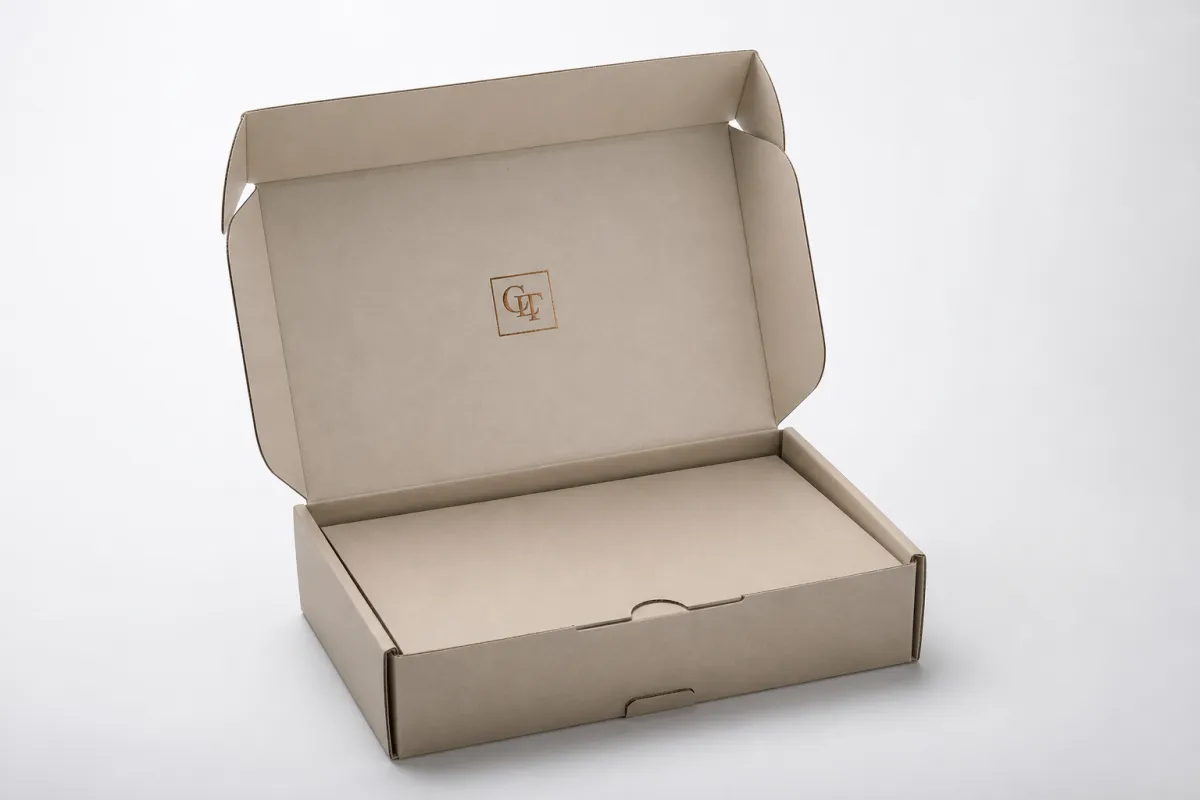
Branded folding cartons for ecommerce do more than contain a product. They act as the first physical proof that the brand pays attention to detail. Ecommerce removes the storefront, the sales associate, and the shelf comparison that shoppers use to justify a purchase, so the carton ends up carrying a surprising amount of emotional weight.
That weight shows up fast. A clean carton with crisp edges, controlled color, and a good fit can make a modest SKU feel considered and established. A flimsy or scuffed carton can make the same product feel rushed, even if the product inside is excellent. That is not branding theater. It is a real customer signal that changes how value is perceived before the product is even used.
Teams sometimes treat the carton as a late-stage task, which is a mistake I have seen more than once. The ad campaign gets weeks of attention, the imagery gets rounded and polished, and then the carton gets approved in a hurry because it feels like one more line item. In reality, the carton may be the longest-lasting branded object in the whole order path. It sits in the home, gets touched, noticed, photographed, and sometimes kept.
Well-made branded folding cartons for ecommerce can also support smaller products without forcing the freight profile to balloon. A 16pt or 18pt SBS carton with a controlled matte coating and a clean tuck can make a skincare item, a supplement, or a small accessory feel more serious. The product itself has not changed. The framing has, and that framing shapes the rest of the experience.
That framing affects hesitation. If the carton looks soft, warped, or badly fitted, customers start wondering what else was handled casually. If it feels tight and intentional, the brand comes across as organized. For new or growing brands, that impression is worth real money because it helps the customer feel good about coming back.
From the warehouse side, branded folding cartons for ecommerce can also reduce friction. Clean folds, predictable tabs, and a layout that makes the packer's job obvious can shave seconds off each order. One or two seconds does not sound like much until you multiply it by hundreds or thousands of units. Then it starts to matter, especially when labor is tight and the line is already busy.
They also help with consistency. The carton can carry product copy, barcodes, QR codes, return instructions, safety notes, or care language in one place. That means customers do not have to dig through an email or hunt around the outside of the shipper to understand what they bought. It is packaging and communication at the same time, which is one reason branded folding cartons for ecommerce keep pulling their weight long after the first impression.
For teams that want to see how those choices play out in real work, production examples are often more useful than polished renders. Our Case Studies show how structure changes can affect pack-out speed and damage performance, and they make the tradeoffs easier to read. A nice rendering can suggest quality. A finished carton tells you whether the quality survives contact with operations.
A practical rule helps keep the decision grounded: branded folding cartons for ecommerce should improve at least two of these three outcomes - perceived value, pack speed, and damage control. If they only help one, the economics can feel thin. If they help all three, the carton starts acting like an operating asset instead of a packaging expense.
How Branded Folding Cartons for Ecommerce Work in the Shipping Stack
Branded folding cartons for ecommerce start with a dieline, but the dieline is only the first step in a larger system. The structure includes board caliper, score depth, tuck style, locking features, adhesive areas, and the print zones that hold the logo, instructions, and required copy. Once those parts are set correctly, the carton can fold flat for storage and open into a rigid form around the product.
The shipping stack runs through artwork approval, prepress, die cutting, folding, flat packing, inbound freight, pack-out, carrier sorting, transit, and final delivery. At every point, branded folding cartons for ecommerce face a different kind of stress. A carton can look beautiful in a studio and still fail if the score is too tight, the board is too soft, or the product moves inside the cavity during vibration and handling.
Protection comes from several places, and not all of them show up in a mockup. Fit is the first line of defense. Internal immobilization is the second. Corner strength, board stiffness, and resistance to scuffing matter too because the carton rubs against other parcels, conveyor rails, bins, and warehouse hands. Light crush forces happen all the time in distribution, so a carton that resists them without tearing or bulging gives the customer a better first impression.
There is a real difference between a folding carton and a shipping carton. A folding carton is usually the retail-facing layer, designed for print quality and moderate protection. A corrugated shipper is built for transport. Many branded folding cartons for ecommerce can stand on their own for light, low-risk products, while heavier or more fragile products often need an overpack or mailer to absorb the rougher parts of the route. The product and the lane should drive the format, not personal preference.
It helps to think of the carton as part of a system instead of a standalone object. It can hold branding, a QR code, a barcode, safety language, and handling cues all at once. It can also tell the packer which end should face up or where an insert belongs. That mix of brand communication and operational clarity is a big reason branded folding cartons for ecommerce can do so much work in a small space.
For structural terminology and common packaging language, Packaging.org is useful. For transit testing, ISTA test methods matter even more because they focus attention on actual distribution hazards instead of assumptions. If a carton has never been tested against a real lane or a credible test method, it is mostly a graphic promise.
Brands should Compare Folding Cartons with two other formats before making a final call. Mailers can sit between presentation and protection. Corrugated shippers provide more defense but often add bulk, more freight cost, and a less refined opening experience. The best choice depends on weight, fragility, and how much damage a business can tolerate before the math starts to wobble.
| Format | Typical Use | Approx. Unit Cost at 5,000 | Protection Level | Brand Presentation |
|---|---|---|---|---|
| Branded folding carton | Light products, retail-ready ecommerce, presentation-focused orders | $0.18-$0.55 | Moderate, depends on fit and board | High |
| Mailer | Subscription boxes, kits, items needing more crush resistance | $0.35-$0.95 | Moderate to high | High to medium |
| Corrugated shipper | Heavier or fragile products, longer transit lanes | $0.60-$1.40 | High | Medium |
The price ranges above are directional rather than universal, but they show why branded folding cartons for ecommerce remain attractive for lightweight products. They can deliver strong presentation without pushing unit cost into the territory of heavier protective formats. The catch is simple: if the product rattles or arrives damaged, the savings disappear into replacements, returns, and lost trust.
The outer system matters too. A carton can hold brand messages, but the fulfillment setup has to support the structure. If the SKU needs a barcode on one face, a tamper seal on another, and a desiccant packet inside, those decisions need to be built into the spec early. Once the line is running, changes get expensive and awkward fast.
Cost, Pricing, and MOQ: What Drives the Quote
The quote for branded folding cartons for ecommerce depends on a handful of variables that sound simple until production starts. Board grade comes first. Print method follows. After that come color count, coatings, specialty finishes, structural complexity, and any inserts or glued components. Add a rushed timeline or a difficult color match and the number shifts again, sometimes sharply.
Board choice matters more than many buyers expect. A 14pt carton may look fine on a screen, but it can feel too soft for a product with weight, sharp corners, or a long transit lane. An 18pt or 20pt board adds stiffness, though it may require different scoring or a different closure style. For delicate products, the carton alone may still not be enough, which means the quote should include an insert or an overpack from the start rather than as a last-minute fix.
Branded folding cartons for ecommerce also carry setup costs. The press needs make-ready time, the die has to be created, and the plant needs waste allowance for alignment and color calibration. That is the real reason minimum order quantities exist. MOQ is not a trick; it spreads fixed costs across more units so the line can run efficiently and the per-unit number stays workable.
Lowest unit cost is not always the best deal. If the carton is too loose, damage claims may rise. If the carton is too intricate, pack-out slows down. If the carton is overbuilt, freight dimensions increase and warehouse storage becomes less efficient. The cheapest quote for branded folding cartons for ecommerce can turn into the most expensive choice once returns, labor, and shipping are part of the picture.
There are hidden costs that deserve space in the budget. Sample rounds take time and sometimes money. Color matching may require extra proofing. Reprints happen when legal copy changes after approval. Flat-packed cartons need storage space. Folding or inserting extra components can slow the line enough to justify a different structure entirely. None of these are edge cases; they are common enough to matter day to day.
A practical vendor comparison begins with the exact board spec, finish, print process, freight method, lead time, and proofing steps. Then ask whether the quote includes a structural sample, a printed proof, or only artwork review. If the assumptions are not aligned, the cheapest bid may simply be missing something important rather than offering real savings.
For larger teams, a short pricing matrix keeps the discussion clean. It separates cosmetic upgrades from functional needs and makes it easier to decide whether a feature belongs in the program or only in the concept deck. That distinction matters for branded folding cartons for ecommerce, because foil, embossing, soft-touch coating, and custom inserts can pile up quickly. The result may look impressive, but not every embellishment helps the order move through a warehouse any better.
A useful benchmark keeps the budget honest: if a carton finish adds 10%-20% to unit cost without improving damage rate, speed, or customer perception in a measurable way, it deserves scrutiny. Premium details can absolutely be justified, but they need a business reason. Otherwise, the brand is paying for decoration rather than performance.
For teams comparing vendors on equal terms, use a brief checklist:
- Exact board grade and caliper
- Print method and color count
- Finish type, including coating or lamination
- Insert or glue requirements
- MOQ and overrun/underrun tolerance
- Sample and proofing schedule
- Freight terms and receiving details
That list may look basic, but it prevents a lot of confusion later. A buyer can compare branded folding cartons for ecommerce much more effectively when the assumptions are visible on paper. It also lowers the chance of approving a price that only works because a functional detail got left out of the quote.
Process and Timeline: From Dieline to Warehouse Drop
The process for branded folding cartons for ecommerce usually starts with a discovery brief. That brief should include product dimensions, weight, fragility, ship lane, target quantity, desired finish, and any special handling cues. Without that input, the structural work becomes guesswork, and guesswork becomes expensive once dies, plates, and production scheduling enter the picture.
The next step is structural design. A packaging engineer or converter creates a dieline, establishes how the folds behave, and suggests the right board for the load. A prototype or white sample follows so fit can be confirmed before artwork is finalized. That step is worth the time because a small dimensional miss can cascade into a rework, and rework is the kind of delay that quietly stretches every downstream date.
Branded folding cartons for ecommerce typically move into artwork placement and prepress review once the structure is approved. This is where bleed, panel mapping, barcode location, and type size are checked. If the brand color is hard to hold, proofing may take an extra round. If the carton has multiple panels or a complex insert, prepress can take longer than a launch team expects, especially when several people need to sign off.
Here is a realistic timing model for a standard order with moderate complexity:
- Discovery brief and sizing: 1-3 business days
- Prototype or white sample: 3-7 business days
- Artwork placement and prepress: 2-5 business days
- Proof approval: 1-4 business days
- Production and finishing: 10-20 business days
- Freight to warehouse: 2-7 business days, depending on lane
That puts a straightforward order at roughly three to six weeks from the first approved spec, while specialty finishes or revision-heavy programs can run longer. The schedule is not fixed. It shifts with complexity, sign-off speed, and whether the carton is tied to a launch that keeps moving while other parts of the business catch up.
Three delay points show up again and again. First, dimensions change after the structure is drawn, which forces a dieline revision. Second, artwork arrives without press-ready files, which slows prepress. Third, sample feedback arrives late, after the plant has already prepared materials. Any one of these adds days, and all three together can knock a launch window off course.
One more operational detail deserves attention: final dimensions, inserts, and barcodes should be locked before the order is placed. Branded folding cartons for ecommerce are not meant to act as a temporary placeholder while the rest of the supply chain is still undecided. If the product changes and the carton does not, the system goes out of alignment, and that misalignment shows up as repacking, spoilage, or slower fulfillment.
Warehouse receiving also needs a place in the schedule. Flat-packed cartons may arrive before product inventory does. That is fine if the receiving team has space and clear labels. It becomes a problem if cartons show up too early and get stored in a damp or crowded area. Paperboard does not like careless storage, and a carton that absorbs moisture before use rarely opens or stacks the way it should.
If the team needs a stronger launch benchmark, add buffer time for sample approval, carrier transit, and one round of minor rework. Those few extra days are much cheaper than emergency freight or a delayed opening. That is especially true for branded folding cartons for ecommerce, because the customer often sees the carton on launch day. The package needs to look ready the first time it is touched.
Key Factors That Determine Fit, Protection, and Brand Impact
Branded folding cartons for ecommerce rise or fall on fit before they rise or fall on graphics. A cavity that is too loose lets the product move. A cavity that is too tight forces packers to work harder and may bow the board. The best setup keeps the product centered, limits headspace, and uses the lightest insert strategy that still controls movement through transit.
Insert strategy depends on the product. A glass bottle may need a molded pulp insert, a paperboard cradle, or a locking feature that stops tilt. A lightweight cosmetic kit may only need a neatly scored liner. The goal is not to overpackage. It is to keep the product from shifting while still allowing the carton to open cleanly and feel deliberate rather than fussy.
Finish choices affect both appearance and operations. A matte aqueous coating is often practical because it adds scuff resistance without making the surface feel slippery. Soft-touch lamination can create a luxury feel, though it may show fingerprints or interfere with scanning if the finish wraps over a critical code area. Foil and embossing can work well for hero SKUs, but they add cost and sometimes slow production.
Branded folding cartons for ecommerce also have to respect logistics realities. If the carton stacks poorly on a pallet, the warehouse pays for it in lost density. If the footprint is awkward, the carton can slow pick speed or complicate case packing. A few millimeters can matter more than many buyers realize, especially in high-volume operations where storage density is part of the profit equation.
Sustainability now belongs in the spec instead of sitting off to the side. Recycled content, recyclable board, soy or low-VOC inks, and FSC-certified fiber all deserve consideration. If chain-of-custody matters for the brand, review the certification rules directly through FSC chain-of-custody standards. Environmental claims should be accurate and supportable, because a vague statement can create more trust problems than it solves.
Regulatory and regional compliance matter too. Some markets expect specific recycling language or disposal cues. Others require batch or lot information on the carton itself. That content has to live in a place that preserves the brand look without burying the operational data. This is one reason branded folding cartons for ecommerce can work so hard: they can carry marketing and compliance on the same printed surface.
The customer experience layer is easy to underestimate. Opening friction should feel intentional, not irritating. A carton that tears in the wrong direction, resists opening, or leaves the customer fighting a glued flap adds tension that does not belong there. Resealability matters for returns and storage. Clear instructions matter for complex products. Good packaging disappears into the experience instead of making the customer think about the package itself.
A simple test keeps the decision grounded: can the carton survive stacking, transit, and opening without forcing the customer to guess how it works? If the answer is yes, the system is close. If the answer is no, branded folding cartons for ecommerce may still look attractive, but they are not ready for scale.
For brands that want a clear north star, three questions help:
- Does the carton keep the product stable through the worst handling likely in the ship lane?
- Does the printed surface help the customer understand the product faster?
- Does the structure support warehouse speed without adding avoidable labor?
If any answer is weak, the carton needs more work. That sounds obvious, yet this is one of the places where brand-led packaging decisions often drift off track. The strongest branded folding cartons for ecommerce are usually the ones where design and operations were treated as equal partners from the beginning.
Common Mistakes When Ordering Branded Folding Cartons for Ecommerce
The biggest mistake is designing for a render instead of a real ship lane. A render can hide fit problems, weak corners, and closure issues. It cannot show what happens after the carton is packed, stacked, dropped, vibrated, and handed off to a carrier network that does not care how elegant the mockup looked in a deck.
Another common error is assuming a premium finish equals strength. It does not. A carton can feel luxurious and still fail if the board is too light, the score is too deep, or the product moves inside the cavity. Branded folding cartons for ecommerce need structure and finish to work together; one does not cover for the other for long.
Testing is often where teams save time and then pay for it later. Skipping drop tests, vibration checks, humidity exposure, or real pack-out trials with warehouse staff is a false economy. A few dozen pilot units can reveal problems that no spreadsheet will show. In packaging terms, a short test is cheaper than a long return cycle.
Comparing the carton to common transit standards helps make the risk visible. Many teams use ISTA procedures such as ISTA 3A or similar distribution simulations to approximate parcel stress. ASTM methods can help with material evaluation as well. The point is not to collect certifications for their own sake. The point is to know whether the carton survives the route it will actually travel.
Oversizing is another trap. Too much headspace increases void fill, raises freight cost, and makes the package feel less premium even if the print is strong. It can also create a louder, sloppier unboxing moment because the product rattles. For branded folding cartons for ecommerce, tighter and smarter usually beats larger and emptier.
Late-stage approvals cause a lot of reprints. Barcode placement gets approved before scan testing. Insert dimensions are finalized after the board order. Legal copy changes after print files are already released. None of these mistakes are dramatic, and all of them are avoidable with a better sign-off checklist. Once the job is in production, every correction costs more.
Here is a concise list of mistakes worth avoiding:
- Approving the carton from a flat mockup alone
- Ignoring product movement inside the cavity
- Choosing a finish before confirming transit durability
- Skipping pack-out trials with real staff
- Overlooking barcode, legal, or recycling copy placement
- Forgetting that freight dimensions affect total cost
There is also a habit of treating branded folding cartons for ecommerce like a one-time design project instead of an evolving system. That mindset keeps repeat mistakes alive. A better approach is to document what worked, what failed, and what the damage data showed. Packaging should improve with each cycle instead of starting over every launch.
Brands that want to see how this looks in practice can review our Case Studies to compare structural decisions, damage outcomes, and pack-out behavior. The pattern usually repeats: the closer the carton was tested against reality, the fewer surprises showed up later.
Expert Tips and Next Steps for a Smarter Pilot Run
If you are starting from scratch, begin with one hero SKU and one shipping lane. That keeps the pilot clean and readable. Branded folding cartons for ecommerce become much easier to evaluate when you are not testing five products, three warehouses, and two carton sizes at the same time. A controlled trial shows what is actually changing and what is not.
Ask for a physical prototype before you approve production. Then run a small pilot with real packers, real materials, and a simple scorecard. Track whether the carton folds correctly, whether the product stays centered, and whether the closure feels reliable. A one-hour exercise on the pack line can reveal more than a week of internal discussion.
Three metrics matter most: damage rate, pack-out time, and customer response. Damage rate tells you whether the structure is doing its job. Pack-out time tells you whether the carton slows the warehouse. Customer response tells you whether the branding actually lands. If one metric improves while the other two slip, the carton is not ready to scale.
For damage testing, use a benchmark that matches the real risk. That may include drop checks from common parcel heights, vibration simulation, or a short humidity exposure if the product is sensitive to climate. The method should reflect the actual route rather than an idealized lab lane. That is the setting where branded folding cartons for ecommerce prove their value or expose their weaknesses.
Build a reusable brief template for future orders. Capture dimensions, board spec, finish, print needs, inserts, barcodes, target Pricing, Lead Time, and receiving notes. Once that template exists, every new SKU gets easier to launch, and every vendor conversation becomes more focused. The template also protects institutional memory when staff changes.
Keep the pilot financially honest. A carton that costs slightly more but cuts returns by even a small percentage may win on total cost. A carton that saves a few cents but adds hand labor may lose quickly. That is why branded folding cartons for ecommerce should always be reviewed against damage, labor, and freight together. Isolated unit cost rarely tells the full story.
One more useful habit helps the results feel real: compare the pilot SKU against a control SKU. That makes the outcome easier to trust. If the new carton reduces damage from 3.8% to 1.6%, or trims pack-out by 8 seconds, the benefit becomes visible in plain numbers rather than instinct. For teams that need to justify a change, numbers carry more weight than aesthetics.
If a broader rollout is on the table, start small before converting the full program. Run one pilot SKU, one lane, one month. Then review the results with operations, marketing, and customer service together. That is usually enough to show whether branded folding cartons for ecommerce deserve a wider launch or another round of structural refinement.
The steadier path usually wins here. Brands that do well with branded folding cartons for ecommerce tend to get there through measured testing, a clean spec, a realistic pack line, and a willingness to refine the structure before the program grows. The next move is simple: audit current damage, request samples, compare one pilot SKU against one control SKU, and make the final call only after the numbers tell the story.
FAQs
What materials work best for branded folding cartons for ecommerce?
For lighter products, solid bleached sulfate and coated recycled board are common because they print cleanly and hold crisp branding. For heavier or more fragile items, ask whether a thicker board, an insert, or a corrugated overpack makes more sense than relying on the carton alone. The right choice depends on product weight, transit risk, and the finish you want, not just on appearance or price. In many programs, branded folding cartons for ecommerce work best when the board is selected for both print quality and real-world stiffness.
How do I know if branded folding cartons for ecommerce are strong enough for shipping?
Check the product weight, the amount of internal movement, and the exact ship lane before approving a structure. Request drop testing or pilot shipments with real fulfillment staff so you can see whether corners crush, tabs open, or the item shifts. If the carton is the only layer of protection, verify that it survives the roughest handling your carrier is likely to create. That is the practical test for branded folding cartons for ecommerce, not how they look on a proof.
What MOQ should I expect for branded folding cartons for ecommerce?
MOQ varies by printer, board type, and print method, and it often rises when setup costs or specialty finishes are involved. If you are testing a new carton, ask for a staged order or pilot quantity so you can validate fit and damage performance first. Treat MOQ as a decision point rather than a deal-breaker; a slightly larger run can reduce the unit cost if the carton is proven. That is especially true for branded folding cartons for ecommerce with custom dies or multi-step finishing.
How long does the process usually take for branded folding cartons for ecommerce?
Expect time for structure design, proofing, approval, production, and freight, and do not assume any of those steps happen instantly. Artwork changes and dieline revisions are the most common reasons schedules slip, especially when multiple teams need sign-off. Build in buffer time for sample review and warehouse receiving so the cartons arrive before the launch window. For most standard programs, branded folding cartons for ecommerce need several weeks rather than a rushed last-minute order.
Can branded folding cartons for ecommerce replace corrugated boxes?
Sometimes, but only when the product is light, the shipment is low risk, and the carton structure has been tested in transit. Many brands use folding cartons as the retail-facing layer and add a mailer or corrugated shipper for real-world protection. If you are unsure, compare damage rates and freight costs across both options before deciding. That comparison often shows whether branded folding cartons for ecommerce can stand alone or need an outer shipper.