Custom Hang Tags for Coffee Roasters Unit Cost Breakdown
Custom Hang Tags for coffee roasters unit cost breakdown is a pricing question, not a design exercise. The tag may be small, but the quote is shaped by stock, print method, finishing, quantity, and freight. A roaster that only compares piece price can miss the real number by a wide margin once setup fees and shipping are included.
That matters because coffee packaging works on tight margins and tight timing. A holiday blend, a wholesale account, and a core SKU do not need the same tag spec, even if the artwork looks similar. One program may justify a premium paper and foil accent. Another needs a practical tag that prints cleanly, ships flat, and stays inside budget.
The useful way to buy hang tags is to separate fixed costs from variable ones, then ask a simple question: what does the tag need to do for this product line, and what is the cheapest spec that still does that job well?
Why hang tag unit cost matters on coffee bags
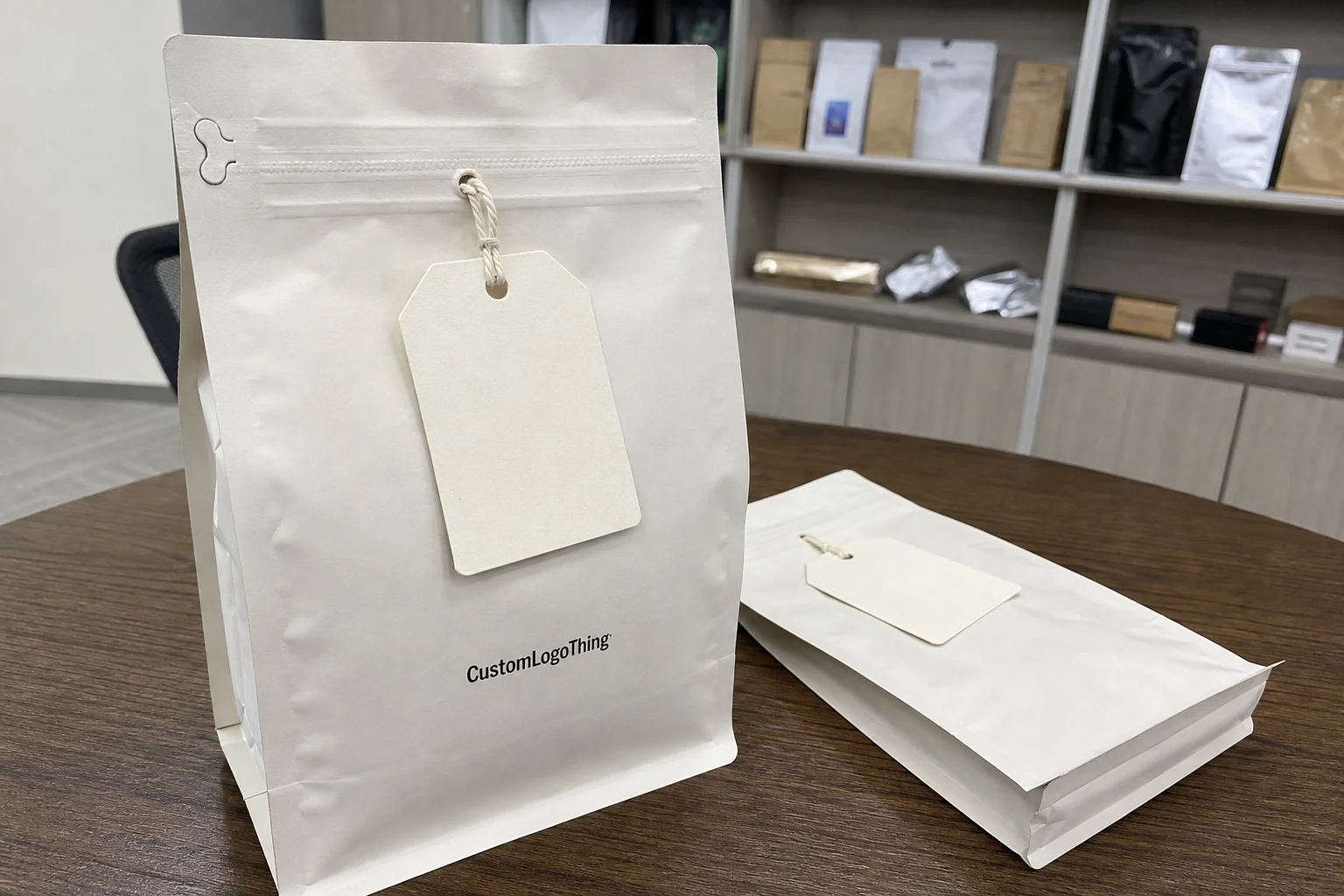
On shelf, a hang tag can make a bag feel finished. It can carry tasting notes, origin data, roast level, a QR code, or a short brand statement. It can also make a simple kraft bag look more deliberate without adding much weight or bulk. That is why roasters use them on seasonal releases, DTC subscriptions, and wholesale programs where presentation matters but full custom packaging would be too expensive.
The mistake is assuming the tag cost is just the quoted unit price. The real number includes setup, die cutting, proofing, finishing, packing, and freight. On a 2,500-piece run, those fixed costs spread thinly only if the spec is simple. On a 20,000-piece run, the economics improve, but only if the artwork stays stable long enough to justify the larger commitment.
There is also a difference between retail visibility and production reality. A tag that looks premium in a digital mockup can become expensive fast if it uses a custom silhouette, multiple metallic inks, and a rush schedule. Meanwhile, a plain rectangular tag with a strong layout may deliver better shelf impact per dollar because the money is going into paper quality and print clarity instead of decorative steps.
“A tag is inexpensive until you add a custom shape, foil, and a short deadline. Then the unit cost tells the real story.”
For coffee roasters, the right pricing lens is landed unit cost, not just press cost. If the tags arrive late, arrive damaged, or require rework, the cheapest quote becomes the most expensive purchase in the job.
Product specifications that change the quote
The first variable is stock. Uncoated cardstock usually gives the cleanest natural feel and works well with simple branding. It is a common choice for roasters that want a tactile, understated look. Coated stock reproduces solids and small type more sharply. Kraft stock supports an earthy, artisan presentation, although colors may read warmer and less predictable. Textured or specialty papers can look strong on premium lines, but they usually increase cost because they are harder to source and less forgiving on press.
Thickness matters too. A 14pt sheet is often enough for a lightweight hang tag. A 16pt or heavier stock feels more substantial, but it can add cost and may not fold or punch as easily depending on the attachment method. If the tag needs to hang flat, wrap around twine, or carry a heavier QR card insert, the stock choice should be tested against the actual use case.
Size and shape are the next cost drivers. Standard rectangles are generally cheaper because they avoid extra tooling complexity. Rounded corners and a standard hole punch are usually low-friction changes. A custom die-cut that echoes a logo shape or coffee cherry silhouette can strengthen branding, but it creates more setup and more production risk. If the project has multiple SKUs, that custom shape also has to work across all of them, not just the hero product.
Print method changes the quote in predictable ways. One-color black on natural stock is usually the most economical. Two-color printing still stays manageable if the design is disciplined. CMYK gives more room for photography, maps, and layered graphics, but it raises press setup and proofing effort. Pantone spot colors are useful when color consistency is non-negotiable, especially if the tag has to coordinate with bag art, cartons, and labels across different production runs.
Finishing is where cost often climbs faster than buyers expect. Aqueous coating can improve rub resistance without turning the tag into a premium special order. Soft-touch lamination, foil stamping, embossing, and debossing all add visual interest, but they should be used with a clear purpose. If the tag is meant to support a larger packaging system, a restrained finish often performs better than a decorative one that creates inconsistency across the line.
There is one more cost factor worth calling out: synthetic or waterproof stocks. They are sometimes used for special retail conditions, but most coffee hang tags do not need them. They usually cost more, can feel out of place on a natural product, and may complicate recycling expectations. For a standard roasted coffee bag, paper-based stock is usually the better fit unless the environment truly demands otherwise.
Typical specification choices and their effect on price
- 14pt uncoated cardstock: usually the lowest-cost option for simple retail-ready tags.
- 16pt coated stock: sharper print reproduction and a more polished surface.
- Kraft or textured paper: strong tactile appeal, but color accuracy can shift.
- Foil, embossing, soft-touch lamination: premium appearance with higher setup and unit cost.
- Custom die cuts: useful for brand distinction, but more expensive than standard shapes.
If sustainability is part of the brief, paper sourcing should be specified early. FSC-certified stock is one of the common requests, and it should be stated before quoting so the paper supply, documentation, and pricing reflect the requirement. The FSC provides a useful overview of responsible forest management and chain-of-custody expectations at fsc.org.
Custom hang tags for coffee roasters unit cost breakdown
The simplest way to analyze Custom Hang Tags for coffee roasters unit cost breakdown is to divide the quote into fixed and variable costs. Fixed costs include prepress, proofing, plate or tooling charges, and sometimes die setup. Variable costs include paper, ink coverage, finishing, trimming, stringing, packing, and freight. Once those buckets are visible, the quote stops looking vague and starts looking comparable.
A useful landed cost formula looks like this:
Landed unit cost = printed piece price + setup amortized over quantity + finishing + packing/assembly + freight + expected waste or reprint allowance
That last line matters more than many buyers expect. If a supplier quotes a low unit price but adds a separate line for stringing, hand assembly, or freight, the “cheap” quote can land well above the more transparent one. For coffee programs, small differences add up quickly because many orders are modest in size and repeated through the year.
| Tag Spec | Typical Run Size | Estimated Unit Cost | Common Use |
|---|---|---|---|
| 14pt uncoated, 1 color, standard rectangle, hole punched | 5,000 pieces | $0.12-$0.22 | Core blends, simple retail programs |
| 16pt coated, 2-sided CMYK, rounded corners | 5,000 pieces | $0.18-$0.32 | Origin stories, tasting notes, QR code use |
| Kraft stock, 1-2 colors, standard die | 10,000 pieces | $0.14-$0.26 | Craft positioning, natural finish |
| Specialty stock, foil, or embossing | 2,500-5,000 pieces | $0.35-$0.85+ | Premium seasonal sets, gift packaging |
Those ranges are realistic planning numbers, not universal pricing. Geography, paper availability, press capacity, and freight distance all move the quote. A supplier on a tight schedule may price higher than a supplier with spare capacity. Likewise, a reprint of an existing spec is usually cheaper than a brand-new build because the tooling and proofing work have already been done.
MOQ is the other side of the equation. A low minimum sounds attractive, but the setup cost gets spread over fewer tags, which pushes up the unit rate. Larger runs lower unit cost, but they also tie up cash and storage space. For many roasters, the best balance is a run that covers one season plus a safety margin for unexpected reorder volume.
Comparability matters. A quote for 12pt uncoated stock should not be compared directly with a quote for 16pt coated stock with foil and a custom die. If the specs do not match, the unit price does not mean much. The buyer needs the same size, the same paper, the same print count, the same finish, and the same delivery terms before the numbers can be trusted.
Print specs and artwork details to lock before ordering
Artwork mistakes are one of the easiest ways to inflate cost. Before a quote is finalized, the tag size, bleed, safe area, hole position, barcode or QR placement, and exact copy should already be decided. If those move after proofing, the job may need a second proof, a press correction, or in the worst case a rerun.
Small type deserves extra attention. Coffee tags often carry origin data, lot numbers, roast level, tasting notes, certifications, and social or sustainability copy. Thin typefaces can disappear on textured stock, and reversed-out text can fail if the ink coverage is too light. What looks clean on screen may print muddy on kraft paper or too delicate on an uncoated sheet with high ink absorption.
Color should be checked on the actual stock, not assumed from a digital file. Black on white coated stock reads differently from black on natural kraft. A rich brand color may look calm and saturated on one paper and flat or muddy on another. If the tags have to coordinate with bags, cartons, and labels, that paper effect has to be acknowledged early rather than corrected later in production.
Structural details matter more than most people expect. A 1/8-inch hole may work for one attachment system, while a twine wrap or peg hook might need a different placement. If the tag has a fold, the fold line needs to be measured against the finished bag size so the card does not curl or sit crooked. These are small details, but they are the kinds of things that separate a clean production run from a frustrating one.
Common rework triggers are predictable:
- Low-resolution images or raster logos
- Missing dielines or incorrect trim size
- Unapproved color builds across multiple SKUs
- Barcode or QR codes placed too close to an edge
- Late changes to quantity, paper, or finish
For a broader packaging rollout, the art system should be aligned across components. The same type family, icon style, and color logic across the bag, hang tag, and carton usually reduces production friction and avoids the mismatched look that happens when assets are built by different teams at different times.
Process, timeline, and production steps from quote to delivery
A standard job moves through inquiry, spec review, pricing, proof approval, production, finishing, packing, and shipment. The sequence is routine. The schedule is not. A straightforward reprint with existing tooling can move quickly, while a new shape, specialty stock, or foil finish can extend the timeline in ways that are easy to underestimate.
For simple reorders, production may land around 7-12 business days after proof approval. New custom shapes, extra finishes, or more complicated assembly can stretch to 12-18 business days or longer. Freight is separate. If a bagging run starts before the tags arrive, the job failed even if the per-piece cost looked attractive.
Delays usually show up in the same places. Artwork corrections take longer than buyers expect because the design team and production team are not always looking for the same defects. A designer may focus on layout, while the printer is checking for bleed, type size, and hole clearance. Late quantity changes are another common issue because they change paper usage and press planning. Rush work is possible in some cases, but it usually requires a simple spec and a schedule with room to absorb it.
Quality control should be visible before the run ships. A good check includes color consistency, hole placement, edge trim, fold alignment if applicable, and count accuracy. If tags are being assembled with string or elastic, the attachment should be tested for pull strength and neatness. The goal is not perfection for its own sake. The goal is to avoid receiving a boxed-up problem that has to be sorted by hand at the packing table.
Handling standards matter too. Tags may not face the same abuse as corrugated shippers, but they still need to arrive flat, clean, and usable. Transit testing organizations such as the ISTA provide useful context on how packaging components behave under real shipping conditions. For paper tags, the practical concerns are curling, scuffing, crushed corners, and moisture exposure during transit.
- Confirm quantity, size, stock, print colors, finish, and attachment method.
- Submit artwork or a rough layout with exact copy.
- Review the proof for color, hole location, type size, and barcode placement.
- Approve production only after the spec matches the intended bag program.
- Plan shipping against roasting, filling, and launch dates, not just the proof date.
Ways to reduce unit cost without weakening the brand
The fastest way to improve the Custom Hang Tags for coffee roasters unit cost breakdown is to reduce unnecessary complexity. A standard rectangle is usually cheaper than a custom silhouette. One or two inks are cheaper than full-coverage CMYK. A matte aqueous finish often gives enough durability without pushing the job into premium territory. None of that weakens the brand if the layout is disciplined.
Standardizing size helps more than many buyers realize. If one tag format can be used across blends, single origins, and seasonal releases, tooling stays consistent and repeat orders become easier. It also makes inventory easier to manage. A roaster that prints one base format and changes only a few lines of copy often spends less over a year than a roaster that keeps redesigning every SKU from scratch.
Grouping products by spec can also save money. If several tags share the same paper, same print count, and same die, the order is easier to schedule efficiently. The same logic applies to packaging accessories, label programs, and inserts. Keeping the system consistent usually beats chasing the absolute cheapest material on paper.
Inventory strategy matters as well. A larger run lowers unit cost, but only if the artwork is stable enough to justify it. If origin information changes often, or if a regulatory statement is updated regularly, smaller runs may be safer. In that case, the savings come from simplifying the structure, not from overbuying tags that might become obsolete.
There is one more practical point. A slightly better stock can reduce waste. If the paper prints cleanly and the finish does not scuff, fewer pieces are rejected. A cheap sheet that causes print issues can erase the savings fast. In production, the lowest paper cost is not always the lowest total cost.
Simple cost controls that usually work
- Keep the shape standard unless the silhouette genuinely adds value.
- Limit the number of inks and special finishes.
- Use one tag template across several coffee SKUs.
- Approve artwork early to avoid change fees and schedule slips.
- Choose a stock that prints cleanly instead of the lowest-cost paper available.
What to expect from a packaging supplier
A good packaging supplier should do more than quote a number. It should identify where the cost is coming from, which spec changes actually move the price, and which upgrades are worth paying for. That is especially useful for coffee roasters, because the packaging system often has to serve both retail presentation and operational efficiency.
The practical value is clarity. If a supplier can explain the effect of stock, finish, die shape, and MOQ without hiding behind generic language, the buyer can make a cleaner choice. If the supplier can also flag potential print issues early, such as thin type on kraft or a QR code too close to the trim line, that saves time later. A decent quote is not the finish line; it is the start of a production decision.
Consistency is another benchmark. Once a hang tag format is established, it should be easy to reuse across products with only minor copy changes. That reduces rework and helps the brand keep a steady visual system from one season to the next. The same standard should apply whether the order is for a single hero SKU or a broader packaging program that includes boxes, labels, and inserts.
The best vendors are usually the ones that make tradeoffs visible. They do not pretend every finish is necessary. They do not blur the difference between a low-MOQ sample run and a full production order. They do not treat freight as an afterthought. For a roaster watching margin, that kind of specificity is more valuable than a polished sales pitch.
Next steps to get an accurate tag quote
Accurate pricing starts with accurate inputs. Before requesting a quote, gather quantity, finished size, paper preference, print colors, finish, and attachment method. If artwork already exists, send the files. If it does not, send a layout sketch or a simple spec sheet so the quote reflects the actual plan rather than an estimate built on assumptions.
It also helps to state the priority plainly. If lowest landed cost matters most, say so. If shelf presence matters more, say that too. Those are different buying decisions. One may point toward a simple uncoated tag with one ink and a standard die. The other may justify a coated stock, a heavier finish, or a custom shape. The quote should reflect the goal, not a generic middle ground.
Freight should be part of the comparison from the beginning, not added after the fact. For some orders, shipping can erase the savings from a lower unit price. For others, a slightly higher quote with better packing and faster transit will land cheaper and cause fewer issues. The only meaningful number is the one that gets the tags into use on time and without extra handling.
If the tags are tied to a roast calendar, timeline discipline matters as much as cost. A tag that arrives after the bagging window is not a savings. Give enough time for proofing, production, and shipping, and compare the options using the same spec. That is the cleanest route to a trustworthy Custom Hang Tags for coffee roasters unit cost breakdown.
What affects custom hang tags for coffee roasters unit cost the most?
Quantity, stock choice, print method, and finishing usually drive unit cost more than the artwork itself. Custom shapes, foil, embossing, and extra setup steps raise the price faster than simple one- or two-color tags.
What is a typical MOQ for coffee roaster hang tags?
MOQ varies by stock and finishing, but the minimum is usually tied to setup efficiency rather than the tag design alone. Standard shapes and common materials tend to support lower minimums than highly customized formats.
Which paper stock works best for coffee bag hang tags?
Uncoated cardstock gives a clean, natural feel and usually prints well for retail-ready coffee branding. Kraft and textured stocks can support a premium craft look, but they may change how colors reproduce.
How long does production usually take after proof approval?
Simple reprints move faster than new custom shapes or specialty finishes. A straightforward order may take about 7-12 business days after approval, while more complex jobs can take longer depending on the schedule and freight.
Can hang tags include QR codes or variable data?
Yes, but those details should be locked in before production so the layout is correct. Variable data can increase complexity, so it should be included in the quote and proof review from the start.


