Buyer Fit Snapshot
| Best fit | Branded Industrial Shipping Boxes projects where brand print, material claims, artwork control, MOQ, and repeat-order consistency need to be specified before quoting. |
|---|---|
| Quote inputs | Share finished size, material target, print colors, finish, packing count, annual reorder estimate, ship-to region, and any compliance wording. |
| Proofing check | Approve dieline scale, logo placement, barcode or warning zones, color tolerance, closure strength, and carton packing before bulk production. |
| Main risk | Vague material claims, crowded artwork, missing packing details, or unclear freight terms can make a low unit price expensive after revisions. |
Fast answer: Branded Industrial Shipping Boxes: Design, Cost, Fit should be specified like a repeatable production item. The safest quote records material, print method, finish, artwork proof, packing count, and reorder notes in one written spec.
Production checks before approval
Compare the actual filled-product size with the drawing, then confirm tolerance on folds, seals, hang holes, label areas, and retail display edges. Reserve space for logos, QR codes, warning copy, and material claims before decorative graphics fill the panel.
Quote comparison points
Review material grade, print process, finish, sampling route, tooling charges, carton quantity, and freight assumptions side by side. A quote is only useful when the supplier can repeat the same color, closure quality, and packing count on the next order.
Branded Industrial Shipping Boxes: Design, Cost, Fit
The first thing many buyers touch is not the product itself; it is the carton that lands on the dock. branded industrial shipping boxes turn that rough-handled outer layer into a useful brand signal, a handling aid, and a protection system all at once. The strongest versions do not try to act like retail packaging. They work harder, stack straighter, and make the handoff through order fulfillment look deliberate instead of improvised.
For a packaging team, that matters because industrial shipments carry more than a logo. They carry part numbers, pallet IDs, handling icons, batch information, and the kind of visual consistency that helps people move faster in warehouses, receiving bays, and cross-dock operations. If you are comparing structures or planning a new program, the Custom Shipping Boxes page is a useful starting point, and the broader Custom Packaging Products catalog can help when your program includes mixed shipping materials across channels.
What Branded Industrial Shipping Boxes Are and Why They Matter
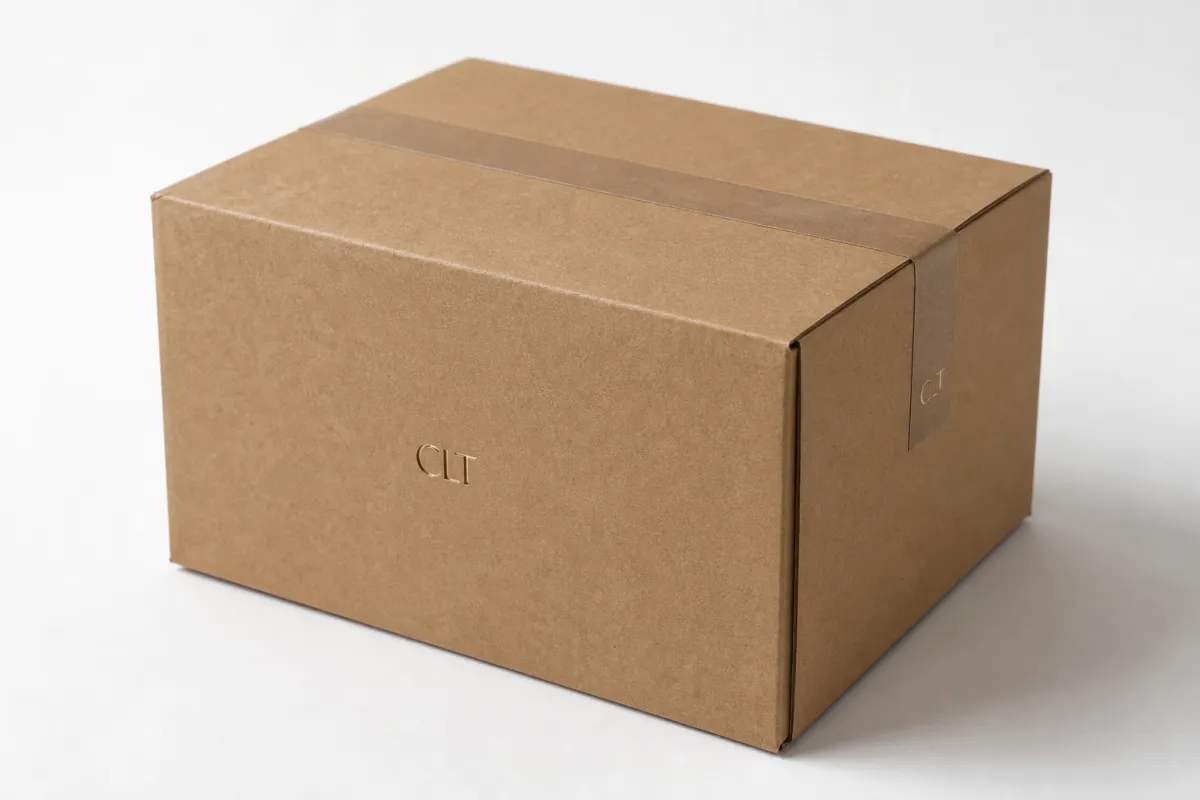
branded industrial shipping boxes are corrugated or heavy-duty cartons built for bulky, valuable, or high-volume goods, with printed brand elements integrated into the structure instead of added as an afterthought. That branding can stay simple, like a one-color logo and a product code, or grow into a fuller system with color blocks, identification panels, and handling instructions that make the package easier to sort and easier to trust. The box still does the job of transit packaging first. The brand layer sits on top of that job, not instead of it.
From a packaging buyer's point of view, the real value shows up when the same box needs to do several things at once. It needs to protect product, move cleanly through ecommerce shipping or pallet freight, and present a professional face at the consignee's facility. A warehouse team may never speak to the sales team behind the order, but they will see the carton. That is why branded industrial shipping boxes often become part of the customer experience long before the product is unpacked.
There is a practical side that gets overlooked. Branding helps reduce confusion across SKUs, especially in multi-location operations where similar cartons can otherwise blend together. Color-coded panels, visible part numbers, and clear orientation marks can speed up receiving and improve picking accuracy. In busy facilities, that is not decoration. That is operational clarity. A carton that is easy to identify supports package protection because it gets handled more consistently and stored more predictably.
A strong logo never fixes a weak carton, but the right carton can make the whole operation feel more organized from the first scan to the final receipt.
It helps to separate cosmetic branding from functional branding. Cosmetic branding is about appearance alone. Functional branding gives people information they need to move the shipment: logo, product code, orientation arrows, fragility marks, pallet stack indicators, or even a color band that tells the receiving team what is inside. For branded industrial shipping boxes, that distinction matters because the wrong graphic treatment can crowd labels, hide barcodes, or create print areas that rub badly during transit.
Most programs also need to balance board grade, flute selection, and print quality. A rugged kraft liner with a single-color flexographic mark may be enough for many industrial uses, while higher-value shipments might call for a cleaner printed face or a coated panel. The goal is not to make the carton look fancy. The goal is to make sure the packaging matches the load, the route, and the customer expectation without wasting material or creating avoidable damage.
That is why branded industrial shipping boxes are often judged differently from consumer packaging. Retail cartons can win on shelf appeal; industrial cartons have to earn trust through performance. The better the fit, the better the stack behavior, and the clearer the communication on the box, the more useful the branding becomes.
How Branded Industrial Shipping Boxes Work in Transit
Once a shipment leaves the packing station, the carton starts a rougher life than most people imagine. branded industrial shipping boxes need to survive compression from stacked pallets, vibration in trailers, drop impact during handling, humidity swings in storage, and the occasional long dwell time in a warehouse or container. If the box design is weak, the printed surface will not matter much. If the box is strong but the graphics are careless, the shipment may protect the product yet still look disorganized at the destination. Both sides have to work together.
The route matters. A box used for parcel distribution faces different stresses than a carton built for palletized freight or export transit. Even within ecommerce shipping, the pressure points change if the box is used inside a kitted order fulfillment flow, handled by a third-party logistics team, or moved through automated sortation. Branded industrial shipping boxes should be designed around that journey. A good print location on the top panel may help in a shipping lane, while end-panel branding may matter more when cartons are racked or stacked where only the short side is visible.
Structural choices influence how the print performs. If a carton uses the wrong flute, the face can crush under load and blur the graphic. If the closure method is weak, the seam may open during handling and damage both product and brand presentation. Board grade, slot style, liner quality, and adhesive pattern all affect the final result. In other words, branding is not a separate layer from the box; it is part of the same engineering problem.
That is also where labeling discipline comes in. Good branded industrial shipping boxes leave space for shipping labels, barcodes, compliance marks, and routing data without crowding the artwork. A clean panel with enough quiet space around a barcode scans better and reduces manual keying. On industrial shipments, that can save real time. It also helps when multiple boxes on a pallet share similar graphics, because the shipping label remains easy to find at a glance.
For teams managing mixed transit packaging, the box layout should also leave room for the tools that keep operations moving: serialized labels, lot codes, and handling symbols that remain legible even when a pallet is wrapped or partially obscured. If your program also uses lighter-format packaging for some products, Custom Poly Mailers may fit the secondary shipping stream, while the carton program handles the heavier cases.
From a brand perspective, the smartest placement is often the one that survives real use. Top panels help when the box is sitting on a pallet. Long panels help when the package is racked or displayed in a warehouse aisle. End panels help when the box is pulled from storage by hand. Branded industrial shipping boxes work best when the graphics are built for those visibility points instead of for a flat mockup on a screen.
I have seen boxes look excellent in approval files and then get rubbed almost blank by stretch wrap and trailer vibration. That is not a design failure alone; it is a reminder that the real test starts after the carton leaves the art department. A logo on the face is nice, sure, but a logo that still reads after transit is the one that actually earns its keep.
For teams that want to see how those choices play out across different product categories, the Case Studies section is a helpful place to compare structural thinking against actual packaging goals.
Branded Industrial Shipping Boxes: Cost, Pricing, and MOQ Factors
Cost starts with structure, not ink. For branded industrial shipping boxes, the biggest drivers are board type, corrugated strength, print method, number of colors, ink coverage, finishing, die cuts, inserts, and whether the carton is based on a stock platform or built from a fully custom dieline. A simple one-color logo on a standard RSC is a very different spend from a full-panel print with coated faces and internal fitments. The more steps the box goes through, the more time and setup it takes.
MOQ, or minimum order quantity, is not just a supplier rule. It usually reflects press economics, cutting waste, and the reality that custom shipping materials become more efficient when setup is spread across enough units. Short runs can absolutely make sense, especially for launches or seasonal programs, but the per-box cost is usually higher because tooling, plates, and machine time are distributed across fewer cartons. A buyer planning branded industrial shipping boxes should think about MOQ as a planning tool, not a barrier.
One cost detail many teams miss is dimensional weight. If a box is oversized, freight pricing can rise even when the product inside is not especially heavy. Extra void space also invites movement, which can reduce package protection and increase filler usage. That means a slightly better-fitting carton can lower both shipping cost and damage risk. In that sense, the cheapest box on paper is not always the least expensive choice in real distribution.
The print choice changes the economics too. A one-color flexographic logo usually sits at the lower end of the cost range, while a two-color layout with handling icons raises the total a bit but often improves visibility. Full-panel litho-lam or high-coverage graphics look cleaner and can support premium industrial branding, but they usually require more setup and a higher minimum. For branded industrial shipping boxes, the right answer depends on how much visibility the box needs on a pallet versus how much polish it needs at the end customer site.
| Option | Best For | Typical Cost Impact at 5,000 Units | Notes |
|---|---|---|---|
| One-color flexographic logo on kraft corrugated | Basic identification, pallet visibility, internal logistics | About $0.15-$0.30 per box added to the base carton | Efficient for branded industrial shipping boxes that need function first |
| Two-color spot printing with handling icons | Better contrast, SKU coding, clearer receiving instructions | About $0.25-$0.45 per box added to the base carton | Often a strong middle ground for industrial shipping boxes with logo placement and utility marks |
| Full-panel litho-lam or high-coverage print | Premium presentation, high brand visibility, polished consignee handoff | About $0.55-$1.25 per box added to the base carton | Better for branded industrial shipping boxes that function as a visible customer touchpoint |
Those ranges can move quite a bit depending on board grade, box size, order volume, and how much of the surface is covered. A 32 ECT single-wall carton with light print will not price the same as a 44 ECT or 200# test carton built for heavier transit packaging. Inserts, dividers, and special coatings also add cost. The conversation should not stop at unit price, though. If stronger branded industrial shipping boxes reduce damage claims, labor, and rework, the landed cost can improve even when the per-box quote rises.
There is another angle worth considering: inventory and consistency. If a company uses the same carton family across several product lines, it can reduce confusion in order fulfillment and simplify reorder planning. That consistency often saves more than it first appears to. It also keeps brand presentation aligned across facilities, which matters when a customer receives multiple shipments from different locations and expects them to look like they came from the same operation.
From a buyer's point of view, the real question is not "What is the cheapest box?" It is "What does this packaging do for me across the full supply chain?" For branded industrial shipping boxes, that answer usually includes protection, presentation, and operational efficiency in the same calculation.
Production Process, Timeline, and Lead Time Basics
The production path for branded industrial shipping boxes usually starts with a brief, then moves into structural recommendation, artwork setup, proofing, prepress, printing, converting, quality checks, packing, and shipment. Each step has its own place in the schedule. If the structure is straightforward and the artwork is ready, the process can move quickly. If the carton needs testing, inserts, special board, or multiple approval rounds, the calendar stretches. Lead time is more than the print date on the press sheet.
Artwork readiness matters more than many teams expect. If logos arrive in the wrong format, if the dieline is missing, or if the barcode quiet zone is too tight, the proof cycle slows down. The same thing happens when there is uncertainty about where the box will be scanned, stacked, or labeled. Good branded industrial shipping boxes depend on a clean proof, and the proof depends on a clean brief. That is why the first round of questions from a packaging partner usually includes dimensions, weight, shipping method, and expected handling conditions.
First-time orders tend to take longer because samples, test runs, and signoff are often part of the process. Repeat orders can move much faster, especially if the exact board grade, print layout, and closure method are already locked in. That difference is useful to remember if a launch depends on the boxes arriving on a certain date. Planning backward from the go-live date gives room for proof corrections and material sourcing. When the carton is tied to product release, buffer time is not a luxury; it is a practical safeguard.
For transport validation, many packaging teams look to recognized procedures from the International Safe Transit Association, especially when they want a more disciplined way to think about vibration, drop, and compression. You do not need a lab report for every shipment, but it helps to know the standards that inform good testing. ASTM methods are also common reference points when strength, compression, or handling concerns need to be documented. The point is not paperwork for its own sake. The point is knowing the carton can withstand the trip.
Timeline also depends on production complexity. A standard branded run might move from proof approval to ship date in a fairly tight window if materials are in stock and the press schedule has space. A fully custom box with inserts, heavy print coverage, or a special finish can add days or even weeks. That is normal. Branded industrial shipping boxes often sit in the middle ground between commodity cartons and display packaging, so the schedule needs to reflect both the engineering and the branding work.
One practical habit helps almost every program: approve the proof with the real receiving conditions in mind. Ask whether the artwork will still be visible under stretch wrap, whether the label area is large enough for automation, and whether the box will still stack correctly once loaded. Those checks are faster than reworking a bad first run. They also protect the schedule from avoidable delays.
Step-by-Step Guide to Specifying Branded Industrial Shipping Boxes
The cleanest way to spec branded industrial shipping boxes is to start with the load, not the logo. If the carton cannot handle the product, the branding is just decoration. Gather the basics first: dimensions, weight, fragility, stack height, shipping mode, storage conditions, and whether the box is going into parcel distribution, palletized freight, or mixed transit packaging. That information shapes the right structure and saves time later.
- Define the product requirements. Measure the product accurately, include any inserts or hardware, and note whether the box needs to protect against vibration, puncture, compression, or moisture.
- Choose the structural style. Select the carton design before artwork is finalized so the box can support the right board grade, flute, and closure method.
- Set the branding priorities. Decide whether the logo, product number, handling icons, or color panel has to be visible from a pallet face, a shelf, or a receiving desk.
- Prepare production-ready artwork. Build safe zones, barcode quiet areas, and contrast that remain readable in a warehouse, not just in a presentation deck.
- Test a sample or prototype. Check closure, label placement, scuff resistance, and stacking behavior before full production starts.
- Lock in reorder specs. Save dimensions, board spec, print layout, and revision notes so future branded industrial shipping boxes match the first run.
That order matters because structure drives print, not the other way around. I have seen teams fall in love with a graphic concept and then try to fit the product into the wrong carton shape. That usually creates tradeoffs in strength, cost, or usability. A better path is to choose the box style based on the load and the route, then apply the brand system to the panels that make the most sense operationally.
Artwork should be prepared with industrial reality in mind. Fine type can disappear on rough corrugated surfaces. Low contrast can be hard to read under warehouse lighting. Heavy ink coverage can change how the liner behaves in bending or folding. Even something as simple as a barcode zone needs room around it so scanners can read quickly. If the branded industrial shipping boxes are used across multiple facilities, consistency becomes even more important because a small artwork shift can create confusion from site to site.
This is also the point where sourcing decisions start to matter. If the packaging is expected to carry an FSC claim or a chain-of-custody message, the board source needs to support it. Buyers who want to understand certification paths can review the standards at FSC. That does not mean every industrial carton needs certification, but it does mean the paperwork should match the message if the claim appears on the box.
Finally, think about the reorder process before the first shipment goes out. Who approves artwork changes? What is the part number for the current version? How will a second facility order the same box? Those answers keep branded industrial shipping boxes consistent over time, which is especially helpful when the same carton is used in multiple product families or across several order fulfillment lanes.
Common Mistakes With Branded Industrial Shipping Boxes
The most common mistake is designing for appearance before strength. A box can look polished on a screen and still fail under pallet load, edge crush, or repeated handling. Once that happens, the cost of damage, replacement, and customer frustration quickly outweighs whatever was saved on the print spec. For branded industrial shipping boxes, the structure has to earn the right to carry the brand.
Oversizing is another expensive habit. Extra empty space can raise freight costs, increase dimensional weight, and force teams to use more filler than they should. It also makes the package feel less controlled. A box that rattles in transit does not feel premium, even if the print is attractive. Good package protection depends on fit as much as on board strength, and the best branded industrial shipping boxes usually reduce void space rather than expand it.
Crowding the panel is a subtle but serious issue. Labels, logos, compliance marks, handling icons, and product descriptions all need their own breathing room. If too many elements fight for the same surface, scanning slows down and the carton becomes harder to manage in the warehouse. That is a real operational cost, not a design preference. Barcode placement, especially, should be treated as a production requirement rather than an afterthought.
Another mistake is choosing the wrong print process for the board surface. Fine detail can vanish on coarse corrugate. Light ink on a brown liner may look tasteful in a mockup but disappear in a dim receiving area. High-coverage graphics can also expose print issues if the material is not suited to that treatment. Branded industrial shipping boxes should be specified with print clarity in mind, especially when the carton has to communicate quickly at distance.
Testing is where many programs fall short. A carton that looks fine during inspection can still fail after vibration, compression, or humidity exposure. That is why real-world validation matters. Even simple checks like drop tests, stack tests, and closure inspections can catch a problem before production grows. If a program involves heavy shipping materials or long transit packaging routes, testing is not optional. It is the cheapest place to discover a weak point.
Reorder planning is the final trap. If the first batch is approved but the second batch is ordered from loose notes, small differences can creep in: color drift, dimension changes, swapped board grades, or old artwork files. Those changes can create inconsistent branded industrial shipping boxes across facilities and confuse everyone from warehouse staff to the end customer. A master spec sheet solves far more problems than most teams expect.
Expert Tips and Next Steps for Branded Industrial Shipping Boxes
The strongest programs are built by people who think like both brand managers and shipping managers. That is the practical truth behind branded industrial shipping boxes. The box should protect the product, reduce handling confusion, and look intentional from the first scan to the final delivery. If one of those pieces is missing, the program is incomplete.
My first recommendation is to create a master specification sheet. Record the dimensions, board grade, flute, print layout, label zones, closure method, and reorder reference in one place. That sheet becomes the source of truth for everyone who touches the packaging, whether they sit in procurement, operations, or design. It is also the easiest way to keep future runs consistent, which matters when branded industrial shipping boxes are used across more than one facility.
Second, test more than one layout if the box has to serve several roles. A carton that works well for one SKU may not be ideal for another if pallet patterns, weight distribution, or warehouse flow are different. A second panel arrangement or a slightly different print placement can improve visibility without increasing cost much. That kind of adjustment is often where experienced packaging teams add real value.
Third, compare total landed value rather than unit price alone. Stronger construction can reduce damage claims. Smarter branding can reduce labor at the receiving dock. Better fit can lower dimensional weight and filler usage. Those savings are not always obvious when the quote arrives, but they show up in the shipping ledger over time. That is why branded industrial shipping boxes should be evaluated as part of the full packaging system, not as a standalone art project.
If you want to compare approaches more broadly, the right packaging partner should be able to walk through shipping materials, print methods, and structural options without pushing everything toward the highest-cost solution. A good conversation starts with the product, the route, and the handling conditions, then works backward to the carton that fits the business.
Here is the simplest next step path: gather product dimensions, estimate volume, decide what branding must be visible, request samples, and ask for a timeline that reflects proofing and testing. If the box has to support both industrial handling and a polished brand presentation, get those requirements in the same brief. That keeps the process faster and the results cleaner.
Handled well, branded industrial shipping boxes become more than containers. They support package protection, make order fulfillment easier, and give the customer a more organized impression of the entire operation. Start with the load, define the visibility needs, and lock down the spec before the first run, because that is the part that saves headaches later.
Frequently Asked Questions
What makes branded industrial shipping boxes different from standard corrugated boxes?
branded industrial shipping boxes are built for heavier-duty use, so the structure, board grade, and print layout are chosen to support stacking, handling, and transit rather than just basic containment. They often carry more than a logo, including part numbers, orientation marks, and warehouse-friendly identifiers that make the carton easier to process. A standard corrugated box may protect the product, but a branded version can also improve organization, recognition, and consistency across shipments.
How do branded industrial shipping boxes affect damage rates?
Damage rates usually improve when the carton is sized correctly, built with the right board, and tested for the route it will travel. Better-fit branded industrial shipping boxes reduce product movement, while clearer handling instructions can lower the chance of rough handling or upside-down loading. The print itself does not stop damage, but it can support a packaging system that is easier to handle correctly.
What MOQ should I expect for branded industrial shipping boxes?
MOQ varies by carton style, board selection, print method, and whether custom cutting tools are needed. Smaller runs usually carry a higher per-box price because setup costs are spread across fewer units, while larger runs usually improve unit economics. A packaging partner can often recommend a quantity that balances budget, storage space, and future reorder needs for branded industrial shipping boxes.
How long does it take to produce branded industrial shipping boxes?
Timeline depends on artwork readiness, structural complexity, approval speed, material availability, and the production schedule. First orders often take longer because samples, proofs, and testing are usually part of the process. Repeat orders can move faster if the specifications are locked in and the artwork has already been approved for branded industrial shipping boxes.
What should I have ready for a quote on branded industrial shipping boxes?
Have product dimensions, weight, shipping method, quantity, and performance needs ready before requesting pricing. Share artwork goals, print colors, branding requirements, and whether you need inserts, coatings, or special structures. The more complete the brief, the more accurate the quote, timing estimate, and production recommendation will be for branded industrial shipping boxes.
What is the smartest way to start?
The smartest place to begin is with the product data and the real shipping conditions, then move to structure, print, and reorder planning in that order. If you build the spec around how the carton will actually move through the supply chain, branded industrial shipping boxes become easier to price, easier to approve, and easier to keep consistent over time.
Takeaway: Start with dimensions, weight, handling conditions, and label requirements, then lock the structure before approving artwork. That sequence keeps branded industrial shipping boxes practical in transit, easier to reorder, and far less likely to need a painful revision after the first production run.