Buyer Fit Snapshot
| Best fit | Branded Lotion Labels Wholesale for Private Label Brands projects where brand print, material claims, artwork control, MOQ, and repeat-order consistency need to be specified before quoting. |
|---|---|
| Quote inputs | Share finished size, material target, print colors, finish, packing count, annual reorder estimate, ship-to region, and any compliance wording. |
| Proofing check | Approve dieline scale, logo placement, barcode or warning zones, color tolerance, closure strength, and carton packing before bulk production. |
| Main risk | Vague material claims, crowded artwork, missing packing details, or unclear freight terms can make a low unit price expensive after revisions. |
Fast answer: Branded Lotion Labels Wholesale for Private Label Brands should be specified like a repeatable production item. The safest quote records material, print method, finish, artwork proof, packing count, and reorder notes in one written spec.
Production checks before approval
Compare the actual filled-product size with the drawing, then confirm tolerance on folds, seals, hang holes, label areas, and retail display edges. Reserve space for logos, QR codes, warning copy, and material claims before decorative graphics fill the panel.
Quote comparison points
Review material grade, print process, finish, sampling route, tooling charges, carton quantity, and freight assumptions side by side. A quote is only useful when the supplier can repeat the same color, closure quality, and packing count on the next order.
Branded Lotion Labels Wholesale for Private Label Brands begins with one practical truth: the label has to survive handling, humidity, shipping, and repeated use while still making the bottle look polished on the shelf.
For lotion, the buying decision is not only about print quality. It is about moisture-resistant stock, dependable adhesion, clean color, and a label shape that fits the bottle from the first carton to the last reorder.
From a packaging buyer's point of view, a lotion label has a hard job. It needs to look refined on a retail shelf, stay readable in a steamy bathroom, and keep its edges down after the bottle has been opened and closed a dozen times. That is why branded lotion labels wholesale are often one of the clearest quality signals in a private label body-care line.
If the artwork is strong but the material curls, or the finish looks premium but the adhesive fails on a curved bottle, the product immediately feels less trustworthy. A good label does more than decorate. It supports product protection, brand consistency, and repeat ordering across retail, spa, salon, subscription, and direct-to-consumer channels.
There is also a quieter business reason to get the label right. In body care, the packaging often has to do the first half of the selling. Customers compare size, finish, and legibility before they ever squeeze the product. In a category where many formulas sound similar, the bottle is one of the few places a brand can signal difference fast.
Why branded lotion labels wholesale matter on the shelf
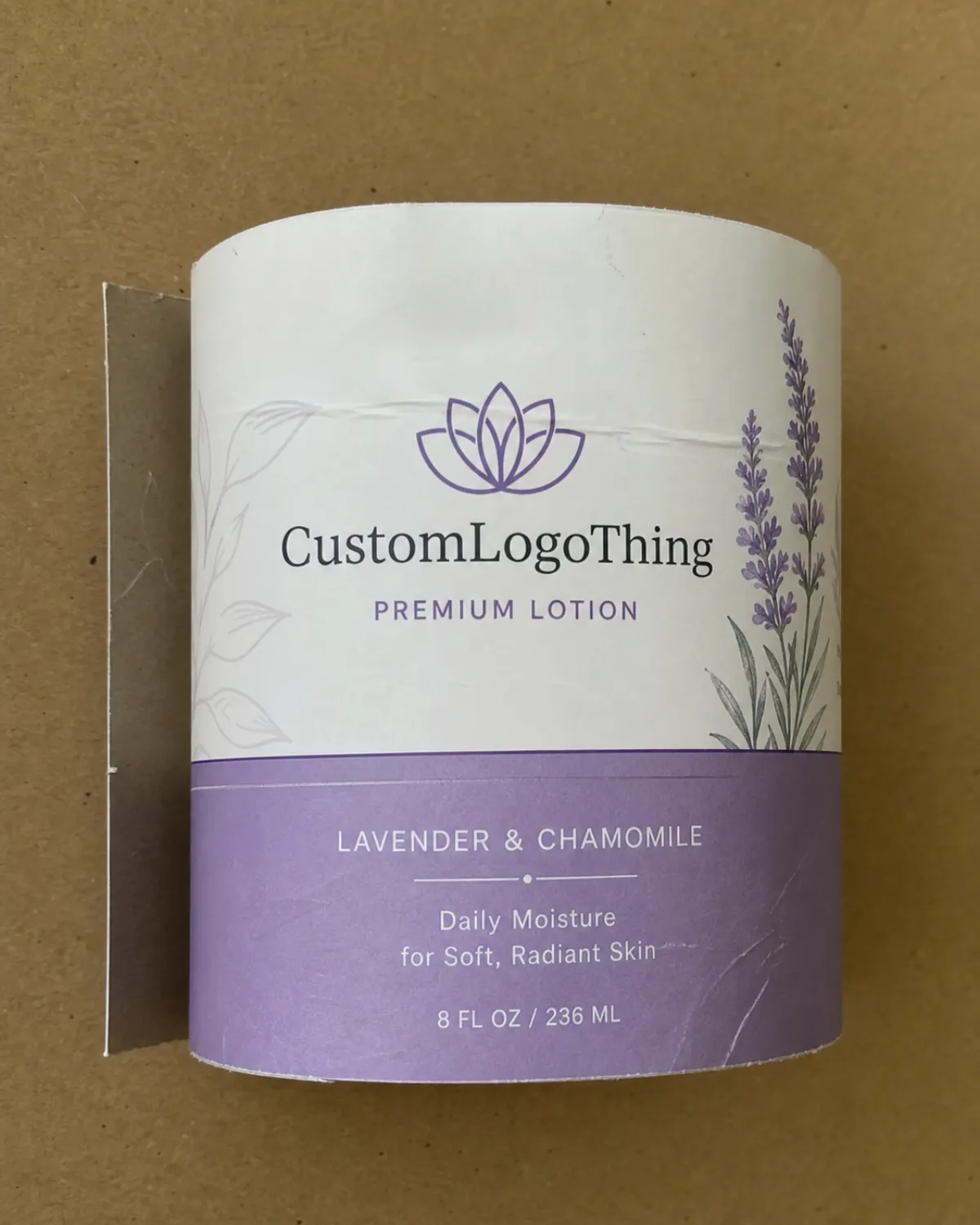
Branded lotion labels wholesale are often where a body-care product either looks ready for market or starts losing trust before anyone opens the cap. Lotion bottles usually live in bright retail lighting, humid bathrooms, and crowded shipping cartons, so the label has to keep performing long after the design file is approved. If the surface scuffs, the corners lift, or the print smears, the customer notices right away.
The shelf effect matters because lotion is often bought as a visual product. Buyers compare bottle shape, label finish, color consistency, and the way the branding sits on the container before they ever judge the scent or formula. A label that matches the bottle contours and uses the right finish can make even a simple cream or hand lotion feel more established and easier to reorder. That is especially true for private label brands that need a clean, consistent look across multiple scents or sizes.
There is also a practical side to all of this. Lotion labels are exposed to handling during filling, packing, shipping, retail stocking, and consumer use. Moisture from sinks or showers can soften the wrong adhesive. A paper label may look fine on a dry sample but fail once it meets condensation or a little product residue. For that reason, many buyers move toward film-based materials for the primary label and reserve coated paper for dry-pack applications or secondary packaging.
"A lotion label has three jobs: identify the product, support the brand, and stay put in conditions that are rarely gentle."
Shelf performance and reorder consistency deserve as much weight as the visual concept. A brand can spend months refining fragrance profiles and formula claims, but if the label family does not hold together across batches, the line loses cohesion. In retail environments, spas, and salons, consistency is part of the purchase decision. The label should look like it belongs to a professional line, not a one-off print job.
For brands planning growth, wholesale label ordering also helps preserve the same visual identity across future SKUs. A lotion line might start with one hero product and later expand into body butter, hand cream, or travel-size minis. A repeatable label system makes those additions cleaner. The bottle looks intentional, the packaging looks connected, and the customer can spot the family instantly on the shelf.
That repeatability matters in operations too. Reorders that match the first run reduce approval time, reduce waste, and keep inventory simpler for the warehouse team. A lot of brand owners learn this the hard way after a successful launch: the first order was attractive, but the second order is where the real packaging system either proves itself or falls apart.
Label materials, adhesives, and finish options for lotion bottles
Material selection is where the packaging decision becomes technical. For wet-use lotion packaging, film-based stocks usually outperform standard paper because they resist moisture, handling, and mild oil exposure more effectively. White BOPP is one of the most common choices because it prints sharply, holds up well in humid conditions, and gives a clean surface for brand colors. Clear film can be a strong option when the design calls for a minimal, floating look, while coated paper is better reserved for drier environments or outer packaging where water exposure is limited.
Finish changes both the look and the performance. Gloss finishes tend to brighten color and make the label pop, but they can also reflect more glare under store lighting. Matte finishes reduce reflection and often feel calmer, more natural, or more apothecary-style. Soft-touch finishes bring a more tactile, premium feel, though they usually cost more and should be judged against actual use conditions rather than style alone. A finish should never make the text harder to read or weaken the label’s hold on the bottle.
There is a useful comparison here. A lotion label is closer to a hand soap or shampoo label than to a dry cosmetics carton. It is touched more often, sees more condensation, and is exposed to more accidental residue. That means a beautiful finish is only half the story. Durability has to survive the bathroom test, the shipping test, and the warehouse test.
| Material | Best Use | Moisture Resistance | Common Finish | Buying Note |
|---|---|---|---|---|
| White BOPP | Primary lotion labels, pump bottles, squeeze bottles | High | Matte, gloss, or soft-touch laminate | Reliable choice for bathrooms, shipping, and handling |
| Clear film | Minimal branding, colorless bottles, modern looks | High | Gloss or matte overprint | Best when the bottle surface and ink contrast are planned carefully |
| Coated paper | Dry-use products, cartons, sample packs | Moderate to low | Gloss or matte varnish | Less suited for humid bathrooms or frequent handling |
| Soft-touch laminate on film | Premium private label lines | High | Velvet-like tactile finish | Feels elevated, but verify readability and cost before committing |
Adhesive choice matters just as much as the face stock. A curved squeeze bottle, a narrow pump bottle, and a wide cosmetic jar all place different stress on the label. A pressure-sensitive adhesive that grips well on polypropylene, PET, or glass may be the right fit, but the exact selection should be matched to the container, the surface energy, and the expected environment. If the label is going onto a jar with a slight taper, the adhesive and material need enough conformability to lay flat without tenting or wrinkling.
Corner radius is another detail that gets overlooked until production starts. Sharp corners are more likely to lift, especially on round containers or when the label wraps close to a seam. Slightly rounded corners usually reduce edge stress and help the label look cleaner after shipping. Label thickness also matters if the order will be hand-applied at scale or run through an applicator. A stiffer film can behave differently from a thinner one, and machine-applied labels often need tighter dimensional control.
Special effects can be useful, but they should earn their place. Metallic accents, spot varnish, raised gloss, and textured finishes can add visual depth, yet each one introduces another production decision. For a lotion line, the priority should usually be durable readability first, decorative detail second. The best results come from a finish that supports the brand rather than one that competes with the product copy.
If you want more context on broader packaging standards and terminology, resources such as the Packaging Machinery Manufacturers Institute can be useful for general industry reference, while the ISTA testing framework is helpful when packaging must survive transit. For paper sourcing on secondary components, the FSC system remains a recognized benchmark.
Branded lotion labels wholesale specifications: sizing, copy, and compliance
Strong artwork cannot save a label that is the wrong size. Before ordering branded lotion labels wholesale, measure the actual bottle rather than relying on a catalog spec alone. Capture the diameter if it is round, the flat label panel if it is a shaped container, the available wrap area, and any taper that changes the label geometry from top to bottom. A bottle that looks cylindrical at first glance may still narrow slightly near the shoulder or base, and that small change can create fit problems once the label is printed.
For copy, most lotion labels need room for the product name, scent or variant, net contents, ingredient copy, warning language where required, barcode placement, and brand contact details. Some products also need batch coding space or a small area reserved for regulatory marks. If the brand sells across multiple channels, it is smart to plan a label system that can handle both retail compliance and e-commerce presentation without forcing every SKU into a different layout.
Artwork setup should be treated as production work, not just design work. Dielines define the shape and size of the label. Bleed gives the printer room to trim cleanly. Safe zones protect text and key graphics from being cut too close to the edge. Color expectations should be locked in before print, especially if the brand depends on a specific shade for recognition. A good proof will show placement, text hierarchy, and overall fit, but the best proof also reflects how the label behaves on the real bottle.
Legibility is a real issue in small-format packaging. Lotion labels often need to carry a fair amount of information, and a long ingredient list can crowd the panel quickly. Small type can still work if contrast is strong and line spacing is controlled, but tiny text printed in low contrast is hard to read in a shower or under store lighting. For compliance-sensitive packaging, the safest approach is to test the label at actual size and check whether the text is legible at arm’s length. That is a simple step, but it catches problems that are expensive to fix after print.
Practical proofing should include three checks: barcode scanning, bottle fit, and visual contrast. If the barcode does not scan cleanly, retail systems may reject it. If the label lifts at the seam or buckles around the curve, the container may need a resize or a different stock. If the back label feels crowded, the copy may need to be split or simplified. These are small adjustments, but they save a great deal of money compared with reprinting a full run.
For brands that are still refining the package, it can help to send a filled bottle photo, exact bottle measurements, and a draft label copy sheet together. That gives the production team a clearer picture of what will actually fit. It also cuts down on back-and-forth during prepress, which is where many delays begin. If the product is sold across different markets, add a compliance checklist for each market so label changes do not arrive after approval.
Branded lotion labels wholesale pricing, MOQ, and quote factors
Price depends on more than quantity. For branded lotion labels wholesale, the main cost drivers are material type, label size, shape complexity, finish, ink coverage, number of SKUs, and whether the job is being run as sheets or rolls. A simple one-color white BOPP label at scale is very different from a full-bleed design with metallic accents, clear film, or multiple die cuts. The more the label needs to do, the more it Affects the Quote.
For many wholesale orders, pricing can land roughly in the range of $0.12 to $0.32 per label at moderate quantities, with smaller runs usually higher per unit and larger runs lowering the cost. That range is only a planning reference, not a promise, because print method, size, and finish can move the number in either direction. A tiny front label on a simple bottle may price lower than a large wrap label with dense artwork, even at the same quantity.
Minimum order quantity is not fixed across the board. Digital runs may begin at a few hundred labels per SKU, while conventional press work often makes more sense at higher counts because setup costs need to be spread over more units. Sheet labels, roll labels, and custom shapes all influence MOQ as well. If a brand is launching a new scent line, a lower MOQ can be useful for testing demand. If the product is already selling steadily, a larger run often improves unit economics and reduces reorder frequency.
| Quote Factor | How It Affects Price | What to Send With the RFQ |
|---|---|---|
| Material | Film stocks usually cost more than paper, but they perform better in moisture | Preferred stock, container material, use environment |
| Size and shape | Larger labels and custom dies increase material use and setup time | Exact dimensions, bottle photo, dieline if available |
| Finish | Soft-touch, varnish, or specialty effects add cost | Desired appearance and durability target |
| Quantity | Higher volume usually reduces cost per label | Total units, SKU split, reorder forecast |
| Artwork readiness | Rebuilds and late changes can create extra fees | Final copy, vector files, brand colors, barcode data |
To get an accurate quote the first time, send the bottle measurements, label copy, quantity target, shipping destination, and any preferred stock or finish. If there are multiple SKUs, each one should be listed clearly so production can be planned correctly. Clean quotes come from complete information, not from guesswork.
Hidden costs are usually tied to delays rather than print itself. Artwork rebuilds, rush scheduling, and proof revisions after content changes can all add time and expense. If the design is still evolving, it is better to make those changes before the order is released. That keeps the line moving and helps avoid reproofing charges. A brand may save more by tightening the spec sheet than by shaving a small amount off the per-label price.
There is a simple comparison that helps here. A label with a stable spec sheet behaves like a repeat order in a manufacturing system. A label with missing measurements behaves like a custom job every time. The first version is faster, cleaner, and usually cheaper over the life of the product line.
Branded lotion labels wholesale process, timeline, and lead time
The production path is straightforward when the inputs are complete. First comes the inquiry with bottle measurements, artwork files, copy, and quantity. Then the team reviews materials, confirms sizing, and prepares a proof. After proof approval, the labels move into print, finishing, inspection, and packing. Finally, they ship to the brand, fulfillment partner, or co-packer.
Most delays happen early. A guessed bottle size can create a bad dieline. Missing ingredient text can stop a proof. A barcode that has not been tested may need correction before print. These issues do not sound large on their own, but they can push a launch back by days or even weeks when several of them stack together. The best way to protect schedule is to finalize measurements and copy before the job enters production.
Lead time varies by stock, finish, quantity, and schedule load, but many wholesale label orders move in roughly 12 to 15 business days after proof approval when everything is ready. More complex work, custom dies, specialty finishes, or larger quantities can take longer. Rush work is possible in many cases, but it works best when the artwork is final and the quantity is stable. Once a job starts changing midstream, rush becomes harder to execute cleanly.
Transit time should also be built into the plan. A label that finishes production on time but arrives after the filling date is still a missed deadline. Brands launching into retail should plan for sample review, internal approval, packaging line testing, and shipping time before they lock the launch date. That extra buffer is often what separates a calm rollout from a scramble.
For more disciplined transport planning, many packaging teams reference ISTA testing standards to understand how packaged goods behave in transit. That does not replace your own bottle and label testing, but it does give a useful framework for shipping stress, vibration, and package integrity.
Proofing should not be rushed. A few minutes spent checking a label on the actual bottle can prevent a full run of avoidable waste. Look at the seam, the edge wrap, the barcode, the text hierarchy, and the way the label sits under light. If the product will ship in cartons, test one packed unit too. A label that looks perfect flat on a desk may tell a different story once it meets a production line and a real distribution path.
One practical rule helps keep projects moving: if the sample bottle changes, the label spec should be reviewed again. Even a small change in neck shape, curve, or panel width can affect placement and adhesion. That is not a cosmetic issue. It is a production issue, and treating it that way prevents the late-stage surprises that strain launch schedules.
Why choose us for branded lotion labels wholesale
Custom Logo Things focuses on packaging that behaves well in the real world, not just in a digital mockup. That matters with lotion labels because the final result has to withstand moisture, handling, storage, and repeated use while keeping the brand presentation steady from one batch to the next. Buyers do not need surprises at the press, at the filling line, or after the first retail shipment.
What brands value most in a wholesale label partner is usually not a long list of claims. It is clear prepress support, helpful material guidance, clean communication, and a process that makes it easier to avoid reprints. A lotion line may only need a few design decisions to go from fragile to reliable, but those decisions need to be made with production in mind. That is where the value lies.
For growing brands, repeatability is a major advantage. When a scent line expands or a new size is added, the packaging should feel like part of the same family. Wholesale ordering makes that easier because the specs can be held, updated, and reused without starting from zero each time. It is a practical way to manage refill programs, seasonal variants, and retail expansion without losing design consistency.
Brands comparing packaging partners often want to see how a label provider supports different use cases. Our Case Studies page shows how packaging choices translate into actual production outcomes, while Custom Labels & Tags gives a closer look at the label formats available for different container styles. If you are planning repeat replenishment or multiple SKUs, our Wholesale Programs page outlines how larger ordering flows are handled.
The real advantage is fewer assumptions. That means a better fit on curved bottles, fewer application issues, more predictable color output, and packaging that looks intentional across every shipment. It also means the brand can move from one run to the next without rebuilding the whole project each time.
There is no mystery in good packaging. The label stock should match the use case, the adhesive should match the container, the copy should fit the panel, and the proof should reflect what the bottle actually needs. When those pieces line up, the product feels more finished, and the buyer feels more confident.
That is especially true for brands that are moving from small-batch sales into repeat wholesale replenishment. The packaging has to hold up not just as a design object, but as a dependable part of the supply chain. If the first run works and the second run matches it, the label program is doing its job.
Next steps for ordering branded lotion labels wholesale
The easiest way to start is to gather the essentials in one place: bottle photos, precise measurements, copy text, quantity targets, and any material or finish preferences. That package gives the printer enough information to judge fit, estimate cost, and identify any production risks before the order moves forward.
It also helps to decide whether the order is for one hero SKU, a small scent family, or a broader product line. A single label may be simple, but a product family needs a plan for hierarchy, color variation, and SKU control. If several variants share the same bottle, make sure each one has the correct copy and enough visual distinction to avoid warehouse confusion.
Ask for a proof review before production begins, and use that proof to check barcode placement, legibility, edge margins, and the look of the label on the actual container shape. If the bottle will be machine-applied, confirm application direction and roll orientation. If it will be hand-applied, confirm where the seam should land so the front panel stays centered and the label is easy to place.
Storage conditions deserve attention too. Labels that sit in a warm warehouse or move through a humid filling room may behave differently than labels stored in a climate-controlled office. That is why material selection should always reflect the real production environment. If the bottle will carry product oils on the surface during filling, ask for a test that reflects that condition rather than a best-case sample.
Keep the approved spec sheet and final artwork file in a safe place. Reorders go faster when the brand can point to the exact size, stock, finish, and version that already worked. That small habit saves time later and protects the consistency of the line as it grows.
For brands that need branded lotion labels wholesale to support clean launches and repeatable reorders, the smartest move is to treat the label as production equipment as much as design. Get the measurements right, choose the stock for the environment, and lock the proof before print. Then hold that specification steady through reorder, because consistency is what turns a good first impression into a reliable product line.
Frequently Asked Questions
What materials work best for branded lotion labels wholesale?
White BOPP and other film stocks usually perform best because they resist moisture, handling, and mild oil exposure better than standard paper. Matte or gloss finishes can be chosen based on the brand look, but durability and adhesion should come before decorative effects for lotion packaging.
What MOQ should I expect for wholesale lotion labels?
MOQ depends on size, material, finish, and whether the labels are rolled or sheeted, so there is no single universal number. Smaller runs work well for new launches, while larger orders reduce unit cost and make sense for established SKUs or multi-store distribution.
How do I know the right size for lotion bottle labels?
Measure the flat label panel or wrap area on the actual bottle, then account for taper, shoulder curves, and the space needed for a clean seam. A sample bottle photo and exact measurements help prevent fit issues and reduce the chance of a label that wrinkles or overlaps.
How long does production usually take after proof approval?
Lead time depends on artwork readiness, stock selection, quantity, and finishing steps, so final timing should be confirmed with the quote. Orders move fastest when the design is final, the measurements are verified, and no last-minute content changes are expected.
Can I order multiple scents or sizes in one wholesale run?
Yes, multiple SKUs are common, but each version needs the correct label copy, dieline, and quantity plan so production stays organized. Grouping related scents or sizes can simplify ordering, but it is important to check whether each variation shares the same stock and finish.
What should I send first if I need a quote?
Send bottle measurements, a clear bottle photo, label copy, estimated quantity, and your preferred material or finish. If you already have a dieline or previous label spec, include that too, since it gives the production team a faster path to an accurate quote.


