Buyer Fit Snapshot
| Best fit | Branded Packaging for Lifestyle Brands projects where brand print, material claims, artwork control, MOQ, and repeat-order consistency need to be specified before quoting. |
|---|---|
| Quote inputs | Share finished size, material target, print colors, finish, packing count, annual reorder estimate, ship-to region, and any compliance wording. |
| Proofing check | Approve dieline scale, logo placement, barcode or warning zones, color tolerance, closure strength, and carton packing before bulk production. |
| Main risk | Vague material claims, crowded artwork, missing packing details, or unclear freight terms can make a low unit price expensive after revisions. |
Fast answer: Branded Packaging for Lifestyle Brands: Material, Print, Proofing, and Reorder Risk should be specified like a repeatable production item. The safest quote records material, print method, finish, artwork proof, packing count, and reorder notes in one written spec.
Production checks before approval
Compare the actual filled-product size with the drawing, then confirm tolerance on folds, seals, hang holes, label areas, and retail display edges. Reserve space for logos, QR codes, warning copy, and material claims before decorative graphics fill the panel.
Quote comparison points
Review material grade, print process, finish, sampling route, tooling charges, carton quantity, and freight assumptions side by side. A quote is only useful when the supplier can repeat the same color, closure quality, and packing count on the next order.
Branded Packaging for Lifestyle Brands: A Practical Guide
For a lot of lifestyle brands, the package gets remembered before the product does. That is exactly why branded packaging for lifestyle brands is not a finishing touch. It is the opening move. The box lands on a doorstep, sits on a boutique shelf, or shows up in a creator’s unboxing video, and the brand story starts working before anyone touches the product.
I have seen teams spend months polishing their website, photography, and ads, then ship the product in packaging that looks like it came from three unrelated suppliers. That mismatch hurts. A lot. Good packaging can raise perceived value, support repeat purchase, and make the whole experience feel intentional. Bad packaging does the opposite. It looks generic, ships badly, and quietly undercuts the product price point. Branded packaging for lifestyle brands sits right at the intersection of design and logistics, which means it has to survive transit, handling, and the unbox without falling apart as a concept.
The clean way to think about it is simple: packaging is not just a container. It is part of the product, part of the marketing, and part of the economics. The best branded packaging for lifestyle brands handles all three without acting like the box deserves a trophy.
Branded Packaging for Lifestyle Brands: Why It Matters
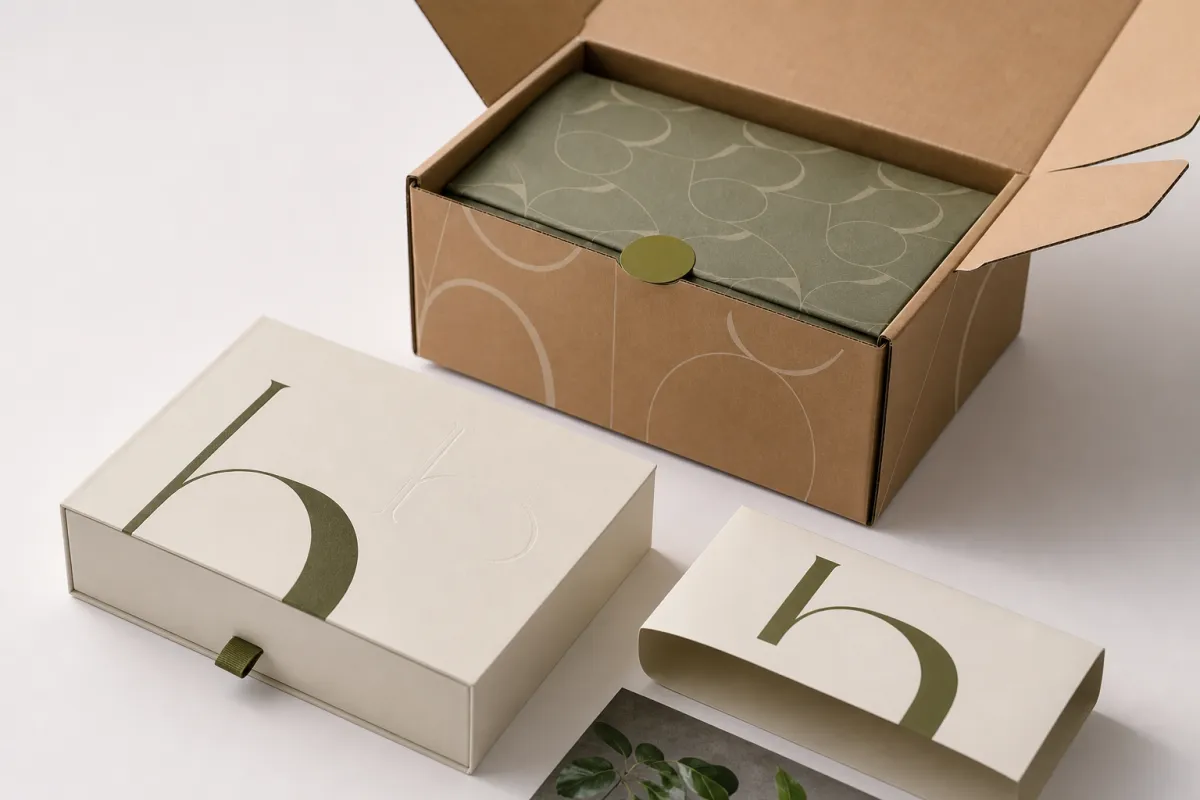
The strange thing about packaging is how long it can stick in someone’s memory. A fragrance gets used up. A candle burns down. Sunglasses get worn, lost, replaced, and forgotten. The packaging that framed those products can stick around much longer, especially if it was photographed, reused, or posted online. That is not fluff. That is a real marketing asset.
At the core, branded packaging for lifestyle brands is the coordinated use of structure, materials, print, color, inserts, and messaging so the package feels like part of the brand world. The box, mailer, sleeve, tissue, label, and insert card should all point in the same direction. When they do, customers read the package as deliberate. When they do not, the product feels disconnected from the identity the brand is trying to build.
Lifestyle categories live and die on identity more than a lot of functional categories do. Buyers of apparel, wellness, home fragrance, accessories, beauty, and gifts are not only buying utility. They are buying taste, aspiration, and a bit of self-definition. That is why branded packaging for lifestyle brands has to echo the product photography, website design, typography, and social content. A calm Scandinavian candle brand should not arrive in loud clutter. A sharp streetwear label should not hide in a generic kraft mailer that could belong to anybody.
There is also a commercial difference between commodity packaging and branded packaging for lifestyle brands. Commodity packaging protects the item and gets it out the door. Branded packaging does that too, then adds perceived value, social sharing potential, repeat purchase support, and unboxing expectations. That is a bigger job, which is why print, substrate, closure style, and finish deserve actual attention instead of a last-minute shrug.
For anyone buying packaging, the goal is not to make the box louder. Loud packaging gets old fast and Drives Costs Up. The goal is to make branded packaging for lifestyle brands more coherent, more memorable, and more useful to the business. Coherence is what makes premium feel earned instead of forced.
There is a quick test worth using. Ask whether a customer could identify the brand from the package alone after seeing it once or twice. If yes, branded packaging for lifestyle brands is doing real work. If no, the package may still look nice, but it is not building enough memory.
How Branded Packaging for Lifestyle Brands Works
The system works when structure, graphics, materials, and finishing tell the same story at the same customer touchpoints. That sounds obvious. A lot of packaging still fails because each piece gets chosen on its own. The mailer gets picked for shipping strength, the artwork gets picked for visual appeal, the insert gets added later, and the result feels assembled instead of designed. Strong branded packaging for lifestyle brands behaves more like a coordinated kit than a pile of parts.
Start with the customer journey. Discovery happens online. Then transit. Then the first unbox. Then the product reveal. After that, the package gets reused, recycled, or tossed. Each stage gives branded packaging for lifestyle brands a different job. On screen, the packaging should echo the brand photography. In transit, it should protect the contents without arriving crushed or wrapped in a ridiculous amount of tape. At the unbox, it should create a clear reveal. Afterward, it should leave a memory that matches the price point.
That is why package branding matters even for brands selling mostly through e-commerce. The package becomes a physical version of the brand voice. If the brand feels calm and elevated, the package should open that way. If the brand is playful, the package needs a controlled moment of surprise. The best branded packaging for lifestyle brands creates that feeling through sequencing, not excess.
The operational side matters just as much. Dielines, sizing, insert fit, shipping constraints, and production methods all shape whether the final result feels polished. A beautiful print file on the wrong structure still looks wrong. A rigid box shipped through parcel service without enough protection can get damaged before the buyer ever sees it. In practice, branded packaging for lifestyle brands lives at the intersection of design and fulfillment.
Consistency across SKUs is another quiet advantage. Many brands win by making the packaging system recognizable even when the products change. One scent can be a candle, another a room spray, another a refill pouch. If the color system, typography, and structure stay linked, the customer recognizes the brand faster. That recognition shortens the mental distance between browsing and buying, which is one reason branded packaging for lifestyle brands pays off beyond the shipment itself.
The best packaging teams keep asking one question: what should the package communicate before the product is even used? If the answer is clear, the structure can be simpler. If the answer is fuzzy, more decoration usually just makes the box more confused. In most cases, branded packaging for lifestyle brands works because it is disciplined.
Key Factors Behind Effective Branded Packaging
Good branded packaging for lifestyle brands starts with practical inputs, not a mood board pretending to be strategy. The design decisions depend on brand positioning, target audience, price point, product fragility, shipping method, and whether the package needs to work for retail, direct-to-consumer, or both. A box for a $24 accessory should not be engineered like a $120 gift set. The structure, thickness, and decoration should match the economics of the product.
Material choice is one of the strongest signal carriers in branded packaging for lifestyle brands. Rigid boxes suggest premium and gifting. Corrugated mailers suggest shipping strength and practical value. Folding cartons work for lighter products and can still look polished with good print control. Paper wraps and sleeves add refinement without adding much bulk. Inserts, whether paperboard, molded pulp, or die-cut corrugate, change the experience again. They also change cost and recyclability. That trade-off is not glamorous, but it is where a lot of packaging decisions get won or lost.
Visual hierarchy comes next. Logo placement, color system, typography, pattern use, and white space should make the brand recognizable without burying the product. A lot of branded packaging for lifestyle brands loses clarity because every surface gets treated like prime real estate. That is not always smart. White space often does more for premium perception than another graphic layer. A restrained package can feel more confident than one trying to explain everything at once.
Finishing choices can be powerful, but they are not free. Embossing, foil, matte lamination, soft-touch coatings, and spot UV can raise perceived value. They can also increase tooling, setup, and lead time. The real question is whether the finish supports the story. A soft-touch mailer may fit beauty or wellness. Foil may work for gifting or limited editions. If the finish exists only because it looked nice in a sample deck, branded packaging for lifestyle brands gets more expensive without getting better.
Sustainability expectations matter too. Many lifestyle buyers want recyclable, reusable, or reduced-material packaging, especially when they see the brand as premium and modern. That is where FSC-certified paperboard, lower-ink coverage, and simpler construction become useful. If you want a reference point for responsible sourcing or certifications, FSC is a solid place to understand chain-of-custody standards, and the EPA’s packaging waste guidance at EPA helps frame material reduction in a broader waste context. For lifestyle brands, the trick is to make sustainability visible without turning the box into a sermon.
It also helps to compare package types against the real use case. If your items ship through parcel networks and face drops, vibration, and compression, the package should be tested accordingly. Transit standards from organizations like ISTA matter because a beautiful box that fails in the carrier network is not premium at all; it is expensive damage. Branded packaging for lifestyle brands has to survive the trip, not just win the photo.
If you are evaluating structures, the useful shortlist usually looks like this:
- Rigid boxes for high perceived value, premium gifting, or elevated retail packaging.
- Corrugated mailers for DTC shipping, apparel, candles, home goods, and subscription packs.
- Folding cartons for efficient production, lighter products, and cleaner unit economics.
- Paper sleeves and wraps for layered presentation without major cost escalation.
For brands comparing branded packaging for lifestyle brands across product lines, the best internal reference is often a sample set tied to actual use. If one package feels premium but ships badly, it is the wrong answer. If another looks modest but performs beautifully and still supports the brand story, that may be the smarter option. If you want examples of structures and services, our Custom Packaging Products page is a good place to review options, and the Case Studies section shows how different formats behave under real production conditions.
Branded Packaging for Lifestyle Brands: Cost and Pricing
Price is where enthusiasm meets reality. Branded packaging for lifestyle brands can be affordable, but only when the design respects how packaging gets manufactured. The main cost drivers are order quantity, structure complexity, print coverage, material thickness, special finishes, inserts, and whether custom tooling is needed. Every added variable pushes the project toward more setup time and more spend.
The volume effect is simple and unforgiving. Unit cost usually drops as quantities rise because setup, plates, cutting dies, and production adjustments get spread across more boxes. A 1,000-unit run can look expensive per piece. The same structure at 5,000 units may feel much more manageable. That is why branded packaging for lifestyle brands often needs a larger planning conversation: the box is not just a design object, it is a volume decision.
Where do budgets leak? Usually in four places. First, teams over-specify materials and choose heavier board than the product actually needs. Second, they add too many finishes, which creates a premium stack without much extra brand value. Third, artwork changes late in the process, which triggers revisions and sometimes rework. Fourth, they design packaging that ships inefficiently, which increases freight and storage costs. Good branded packaging for lifestyle brands avoids those traps by keeping the design close to the business model.
Here is a practical comparison for common package formats used in lifestyle categories:
| Packaging option | Best fit | Typical unit cost at 5,000 pcs | What it signals |
|---|---|---|---|
| Folding carton | Lightweight beauty, supplements, accessories, smaller retail SKUs | $0.18-$0.55 | Efficient, clean, retail-ready |
| Corrugated mailer | DTC shipping, apparel, candles, home goods, subscription packs | $0.65-$1.40 | Practical, sturdy, brandable on the outside and inside |
| Rigid set-up box | Premium gifting, limited editions, higher price-point products | $1.80-$4.50 | Elevated, giftable, high perceived value |
| Mailer with insert system | Fragile products that need both protection and presentation | $0.95-$2.20 | Balanced, secure, experience-focused |
Those ranges shift with board caliper, print coverage, quantity, and finish selection. A tight two-color print on kraft stock is much cheaper than full-bleed graphics with foil and spot UV. Smaller runs can also carry a higher per-unit cost because the setup burden has less volume to absorb it. For branded packaging for lifestyle brands, the right question is not “What is the cheapest box?” It is “What box delivers the best landed cost for the customer experience we need?”
That landed cost includes more than the carton itself. Freight, warehousing, assembly labor, fulfillment speed, and damage replacement should all be part of the calculation. A rigid box that looks beautiful but takes extra labor to pack can be less economical than a folded structure with a smart insert. Premium is not always the expensive route. Well-built branded packaging for lifestyle brands can sometimes be the one that simplifies the workflow.
There is a useful design principle here: choose one or two high-impact upgrades rather than trying to premiumize everything. Better structure plus stronger color control can do more for the unboxing than five finish effects added together. That is especially true when the product already carries strong visual appeal. The package should support the item, not compete with it.
Process and Timeline for Launching Branded Packaging
A solid schedule matters because branded packaging for lifestyle brands is rarely the only thing moving. Product production, inventory planning, photography, fulfillment setup, and marketing launch work all happen at the same time. Packaging slips can trigger a chain reaction. The fix is to treat packaging as a tracked workstream, not a side task that gets handled whenever someone finally has a free hour.
The standard workflow is pretty straightforward: discovery, concept development, dieline approval, prototype sampling, revision rounds, prepress, production, finishing, and delivery. Each step needs a decision owner. If too many people review art at once, revisions multiply. If nobody owns the final approval, the schedule drifts. Strong branded packaging for lifestyle brands often succeeds because someone keeps the process moving, not because the design team magically guesses the right answer on the first round.
Timing risk usually comes from approval delays, artwork changes, and structural revisions more than from press time itself. That is one of the most common misunderstandings in packaging planning. The print run may take only part of the schedule, but the front end can stretch fast if a dieline changes after the artwork has already been built. For branded packaging for lifestyle brands, the safer move is to lock the structure early, then build graphics with enough room for adjustment.
Lead time is easiest to understand in practical terms. Simple concept work and sample development can move quickly if the structure is stock-based and the artwork is clean. Custom tooling, multi-layer inserts, or special finishes need more room. Large runs also need buffer time for freight and receiving. If the packaging has to land before a retail launch or subscription rollout, build in revision space. Do not schedule packaging around the optimistic calendar version nobody actually lives in.
"The cleanest packaging projects are the ones where one person owns the final yes. It sounds minor, but it usually saves the schedule."
That line shows up in some form on nearly every disciplined packaging project. One internal owner can consolidate feedback from marketing, operations, finance, and product. Without that point person, branded packaging for lifestyle brands turns into a moving target. The packaging can still be good, but the timeline becomes a mess.
Another practical move: align the packaging schedule with inventory arrival and fulfillment training. If the box arrives after product stock, teams end up using temporary workarounds. That can mean extra labels, extra inserts, or rushed assembly instructions. None of that improves the customer experience. The strongest branded packaging for lifestyle brands project is timed so the packaging is ready before the product gets staged for launch.
As a rough planning benchmark, many custom box projects take multiple weeks from final approval to delivery, depending on format and quantity. Add more time if the project includes bespoke insert engineering or complex decoration. Build that reality into the launch calendar from the start. It is cheaper to wait on a scheduled sample than to rush a damaged rollout.
Common Mistakes in Branded Packaging Projects
The most expensive mistake is designing for a mood board instead of the actual product, shipping method, and customer behavior. A package can look fantastic in a presentation and still fail in real use. That happens when the team optimizes for aesthetics alone. Branded packaging for lifestyle brands needs to perform in transit, on shelf, and at the unbox. If it only works in one of those places, the result is incomplete.
Over-branding is another frequent problem. Too many messages, graphics, or finishes can make the package feel busy and weaken premium impact. Customers do not read every surface. They scan. They notice contrast, structure, and hierarchy first. When branded packaging for lifestyle brands tries to say too much, it usually ends up saying less because the main idea gets buried under decoration.
Fit and function errors can cause real damage. An insert that is off by a few millimeters can let a bottle rattle or a candle shift. A weak closure can pop open in shipping. A complicated assembly step can slow fulfillment and increase labor. These are not cosmetic problems; they affect trust. Well-built branded packaging for lifestyle brands should reduce friction for the warehouse as much as it impresses the buyer.
Sustainability mismatches are getting easier to spot. If a brand talks about recycled content or low-waste values but ships products in layers of mixed materials, the inconsistency stands out immediately. Lifestyle buyers are sharp about that gap. A package can be elegant and still be responsible, but the design has to be honest. For many brands, branded packaging for lifestyle brands works best when the material story is simple enough to explain in one sentence.
Inconsistency across SKUs causes its own damage. If one product line looks polished and another looks unrelated, the brand loses shelf recognition and repeat-customer recall. The visual system should stretch across product families without losing clarity. That is why package branding needs rules, not just taste. If the logo shifts around, the color logic changes, and the typography resets on every SKU, branded packaging for lifestyle brands stops functioning as a system.
There is also the habit of chasing a premium look that does not fit the brand’s actual price point. A $30 item can still look elevated, but it probably should not arrive in packaging that signals luxury gifting at a $150 level unless the economics support it. Customers notice that mismatch. They may not name it directly, but they feel it. The best branded packaging for lifestyle brands matches the value promise without exaggerating it.
Expert Tips and Next Steps for Better Packaging
Start with the customer moment you want to own, then design backward from that emotional and operational target. That is the simplest way to keep branded packaging for lifestyle brands focused. Are you trying to create a premium gift moment? A fast unbox for repeat buyers? A rugged shipping experience that still feels elevated? Each goal changes the structure, finish, and insert strategy. If the goal is fuzzy, the box will be fuzzy too.
One of the smartest upgrades is to test a single high-impact change before redesigning everything. Better structure, stronger color control, or one premium finish can reveal a lot about what customers actually notice. It is tempting to fix every issue at once. In reality, branded packaging for lifestyle brands gets easier to manage when the brand learns what moves perception, what only looks good in renderings, and what genuinely improves repeat orders.
Always compare prototypes against real shipping conditions. A beautiful mailer that fails in parcel transit costs more than it saves. A box that arrives intact, opens cleanly, and fits the product securely is worth far more than one extra effect nobody remembers. If you want to pressure-test branded packaging for lifestyle brands, do a simple trial: ship samples through the same method your customers use, then inspect edge wear, denting, and insert movement.
A simple scorecard keeps decisions grounded. Track cost, damage rate, unboxing feedback, and reorder consistency. Add notes on freight efficiency and assembly time if the packaging gets packed in-house. Over time, packaging stops being a subjective debate and starts acting like a measurable asset. That matters because branded packaging for lifestyle brands should support both customer sentiment and operating margin.
If you are deciding what to do next, keep the action list short and concrete:
- Audit the current package against product fit, shipping method, and brand story.
- Define one business objective for the next packaging change.
- Request samples and compare structures side by side.
- Set a launch timeline with room for proofing and revision.
- Choose the format that best balances protection, price, and perception.
That last point is where a lot of brands save money. They stop asking for the fanciest option and start asking for the smartest one. For many teams, branded packaging for lifestyle brands is not about adding more decoration. It is about making every layer earn its place. A good package feels intentional, not crowded. It protects the product, supports the price point, and gives customers a reason to remember the brand one more time.
The most useful takeaway is simple: pick the packaging system that matches the product’s actual journey, then test it like real life is going to be rude about it. If the structure fits, the branding is clear, and the box survives shipping without drama, you are on the right track. If not, the answer is not more foil. It is better alignment between brand, budget, and fulfillment.
What is branded packaging for lifestyle brands, and how is it different from standard packaging?
It combines protection with brand storytelling through materials, print, structure, and finishing. Standard packaging mainly moves or protects a product; branded packaging for lifestyle brands also shapes perception, repeat purchase, and the emotional feel of the unboxing.
How much does branded packaging for lifestyle brands usually cost?
Cost depends on order volume, box style, material thickness, print coverage, inserts, and finishing choices. Smaller runs cost more per unit because setup fees get spread across fewer boxes, so a good estimate starts with target landed cost and then narrows the options to fit it.
How long does it take to produce branded packaging for lifestyle brands?
Timeline depends on whether the structure is stock-based or fully custom, plus how many revision rounds are needed. Sampling, approvals, and artwork changes often take longer than the print run itself, so plan the schedule around your product launch date and leave room for proofing.
Which materials work best for branded packaging in lifestyle categories?
Rigid boxes, corrugated mailers, folding cartons, and paperboard each serve different price points and brand signals. The best choice depends on fragility, shipping method, unboxing goals, and sustainability expectations, so the right material is the one that balances appearance, protection, and cost efficiency.
How can I tell if branded packaging for lifestyle brands is working?
Look for lower damage rates, better customer feedback, and stronger repeat purchase signals. Track whether customers mention the unboxing experience, share it socially, or recognize the brand faster, because if the packaging supports the price point and reduces friction in fulfillment, it is doing its job.

