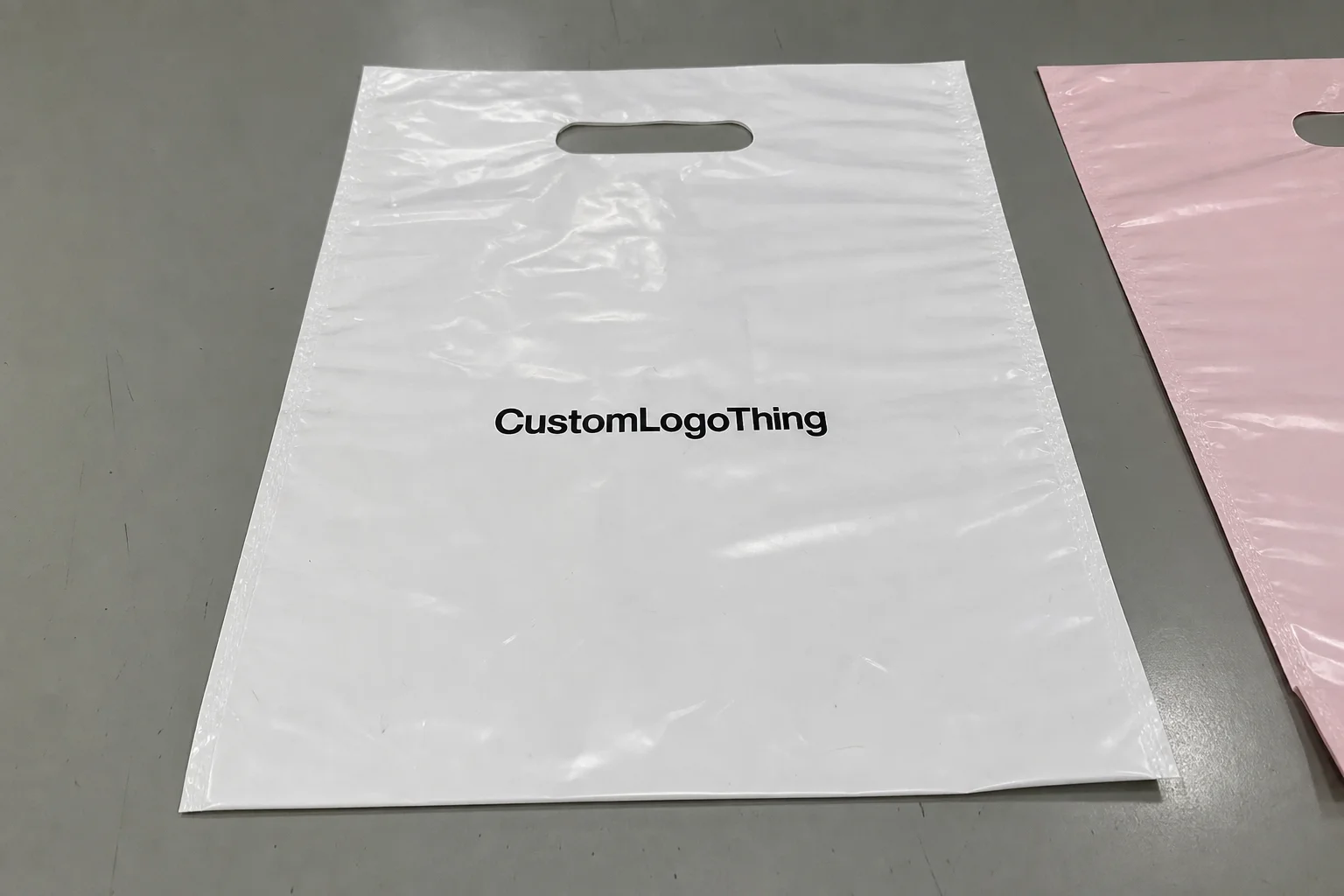
Buyer Fit Snapshot
| Best fit | Sample Poly Mailers for Brands projects where brand print, material claims, artwork control, MOQ, and repeat-order consistency need to be specified before quoting. |
|---|---|
| Quote inputs | Share finished size, material target, print colors, finish, packing count, annual reorder estimate, ship-to region, and any compliance wording. |
| Proofing check | Approve dieline scale, logo placement, barcode or warning zones, color tolerance, closure strength, and carton packing before bulk production. |
| Main risk | Vague material claims, crowded artwork, missing packing details, or unclear freight terms can make a low unit price expensive after revisions. |
Fast answer: Sample Poly Mailers for Brands: A Practical Overview should be specified like a repeatable production item. The safest quote records material, print method, finish, artwork proof, packing count, and reorder notes in one written spec.
Production checks before approval
Compare the actual filled-product size with the drawing, then confirm tolerance on folds, seals, hang holes, label areas, and retail display edges. Reserve space for logos, QR codes, warning copy, and material claims before decorative graphics fill the panel.
Quote comparison points
Review material grade, print process, finish, sampling route, tooling charges, carton quantity, and freight assumptions side by side. A quote is only useful when the supplier can repeat the same color, closure quality, and packing count on the next order.
Sample Poly Mailers for Brands: A Practical Overview
Sample Poly Mailers for Brands look simple on paper and a lot less simple once a real product goes inside. A rendering can make a bag look crisp, balanced, and premium. The sample is where the illusion gets tested. It shows whether the seal grabs evenly, whether the film feels too flimsy or reassuringly firm, whether the print still looks clean after the bag is folded and handled a few times, and whether the final package still looks intentional once it is packed, stacked, and moved across a warehouse table.
I have seen brands approve a mailer from a flat proof, only to discover later that the chosen size worked beautifully for one folded tee and badly for a full pack-out with tissue, a return card, and a polybag. That is not rare. Packaging has a way of exposing assumptions. Sample poly mailers for brands are valuable precisely because they turn those assumptions into visible facts before a larger order locks in the mistake.
The best sampling process is not glamorous. It is practical, methodical, and a little bit unforgiving. That is a good thing. A sample should answer the questions that matter most: does it fit, does it close correctly, does it protect the product, and does it still represent the brand with enough polish that customers will not think twice when they open the box or mailer on their doorstep?
What do sample poly mailers for brands reveal up front?
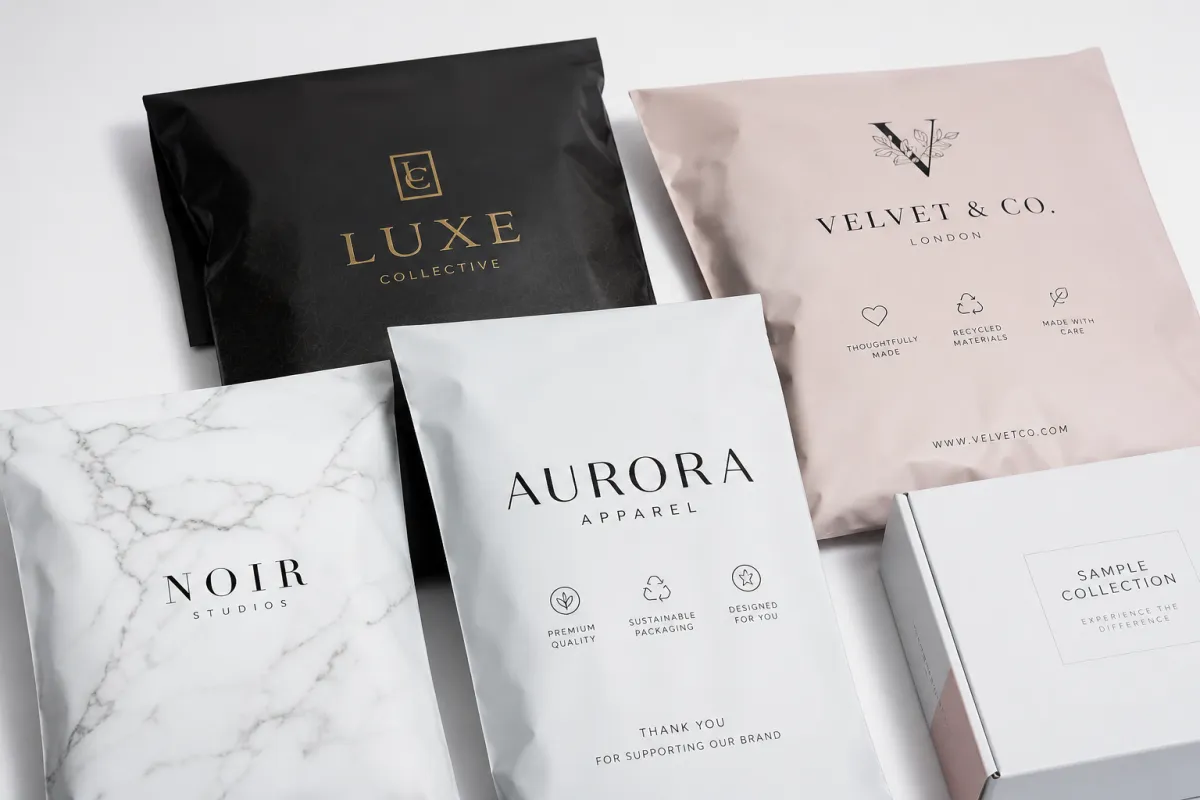
The main value of sample poly mailers for brands is early failure, the useful kind. A mailer can look sharp on a screen and still be the wrong structure for the product. A light apparel item may slide into a 10 x 13 bag with room to spare, then become a bad fit the second the brand adds tissue, a hangtag, a thank-you insert, or a retail fold that adds bulk. The sample catches that mismatch while the cost of changing course is still small.
Three sample types deserve different treatment. A blank sample is usually the first check: size, material, thickness, closure feel, and overall handling. A printed proof focuses on artwork placement, logo scaling, color direction, and legibility. A production-like sample is the closest thing to the finished mailer, with the intended film, finish, seal style, and print method. Brands sometimes request a “sample” without specifying which one they need, and that is where confusion starts. A proof is not a substitute for a production-style sample, and a blank bag cannot tell you how the final artwork will behave.
For brands, the job is pretty straightforward: remove guesswork before the order becomes expensive. These samples help confirm fit, opacity, closure behavior, handling, and shelf appearance before the packaging reaches scale. Marketing wants a package that feels deliberate. Operations wants something that does not slow down the line. The sample should give both teams something real to evaluate, not just a mood to react to.
“A spec sheet can promise a lot. The sample is where the promise meets the product.”
That difference matters in the warehouse as much as it does in the brand deck. A glossy white mailer may look premium in a mockup and still show scuffs under fluorescent lighting. A matte film may appear less flashy, yet it can hide fingerprints and small handling marks better. Those trade-offs are easy to miss until the sample is in someone’s hands. Then they are obvious.
How are sample poly mailers for brands made and checked?
Everything starts with the spec sheet. Weak input almost always produces weak samples. Product dimensions, estimated fill weight, folding method, insert count, and any special handling requirements should all be listed up front. A 10 x 13 mailer and a 12 x 15.5 mailer may look similar on a quote, but once a garment bag, tissue, and a card are added, they behave like different products. The sample needs that context or it becomes a guess in packaging form.
Material choice follows size and use case. Most poly mailers use coex film, often in the 2.5 to 3.0 mil range for standard apparel and soft goods, though lighter or heavier constructions are available depending on what is being shipped. The sample should match the intended build as closely as possible. Seal style, film gauge, finish, and print method belong in the same conversation. If the final plan calls for a matte surface and a peel-and-seal strip with a strong initial grab, a substitute sample answers a different question. It might still be useful, but not for final approval.
A visual proof and a physical sample are not interchangeable. The proof checks margins, safe zones, logo size, and whether small text stays readable. The sample checks opacity, drape, hand feel, closure response, and whether the print still looks clean after the bag has been folded and sealed. They deserve both checks because each one reveals a different class of risk. One is about design integrity. The other is about how the package behaves in the real world.
Inspection is where the sample earns its place. Look at seal alignment, edge quality, print sharpness, opacity, and the way the closure behaves after repeated opening and closing. If the team that packs orders will be using the mailer daily, hand them the sample and let them use it a few times, not just once. A single open-and-close tells you very little. Five minutes of actual handling tells you far more.
In one apparel rollout I reviewed, the print looked excellent on the proof but showed tiny shifts near the seam once the mailer was packed and sealed. It was not a catastrophic defect. It was worse in a way: the kind of issue that would have annoyed the brand for years if nobody had caught it during sampling. That is why sample poly mailers for brands deserve the same scrutiny as any other product decision that touches fulfillment, customer perception, and freight cost.
If your packaging program is still being shaped, browsing Custom Packaging Products can help the team compare formats before the final spec is locked.
| Sample Type | What It Shows | Typical Review Focus | Best Use |
|---|---|---|---|
| Blank sample | Base material, size, closure, and feel | Fit, thickness, seal behavior | Early sizing and operational checks |
| Printed proof | Artwork placement and color expectations | Logo clarity, spacing, copy accuracy | Brand review and design approval |
| Production-like sample | Closest match to final construction | Handling, scuffing, opacity, closure performance | Final sign-off before production |
Buying teams sometimes blur the difference between a proof and a real sample, then wonder why the approval feels incomplete. A printed sheet, a hand-cut mockup, and a finished mailer are not close substitutes. If the goal is to evaluate the broader range of Custom Poly Mailers, the sample should match the intended structure closely enough that the result means something.
Key Factors That Shape the Look and Performance
Size comes first because size affects everything else. Too small, and the mailer strains at the seams and looks squeezed. Too large, and the package feels loose, wastes material, and often costs more to ship. Sample poly mailers for brands should always be tested with the real product plus any inserts, not just with the bare item. Tissue, hangtags, return cards, and even a folded insert can add enough bulk to change the fit in ways that are obvious once the sample is packed.
Film thickness is the next variable with real consequences. In packaging, thickness is usually measured in mils or microns, and the right number depends on what the brand ships. Lighter apparel may do fine with a thinner film. Heavier bundles, items with corners, or products that need more puncture resistance often justify a thicker gauge. The right sample makes that difference easy to feel. A flimsy bag and a sturdier one behave differently as soon as they are sealed and lifted.
Print coverage changes more than the look. Full-coverage artwork can create a strong shelf presence, but it also changes how the film handles scuffing, how crisp the edges stay after folding, and how much ink or coating is needed to preserve the finish. A single-color logo on a clean surface may be easier to produce and cheaper to revise. Dense multi-color art may carry more brand personality. These samples should be checked under warehouse lighting, because a design that looks sharp on a monitor can feel flatter, brighter, or more reflective in person. That discrepancy trips people up more often than they admit.
Closure style, tamper resistance, and surface texture shape daily use. A peel-and-seal strip that grabs too quickly can slow down a fulfillment line. One that is weak can fail in transit or during rough handling. Matte film hides fingerprints and light scuffs better than gloss. Gloss can look more premium, yet it also tends to show marks faster. Brands that already know they want a specific style can review the broader category through Custom Poly Mailers and then use the sample to verify the exact fit and finish.
There is also a practical truth that gets missed in prettier presentations: the best package is not always the most eye-catching one. It is the one your team can pack quickly, your customer can open cleanly, and your shipper can move without extra damage. That balance is the whole point of sampling.
- Fit: enough room for product and inserts without excess slack.
- Thickness: enough film strength to resist puncture and tearing.
- Print: crisp artwork that remains legible after folding and handling.
- Closure: a seal that closes cleanly and stays closed under normal shipment stress.
- Finish: matte, gloss, or satin surface behavior under real lighting and touch.
No single version wins across every brand. These samples should be judged against the product, the pack-out method, and the delivery route. A beauty brand shipping light retail kits has different needs than a clothing label shipping folded denim. A subscription insert sleeve brings a different set of risks again. The sample only helps when the review criteria match the real use case.
Sample poly mailers for brands: Cost and pricing basics
Price is usually the first question, and that makes sense. Sample poly mailers for brands often cost more per unit than production quantities because setup work is spread across a tiny run. Someone still has to review the file, prepare the print setup, confirm dimensions, inspect the construction, and ship the sample. Whether the run is three pieces or thirty, those steps still exist. The math just gets divided across fewer units, so the unit cost looks higher than people expect.
Blank samples are sometimes low-cost or even free, with freight carrying most of the expense. Printed proofs and production-like samples cost more, especially when custom artwork, special finishes, or multiple revisions are involved. A rough range for small sample orders might land around $25 to $150 before shipping, while more developed printed sample sets can run higher depending on the number of variants, print coverage, and rush timing. Comparing samples as if they were full runs tends to distort the decision. A sample is not really being bought for volume efficiency. It is being bought for information.
| Option | Typical Cost Range | What Drives the Price | What the Brand Learns |
|---|---|---|---|
| Blank sample | $5-$25 plus shipping | Material, size, freight | Fit, film feel, closure action |
| Printed proof | $25-$100 | Artwork setup, color count, proofing time | Logo placement, readability, color direction |
| Production-like sample | $75-$250+ | Closer construction match, custom print, finishing steps | Real-world performance and final presentation |
The price drivers are plain, but they stack fast. A larger mailer uses more material. A thicker gauge costs more. More colors usually mean more setup. Special finishes such as matte lamination, soft-touch feel, or high-opacity film can also change the number. Sample runs with full-coverage graphics or several SKU versions may need multiple variants, which raises the sample budget but also sharpens the decision.
It helps to know what the quote includes. Some vendors credit sample charges toward a full order; others treat them as separate development work. Some include freight in the quoted number; others do not. Brands comparing sample options should ask whether the cost is reusable, whether revisions are included, and whether the sample reflects the final spec or only an early pass. That keeps the discussion tied to the real economics of the packaging program.
For sustainability questions that extend beyond the mailer itself, industry guidance from organizations such as FSC can be useful. Paper inserts, hangtags, and other secondary materials shape the overall packaging story even when the poly mailer remains the main outer container.
Step-by-Step Process and Timeline for Ordering Samples
The smoothest sampling process starts before the quote request. List the product dimensions, fill weight, fold method, and whether the package needs to hold inserts, tissue, seals, or warning labels. Sample poly mailers for brands perform better when the request is specific. Clear input cuts down on revisions and makes the first sample far more likely to reflect actual use instead of a generic approximation.
Artwork submission and proof review come next. This is where the brand checks logo placement, bleed, safe area, barcode placement, compliance copy, and the relationship between the art and the seam. If the design includes a matte background with a glossy logo, that choice should be confirmed in writing. These samples often uncover layout issues that disappear on screen and reappear once the file is printed at full scale. A screen mockup can flatter almost anything; the sample does not care.
Timeline depends on file readiness and revision count. A straightforward proof cycle can move quickly. A custom production-like sample takes longer because material selection, print method, and shipping all have to align. Several business days for proofing is common, followed by production and transit time. Revisions extend the schedule. A brand should assume at least one review cycle before final sign-off, with more time reserved for complex artwork or material changes. If the team is trying to launch on a fixed date, the schedule should include buffer. Otherwise it is gonna get tight in a hurry.
Once the sample arrives, inspect more than the surface. Pack the real item, seal the mailer, stack a few units, and move them the way a fulfillment team would. A short transit simulation can reveal how the closure behaves after compression or shifting. For brands shipping through parcel networks, ISTA test methods are a useful reference point, and their packaging protocols are available at ista.org. These samples become more valuable when the review includes at least a basic handling and transit check instead of a purely cosmetic approval.
- Confirm product dimensions, fill weight, and pack-out method.
- Request the correct sample type: blank, printed proof, or production-like sample.
- Review artwork placement, size tolerance, and finish expectations.
- Test with the exact contents the brand will ship.
- Record any changes before approving production.
A useful timeline leaves room for one revision round. That may mean a size change, a thicker film, a stronger seal, or a color adjustment. These samples exist to catch those details before volume production, where every error costs more. Teams that build revision time into the schedule usually end up with a cleaner final spec and fewer surprises later. It is a boring discipline, but a useful one.
Common Mistakes Brands Make When Reviewing Samples
Judging the mailer only while it is flat is a classic mistake. Flat samples can make the print look flawless and the bag feel elegant, then the whole impression changes once the product is inside, the closure is sealed, and the package is stacked with other orders. The sample should always be reviewed in its packed state, because that is the version the customer and warehouse team will actually see.
Ignoring the true product load causes another round of false confidence. A bag that works well for one shirt may struggle when the pack-out includes a folded set, a card, tissue, and an accessory. A quarter inch of extra thickness can be enough to change closure behavior. These samples need to be tested with the real fill, not the idealized one, or the approval becomes a polite mistake. That kind of mistake is expensive because it often looks harmless right up until production day.
Operational testing gets skipped more often than it should. Marketing may like the layout because it looks clean. The packing team may find it awkward to open, awkward to close, or annoying to stack. Those irritations matter because they slow throughput and increase the chance of errors. The sample should be handled by the people who will actually use it, even if that means pulling a few team members into the review for ten minutes. A brief test from the right hands can save a lot of back-and-forth later.
Shipping durability is the final check many brands miss. A sample that survives a desk review can still scuff, crease, or pop open during transit. Even without a lab certification, a basic parcel test or rough-handling pass can reveal a lot. Brands comparing packaging paths may also find value in Case Studies, where real outcomes show how different formats hold up across order types and fulfillment setups.
Here are the mistakes that show up most often:
- Approving the sample without packing the actual product.
- Judging print quality only under ideal lighting.
- Ignoring how the seal performs after repeated handling.
- Forgetting that inserts and wraps change the final dimensions.
- Skipping a quick transit or compression check.
These samples work best when the review feels closer to production rehearsal than to a design presentation. That shift in mindset saves money, time, and frustration.
Expert Tips for Better Sampling Decisions
A simple scorecard makes review far easier. Fit, print quality, material strength, closure reliability, and cost can each get a 1-to-5 score with a short note beside it. That keeps one strong trait from hiding a weak one. Sample comparisons are easier when the evaluation is structured, because packaging teams rarely remember every detail once three versions sit on the table and everyone has a different favorite.
Test the sample with the exact contents the brand plans to ship, including tissue, inserts, or bundled products. That sounds basic. It is also the step that fails most often. The bag that feels roomy with a single shirt may feel tight with a folded set and a thank-you card. These samples should be judged on the true pack-out, not the idealized version, because the real version shows whether the mailer still looks neat after it has been closed and stacked.
Bring marketing and operations into the review. Marketing will catch visual issues such as logo placement, finish, and shelf appeal. Operations will catch opening speed, closure reliability, storage bulk, and line efficiency. If the brand uses related packaging too, browsing Custom Packaging Products can help the group decide whether the mailer should stand alone or work alongside other branded materials in the shipping flow. Sample decisions become more useful when they reflect both sides of the business. Otherwise you end up with a pretty package that is a pain to pack, or the reverse.
Keep records. Annotated photos, measurements, notes on the closure, and comments about how the bag behaved during a short test are far more useful than a vague “looks good.” If the brand reorders later, those notes make the next quote faster. These samples should leave behind a paper trail that helps the team defend the final choice and explain it to new people who join the project later.
A practical review checklist can look like this:
- Does the mailer fit the real product with room to spare, but not too much?
- Does the seal close cleanly without fighting the operator?
- Does the print stay crisp after folding and stacking?
- Does the film feel strong enough for the shipping route?
- Does the final unit still look like the brand intended?
Sample poly mailers for brands are at their best when they support a decision that can be repeated later. That means choosing specs the team can explain, reorder, and defend with confidence. A mailer is a small thing. The decision behind it should not be.
What to Do Next After You Review the Samples
Once the samples are on the table, compare them against the brand’s real goals, not just against each other. The prettiest option is not always the strongest one, and the strongest one is not always the cheapest one. These samples should be judged on the total package: fit, print, handling, shipping strength, and the effect on the customer’s first impression. That means looking past the first glance and asking what happens after the package has lived a little.
If one detail is close but not perfect, ask for one final adjustment round before production is released. A small color correction, a closure change, a different thickness, or a minor size tweak is usually easier to fix now than after the full order is in motion. The sample is meant to protect the final run, so it makes sense to use it as a checkpoint rather than as a stamp of approval. A brand that treats the sample as a real decision tool usually avoids the most annoying downstream fixes.
Before approving anything, confirm lead time, minimum order quantity, and delivery expectations. Those details keep the handoff from sampling to production steady and predictable. If you want a broader view of how packaging decisions get made in practice, the examples in Case Studies can help show how different brands balance appearance, protection, and fulfillment speed. Sample poly mailers for brands work best when they are treated as the final test before scale, not just a preview of artwork. If fit, finish, closure behavior, and cost all line up, the next move is simple: lock the spec, document the approved sample, and send the exact same standard into production so the final order matches the version everyone already signed off on.
How do I request sample poly mailers for my brand?
Provide product dimensions, estimated fill weight, artwork files, and any special needs such as tear resistance, matte finish, or extra opacity so the sample reflects real use. Also confirm whether you need a blank sample, a printed proof, or a production-style sample, because each one answers a different question. For sample poly mailers for brands, that distinction keeps the review focused and avoids confusion later.
What should I look for when comparing sample poly mailers?
Check fit, closure security, print clarity, opacity, and how the mailer feels once it is packed and sealed. Also watch for wrinkling, weak seams, or surface scuffing, because those issues often show up after handling rather than on the first glance. The sample should be judged in the same conditions the final package will face, not on a spotless desk under perfect light.
How much do sample poly mailers for brands usually cost?
Cost depends on size, thickness, print complexity, and whether the sample is blank or custom printed. Small sample runs usually cost more per piece than production orders because setup and proofing are spread across fewer units. Sample poly mailers for brands can be inexpensive in a blank form, but fully branded versions often include more development work and more revisions.
How long does it take to get sample poly mailers made?
Timing depends on artwork readiness, revision count, material availability, and shipping distance. A clean approval process moves faster, while changes to size, color, or finish can add days to the timeline. These samples are easiest to manage when everyone expects at least one review cycle before the final sign-off.
Can sample poly mailers match my exact print and size?
They can get very close when the spec sheet is clear and the artwork is supplied correctly, but small proof-to-production differences can still happen. That is why physical testing matters: it confirms whether the final mailer performs the way the brand needs. Sample poly mailers for brands are best viewed as the strongest practical indicator, not a perfect substitute for full production.