Buyer Fit Snapshot
| Best fit | Branded Packaging Sleeves Cost projects where brand print, material claims, artwork control, MOQ, and repeat-order consistency need to be specified before quoting. |
|---|---|
| Quote inputs | Share finished size, material target, print colors, finish, packing count, annual reorder estimate, ship-to region, and any compliance wording. |
| Proofing check | Approve dieline scale, logo placement, barcode or warning zones, color tolerance, closure strength, and carton packing before bulk production. |
| Main risk | Vague material claims, crowded artwork, missing packing details, or unclear freight terms can make a low unit price expensive after revisions. |
Fast answer: Branded Packaging Sleeves Cost: Pricing, MOQ & Value should be specified like a repeatable production item. The safest quote records material, print method, finish, artwork proof, packing count, and reorder notes in one written spec.
Production checks before approval
Compare the actual filled-product size with the drawing, then confirm tolerance on folds, seals, hang holes, label areas, and retail display edges. Reserve space for logos, QR codes, warning copy, and material claims before decorative graphics fill the panel.
Quote comparison points
Review material grade, print process, finish, sampling route, tooling charges, carton quantity, and freight assumptions side by side. A quote is only useful when the supplier can repeat the same color, closure quality, and packing count on the next order.
Branded Packaging Sleeves Cost: Pricing, MOQ & Value
If you are comparing branded packaging sleeves cost against a full custom carton, the numbers can look a little strange at first. A plain box with a printed sleeve can create a polished shelf presence without forcing a full structural redesign, and that matters a lot when cash flow, inventory planning, and launch timing all need to stay in step.
Sleeves are one of the most efficient tools in package branding. They turn an ordinary base pack into something that feels designed for the product, support seasonal campaigns without replacing the whole box, and give brands a way to keep stock moving when artwork or messaging changes. The real question is not whether sleeves add value. It is how branded packaging sleeves cost changes with size, material, print coverage, finish, and order quantity.
Why branded packaging sleeves cost less than full custom packaging
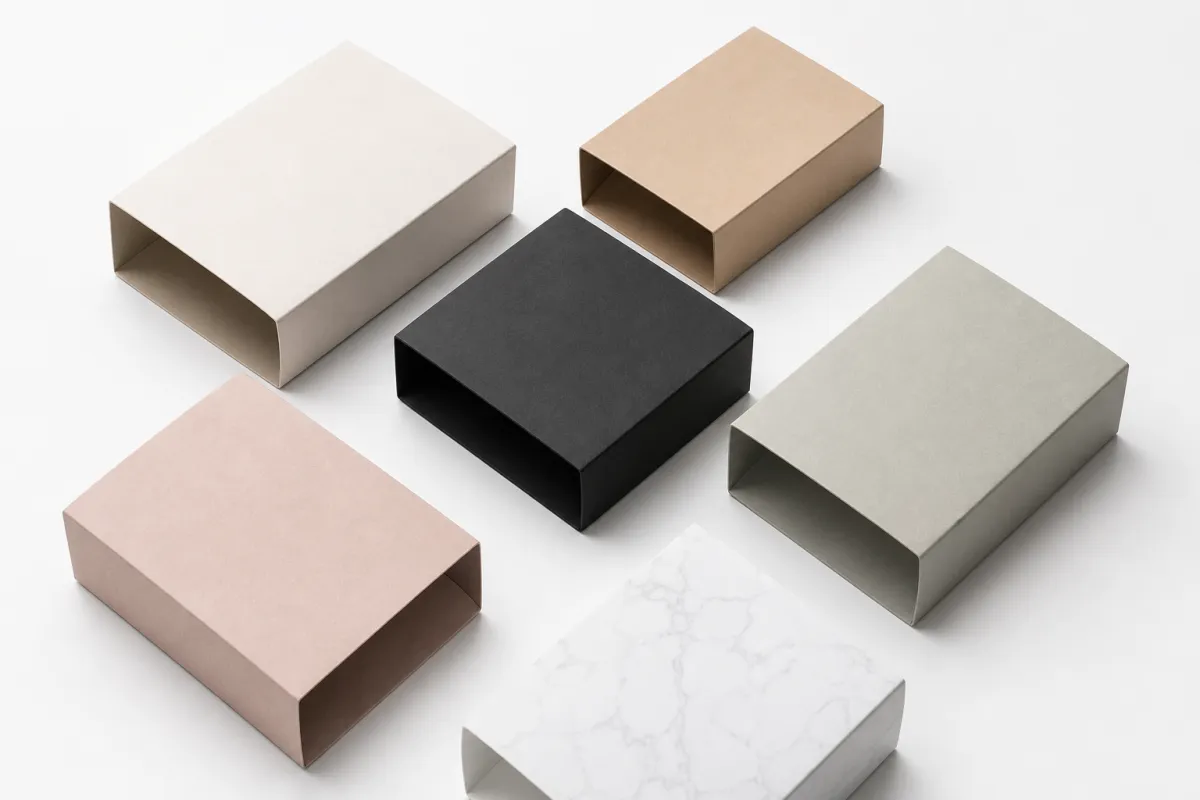
A sleeve is a focused upgrade. A full custom carton changes the entire structure, board spec, dieline, print plan, and often the inventory strategy too. A sleeve, by contrast, wraps branding around an existing base pack. That is a big reason branded packaging sleeves cost less than a new box program in many cases. You are paying for a visible face, not a complete rebuild.
The savings show up in practical ways. First, you can buy a standard box, bottle, tray, or mailer in higher volumes and keep that base pack stable. Second, you can use the sleeve for promotions, line extensions, seasonal messaging, or limited-edition artwork without scrapping the underlying pack. Third, a sleeve gives you a way to test retail packaging ideas without taking on new tooling or a large carton inventory all at once.
For buyers, the win often comes from risk reduction rather than unit price alone. A sleeve can lower the chance of overbuying a format that becomes obsolete when a campaign changes. It also gives you more flexibility for replenishment. If the graphics change but the base pack stays the same, you are not pushed into a complete custom printed boxes reorder cycle. That flexibility is worth real money, even if it does not always show up cleanly on a spreadsheet.
That is where packaging teams sometimes misread the numbers. They compare the unit price of a sleeve to a plain carton and miss the broader commercial picture. A sleeve may cost more than a basic label, yet still cost less than a fully customized carton. It also carries a different value profile: stronger shelf impact, cleaner brand presentation, and easier version control across SKUs.
“The cheapest print choice is not always the best buy. The better question is whether the sleeve improves sell-through, protects inventory, and keeps your packaging design flexible enough for the next launch.”
When buyers ask how branded packaging sleeves cost compares with other formats, I usually arrange the options by complexity. A label is generally the lowest-cost branding layer. A sleeve sits above that because it needs forming, die-cutting, and more board coverage. A full carton usually sits above both because it combines structure, print, and fit into one item. The order is not fixed in every case, but it is a useful place to start.
For brands that need adaptable product packaging, sleeves are often the smart middle ground. You get room for brand storytelling, ingredients, promotional copy, barcodes, and regulatory text, while still keeping the base pack standardized. That works especially well in cosmetics, food, wellness, gift sets, subscription kits, and retail promotions where shelf presence matters but overproduction is expensive.
If you want to see how sleeves fit into broader packaging programs, it helps to review a broader product mix such as Custom Packaging Products and compare that against the launch calendar you are actually managing. The sleeve is not trying to replace every format. It is solving the specific problem of strong presentation without a full structural reinvestment.
For a standards-based view of packaging and shipping performance, the ISTA testing framework is useful when a sleeve ships with a secondary pack that must survive distribution. That does not speak to sleeve print quality, of course, but it reminds teams that the best-looking pack still needs to move through the supply chain without damage.
| Option | Typical setup level | Approx. unit cost pressure | Best use case |
|---|---|---|---|
| Label | Low | Lowest | Fast branding on existing packs |
| Printed sleeve | Moderate | Low to medium | Flexible branding, promos, retail presentation |
| Custom printed box | Higher | Medium to high | Premium unboxing and structural branding |
| Rigid or specialty carton | Highest | Highest | Luxury presentation and high perceived value |
Branded packaging sleeves cost: what drives the price
Every quote blends production work with commercial variables. The most obvious driver is size. A small sleeve for a compact cosmetic box uses less board and less press time than a large sleeve for a multi-item gift set. The next driver is substrate. A simple 350gsm SBS board will usually price differently from a kraft stock or a heavier coated board because the raw material and press behavior are not the same.
Branded packaging sleeves cost also rises or falls with print coverage. A one-color design on a white background is usually simpler than a full-bleed, four-color design with heavy ink coverage on both sides. If the sleeve needs multiple spot colors, varnish, foil, or spot UV, the production steps increase. More steps mean more setup, more handling, and more pressure on scheduling. That is just how the work stacks up.
Volume changes the picture sharply. Short runs usually cost more per unit because setup time, die-cutting, proofing, and press prep are spread across fewer pieces. Larger runs often reduce the unit price, sometimes quite noticeably, because the fixed costs get diluted. That is why branded packaging sleeves cost can look steep at 500 pieces and much more manageable at 5,000 or 10,000 pieces.
Artwork complexity matters too. If you need multiple SKUs, versioned claims, different languages, or promotional copy that changes by channel, the job becomes more expensive to manage. Even when the physical sleeve is similar, version control adds operational time. For a buyer, that means the quote is not only paying for printing. It is also paying for the discipline required to keep each version correct.
Logistics can move the number as well. Freight, packing format, carton count, and rush handling all matter. A sleeve shipped flat in efficient master cartons is easier to move than a more fragile format that needs special packing. If you are ordering from a supplier with tighter production windows or asking for a compressed turnaround, those costs can show up in the final number. No magic there, just the reality of moving paperboard through a supply chain.
The practical way to compare quotes is to look beyond the lowest unit price. Compare the total job. That includes setup, proofing, freight, revision allowances, and any finishing steps. A quote that looks cheaper at first glance can become the expensive option if it hides a large setup charge or pushes shipping into a premium lane. I have seen that happen more than once, and it is always the same story: the first number looked friendly, then the add-ons started appearing.
Typical market ranges vary by size and finish, but for planning purposes many buyers see something like $0.18-$0.45 per sleeve on modest runs with standard print and simple finishing, then lower unit pricing on larger volumes. Specialty finishes, heavy ink coverage, or tighter tolerances can move the number higher. That is normal. It also means branded packaging sleeves cost should be evaluated alongside yield, lead time, and presentation goals, not in isolation.
For buyers who want to benchmark the environmental side of a quote, the EPA recycling and materials strategy pages are helpful when thinking about board choice, recyclability claims, and how a sleeve fits into a broader waste-reduction plan. Sustainability is not a pricing shortcut by itself, but it can influence material selection and brand perception.
One more point gets overlooked often: supplier communication affects price indirectly. Clear specs reduce back-and-forth. Fewer revisions usually mean less admin time, fewer proof cycles, and fewer delays. That does not always change the quote line by line, but it often changes the total project cost. In other words, branded packaging sleeves cost is partly a design issue and partly a project-management issue.
Product details that shape sleeve quality and use
Not every sleeve is built for the same job. Some are designed for cosmetics and wellness kits, where the brand face needs to feel polished and precise. Others support food or snack items, where shelf visibility and clean labeling matter more. Others still are used for subscription boxes, event kits, or seasonal retail packaging. The use case changes the materials, the print plan, and the finishing level.
Branded packaging sleeves cost is shaped strongly by the board you choose. SBS artboard is common for clean white print surfaces and sharp color reproduction. Kraft board gives a more natural, earthy look that can support a sustainability story, but the tone of the stock changes the way colors appear. Coated stocks help deliver a smoother print face and more consistent image density. Each choice has a price implication, and each one sends a different signal to the shopper.
Print method matters in practical terms. Offset printing is usually chosen for high quality, detailed graphics, and tighter color control across medium and large runs. Digital print can be a strong fit for shorter runs or jobs with frequent version changes. Neither is automatically better. The better choice depends on the quantity, the required color consistency, and how often the artwork will change. That is why branded packaging sleeves cost should always be paired with the intended production route.
Finish options can lift shelf impact, but they should earn their keep. Matte lamination feels quieter and more restrained. Gloss can make imagery pop. Soft-touch creates a tactile premium effect, though it is not the cheapest option. Foil can emphasize a logo or a key message, embossing adds a physical highlight, and spot UV creates contrast on selected elements. I would treat these as commercial tools, not decoration for its own sake. If the sleeve is for a temporary campaign that will be stacked in a shipper, premium finishes may not justify the added spend.
Structural details matter more than many buyers expect. A sleeve needs the right die-cuts, fold lines, and tolerance so it slides over the base pack without fighting the material. If the box is slightly oversized or the board thickness changes, the sleeve can bind, scrape, or sit loosely. That turns a branding decision into a packaging problem. A clean fit signals care. A sloppy fit undercuts the whole presentation.
For teams working on branding and packaging together, the sleeve can serve as a tactical asset. It can carry a promotional offer, a limited-edition message, a QR code, or a seasonal design while keeping the underlying stock unchanged. That makes it especially useful when a marketing calendar moves faster than packaging development cycles.
Good sleeve programs also support cleaner inventory planning. Instead of stocking multiple fully printed carton versions, a brand may hold a consistent base pack and print sleeves in smaller batches tied to forecasted demand. That reduces obsolescence risk. It also makes reorders easier to manage because the structural pack stays fixed while graphics rotate.
If you are considering FSC-certified board, check the chain-of-custody requirements carefully. The certification itself is meaningful only if the supplier can document it properly. You can review standards and sourcing principles on fsc.org. That matters for claims, retailer audits, and internal procurement checks. It also helps keep the sustainability story credible instead of vague.
There is also a practical distinction between a sleeve meant to be opened and one meant to remain on the pack in use. A sleeve for a retail kit may need easy removal after purchase. A sleeve for a gift box may need a tighter, more elegant wrap. Those details sound small, but they affect branded packaging sleeves cost because they alter dieline complexity, finishing tolerance, and the chance of rework.
From the standpoint of product packaging, the sleeve often does exactly what a smart buyer wants: it adds visible value where the customer sees it, not where the factory process is easiest. That is why sleeve specs should be judged by fit, print clarity, and consumer impact, not only by board weight.
Specifications that affect branded packaging sleeves cost
The fastest way to get a useful quote is to provide a complete spec sheet. At minimum, that should include exact dimensions, board type, print sides, finish, quantity, and the artwork status. If you send only a rough size and a logo, the supplier has to guess. Guessing usually means a wider price band, slower turnaround, and more risk of changes later.
Accurate measurements matter more than most people think. A sleeve built for a carton that is even a few millimeters off can create fit problems. Too tight, and the sleeve may scuff or buckle during application. Too loose, and the package looks careless on shelf. Either way, branded packaging sleeves cost can rise because a poor initial measurement creates sample revisions or reruns.
The actual material structure also influences the number. A plain 300gsm board with one-side print will not cost the same as a 350gsm board with full-bleed graphics, two-sided print, and a specialty finish. If the brand requires strong color matching, Pantone references, or a controlled visual standard across multiple SKUs, the printer may need extra testing and more exact press setup. That is a fair cost, not a hidden one.
Approval steps are another real cost factor. Proofs, samples, dieline adjustments, and artwork revisions all take time. A buyer may not see each of those as a line item, but they influence scheduling and sometimes the final price. If the job requires a physical sample to confirm sleeve fit, that sample cycle should be planned up front. Otherwise the project slips, and the rush window becomes the expensive part.
For larger programs, a simple spec sheet can prevent a lot of confusion. I recommend including:
- Exact internal and external dimensions of the base package
- Desired sleeve finished size and wrap direction
- Board type and target thickness
- Print method, colors, and coverage
- Finish choice such as matte, gloss, foil, or spot UV
- Quantity per SKU and total quantity
- Packaging format for shipment
- Target delivery date and any launch constraints
That level of detail improves quote accuracy. It also makes supplier comparisons much fairer. If two vendors are quoting on different assumptions, the cheaper one may only look cheaper because it excluded setup, proofing, or finishing. That is one of the oldest traps in branded packaging sleeves cost analysis.
Multiple SKUs deserve a separate check. If a brand wants one master sleeve with changing copy panels or region-specific text, the print file logic can become the deciding factor. In that case, digital print may help with version control on smaller runs, while offset may win for larger quantities. The right answer depends on the number of versions and how often they change.
Buyers should also think about supply chain behavior. A sleeve for export cartons, for example, may need stronger packing, clearer outer carton labeling, or stricter transit protection. That is not sleeve design in the narrow sense, but it affects the overall cost structure. If a package must survive longer transit or more handoffs, the order may need better packing discipline. Standards such as ISTA testing can be useful if the pack is part of a distribution-sensitive program.
The clearest way to keep control is to compare like for like. If one quote includes a proof and another does not, adjust for that. If one supplier offers a heavier board, ask whether that is necessary for the application. If one quote prices a premium finish but your product sits inside a shipper most of the time, reconsider whether the finish is paying back in sales, not just in appearance.
Handled this way, branded packaging sleeves cost becomes a decision tool rather than a surprise. The right specifications narrow the range, improve fit, and help procurement and marketing agree on what the sleeve is supposed to do.
Process, timeline, and turnaround from quote to delivery
The process usually starts with an inquiry, but the quality of that inquiry sets the pace for everything that follows. If the supplier receives exact dimensions, quantity, board preference, finish choice, and artwork status, they can quote faster and more accurately. If the inquiry is vague, the quote will be vague too. That may sound obvious, but it still trips up a lot of sleeve projects.
Here is the usual path: inquiry, quote, artwork review, proof approval, production, finishing, packing, and shipment. Each stage can move quickly on a simple job, or slowly on a complex one. Straightforward runs with standard print and simple folds often move faster than jobs with foil, embossing, soft-touch lamination, or multiple artwork versions. When branded packaging sleeves cost is compared against delivery timing, speed is often the hidden variable.
Most delays happen in a few predictable places. Late artwork is the most common. Unclear specs come next. Then come approval delays, last-minute copy changes, or a change in quantity after the job is already scheduled. Each of those adds friction. None is dramatic on its own. Together they can push delivery beyond a launch date.
For planning purposes, simple sleeve jobs may move through production in roughly 10-15 business days after approval, while more complex runs can take longer if tooling, finishes, or sample approval are involved. That range is not a promise; it depends on the exact job. Still, it is realistic enough to plan around. If your launch date is fixed, do not leave the sleeve to the last minute.
Rush handling is possible in some programs, but it is rarely the cheapest path. When teams compress the timeline, they often pay for priority scheduling, extra admin time, or more expensive freight. In other words, branded packaging sleeves cost can increase because the calendar gets short. A better tactic is to lock the spec early and keep the approval path tight.
Good communication from a supplier matters here. The best vendors do not make buyers chase every update. They explain what is needed, what is approved, and where the job stands. That reduces internal friction. It also protects the launch plan because everyone understands the remaining steps.
For reference and inspiration, it helps to look at prior work in Case Studies. Not every project will be identical, but examples make it easier to see how sleeve format, print finish, and budget interact in real packaging programs. A buyer can often spot the difference between a sleeve designed for shelf impact and one that was simply priced as a commodity item.
Turnaround also depends on how many SKUs are in the job. One sleeve version is one thing. Six versions with different claims, languages, or barcodes is another. That is where project management becomes part of the pricing equation. More versions mean more proof checks, more file control, and more opportunity for error if the process is not disciplined.
When planning for seasonal drops, the safest move is to work backward from the launch date. Allow time for proof review, sample checks if needed, and freight. If the sleeve must arrive alongside product fill or kitting, the schedule should be even tighter. I would rather see a buyer commit slightly earlier than scramble later, because late changes tend to be expensive changes. Nobody wants to be chasing cartons at the end of the week.
That is the core of branded packaging sleeves cost planning: the printed unit is only one part of the commercial equation. The project timeline, the number of review cycles, and the shipment plan all affect what You Really Pay.
Why choose us for branded packaging sleeves
Buyers do not need more noise. They need a supplier that makes the specification, quoting, and approval process easier. That is the benchmark worth using when comparing vendors for branded packaging sleeves cost. If the supplier responds clearly, prices transparently, and flags risks before production starts, the job usually goes better.
Custom Logo Things is positioned for buyers who want practical support, not vague promises. The value is in clear communication, consistent print quality, and a realistic conversation about quantity, finish, and turnaround. That matters because sleeve orders often sit between marketing and operations. One side wants presentation. The other side wants control. A good supplier helps both sides work from the same spec.
We also know that not every project starts at the same scale. Some teams need a modest test run to validate shelf response. Others need a larger production lot for a stable retail rollout. In both cases, the goal is the same: keep branded packaging sleeves cost aligned with the business result. That means advising on MOQ, helping with versioning, and avoiding overbuying when the market has not yet proven the design.
Quality control matters here. Sleeve jobs need accurate cutting, consistent color, and dependable fit. If the board is wrong, the sleeve slides poorly. If the color drifts, the brand looks off. If the finish is overdone, the sleeve can feel more expensive than the product inside. Those are not minor concerns. They affect packaging design and sell-through in very concrete ways.
Good oversight also reduces surprises before shipment. A sensible production partner will review the dieline, check dimensions, confirm print expectations, and make sure the final pack is packed in a way that supports transit. That discipline is what buyers should expect from a supplier handling branded packaging, especially when the sleeve is part of a broader product packaging program.
For retailers and consumer brands, the best outcome is simple. The sleeve arrives on time, fits the pack, carries the message cleanly, and stays within budget. That is the standard. Anything less adds work on the buyer’s side. In a crowded market, a supplier that removes friction is worth more than one that only quotes a low number.
If you are balancing shelf impact and spend, it helps to think in terms of return, not decoration. A sleeve that sharpens presentation, supports upsell, or simplifies seasonal refreshes can justify itself quickly. That is why branded packaging sleeves cost should be judged against commercial value, not just printing expense.
Next steps: compare quotes and lock in your sleeve spec
Before you request pricing, assemble the basics: exact dimensions, board choice, print sides, finish level, quantity, and delivery target. That small amount of preparation makes the quote more useful and gives you a much clearer read on branded packaging sleeves cost. A clean brief saves time on both sides.
Then compare at least two or three suppliers side by side. Look at unit price, setup fees, proofing, finish options, and lead time together. A quote that looks strong on unit price may not be strong once finishing or shipping is included. That is especially true if you are comparing sleeves against labels, cartons, or other branded packaging formats.
If your sleeve must fit tightly over an existing box, ask for a sample or proof. If color matters, ask for guidance on the print method and whether a standard proof is enough or a physical sample is safer. That small extra step can prevent expensive rework. It can also give marketing and operations the same reference point, which saves a lot of back-and-forth later.
Finally, plan your order with enough room for proof changes and freight. If the launch is tied to a retailer set date or a seasonal promotion, work backward from that date instead of forward from the quote. That is the difference between a controlled rollout and a rushed one. And rushed programs almost always push branded packaging sleeves cost higher than planned.
In the end, the best buying decision is the one that matches the sleeve spec to the real job: shelf impact, fit, quantity, and timing. Get those right, and branded packaging sleeves cost becomes manageable, predictable, and easy to defend inside the business.
How much do branded packaging sleeves cost per unit?
Unit cost depends on size, board, print coverage, finish, and quantity. Smaller orders usually cost more per sleeve because setup and press time are spread across fewer pieces. Ask for a quote using exact dimensions and artwork details so the number is useful for budgeting.
What is the usual MOQ for branded packaging sleeves?
MOQ varies by supplier and production method, but it is usually lower than a full custom carton run. Simple sleeves often support smaller test runs, while specialty finishes may require a higher minimum. If you need multiple SKUs, ask whether quantities can be split without pushing the unit price too high.
Can branded packaging sleeves fit an existing box size?
Yes, as long as the base package dimensions are measured accurately. The sleeve must account for board thickness, fold tolerance, and the way it will slide over the box. A sample or dieline check is the safest way to confirm fit before production.
Which finishes increase branded packaging sleeves cost the most?
Foil, embossing, spot UV, and soft-touch coatings typically add more cost than standard printing. Complex finishes can also extend production time because they add extra manufacturing steps. Use premium finishes where the sleeve faces the customer directly, not on every internal variation.
How long does production usually take after approval?
Timeline depends on complexity, quantity, and whether proofs or samples are required. Straightforward runs move faster than jobs with specialty finishes or multiple artwork revisions. Approve artwork quickly and confirm shipping details early to avoid delays in the final delivery window.


