Buyer Fit Snapshot
| Best fit | Sustainable Hang Tag Printing Cost projects where brand print, material claims, artwork control, MOQ, and repeat-order consistency need to be specified before quoting. |
|---|---|
| Quote inputs | Share finished size, material target, print colors, finish, packing count, annual reorder estimate, ship-to region, and any compliance wording. |
| Proofing check | Approve dieline scale, logo placement, barcode or warning zones, color tolerance, closure strength, and carton packing before bulk production. |
| Main risk | Vague material claims, crowded artwork, missing packing details, or unclear freight terms can make a low unit price expensive after revisions. |
Fast answer: Sustainable Hang Tag Printing Cost: Material, Adhesive, Artwork, and MOQ should be specified like a repeatable production item. The safest quote records material, print method, finish, artwork proof, packing count, and reorder notes in one written spec.
Production checks before approval
Compare the actual filled-product size with the drawing, then confirm tolerance on folds, seals, hang holes, label areas, and retail display edges. Reserve space for logos, QR codes, warning copy, and material claims before decorative graphics fill the panel.
Quote comparison points
Review material grade, print process, finish, sampling route, tooling charges, carton quantity, and freight assumptions side by side. A quote is only useful when the supplier can repeat the same color, closure quality, and packing count on the next order.
The cheapest-looking tag often turns out to be the most expensive order by the time the job is packed, checked, shipped, and used. Sustainable hang tag printing cost depends on stock, size, ink coverage, finishing, and the amount of file cleanup needed before anything goes on press. A boutique launch can look polished on a screen and still strain the budget once trimming, punching, stringing, and reprints are counted. Buyers are not paying for paper alone; they are paying for consistency, fewer defects, and tags that carry the brand cleanly instead of dragging attention away from it.
That is the piece people miss when they ask for a price too quickly. Sustainable hang tag printing cost is not one line item; it is the result of material choice, print method, MOQ, setup, and turnaround speed working together. Apparel, candles, beauty products, and handmade goods all need the tag to do several jobs at once: look good, survive handling, and stay inside budget. That sounds simple until the product line, the finish, and the deadline all start pulling in different directions. Cheap shortcuts tend to show up later as waste, and waste has a habit of being expensive.
In my own prepress reviews, the jobs that stay on budget are rarely the flashiest ones. They are the ones where the spec is clear, the artwork is ready, and the buyer knows what matters more: presentation, durability, or price. If you try to optimize all three equally, you usually end up with a compromise that looks tidy on paper and awkward in hand. That is where the real cost sneaks in.
Sustainable Hang Tag Printing Cost: What Drives It?
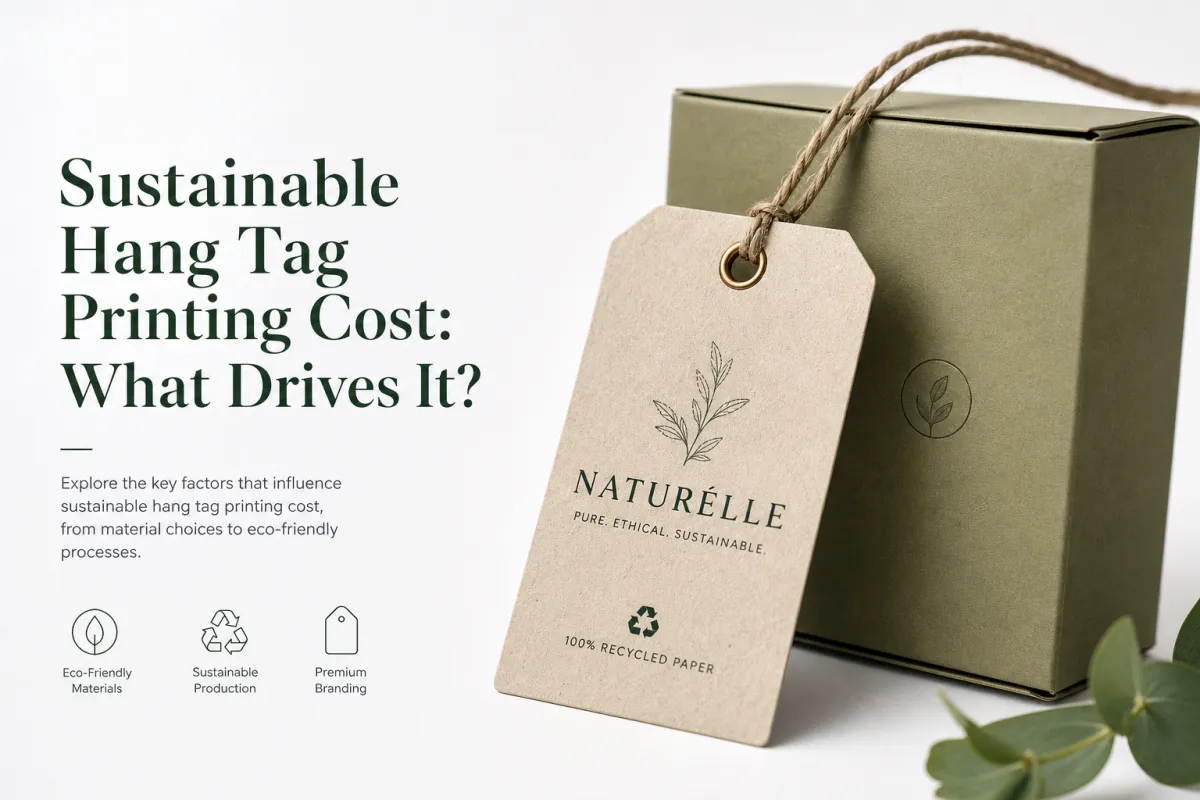
A tag that saves two cents but triggers a reprint is not a savings. It is a neat little mistake with a clean edge. Sustainable hang tag printing cost starts with the basics: substrate, size, print coverage, and quantity. The number then shifts with finishing, hole punching, threading, and whether the artwork needs spot color matching or a full CMYK build. For a clothing launch, the price is not just about the tag itself. It is about whether the tags arrive flat, stack neatly, and match from the first carton to the last.
From a packaging buyer's point of view, the real question is never only "What is the lowest price?" It is "What unit cost gives me the fewest problems?" Sustainable hang tag printing cost should be measured against spoilage, labor, and presentation. A recycled paper tag that prints cleanly, punches cleanly, and stacks well can outperform a fancier stock that curls, scuffs, or slows down packing. Consistency saves money. It does not sound dramatic, yet it is usually the difference between a tidy rollout and a job that keeps asking for attention.
Another useful way to think about sustainable hang tag printing cost is to treat it as brand control, not just print. If the tags on a 500-piece launch all match, the hang tags reinforce the product instead of competing with it. If the stock curls, the drill holes tear, or the ink density drifts between batches, the tag begins to feel like a quality complaint before the customer even touches the item. That is why the budget conversation should include how the tag behaves in real use, not only how it appears in a mockup.
A practical launch scenario makes the point quickly. A small apparel label orders 1,000 tags for a seasonal drop. The gap between plain recycled paper and a heavier FSC-certified stock may only be a few cents per unit, but the heavier stock can reduce edge damage, improve stiffness, and make the product feel more deliberate. Sustainable hang tag printing cost rises a bit, while the perceived value of the item often rises faster. That is the sort of tradeoff worth measuring.
"A brown tag is not automatically a sustainable tag. Packaging theater is still theater."
Waste belongs in the calculation too. Reprints caused by file errors, color mismatches, or wrong punch placement can wipe out any savings from a low quote. That is why sustainable hang tag printing cost needs to be read as a total project cost, not a single unit price. If one supplier looks cheaper but excludes proofing, packing, or freight, the final bill may end up higher than the quote that seemed more expensive at the start.
For buyers comparing options, the biggest cost levers usually include these:
- Material - recycled paper, kraft, cotton, and seeded paper all behave differently on press.
- Size - larger tags use more stock and usually increase waste on press sheets.
- Print method - digital printing is strong for small runs, offset printing often wins on volume, and flexographic printing can suit repeat work.
- Finish - matte coating, soft-touch, foil, embossing, and lamination all change both appearance and price.
- Turnaround - rush jobs cost more because they disrupt scheduling and freight planning.
That is the plain version of sustainable hang tag printing cost. No mystery, no polish for its own sake. Just a set of moving parts that add up fast if one of them is ignored.
Product Details: What Counts as a Sustainable Hang Tag
A sustainable hang tag is not one material, and it is certainly not just "anything brown." That shorthand causes more confusion than clarity, and buyers who rely on it usually end up with tags that do not fit the brand or the production line. Sustainable hang tag printing cost starts with what the product actually is: Recycled Paper Hang Tags, FSC-certified stock, kraft tags, cotton hang tags, seeded paper, or other low-impact substrates. Each one brings a different texture, print response, and waste profile.
Recycled paper is the practical starting point for many brands. It gives a clean print surface, works well with both digital printing and offset printing, and can be specified in common weights like 300gsm, 350gsm, or 400gsm depending on stiffness. FSC-certified board is another common choice when traceable sourcing matters. Kraft stock remains popular because it has an honest, natural look, but appearance alone does not guarantee lower impact. Sustainable hang tag printing cost should be tied to the material specification itself, not only the language used in the mockup.
There is a real difference between a sustainable tag and a greenwashed tag. A brown uncoated sheet with heavy ink coverage can still be wasteful. A premium cotton tag may cost more upfront, yet it may also lie flatter, feel better in hand, and avoid coatings that complicate recycling. Seeded paper can be memorable for the right launch, but it is not a practical answer for every category and it should be treated honestly because it can be more fragile in pack-out. That is why sustainable hang tag printing cost should be judged against finish, ink load, and product category. A candle tag does not need the same structure as a heavy outerwear label, and a beauty line does not need the same stock as a workwear line. Matching the tag to the product keeps the spend honest.
Common use cases include:
- Apparel - size, price, care info, brand story, barcode, and collection details.
- Accessories - product naming, SKU, material notes, and gift presentation.
- Beauty - ingredient cues, batch codes, and premium shelf presence.
- Candles - scent notes, burn guidance, warning icons, and seasonal branding.
- Handmade goods - artisan story, logo, and concise product data.
In most of these categories, the hang tag does more than carry a price. It signals quality, explains the product, and helps the item feel finished. That is where sustainable hang tag printing cost becomes a business decision instead of a print purchase. If the tag is part of the packaging system, it should behave like packaging: durable enough, legible enough, and consistent enough to support the sale.
Standard components matter too. A useful tag often includes front and back print, a barcode zone, hole punching, rounded corners, and a string or twine attachment. Some orders need variable data for SKU or batch coding. Others need a blank area for handwritten pricing or retail stickers. Each add-on changes sustainable hang tag printing cost because it affects setup, trimming, and pack-out labor. A tag that is easy to use usually costs less to own than one that looks impressive but asks for extra handwork at every stage.
For buyers who want a broader view of tag and label formats, it helps to compare the tag with related packaging pieces. See our Custom Labels & Tags options if you are building a coordinated line. If you want the production side spelled out more clearly, our Manufacturing Capabilities page gives a better sense of what can be produced efficiently.
One final point here: paper claims should be traceable. If you are comparing suppliers, ask whether the stock is FSC-certified or whether the supplier can document recycled content claims. For certification basics, the FSC site explains chain of custody and label usage clearly: fsc.org. That matters more than vague "eco-friendly" language, which is usually just decoration.
Specifications That Change Cost, Look, and Durability
If you want to control sustainable hang tag printing cost, start with the spec sheet. Size, stock weight, coverage, finish, and shape all move the number. A 2 x 3 inch tag on 350gsm recycled board is a different job from a 3 x 5 inch tag on cotton stock with double-sided print and rounded corners. That sounds obvious once it is written out, yet it gets missed constantly when people ask for "an eco tag quote" without naming the build.
Size is the first driver. Larger tags use more material and create more sheet waste around the die. They also increase postal weight if the tags are shipped loose in batches. If the brand story can fit on a compact tag, the print cost usually falls. If the design needs a bigger visual footprint, then the budget has to carry the added material and trimming. Sustainable hang tag printing cost is often lowest when the layout is designed around a standard size instead of a custom shape that forces extra waste.
Paper weight changes both feel and durability. A lightweight recycled sheet may be fine for a short promotional run, but it can curl, scuff, or look thin beside a premium garment. Heavier stock raises unit cost, though it also reduces bending and gives the tag a more deliberate feel. In many retail categories, a 350gsm or 400gsm board is the better buy because it protects presentation and lowers spoilage. That means sustainable hang tag printing cost can fall in practice if the better stock avoids rework and damage later on.
Ink coverage matters more than most people expect. A simple one-color mark uses less press time and less ink than a full-bleed CMYK design. Dark solids, rich black backgrounds, and broad saturated areas can all push pricing up because they require more control and more drying time. Spot color work can help keep brand color tighter, especially on a recurring product line, while CMYK is more flexible for photo-heavy layouts. If the design stays simple, sustainable hang tag printing cost stays lower. If the artwork gets heavier, the bill follows.
Print finishing is the quiet budget mover. Matte coating can improve handling and scuff resistance. Soft-touch lamination creates a premium feel, though it is not always the cleanest path for sustainability claims. Foil stamping, embossing, and spot UV all raise cost and can complicate the environmental story if they are used without restraint. Sometimes the better answer is to rely on paper texture, clean typography, and a controlled finish. That usually gives a more honest result and keeps sustainable hang tag printing cost inside range.
Attachment details deserve attention as well. Stringing and twine can be simple, but they add hand labor. Die-cut shapes may look sharp, yet custom tooling can increase both setup cost and lead time. Rounded corners are a practical middle ground because they reduce edge wear without introducing extra complexity. Hole placement matters too. Too close to the edge and the tag tears. Too far in and the balance feels awkward. Small choices like these create waste, which is another way sustainable hang tag printing cost creeps upward.
Here is a practical comparison of common spec choices:
| Option | Look | Durability | Typical Cost Impact | Best Use |
|---|---|---|---|---|
| Recycled uncoated paper | Natural, clean, understated | Good for light handling | Usually lowest | Short runs, simple branding, price-sensitive launches |
| FSC-certified board | Polished and consistent | Better stiffness and flatter stacking | Moderate | Apparel, accessories, retail tags |
| Craft-style kraft stock | Organic, earthy, textured | Moderate, depends on fiber blend | Moderate | Handmade goods, rustic packaging, gift items |
| Cotton or premium fiber stock | Soft, high-end, tactile | Strong feel, excellent presentation | Higher | Luxury, beauty, premium capsule releases |
| Seeded paper | Distinctive and memorable | More delicate in handling | Highest for most runs | Promotions, special launches, short runs with a story |
That table is the basic math behind sustainable hang tag printing cost. A material can look appealing and still be a poor buy if it tears during pack-out. Another can feel plain and still be the smarter option because it prints better, wastes less, and holds up in retail use. Buyers should choose the spec that supports the product, not the one that looks best in one mockup.
For transportation-heavy orders, packaging performance matters too. If the tags are traveling with apparel, the supplier should care about how the stack is packed, whether edges are protected, and whether the box can survive normal transit abuse. If you are testing logistics, the shipping standards from ISTA are useful context: ista.org. That kind of discipline is not flashy. It saves money anyway.
Sustainable Hang Tag Printing Cost: Pricing, MOQ, and Volume Breaks
Quantity changes everything. People try to negotiate around it all the time, and the math rarely bends. Sustainable hang tag printing cost drops as volume rises because setup, proofing, cutting, and packing are spread over more units. Small orders feel expensive because the fixed work has to be recovered across fewer pieces. Once the run gets larger, the unit cost begins to make sense.
For planning, it helps to think in bands rather than exact promises. A sample or micro-run may sit in a higher unit-cost range because the process still needs setup. Small launches usually land in the middle. Reorderable wholesale quantities usually give the best price break. The exact sustainable hang tag printing cost depends on the artwork, stock, and finish, but the pattern is steady. Tiny order, high unit cost. Bigger order, lower unit cost. Packaging has never been shy about that logic.
Here is a realistic way to compare volume bands:
| Quantity Band | Typical Use | Approx. Unit Cost Direction | Notes |
|---|---|---|---|
| 100-250 pieces | Samples, prototypes, internal approval | Highest | Useful for testing artwork and stock, not ideal for price efficiency |
| 500-1,000 pieces | Small product launch | High to moderate | Good for a first retail drop, but setup still weighs heavily |
| 2,000-5,000 pieces | Growing brand, seasonal line | Moderate | Often the best balance of unit cost and inventory risk |
| 10,000+ pieces | Repeat programs, wholesale, chain retail | Lowest | Best raw price, but only smart if the design will not change soon |
That spread is why sustainable hang tag printing cost needs to be judged against actual usage. A brand with a steady core range can order more and lower the cost per tag. A seasonal brand with frequent art changes may be better off ordering smaller volumes more often so the tags do not sit around as dead inventory. The cheapest unit is not always the smartest inventory decision, especially when product lines move quickly.
MOQ matters because different print methods have different setup logic. Digital printing usually supports lower MOQ because it avoids some of the plate and press setup associated with offset printing. Offset printing often becomes more attractive as volumes rise and color consistency matters across a long run. Flexographic printing is common in repeat packaging work where designs stay stable and volumes justify the setup. None of those methods is "best" in every case. The right method is the one that fits the run length, finish, and deadline. Sustainable hang tag printing cost changes with all three.
Buyers also need to know what is included in the quote. A clean quote should spell out prepress, proofing, printing, cutting, punching, stringing if needed, packing, and freight terms. If one supplier excludes packaging or shipping, the apparent savings can disappear fast. That is why comparing sustainable hang tag printing cost requires apples-to-apples specs: same size, same stock, same finish, same quantity, same shipping method. Anything else is a rough sketch, not a real comparison.
Hidden charges often hide in small places. A rush proof fee. A plate charge. A custom die. A manual stringing charge. A packaging surcharge for split shipments. A color correction step after the artwork is already in queue. Individually, those items look small. Together, they can create a real jump in sustainable hang tag printing cost. Buyers who ask for a line-by-line quote usually avoid the painful surprises.
One more practical note: if the design is stable, pre-ordering a slightly larger quantity can lower the unit price enough to offset future reorder risk. If the design is likely to change, overbuying becomes false economy. I have seen teams chase the lowest sustainable hang tag printing cost and then sit on obsolete tags for months. That is not efficiency. That is inventory with feelings.
Process and Timeline: From Quote to Delivery
A clean order process saves money. That is not glamorous, but it is true. Sustainable hang tag printing cost is easier to control when the job moves through a clear sequence: inquiry, quote, artwork check, proof approval, production, quality control, and shipment. Every skipped step tends to reappear later as a correction fee or a delay fee. Packaging does not reward guesswork or optimism.
The fastest projects begin with a complete spec sheet. If the buyer knows the size, quantity, stock preference, print sides, finish, and attachment style, the quote can be accurate the first time. If the art file is also ready in the right format, the production team can check bleed, safe area, and color setup quickly. That shortens both lead time and sustainable hang tag printing cost because fewer revisions are needed.
Digital printing is usually the quickest for smaller runs because it skips plate setup. Offset printing may take longer, especially if the color build is complex or the artwork needs careful matching. Specialty finishing can add another layer of time if the tag uses embossing, foil, or custom die-cut shapes. In plain terms: the more special the tag, the more schedule pressure it creates. Sustainable hang tag printing cost should always be checked against the launch calendar, not only the target budget.
Typical timing often looks like this:
- Artwork check and proofing - 1 to 3 business days if the files are ready.
- Standard digital production - often 3 to 7 business days after proof approval.
- Offset production - often 7 to 12 business days depending on the spec.
- Special finishing - add time for die cutting, embossing, or custom stringing.
- Shipping - depends on distance, freight class, and whether the order is boxed for retail use.
What slows things down most often? Missing dielines. Low-resolution logos. Last-minute color changes. Unclear hole placement. Artwork that has not been flattened or checked for bleed. A buyer can reduce sustainable hang tag printing cost by sending better files because the prepress team spends less time untangling avoidable problems. It sounds minor, yet those small fixes tend to decide whether a job stays on schedule or starts collecting charges.
Good vendors also keep quality control simple and visible. That means checking cutting alignment, punch placement, color consistency, and count accuracy before shipment. If the tags are going into retail or wholesale packaging, the supplier should be able to pack them in a way that supports fast use on the receiving end. A clean pack-out is part of the value, not a bonus. It reduces labor after delivery and keeps sustainable hang tag printing cost from climbing in hidden warehouse time.
For buyers managing a launch date, the safest move is to work backward. Leave time for one proof round, a production window, and a shipping buffer. If the deadline is fixed, rush jobs can be arranged, but rush fees exist for a reason: they compress schedule flexibility and often increase freight cost. That is why the real sustainable hang tag printing cost is always linked to time as much as material.
If you need production clarity before you order, our team's Manufacturing Capabilities page is the best place to see how different print methods and finishing options fit together. It is much better to make the decision once than to figure it out later and pay for it twice.
Why Choose Us for Sustainable Hang Tag Printing
Most buyers do not need poetry from a supplier. They need someone who can hold the line on spec, color, and schedule without turning every quote into a guessing game. That is the value here. At Custom Logo Things, the practical benefit is clear communication, consistent production, and help choosing the version that fits the job instead of pushing the most expensive one. That matters because sustainable hang tag printing cost is easier to manage when the supplier gives straight answers.
Material sourcing is one part of that. Print accuracy is another. Waste reduction is the third. If the stock is right, the color is right, and the finishing is not overdone, the job usually runs smoother and costs less to own. Sustainable hang tag printing cost should feel predictable. If the supplier cannot explain why one tag costs more than another, that is usually a sign that the quote is padded or incomplete.
Good support also means recommending a sensible spec. Sometimes that means a standard size instead of a custom die. Sometimes it means simplifying the layout to one side. Sometimes it means choosing recycled board with clean print rather than adding a finish that looks fancy but does very little in retail use. The point is not to make the tag cheap. The point is to make the tag sensible. That is how sustainable hang tag printing cost stays aligned with brand value.
For a buyer, the best supplier is the one that helps avoid bad decisions early. That includes checking file readiness, confirming stock thickness, warning when a color build is too fragile, and flagging if stringing will add labor without adding much value. It also includes handling the order cleanly once approved, so the tags arrive ready to use instead of needing another round of handwork. That kind of process discipline protects sustainable hang tag printing cost from turning into a pile of small add-ons.
There is also a trust factor. If a vendor can explain the difference between digital printing, offset printing, and flexographic printing in plain language, that is useful. If they can talk about CMYK versus spot color without turning it into a sales lecture, even better. If they can show how a matte recycled tag differs from a cotton tag in handling and appearance, the buyer gets a better result. Those are the conversations that lead to cleaner production and a fairer sustainable hang tag printing cost.
One more detail buyers appreciate: sample support. A good sample lets you see stiffness, texture, color behavior, and how the tag sits beside the actual product. That reduces risk. It also reduces the chance of paying for a full run that looked fine on a screen and wrong in hand. In a category this tactile, the sample often saves more than it costs. That is the kind of decision that keeps sustainable hang tag printing cost under control.
If you are comparing suppliers, ask yourself three questions: do they explain the specs clearly, do they price the job transparently, and do they help you Choose the Right quantity? If the answer is yes, the order is probably in good hands. If the answer is vague, the quote will probably be vague too. And vague is expensive.
Next Steps: Get an Accurate Quote Fast
The fastest way to get a reliable quote is to send the right information the first time. That sounds basic because it is basic. Sustainable hang tag printing cost becomes much easier to estimate when the request includes size, quantity, stock preference, print sides, finish, attachment style, and final artwork files. If any of those pieces are missing, the quote will be a placeholder instead of a real number.
Use this checklist before you ask for pricing:
- Final size or the closest standard size you want to use.
- Quantity needed for the first order and any repeat order estimate.
- Preferred stock, such as recycled paper, FSC-certified board, kraft, or cotton.
- Print setup, including one side or two sides, CMYK or spot color.
- Finish requirements like matte coating, rounded corners, embossing, or no special finish.
- Attachment needs, such as string, twine, punched hole, or no attachment.
- Artwork files in the correct format with bleed and safe area confirmed.
If you want a smarter budget conversation, ask for two or three spec options instead of one. A standard recycled board, a heavier FSC-certified board, and a premium fiber stock can reveal where the best balance sits between appearance, durability, and unit cost. That comparison usually shows which version keeps sustainable hang tag printing cost in range without weakening the product presentation.
That approach also helps avoid the false choice between "cheap" and "premium." Sometimes the middle spec is the real answer. A standard size, simple layout, and clean finish can look more expensive than a crowded tag with extra effects. The buyer who understands that usually gets the better result, both visually and financially. The buyer who does not often learns the hard way, which is a very old and very avoidable packaging lesson.
If you are ready to move, confirm the final specs, approve the proof quickly, and place the order with enough time to skip rush charges. That is the easiest way to keep sustainable hang tag printing cost in line while still getting a tag that supports the brand. If you want help narrowing the options, send the basics and compare the quote against two alternate materials. That is usually where the smartest decision shows up.
Bottom line: sustainable hang tag printing cost is not about chasing the lowest number. It is about getting the right stock, the right finish, the right quantity, and the right timeline for the product in front of you. Do that, and the tag works. Miss it, and you pay for it twice.
FAQ
How much does sustainable hang tag printing cost for a small order?
Small orders usually cost more per tag because setup, proofing, and cutting are spread over fewer pieces. Expect the best value once you move from sample quantities into a repeatable production run. The final sustainable hang tag printing cost still depends on size, stock, ink coverage, and whether you need stringing or special finishing.
What affects sustainable hang tag printing cost the most?
Quantity is usually the biggest lever, followed by material choice and finish complexity. Heavy ink coverage, Custom Die Cuts, and premium coatings raise sustainable hang tag printing cost faster than simple one-color artwork. Rush turnaround and shipping speed can also move the total more than buyers expect.
Can I lower sustainable hang tag printing cost without making the tag look cheap?
Yes. Simplify the shape, reduce special finishes, and use a stock that still fits the brand feel. One-sided print, standard sizes, and clean layouts often lower sustainable hang tag printing cost without hurting presentation. Ordering a little more at once can also reduce unit cost if the tags will be used consistently.
What is the minimum order for sustainable hang tag printing?
MOQ depends on the print method and finishing, but small-run digital jobs usually start lower than offset runs. If you need specialty work, the minimum may be higher because setup costs have to make sense on both sides. Ask for price breaks at a few quantities so you can see where the jump in sustainable hang tag printing cost starts to work in your favor.
How long does sustainable hang tag printing take after artwork approval?
Standard timelines are usually driven by proof approval, production method, and shipping distance. Simple jobs move faster, while custom shapes or special finishes add time. If your launch date is fixed, build in extra time for file checks and one round of proof changes so sustainable hang tag printing cost does not rise because of rush charges.
If you are pricing a new run, gather the exact size, material, finish, quantity, and artwork before you request a quote, then compare at least two material specs side by side. That single habit usually does more to control sustainable hang tag printing cost than any last-minute negotiation ever will.

