Buyer Fit Snapshot
| Best fit | Branded Packing Inserts Bulk Pricing projects where brand print, material claims, artwork control, MOQ, and repeat-order consistency need to be specified before quoting. |
|---|---|
| Quote inputs | Share finished size, material target, print colors, finish, packing count, annual reorder estimate, ship-to region, and any compliance wording. |
| Proofing check | Approve dieline scale, logo placement, barcode or warning zones, color tolerance, closure strength, and carton packing before bulk production. |
| Main risk | Vague material claims, crowded artwork, missing packing details, or unclear freight terms can make a low unit price expensive after revisions. |
Fast answer: Branded Packing Inserts Bulk Pricing: Material, Print, Proofing, and Reorder Risk should be specified like a repeatable production item. The safest quote records material, print method, finish, artwork proof, packing count, and reorder notes in one written spec.
Production checks before approval
Compare the actual filled-product size with the drawing, then confirm tolerance on folds, seals, hang holes, label areas, and retail display edges. Reserve space for logos, QR codes, warning copy, and material claims before decorative graphics fill the panel.
Quote comparison points
Review material grade, print process, finish, sampling route, tooling charges, carton quantity, and freight assumptions side by side. A quote is only useful when the supplier can repeat the same color, closure quality, and packing count on the next order.
Branded Packing Inserts Bulk Pricing: What Buyers Actually Pay
Branded packing inserts bulk pricing is rarely a single clean number. It can look that way on a quote sheet, sure, but the real cost hides in the places most buyers do not see at first glance: damage rates, pack-out speed, freight cube, and the customer’s first impression when the carton opens. I have seen a team save three cents per insert and then lose far more on returns, extra handling, and support tickets. That math is not theoretical. It shows up fast once orders start moving.
So the smarter way to read branded packing inserts bulk pricing is through operations, not just procurement. The insert has to hold the product in place, absorb movement in transit, and make the package feel deliberate instead of thrown together at the last minute. A slightly higher unit cost can still be the cheaper decision if it cuts void fill, reduces repacking, or speeds the line by a few seconds per order. On a high-volume run, that starts to matter a lot.
Comparing suppliers works best when you look at the structure of the quote, not the lowest headline rate. Material, print method, fit tolerance, and order size all change the math. Tooling charges matter too, along with whether the insert ships flat or arrives pre-assembled. Branded packing inserts bulk pricing can look attractive on paper and still end up expensive once labor, freight, and minimum order quantities are folded in. The trick is to compare the same thing against the same thing.
Branded packing inserts bulk pricing: why empty space gets expensive
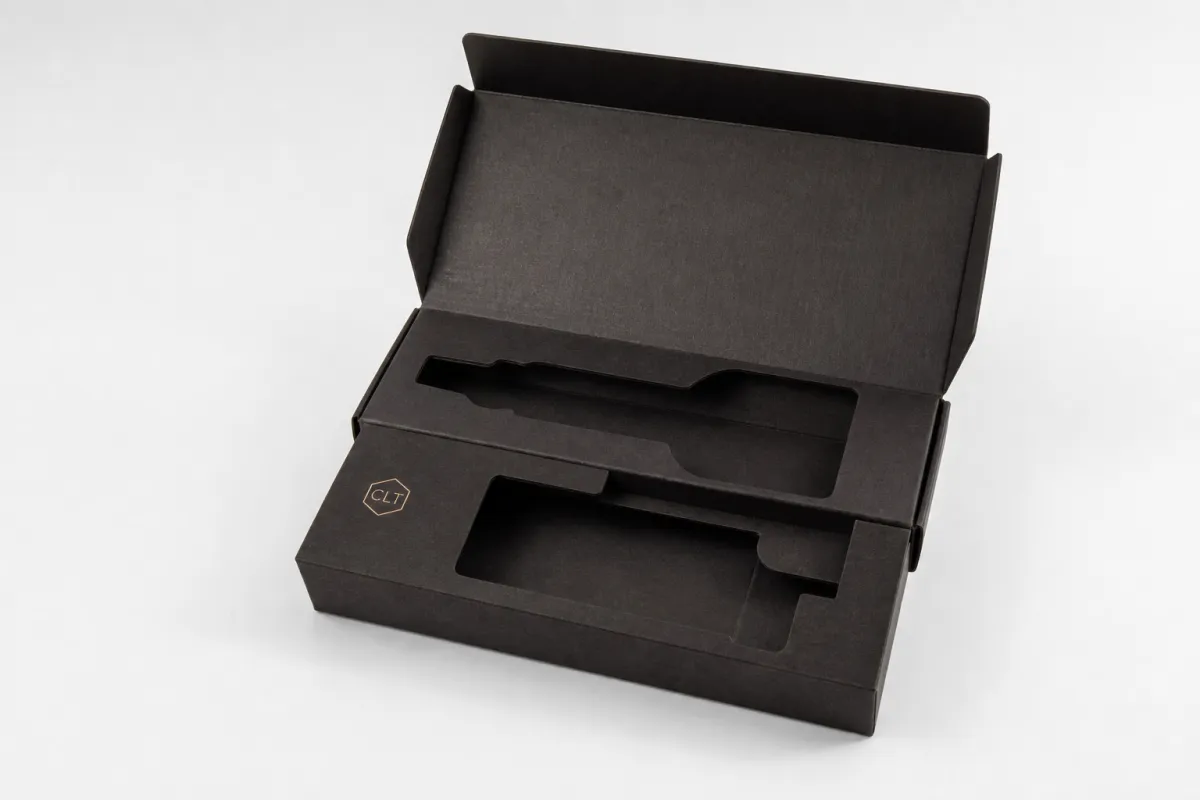
Empty space inside a shipping carton is not free. It gives the product room to move, and movement creates scuffs, crushed corners, broken seals, and the kind of little failures that turn into expensive customer calls. Branded packing inserts bulk pricing often matters less than the money saved by stopping those failures before they happen. A better insert protects margin in ways a cheaper carton never will.
Many buyers make the same mistake: they compare the insert cost and stop there. That is only one line in the ledger. The better question is what one damaged shipment costs once replacement freight, labor, and lost trust are added in. If a 15-cent insert prevents even one bad shipment out of every 100 orders, the return can be meaningful. If pack-out time drops by 10 to 20 seconds per order, the labor savings pile up too. DTC brands notice that quickly because their fulfillment lines are already tight. Branded packing inserts bulk pricing should always be tied to total program cost, not isolated unit price.
Presentation matters just as much as protection. A bottle, cosmetic kit, or electronic accessory looks intentional when the insert fits properly. Without that support, the box can feel loose and unfinished. Customers notice the difference before they test the product. A tidy insert reduces broken accessories, cuts support tickets, and gives premium goods a cleaner exit from the box. That first moment opens the door for the rest of the experience.
The cheapest insert is not always the cheapest program. A useful one protects the item, keeps the fulfillment line moving, and helps hold the return rate down.
For that reason, branded packing inserts bulk pricing belongs in procurement, operations, and quality conversations at the same time. Buyers who treat it as a packaging spec rather than a sourcing checkbox usually end up with fewer surprises after launch. Fragile items, premium goods, and awkwardly shaped products tend to magnify the difference between a cheap insert and a smart one. I have seen that on the floor more than once, and it is never subtle.
For teams that want a wider packaging benchmark, the ISTA test standards are a useful reference for transit performance, while the Packaging School and IoPP resources help teams compare structural options and material behavior with more precision.
Branded packing inserts bulk pricing by material, print, and format
Material choice usually creates the biggest swing in branded packing inserts bulk pricing. Corrugated, paperboard, molded pulp, foam, and hybrid builds all solve different problems. Some are strong on branding. Some are strong on protection. A few do both, although that usually costs more. Buyers tend to discover pretty quickly that “better-looking” and “better-performing” are not always the same thing.
The tradeoff is straightforward. Corrugated and paperboard often deliver strong cost per piece when the design is simple and the run is flat. Molded pulp can support sustainability goals and offer respectable protection, but tooling and mold complexity affect the quote. Foam handles fragile items well, though some buyers pay more for a look that feels less premium unless the foam is finished carefully or paired with a wrap. Hybrid inserts, such as paperboard with die-cut support points, often sit in the middle because they balance presentation and protection without pushing cost too far. That middle ground is where a lot of practical programs land.
Print method matters just as much. Unprinted inserts are usually cheapest. One-color branding may add only a modest amount if the print area is small and the setup is simple. Full-color litho or high-coverage direct print introduces higher setup charges, tighter color control, and sometimes a longer production window. Basic artwork can barely move the price. Large graphics, heavy ink coverage, or multiple print sides push branded packing inserts bulk pricing upward fast.
| Material / Format | Typical Bulk Pricing Range | Best Use | Buyer Note |
|---|---|---|---|
| Corrugated die-cut insert | $0.18-$0.45 per unit | Shipping protection, simple product fit | Strong cost per piece at higher volumes; often flat-shipped |
| Paperboard sleeve or tray | $0.12-$0.35 per unit | Retail presentation, light-to-medium products | Lower unit cost, but less cushioning than thicker structures |
| Molded pulp insert | $0.20-$0.60 per unit | Eco-focused brands, moderate protection | Tooling fees may be higher, especially for custom cavity shapes |
| EPE or PU foam insert | $0.25-$0.70 per unit | Fragile electronics, glass, premium kits | Protection is strong, but presentation and sustainability may need extra review |
| Hybrid custom insert | $0.35-$1.10 per unit | Premium DTC, bottles, kits, mixed-component packs | Often the best total value when labor and damage risk are part of the calculation |
Those ranges are planning numbers, not guarantees. Size, print coverage, and order quantity can move branded packing inserts bulk pricing quickly. A compact insert at 10,000 pieces may come in far lower than the same construction at 500 pieces. A larger, heavily printed insert can jump in price because the sheet yield drops and more material is wasted around the cut pattern. It is kinda amazing how much pricing shifts once the geometry changes by even a little.
Format changes the bill too. Sleeves, trays, dividers, cradle inserts, and custom-fit supports each call for different amounts of cutting, folding, and handling. A sleeve may cost less than a molded cradle, but if it adds pack-out steps or leaves the product exposed, the supposed savings fade fast. Dividers may look inexpensive at the unit level and still become costly in labor if they need hand assembly or pairing with extra void fill.
Branded packing inserts bulk pricing becomes clearer when buyers compare the right set of options. The lowest-looking option is often not the most economical one. If an insert reduces freight volume, shortens pack time, and lowers damage claims, the real value sits above the invoice total. Wholesale packaging teams often ask for several constructions before they settle on a final spec. That is usually a sign of discipline, not indecision.
Specifications that drive unit cost and performance
Once the material is chosen, the spec sheet starts doing the real work. Exact product dimensions matter. So does wall thickness, pocket depth, fit tolerance, and whether the product needs a snug snap-in fit or simply a stable cradle. Branded packing inserts bulk pricing shifts when those variables shift because the cutter, the yield, and the inspection requirements all change with them.
A tight fit is not always the right fit. It can improve stability, but it may also raise tooling costs or demand more precise quality control. A looser fit is cheaper to make, yet the product may rattle in transit. Buyers usually discover that the hard way after spotting abrasions, lid separation, or chipped corners. The better question is not how cheap the insert can be. The better question is what fit protects the item without slowing fulfillment.
Finish and presentation affect cost too. Coating, embossing, soft-touch lamination, matte varnish, foil accents, cut windows, and polished edge quality can all push branded packing inserts bulk pricing higher. Premium retail programs may justify those details. A subscription box that ships and turns over quickly may not need them. The right answer depends on the product and the customer journey, not on a generic packaging rule.
Thickness quietly Drives the Quote as well. A 14 pt paperboard tray may look fine in a prototype, but a 24 pt structure or 32 E-flute corrugated insert may be needed once the product gets heavier or the shipping route gets longer. Extra thickness affects the die cut, the folding behavior, and the outer carton fit. It can also change cubic freight, which is why buyers should never isolate the insert from the shipping carton. Packaging is a system, not a set of separate boxes sitting next to each other.
Branded packing inserts bulk pricing becomes easier to interpret when the supplier has the right inputs from the start. Product weight, fragility level, shipping distance, and pack-out speed target all matter. If the item has a glass component, a pump, a cable, or a removable accessory, include that detail. Pricing teams do not treat those as minor notes. They often explain the difference between one quote and the next.
For teams that track sustainability and compliance, FSC-certified paperboard may matter, and fiber-based structures can support procurement goals more cleanly than mixed-material builds. If transit validation is part of the program, test methods and acceptance criteria should be agreed on before the structure is locked. That is where branded packing inserts bulk pricing becomes a planning tool instead of a number on a worksheet.
Practical spec checklist:
- Exact product dimensions, including the tallest and widest points.
- Target fit tolerance and any no-contact zones for labels, caps, or screens.
- Product weight and fragility level.
- Outer carton size and expected shipping distance.
- Print coverage, color count, and finish preference.
- Pack-out method: hand assembly, machine-assisted, or fully manual.
Cost, pricing, and MOQ: how bulk quotes are built
Most buyers want to know what actually sits inside the quote. The answer is usually a mix of setup charges, tooling fees, unit price tiers, sample charges, art adjustments, and freight. Branded packing inserts bulk pricing can look neat until those lines are split apart. Once they are separated, the real comparison becomes much easier to read.
A one-time die charge may be modest for a simple insert and much larger for a complex custom shape. In some programs, tooling lands around $150-$600 for standard die-cut work. Custom molded or highly engineered projects can run higher. That cost should be spread across the expected quantity so the buyer can see the true per-piece impact. When a supplier buries tooling inside unit price, the quote may look tidy and still be difficult to compare.
MOQ matters because the supplier has to recover setup time across enough units to make the run efficient. Larger runs usually bring lower per-unit pricing. MOQ is not only a supplier preference, though. It is a planning issue. A buyer who lacks warehouse space, cash flow, or confidence in demand may not benefit from the lowest tier if the order sits too long. Ordering bigger just because the unit price drops can backfire if the inventory ages on the shelf.
A tiered quote helps remove the guesswork. Request pricing at 1,000, 3,000, 5,000, and 10,000 pieces, or at quantity bands that match the forecast. Then compare where the break-even point falls. Sometimes the unit cost drops enough to justify a larger order. Sometimes it does not. Branded packing inserts bulk pricing should be reviewed alongside storage cost, carrying cost, and the timing of the next reorder.
The main drivers are usually predictable:
- Material yield and scrap rate.
- Print coverage and color count.
- Number of cutouts, folds, and locked tabs.
- Whether the insert ships flat or pre-assembled.
- Inspection level and quality tolerance.
- Freight method, carton count, and destination.
If the insert ships flat, freight may be lower and storage easier. If it ships pre-assembled, labor may be lower at the packing line while freight cube rises. That tradeoff can swing branded packing inserts bulk pricing in either direction, depending on the program. A brand shipping a few thousand premium kits may accept a slightly higher unit cost to save labor. A high-volume warehouse may care more about pallet efficiency and cube.
Total landed cost gives the clearest picture. Insert cost, setup charges, freight, damage allowance, and the labor needed to use the insert properly all belong in the same conversation. The cheapest unit price can become the most expensive decision if it creates more handling, more returns, or a stock problem because the MOQ was too aggressive. Ask for a quote that breaks out each line item. Internal approvals get easier when the math is visible.
Process and timeline: sampling, approvals, and lead time
The quoting process should not feel mysterious. A good supplier follows a repeatable path: inquiry, spec review, quote, dieline or structural mockup, sample approval, production, quality check, and shipment. Branded packing inserts bulk pricing becomes more accurate at each stage because fewer assumptions remain in the background.
Sampling is where timelines tend to stretch. A simple layout can move fast, but once artwork changes, the cavity shape shifts, or the product fit needs a second pass, the schedule grows. Many buyers assume production is the slow part. The sample approval cycle is often what pushes the launch date. A complete spec package saves time and keeps the back-and-forth to a minimum. If the brief is vague, everybody pays for it later.
A typical custom insert program may need several working days for quoting, a few more for sample generation, and then another round if the first fit is not quite right. Once approved, a straightforward run might ship within 10-20 business days from proof signoff. Complexity, quantity, and material availability can push that longer. Rush orders do happen, but they usually carry extra cost because the schedule gets compressed and quality checks become tighter.
Ask for milestones in writing. Specifically, request:
- Proof approval date.
- Sample signoff date.
- Target production window.
- Estimated ship date tied to the final quantity.
- Any assumptions about freight, cartons, or assembly.
That level of detail makes branded packing inserts bulk pricing easier to defend internally. It also prevents a familiar failure mode: the quote looks good, then the schedule slips because no one locked the approval steps early enough. If the launch date matters, the calendar matters almost as much as the price. Sometimes more, honestly, because a great price that misses the launch is still the wrong price.
Exact dimensions, product photos, and packing instructions usually produce better first-round numbers. Fewer revisions mean fewer surprises. Fewer surprises let the supplier focus on the right construction instead of guessing. Speed and accuracy start to move together once the brief is complete.
Why choose us for branded packing inserts bulk pricing
Buyers do not just need a quote. They need a sourcing partner who can explain why one option costs less, why another protects better, and which version fits the program without adding noise. That is the practical value of working with a supplier that understands branded packing inserts bulk pricing from both a production and procurement angle.
For Custom Logo Things, the goal is simple: make the comparison clean. That means line-item pricing, clear MOQ guidance, realistic lead times, and straight answers about where the money goes. If the unit cost is low but the setup charges are high, you should see that in the quote. If the insert looks polished but weakens in transit, that should be obvious too. A quote that hides tradeoffs does not help a buyer make a smart call.
Operational support matters just as much as the numbers. Launches move fast. Reorders often follow marketing campaigns, restocks, or seasonal spikes. A late packaging order can throw off the whole shipment plan. Responsive communication and stable quality control are not soft benefits; they are part of the cost equation. Branded packing inserts bulk pricing only works when the supplier can repeat the result on the next order as reliably as on the first.
Scaling matters too. A buyer may start with a test run and grow into a larger wholesale program once the fit is proven. That is one reason many brands review the Case Studies page before locking a spec. Seeing how similar projects were handled helps buyers avoid overengineering the insert or underspecifying the protection.
For businesses that need recurring volume, our Wholesale Programs are designed for repeat ordering, cleaner forecasting, and a more stable cost per piece over time. Branded packing inserts bulk pricing is rarely a one-time decision. It becomes a program choice, and program choices reward consistency.
If you want a cleaner apples-to-apples comparison, ask for a quote that uses the same dimensions, print method, and delivery terms across every supplier you contact. Then compare unit cost, MOQ, setup charges, and freight together. That is the most reliable way to judge whether branded packing inserts bulk pricing is actually favorable or just formatted to appear favorable.
Next steps: compare quotes and place the right order
The fastest way to get a useful number is to send a complete quote package. Include product dimensions, quantity bands, artwork files, shipping destination, finish requirements, and any damage or presentation concerns. If the product is fragile, include a sample or clear photos. If fit is critical, say so plainly. The more complete the input, the more accurately branded packing inserts bulk pricing will reflect reality.
Then compare at least three quotes using the same assumptions. If one supplier prices a flat-shipped insert and another prices a pre-assembled version, the numbers are not truly comparable. If one includes tooling fees and another folds them into unit cost, the headline price is misleading. Good buyers compare the full program, not just the lowest number in the table.
Ask for a digital mockup or physical sample before committing to a full run. That small step can prevent a large mistake, especially for fragile products, cosmetics, glass, or electronics. If the insert needs to protect an item during long transit routes, the sample is not a luxury. It is insurance.
Once the sample is approved, lock the production schedule and confirm the MOQ in writing. That gives operations, purchasing, and fulfillment the same reference point. It also makes branded packing inserts bulk pricing easier to manage on future reorders because the baseline is already documented. A clear starting point leads to cleaner forecasting and fewer surprises.
Here is the practical takeaway: define the product, compare the same spec across every quote, and do not approve bulk pricing until the sample proves the fit, the protection, and the pack-out speed. If those three things line up, the purchase is easier to defend and much less likely to turn into a headache later. That is the order worth placing.
Frequently Asked Questions
What is the typical MOQ for branded packing inserts bulk orders?
MOQ varies by material and construction, but custom branded inserts often begin higher than stock packaging because tooling, cutting, and setup charges need to be spread across the run. For many buyers, the more useful question is where branded packing inserts bulk pricing drops enough to justify the larger order. Ask for several quantity tiers so the break points are visible.
How do I compare branded packing inserts bulk pricing across suppliers?
Use one spec sheet for every quote: dimensions, material, print method, quantity, shipping ZIP, and pack-out requirements. Then compare setup charges, unit cost, freight, sample charges, and tooling fees together. If one quote looks lower, check whether it excludes art changes, assembly, or freight. Branded packing inserts bulk pricing only means something when the assumptions match.
Which material usually gives the lowest cost at scale?
Corrugated and paperboard often offer the strongest cost advantage for many shipping programs, especially when the design is simple and runs flat. The cheapest material still depends on the product, though. Fragile or premium items may need a different structure that lowers damage costs even if the unit cost is higher. Branded packing inserts bulk pricing should be judged against performance, not just the invoice total.
How long does production take after approval?
Typical timelines depend on complexity, quantity, and finishing, but the schedule is usually driven by sample approval and material availability. A straightforward order may move quickly after proof signoff, while a custom build with revisions can take longer. If your launch date is fixed, build buffer time into the plan so branded packing inserts bulk pricing does not get overshadowed by a late packaging change.
What details are needed for an accurate branded packing inserts quote?
Provide exact product dimensions, quantity bands, material preference, print needs, and destination address so the quote reflects real production and shipping costs. Include photos or a sample of the product if fit is critical. That helps the supplier recommend the right insert style before pricing. The more complete the brief, the more accurate branded packing inserts bulk pricing will be.
For buyers who want a repeatable sourcing decision, the best move is to gather complete specs, compare tiered pricing, and approve a sample before production starts. That is how branded packing inserts bulk pricing turns from a rough estimate into a controlled, defendable purchasing choice.


