Buyer Fit Snapshot
| Best fit | Branded Paper Bags Bulk Pricing projects where brand print, material claims, artwork control, MOQ, and repeat-order consistency need to be specified before quoting. |
|---|---|
| Quote inputs | Share finished size, material target, print colors, finish, packing count, annual reorder estimate, ship-to region, and any compliance wording. |
| Proofing check | Approve dieline scale, logo placement, barcode or warning zones, color tolerance, closure strength, and carton packing before bulk production. |
| Main risk | Vague material claims, crowded artwork, missing packing details, or unclear freight terms can make a low unit price expensive after revisions. |
Fast answer: Branded Paper Bags Bulk Pricing: Film, Print, MOQ, and Carton Packing should be specified like a repeatable production item. The safest quote records material, print method, finish, artwork proof, packing count, and reorder notes in one written spec.
Production checks before approval
Compare the actual filled-product size with the drawing, then confirm tolerance on folds, seals, hang holes, label areas, and retail display edges. Reserve space for logos, QR codes, warning copy, and material claims before decorative graphics fill the panel.
Quote comparison points
Review material grade, print process, finish, sampling route, tooling charges, carton quantity, and freight assumptions side by side. A quote is only useful when the supplier can repeat the same color, closure quality, and packing count on the next order.
Most buyers ask for Branded Paper Bags bulk pricing the wrong way, then wonder why the quote climbs once size, handle type, and print coverage finally enter the conversation. A bag that seemed like a $0.18 item can land at $0.34 fast, and the jump usually makes sense once the spec is written out in full. Packaging math is blunt like that. It rewards the buyer who knows exactly what is being ordered and punishes the buyer who is trying to price a guess.
From a packaging buyer’s point of view, branded paper bags bulk pricing is not only about hunting the lowest sticker price. It is about choosing the right spec once, ordering enough to reduce repeat setup work, and keeping the front-of-house presentation steady without spending the week chasing packaging problems. That steadiness matters just as much as the dollar figure, especially for brands that hand bags out every day and need the result to look intentional every time.
I have watched more than one order start out as a simple “paper shopping bag” request and turn into a long chain of clarifications about gussets, basis weight, handle reinforcement, and delivery pallets. That usually means the buyer was not given enough structure at the start, and the quote had to grow up in public. Nobody enjoys that part, and it is kinda avoidable if the spec is handled early.
Branded Paper Bags Bulk Pricing: Why Orders Get Cheaper Fast
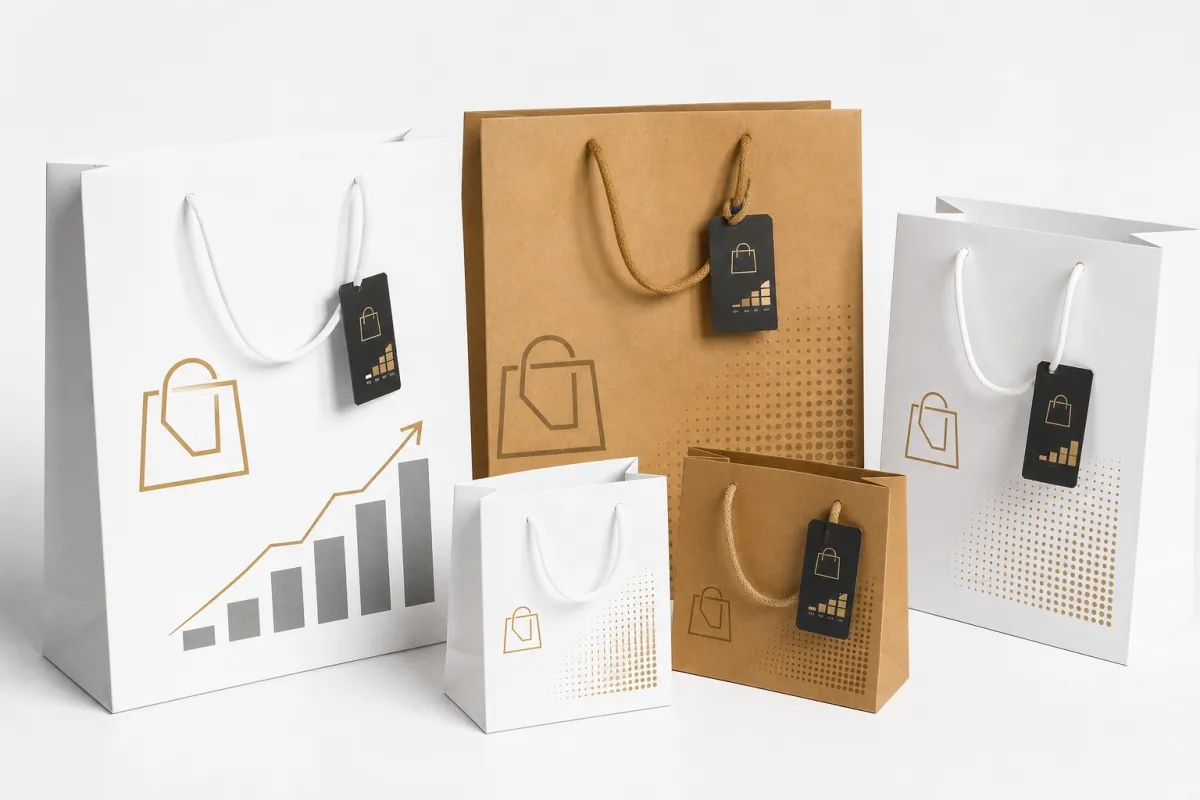
Branded paper bags bulk pricing drops faster than many buyers expect because the fixed parts of production get spread across more units. Setup, prepress, plate preparation, and handling do not shrink much just because the order grows. The labor is still there, the press still needs to run, and the material still needs to be prepared with care. A run of 5,000 bags can absorb those costs far more efficiently than 1,000 bags, so the unit price looks much friendlier once the order moves into a larger bracket.
That matters for restaurants, retail shops, trade shows, and event brands that move through bags quickly. A café might need 5,000 to 10,000 takeout bags to cover one quarter without scrambling, while a boutique group can use 15,000 Branded Shopping Bags across several locations before the season changes. In those runs, branded paper bags bulk pricing can fall sharply once the order crosses into a higher tier. Not magically. Just predictably, because the setup burden is finally being shared across enough bags to make a difference.
The real value is not only the lower unit cost. It is fewer reorders, fewer emergency purchases, and fewer moments where somebody is standing at the counter with plain bags because the branded stock was misjudged. That last-minute scramble is where budgets quietly disappear, and it is also where the brand presentation starts to feel patched together. A stable stock plan usually saves more than a tiny discount ever will, especially if the bags are used daily and the reorder rhythm is easy to miss until inventory starts looking thin.
There is also a presentation angle that does not always show up on a spreadsheet. A well-chosen bag does two jobs at once: it carries the product and it carries the brand into the street, the office, or the customer’s car. For customer-facing businesses, that front-of-house impression has real value. A crisp logo on the right paper stock looks deliberate. A flimsy, undersized bag with the logo floating in the middle looks like someone guessed and hoped for the best.
Branded paper bags bulk pricing works best when the bag spec matches the use case. Heavy retail items need stronger paper and handles. Light bakery goods or giveaway items do not need the same build. That sounds obvious, yet buyers still over-spec or under-spec all the time. Over-spec wastes money. Under-spec creates failures, refunds, and awkward conversations at the counter. Nobody wins there, and the wrong choice usually costs more than the better bag ever would have.
“The cheapest quote is not the cheapest order if the bags fail, arrive late, or look off-brand. A good bulk buy is the one that shows up right and stays consistent.”
For buyers comparing packaging options, the useful question is not, “What is the absolute lowest price?” It is, “What branded paper bags bulk pricing gives me the right combination of size, strength, print quality, and delivery timing?” That question produces better orders and fewer regrets, because it keeps the conversation tied to the actual job the bag has to do.
Branded Paper Bags Bulk Pricing: Cost Drivers That Change Your Quote
Branded paper bags bulk pricing is shaped by a handful of real variables, and they do not all behave the same way. Bag size is one of the biggest drivers. A small change in width or gusset can push the job into a different paper yield, a different die line, or a different manufacturing setup. That is why a quote for an 8 x 4 x 10 bag can differ a lot from a 10 x 5 x 13 bag, even if both are described simply as paper shopping bags.
Paper weight matters too. Kraft paper around 120gsm to 150gsm is common for light retail and takeaway use, while 170gsm to 250gsm or more is more appropriate for premium retail bags or heavier products. Thicker paper usually raises branded paper bags bulk pricing, but it can also reduce complaints, handle failures, and bag collapse. Cheap paper is cheap until it embarrasses you in front of customers.
Finish changes both the tone and the price. Uncoated kraft feels natural and practical. White kraft looks cleaner and gives sharper graphics more room to breathe. Coated stock, soft-touch lamination, foil accents, and spot UV all push branded paper bags bulk pricing upward because they add process steps and slow production down. If the bag is for a luxury boutique, that extra spend may be doing useful work. If it is for a sandwich shop, it usually is not.
Print method is another major lever. One-color flexographic work or a simple one-color offset job is usually easier to price than multi-color artwork, full-bleed coverage, or tight registration across large panels. The more colors involved, the more checking, the more setup, and the more chances there are for the final bag to need an extra approval round. That is why “just print the logo” and “print the whole bag” are not the same quote, even though buyers often wish they were.
Then there are the quieter cost items that people overlook because they do not sit on the first line of the estimate. Tooling fees, setup charges, die costs, plate costs, packaging format, and shipping destination all matter. Freight can wipe out a paper-thin unit discount before the order even reaches the dock. A low unit price that excludes delivery is not a bargain; it is a trap with a pleasant-looking number.
For a cleaner view, ask suppliers to quote the same spec side by side and show the total landed cost. For a useful benchmark on packaging materials and sustainability standards, the Packaging Consortium resources and FSC are worth checking. They will not price the bags for you, but they do help frame material claims, sourcing expectations, and the language that often gets attached to packaging decisions.
- Size: bigger bag, more paper, more cost.
- Paper weight: heavier stock improves strength and price stability.
- Print coverage: more ink and more colors raise branded paper bags bulk pricing.
- Handles: twisted paper, rope, flat tape, and die-cut handles price differently.
- Logistics: freight, customs, and delivery location can shift the final number more than buyers expect.
Bag Styles, Sizes, and Print Specs That Matter
There is no single “paper bag.” There are paper bags that look similar from ten feet away and behave very differently at the counter. That is why branded paper bags bulk pricing should always be tied to the actual bag style, not a vague request for “custom bags.” If the spec is fuzzy, the quote will be fuzzy too, and the person trying to approve it will have very little to work with.
SOS paper bags are the plain workhorses. They stand up on their own, usually suit grocery, bakery, and quick-service packaging, and often keep branded paper bags bulk pricing relatively low because the construction is simple. Takeout bags are similar, but they may need extra width or a stronger basis weight to handle clamshells, cartons, and heavier food orders. Boutique bags tend to be more refined, with better print quality and handle presentation. Luxury retail bags often use thicker paper, reinforced tops, and rope handles because the bag is part of the brand story, not just a carrier for the product.
Size selection is where a lot of mistakes happen. Oversized bags look wasteful and cost more per piece. Undersized bags create product issues, bent packaging, and ugly counter interactions. If the bag is for apparel, it may not need the same dimensions as a gift shop or a bottle carrier. If it is for food, a few millimeters can matter for container stacks, steam, and transport stability. That is not theory. That is the difference between a neat handoff and a bag that buckles the moment somebody picks it up.
Paper options are easier to understand than most salespeople make them sound. Kraft paper is durable, practical, and usually the most price-friendly. White kraft gives cleaner print contrast. Recycled paper can support sustainability positioning if the print and handling still work. Coated paper gives a smoother surface and stronger color but usually increases branded paper bags bulk pricing. In plain English: the nicer the finish, the more the quote reflects that niceness.
Handles are not a small detail. Twisted paper handles are common and cost-effective. Flat handles can be economical for takeaway bags. Rope handles and ribbon handles feel more premium but add cost. Die-cut handles reduce complexity in one area and increase it in another, depending on reinforcement and stock thickness. Handle choice changes the carrying experience, so it should be selected for the job rather than for the mockup alone.
Artwork placement also matters. A centered one-color logo on one panel is simple. A full wrap design on both sides, or a logo with fine lines and small type, needs more control. Ink coverage affects branded paper bags bulk pricing because dense printing uses more material and often more setup checks. If the logo includes thin strokes, ask for a proof. Tiny print details have a habit of disappearing on textured kraft, and they never disappear in a way that improves the look.
For buyers who want a practical rule, start with the product. Ask what the bag needs to hold, how it will be handed out, how it will be stored, and how long it needs to last in circulation. Then choose the style and finish. That order of thinking usually gives a better result than starting with a pretty bag and hoping the product fits later. Bags reward people who think through use first.
Pricing, MOQ, and Unit Cost: How to Compare Quotes
Branded paper bags bulk pricing only makes sense if you compare like for like. That sounds obvious, yet quotes get placed side by side all the time even when one supplier is quoting a 120gsm bag with twisted handles and another is quoting a 170gsm bag with rope handles, full-color print, and freight included. That is not a comparison. That is a confusion festival dressed up as procurement.
MOQ and the best unit cost are not always the same thing. A supplier may accept a lower MOQ, but the unit cost can be noticeably higher because setup charges are spread across fewer bags. The quote may still work if you need a small test run. For ongoing use, the best branded paper bags bulk pricing usually appears at the tier where setup costs stop dominating the total and the order starts behaving like a proper production run instead of a sample.
Ask for pricing at several breakpoints. 1,000, 3,000, 5,000, 10,000, and 20,000 pieces often show the real curve. Once you see the curve, you can decide whether moving from 5,000 to 10,000 pieces is worth the storage space and cash flow. In many cases, the step up lowers the cost per piece enough to justify the larger order. In other cases, it just fills a back room with paper bags nobody has room for and nobody wants to count twice.
Here is a practical comparison of typical bulk buying patterns. These are general ranges, not promises, because artwork, freight, and spec changes can move the final number quickly.
| Quantity | Typical Unit Cost | Best For | What Usually Changes |
|---|---|---|---|
| 1,000 pieces | $0.32-$0.60 | Test runs, launches, small stores | Higher setup charges and weaker bulk pricing |
| 3,000 pieces | $0.22-$0.42 | Seasonal needs, moderate traffic | Better unit cost, still some setup pressure |
| 5,000 pieces | $0.16-$0.34 | Busy retail, restaurants, events | Strong drop in branded paper bags bulk pricing |
| 10,000 pieces | $0.12-$0.28 | Multi-location use, repeat programs | Better absorption of tooling fees and print setup |
| 20,000 pieces | $0.10-$0.24 | High-volume retail or distribution | Lowest per-piece pricing, higher storage and cash tie-up |
Now the boring but useful part: confirm what the quote includes. Does it include tooling fees? Are setup charges itemized? Is freight built in or billed separately? Is the bag packed flat, bundled, carton-packed, or palletized? Those details change landed cost and can make a quote look better or worse than it really is. Branded paper bags bulk pricing should be judged on the full invoice, not the single shiny number in the email subject line.
If you need a performance reference for transit and handling, the ISTA testing guidance is useful for understanding how packaging behaves in distribution. Paper bags are not shipping cartons, obviously, but the mindset is the same: understand how the package will be handled before you approve the spec.
Good buyers also ask for a quote that shows the break point where savings start. If the difference between 5,000 and 10,000 units is tiny, you may not need to double your stock. If the difference is dramatic, the larger run may be the smarter buy. Branded paper bags bulk pricing should help you decide, not force you to guess.
Process, Lead Time, and Production Steps
A clean order process protects branded paper bags bulk pricing from turning into a mess. The work should start with a spec sheet, not with a vague email that says “need quote for custom bags.” If the supplier has to chase size, paper weight, handle style, print colors, and delivery date one by one, the quote slows down and the risk of mistakes rises. That benefits nobody, and it usually leaves the buyer with more follow-up than they expected.
The normal path is straightforward. First comes the artwork review. Then the supplier checks dimensions, print coverage, and material availability. After that, the quote is confirmed, proofs are issued, samples or digital mockups are reviewed, and production starts only after approval. The strongest branded paper bags bulk pricing usually belongs to buyers who know what they want before the first proof lands in the inbox. Clarity at the start saves money later.
Lead time depends on a few moving parts. Simple single-color bags can move faster than multi-color bags with specialty finishes. Standard paper stocks are easier to source than a custom paper match. Larger quantities take longer to print, fold, inspect, and pack. If the artwork file is messy, expect delays. A crisp vector logo and a clean dieline save time. A blurry JPEG with the logo cut off does not.
Typical production windows vary, but many bulk paper bag orders land in the 12-20 business day range after proof approval. Complex designs or peak seasons can stretch that timeline. Rush jobs cost extra because they interrupt scheduling and sometimes require alternate materials or overtime handling. Sometimes the rush fee is justified. Sometimes it is simply the price of waiting too long. A buyer who knows the calendar can protect branded paper bags bulk pricing from avoidable expedite charges.
Before requesting a quote, prepare these items:
- Logo file: vector format is best, usually AI, EPS, or PDF.
- Bag size: exact width, gusset, and height if known.
- Quantity: include the expected breakpoints for bulk pricing.
- Handle preference: twisted, flat, rope, die-cut, or none.
- Print details: colors, one side or two sides, and any finish.
- Deadline: give the delivery date, not just “soon.”
Buyers who skip approval checkpoints pay for it later. Proofs exist for a reason. Sample checks exist for a reason. If the bag will be used for food service, consider how weight, grease resistance, and carry comfort affect real-world use. If the bag will hold clothing or gifts, check print placement and color consistency. If the order must perform under transit pressure, review packaging and distribution expectations with the supplier. For more on repeatable procurement and bulk programs, see Wholesale Programs.
There is a reason packaging teams talk about “spec discipline.” It prevents the classic problem where everyone agrees on a cheap quote and then discovers the bags are the wrong size, the handle feels wrong, or the logo sits too low. Good process protects branded paper bags bulk pricing from becoming a false bargain, and it keeps the order from turning into an expensive correction run.
Why Custom Logo Things Is a Safer Bulk Buy Partner
Branded paper bags bulk pricing gets safer when the supplier understands the whole job, not just the quote. That means looking at print tolerance, paper strength, pack format, and end use before pushing a number across the table. Cheap quotes are easy. Correct quotes take more work. Buyers usually appreciate the second one after the first mistake costs them a week and a second round of approvals.
Custom Logo Things is set up for buyers who need clear specs and repeatable results. That matters because retail packaging is not a one-off experiment for most brands. A café chain, boutique group, or event company needs the same look across the run, and often across multiple reorder cycles. Consistency is part of the value. If the bags change slightly every
FAQ
What should I verify before ordering Branded Paper Bags Bulk Pricing?
Confirm the product size, material, print method, quantity, sample route, packing count, and delivery date. A clear packaging spec is easier to quote, easier to approve, and easier to reorder.
How many samples should I review before bulk production?
At minimum, review one production-grade sample or proof that shows scale, color, logo placement, finish, and packing fit. For high-volume orders, keep the approved sample as the reference standard.
What usually changes the final cost?
Material grade, printing method, finish, tooling, quantity, packing method, revision count, and freight assumptions can all move the final price.


