Buyer Fit Snapshot
| Best fit | Branded Padded Mailers with Logo projects where brand print, material claims, artwork control, MOQ, and repeat-order consistency need to be specified before quoting. |
|---|---|
| Quote inputs | Share finished size, material target, print colors, finish, packing count, annual reorder estimate, ship-to region, and any compliance wording. |
| Proofing check | Approve dieline scale, logo placement, barcode or warning zones, color tolerance, closure strength, and carton packing before bulk production. |
| Main risk | Vague material claims, crowded artwork, missing packing details, or unclear freight terms can make a low unit price expensive after revisions. |
Fast answer: Branded Padded Mailers with Logo: Film, Print, MOQ, and Carton Packing should be specified like a repeatable production item. The safest quote records material, print method, finish, artwork proof, packing count, and reorder notes in one written spec.
Production checks before approval
Compare the actual filled-product size with the drawing, then confirm tolerance on folds, seals, hang holes, label areas, and retail display edges. Reserve space for logos, QR codes, warning copy, and material claims before decorative graphics fill the panel.
Quote comparison points
Review material grade, print process, finish, sampling route, tooling charges, carton quantity, and freight assumptions side by side. A quote is only useful when the supplier can repeat the same color, closure quality, and packing count on the next order.
Branded Padded Mailers With Logo: Cost, Process, Tips
A lightweight serum, a folded T-shirt, or a sample kit can arrive intact and still feel oddly forgettable if it lands in a plain mailer. Branded Padded Mailers with logo fix that mismatch. They protect the product, then keep carrying the brand while the parcel is scanned, stacked, hauled, and finally opened.
The effect is bigger than many buyers expect. A mailer passes through more hands than a lot of packaging teams account for: warehouse pickers, line haulers, carriers, front desks, neighbors, gift recipients. By the time the customer sees the item itself, the outer pack has already done a surprising amount of persuasion. That is why branded padded mailers with logo can shape perceived value more strongly than the product carton in some programs. The real question is not whether the package looks nice. It is how to balance protection, print quality, cost, and lead time without buying a format that misses the product’s actual needs.
For teams comparing packaging formats, our Custom Packaging Products page is a practical starting point. It becomes more useful once you see where branded padded mailers with logo sit between a plain stock mailer and a fully custom box. The sections below break down materials, pricing, timelines, and the checks that keep a packaging job from becoming a reprint.
Why branded padded mailers with logo matter more than you think
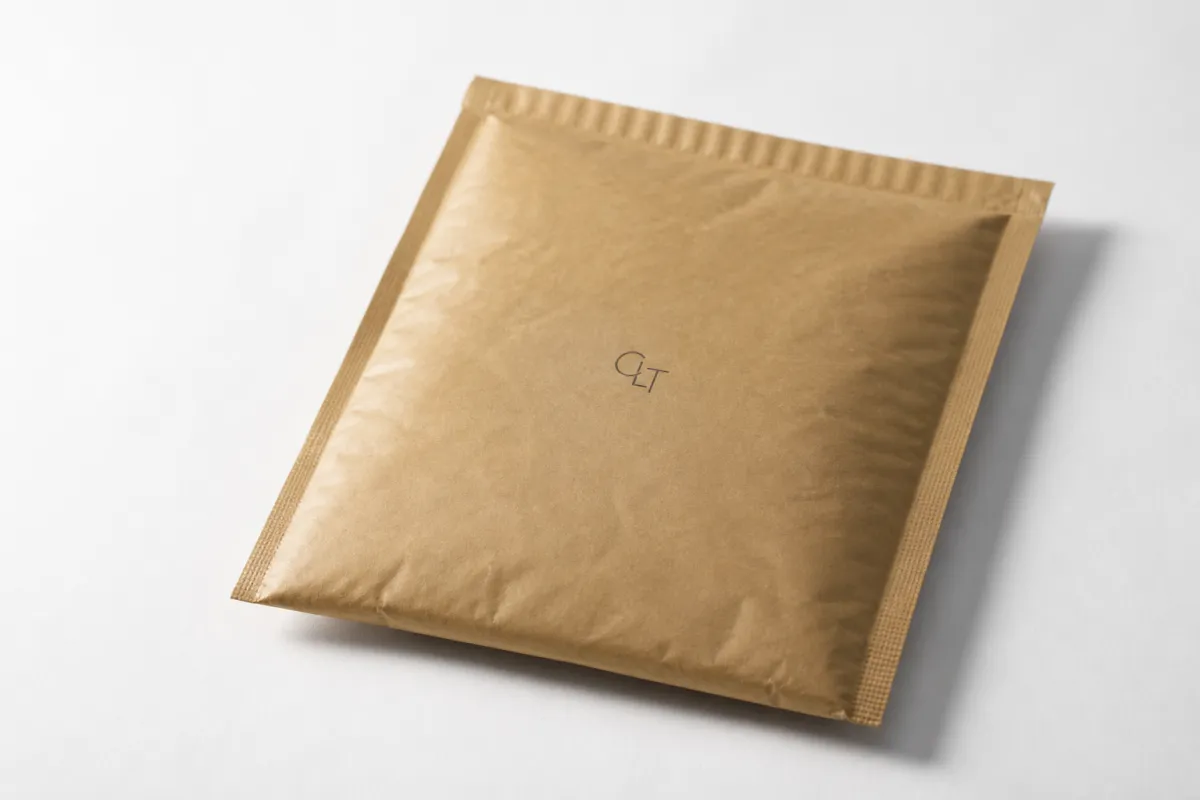
Why does one parcel feel like a brand, while another feels like logistics? The outer mailer usually has more to do with that answer than people admit. Branded padded mailers with logo can turn a routine shipment into a visible brand event, even when the item inside is small, inexpensive, or practical rather than glamorous. The branding effect lasts longer than the unboxing moment. A box may go straight into the recycling bin. A mailer can sit on a desk, travel through a break room, get reused for storage, or remain visible in transit long enough to be noticed by multiple people.
From a packaging buyer’s perspective, branded padded mailers with logo occupy a useful middle ground. A stock padded mailer is cheaper, but generic. A fully custom box gives more structure and more print space, but it usually adds cost and cubic volume. Branded padded mailers with logo offer a lower-cost way to look intentional, especially for e-commerce, subscription kits, parts, accessories, and lightweight retail shipments.
The mistake that shows up again and again is treating the mailer as a minor detail. In practice, the outer pack is the first physical proof that the shipment was handled with care. Premium product, commodity outer pack? The gap is visible. Practical product, value-driven price point? Even then, branded padded mailers with logo can lift the experience without pushing the program into box-level spend.
A mailer that survives transit but signals no care has only done half the job. A good mailer should protect, present, and quietly reinforce the purchase decision.
That is why the format deserves a real comparison against other options. If the choice is still sitting between a label, a plain mailer, or a more developed print program, it helps to look at actual packaging use cases. Our Case Studies page is useful here because it shows how packaging decisions affect customer perception, complaint rates, and replenishment behavior in live programs, not just in spec sheets. When the numbers are close, branded padded mailers with logo often win because they do more than one job at once.
There is a practical warehouse benefit too. A branded mailer is easier for fulfillment teams to spot during picking and packing, especially when the design uses a strong color block or a repeating pattern that stands out under industrial lighting. That may sound small. In a busy operation, small visual cues reduce confusion. Branded padded mailers with logo can help separate subscription shipments from standard orders, or promotional kits from routine replenishment, without adding another label layer or insert step.
I've seen this play out in small teams that were trying to do too much with too little space. A clean logo on the outside of the mailer made pack-out easier and cut down on the "which shipment is this?" conversations that eat ten minutes here and there. It sounds minor. It is kinda not.
How branded padded mailers with logo are made
Branded padded mailers with logo usually combine four elements: an outer stock, a cushioning layer, a closure system, and a printable surface. Each element affects something different. The outer stock shapes appearance and tear resistance. The cushioning layer affects drop protection and handfeel. The closure determines how reliably the mailer seals. The printable surface affects color accuracy, logo clarity, and how much of the design survives handling.
Construction layers
Outer stock options often include kraft paper, poly film, or paper-based composites. Kraft gives a natural look and tends to pair well with simple one- or two-color branding. Poly versions are usually tougher against moisture and abrasion, which matters if parcels move through damp docks or dense sortation systems. Paper-based constructions can support stronger sustainability claims, but only if the structure, coating, and end-of-life pathway are clearly understood. With branded padded mailers with logo, the material choice shapes both the story and the performance.
Cushioning is usually some version of bubble, pulp, or paper pad. A lighter item such as apparel may work with a thinner pad, while fragile cosmetics or small glass components often need more consistent cushioning around corners and edges. The important point is simple: branded padded mailers with logo are not just printed shells. If the cushioning is too soft, the mailer looks good and performs badly. If it is too stiff, it can add cost and bulk without solving the actual transit risk.
There is also a difference between materials that look similar on a mockup and materials that behave similarly in the real world. Two white mailers can print very differently depending on coating and fiber mix. One may absorb ink and mute the logo. Another may hold sharp detail but scuff sooner in transit. That is why a spec sheet alone is not enough. It gives you a starting point, not the whole story.
Printing methods and artwork setup
Print method matters a lot. Flexographic printing is common for larger runs because it is efficient, fast, and stable for repeat graphics. Digital printing makes more sense for shorter runs, frequent design changes, or campaigns with multiple artwork versions. Spot-color layouts can keep logos crisp and predictable, while full-coverage graphics can create a stronger shelf and unboxing impression. In branded padded mailers with logo, the method often decides whether the result feels premium or merely busy.
Artwork setup is where a lot of jobs slow down. The logo should sit inside a safe area that avoids folds, seals, and edge crush. Bleed is useful when the design runs to the edge, but it adds planning overhead. Repeating patterns can hide small scuffs better than a centered logo that must stay perfect. When I review branded padded mailers with logo for buyers, I start by checking how the design behaves after sealing, stacking, and handling, because weak layouts reveal themselves there first.
Sampling closes the loop. A supplier may send a digital proof, a printed mockup, or a pre-production sample. Those three things are not identical. A proof confirms placement and text. A mockup shows proportion and scale. A pre-production sample shows actual material behavior, ink density, and sometimes the feel of the closure. If branded padded mailers with logo are meant for a launch, the sample stage is not optional. It is the cheapest place to catch a seam issue, a color shift, or a logo that disappears once the mailer is folded.
For teams comparing packaging structures by product type, Custom Poly Mailers can be a useful reference point because poly mailers and padded mailers solve different problems. One prioritizes lightness and moisture resistance; the other adds more cushioning and a different presentation profile. That comparison becomes especially helpful when branded padded mailers with logo are being weighed against simple shipping films or plain padded stock.
Tiny choices matter more than most teams expect: logo scale, empty space, and whether the design has enough contrast to read at a glance. Branded padded mailers with logo reward careful layout because the printable area stays visible in transit, not just after opening.
Cost and pricing factors for branded padded mailers with logo
Pricing for branded padded mailers with logo comes down to a handful of variables, and most of them are easy to underestimate if you look only at the unit price. Size, stock thickness, print coverage, number of colors, cushioning type, and order volume all affect cost. So does whether the mailer is a standard size or a custom size that requires more setup time. A mailer can look inexpensive until the spec sheet starts filling in the gaps.
MOQ matters too. A low minimum order quantity sounds attractive, and it is useful for tests, launches, or seasonal promotions. Smaller runs usually carry a higher per-unit cost because setup and production overhead are spread across fewer pieces. Larger runs can lower the unit price meaningfully, yet they also create inventory risk if the design changes or the product line turns over quickly. Branded padded mailers with logo should be priced as part of a forecast, not as a single quote line.
Here is the sort of cost comparison that helps buyers see the full picture. The numbers below are typical planning ranges for a 5,000-piece order, not a universal rate card, and they assume standard freight conditions. The point is to compare the structure of the spend, not to treat one quote as a market average.
| Option | Typical use | Indicative unit cost | Common setup cost | Notes |
|---|---|---|---|---|
| Plain padded mailer + branded sticker | Tests, short campaigns, low-volume fulfillment | $0.16-$0.24 | $0-$100 | Low entry cost, but less durable branding and more labor at pack-out |
| One-color printed kraft mailer | Everyday e-commerce shipping | $0.22-$0.38 | $75-$250 | Good balance of cost and presentation for branded padded mailers with logo |
| Full-coverage poly mailer with print | Bold brand graphics, moisture-prone lanes | $0.30-$0.52 | $150-$400 | Stronger visual impact, usually more artwork prep and print control |
| Custom size, multiple colors, premium finish | Launch kits, premium retail shipments | $0.45-$0.80 | $250-$600 | Highest presentation value, but the most sensitive to lead time and inventory risk |
Setup fees and freight deserve separate attention. Plate or tooling charges can be modest on a run that repeats every month, but they become painful if the project is a one-off. Proofing fees are sometimes bundled, sometimes not. Shipping charges can swing widely depending on carton pack, pallet count, and destination. Branded padded mailers with logo should always be judged on landed cost, because a cheaper factory quote can become a more expensive final purchase once freight, duties, and rejects are added.
A second comparison helps too: premium mailers versus plain mailers plus inserts or labels. A plain mailer plus a sticker may seem cheaper, but if someone has to apply the label manually, labor cost rises. If an insert is needed to make the unboxing feel complete, that adds another component, another SKU, and another possible shortage. In many mid-volume programs, branded padded mailers with logo reduce moving parts. That simplification can be worth real money even when the unit price is not the lowest number on the page.
One more pricing clue: full-bleed artwork and metallic inks usually add cost faster than a clean one-color design. Multiple print locations do the same. If the logo appears on both sides, or if the design needs different messaging on the front and flap, expect the quote to reflect the extra handling. The cheapest branded padded mailers with logo are often the ones with the cleanest artwork brief.
It is also worth asking whether the quote includes the little things that often get buried: carton labels, pallet wraps, packed dimensions, and whether damaged units are replaced or credited. Those details do not sound dramatic, but they change the final math. A buyer who skips them is basically guessing, and guessing is expensive.
Process and timeline for ordering branded padded mailers with logo
The order process for branded padded mailers with logo usually follows a familiar sequence: brief, specification, artwork, proof, sample, production, inspection, and shipment. Straightforward on paper. In real projects, each stage hides a delay risk. A buyer who needs a launch-ready packaging schedule should ask for milestone dates, not only a final ship estimate. Branded padded mailers with logo move faster when the supplier has a clear decision log and one point of contact for approvals.
- Start with the brief. Define product weight, dimensions, cushioning needs, print goals, and monthly volume.
- Lock the size. Make sure the internal dimensions fit the product plus any insert, tissue, or sleeve.
- Approve the artwork. Confirm logo placement, bleed, Pantone targets, and any back-panel copy.
- Review the proof. Check folds, seals, registration, and how the design reads after the mailer is closed.
- Request a sample. Validate material feel, closure strength, and color on the actual substrate.
- Move to production. Confirm quantities, packaging configuration, palletization, and ship windows.
- Inspect the first lot. Compare the finished run against the approved sample before the rest of the inventory is released.
Lead time depends on the printing method and how customized the order is. A shorter digital run can move quickly once art is approved, while a larger flexographic order may need more setup but offer better economics on volume. Standard production often lands in a two- to three-week window after proof approval, though material availability, seasonal demand, and custom sizing can stretch that timeline. If the project includes import freight, the transit portion can easily become the longest leg of the schedule.
Where do delays usually happen? Artwork revisions are the obvious answer, but the less visible problems matter just as much. A dieline that does not match the actual size can send the proof back for correction. A logo positioned too close to a fold may need to be moved. Color matching can trigger back-and-forth if the brand team wants a specific Pantone reference but the substrate prints differently than expected. Branded padded mailers with logo are easiest to launch when everyone agrees on what “approved” means before production starts.
A good production schedule is not one date. It is a chain of small dates that all have to hold.
For higher-risk shipments, ask the supplier how they test transit performance. Many brands use the test methods published by ISTA as a benchmark for package integrity, especially when the mailer contains fragile or higher-value items. ASTM transit standards can also help frame expectations. The practical point is simpler than the jargon: if the package is going to be tossed, compressed, or routed through automated handling, it should be validated under conditions that resemble the real lane.
Working backward from the launch date is the safest way to plan. If a campaign needs arrival before a retailer deadline or subscription drop, build in time for proof revisions, sample review, freight slack, and a second inspection window. That planning habit matters even more with branded padded mailers with logo because the printing and structural approval steps are linked. Change one, and the other often changes too.
Milestone dates beat shipping confirmation every time. Branded padded mailers with logo are much easier to manage when the supplier can tell you when artwork is due, when the sample ships, when production starts, and when cartons leave the floor.
How to choose the right branded padded mailers with logo for your product
Choosing branded padded mailers with logo starts with the product, not the print. Weight, fragility, surface finish, and the way the item behaves in transit all matter. A soft textile item needs different protection than a glass vial or a printed accessory with sharp corners. Underbuild the mailer and the customer gets damage. Overbuild it and you pay for padding you do not need, sometimes while raising postage because of extra bulk.
Sizing is the easiest place to go wrong. The interior should allow for the product plus any insert, card, or sleeve, but not so much empty space that the item shifts around during shipping. Oversized branded padded mailers with logo can also waste material and increase dimensional weight charges. A slim product may fit nicely in a 6 x 9 inch mailer, while a wider kit may need something closer to 8 x 11 or a custom size. The real target is a fit that looks tidy, seals cleanly, and protects the edges.
Brand goals should guide the finish. If the goal is premium unboxing, a more deliberate print pattern and a cleaner seal area can help. If the requirement is everyday shipping at scale, a simple one-color logo on a kraft surface may be the better choice. If the mailer is used for sample distribution, the surface can do more marketing work because the recipient is often deciding whether to reorder. Branded padded mailers with logo should match the channel, not just the brand style guide.
Sustainability needs careful handling. Recycled content can be a useful signal, but only if the structure still performs in transit. Recycle-ready is not the same as actually recycled in every market. Paper-based mailers may support stronger end-of-life positioning, yet coatings, adhesives, and bubble layers can change the disposal story. For buyers who want to verify claims, the FSC chain-of-custody framework is worth reviewing, and the EPA recycling guidance is a sensible reference for how local recycling behavior varies. Branded padded mailers with logo should not lean on vague eco language if the structure cannot support it.
Sample testing is non-negotiable. Test the actual product, not an empty package. Put the item inside, seal it, shake it, stack it, and look at how it behaves after a short drop or corner compression test. That may sound basic, but many spec sheets miss the reality of product shape. A narrow bottle can puncture weak cushioning. A boxy cosmetic jar can scuff the inside of the mailer. With branded padded mailers with logo, the best sample is the one that exposes those problems before the order is committed.
If the format is still undecided, use the task itself as the guide. For simple, lightweight orders, branded padded mailers with logo may be enough. For heavier or more rigid items, a stronger structure may be smarter. If you need a middle option that keeps the package light but protects better than a flat mailer, compare the spec against the product family in Custom Poly Mailers and then decide where the cushioning layer actually adds value.
One more filter helps: think about the route, not just the item. A package that stays in a local network may survive with less cushioning than a package that hits multiple hubs, hot trailers, or rainy delivery windows. That is where the difference between "looks fine" and "will actually arrive fine" starts to matter.
Common mistakes when sourcing branded padded mailers with logo
The first mistake is approving artwork before the dieline is checked. A logo can look perfectly centered on screen and still land too close to a fold, seam, or closure strip. In branded padded mailers with logo, the actual usable space is smaller than many buyers expect. If the design wraps badly around a crease, the branding may disappear at the exact moment the parcel is handled.
The second mistake is focusing only on unit price. That is how teams miss freight, setup, sampling, and waste. A quote that looks cheaper can become more expensive after rejected proofs, a mislabeled shipment, or a packaging size that forces extra postage. If branded padded mailers with logo are part of a repeat program, compare landed cost over the full run, not just the sticker price on the first invoice.
- Choosing by appearance alone. A glossy mailer is not better if it tears easily or crushes under load.
- Skipping the pre-production sample. Color shifts and seal problems are easier to catch before mass production.
- Underestimating lead time. Artwork revisions, print approval, and freight can stack up quickly.
- Ignoring transit conditions. Heat, moisture, and pressure can all change how the mailer performs.
- Not checking the post-seal look. Some branded padded mailers with logo read well before sealing and poorly after the flap closes.
Another common miss is assuming that all cushioning is equal. It is not. Two mailers can look similar on a spec sheet and behave very differently once loaded. I have seen brands choose a prettier mailer, then discover it buckled at the corners or scuffed the product finish after a short trip through sortation. That is why branded padded mailers with logo should be tested with the actual SKU and not with a generic placeholder.
Timing creates its own trap. Teams often line up the mailer order with labels, inserts, or other packaging components, then discover that one element is late. If the mailers arrive early and the inserts do not, inventory sits. If the reverse happens, pack-out stalls. Branded padded mailers with logo should live inside the same launch calendar as every other packaging part, especially if the shipment must hit a retailer reset or a subscription date.
There is also a quiet risk in over-customizing too soon. A highly specific mailer can be beautiful, but if sales volumes are still uncertain, the inventory exposure can bite later. A more restrained design is often the smarter move for the first run. You can always add complexity once the reorder pattern is clear.
Expert tips for better results with branded padded mailers with logo
Branded padded mailers with logo perform best when the design is clean, the spec is disciplined, and the team knows which tradeoffs matter most. My first recommendation is to simplify the graphics whenever possible. A logo, one accent color, and a well-chosen background pattern often print more reliably than an overworked layout with too many tiny details. Clean artwork tends to age better in transit, too, because minor scuffs are less visible.
- Keep one version cost-focused and one version premium. That gives the team a practical option for everyday orders and a stronger option for campaigns.
- Ask for substrate swatches, not just a paper proof. Color on kraft, poly, and paper-based materials can behave differently.
- Document the packaging spec. Store size, material, print rules, seal type, and reorder notes in one place.
- Build the design around handling. Branded padded mailers with logo should still read clearly after stacking and sealing.
- Allow a little more time if cost matters. A longer production window can sometimes open up better material options or sharper pricing.
It also helps to keep a short internal review checklist. Before approval, ask whether the logo can be read from arm’s length, whether the color still looks right under warehouse lighting, and whether the mailer size fits the actual packed item with room to close cleanly. If the answer is no to any of those, the art or structure should probably change. Branded padded mailers with logo do not need to be loud; they need to be legible, durable, and easy to ship.
A second practical tip is to save every approved file in a future-ready folder. Keep the dieline, print-ready artwork, proof, sample notes, and shipping dimensions together. That way, the next reorder is not a detective job. If the design is reused seasonally, a strong archive prevents accidental drift from one run to the next. Buyers who treat branded padded mailers with logo like a managed spec, rather than a one-off purchase, usually get faster reorders and fewer surprises.
It also helps to ask suppliers how they handle consistency across repeat runs. A good partner should be able to explain what stays fixed, what can shift slightly, and which variables are most likely to move the price. Our Case Studies page shows why that matters: the brands that reduce packaging ambiguity often reduce approval time as well. Branded padded mailers with logo improve most when the project is designed for repeatability, not just for the first order.
From a buyer’s perspective, the best suppliers are the ones who can talk through the ugly details without flinching: seam strength, ink rub, color drift, and how the finished piece behaves after compression. That kind of answer is a better sign than a glossy mockup alone.
Frequently asked questions
How much do branded padded mailers with logo usually cost?
Pricing depends on size, material, print coverage, and order volume. For planning, smaller runs often sit in the higher per-unit range because setup costs are spread across fewer pieces, while larger runs usually lower the unit price. Ask for a landed-cost quote that includes setup, freight, and any proofing or sampling fees so branded padded mailers with logo can be compared fairly against plain mailers or alternative packaging formats.
What is the typical lead time for branded padded mailers with logo?
Lead time often depends on how fast artwork is approved, which print method is used, and whether the supplier has the right material in stock. Digital runs can move faster on short timelines, while larger printed runs may need more setup time but better volume economics. Build in extra time for sample review, corrections, and shipping so branded padded mailers with logo do not put the launch date at risk.
What MOQ should I expect for branded padded mailers with logo?
MOQ varies by supplier and process. Digital or shorter-run programs may allow lower quantities, while traditional print methods often require higher volumes to stay economical. If you are testing a new design, ask whether the supplier offers sample or pilot orders before you commit to a full run of branded padded mailers with logo.
Which material is best for branded padded mailers with logo?
There is no universal winner. Kraft, poly, and paper-based constructions each trade off durability, appearance, print behavior, and sustainability claims differently. The best choice depends on the product, the shipping lane, and the brand story. If the item is light and the look should feel natural, kraft can make sense. If moisture resistance or toughness matters more, poly may be the better fit for branded padded mailers with logo.
How do I make sure the logo looks right on branded padded mailers with logo?
Request a proof or sample that shows exact placement, color, and scale before mass production. Then test the mailer after sealing, stacking, and handling so the logo is still visible in real use. If the design disappears once the flap closes or if the contrast is too weak under warehouse lighting, adjust it before final approval. That extra step is usually what separates a good packaging run from a disappointing one, and it is the fastest way to make sure branded padded mailers with logo earn their place in the shipper lineup.
If you are deciding whether to move forward, the shortest path is this: define the product, choose the material and size around the actual shipping lane, and approve a sample that has been sealed, stacked, and handled before you place the full order. That is the step that keeps branded padded mailers with logo from becoming a pretty mistake.


