Buyer Fit Snapshot
| Best fit | Branded Pallet Boxes for Export projects where brand print, material claims, artwork control, MOQ, and repeat-order consistency need to be specified before quoting. |
|---|---|
| Quote inputs | Share finished size, material target, print colors, finish, packing count, annual reorder estimate, ship-to region, and any compliance wording. |
| Proofing check | Approve dieline scale, logo placement, barcode or warning zones, color tolerance, closure strength, and carton packing before bulk production. |
| Main risk | Vague material claims, crowded artwork, missing packing details, or unclear freight terms can make a low unit price expensive after revisions. |
Fast answer: Branded Pallet Boxes for Export: Branding That Travels should be specified like a repeatable production item. The safest quote records material, print method, finish, artwork proof, packing count, and reorder notes in one written spec.
Production checks before approval
Compare the actual filled-product size with the drawing, then confirm tolerance on folds, seals, hang holes, label areas, and retail display edges. Reserve space for logos, QR codes, warning copy, and material claims before decorative graphics fill the panel.
Quote comparison points
Review material grade, print process, finish, sampling route, tooling charges, carton quantity, and freight assumptions side by side. A quote is only useful when the supplier can repeat the same color, closure quality, and packing count on the next order.
Branded pallet boxes for export do not just hold product in place. They carry a company’s name across a dock, into a container, through customs, and into someone else’s receiving bay without falling apart or looking sloppy. That sounds basic. It is not. One bad outer pack can turn a clean shipment into a guessing game, and nobody at the destination wants to play that game before breakfast.
The outer pack is often the first brand touchpoint a distributor, importer, or warehouse team sees. Not the website. Not the sales deck. The box. That matters because export packaging has a rough job. It has to survive vibration, moisture, stacking pressure, handling abuse, and long stretches where nobody is babying it. If branding is done well, it supports that job instead of getting in the way.
For packaging buyers, that is the real draw of branded Pallet Boxes for Export: they protect goods, improve traceability, make receiving faster, and make the shipment look deliberate instead of thrown together at the last minute. If you are still comparing formats, our Custom Packaging Products page is a useful place to compare substrates, print methods, and structural styles. The Case Studies page shows how those choices play out once freight starts moving and people stop pretending the lab sample is the real world.
Branded pallet boxes for export: why the label does more than decorate
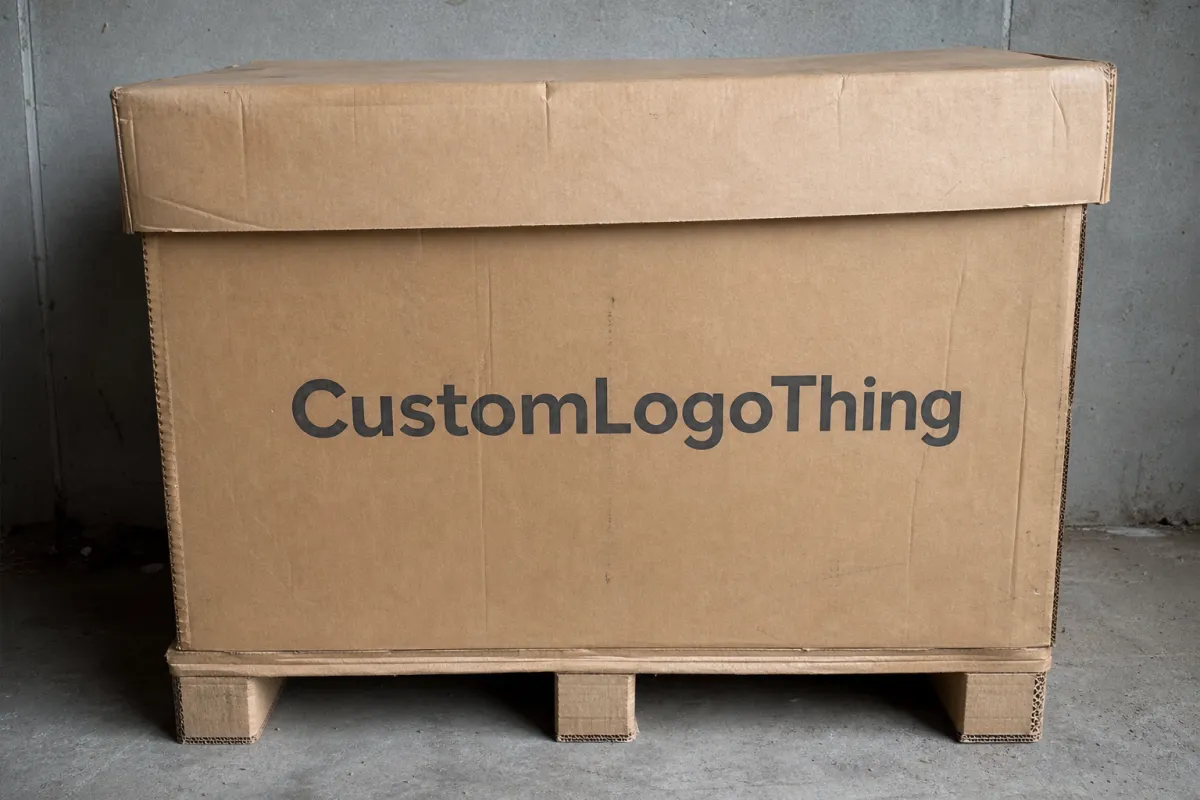
Picture a normal export handoff. The shipment leaves the warehouse, wrapped and packed on time, with labels in place and the customer logo printed clearly on the outer box. At the other end, the receiving crew knows what they are looking at before they cut the wrap. Compare that with a plain corrugated cube, half-covered in opaque film, with one handwritten note trying to do the work of five labels. The first version moves. The second version creates questions no one asked for.
That is why branded pallet boxes for export are not really about decoration. They are about identity, and identity has a job to do in transit. Warehouse teams use it to separate SKUs. Freight partners use it to route freight. Importers use it to confirm they received the right load. The branding is useful because it helps the shipment remain legible while the rest of the supply chain is trying to make it disappear into a stack of other freight.
The commercial effect is real too. A branded industrial shipment says the supplier understands the lane, not just the invoice. That matters in B2B trade, where packaging is one of the few visible signs that a supplier is organized, repeatable, and paying attention. Nobody confuses a pallet box with luxury packaging, and that is fine. It still tells a buyer whether the operation behind it is disciplined or chaotic.
In plain terms, these are pallet-sized or pallet-integrated boxes designed for international transport and printed with branding, handling information, or logistics markings. They can be full-height shippers, half-pallet displays, corrugated containers, or heavy-duty palletized cartons. Branding may appear as direct print, pressure-sensitive labels, hot-stamped panels, or a mix of those methods depending on the lane and the product.
That phrase covers a wide range of packaging, so the exact construction matters. In some programs the pallet box is a corrugated outer shipper sitting on a wooden pallet. In others it is a sleeve pack, a knock-down bulk box, or a display-ready unit that still needs to survive ocean freight and warehouse forks. If wood is part of the build, ISPM 15 rules may apply to pallets, skids, or any other wood packaging material used in export lanes. Ignore that and customs will happily educate you the hard way.
The format earns its keep because it handles three jobs at once:
- Protection for the product as it moves through long routes and multiple touches.
- Communication for warehouse staff, carriers, and receivers who need the right information fast.
- Presentation for the brand, distributor, or customer who sees the load first.
That is why branded pallet boxes for export often beat a plain box plus a pile of separate labels. Fewer parts means fewer ways for the pack to fail. Supply chains already manufacture enough problems without adding avoidable ones.
A pallet box does not earn respect because it looks expensive. It earns respect when the lane gets rough, the receiver finds the right SKU immediately, and the claim file stays boring.
How branded pallet boxes for export work in the supply chain
The easiest way to understand this format is to follow it from pack-out to delivery. Product gets staged. The unit load gets built to match the pallet footprint. The box is folded, glued, strapped, or sleeved depending on the design. Some programs use stretch wrap and corner protection. Others use banding, top caps, or internal dividers. The last step is identification, where print, serialization, barcodes, handling marks, and shipping labels all have to live on the same surface without fighting each other.
That sounds tidy on paper. Real life is messier. If the box overhangs the pallet, you get instability. If artwork crosses a strap path, the logo gets scarred. If a barcode lands on a seam, scanning slows down and someone mutters under their breath. If the finish cannot handle condensation in a container, the brand image looks tired long before the shipment clears port.
Good branded pallet boxes for export are specified with those conditions in mind. They are not just printed after the structural decision has already been made. The freight profile, destination market, stacking requirement, dwell time, and receiving environment should all shape the spec from the start. A box that works on a dry domestic route can behave very differently after a six-week ocean leg and two warehouse handoffs.
Where branding appears on the pack
Branding can show up in several places, and smart programs do not depend on a single panel to do all the heavy lifting.
- Structural print on the corrugated board for larger graphics or repeated marks.
- Adhesive labels for product names, SKUs, or quick-turn campaign details.
- Handling marks for orientation, lifting points, pallet count, and fragile zones.
- Serialized identifiers for traceability, lot control, or distributor inventory systems.
In some export programs, the box is only one part of a larger set that includes inserts, edge protectors, pallet skirts, or outer sleeves. Those pieces can carry secondary branding while the main shipper stays clean and readable for logistics. That hierarchy matters. A pallet box trying to say everything at once usually ends up saying nothing clearly.
Why operations teams care as much as marketing teams
Receiving speed is not a vanity metric. It is labor, and labor costs money. In a multi-node distribution network, an extra 20 or 30 seconds per pallet adds up fast. If the branding is clean and the identifiers are easy to read, staff can sort, count, and route pallets without hunting for clues under bad warehouse lighting.
There is a claims angle too. Misrouted freight, relabeled pallets, and mixed-SKU confusion create waste that somebody has to eat. Branded pallet boxes for export reduce that mess when the print is designed to support operations instead of stealing space from them. For buyers running repeat programs, that is often where the strongest return shows up.
There is also a human factor that gets missed in spreadsheets. A receiving team that can scan, identify, and stack the load without guessing is a team that makes fewer mistakes. That does not sound glamorous, but it is how export packaging earns its keep: fewer pauses, fewer callbacks, fewer “which pallet is which?” conversations.
Key factors that shape durability, compliance, and brand impact
Structural strength comes first. If the box crushes, the branding becomes wallpaper on a failure. Board grade, flute profile, reinforcement, and pallet base design all affect whether the package survives the trip. A light printed shipper might be fine for a short domestic route. Export lanes are less forgiving. Humid routes, mixed freight, long dwell times, and stacked containers usually call for heavier board, stronger glue or stitching, and tighter edge control.
Think about the whole stress profile, not one dramatic drop test. Long-distance freight adds vibration, compression, handling impact, and moisture exposure. A pallet box can look perfect on the dock and still bow in transit if the board spec is too thin. That is why many export teams review compression assumptions and transit testing before artwork gets the final green light.
Print durability is the next issue. Ink, coating, and finish have to survive abrasion, condensation, and sometimes UV exposure if pallets sit in open yards or near loading bays. A simple one-color logo can be a durable choice. Full-coverage artwork looks sharp, but it may need a better coating or laminate, especially on humid ocean lanes or routes with long staging times.
Compliance is not optional. Export markings, country-of-origin information, barcodes, and handling symbols need enough contrast and white space to stay readable. Brand graphics should never crowd out the information that keeps freight moving. If a destination market needs specific labeling language or regulatory marks, the artwork should leave room for them from day one instead of forcing a redesign later.
That also includes the less glamorous stuff. If a shipment needs SSCC labels, lot codes, or consignee-specific marks, those need to be placed where wrapping, strapping, and container handling will not destroy them. The prettiest box in the warehouse is still a problem if the scanner cannot read the code after it has been wrapped twice and squashed under another pallet.
For transit validation, standards such as ISTA protocols are often used to simulate shipping stress. Depending on the product and route, teams may also reference ASTM methods for compression, vibration, or drop testing. That does not mean every pallet box needs the same test package. It does mean the pack should be built against a measurable performance target instead of optimism and a prayer.
Sustainability belongs in the conversation too. FSC-certified materials, recycled content, and restrained ink coverage can support a more credible brand story. The tradeoff is real. Premium finishes and heavy print coverage can raise cost and complicate recyclability. A lot of buyers land on a practical middle ground: protect the product, use only the print that adds value, and keep materials aligned with the export lane instead of over-engineering the whole thing.
The best pallet box spec usually answers four questions at once:
- Will it survive the journey?
- Can warehouse staff identify it quickly?
- Does the branding look intentional at receiving?
- Does the cost still make sense against damage and labor savings?
If one of those answers is weak, the program is not finished.
Process and timeline: from brief to export-ready production
Strong export packaging starts with a brief that is tighter than most teams expect. Before design starts, define destination markets, pallet footprint, load weight, stacking limits, expected dwell time, and every compliance mark that has to appear on the outer box. If the shipment crosses several countries or distribution hubs, say so. The pack may be scanned, repalletized, or stored in conditions that are warmer, colder, or wetter than the origin warehouse.
The brief should also spell out the intended print treatment. Is the branding a full-color message, a simple two-color logo, or a mix of labels and handling marks? Does the outer pack need to be shelf-ready, distributor-facing, or purely operational? Those answers decide whether the design should prioritize visual impact, scan speed, or both.
Next comes the prototype stage. Structural samples and print proofs should be reviewed together. Signing off on artwork while ignoring the physical box is a common mistake. A logo can look perfect on a screen and still sit awkwardly across a fold, a seam, or a strap zone. A box can fit the load beautifully and still become a lousy communication tool if the print layout is cramped.
In a well-run program, the sequence usually looks like this:
- Brief and measurements.
- Die-line confirmation.
- Artwork placement and print proof.
- Structural sample or mock-up.
- Testing or transit validation if required.
- Production approval.
- Manufacture and outbound scheduling.
Timing varies more than buyers like to admit. Simple branded pallet boxes for export can sometimes move from proof approval to production in about 12 to 15 business days, assuming standard board, clean artwork, and no new tooling. Heavier-duty programs, special coatings, multiple SKUs, or fresh test requirements can push that into a 3 to 5 week window. Add more time if the run needs custom print plates, unusual board grades, or factory congestion tied to the season.
Artwork approval is often the hidden bottleneck. Sales wants the logo bigger. Operations wants a clearer label zone. Freight teams need space for handling marks. If those conversations happen late, production stalls. Pulling all three groups into the same review early can save days. Sometimes more.
One practical habit helps here: review the actual pallet layout on a floor sample, not just a PDF. A layout that looks balanced on screen can turn awkward once the straps, barcodes, and wrap are in the picture. The physical sample is usually where the argument ends.
When teams need a reality check, comparing the proposed format with actual shipping examples in Case Studies helps. It moves the conversation away from theory and back to what happened when the box met real freight.
Cost and pricing: what branded pallet boxes for export really cost
Unit price gets all the attention because it is easy to quote. It is also incomplete. The real cost stack includes board weight, print method, finishing, reinforcements, tooling, and freight to the production point or final destination. A buyer comparing two bids can miss the fact that one version includes stronger board and fewer relabeling steps, while the cheaper one may create more damage or labor later.
For low-volume branded pallet boxes for export, setup costs can take up a noticeable chunk of the total. Short runs often carry higher per-unit pricing because the line absorbs more changeover time and less volume efficiency. Repeat programs usually improve once dimensions, artwork, and structure are locked down. Stability helps. Novelty usually bills by the hour.
Here is a practical comparison of common print and finish options. These ranges are illustrative, because final pricing depends on quantity, board grade, print coverage, and destination.
| Option | Best For | Typical Unit Range | What to Watch |
|---|---|---|---|
| Direct flexo print | Simple logos, handling marks, repeat export runs | $0.12-$0.30 at 5,000+ units | Works best for limited-color graphics and clear marks; not ideal for highly detailed artwork |
| Labels on unprinted board | Fast-turn jobs, variable data, mixed-SKU shipments | $0.18-$0.45 at 1,000-3,000 units | Label adhesion and moisture resistance matter a lot in export lanes |
| Litho-laminated or premium panel print | Distributor-facing shipments, high-visibility branding | $0.70-$1.80 at 2,000+ units | Stronger visual presence, but higher setup and material cost |
| Coated or laminated board | Humidity exposure, abrasion risk, premium presentation | Varies widely, often +10% to +35% over standard board | Improved durability can be worth it on long ocean or mixed-modal routes |
Those numbers are not the whole answer. A box that cuts damage by a small margin can pay for itself quickly, especially on higher-value goods. Relabeling eats labor. Misrouting eats freight. Claims eat margin. Sometimes the cheaper box ends up being the expensive one, which is a very old lesson that keeps getting a fresh invoice.
There are also cost savings that do not wreck the brand. Buyers can reduce the color count, print only the most visible surfaces, reuse one structural format across several SKUs, or move secondary information onto labels instead of using full-coverage graphics. Those moves lower setup cost while keeping the parts of the pack that actually get seen.
When requesting quotes, be precise. Include dimensions, board grade, quantity, destination, print coverage, pallet size, stacking requirements, and any testing standard you want the supplier to reference. If you already know the freight environment, say it plainly. A quote built for a dry regional lane will not hold up for a humid export route with long storage time.
For teams building a broader packaging line, comparing formats inside Custom Packaging Products can help decide where the money should go: structural reinforcement, print quality, or both.
Common mistakes that quietly raise damage rates and freight costs
The biggest mistake is designing for appearance alone. A box can look sharp in a render and still fail under stack pressure. If the load shifts, the pallet overhangs, or the board crushes in the container, the branding has not solved anything. It has just made the failure easier to notice.
Measurement errors cause plenty of pain too. A small dimensional mistake can lead to pallet overhang, unstable stacks, or carrier surcharges. In export work, a few millimeters can matter more than people want to admit. If the box is supposed to sit flush on a specific pallet footprint, verify it with a real sample instead of trusting a drawing and crossing your fingers.
Print can get in the way of operations when it is handled carelessly. Crowded artwork can hide the barcode. Low-contrast handling marks slow down warehouse staff. Logos placed across a seam or a strap path lose readability. The box may still function, but the receiving experience becomes slower and more annoying than it needs to be.
Climate gets overlooked too often. A design that behaves fine on a dry domestic route can struggle after humidity, condensation, or a long dwell period in transit. That is where board grade, coating choice, and label adhesion become part of the brand conversation. If the surface arrives looking beaten up, the shipment feels less premium no matter how good the logo looked at origin.
Inconsistent specs create a quieter but expensive problem. When procurement keeps changing dimensions, print layouts, or board grades, reorder planning gets messy. Warehouse staff have to relearn the pack. Brand recognition weakens. Small tweaks look harmless until they show up across purchasing, production, and logistics as friction nobody budgeted for.
A quick checklist helps catch the obvious misses before they become expensive:
- Does the loaded pallet fit the carrier footprint without overhang?
- Will the print stay legible after wrap, banding, or stacking?
- Are all compliance marks visible and in the correct place?
- Is the board strong enough for the route and storage conditions?
- Can the same structure be reordered without redesigning every time?
If any answer is uncertain, pause the artwork. Fix the structure first.
Expert tips and next steps for a smarter rollout
The cleanest way to launch branded pallet boxes for export is to start small and measure hard. Pick one export lane and one hero SKU. Do not try to redesign the whole packaging portfolio on the first pass. A focused pilot gives real data on damage rate, receiving speed, artwork readability, and total landed packaging cost.
That pilot should have a scorecard. Track damaged units, the time it takes the consignee to identify and route the pallet, any relabeling work, and whether the box stays within spec after transit. A scorecard turns packaging from a design opinion fight into a business decision, which is where it should have been from the start.
Alignment matters too. Packaging, logistics, and sales should all review the spec early. Packaging teams think about structure and print. Logistics focuses on freight constraints. Sales cares about presentation and customer perception. The best export box balances all three. If one group works alone, the result is usually too fragile, too plain, or too expensive. Sometimes all three, which is impressive in the wrong direction.
Before production, use a short checklist:
- Approved dieline and dimensions.
- Printer-ready artwork with clear zones for logos, barcodes, and handling marks.
- Pallet specs and load weight verified.
- Destination-market compliance marks confirmed.
- Sample signed off by operations and, if needed, freight partners.
Do not skip sample sign-off just because the deadline is tight. A one-hour review can save days of claim handling later. If the shipment is high value, use a test plan that reflects the actual distribution stress instead of relying on visual approval alone. Standards such as ISTA or ASTM help because they turn assumptions into something measurable, and assumptions are expensive when freight is involved.
If you want a sane rollout path, use this order: pilot, review, standardize, then scale. First prove that the branded pallet boxes for export survive the lane. Then confirm that receiving likes the identification. Only after that should the format move into more regions or more SKUs.
That path is slower than guessing. It is also cheaper than fixing the wrong specification across three shipping routes and ten reorder cycles.
Bottom line: the best branded pallet boxes for export protect product, support operations, and present the brand clearly without making the box harder to use. Pilot the format on a real shipment, compare it against your current pack, then standardize the version that proves both performance and value.
Frequently Asked Questions
What are branded pallet boxes for export used for?
They protect bulk shipments during international transport while giving the palletized load a clear brand identity. They are common for distributor orders, industrial goods, promotional kits, and any shipment where presentation, traceability, and handling clarity matter.
How do I choose the right print method for branded pallet boxes for export?
Choose based on run size, artwork complexity, and the conditions the box will face in transit. Simple graphics may suit direct print or labels, while heavier branding or moisture exposure may justify coatings, higher-grade inks, or laminated surfaces.
Are branded pallet boxes for export worth the higher unit cost?
They can be if they reduce damage, relabeling, misrouting, or warehouse handling time. The real test is landed cost: compare the packaging premium against claim reduction, labor savings, and stronger buyer perception.
How long does it take to produce branded pallet boxes for export?
Timing depends on artwork approval, material availability, structural complexity, and whether new tooling is required. Straightforward programs can move quickly, but export-grade custom work often needs extra time for proofs and testing.
What should I send when requesting a quote for branded pallet boxes for export?
Provide dimensions, load weight, destination markets, quantity, print coverage, and any compliance marks or handling symbols. Include pallet size, stacking requirements, preferred material grade, and any testing standards so the quote reflects real shipment conditions.
If you are planning a rollout, start with one lane, one SKU, and one clear performance target. Get a real sample into transit, measure the results, and only then widen the spec to the rest of the program. That is the clean way to build branded pallet boxes for export that do their actual job instead of just looking good at approval.


