Buyer Fit Snapshot
| Best fit | Branded Paper Tissue Inserts for Premium Unboxing Moments projects where brand print, material claims, artwork control, MOQ, and repeat-order consistency need to be specified before quoting. |
|---|---|
| Quote inputs | Share finished size, material target, print colors, finish, packing count, annual reorder estimate, ship-to region, and any compliance wording. |
| Proofing check | Approve dieline scale, logo placement, barcode or warning zones, color tolerance, closure strength, and carton packing before bulk production. |
| Main risk | Vague material claims, crowded artwork, missing packing details, or unclear freight terms can make a low unit price expensive after revisions. |
Fast answer: Branded Paper Tissue Inserts for Premium Unboxing Moments should be specified like a repeatable production item. The safest quote records material, print method, finish, artwork proof, packing count, and reorder notes in one written spec.
Production checks before approval
Compare the actual filled-product size with the drawing, then confirm tolerance on folds, seals, hang holes, label areas, and retail display edges. Reserve space for logos, QR codes, warning copy, and material claims before decorative graphics fill the panel.
Quote comparison points
Review material grade, print process, finish, sampling route, tooling charges, carton quantity, and freight assumptions side by side. A quote is only useful when the supplier can repeat the same color, closure quality, and packing count on the next order.
Open a box and the first thing many customers register is not the product itself, but the layer that frames it. That quiet first impression is where branded paper tissue inserts earn their keep: they shape the reveal, add a sense of care, and protect delicate finishes just enough to matter.
For a brand that depends on presentation, the tissue sheet is often the first branded surface inside the carton. That makes branded paper tissue inserts more than filler paper. They carry visual weight, influence the pace of unboxing, and can make a straightforward shipment feel considered rather than rushed.
Custom Logo Things works in the part of packaging where small choices are impossible to ignore. When the customer reaches into the box, the fold, print, and texture of branded paper tissue inserts often become part of the memory of the purchase, right alongside the box exterior, the label, and any product card tucked inside.
What Are Branded Paper Tissue Inserts?
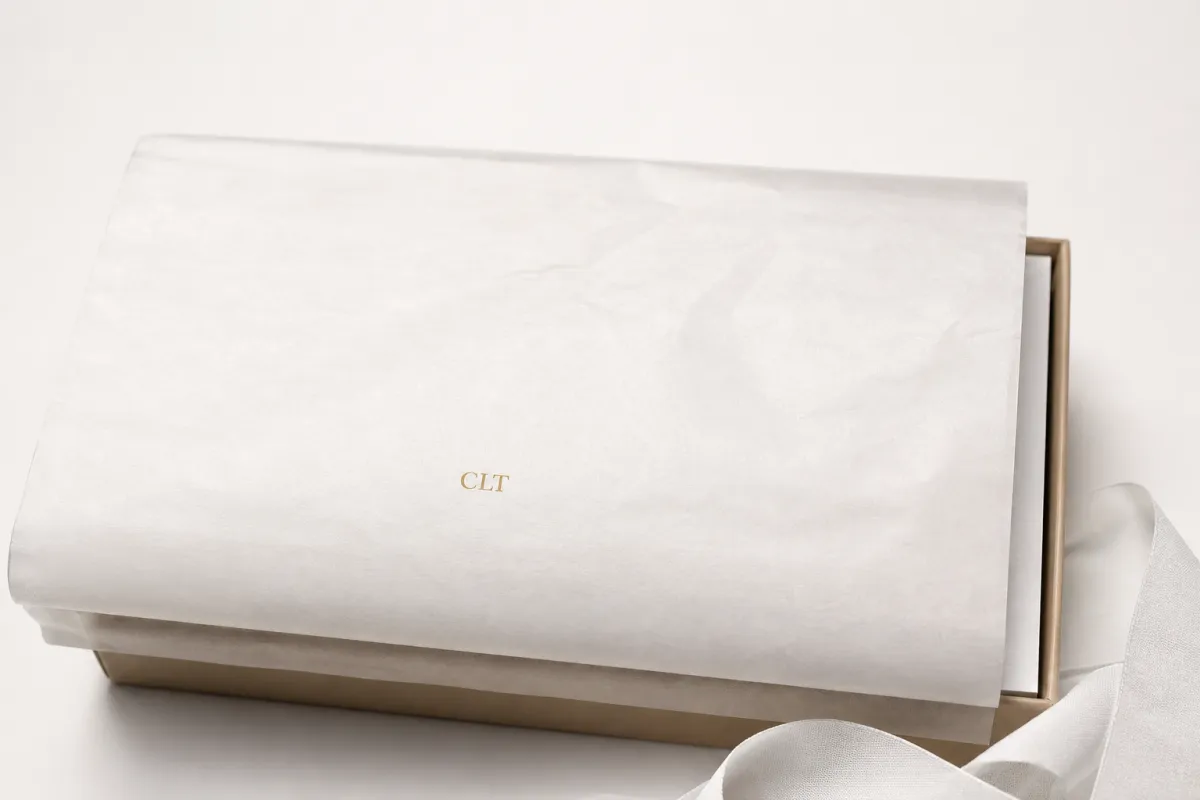
Branded paper tissue inserts are thin decorative sheets printed with a logo, repeat pattern, brand message, or restrained mark and used to wrap, separate, or cushion items inside a box or mailer. They do the practical job of lining the packout, but they also create a deliberate sequence as the package opens, which is why they matter so much in presentation-heavy categories.
The easiest way to think about them is in layers. The outer shipper handles transport, the carton or mailer frames the contents, and branded paper tissue inserts soften the reveal while keeping the inside of the package from looking empty or improvised. That simple structure helps a product feel like it has been packed with intent, not just dropped into a box.
They show up most often in apparel, accessories, beauty kits, subscription boxes, and gift-ready orders where the inside of the package is part of the product value. A folded shirt under plain filler paper looks like stock inventory; the same shirt under branded paper tissue inserts feels curated, protected, and ready to hand to someone as a gift.
A tissue sheet should feel chosen. If it reads like spare packing paper, the presentation loses its edge.
There is a practical side too, and it matters more than many teams expect. branded paper tissue inserts can help reduce scuffing between finished surfaces, keep dust off polished items, and stop the inside of the box from turning visually busy when several components move through fulfillment together.
From a buyer's point of view, the real question is not whether the sheet looks attractive in isolation. The better question is whether branded paper tissue inserts support the brand story, fit the product size, and move through the packing line without adding extra labor or waste.
That is why good tissue work belongs to the whole packaging system. If the outer carton is rigid and minimal, the tissue should not suddenly become loud and crowded. If the brand voice is playful, branded paper tissue inserts can carry that energy while leaving the box exterior clean.
How Branded Paper Tissue Inserts Work in Packaging
The process is simple on paper, but the details make the difference. A supplier sizes the sheet, prints the artwork, cuts or sheets the tissue, and then the packing team folds it around the product or uses it as a top layer inside the box. Well-planned branded paper tissue inserts should feel like part of the normal packout flow instead of a separate step that slows the line.
For the customer, the experience is tactile as much as visual. They open the mailer or carton, see the branded tissue first, lift it, and then find the product beneath it. That short pause matters because branded paper tissue inserts stretch the reveal just enough to create anticipation, and that is a big part of why premium unboxing feels memorable.
There is a protection angle as well. Tissue gives a light buffer between surfaces, and that buffer can reduce abrasion on coated boxes, polished hardware, printed apparel graphics, or cosmetic packaging. No one should treat it as heavy-duty protection, yet branded paper tissue inserts do help manage the small rub marks and scuffs that happen during normal fulfillment.
The best designs match the box size and the way the item is folded or nested. A sheet that is too small leaves exposed edges and unfinished corners. A sheet that is too large creates waste, awkward folds, and unnecessary handling. In practice, branded paper tissue inserts work best when the packout has been mapped out in advance, not guessed at after the artwork is approved.
Design range is one reason buyers keep returning to this format. A subtle one-color repeat can feel refined and quiet, while a bold all-over pattern can make the inside of the package feel giftable and energetic. Either direction can work, but consistency matters: branded paper tissue inserts should match the tone of the carton, the insert card, and the product itself.
For teams comparing packaging systems, our Case Studies page is useful because it shows how presentation choices hold up once they meet real order volumes and real packing habits.
Visual impact and packing efficiency do not always point in the same direction. Some brands want a dramatic printed sheet that becomes part of the reveal, while others prefer a quieter look that stays out of the way and lets the product lead. Good branded paper tissue inserts can support both approaches, but the smartest choice depends on how often the tissue remains visible after the box is opened.
Key Factors That Affect Look, Feel, and Brand Fit
Paper weight is usually the first spec to sort out. Lighter tissue has a delicate hand feel and folds easily, while slightly heavier stock gives more structure and stronger opacity. For branded paper tissue inserts, that choice affects both the reveal and the way the sheet behaves on the packing table, so it is not just a cosmetic detail.
Opacity deserves the same attention. If the sheet is too translucent, product colors can show through and make the print look weaker than expected. If it is too opaque and heavy, the sheet may lose some of the softness people expect in premium packaging. The best branded paper tissue inserts find a middle ground between softness, visibility, and enough body to hold a neat fold.
Print coverage changes the mood quickly. A light repeat pattern can feel elevated and minimal, while denser coverage reads more graphic and more promotional. With branded paper tissue inserts, lower coverage often keeps the tissue feeling airy, while stronger print coverage can work better for gift sets or seasonal packaging that needs the interior to feel more dramatic.
Brand alignment should guide every choice. A heritage label may want a restrained logo placement or a small repeat that feels expensive without shouting. A newer direct-to-consumer brand may prefer a louder pattern that photographs well in user-generated content. Either route can work, but branded paper tissue inserts should never look borrowed from a different brand language.
Handling is another practical issue that gets overlooked. Tissue has to fold without tearing, stay tidy in the box, and survive repeated contact during packing. If the sheet is too flimsy, it can wrinkle awkwardly or snag on edges. If it is too stiff, it loses the soft quality that makes branded paper tissue inserts appealing in the first place.
Sustainability belongs in the spec as well. Many brands want recycled content, FSC-certified paper, or inks that fit a more responsible packaging story. That direction makes sense, but the material choice still has to perform in the real world. A strong procurement brief for branded paper tissue inserts should say whether the goal is recycled content, recyclability, or lower material use through right-sized sheets.
For teams that care about forestry standards, FSC is a useful reference point for responsible paper sourcing. For packaging performance, ISTA publishes testing frameworks that can help teams think more clearly about how packaging behaves in transit.
The best tissue work is often the kind customers do not isolate as a separate object. They notice the care, the neatness, and the pacing of the reveal. They do not stop and say, “That is a great sheet of tissue.” They feel that the brand is organized, deliberate, and worth remembering, which is exactly what branded paper tissue inserts should accomplish.
| Paper Option | Typical Use | Indicative Unit Price at 5,000 Sheets | Notes |
|---|---|---|---|
| Lightweight tissue, one-color print | Apparel, accessories, simple wraps | $0.08-$0.14 | Soft hand feel, lower coverage, efficient for high-volume packouts |
| Standard tissue, one- or two-color print | Gift boxes, subscription packaging | $0.11-$0.18 | Good balance of structure, opacity, and presentation |
| Heavier tissue, dense repeat pattern | Premium unboxing, visible presentation | $0.14-$0.24 | Better fold memory, stronger visual impact, more ink coverage |
| Recycled-content tissue, custom print | Eco-focused brands, limited runs | $0.13-$0.26 | Can support sustainability claims, depending on exact paper and ink spec |
Branded Paper Tissue Inserts: Process, Timeline, and Lead Time
The production path usually starts with a brief, then artwork setup, proofing, sampling, and the full run. For branded paper tissue inserts, the fastest projects are the ones that begin with clear size specs, a usable logo file, and a print plan that does not require a lot of guesswork from the supplier.
Artwork preparation matters more than many teams expect. Vector logos are easier to work with than low-resolution files, repeat patterns need to be built at the correct scale, and color references should reflect the paper and print method being used. If those details are clear from the start, branded paper tissue inserts move through quote and proofing with less back-and-forth.
Sampling is where the real picture appears. A digital proof can confirm placement, but a physical sample tells you how the tissue folds, how readable the print is, and how the material feels in the hand. If the launch matters, asking for a sample of branded paper tissue inserts is usually the smartest money spent in the project.
Lead time depends on order size, number of print colors, paper sourcing, and whether the tissue needs custom cutting or can be produced as standard sheets. For straightforward runs, production often falls somewhere around 10-15 business days after proof approval; more complex branded paper tissue inserts with special sizes, heavier coverage, or multiple approval rounds can take longer.
The schedule also needs room for freight and a little cushion for changes. If the tissue supports a holiday drop, product launch, trade event, or gift campaign, the calendar should leave space for proof corrections and transit. I have seen too many teams treat branded paper tissue inserts like an accessory order, then realize the packaging arrives after the merchandise is already moving.
A solid packaging timeline helps avoid that kind of scramble. Build the brief, define the quantity, approve the art, sample the sheet, and only then lock production. If the tissue is part of a broader packaging system, our Case Studies can help teams compare how different lead times and packout decisions affect the finished result.
One practical habit saves a lot of trouble: do not wait for the final box size before discussing tissue. A small change in carton dimensions can shift the fold line, visible logo placement, and the amount of sheet waste. The more stable the final packout dimensions are, the easier it is to produce branded paper tissue inserts that land where they should every time.
Here is a simple rule that prevents headaches. If the insert is part of the launch story, treat it like a production component rather than a decorative add-on. That mindset usually leads to cleaner artwork, tighter approvals, and branded paper tissue inserts that arrive on time with fewer surprises.
Branded Paper Tissue Inserts: Cost, Pricing, and MOQ
Pricing is shaped by sheet size, paper grade, ink coverage, color count, and whether the print happens on one side or both. For branded paper tissue inserts, a simple one-color design on standard tissue will almost always cost less than a dense, multi-color pattern on heavier stock, and the difference can grow quickly at volume.
Minimum order quantities exist because setup, printing, finishing, and inspection costs need to be spread across enough sheets. That is normal in print production. Depending on the supplier and print method, MOQ for branded paper tissue inserts may start in the low thousands and rise from there if the artwork is complex or the sheet size is nonstandard.
Unit cost usually improves as volume rises, especially if the artwork stays the same across a larger run. That is why many brands compare 1,000, 3,000, and 5,000 sheet quotes side by side before choosing a final quantity. With branded paper tissue inserts, the lowest per-sheet number is not always the best buy if it leaves unused inventory or forces an oversized first order.
Hidden costs deserve attention. Sampling, custom packaging for the tissue itself, special inks, split shipments, and freight can all change the final landed price. A smart quote request for branded paper tissue inserts should ask for the product price, the sample cost, and the transit cost so the buyer is not comparing incomplete numbers.
Here is a practical quote habit that helps teams compare options clearly: ask for at least three versions. One should be a lower-coverage approach, one should reflect the preferred spec, and one should show what happens if sheet size or print complexity increases. That makes it easier to see where branded paper tissue inserts become more expensive because of real production variables, not vague assumptions.
For buyers, the goal is not to chase the cheapest sheet. The goal is to get the right sheet for the box, the product, and the margin. If a slightly heavier tissue reduces scuffing, improves presentation, and packs faster, then the value of branded paper tissue inserts can justify the extra cents far better than a bare-minimum spec ever will.
The table below gives a useful starting point for comparing typical price and feature tradeoffs. Exact numbers will vary, and they should, because paper mills, ink systems, and finishing setups are not all the same. Still, it is a practical way to talk with suppliers and avoid debating packaging by instinct alone.
| Option | Best For | Price Pressure | Performance Tradeoff |
|---|---|---|---|
| Small sheet, light print | Minimal wraps, compact products | Lowest | Less visual coverage, more efficient material use |
| Medium sheet, standard repeat | Most apparel and gift packaging | Moderate | Balanced cost, good branding, easier packing |
| Large sheet, dense coverage | Premium reveal, visible interior branding | Higher | Strong visual impact, more ink, more material |
| Custom finish or special paper | Distinctive campaigns | Highest | Can improve brand fit, but requires a stronger budget case |
From a procurement angle, branded paper tissue inserts should be quoted against a clear use case. If the tissue is for a luxury set, the brand may accept a higher price to protect the feel of the reveal. If it is for daily fulfillment across thousands of orders, the numbers have to work with packing speed, waste targets, and shipping cost.
Common Mistakes When Ordering Tissue Inserts
The most common mistake is designing on a screen and forgetting how thin tissue behaves in real life. Fine lines, tiny type, and crowded logos can disappear once the sheet is folded, printed, and handled. With branded paper tissue inserts, artwork that looks crisp in a PDF can turn too dense or too faint on the actual sheet.
Another frequent problem is choosing the wrong sheet size. Too small, and the product is not wrapped well. Too large, and you create extra folds, excess waste, and slower packout. Many teams only notice the issue after the first production run, which is why branded paper tissue inserts should always be checked against the actual box dimensions before the order is locked.
Color expectations can also trip people up. Brand colors shift on absorbent paper, especially when the print coverage is broad or the tissue is lighter weight. If color accuracy matters, sample approval is not optional. Branded paper tissue inserts need proofing under real lighting, because what looks close on a monitor may not read that way on paper.
Skipping the physical sample is a mistake that usually costs more later. A sample reveals fold behavior, opacity, print clarity, and how the sheet sits inside the pack. It is also the fastest way to spot typography that is too small or a repeat that becomes visually noisy once the tissue is opened. That matters most for branded paper tissue inserts intended to support premium positioning.
There is a labor issue too. Beautiful tissue that tears easily, jams on the line, or needs extra folding steps can slow fulfillment and frustrate staff. If the tissue adds minutes to every box, the branding benefit may not justify the labor loss. Good branded paper tissue inserts should support the packing process, not fight it.
One more mistake is overdesign. A sheet can carry too much branding. When every inch is packed with graphics, the tissue stops feeling like premium wrapping and starts feeling like an ad. In many cases, less print coverage gives branded paper tissue inserts a more upscale look, because the product still has room to breathe visually.
If a brand already has a strong packaging system, the insert should fit that system instead of competing with it. A clean logo repeat, a small tagline, or a restrained pattern often works better than a loud composition. That is one reason branded paper tissue inserts are so effective: they add personality without turning the inside of the box into clutter.
Expert Tips and Next Steps for Better Tissue Inserts
Start with one hero use case. Pick the product size, box style, and launch scenario where the insert matters most, then build from there. That approach makes branded paper tissue inserts easier to approve because everyone can evaluate them against a real package instead of a theoretical one.
Ask for a pre-production sample whenever possible. There is no substitute for handling the paper, folding it, and seeing how the print sits in the hand. A digital proof can confirm artwork placement, but a sample shows whether branded paper tissue inserts feel delicate, crisp, too transparent, or too dense.
Match the print style to the unboxing sequence. If the reveal is meant to feel quiet and premium, use a subtle repeat and keep the logo restrained. If the brand wants the inside of the package to photograph well, a bolder pattern may be the better choice. The point is not simply to print more; the point is to make branded paper tissue inserts support the exact emotion the box is meant to create.
Here is a practical checklist that keeps projects moving:
- Confirm sheet size against the final box and product dimensions.
- Choose the paper weight based on fold behavior and opacity.
- Define the number of print colors and the target artwork scale.
- Request a sample before full production approval.
- Build in time for proof changes, packing approval, and freight.
There is also a brand strategy angle. If your packaging system uses recycled board, matte finishes, and restrained graphics, the insert should reinforce that language. If the product line is more colorful and giftable, the tissue can carry that energy. In both cases, branded paper tissue inserts work best when they feel like one piece of a larger packaging decision, not an isolated print job.
For teams comparing suppliers or planning a rollout across multiple products, our Case Studies can help show how real packaging decisions perform across different volumes, materials, and presentation goals.
My advice is to think like a packout operator and a brand manager at the same time. Ask how the sheet folds, how it prints, how it ships, and how it feels in the customer’s hand. That is the point where branded paper tissue inserts stop being a detail and start becoming part of the experience your customer remembers.
FAQ
What are branded tissue inserts used for in packaging?
They create a branded reveal, separate the product from the box interior, and help reduce scuffs or dust contact. They work especially well for apparel, accessories, beauty items, and gift-ready orders that benefit from a polished first impression. In many packouts, branded paper tissue inserts are the first surface a customer sees, so they carry more presentation value than their size suggests.
What paper weight is best for branded paper tissue inserts?
A lighter weight feels delicate and folds easily, while a slightly heavier sheet gives more structure and better opacity. The best choice depends on product size, how much coverage you need, and whether the tissue must wrap, cushion, or simply decorate. For most brands, branded paper tissue inserts land in the middle range because that gives enough body without making the sheet feel stiff.
Can branded paper tissue inserts be printed in more than one color?
Yes, multi-color printing is possible, but the best option depends on budget, artwork complexity, and the print method used. Simple repeats and controlled color coverage often deliver the cleanest look on thin tissue without overwhelming the sheet. With branded paper tissue inserts, one or two well-placed colors often read more premium than a crowded graphic.
How much do branded paper tissue inserts usually cost?
Pricing depends on size, paper grade, print coverage, number of colors, and the minimum order quantity. Higher volumes usually lower the unit cost, so ask for a quote at a few quantity levels before deciding. A supplier should be able to explain where branded paper tissue inserts become more expensive because of paper choice, ink load, or custom finishing.
How long does it take to produce branded tissue inserts?
Timing depends on artwork readiness, proof approval, production method, and current factory scheduling. Build in extra time for sample review and freight so the inserts arrive before a launch, event, or seasonal campaign. If the insert is tied to a hard release date, plan branded paper tissue inserts early enough to absorb one revision round without stress.
What is the smartest way to approve tissue before a full run?
Approve a physical sample against the finished carton, folded product, and intended packing method. That quick check catches the issues screen proofs miss: transparency, fold memory, ink density, and whether the sheet tears too easily during handling. For branded paper tissue inserts, that sample step usually pays for itself the first time it prevents a bad production run.
The cleanest approach is pretty simple: lock the final box size, Choose the Right paper weight, and approve a real sample before you place the full order. Do those three things, and branded paper tissue inserts are far more likely to land with the right feel, the right fit, and the right level of polish.


