Buyers often start with Branded Plastic Mailing Bags price and work backward from there. That usually creates the wrong comparison. A quote only tells you what the bag costs before it meets a product, a parcel network, and a packing team. The real number includes damage risk, packing speed, reorders, freight, and how much branding value the mailer pulls its weight on your behalf.
A low-priced mailer can look efficient on paper and still become the most expensive line in the packaging budget. If the seam splits, the adhesive fails, or the print rubs off in transit, the hidden cost appears later as replacements, refunds, and support time. One weak bag can erase the savings from an entire batch.
The better approach is to buy for total landed cost. That means unit price, MOQ, freight, film quality, and the product category all need to be considered together. A mailer for soft apparel is not the same spec as one carrying boxed cosmetics, beauty sets, or items with sharp corners. The difference shows up quickly once orders start moving.
Practical rule: compare branded mailers by cost per shipped order, not by the price of the empty bag.
Why the lowest quote is not the lowest cost
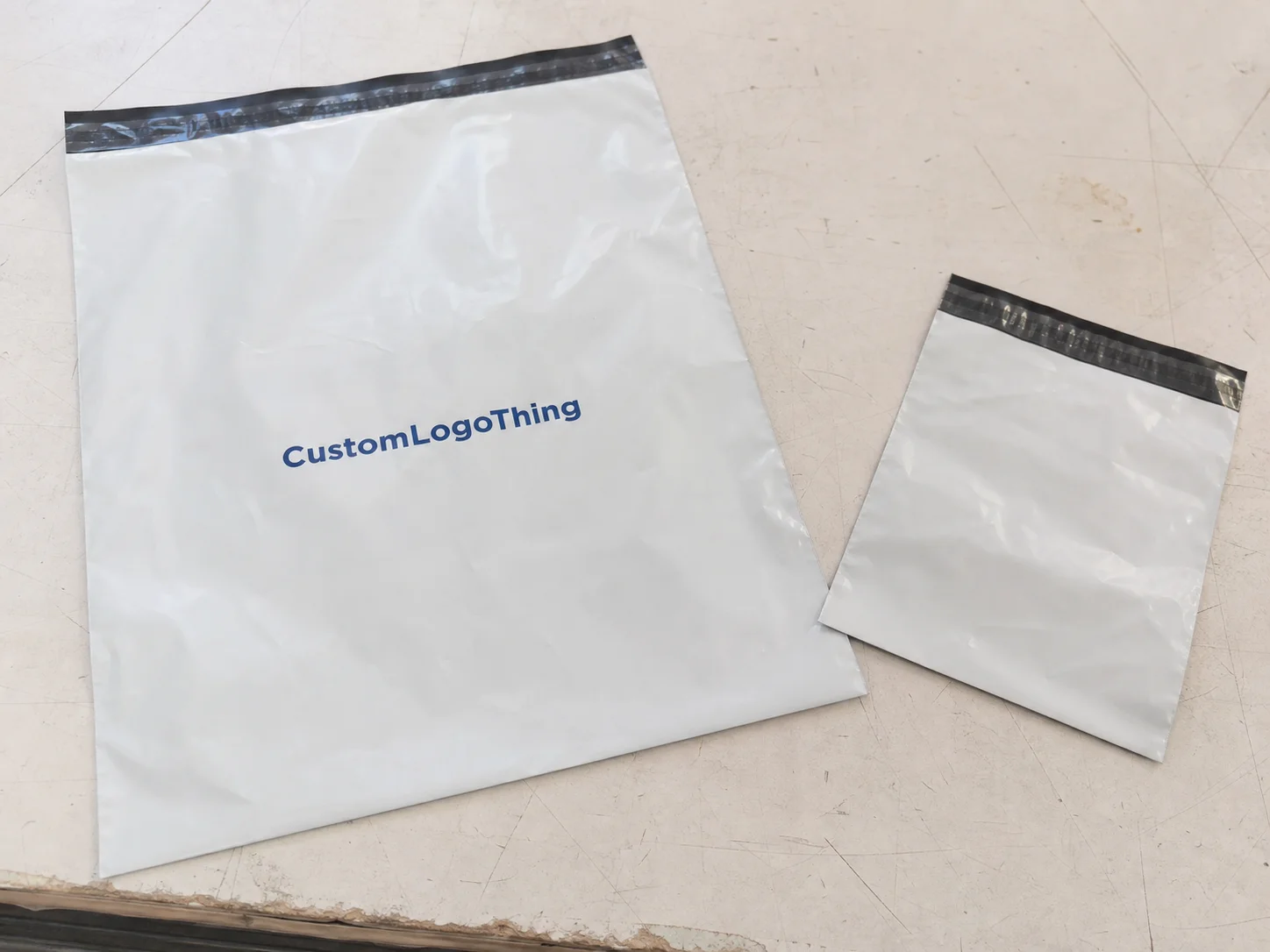
A quote can be technically correct and still be the wrong decision. The cheapest mailer often uses lighter film, narrower seals, less adhesive, or simplified printing. Those changes reduce the factory price, but they can also reduce resistance to puncture and stretch. If the contents are bulky, uneven, or sensitive to transit abuse, the apparent saving evaporates fast.
Packaging buyers see this pattern repeatedly: a bag that saves a few cents on purchase creates a bigger cost elsewhere in the chain. Returns are the obvious one. Less obvious are labor interruptions, repacking time, and inventory held back because the packing team no longer trusts the mailer.
That is why the strongest purchasing decisions are rarely the cheapest ones. They are the ones that keep product loss low, packing speed stable, and brand presentation consistent without adding unnecessary material.
There is also a branding effect that is easy to underestimate. A mailer is the first physical point of contact for many e-commerce customers. If the print is off-center or the film looks flimsy, the package communicates “cut rate” before the customer opens it. That matters more than most spec sheets admit.
What branded plastic mailing bags are made of
Most custom plastic mailers are made from LDPE, co-extruded film, or recycled-content blends. Each has a different balance of flexibility, strength, printability, and cost.
LDPE is the common workhorse. It is flexible, lightweight, and well suited to general e-commerce use, especially apparel and soft goods. It usually gives the lowest starting cost, which is why it appears in a large share of standard mailer programs. It is not the strongest option, but for the right product it is efficient.
Co-extruded film uses multiple layers, which can improve tear resistance and puncture performance. That extra structure is useful for heavier shipments or products with edges that push against the film during transport. It generally costs more than simple LDPE, but the uplift is often justified by the reduction in damage risk.
Recycled-content films are increasingly common, especially where brands are trying to reduce virgin plastic use. They can work well, but they are not automatically identical to virgin-film equivalents. Print consistency, seal strength, and thickness tolerance need to be checked carefully. Recycled content can introduce more variation in appearance, which matters if the design is color-sensitive.
Finish changes both appearance and performance perception. Matte hides scuffs and tends to look more premium. Gloss makes color feel brighter and more saturated. Opaque bags conceal contents, which is useful for apparel and beauty products. Clear bags are practical for internal sorting or retail prep where visibility matters more than concealment.
For buyers who need a performance reference, transit testing frameworks such as ISTA are useful because they shift the conversation from guesswork to handling risk. If a product is fragile or expensive to replace, asking how a mailer behaves under distribution stress is a sensible step, not a technical luxury.
The specs that change price fast
Quotes get messy when buyers say “we need branded mailers” and stop there. That phrase leaves too much open to interpretation. A proper specification should cover dimensions, thickness, film type, closure style, print coverage, and destination. Leaving those details out usually gives you a price that looks attractive until the bag is produced to the wrong assumption.
Size matters because it changes material usage. A larger bag uses more film, and that pushes unit cost up. Oversizing is a hidden expense too. If the mailer is much bigger than the product, the package looks loose and may need extra packing time or inserts to feel secure.
Thickness is usually stated in micron or gauge. A lighter apparel mailer may sit around 50–60 micron, while a more demanding bag can move into the 70–100 micron range depending on structure and load. Thicker film costs more, but not every order benefits from the thickest option. The goal is protection without overbuilding.
Print method changes cost in a way that is easy to underestimate. A one-color logo is usually the most economical. Two-color artwork adds setup complexity. Full-coverage or photo-style graphics cost more because registration, ink handling, and proofing become more demanding. Complex artwork also slows approval, especially if color accuracy matters.
Closure style affects both cost and packing labor. A standard adhesive flap is the most common option. Tamper-evident closures, resealable strips, and reinforced seals add material and processing steps. They may be worth the extra cost, but they should be chosen for a reason, not because they sound more premium in a product sheet.
Common spec choices worth confirming before quote
- Outer dimensions and usable internal space
- Film thickness in micron or gauge
- Material type: LDPE, co-extruded, or recycled-content blend
- Print colors and whether artwork prints one side or both sides
- Bag color and opacity requirement
- Closure type: adhesive flap, tamper-evident seal, or resealable strip
- Branding coverage: small logo, partial print, or full-wrap design
These choices are not decorative details. They directly affect whether the bag holds up in transit and whether the packing team can use it without slowing down.
Branded plastic mailing bags price: what really drives it
The main drivers behind branded plastic mailing bags price are straightforward: material grade, bag size, thickness, number of print colors, quantity, and freight. Everything else is secondary. Once those variables are fixed, the price becomes much easier to understand.
Material grade is one of the most important inputs because it controls raw film cost and performance. A stronger or more specialized film usually raises the quote. Size adds another layer because more film equals more material. Thickness pushes cost in the same direction. Add more micron, and the bag becomes more durable, but the price follows.
Print coverage can move the number more than many buyers expect. A small logo on one side is relatively efficient. A full wrap with multiple colors, tight registration, or large solids takes more setup and more careful production control. That increases both direct cost and the chance that proofing will take longer.
MOQ, or minimum order quantity, is the other major lever. Smaller orders tend to have a higher unit price because setup cost gets spread over fewer pieces. That is not a supplier trick. It is simple production math. The printing line has to be prepared, colors checked, and the run calibrated whether you order 2,000 bags or 20,000.
Volume can lower unit cost quite sharply, but there is a limit to the benefit. Ordering too many bags creates storage pressure and ties up cash in stock that may not move quickly. The useful question is not “how low can the unit cost go?” It is “what quantity gives me acceptable pricing without creating dead inventory?”
For planning, the price pattern usually looks like this:
| Order Size | Cost Trend | Best Fit | Tradeoff |
|---|---|---|---|
| 1,000–3,000 pcs | Highest unit cost | Testing a new design or launching a small range | Lower stock risk, weaker price |
| 5,000–10,000 pcs | Better unit cost | Most growing e-commerce brands | Needs more storage planning |
| 20,000 pcs and up | Best unit cost | Stable repeat orders | Higher carrying cost if demand changes |
Standard sizes are the easiest way to reduce cost Without Cutting Quality. Custom dimensions may be necessary, but they almost always increase complexity. The same applies to artwork. Clean, simple branding is usually cheaper to produce than crowded graphics with many colors and small text.
Freight can make a good factory price look less attractive. Air freight is fast, but it can push landed cost up sharply. Sea freight usually gives a better total cost for larger orders, though the timeline is longer and planning has to happen earlier. Comparing unit price without freight is only useful if you enjoy misleading yourself.
For brands with sustainability claims that extend beyond the mailer itself, it helps to keep packaging decisions aligned with broader material standards and disposal guidance. Resources such as EPA recycling guidance can help frame the discussion, while organizations like the FSC matter when paper components sit alongside plastic packaging in the wider system.
Lead times, sampling, and approval risks
Most custom mailer orders follow a fairly predictable sequence: quote, artwork check, proof, sampling if required, printing, curing, packing, and dispatch. The process sounds simple. Delays usually come from the same few places: unclear artwork, late changes to dimensions, and vague color expectations.
First-time orders almost always take longer than repeat orders. That is normal. A new design needs alignment checks, color decisions, and sometimes minor layout changes to fit the exact bag size. Once the specification is locked, repeat production is faster because there is less uncertainty to resolve.
A practical lead-time expectation is often:
- Sampling: several business days to around 2 weeks, depending on complexity
- First production run: often 12–15 business days after proof approval, sometimes longer for larger or detailed orders
- Repeat orders: usually faster, if the specification stays unchanged
Artwork files can slow things down more than most buyers expect. Low-resolution logos, missing dielines, and unclear Pantone targets are common reasons for back-and-forth. If the print covers both sides or uses a large solid area, the proofing step becomes more sensitive. That is the stage where expensive production mistakes are most often avoided.
There is a tradeoff here that buyers should accept early: if the color has to be exact and the layout has to be precise, approval takes longer. That is not unnecessary friction. It is the cost of not discovering an error after thousands of bags have already been packed.
How buyers keep orders practical and consistent
Good packaging programs are built on repeatability. A bag that performs consistently on the first run and again on a reorder six months later is worth more than a slightly cheaper option with unpredictable results. The aim is not to over-specify. It is to choose the lightest spec that still protects the product and looks right under normal handling.
Quality control should focus on practical checks: seal strength, print alignment, film thickness, color consistency, and carton packing. These are the things that show up in real operations. If the seal is weak, the package fails. If the print shifts, the brand looks careless. If cartons are packed too loosely, the goods can arrive with crease or compression damage before the customer even sees them.
Packaging consistency also depends on how the supplier handles packing and export preparation. Carton dimensions, pallet counts, and labeling affect receiving on the buyer’s side. Clear packing instructions reduce confusion later, especially when orders move through multiple handlers before they reach a warehouse.
A sensible workflow is to test the mailer against real use rather than assuming the spec sheet tells the whole story. If the contents are fragile or awkwardly shaped, ask for a transit test discussion or use a standard like ISTA to frame the risk. A small change in film thickness can sometimes solve a problem that would otherwise turn into a stream of damaged orders.
For apparel, a standard mailer with moderate thickness is often enough. For cosmetics, bundles, or items with hard edges, extra film strength or a better seal is usually justified. The best bags are not the thickest. They are the ones that match the product and the route it travels.
Related packaging formats are covered on our Custom Poly Mailers page, and our Case Studies provide examples of how different specifications change the final result.
How to request a quote that actually compares well
If you want a useful comparison on branded plastic mailing bags price, send the core details upfront: size, quantity, material preference, thickness, print colors, closure type, and delivery destination. If artwork already exists, send the editable file as well. A PDF is helpful for reference, but vector artwork usually speeds proofing and reduces the risk of errors.
It also helps to request two versions of the same bag. One should be built for cost efficiency, usually with a standard size and simple print. The other should be built for durability, with stronger film or a more secure closure. Comparing those side by side is far more useful than comparing a random quote against a vague memory of last year’s price.
Production planning improves when the approval schedule is clear from the start. If the launch date is fixed, state it early. If the bag will be reordered regularly, ask whether the specification can be locked for future runs. Stable repeat orders usually protect pricing and reduce delays because the setup is already defined.
The key is not to chase the absolute lowest number. It is to choose a bag that protects the product, prints cleanly, and stays within budget once freight and failure risk are included. That is the level at which the price becomes meaningful.
FAQ
What affects branded plastic mailing bags price the most?
The biggest drivers are material grade, bag size, film thickness, print colors, order quantity, and freight. Material and size affect raw usage, while print complexity and MOQ influence setup cost. Shipping can shift the final landed cost significantly, especially for smaller orders.
What is a typical MOQ for custom printed mailing bags?
MOQ varies depending on size, film type, and print method. Smaller runs are possible, but the unit price usually falls as quantity rises because setup cost is spread across more pieces. Many buyers start with a test run and move to a larger order once the specification is proven.
How long does production usually take after artwork approval?
Timing depends on order size, print complexity, and whether the artwork is ready for production. Sampling can take several business days to around 2 weeks. A first production run often takes about 12–15 business days after proof approval, while repeat orders are usually quicker.
Can I reduce cost without changing the look too much?
Yes. Standard sizes, fewer print colors, and simpler artwork usually lower cost without making the mailer look basic. Choosing the correct thickness for the product is also important; reducing film too much can create more expense later through damage and returns.
What should I send to get an accurate quote quickly?
Send the size, quantity, material preference, thickness, print design, closure type, and delivery address. If you have artwork, include the editable file so proofing can move faster and the quote reflects the real production setup rather than an estimate built on assumptions.


