Buyer Fit Snapshot
| Best fit | Branded Plastic Mailing Bags Price projects where brand print, material claims, artwork control, MOQ, and repeat-order consistency need to be specified before quoting. |
|---|---|
| Quote inputs | Share finished size, material target, print colors, finish, packing count, annual reorder estimate, ship-to region, and any compliance wording. |
| Proofing check | Approve dieline scale, logo placement, barcode or warning zones, color tolerance, closure strength, and carton packing before bulk production. |
| Main risk | Vague material claims, crowded artwork, missing packing details, or unclear freight terms can make a low unit price expensive after revisions. |
Fast answer: Branded Plastic Mailing Bags Price: What Drives It should be specified like a repeatable production item. The safest quote records material, print method, finish, artwork proof, packing count, and reorder notes in one written spec.
Production checks before approval
Compare the actual filled-product size with the drawing, then confirm tolerance on folds, seals, hang holes, label areas, and retail display edges. Reserve space for logos, QR codes, warning copy, and material claims before decorative graphics fill the panel.
Quote comparison points
Review material grade, print process, finish, sampling route, tooling charges, carton quantity, and freight assumptions side by side. A quote is only useful when the supplier can repeat the same color, closure quality, and packing count on the next order.
The branded plastic mailing bags price is often lower than the cost of a damaged parcel, a second shipping label, or the brand damage that follows a split mailer. For e-commerce, subscription, and retail-shipping teams, the right bag does three jobs at once: it protects the contents, carries the logo, and cuts down on extra packaging.
That is why the better question is not, "What is the unit price?" The better question is, "What does this mailer do for the product, the fulfilment line, and the landed cost?" A bag that arrives flat, prints cleanly, seals properly, and holds up across repeat orders can save time and money that never shows up in the headline quote.
For Custom Logo Things, the real discussion is not whether branded mailers are cheap or expensive in the abstract. It is whether the specification matches the job. A monthly shipping program can justify custom artwork and tighter quality control. A one-off parcel run may not.
"The cheapest bag is the one that still arrives intact."
Why branded plastic mailing bags price can drop sharply
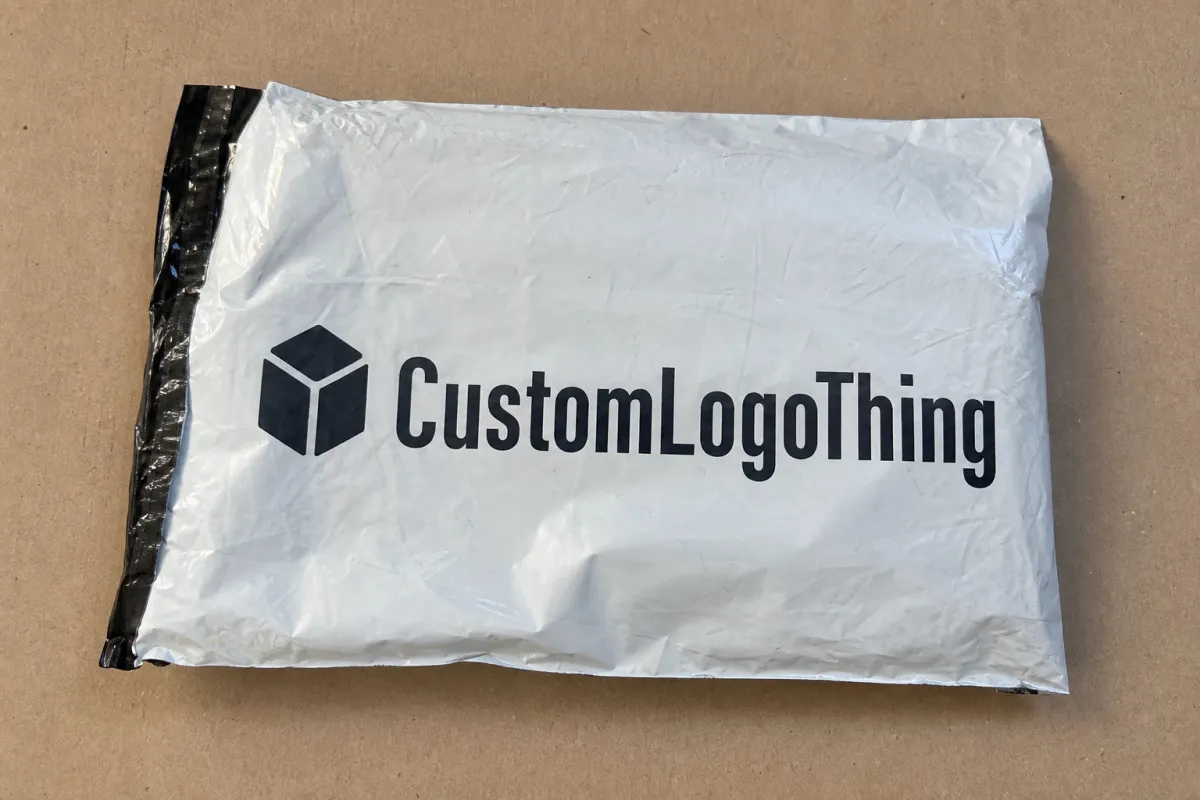
From a buyer's point of view, the branded plastic mailing bags price can feel unexpectedly low because the bag is doing several practical jobs at once. It protects against scuffs, moisture, and dirt. It puts the brand in front of the customer the moment the shipment lands. It can also remove the need for a printed outer box, extra wrapping, or a separate branded pouch.
That last point matters more than procurement decks usually admit. A mailer is not just a plastic sleeve with a logo on it. In steady-volume programs, it becomes part of the fulfilment system. If you ship hundreds or thousands of units every month, even a small change in bag spec can affect picking speed, storage space, freight weight, and packing consistency. One low-cost mailer that looks fine on paper can become expensive if it tears, prints poorly, or forces staff to double-bag orders.
That is why e-commerce, subscription, and retail brands usually treat branded mailers as a repeat-use item rather than a novelty. The order size is large enough to justify custom artwork and a controlled print process. The packaging is visible enough to justify brand investment. The shipping profile is predictable enough to benefit from a standardised size and seal style.
The buying logic is simple: if parcels leave the building every day, the packaging should do more than close a box. It should support the unboxing experience, reduce damage risk, and keep the fulfilment team from improvising with labels and tape like the job was a school project.
Where the price starts to fall is usually where production stops being rare and starts becoming repeatable. Standard sizes run faster. One-colour artwork is easier to print. Common film widths waste less material. Straightforward self-seal closures need less handling than specialty seals. If you want a bag that handles a basic shipping job and still looks clean, the factory can move quickly and the quote drops with it.
What actually lowers cost
There are a few levers that move the price more than buyers expect.
- Higher quantity: setup, prepress, and printing overhead get spread across more units.
- Standard dimensions: a common size uses less custom cutting and less film waste.
- Fewer print colors: one or two spot colors is cheaper than full-coverage artwork with tight registration.
- Moderate film thickness: a 60-80 micron mailer is usually cheaper than a 100+ micron heavy-duty build.
- Simple closures: self-seal adhesive strips cost less and pack faster than specialty seals or added features.
- Less special finishing: no metallic ink, no special varnish, and no unusual matte-soft-touch treatment unless there is a real reason.
A buyer who understands those levers can make sensible tradeoffs. If the bag is only meant for lightweight clothing, a bulky film spec may be wasteful. If the parcel includes rigid accessories or items with sharp corners, chasing the lowest possible unit price is false economy. A bag that fails in transit is not a packaging saving. It is a shipment problem.
For broader format comparisons, our Custom Poly Mailers page is a useful starting point if you are still deciding between standard courier mailers, heavier-duty bags, or a more premium printed finish.
Product details: what you are actually buying
Branded plastic mailing bags are lightweight courier mailers made from poly film, printed with a logo, strapline, brand colours, repeat pattern, or a full-bleed design. In plain terms, they are the shipment layer between your product and the outside world. The best versions are neat, durable, and easy to seal. The weak ones feel compromised the moment you pick them up.
A mailer specification should be clear enough that two different suppliers could quote the same thing and land close on price. If the spec is vague, the quote is vague. Vague packaging quotes are where buyers get surprised later by extra charges, weak print, or a bag that does not fit the product properly.
Common build choices
The base structure usually starts with one of two film approaches. Single-layer film is simpler and often lower cost. Co-extruded film combines layers so the outside can print cleanly while the inner layer handles strength and opacity. That difference matters if your logo needs crisp edges or if you want the bag to hide the product better.
- Opaque bags hide the contents and usually look cleaner on arrival.
- Translucent or frosted bags can reduce material cost and create a lighter visual feel, but they are not ideal for every brand.
- Self-seal adhesive strips are the norm for fast packing.
- Tamper-evident courier bags add a visible security feature and suit higher-risk parcels or compliance-sensitive shipments.
There is also the finish to think about. A standard gloss surface gives sharp print contrast and is common on poly mailers. A matte finish can feel more premium, but it may not be the best choice if your artwork needs strong colour pop. A soft-touch effect is possible on some premium builds, but it should be chosen for a reason, not because someone in the room thought "premium" sounded convincing.
Size is the other big piece. A bag that is too tight is hard to load and more likely to split at the seam. A bag that is too large wastes material and can make the shipment look sloppy. In practice, buyers should define the internal usable size, not just the outside dimensions, because the seal flap and seams reduce the actual packing space. For apparel, that usually means thinking in finished garment stacks, folded shoe boxes, or accessory cartons rather than guessing from a product photo.
As a rule of thumb, many mailers are made to fit common shipment profiles like T-shirts, leggings, small boxes, books, or bundled beauty kits. The bag should not be so roomy that the contents slide around. It also should not force staff to wrestle the product into a bag that barely closes. A good fit speeds up fulfilment and keeps the parcel looking deliberate, not improvised.
Artwork and placement
Artwork placement changes the whole look of the bag. A centered logo with plenty of white space feels restrained and tidy. A full-bleed print creates stronger shelf impact and makes the mailer feel closer to a branded retail item than a shipping accessory. Repeat patterns can work well for fashion, beauty, or Subscription Brands That want the parcel to look considered from every angle.
Print-safe margins also matter. Seams, gussets, and seal zones can swallow artwork if the layout is not planned properly. A good supplier will tell you where the quiet zones sit, where the main logo should live, and how much space to leave around edges so the bag does not look cramped. That is not a small detail. It is the difference between a mailer that looks designed and one that looks like somebody shoved a logo into the last available corner.
If you want to see how layout choices affect finished packaging across different client scenarios, our Case Studies page shows the kinds of visual and structural tradeoffs that show up in real production runs.
The practical tradeoff is easy to understand: the more custom the look, the more control you need over artwork, film selection, and order quantity. A basic one-colour logo on a standard size bag is cheaper and faster. A full-coverage printed mailer with a special finish takes more coordination and usually demands a larger MOQ to make the unit cost sensible.
There is also a hidden operational benefit. Clean artwork makes the packaging team faster because they do not need to check whether the logo is upside down, clipped, or too close to a seam. That sounds minor until you are shipping hundreds of parcels a day. Then it is not minor anymore.
Specifications that change durability and print quality
Before a buyer argues about price, the bag specification should be pinned down. The main variables are thickness, width, length, flap size, seal strength, opacity, and tear resistance. Miss one of those and you can end up paying for a beautiful-looking bag that is wrong for the product weight or shipping route.
Thickness is usually one of the most important cost and performance drivers. A lighter mailer might sit around 50-70 micron, which works for low-risk, low-weight shipments. A more durable option often lands in the 80-100 micron range. Heavier-duty versions can go beyond that, especially if the pack needs more puncture resistance or a more premium feel in hand. In U.S. terms, many buyers think in the rough band of 2.0-4.0 mil, but micron usually gives a more precise specification conversation.
Heavier film costs more. That part is simple. More material means more cost. The extra spend can be worth it if your product has sharp edges, if the shipment is likely to be stacked or compressed, or if the customer experience depends on the parcel arriving clean and intact. A bag that splits because the film was too light was never the bargain it claimed to be.
Print quality depends on more than the art file. The number of ink colours, the amount of coverage, and the registration complexity all influence the result. A simple one-colour logo is easier to hold cleanly. A two-colour mark with tight alignment needs better control. Full-bleed artwork, gradients, and fine type all raise the bar.
Print methods and artwork reality
Most poly mailers use flexographic or gravure-style printing, depending on the plant and order scale. Flexo can be efficient for repeated production, while gravure can support stronger coverage and detail on larger runs. Not every supplier runs the same way, so do not assume the same artwork will cost the same everywhere.
Practical artwork rules matter more than fancy design language:
- Bold lines hold better than thin decorative marks.
- Large solid areas show ink consistency more than small logos do.
- Light text on dark backgrounds needs tighter press control.
- Fine type under 6 pt can vanish if the film stretches or the press is off by a fraction.
- Pantone matching is safer than guessing colour values from a screen.
Do not expect a monitor preview to tell the full story. Screen colour, film colour, and ink laydown all behave differently. For critical brand work, ask for a printed proof or at least a digital proof with the exact bag dimensions marked. If colour consistency matters across reorders, ask how the supplier stores ink references and whether they can maintain a stable match within a sensible tolerance.
Testing and standards
A decent supplier should know how the bag will behave in transport, not just how it looks on a bench. For transit checks, buyers often ask for drop and compression testing aligned with ISTA methods, especially if the parcel will move through rough courier networks. For film performance, ASTM test references such as tensile or tear behavior can help define whether the material is strong enough for the job.
If your packaging program includes recycled content, ask for the exact PCR percentage and whether the film still meets the needed strength after recycled content is added. Recycled material can be a good choice, but not if it causes weak seals or inconsistent opacity. That is not sustainability. That is bad packaging wearing a responsible label.
Some brands also ask for visual traceability or chain-of-custody documentation when the program includes paper inserts or outer cartons alongside the mailers. In those cases, FSC paper stock can be part of the wider packaging system, even if the mailer itself is poly. The point is to match the documentation to the actual materials, not to collect certificates for the sake of a presentation deck.
A practical test list for mailers usually includes seal integrity, burst or split resistance, print rub resistance, edge durability, and transit appearance after handling. If the supplier cannot explain how they check those points, that should slow the order down. Fast is good. Blind is not.
Branded plastic mailing bags price, MOQ, and quote basics
Once the specification is clear, the branded plastic mailing bags price becomes easier to read. Most buyers are comparing not just one number, but a bundle of costs: material, printing, plate or setup charges, proofing, packaging, freight, and sometimes duties or local taxes. If a quote looks lower than the rest, check what has been left out. Cheap quotes like to hide somewhere.
The MOQ is often the point where the deal becomes practical or annoying. Many custom mailer programs start around 3,000 to 5,000 pieces, though some suppliers will quote higher or lower depending on bag size, print complexity, and film type. Lower quantities usually carry a higher unit price because setup costs are spread across fewer bags. Higher quantities almost always improve the per-unit rate, but only if the brand can actually use the stock before the artwork changes.
Typical pricing bands
Exact pricing depends on dimensions, film thickness, print coverage, and shipping terms, but buyers often see rough working ranges like these:
- 3,000 pieces: about $0.16-$0.40 per unit for a straightforward printed bag.
- 5,000 pieces: about $0.09-$0.24 per unit for standard sizes and simple artwork.
- 10,000 pieces: about $0.06-$0.18 per unit when the specification is stable and the print is not overcomplicated.
- 30,000 pieces or more: about $0.04-$0.12 per unit on repeatable, high-volume programs.
Those ranges are not promises. They are the kind of numbers a buyer can use to sanity-check a quote. A smaller mailer with one-colour branding may sit near the bottom of the band. A large, heavy-gauge, full-bleed bag with a premium finish may sit much higher. Freight can also shift the landed cost enough to matter, especially on smaller orders.
For a packaging buyer, the real comparison is landed cost versus damage risk versus brand value. A bag that is two cents cheaper but creates a higher return rate is not a saving. It is a nuisance with a spreadsheet attached.
What should be on the quote
Ask for a quote that spells out the basics clearly:
- Finished bag dimensions and usable internal size
- Film thickness in micron or mil
- Film structure, such as single-layer or co-extruded
- Number of print colors and print method
- Closure type and seal strip specification
- Packaging format for shipment, such as bulk-packed or boxed
- Sampling or plate/setup fees if they apply
- Production lead time and freight method
- Any recycled-content claims or compliance notes
That level of detail prevents a lot of nonsense later. It also makes reorder planning easier because you can compare like with like. If a supplier quotes an attractive unit price but leaves the film thickness undefined, you do not actually know what you are buying. You know what they hope you will accept.
For brands with repeat orders, it is also worth asking whether the price changes after the first run. Sometimes plate or setup fees vanish on a reorder. Sometimes they do not. Sometimes the supplier quietly changes the print method to hit the same price point. Ask directly. It saves everyone time.
When a higher MOQ makes sense
There are times when a higher MOQ is the right answer. If the artwork is stable, the SKU does not change often, and the bag is used every day, a larger order can cut the unit price enough to justify the cash tied up in inventory. That is especially true for apparel, accessories, and subscription programs where the same mailer repeats for months.
If the brand is still testing sizes or finalising a new visual identity, a lower MOQ is safer. It costs more per bag, but it reduces the risk of dead stock. A buyer should never pretend that 20,000 custom mailers are "flexible" if the logo is likely to change next quarter. Inventory discipline matters more than wishful thinking.
Process and turnaround: from artwork to delivery
The best way to keep a mailer order on track is to treat it like a production job, not a design request. The process usually starts with a brief, moves through artwork and proofing, then sample confirmation, production, inspection, and delivery. If any one of those steps is rushed, the risk of rework goes up. Packaging mistakes are cheap to prevent and irritating to fix.
From brief to proof
A clean brief should include the bag size, intended product weight, closure type, print area, desired finish, and expected monthly usage. If the supplier has to guess whether you are shipping socks or Rigid Gift Boxes, expect slower quoting and more revisions. Specifics save time.
Once the artwork is received, a supplier should return a proof that shows print placement, bag dimensions, and any safe margins. This is the moment to catch obvious errors. Wrong logo version? Wrong brand colour? Text too close to a seam? Fix it now. Those are much easier to correct before production than after 10,000 bags are printed and packed.
In a normal run, proofing can take 1-3 business days if the artwork is clean. If a design needs resizing, file cleanup, or a new dieline, expect longer. The delay usually comes from the file, not the factory. That is just how it is.
Sampling and approval
For new programs, a physical sample is worth the time. It shows how the bag feels, how the closure behaves, and whether the film thickness actually matches expectations. A sample also exposes practical problems that never show up in a PDF, such as excessive shine, weak opacity, or a logo that looks too small once printed on real material.
Samples are useful even on simple bags because they help packing teams judge handling speed. If staff can load and seal the bag quickly without fumbling, the shipment line will thank you later. If it sticks awkwardly or peels open too easily, the price point is not the main issue anymore. The workflow is.
Production, inspection, and delivery
For production, a typical lead time is often 12-18 business days after proof approval, though this depends on order size and press load. Very simple orders can move faster. Complex full-bleed work, special finishes, or heavier films can take longer. Sea freight can add several weeks, while air freight is faster but obviously costs more. Pick the transport method based on stock pressure, not optimism.
Before shipping, good suppliers will inspect the run for print consistency, seal quality, and dimensional accuracy. A practical inspection plan usually checks the first units, middle units, and finished cartons rather than one happy sample from the top of the stack. That matters because many defects are batch-related, not universal.
If you are buying from overseas, ask how the bags are packed for export. Flat-packed mailers should be protected from moisture and compression. If cartons are overfilled, the bags can arrive creased, warped, or difficult to count. Small things, big headaches.
A sensible procurement schedule looks like this: 1-3 days for proofing, 3-7 days for sampling if needed, around 12-18 business days for production, then freight based on route. Build in extra time if your launch date is fixed. Packaging always takes longer than the person scheduling it thinks it will.
Why buyers choose us, and what to do next
Buyers usually choose a supplier for one reason: the numbers and the sample both make sense. The quote is clear. The print looks right. The bag closes properly. The mailer is not overbuilt, and it is not flimsy. That is the job. Everything else is decoration.
From a buyer's point of view, a good packaging partner should make three things easier: spec comparison, artwork control, and reorder consistency. If the supplier cannot explain the material, cannot match the print properly, or keeps changing small details from one order to the next, that is a bad fit no matter how friendly the sales pitch sounds.
What a good supplier should provide
- A clear specification sheet with size, thickness, film type, and closure details
- A proof that shows safe margins and final print placement
- A sample or reference photo that reflects the real build, not a fantasy version
- Practical advice on MOQ and the price break points that actually matter
- Transit-oriented QC, especially for international shipments
It also helps when the supplier speaks in real production language instead of marketing fog. If the bag needs more opacity, say so. If the seal must survive a hot warehouse, say so. If the line team needs faster packing, say so. Packaging works better when everyone stops pretending the job is abstract.
For brands comparing several options, the best move is to order a sample kit, narrow the spec to two or three realistic versions, and compare landed cost rather than headline unit price alone. A slightly higher quote can still win if it reduces failures, speeds packing, or supports a better brand presentation. Cheap is only useful when it stays useful after the parcel leaves the building.
If you are planning a refresh, start with the product weight, the shipping route, and the monthly volume. Then choose the thickness, print coverage, and bag size from there. That sequence usually produces a better result than starting with a colour palette and hoping the rest sorts itself out. It usually does not.
The quickest next step is to request a quote with exact dimensions, target film thickness, print count, and estimated annual volume. That gives you a real comparison point and keeps the branded plastic mailing bags price tied to an actual shipping job, not a vague wish for "something nice."
Branded Plastic Mailing Bags Price: decision table
| Decision area | Best fit | What to verify | Risk if skipped |
|---|---|---|---|
| Board or flute choice | Product protection, stacking strength, and shipping distance | Caliper/flute, crush resistance, and sample fit | Weak structure or oversized cartons increase damage and freight cost |
| Print and finish | Retail presentation, unboxing, and shelf recognition | Color proof, coating, scuff resistance, and logo placement | A good dieline can still look cheap if finish and color drift |
| Packing method | Hand packing, ecommerce fulfillment, or retail-ready cartons | Inner count, master carton, label position, and warehouse handling | Good packaging slows operations if pack-out is ignored |
FAQ
What size should I choose for a custom mailer?
Choose the bag based on the folded product size plus a little working room for loading and sealing. Apparel often needs less room than rigid boxes, while accessories with sharp corners may need a larger or thicker bag. If the product slides around too much, the finished parcel will look loose and the seal can be stressed. If it is too tight, packing slows down and the film can split.
How do I know if the bag is thick enough?
Start with the product weight, then think about the route. Lightweight clothing can often work in the 50-70 micron range. Heavier items, sharp-edged products, or parcels that get stacked hard in transit may need 80-100 micron or more. If you are unsure, ask for a sample and test it with the exact product inside. That is better than guessing from a specification sheet and hoping for the best.
Are branded plastic mailing bags recyclable?
Some are, depending on the film type, local recycling systems, and whether the bag is made from a mono-material structure. Claims should be checked carefully, because not every bag that looks recyclable will be accepted everywhere. If sustainability is a major selling point for your brand, ask for the exact material composition and any supporting documentation. Vague green language is easy. Accurate claims are harder, which is why they matter.
Can I print more than one color?
Yes, but every extra color usually adds complexity and may increase cost. One-color logos are often the most efficient option. Two colors can still be practical if the artwork is simple and the registration is not too tight. Full-coverage or multi-color artwork can look strong, but it usually needs better press control and a clearer budget. Pretty is nice. Accurate is better.
How should I compare quotes from different suppliers?
Compare the same size, the same thickness, the same number of print colors, the same closure, and the same shipping terms. If one quote is lower, check whether it includes setup, freight, or inspection. Also check the MOQ. A low unit price with a huge minimum is not automatically a better deal. The best quote is the one that fits your actual order pattern and your actual packaging standard.
That is the practical way to judge the branded plastic mailing bags price: match the quote to the job, check the specification against the shipping risk, and do not pay for features you will never use. A bag should protect the parcel, present the brand clearly, and keep fulfilment moving. If it does those three things at the right price, you have the right mailer.

