Buyer Fit Snapshot
| Best fit | Branded Pouch Stickers Wholesale projects where brand print, material claims, artwork control, MOQ, and repeat-order consistency need to be specified before quoting. |
|---|---|
| Quote inputs | Share finished size, material target, print colors, finish, packing count, annual reorder estimate, ship-to region, and any compliance wording. |
| Proofing check | Approve dieline scale, logo placement, barcode or warning zones, color tolerance, closure strength, and carton packing before bulk production. |
| Main risk | Vague material claims, crowded artwork, missing packing details, or unclear freight terms can make a low unit price expensive after revisions. |
Fast answer: Branded Pouch Stickers Wholesale: Pricing, Specs, MOQ should be specified like a repeatable production item. The safest quote records material, print method, finish, artwork proof, packing count, and reorder notes in one written spec.
Production checks before approval
Compare the actual filled-product size with the drawing, then confirm tolerance on folds, seals, hang holes, label areas, and retail display edges. Reserve space for logos, QR codes, warning copy, and material claims before decorative graphics fill the panel.
Quote comparison points
Review material grade, print process, finish, sampling route, tooling charges, carton quantity, and freight assumptions side by side. A quote is only useful when the supplier can repeat the same color, closure quality, and packing count on the next order.
Branded pouch stickers wholesale is one of the fastest ways to make a plain pouch look like it belongs in a real product line. Not a sample table that never got finished. Not a random supplier bag with a logo slapped on as an afterthought. A real brand, with a point of view. One sticker can do more for a package than a stack of internal meetings ever will.
That is why buyers keep coming back to stickers. You do not need new pouch tooling. You do not need to commit to expensive printed film before the product is proven. You do not need to order a mountain of bags just to see whether the first version sells. Stickers give you branding without boxing you into a corner.
Branded pouch stickers wholesale shows up everywhere for a reason. Sample packs use them. Subscription kits use them. Wellness launches use them. Food startups use them. Seasonal promos and event giveaways use them too. The sticker does not have to carry the whole load. It just has to make the pouch look intentional, and maybe save the brand from looking like it got dressed in the dark.
From a packaging buyer’s angle, the job is not decoration. It is shelf presence, brand recall, and a cleaner unboxing moment without spending money on features you do not need yet. If the pouch gets handled a lot, the sticker still has to survive shipping, stacking, storage, and the occasional rough hand. Cute is nice. Stuck on is better.
Branded Pouch Stickers Wholesale: Why Small Stickers Move Big Orders
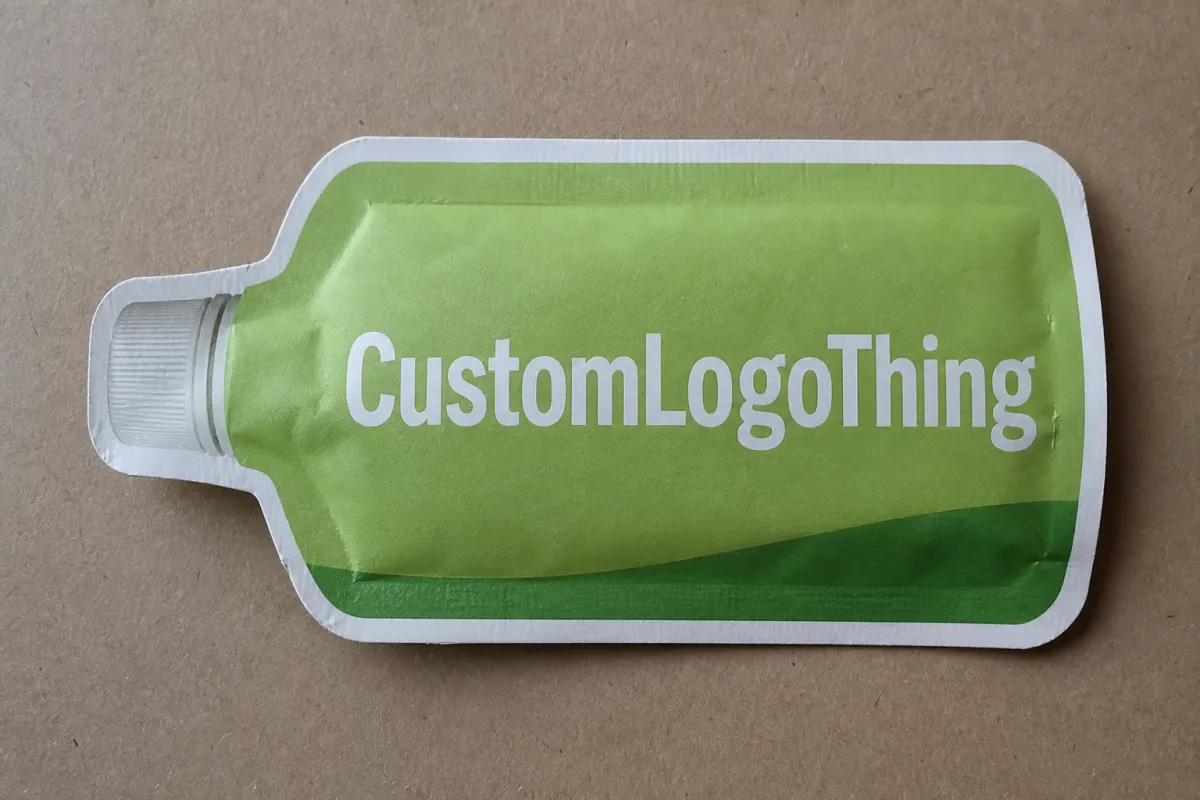
A pouch sticker does more than fill space. It gives the customer a brand cue right where the eye lands first. On kraft, matte white, black barrier film, or clear packaging, a clean logo sticker changes the whole read of the product. Suddenly the bag looks like it was planned instead of assembled in a hurry between two emails.
The practical upside is hard to ignore. Custom Printed Pouches make sense when volume is stable. They are not always the right first move. Stickers are the lower-risk option when you want to test artwork, run a short campaign, support multiple SKUs, or keep one pouch style while changing flavor names, scent names, or promo messaging. One base pouch. Several labels. Fewer packaging headaches.
They also help when the packaging keeps changing. Seasonal products, limited editions, regional labels, and updated compliance copy all play nicely with stickers. A new sticker is quicker than reordering a full custom pouch run, and the inventory risk stays a lot smaller. That matters when the launch window is tight and nobody wants to babysit a fresh packaging spec every month.
Branded pouch stickers wholesale fits best in places where the package is seen, handled, and photographed. Coffee and tea pouches. Wellness bags. Supplement packs. Pet treats. Dried goods. Cosmetic sachets. Subscription pouches. Trade show handouts. Short-run promo bags. The sticker does not need to do everything. It needs to do the one job that counts: make the pouch feel like your brand, not the supplier’s stock item.
A sticker is only cheap if it stays put, prints cleanly, and survives the real abuse your package gets. If it peels in transit, it is not a bargain. It is a problem with adhesive.
Buyers often ask whether a sticker can make a simple pouch feel retail-ready. Yes. Easily. Not if the artwork is sloppy or the material choice is wrong, though. A label with weak adhesive, fuzzy print, or a finish that fights the pouch surface will look cheap in a hurry. The right stock, the right cut, and accurate color can do the opposite without blowing up the budget.
Compared with printed pouches, stickers give you speed and flexibility. Printed pouches give you a more integrated look. The right choice depends on volume, SKU count, and how often your packaging changes. If the order is still moving around, stickers usually win. If the packaging is settled and monthly demand is steady, printed pouches may eventually make more sense on unit economics.
For sourcing and program structure, our Wholesale Programs page and a few real-world examples in our Case Studies are worth a look.
What Branded Pouch Stickers Do for Your Packaging
Stickers handle branding, organization, and communication at the same time. That is a big reason they keep showing up in packaging programs. A logo sticker identifies the product. A product-name sticker separates SKUs. A compliance label can carry ingredients, lot numbers, instructions, or a QR code without turning the pouch into a crowded mess.
They also keep mixed packaging lines from looking chaotic. If you use different pouch sizes or finishes, one sticker system can pull everything together visually. That matters once the catalog starts growing. It is easier to standardize label placement than to redesign every pouch variation just so the shelf looks tidy. Buyers do not get a trophy for making operations miserable.
Branded pouch stickers wholesale can do real work beyond decoration. They can act as tamper cues on resealable bags, support inventory tracking with barcodes, and carry campaign-specific messaging for bundles, limited editions, and regional releases. A smart sticker system can cut down the number of packaging pieces you need to manage.
There is a merchandising side too. If the package gets photographed for e-commerce, the sticker has to read clearly at thumbnail size and still hold up in close-up. That means simple type, strong contrast, and enough empty space to keep the design from turning into visual static. If every element is shouting, nobody gets heard.
Compared with custom printed pouches, stickers are usually faster to approve and easier to revise. A pouch print change can trigger extra setup, extra material risk, and extra warehouse complexity. A sticker revision is often just a new art file and a new print run. That difference matters when marketing decides to change the tagline after the samples are already sitting on the table.
Common use cases that justify stickers
Some situations make the choice obvious. Launching before the final pouch spec is locked? Stickers let you move now and refine later. Selling multiple flavors or variants? One pouch with different labels keeps buying simple. Running seasonal promos? Stickers make short-run branding affordable without creating dead inventory.
Food and wellness packaging gets another benefit: traceability. A lot code or batch reference on the outer pouch helps with production records and recall control. Not glamorous. Still useful. The kind of boring detail that keeps a small problem from becoming a very expensive one.
Where stickers beat full pouch printing
Sticker branding tends to win when quantities are spread across many SKUs, when artwork changes often, or when the pouch supplier wants a high minimum for custom film. It also wins when you want to test market response before committing to a bigger packaging program. If the product is still proving itself, why sink money into a warehouse of expensive print inventory? That is how brands end up with boxes of bags carrying last quarter’s copy.
Sticker Materials, Adhesives, and Print Specs That Matter
This is the part where a packaging project gets decided by details people usually want to ignore. Material matters. Adhesive matters. Finish matters. File prep matters too, no matter how many times someone says, “It should be fine.” That sentence has caused enough reprints to qualify as a threat.
For branded pouch stickers wholesale, the usual material choices are paper, matte film, gloss film, clear film, and weather-resistant synthetic stocks. Paper can work for dry indoor use and tighter budgets. Film handles moisture, scuffing, and repeated handling better. Clear film looks clean on transparent or colored pouches, but it needs tighter artwork discipline because every flaw shows up fast.
| Sticker Type | Best For | Typical MOQ | Rough Wholesale Price Range | Tradeoff |
|---|---|---|---|---|
| Paper matte labels | Dry goods, short runs, budget-conscious launches | 500-1,000 pieces | $0.03-$0.10 each | Lower moisture resistance |
| Gloss BOPP film | Retail packaging, bright graphics, durable handling | 1,000-3,000 pieces | $0.05-$0.14 each | More reflective, can show glare |
| Matte film | Premium-looking pouches, subdued branding, scuff resistance | 1,000-3,000 pieces | $0.06-$0.15 each | Costs a bit more than paper |
| Clear film | Minimal designs, transparent packaging, modern branding | 1,000-3,000 pieces | $0.07-$0.18 each | Design must be cleaner |
| Specialty or metallic finishes | Premium retail, limited editions, gift packaging | 3,000+ pieces | $0.12-$0.28 each | Higher cost, longer lead time |
Those ranges are practical wholesale brackets for common sticker sizes and standard production setups. Size, artwork coverage, cut shape, and finish all move the number. A tiny one-color seal is not priced like a full-bleed, custom-shaped metallic label. Packaging quotes still attract magical thinking, but the press does not care about optimism.
Adhesive choice is where a lot of pouch jobs go sideways. Permanent adhesive is usually the safer choice for retail packaging because it is meant to stay in place through transit, storage, and handling. Removable adhesive makes sense for temporary promotions or test runs where the pouch may be reused. Stronger bonding formulations are worth asking about when the pouch has texture, soft-touch lamination, or a surface that resists standard adhesive.
If the pouch is cold, damp, or shipped through temperature swings, ask about performance under those conditions. Freezer and chilled applications can be rough on labels. Not every adhesive behaves the same. If the bag will be wiped, stacked, or handled by people wearing gloves, scuff resistance matters too.
Print specs affect both appearance and production speed. Most wholesale sticker runs use CMYK, though spot colors help when brand matching has to be strict. Cut shape changes price as well. A clean rectangle or circle is easier to produce than a wild die-cut that hugs every curve of a logo. Bleed matters because cutting too close to live art leaves white slivers or clipped type. None of that is glamorous. All of it decides whether the package looks planned or rushed.
Artwork readiness saves time
Vector files are ideal for logos and simple line art. High-resolution raster files can work for photographic labels, but they need proper resolution at final size, not a screenshot stretched past its limit and sent out with confidence. That trick fools no one except people who do not care what the label looks like.
Send the dieline if you have one. If you do not, send the target size, pouch dimensions, and a photo of the actual bag. A supplier can recommend shape and placement faster when they can see the packaging context. It also helps to say whether the sticker will sit on the front panel, close the pouch flap, or wrap around a curved surface.
For durability and material sourcing guidance, industry references such as the Institute of Packaging Professionals and ISTA are useful benchmarks for handling and distribution expectations. If you need paper stock with responsible fiber sourcing, FSC certification is worth asking about. Not every job needs every standard. Buyers should still know the standards exist before approving a spec that cannot survive the trip.
Branded Pouch Stickers Wholesale Pricing, MOQ, and Quote Basics
Pricing comes down to the boring stuff, which is usually where the money is hiding. Quantity, size, material, finish, color count, cut complexity, and pack format all matter. Order stickers on sheets, rolls, or as individually cut pieces and the production flow changes. That changes cost. Nothing mysterious there.
For branded pouch stickers wholesale, the biggest swing usually comes from volume. A 500-piece run will not get the same unit economics as a 10,000-piece order. Smaller runs need setup work spread across fewer pieces, so the per-label price rises. Larger quantities spread setup out and make premium finishes easier to justify.
MOQ is not a random number someone pulled from the air to annoy you. It reflects setup cost, material waste, and production format. If you want a tiny run, ask for standard sizes, simple shapes, and a print method that does not need expensive prep. If you want a custom die-cut with specialty lamination, expect a higher minimum. Wholesale is not retail with better fonts.
Good quote requests save everyone time. Send the following from the start:
- Sticker dimensions or a pouch photo with the label area marked
- Material preference, if you already know it
- Finish preference such as matte, gloss, or clear
- Quantity target for the first run and expected reorders
- Pouch material, including paper, foil, matte film, or textured stock
- Application method, such as hand-applied or machine-applied
- Any compliance needs, such as ingredients, lot codes, or freezer use
That list matters because the wrong adhesive on the wrong surface burns time fast. A cheap sticker that peels during packing is expensive. A slightly better sticker that keeps the line moving is usually the smarter buy. Packaging buyers are not shopping for the lowest sticker price in isolation. They are buying a label that fits the product, the surface, the line speed, and the brand.
For rough planning, many buyers see simple pouch stickers land around $0.03-$0.10 per piece at moderate quantities, while premium films or specialty cuts can move into the $0.12-$0.28 range. That depends on size and coverage. A tiny logo seal is one thing. A full-color front label with compliance text is another.
If you want a tighter quote, be honest about the use case. “This is for samples only” and “this is for retail shelf life” are not the same job. A supplier cannot recommend the right stock if the only brief is “make it nice.” Nice is not a spec. It is a mood.
Budget planning should also include the hidden cost of bad labels: slower packing, damaged presentation, rework, and possible reprints. A sticker that costs one cent less but fails twice as often is not savings. It is a lesson. Usually a pricey one.
Smart ways to control cost
Keep shapes simple. Keep color counts reasonable. Avoid oversized art coverage if a smaller mark does the job. Choose standard finishes if the brand does not need extra texture. If the product will be boxed or bagged again, you may not need the fanciest label on the market just to hide behind another package.
Production Process, Proofing, and Turnaround Timeline
The production sequence is simple enough. Quote request. Spec confirmation. Artwork submission. Proof review. Approval. Print. Finishing. Packing. Shipment. The sequence sounds painless until someone notices the logo is off-center or the barcode is too small for the scanner. Then the mood changes.
Proofing is not a checkbox. It is the moment where you prevent the expensive mistake. Check size, spelling, color treatment, barcode placement, adhesive notes, and cut line details. Make sure the label still reads well at final size. If the proof shows a tiny legal line no one can read, say something. If the color looks wrong against the pouch background, say something faster.
Revisions are easy before production starts. Once the job is in motion, changes can affect material waste, schedule, and cost. That is why fast proof approval matters. If one person reviews the file and another person wants to “make it pop” three days later, the timeline slips. Packaging does not care that the idea came in after lunch.
Turnaround depends on complexity and schedule load. Simple reorders can move in about 7-10 business days after approval. New artwork, custom shapes, or specialty finishes often take 10-15 business days or more. Add time for extra proof rounds, compliance review, or split shipments. If your launch date is fixed, leave buffer. Do not build a product launch around hope.
Shipping and packing matter too. Stickers are usually packed flat or in rolls depending on the order format. Flat packs reduce some handling risk. Rolls suit faster application. Confirm the ship-to address, receiving hours, and whether the destination can accept pallets or cartons. A great production run can still get delayed by a loading dock that shuts at 3 p.m. and acts like it is doing you a favor.
If the order is for food or wellness packaging, remember that claims and traceability expectations can change the timeline. If the label includes batch codes, ingredients, or regulatory text, build in time for review. For packaging systems that support traceability or transport testing, shipping standards such as ISTA profiles are useful references even when the order is “just” a sticker label on a pouch.
Fast production starts with clear specs. Vague specs just create expensive email chains, and no one has ever sold more packaging by making the file trail longer.
One habit helps more than most: approve a single master spec for repeat orders. Lock size, material, finish, color, cut, and adhesive unless you intentionally change them. Reorders then become predictable instead of a scavenger hunt through old threads and half-remembered PDFs. Predictability is boring. It also saves money.
Why Choose Us for Wholesale Pouch Sticker Runs
Wholesale buyers want the same basics every time: consistent print quality, clear communication, fair pricing, and no surprises. Fancy sales copy does not change that. If the colors drift from batch to batch or the adhesive does not fit the pouch, the job failed no matter how polished the landing page looked.
We keep branded pouch stickers wholesale practical. That means helping you choose a material that matches the pouch surface, recommending a finish that fits the brand, and keeping artwork setup straightforward so you do not lose days to avoidable corrections. The real value is not just the sticker. It is the reduced guesswork.
Consistency matters in wholesale packaging. If the logo shifts in color, the cut line wanders, or the finish changes between batches, the line looks less reliable. Customers usually do not say that out loud. They still notice. Clean, repeatable sticker production helps the brand look established even while the product range is still growing.
Reorders matter too. A good wholesale supplier should make it easy to repeat the same spec, review a previous file, and keep the packaging stable as demand changes. That matters for brands with seasonal cycles or retail accounts that restock on schedule. Nobody wants to rebuild the same label from scratch because the old spec got buried in a folder titled “final_final2.”
If you need help with the broader packaging setup, our Custom Labels & Tags page is a useful place to compare formats and applications. It makes the difference between pouch stickers, hang tags, seal labels, and related options easier to see.
We also understand the buying side of packaging better than the average print shop that thinks “close enough” is a quality system. Buyers need direct answers on MOQ, file prep, and turnaround. They need advice that works on real pouches, not just clean sample boards. They need a partner who will say when a spec is too ambitious for the budget. That saves money and avoids embarrassing reprints.
For packaging programs that need certified fiber, documented materials, or compliance-sensitive workflows, ask early. We can usually steer the conversation toward a realistic spec instead of guessing after the proof is already approved. That is how you avoid the usual loop of “this looked fine on screen” followed by “why does the batch look different?”
How to Order and What to Prepare Next
The quickest way to get the right sticker is to show up with the right inputs. Start with the pouch itself. Measure the front panel area. Decide whether the sticker should act as a logo badge, a product label, or a seal. Then choose a finish that matches the brand and the handling conditions. That one decision cuts a lot of back-and-forth.
Before requesting a quote, prepare this checklist:
- Logo or artwork files, ideally vector format
- Exact sticker size or target application area
- Quantity for the first order and expected reorder volume
- Pouch material and surface finish
- Application method: hand-applied, machine-applied, or seal use
- Delivery deadline and any launch date pressure
- Compliance details, if the label needs ingredients, barcodes, or batch codes
Then compare suppliers on more than unit price. Look at MOQ, proofing process, turnaround time, and how they handle reorders. A quote that is a few cents lower can still cost more if proofing crawls or the adhesive is wrong for the surface. Cheap is not a strategy. It is just a number. Strategy is the part where the packaging actually works.
If you are still deciding between sticker formats, ask for samples or a material recommendation. Clear film on a glossy pouch behaves differently from a matte paper label on kraft stock. If the product will be refrigerated, handled often, or shipped through mixed weather, say that early. Those details change the spec in ways that matter more than most buyers expect.
For buyers who want a reliable wholesale path, the smart move is to standardize early. Pick one size, one finish, and one placement that work across the product line, then keep that spec steady. That reduces production friction and makes future orders easier to approve. It also makes the packaging look like a system instead of a string of emergency fixes.
Branded pouch stickers wholesale works best when the specs are clear, the files are ready, and the buyer is not inventing the packaging plan during proof review. Measure the pouch. Choose the adhesive for the real surface, not the ideal one. Lock the master spec before the first reorder. That is how you keep the line moving and get packaging that looks deliberate instead of improvised.
What is the usual MOQ for branded pouch stickers wholesale orders?
MOQ depends on size, finish, and print method, but wholesale buyers should expect better per-piece pricing as quantity goes up. Small runs are possible, especially with standard sizes and simpler finishes. For repeat orders, lock the same spec so reprints stay predictable and easy to quote.
How much do branded pouch stickers wholesale orders cost per unit?
Unit cost changes with quantity, material, shape, and finish, so quote comparisons should always use the same spec. Kiss-cut shapes, specialty films, and premium coatings cost more than basic labels, but they may be worth it for retail presentation. The cheapest quote only helps if the sticker sticks, prints cleanly, and works on your pouch surface.
Can branded pouch stickers wholesale be made for flexible or textured pouches?
Yes, but adhesive choice matters more on flexible or textured surfaces than on flat cartons or rigid packaging. Ask for a test recommendation if the pouch has a matte, rough, or cold-store finish, because some adhesives grab better than others. If the packaging will be handled often, choose a stronger adhesive and a finish that resists scuffing.
How long does production take after proof approval?
Simple sticker runs can move quickly after approval, while custom shapes, specialty finishes, or larger volumes take longer. The timeline depends on artwork readiness, proof revisions, and whether the order needs extra finishing or packing steps. If you have a launch date, build in buffer time instead of betting the schedule on a rush job.
What files do you need for a branded pouch stickers wholesale quote?
Send the logo or artwork in a vector format when possible, plus the desired size, shape, quantity, and finish. Include the pouch material and where the sticker will be applied so the supplier can recommend the right adhesive. If you are unsure about the spec, send the packaging photo anyway; a good supplier can usually narrow the options fast.

