Buyer Fit Snapshot
| Best fit | Custom Printed Pouches for Supplements projects where brand print, material claims, artwork control, MOQ, and repeat-order consistency need to be specified before quoting. |
|---|---|
| Quote inputs | Share finished size, material target, print colors, finish, packing count, annual reorder estimate, ship-to region, and any compliance wording. |
| Proofing check | Approve dieline scale, logo placement, barcode or warning zones, color tolerance, closure strength, and carton packing before bulk production. |
| Main risk | Vague material claims, crowded artwork, missing packing details, or unclear freight terms can make a low unit price expensive after revisions. |
Fast answer: Custom Printed Pouches for Supplements: Film, Print, MOQ, and Carton Packing should be specified like a repeatable production item. The safest quote records material, print method, finish, artwork proof, packing count, and reorder notes in one written spec.
Production checks before approval
Compare the actual filled-product size with the drawing, then confirm tolerance on folds, seals, hang holes, label areas, and retail display edges. Reserve space for logos, QR codes, warning copy, and material claims before decorative graphics fill the panel.
Quote comparison points
Review material grade, print process, finish, sampling route, tooling charges, carton quantity, and freight assumptions side by side. A quote is only useful when the supplier can repeat the same color, closure quality, and packing count on the next order.
Custom Printed Pouches for Supplements: A Smart Guide
Custom printed pouches for supplements can win trust in seconds, and they can lose it just as fast. On a shelf packed with shiny claims, loud graphics, and too many near-identical white bags, the package either looks precise, protected, and ready for a serious formula, or it looks like a rush job before anyone even reads the supplement facts panel. That first impression matters because custom printed pouches for supplements have to do two jobs at once: support product packaging performance and carry package Branding That Feels credible for powders, capsules, gummies, tablets, and drink mixes.
There is a practical reason so many brands keep coming back to this format. A well-built pouch can ship lighter than a jar, store flatter than a tub, and present cleaner than a clamshell or carton. If you are comparing flexible packaging with other formats, our Custom Packaging Products page is a useful place to see how different builds fit different products. The real value of custom printed pouches for supplements is simple: protection, information, and shelf appeal can live in the same package without forcing the brand to sacrifice one for the others.
What Custom Printed Pouches for Supplements Actually Do
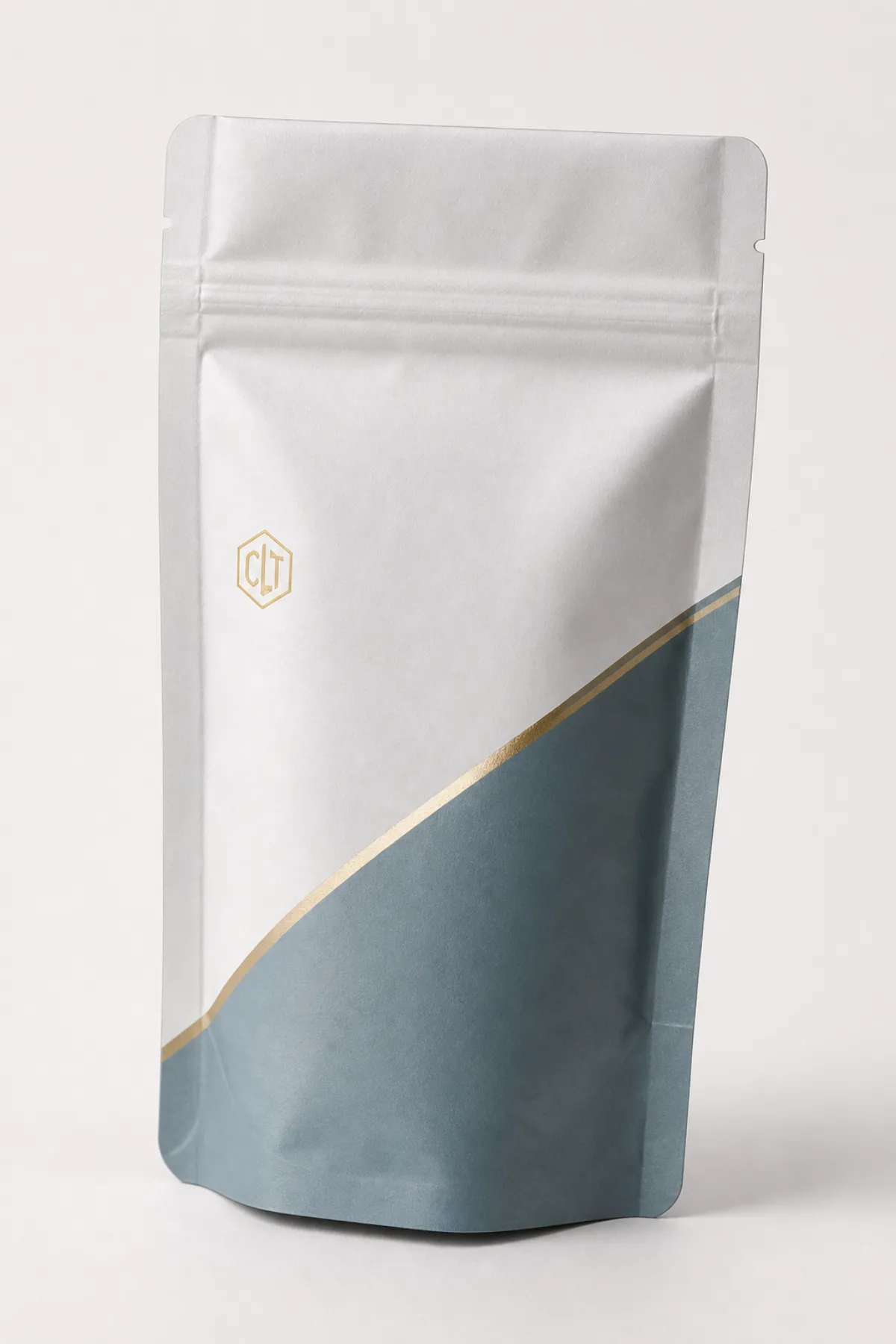
At shelf level, custom printed pouches for supplements have to answer one fast question: does this look like a formula made with care? A supplement pack can signal premium, clinical, natural, or budget before a shopper studies the benefits panel or the supplement facts box. That is why custom printed pouches for supplements are more than decoration. They sit inside product packaging, retail packaging, and package branding all at once.
In practical terms, a pouch is a flexible printed package made from laminated films or barrier structures. Brands use custom printed pouches for supplements for powders, capsules, gummies, tablets, greens blends, collagen mixes, and other nutrition products that need a controlled environment. The format can be built as a stand-up pouch, flat pouch, lay-flat pouch, or flat-bottom style depending on how the product is filled and displayed.
The protection side matters just as much as the graphic side. Many supplements are sensitive to moisture, oxygen, odors, light, and rough handling. If a formula clumps, softens, oxidizes, or loses aroma, the package has failed even if the artwork looks polished. Good custom printed pouches for supplements are designed to protect freshness while carrying directions, barcodes, lot codes, ingredient statements, and brand visuals in one compact footprint.
There is a reason this format keeps growing in wellness. Flexible packaging often uses less material than rigid containers, moves efficiently through shipping, and can scale from small pilot runs to larger rollouts without forcing a complete packaging reset. Buyers keep choosing custom printed pouches for supplements instead of defaulting to jars or bottles because the format gives them room to manage cost, shelf appeal, and product integrity together.
A pouch has two jobs that matter more than the rest: it must protect the formula and it must present the brand clearly. Miss either one and the pack starts costing money instead of earning it.
Appearance and performance do not always travel together. A glossy surface with weak seals will not help a hygroscopic powder. A matte finish with the wrong barrier layer may look refined and still let moisture creep in. That tension sits at the center of custom printed pouches for supplements: they need to look credible and also behave like real packaging under real conditions.
- Visual role: create a clean, branded first impression on shelf and online.
- Technical role: slow moisture, oxygen, and odor transfer.
- Operational role: work with the brand’s filling equipment and shipping method.
- Regulatory role: leave room for mandatory copy, lot coding, and expiration dates.
How Custom Printed Pouches for Supplements Are Made
The process usually starts with artwork, and this is where many projects either get organized early or become expensive later. For custom printed pouches for supplements, the design is not just a pretty front panel. It needs to be built as press-ready artwork with die lines, bleed, safe zones, barcode placement, nutrition panels, claims copy, and room for coding and compliance details. Good packaging design leaves space for all of that without crowding the face panel.
Printing method comes next, and quantity usually drives the decision. Digital printing is often a strong choice for shorter runs, multiple SKUs, or launch tests because it reduces setup work and handles tighter quantity bands. Flexographic printing tends to make more sense for larger volumes because the press setup gets spread over more units. That is why many long-run custom printed pouches for supplements move through flexo once demand is proven.
Behind the graphics sits the film structure itself. A typical build can include an outer print layer, a barrier layer, and a sealant layer. The outer layer carries ink and finish, the middle layer helps control oxygen or moisture transmission, and the inner sealant layer gives the pouch closure strength. In practice, custom printed pouches for supplements often use laminated structures that balance appearance, shelf life, and machinability instead of simply chasing the thickest film available.
After printing, the roll stock is cured, slit, formed, and converted into the final pouch style. Depending on the job, the line may create a stand-up pouch with a bottom gusset, a flat-bottom pouch with more shelf stability, or a simpler lay-flat format for sample sizes and single-serve packs. Filling method matters too. Some custom printed pouches for supplements are filled on vertical form-fill-seal equipment, while others are packed by hand or through semi-automated machines. A pouch that seals beautifully on paper still has to behave properly on the actual filling line.
One detail that gets overlooked is how finish changes the way the print reads. A matte surface softens the appearance and can make the brand feel more restrained or premium. Gloss boosts contrast and tends to push colors harder under bright retail lighting. On custom printed pouches for supplements, that choice is not only cosmetic; it changes how labels, icons, and claims are seen at a glance.
If you are comparing packaging routes, it helps to think in terms of production fit instead of appearance alone. Some supplement lines are better suited to Custom Printed Boxes for secondary packaging, but the primary pack still does the freshness work. That is why custom printed pouches for supplements remain such a strong choice in branded packaging: they can look polished while still handling the mechanical and barrier demands of real production.
Materials, Barrier Layers, and Shelf-Life Factors
Material selection matters more than most buyers expect. A powder blend with no hygroscopic ingredients is one thing; a probiotic, an effervescent mix, or a botanical formula that reacts to moisture is another. Custom printed pouches for supplements should be matched to the product’s real sensitivity, not just to a mood board or a color palette. That is the difference between packaging that photographs well and packaging that protects a formula through distribution.
Common film choices include PET for print clarity and stiffness, foil laminates for stronger barrier performance, metallized films for a middle ground, and recyclable monomaterial structures where the product and supply chain can support them. Some buyers want a matte lamination because it feels refined in the hand; others prefer gloss because the color pop is stronger. The right answer depends on shelf life, fill method, and the selling environment. For custom printed pouches for supplements, barrier performance usually deserves more attention than surface shine.
Three numbers matter in technical conversations: oxygen transmission rate, water vapor transmission rate, and seal strength. If a supplement formula is oxygen sensitive, OTR becomes part of the discussion. If it absorbs moisture, WVTR becomes just as important. Seal strength can be checked against methods such as ISTA distribution test standards for shipping performance and ASTM-style seal testing for closure integrity, while fiber-based components can be sourced with an eye toward FSC certification where paper content is part of the build. Those references do not solve the whole packaging problem, but they keep the conversation tied to measurable performance rather than guesswork.
Closures and convenience features shape the final spec too. Resealable zippers are common for multi-serve pouches because consumers do not always empty the pack at once. Tear notches help with clean opening. Hang holes can matter for club stores or peg displays. Rounded corners improve handling and can soften the visual profile. Child-resistant features are less common but relevant for certain supplement categories and distribution channels. In short, custom printed pouches for supplements should match not only the formula, but also how people will open, close, and store the package.
The best pouch is not always the thickest one. A 4.5 mil build with a proper barrier can outperform a bulkier pouch if the structure is tuned correctly. A heavy film with poor seals will not rescue a product that is sensitive to humidity. For custom printed pouches for supplements, the real job is matching the structure to the product sensitivity, the storage environment, and the distribution route.
- Dry powders: often need moderate moisture protection and a dependable resealable zipper.
- Gummies and chews: usually benefit from odor control and stronger moisture barriers.
- Probiotics and enzyme blends: may need careful oxygen management and tighter seal validation.
- Single-serve sticks or sachets: prioritize dosing consistency and efficient line speed.
Production Process, Timeline, and Lead Time
A smooth order path usually follows the same sequence: discovery, artwork review, proofing, material approval, printing, conversion, quality checks, packing, and shipping. With custom printed pouches for supplements, the speed of the job depends less on wishful thinking and more on whether each step has the information it needs. If the artwork is clean and the specs are settled early, the project moves with much less friction.
Proof approval is often the hinge point. If a barcode needs to be regenerated, a claim needs to be softened, or a panel is too crowded for readable copy, the schedule can slip. That is not only a printer problem; it is a packaging design problem, and it shows up often on first-time supplement work. The more complete the brief, the easier it is to keep custom printed pouches for supplements on schedule.
Lead time depends on pouch style, print method, quantity, special finishes, raw material inventory, and whether sample sets or test runs are needed. A simple digital run with finalized artwork can move quickly, often in the 12-15 business day range after final proof approval. Larger flexographic or foil-heavy programs usually need more runway because plate work, material staging, and conversion steps add time. That is normal for custom printed pouches for supplements, and it is better to plan around that reality than to hope the calendar will cooperate.
Planning window matters. If a launch date is fixed, it is wise to start the packaging conversation well before the sell sheet or ad campaign is locked. A buyer who waits until the last minute can still get a quote, but there may be less room for revisions, sampling, or supply contingencies. For seasonal promotions and multi-SKU launches, custom printed pouches for supplements should be treated as an early milestone rather than a final-week task.
Quality control has a practical side too. Reputable production teams check seal consistency, print registration, color match, and final pack count before shipment. If the pouches are for e-commerce, they may also be reviewed for transit resilience. A supplement brand that depends on retail packaging should think about box-out, pallet stability, and handling marks as part of the same workflow. That is where custom printed pouches for supplements connect back to broader supply chain planning.
Cost, Pricing, and MOQ for Custom Printed Pouches for Supplements
Price is driven by a handful of variables that buyers can actually control. Size matters, because a larger pouch uses more film and often more print coverage. Quantity matters, because setup cost gets spread across more pieces. Print method matters, because digital and flexographic systems do not share the same economics. Finish, zipper type, barrier layer, and custom features all add their own weight. That is why two quotes for custom printed pouches for supplements can look very different even when both vendors are being honest.
MOQ exists for a reason. A printer has setup time, material usage, press calibration, and conversion labor to account for, so a very short run can cost a lot more per unit than a larger run. In everyday terms, a minimum order quantity is the point where the production math starts to make sense. For custom printed pouches for supplements, digital runs may start around 1,000 to 5,000 units depending on the structure, while flexographic programs often become more attractive above 10,000 units.
| Option | Typical MOQ | Typical Unit Cost | Best Use | Notes |
|---|---|---|---|---|
| Digital printed stand-up pouch | 1,000-5,000 | $0.24-$0.45 | Test launches, short runs, multiple SKUs | Lower setup burden, quicker artwork changes |
| Flexographic printed pouch | 10,000-50,000 | $0.12-$0.24 | Established products and larger rollouts | Better economics at higher volume |
| Foil-barrier pouch with zipper | 5,000-25,000 | $0.18-$0.36 | Moisture-sensitive or aroma-sensitive formulas | Higher barrier and more premium look |
| Recyclable monomaterial pouch | 5,000-20,000 | $0.20-$0.40 | Brands prioritizing sustainability claims | Structure selection should still meet shelf-life needs |
Those figures are broad working ranges, not promises. Artwork complexity, finish choice, and freight can move the final number. So can prepress corrections, plate or cylinder charges, rush scheduling, sample sets, and special packing requirements. If a quote for custom printed pouches for supplements looks unusually low, ask what is missing; otherwise the real cost may show up later as add-ons. That little bit of skepticism is healthy here. It saves headaches.
The smartest way to compare quotes is line by line. Check pouch dimensions, film structure, zipper type, finish, print method, lead time, and freight assumptions. A cheap quote with the wrong barrier level is not a good value. Neither is a premium quote if the product does not need that much protection. I usually tell buyers to start with one or two sizes, learn how the pack performs, then scale once sell-through and reorder behavior are clearer. That approach keeps custom printed pouches for supplements tied to actual market response instead of speculation.
If you want to compare pouch pricing against other flexible formats, our Custom Packaging Products page can help frame those decisions. It also serves as a reminder that custom printed pouches for supplements are only one part of a wider packaging system, especially if your brand also uses cartons, labels, or secondary packaging for retail presentation.
Common Mistakes to Avoid With Supplement Pouches
One of the biggest mistakes is choosing a style because it looks impressive in a mockup. A high-gloss stand-up pouch may photograph well, but if the zipper is weak or the barrier is wrong, the bag will not support the formula. That is a classic trap with custom printed pouches for supplements: the artwork gets approved first, then the structure has to catch up. It happens a lot more than people like to admit.
Artwork errors are another common issue. Low-resolution files, thin type, crowded panels, and missing bleed all become obvious once the press proof is laid out at actual size. Small pouches are unforgiving. If the product facts, warning copy, and barcode are squeezed too tightly, the pack can feel busy and cheap even if the colors are attractive. For custom printed pouches for supplements, clean packaging design matters as much as bold color.
Brands also get into trouble when they lock in a fill method too late. A pouch for hand-filling is not always ideal for a vertical form-fill-seal line. Zipper placement, seal area, gusset geometry, and powder behavior can all affect machinability. Before approving a spec, it helps to confirm how the line actually runs. That single step can prevent a lot of frustration with custom printed pouches for supplements.
Compliance oversights create their own headaches. Missing lot-code space, inconsistent net weight placement, or a forgotten expiration-date area can force a late redesign. Ingredient and claim review should happen before final approval, not after the packaging is already in motion. In supplement packaging, the label and the pouch have to cooperate. That is true whether the brand uses custom printed pouches for supplements, custom printed boxes, or a mixed retail packaging system.
Timing mistakes are just as costly. A launch that looks far away can turn very real once ingredient inventory, creative review, and sales planning start pulling in the same direction. A delayed proof or a late correction can turn a manageable project into a rush order. With custom printed pouches for supplements, the safest schedule is the one that includes a little room for revision.
- Do not approve a pouch based on appearance alone.
- Do not submit artwork without panel dimensions and safe zones.
- Do not guess at barrier needs for moisture-sensitive formulas.
- Do not leave compliance space as an afterthought.
Expert Tips and Next Steps Before You Request a Quote
If you want a sharp quote, gather the basics first: pouch dimensions, product type, fill weight, quantity, artwork files, closure preference, and any barrier or compliance requirements. A complete brief lets the supplier check fit, structure, and print method before the project gets too far down the road. That is especially useful for custom printed pouches for supplements, where small spec changes can alter both cost and shelf-life performance.
It is also smart to ask for samples or material swatches. You can learn a lot from how the pouch feels in hand: seal stiffness, zipper action, matte versus gloss contrast, and the way the print reads under normal room lighting. That physical review is more useful than staring at a PDF. For custom printed pouches for supplements, a sample can reveal whether the pack feels clinical, natural, premium, or too generic.
A simple decision checklist helps keep the conversation grounded. Start with barrier needs, then move to closure type, then think about shelf presentation, then confirm the fill method and storage environment. If your brand expects growth, mention that up front. A pouch structure that handles the first order and the reorder without redesign saves time and protects package branding later. I have seen many teams benefit from choosing custom printed pouches for supplements that can scale with the line instead of only fitting the current SKU count.
There is also a strategic angle. If your supplement program may expand into related SKUs, it can be useful to standardize on a base pouch family and vary only the print and size. That makes future product packaging easier to manage and often gives the brand a more coherent retail presence. Many buyers use Custom Packaging Products as a way to map those options before they commit to a full print run. Done well, custom printed pouches for supplements become part of a larger branded packaging system rather than a one-off purchase.
Custom printed pouches for supplements work best when the spec is clear, the timeline is realistic, and the design respects both shelf appeal and shelf life. If you are comparing routes, start with three questions: what does the formula need from the barrier, how will the pack be filled, and how much time is actually left before launch? Those three answers usually decide the rest. Get them right, and custom printed pouches for supplements become a packaging choice that earns its keep instead of just looking nice in a mockup.
What are custom printed pouches for supplements used for?
They package powders, capsules, gummies, tablets, and drink mixes in a flexible format that is easier to ship and display than many rigid containers. They combine branding, ingredient information, and protection against moisture, oxygen, light, and odor in one package. Brands also choose custom printed pouches for supplements because the format often reduces freight and warehouse burden compared with heavier containers.
How do I choose the right material for supplement pouches?
Start with product sensitivity. Moisture-heavy formulas, aromatic blends, and light-sensitive ingredients usually need stronger barrier protection. Match the film structure to the shelf-life goal, storage conditions, and fill process instead of choosing based on appearance alone. Ask for material samples so you can compare matte, gloss, foil, or recyclable options in hand before approving the final build for custom printed pouches for supplements. That tactile check sounds small, but it saves a lot of second-guessing later.
What affects pricing on custom printed supplement pouches?
The biggest drivers are size, total quantity, film complexity, print method, zipper style, and any special finish or feature. Short runs usually cost more per unit because setup is spread across fewer pouches, while larger runs reduce unit cost. Freight, proofing, and prepress changes can also affect the final number, so quotes should be reviewed line by line for custom printed pouches for supplements.
How long does it take to produce custom printed pouches for supplements?
Lead time depends on artwork readiness, proof approvals, material availability, print method, and pouch complexity. A simple order with finalized files usually moves faster than a multi-SKU project with special finishes or custom features. The safest approach is to start the process well before launch so there is room for review, production, and shipping when planning custom printed pouches for supplements. A rushed proof is where projects get wobbly.
What should I send when requesting a quote for supplement pouches?
Send pouch dimensions, fill weight, product type, quantity, artwork files, closure preference, and any barrier or compliance requirements. Include your target launch date and whether the pouches will be hand-filled, semi-automated, or packed on a vertical form-fill-seal line. The more complete the spec sheet, the easier it is to get a clear quote and avoid revisions later for custom printed pouches for supplements.
For Supplement Brands That want a package to do real work on shelf and in transit, custom printed pouches for supplements are often the most practical place to start: they can protect the formula, support retail packaging goals, and carry strong package branding without overcomplicating production.

