Buyer Fit Snapshot
| Best fit | Branded Recycled Sticker Sheets projects where brand print, material claims, artwork control, MOQ, and repeat-order consistency need to be specified before quoting. |
|---|---|
| Quote inputs | Share finished size, material target, print colors, finish, packing count, annual reorder estimate, ship-to region, and any compliance wording. |
| Proofing check | Approve dieline scale, logo placement, barcode or warning zones, color tolerance, closure strength, and carton packing before bulk production. |
| Main risk | Vague material claims, crowded artwork, missing packing details, or unclear freight terms can make a low unit price expensive after revisions. |
Fast answer: Branded Recycled Sticker Sheets: Material, Adhesive, Artwork, and MOQ should be specified like a repeatable production item. The safest quote records material, print method, finish, artwork proof, packing count, and reorder notes in one written spec.
Production checks before approval
Compare the actual filled-product size with the drawing, then confirm tolerance on folds, seals, hang holes, label areas, and retail display edges. Reserve space for logos, QR codes, warning copy, and material claims before decorative graphics fill the panel.
Quote comparison points
Review material grade, print process, finish, sampling route, tooling charges, carton quantity, and freight assumptions side by side. A quote is only useful when the supplier can repeat the same color, closure quality, and packing count on the next order.
Branded Recycled Sticker Sheets are often treated like a compromise. That view is outdated. In practice, the right sheet can look clean, feel intentional, and support a brand story without sliding into the faux-handmade look that some eco packaging falls into when the spec is rushed.
I have seen the same design fail on one recycled stock and hold beautifully on another. The difference was not the concept; it was the combination of face stock, adhesive, and print method. That matters because sticker sheets are usually judged in a few seconds, often while someone is opening a parcel, packing an order, or moving through a retail display.
The real mistake is assuming recycled material automatically means reduced quality. It does not. A better approach is to treat the sheet as a system: paper, adhesive, finish, cut, and artwork all need to work together. A sticker sheet for a luxury mailer has different demands from one used in a conference kit or sealed onto cartons that will sit in storage for a week.
Branded recycled sticker sheets: why they stand out on shelf
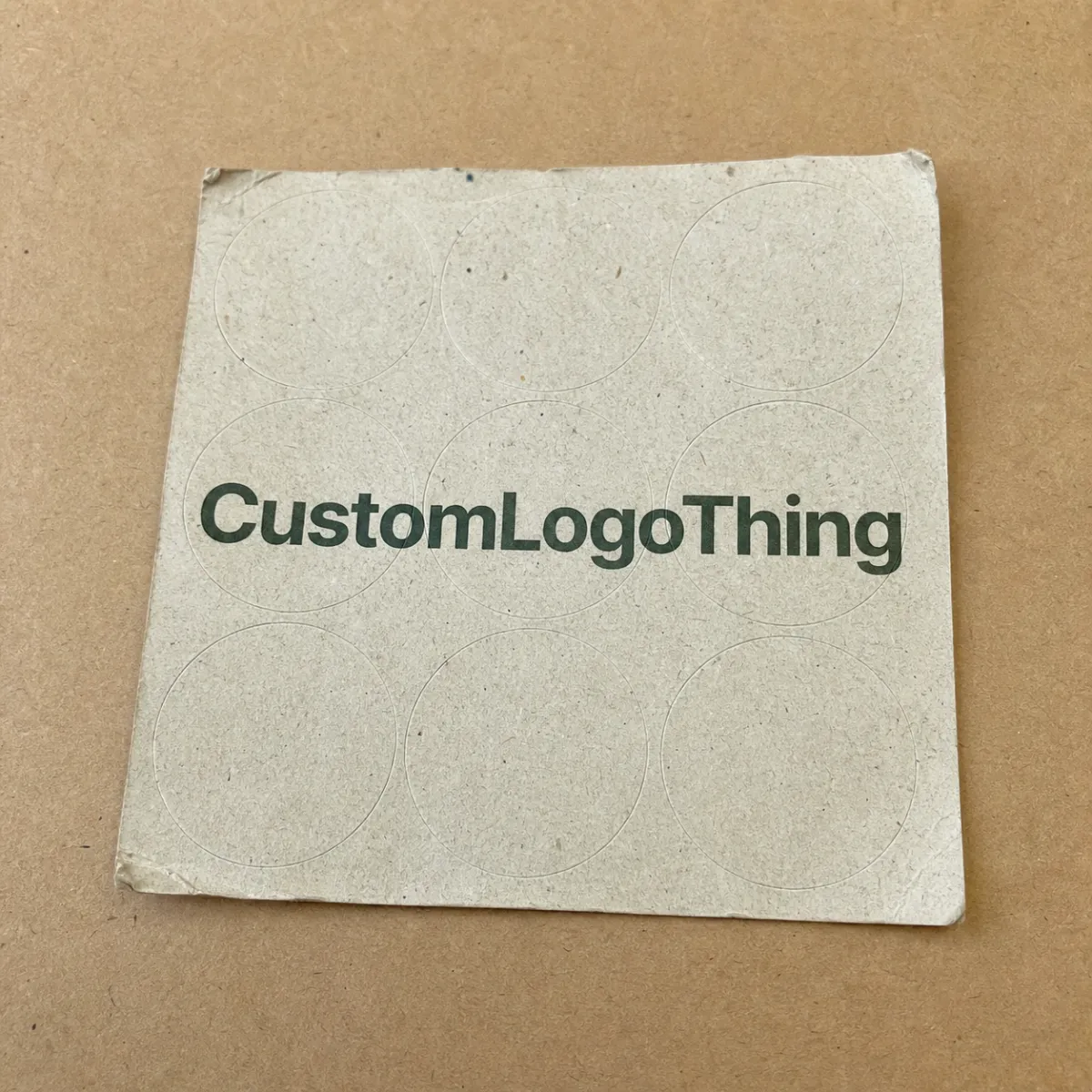
Branded recycled sticker sheets do not need to look dull, rough, or homemade. Good recycled paper can print with surprising clarity, especially if the artwork respects the material instead of fighting it. Customers do not study packaging for long. They scan, compare, and decide. A sheet with a confident logo, controlled spacing, and a restrained palette can communicate faster than a longer brand message ever will.
Put plainly, branded recycled sticker sheets are sticker sheets produced on recycled paper or recycled-content stock and printed with logos, product names, graphics, seasonal art, or short campaign messages. They are supplied as sheets rather than individual stickers, which makes them easier to store, easier to distribute, and often more efficient for small or mid-sized runs. A single sheet can seal a box, add decoration, identify a product line, or reinforce the brand with very little waste.
You will see branded recycled sticker sheets used in product packaging, subscription boxes, event kits, retail gift bags, and promotional inserts. They are also useful for brands that want a branded touchpoint without paying for a fully custom carton. A small square or rectangle can carry more identity than people expect, especially when it mirrors the colors, type, or illustration style used across the rest of the packaging system.
There is a tradeoff, but it is not as dramatic as buyers fear. Recycled paper can be less bright and sometimes less forgiving than premium virgin-fiber stock. That does not make it worse. It means the artwork has to be planned more carefully. Soft grays, pale pastels, and delicate type can disappear into a porous surface. Strong contrast, clearer hierarchy, and slightly heavier line weights usually travel better onto recycled stock.
Recycled does not have to mean rustic. With the right spec, branded recycled sticker sheets can look polished, modern, and fully aligned with the rest of the packaging.
The buying question is not “eco or quality.” That frame is too neat for a manufacturing decision. The better question is which recycled face stock, finish, and adhesive suit the actual use. A mailer insert, a retail seal, and a giveaway sheet do not ask the same thing of the material. Branded recycled sticker sheets should be judged against the application first, then the sustainability claim.
For a broader view of how packaging choices perform outside a sales sample, our Case Studies page shows how different formats hold up in real production settings. That tends to be more useful than relying on a polished product photo.
How branded recycled sticker sheets are made and printed
Most branded recycled sticker sheets follow the same basic build: a recycled paper face stock, a pressure-sensitive adhesive layer, and a liner or backing sheet. The face stock carries the printed artwork. The adhesive creates the bond. The liner protects the adhesive until the user peels the stickers away. The structure is straightforward. The performance differences are not.
Print method matters more than many buyers expect. Digital print is common for shorter runs because it keeps setup costs lower and makes artwork changes easier to manage. It also suits variable data and mixed designs. Flexographic and offset methods can work well for larger runs, although they usually require more setup before the first approved sheet appears. For many branded recycled sticker sheets, digital production is the practical starting point unless the quantity is high enough to justify another process.
Sheet layout deserves more attention than it usually gets. One design per sheet is simple. Multiple logos on a single sheet can support a broader campaign. Mixed shapes can help packing teams work faster. Repeated icons can speed up manual application. Those differences sound small until a team is assembling hundreds of orders and every saved second starts to matter.
Recycled paper changes how ink behaves on the surface. The sheet may be more porous, slightly less opaque, and a little more textured than a coated virgin stock. That affects black density, fine type, and soft pastel colors. Branded recycled sticker sheets usually perform better with stronger contrast, simplified color builds, and firmer line weights. What looks elegant on a screen can become vague on paper if the stock absorbs too much ink.
Finishing is where the spec gets interesting. Matte and uncoated surfaces are common because they suit a natural look and pair well with recycled paper. Light coatings can improve scuff resistance, although not every recycled construction accepts heavier coating cleanly. If a supplier talks about sustainability, ask which part of the sheet is recycled-content and which part is actually recyclable. Those are separate questions, and they should not be blurred together.
For buyers comparing related products, Custom Labels & Tags can be a useful reference point. The same questions about print method, adhesive, finish, and cut quality show up there too, even though the format is different.
Two outside references help keep the conversation grounded. FSC certification is commonly used to document responsible fiber sourcing. The EPA recycling guidance is useful for checking what is actually recyclable in practice. Neither replaces a proper spec sheet, but both are better than vague green language with no evidence behind it.
The practical point is simple: branded recycled sticker sheets are a materials decision and a production decision at the same time. Color accuracy, peel behavior, and presentation all depend on how the sheet is built. Treat those elements as one system instead of separate tasks.
Material choices, durability, and design factors
This is where careful buyers separate themselves from expensive reorders. The material stack for branded recycled sticker sheets usually comes down to four variables: recycled content percentage, face-stock weight, adhesive strength, and liner type. If one of those is off, the proof can still look good while the final sheets misbehave in actual use. That is a frustrating way to discover the gap between a sample and a production run.
Face stock is usually specified by weight and finish. Lighter applications often use recycled paper in the 80-120 gsm range. Heavier cover-style stocks can feel more premium and suit pieces that need a little more presence in the hand. If the sheet will be tucked into a mailer or event kit, a midweight stock often lands in the useful middle between cost and structure. If it is going on display, a heavier stock can feel more deliberate.
Adhesive choice determines how the sheet behaves outside the proof room. Permanent acrylic adhesives work well for most branding jobs because they bond to paperboard, poly mailers, and many cartons. Removable adhesives suit temporary promotions or use cases where residue is a concern. For branded recycled sticker sheets, the adhesive should be matched to the surface, not chosen because one quote looked slightly cheaper.
Durability is not only about water resistance. It also includes shelf life, abrasion resistance, and how much handling the sheet can survive before the user applies it. A sheet used for internal packing may only need to survive a few weeks in a packing station. A retail-facing sheet may need better scuff resistance and more stable color. Same artwork, different demands.
Design choices can help or hurt the final result. Fine serif text, tiny legal copy, pale backgrounds, and metallic effects can all become messy on porous recycled stocks. Strong logos, straightforward icon sets, and larger type usually reproduce more cleanly. If the design includes QR codes or dense compliance text, ask for a proof on the actual stock rather than trusting the digital file alone.
Branded recycled sticker sheets also need a practical sustainability check. A sheet that looks eco-conscious but peels badly, scratches quickly, or fails in transit can become wasted inventory. That is not a sustainability win. It is waste with better marketing language. A more durable sheet often ends up being the greener choice because fewer units need to be scrapped, replaced, or reprinted.
Here is the rule of thumb I use with clients:
- If the sheet is for dry, indoor use, prioritize tactile feel and print quality.
- If the sheet may face moisture, friction, or long storage, prioritize adhesive and surface durability first.
- If the artwork is detailed, choose a smoother recycled face stock and ask for a sample print.
Recycled-content paper, FSC-certified fiber, and liner stock all belong in the conversation, but they do not behave the same way on press or in the field. A good supplier should be able to explain the actual construction, not just repeat broad environmental claims and hope nobody asks for the details.
Branded recycled sticker sheets: process, timeline, and turnaround
The production path for branded recycled sticker sheets is usually more predictable than people think, provided the artwork and specification are clean. The typical flow is briefing, artwork setup, proofing, approval, production, cutting, packing, and shipping. Miss one step and the schedule starts slipping in small, irritating increments.
- Brief: Confirm sheet size, quantity, intended surface, finish, and whether the design is one-up or mixed layout.
- Artwork setup: Build the dielines, bleed, safe zones, and cut paths.
- Proofing: Review color, alignment, and copy, ideally on the actual stock.
- Approval: Lock the file so production can start.
- Print and cut: Produce the sheets, kiss-cut or die-cut them, then check registration.
- Packing and shipping: Package in cartons or bundles, then send by the selected freight method.
The most common delay is not the press room. It is the approval cycle. Low-resolution logos, vague cut lines, missing bleed, and endless notes about making the green “just a touch greener” can turn a simple order into a long one. If you are ordering branded recycled sticker sheets against a deadline, get the file sorted before asking for speed.
Turnaround depends on complexity and queue. A straightforward sheet order with standard recycled paper, one design, and a clean cut pattern may move in roughly 7-12 business days after proof approval. Add custom recycled materials, heavier ink coverage, or special cutting, and the timeline can stretch into the 12-18 business day range. If the supplier has to source a less common stock or is working through a holiday backlog, plan for more slack. The sheet is only fast if every part of the chain is fast.
Branded recycled sticker sheets with premium finishing, tighter color matching, or several sheet layouts often need extra time for setup and inspection. That is normal. What is not normal is a supplier promising a tight date and quietly treating proofing like it never happened. Ask whether the quoted turnaround includes proofing, production, packing, and transit. Some quotes only describe print time, which leaves out a surprising amount of the schedule.
Before you pay, confirm these points:
- What proof type you will receive: digital proof, printed sample, or press proof.
- Whether the quoted ship date is factory-complete or ex-works.
- How change requests affect the schedule.
- Whether packing and carton labeling are included.
- What shipping method is assumed in the quote.
A clearer question than “How fast can you do it?” is “What date can you ship after approval?” That phrasing removes some of the fog. If the order matters for a launch, add buffer time. Packaging has a way of exposing optimism.
Cost, pricing, MOQ, and quote basics for branded recycled sticker sheets
Pricing for branded recycled sticker sheets is driven by the usual variables: sheet size, print coverage, quantity, substrate choice, adhesive type, cutting method, and any finishing steps. Recycled content itself does not automatically push the job up or down in price. The exact stock and the amount of setup work determine that.
MOQ matters because setup costs have to be absorbed somewhere. A smaller run spreads those costs across fewer sheets, which pushes the unit price higher. That is why 250 sheets can look strangely expensive beside 1,000 or 5,000 sheets. Nothing mysterious there. Just arithmetic with a packaging label on it.
| Order Tier | Typical Unit Price | Best For | Notes |
|---|---|---|---|
| Basic recycled sheet | $0.10-$0.22 per sheet at 1,000+ pieces | Internal use, simple mailers, low-complexity branding | Usually uncoated or matte, limited color coverage |
| Mid-range branded sheet | $0.18-$0.40 per sheet at 1,000+ pieces | Retail inserts, event kits, brand-heavy packaging | Better print control, cleaner cut work, stronger presentation |
| Premium recycled sheet | $0.30-$0.75 per sheet at 1,000+ pieces | High-touch unboxing, refined retail, exacting color needs | Heavier stock, tighter spec control, sometimes special adhesives or finishes |
Those ranges are not fixed. They move with quantity, sheet size, and print coverage. A small 250-piece order can sit well above them, while a larger run may drop below them. If a quote lands far outside the band, ask why before assuming the supplier is being generous or difficult. Sometimes the difference is a heavier stock. Sometimes it is a better adhesive. Sometimes it is simply a different product wearing a similar name.
Read the quote language carefully. Setup fee, plate charge, die charge, proofing, freight, and reprint policy can all hide in the details. If you are comparing branded recycled sticker sheets from different suppliers, make sure the quotes are based on the same spec. Comparing a basic matte stock to a premium recycled sheet is not price shopping. It is comparing apples to an orange that has been painted green.
A useful tactic is to request pricing at several quantities, usually something like 250, 1,000, and 5,000 sheets. That shows the cost curve and reveals where setup stops hurting so much. If the price falls sharply at the next tier, your target quantity may not be the most efficient buying point. If the curve barely moves, setup is probably doing most of the damage.
Here is a simple way to think about budget tiers:
- Entry level: functional branding, simple layouts, fewer ink colors, minimal finishing.
- Mid tier: cleaner registration, stronger presentation, more consistent recycled stock.
- Premium tier: tighter proofing, better tactile feel, and stronger consistency across the run.
For brands building a broader packaging system, it can help to compare the sticker sheet budget against the rest of the package. Sometimes a better sticker sheet delivers more brand value than a cheaper insert. Other times the insert does the heavier lifting. Packaging rarely rewards the flashiest object. It rewards the one that carries the message most efficiently.
Common mistakes when ordering recycled sticker sheets
The biggest mistake is assuming recycled stocks all behave the same way. They do not. A recycled-content face stock can be smoother or rougher, brighter or duller, more porous or less porous, depending on the mill and coating. If you are ordering branded recycled sticker sheets, judge the sample in your hand, not the line on the quote.
A second mistake is overfilling the design. Tiny type, thin rules, pale backgrounds, and crowded logos can turn muddy after print. Recycled paper often gives artwork a softer edge than a coated virgin stock, so a design that barely works on screen may not hold up on paper. That is not a printer problem. That is the material behaving as expected.
A third mistake is vague sustainability language. If a supplier says the sheet is “eco-friendly” but cannot explain the face stock, adhesive, liner, and disposal path, the claim is doing too much work. Ask what is recycled, what is recyclable, and what the actual end-of-life path looks like for the exact construction. Branded recycled sticker sheets should have a traceable material story, not a slogan.
A fourth mistake is approving color from a monitor and calling the job done. Screen color is useful for direction, not final truth. A physical sample or proof is safer, especially if brand color matching matters. If the logo blue has to sit beside packaging already on shelf, get the sample. Otherwise you are trusting display settings to protect brand consistency, which is a fairly strange bet.
A fifth mistake is ignoring the end use. A sticker for a dry mailer should not be specified like a label that will deal with abrasion, condensation, or repeated handling. That sounds obvious, and yet it gets missed often. If the sheet will be touched frequently, stored for a long time, or shipped inside cartons, ask for a more durable adhesive or face stock. Branded recycled sticker sheets are not all built for the same treatment.
The same discipline applies across related packaging parts. If your team is comparing labels, tags, and sticker sheets in one campaign, keep the spec standards consistent. Otherwise you end up with one polished piece and two awkward relatives.
If you want a reality check on execution quality, read through our Case Studies to see how specs behave across different production scenarios. It is less glamorous than a mood board, but much better at catching problems before they become expensive.
Expert tips and next steps for branded recycled sticker sheets
Here is the checklist I would use before placing an order for branded recycled sticker sheets: stock, adhesive, finish, quantity, turnaround, shipping method, and sustainability documentation. If one of those seven is unclear, you do not really have a quote yet. You have a conversation.
Start with a sample or pilot run if the color has to match closely or the sticker will touch an unusual surface. A small test order can expose problems with adhesion, texture, or contrast before you commit to a larger purchase. That matters even more for branded recycled sticker sheets used in retail or high-visibility mailers, where a poor result can do more damage than a slightly higher unit price.
Compare quotes on the same spec. That point deserves repetition because it is still missed too often. If one supplier quotes a premium recycled sheet and another quotes a simpler recycled-content stock, the lower number is not a better deal. It is a different product. Make the comparison fair, or the decision will be false.
Brief your supplier with enough detail to remove guesswork. Share the artwork, the intended surface, storage conditions, whether the sheet will be handled by staff or customers, and whether the job supports retail or internal use. Specific instructions reduce surprises. Vague instructions invite them.
For brands that care about consistency across packaging, branded recycled sticker sheets can be a useful middle ground. They give you a branded touchpoint without the cost of a full custom carton, and they carry a stronger material story than generic glossy stock. Not every campaign needs that. But when the sheet has to do real branding work, recycled can be the right choice rather than the fashionable one.
The practical next step is straightforward: choose one use case, request matched quotes, review samples, and only then commit to production. Branded recycled sticker sheets work best when the spec is proven before the bulk order, not after. If you want a cleaner, more controlled packaging setup, start with the sample and make the final decision from there.
What are branded recycled sticker sheets made from?
They are usually printed on recycled paper or recycled-content paper stocks with an adhesive backing and liner. The feel depends on the face-stock weight, coating, and print method, so branded recycled sticker sheets can look rustic, premium, or plain practical depending on the build. Ask which part of the construction is recycled, because the face stock, liner, and adhesive do not always come from the same material path.
Are branded recycled sticker sheets actually recyclable?
Not always, and that is where people get sloppy with language. The paper face may be recyclable, but the adhesive and liner can change the disposal path. The safest answer is to confirm the supplier's claim for the exact construction you are ordering, not a generic recycled label. If the supplier cannot explain the full build, I would treat the claim carefully.
How much do branded recycled sticker sheets cost?
Pricing usually depends on quantity, print coverage, sheet size, material choice, and cutting complexity. Small runs often cost more per sheet because setup gets spread over fewer units. For an apples-to-apples quote, compare the same size, same stock, same finish, and same quantity. That is the only way to know whether the price is real or just dressed up in nicer language.
What is the typical turnaround for branded recycled sticker sheets?
Simple orders can move faster, while custom materials or special finishes add lead time. Artwork approval is usually the slowest part, not the printing itself. Ask whether the quoted turnaround includes proofing, production, packing, and shipping, because those are often treated like separate problems until the deadline starts barking.
Can I print full-color artwork on recycled sticker sheets?
Yes, but the result depends on the stock surface and print method. Bright colors, fine type, and subtle gradients may need a test or proof to make sure they reproduce cleanly. If brand color accuracy matters, request a sample or proof before approving the full run. Branded recycled sticker sheets can handle full color well, but the proof is what tells the truth, not the design file on your laptop.

