stationery Recycled Poly Mailers material sample guide matters because a mailer that looks right on screen can behave differently once envelopes, cards, and insert sets are inside it. Recycled film can vary in stiffness, opacity, and seal response from one lot to the next, so the sample is where those differences show up.
For stationery buyers, sampling is the cheapest way to catch fit issues, closure failures, scuffing, and print problems before they turn into reorders or returns. A spec sheet is useful, but it cannot tell you how the mailer performs with your actual product and packing method.
Why Sample Mailers Expose Problems Spec Sheets Miss
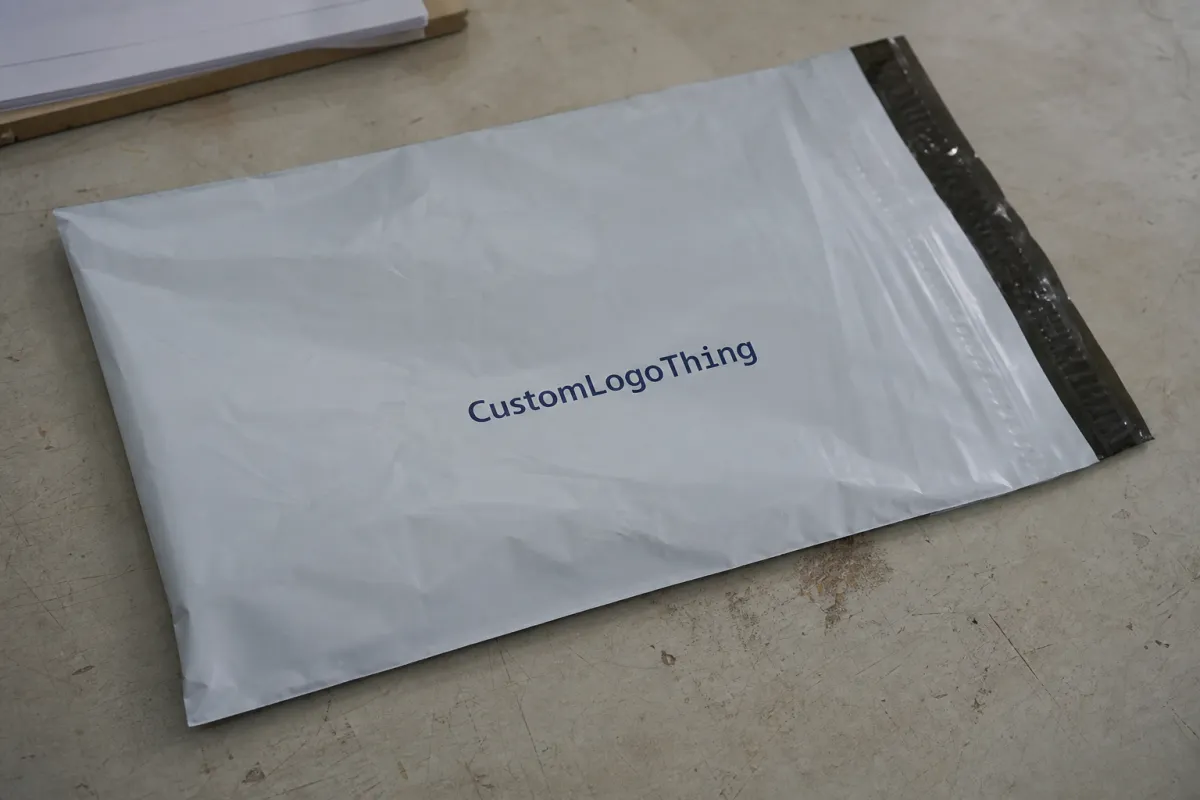
Spec sheets usually tell you the gauge, recycled-content target, print method, and seal width. They do not show how the mailer behaves when a real stationery kit slides in, gets stacked, and travels through a packing line. That is why a sample is more valuable than a line of claims.
Recycled poly blends can feel different even when the nominal thickness is the same. A 30% PCR film and an 80% PCR film may both meet the stated spec, but they can differ in hand feel, opacity, and how the adhesive reacts to pressure. Neither is automatically better. The buyer has to test the actual build.
The most expensive error is approving a mailer that looks fine in a meeting and then discovering the contents bend, the seal peels, or the print dulls once the pack is closed. One bad production run can erase the savings from a cheaper material choice.
Sampling also shows whether the package protects delicate branding. Loose fit, abrasive interiors, and weak closure lines can damage sticker sheets, booklets, and folded cards even when the mailer survives transit. Empty tests hide those problems.
A sample is not a souvenir. It is the lowest-cost way to simulate real packing, handling, and transit before the order goes live.
For teams comparing packaging formats, it can help to benchmark against other Custom Packaging Products or narrow the search to Custom Poly Mailers when the goal is a slimmer, lighter pack-out.
What a Recycled Poly Mailer Sample Should Prove
A proper sample should act like a working prototype. It needs to prove fit, seal quality, print clarity, opacity, and opening behavior before production starts. For stationery orders, it is often the first time the package and product are judged together.
Fit comes first. The mailer should hold the packed stationery without forcing bends or leaving so much slack that the contents move in transit. Clean fit matters more than a dramatic spec on paper.
Durability comes next. Recycled content does not automatically mean weak performance, but it can change elongation and seal response. A mailer that handles an empty check may still buckle once a rigid insert or thick card stack is added.
The closure should feel deliberate, not ragged. Buyers usually want a seal that closes cleanly, opens in a controlled way, and resists tampering without tearing unevenly. If the opening edge looks rough in the sample, it will not improve in production.
The sample should also tell you whether the branding survives touch. If the logo smears, the small type disappears, or the surface picks up fingerprints too easily, the finish needs adjustment. That matters even more when recycled materials are supposed to look premium, not just practical.
Material, Seal, and Print Factors That Change Performance
Most performance differences come from a few variables: film gauge, recycled resin blend, layer construction, seal width, and print surface. A 2.5 mil mailer may be enough for a slim stationery set, while a heavier multi-item pack may need 3.0 or 3.5 mil depending on length, weight, and corner sharpness.
Seal width is easy to underestimate. A narrow seal can look neat, but if the adhesive lane is uneven or the heat seal is inconsistent, burst resistance drops. For heavier stationery bundles, a wider, more uniform seal is usually safer.
Opacity and gloss affect both brand presentation and usability. Too much translucency can make internal shadows look messy. Too much gloss shows fingerprints and scuffs quickly. If the ink system and film surface do not match, fine type and logos can lose sharpness.
Slip and stiffness matter on the packing line. A very slick mailer can slow operators down, while a stiff mailer can resist folding and make the finished pack look bulkier than intended. Climate matters too: heat can soften adhesive response, humidity can alter recycled film feel, and cold can make some films feel brittle.
Recycled-content language should stay precise. Recycled Poly Mailers are not the same as biodegradable packaging, and they are not a direct substitute for paper-based formats. If the order includes paper inserts or cartons, choosing FSC certified stock for those parts can strengthen the overall claim without mixing categories. For distribution testing, the handling logic used by ISTA is a useful reference. For sourcing language, FSC remains relevant.
Recycled resin is also not perfectly uniform. Small speckling or slight haze can be normal in higher PCR blends. The key question is whether the result still fits the brand and the product. That is a design and purchasing decision, not a defect judgment.
When comparing samples, ask for the exact resin blend and layer structure. A single-layer film and a co-extruded film may look similar, but they can behave differently at the seal line and around sharp corners. If the supplier cannot explain the build, the sample is doing only part of the job.
Sample Process and Lead Time From Request to Approval
The best sample requests are specific. Send the mailer dimensions, stationery contents, target pack count, print files, closure preference, recycled-content target, and any finish or color standards. The more complete the brief, the fewer revisions later.
Most suppliers confirm the construction first, then review artwork, then build the sample. If you are using a stock-style recycled mailer, the turnaround can be short. Custom dimensions, special print placement, or a unique closure layout usually add time because tooling, laminate availability, and print setup need to be checked.
Lead time varies by complexity. A stock sample may take 3 to 5 business days before freight. A custom unprinted prototype often takes 5 to 8 business days. A printed pre-production sample usually needs 7 to 15 business days, with shipping and customs adding more time if the order crosses borders.
Revision rounds also affect timing. Comparing two gauges, two seal widths, or two finishes can easily add a week. That is not inefficiency; it is part of making a better decision. A second sample is cheaper than a full run that misses the mark.
Use this simple framework:
- Stock sample: fastest and best for basic feel, fit, and closure checks.
- Custom prototype: better for size validation and material comparison.
- Pre-production sample: best for final sign-off on print, color, and production-style performance.
Pricing, MOQ, and Quote Variables to Compare
Sample pricing is driven by material, gauge, print coverage, setup work, and how many pieces are included. Recycled resin content can also move the price if the blend is harder to source or process.
MOQ means the minimum order quantity the supplier needs before production makes sense. Sample orders look expensive per piece because setup cost is spread over a small quantity. That is normal and should not be compared directly with a full production run.
When comparing quotes, ask for unit cost, setup fee, artwork charge, freight, packaging format, and revision cost. The most useful quote is not the cheapest one; it is the one that is easiest to trust and scale.
| Sample Option | Typical Cost | Typical Lead Time | Best Use |
|---|---|---|---|
| Stock unprinted sample pack | $18-$35 plus freight | 3-5 business days | Basic fit, feel, and closure checks |
| Custom unprinted prototype | $45-$90 plus freight | 5-8 business days | Size validation and material comparison |
| Printed pre-production sample | $95-$220 plus freight | 7-15 business days | Final art, color, and production approval |
For bulk production, simple custom Recycled Poly Mailers for stationery usually land far below sample pricing on a per-unit basis. A 5,000-piece order might sit around $0.18-$0.35 each for a basic printed build, while heavier film, wider coverage, or tighter color control can raise it. Do not use sample pricing as a proxy for production cost.
Keep size, closure type, and print coverage constant when comparing bids. If one quote is for a 9 x 12 inch mailer and another is for a 10 x 13 inch version, they are not comparable. The same is true if one sample uses a wider adhesive flap or heavier film.
Ask what changes if the recycled-content target shifts. A 30% post-consumer waste blend is not the same as a 50% blend, and price, consistency, and tactile result may all move together. Also ask whether overage for setup and quality control is included, because hidden rejects can make a low quote expensive later.
Common Sampling Mistakes That Inflate Returns
The biggest mistake is approving an empty mailer. Empty samples hide weak seals, awkward dimensions, and print issues that only appear once the stationery is inside. A mailer can feel strong in the hand and still fail when packed.
Another common error is judging recycled poly only by appearance. A clean surface does not guarantee puncture resistance, and a matte finish does not automatically mean better handling. The return drivers are usually fit, seal failure, and corner abrasion.
Changing too many variables at once is also a problem. If size, artwork, thickness, and closure style all change together, the feedback becomes hard to use. Keep the test controlled so the sample teaches you something specific.
Storage and handling matter more than many teams expect. Some defects show up only after a pallet sits in heat or a stack is compressed under other materials. A sample that looks fine on day one can change after 48 hours in the wrong conditions.
Do not ignore the seal edge. A decent-looking top flap can still hide contamination, uneven adhesive, or a seal line that is too narrow for the actual load. If a mailer is going to fail, that is a common place for it to start.
Expert Tips for Smarter Sample Evaluation
Use a simple scorecard and keep it consistent. Rate seal quality, print clarity, feel, opacity, fit, and closure performance on the same scale for every sample. A short checklist is usually enough to make the decision repeatable.
Test the sample the way your team will use it. Pack the real stationery product, close it at normal speed, and check it after stacking or light handling. A sample that works in the office but fails on the line is not a good sample.
If you are unsure about thickness, request two options side by side. Small differences become obvious fast when you compare them directly. A 2.5 mil and a 3.0 mil sample may look similar on paper, but the hand feel and compression resistance can be very different.
Document exact specs, photograph the packed sample, and record operator feedback. Then ask what changed between sample and production if the supplier proposes a different blend or print setup. Small shifts in recycled film are normal, but they should not be invisible.
- Document exact specs: size, gauge, print count, adhesive type, and recycled-content target.
- Photograph the packed sample: front, back, seal edge, and scuff-prone corners.
- Record operator feedback: easy to pack, too slick, too stiff, or awkward to seal.
- Ask what changed: if the sample and production run differ, get the reason in writing.
The best buying teams are not the ones that fall in love with a sample quickly. They are the ones that know exactly why it passed.
Next Steps Before You Approve Production
Before you approve the order, request the sample, test it with the actual stationery load, and compare it with at least one alternate construction. Then record the results in a short approval note that covers cost, lead time, appearance, closure strength, and transit performance.
Confirm the final handoff in writing. Lock down dimensions, artwork, recycled-content target, closure style, MOQ, and delivery timing. If the order includes paper inserts or secondary packaging, note whether those pieces should be FSC certified or tied to another sourcing standard.
Also confirm acceptable variance before production starts. Color can shift slightly, gauge can drift within tolerance, and recycled content can vary by batch. None of that is shocking, but it should be agreed in advance so everyone knows what acceptable means.
For a simple go/no-go decision, keep it practical:
- Cost: Does the quote fit the margin target?
- Lead time: Can the schedule support the launch?
- Appearance: Does the mailer still look right when packed?
- Transit: Does it hold up under handling, stacking, and closure stress?
Used well, this stationery Recycled Poly Mailers Material Sample guide reduces risk, speeds approval, and protects margin before bulk buying starts.
How do I evaluate a recycled poly mailer sample for stationery orders?
Pack the actual stationery product inside the sample, then check fit, seal strength, print clarity, opacity, and how the mailer feels after handling. A short pass/fail checklist keeps the decision grounded in performance instead of appearance.
What information should I send for an accurate sample quote?
Share the mailer size, artwork files, closure type, recycled-content target, product weight or pack count, and whether you need a stock sample, custom prototype, or pre-production sample. Include expected MOQ and delivery timing so the supplier can price it correctly.
Why does one recycled poly mailer sample cost more than another?
Price changes with material blend, film thickness, print coverage, construction complexity, and setup work. Custom samples usually cost more per piece because the setup is spread across fewer units. Freight and revision rounds can also change the final total.
How long does the sample process usually take?
Simple stock samples move faster than custom-sized or printed samples. Artwork review, material confirmation, and revision rounds add time, especially if you want multiple comparisons. Ask the supplier to separate sample lead time from full production turnaround.
What should I ask before moving from sample to production?
Ask whether the sample and production run use the same resin blend, film gauge, seal method, and print setup. Confirm acceptable variance for color and thickness, and get lead time, MOQ, and freight terms in writing before you approve the order.


