Buyer Fit Snapshot
| Best fit | Branded Seal Stickers for Cartons projects where brand print, material claims, artwork control, MOQ, and repeat-order consistency need to be specified before quoting. |
|---|---|
| Quote inputs | Share finished size, material target, print colors, finish, packing count, annual reorder estimate, ship-to region, and any compliance wording. |
| Proofing check | Approve dieline scale, logo placement, barcode or warning zones, color tolerance, closure strength, and carton packing before bulk production. |
| Main risk | Vague material claims, crowded artwork, missing packing details, or unclear freight terms can make a low unit price expensive after revisions. |
Fast answer: Branded Seal Stickers for Cartons: Material, Adhesive, Artwork, and MOQ should be specified like a repeatable production item. The safest quote records material, print method, finish, artwork proof, packing count, and reorder notes in one written spec.
Production checks before approval
Compare the actual filled-product size with the drawing, then confirm tolerance on folds, seals, hang holes, label areas, and retail display edges. Reserve space for logos, QR codes, warning copy, and material claims before decorative graphics fill the panel.
Quote comparison points
Review material grade, print process, finish, sampling route, tooling charges, carton quantity, and freight assumptions side by side. A quote is only useful when the supplier can repeat the same color, closure quality, and packing count on the next order.
Branded seal stickers for cartons do a small job with an outsized effect. I have watched a perfectly printed carton lose authority the second a seam looked lifted, even if the box itself was pristine. People notice that break fast. They read it as handling, inspection, or opening, and the reaction is almost instant. That speed is exactly why branded seal stickers for cartons matter.
Shipping teams use branded seal stickers for cartons as closure, branding, and damage control in one move. They sit on the first place warehouse staff, customers, and returns teams inspect, which gives them more visibility than most box print. If the carton is the stage, the seam is the spotlight. That is where the eye goes, whether you planned for it or not.
A sticker that lifts at the corners is not a seal. It is expensive confetti.
If you are weighing whether branded seal stickers for cartons belong in your pack-out, the answer is usually yes, provided the spec fits the carton, the route, and the storage conditions. If you want a wider comparison before choosing a seal format, our Custom Labels & Tags page shows how adhesive formats differ before you commit to a carton seal format.
Branded Seal Stickers for Cartons: What They Actually Do
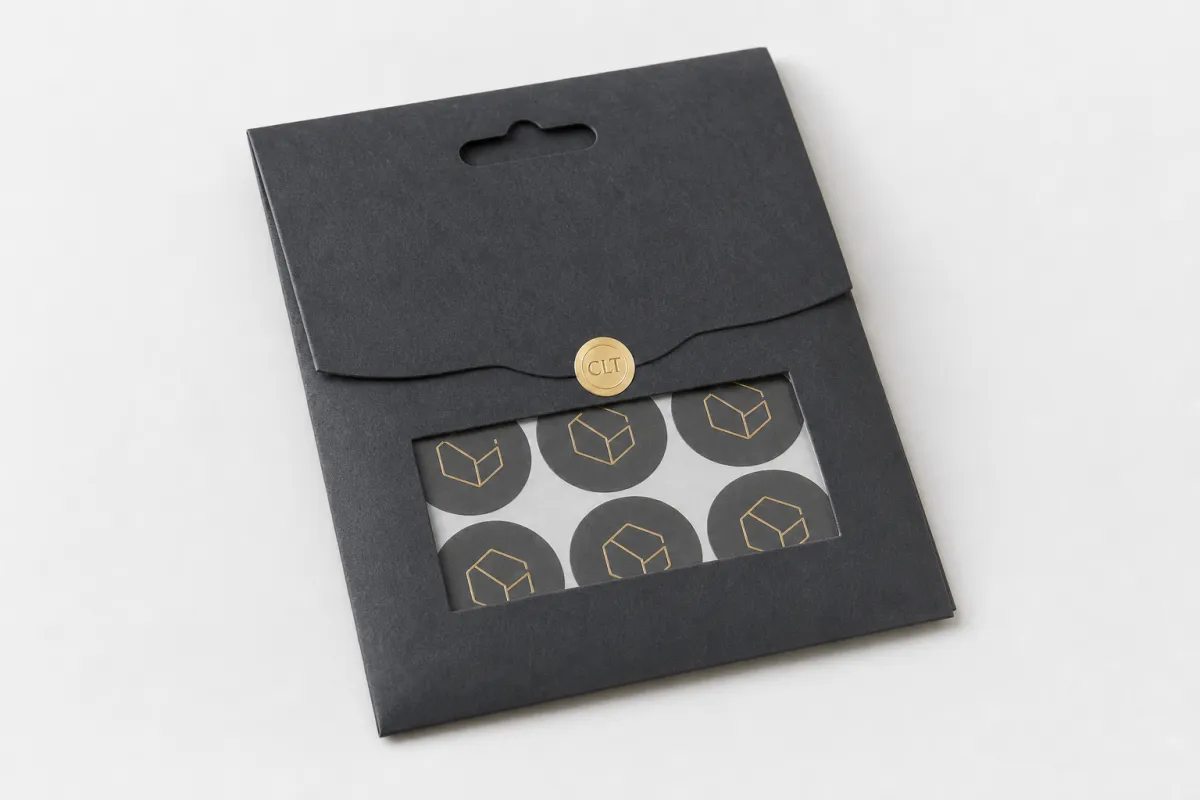
Picture a carton on a receiving dock. The print looks clean, the corners are square, and the tape line is straight. Then someone notices a broken seam sticker and starts asking questions. That question is the whole point of branded seal Stickers for Cartons: they create a visible signal at the part of the package people trust most, the closure itself.
Branded seal stickers for cartons handle two jobs at once. First, they bridge the flap seam so the carton looks closed and orderly. Second, they place your logo, message, or brand mark on the first surface people touch. In practice, the seal often gets more attention than the box print because the seam gets checked more closely than the panel art.
That unexpected focus matters. A shipping manager may spend money on full-color corrugated print and still miss the fact that most people notice the top seam first. Branded seal stickers for cartons sit in that narrow visual zone and pull the eye there. That helps with recall, and it also supports pack-out discipline because a box with a neat seal looks intentional rather than improvised.
The format stays simple: pressure-sensitive labels or seals applied over a carton closure, usually on Corrugated Shipping Boxes, mailers, or retail cartons. They are not magic tamper-proof devices. Anyone with a blade can still open the carton. Even so, branded seal stickers for cartons make casual opening obvious, and they support trust better than a blank strip of tape ever will.
From a buyer's point of view, the value is not just decoration. It is closure, visual control, and brand presence bundled into one low-cost item. If your packaging team wants a quick way to tighten the look of outgoing cartons, branded seal stickers for cartons often beat printing a new box run, especially for seasonal programs and limited releases. That is the part people miss when they only compare price per piece.
I once saw a cosmetics brand switch from plain tape to branded seal stickers for cartons on a holiday run. Nothing else changed, but returns from retail staff dropped because the box looked less like a re-taped exception and more like a planned package. Not a laboratory result, sure, but it is the kind of field evidence packaging teams live on.
If you want examples of how packaging details shape customer perception, our Case Studies page is useful. It shows how small format changes affect the way cartons are received, handled, and remembered.
How Branded Seal Stickers for Cartons Work in Shipping
The mechanics stay straightforward. A seal bridges the joint between carton flaps, so anyone opening the box has to break the sticker or visibly distort it. That is why branded seal stickers for cartons work best when the adhesive and the face stock are matched to the carton surface instead of treated like a generic label.
Three roles matter here. Closure reinforcement keeps the seam tidy. Tamper evidence gives a visual clue if the carton has been opened. Branding gives the package a deliberate look. Most teams notice the logo first, yet adhesion is the part people underestimate. A pretty seal that slides off the board is just waste.
Placement changes the result too. On a standard RSC carton, branded seal stickers for cartons usually sit over the center seam. On mailers, they may run across side flaps. On a tuck closure, the sticker can sit over the fold if the box design supports it. The rule stays simple: the seal must cross the opening line cleanly, or it will not tell a clear story.
Corrugated board is not uniform. Recycled board can be dusty, rough, or slightly fibrous, and that changes bond strength. Coated cartons behave differently again. If a shipper uses branded seal stickers for cartons on a glossy mailer, the adhesive may behave one way; on a raw kraft carton, it may behave another way. The face stock and adhesive should match the actual board, not the picture in somebody's head.
Distribution conditions matter too. Seals should survive vibration, stacking, humidity, and temperature swings without lifting at the edges. If your cartons move through cold storage, chilled dispatch, or hot warehouse aisles, test the seal under those conditions before you approve a full run. Shipping realities have a bad habit of exposing weak specs.
For a quick rule of thumb, branded seal stickers for cartons deserve extra testing if the cartons are reused, handled in a humid warehouse, or exposed to chilled storage. A cheap sample may look fine on a desk. It may fail completely after one shift in a real facility. That is not an edge case. That is normal.
What to test first:
- Bond on the exact carton stock, not a sample sheet.
- Lift resistance after 24 hours of dwell time.
- Tear behavior at the seam so opening is obvious.
- Edge stability after temperature and humidity changes.
For distribution validation, many packaging teams borrow the logic of ISTA testing: vibration, drop, and compression matter more than how polished the artwork looks. That is a sensible way to think about branded seal stickers for cartons. If the seal cannot survive the route, the brand side does not matter.
If the paper source matters to you, especially for printed inserts or paper-based face stock, FSC certification is worth checking. It does not fix adhesion, obviously, but it helps buyers who need a documented paper trail for sourcing. That kind of paperwork tends to matter more than people expect.
Cost, Pricing, and MOQ for Branded Seal Stickers for Cartons
Price is where buyers usually get surprised. Branded seal stickers for cartons look simple, but the cost is shaped by size, shape, print colors, face stock, adhesive, finish, and quantity. One tiny change in spec can move the unit price more than people expect, especially on short runs.
For small custom jobs, branded seal stickers for cartons often cost several times more per piece than higher-volume orders. A short run with a custom die-cut shape can land in the range of $0.10-$0.30 per piece or more depending on coverage and finish. At higher volumes, a simpler paper seal can drop to a few cents each. That range is normal. It is not a scam. It is setup time, material choice, and production reality.
MOQ usually lands around 500 to 1,000 pieces for custom work, though it depends on print method, die-cut complexity, and finish. Digital printing tends to support lower quantities more easily. Offset or specialty finishing often pushes the floor higher. If someone offers a wildly low MOQ with no setup details, ask what corners were cut. There is always a corner.
| Option | Typical Unit Cost | Common MOQ | Best Use | Main Tradeoff |
|---|---|---|---|---|
| Economy paper seal | $0.03-$0.07 | 500-1,000 | Dry warehouses, light-duty cartons, simple branding | Less moisture resistance, lower tear strength |
| Standard custom paper seal | $0.05-$0.12 | 500-1,500 | Most shipping cartons, promotional runs, retail cartons | Needs the right adhesive for rough board |
| Synthetic film seal | $0.09-$0.20 | 1,000+ | Humid storage, rough handling, longer-lasting carton control | Higher cost, may not suit every recycling workflow |
Hidden costs show up in the usual places. Setup charges can run from $40-$150 for simple jobs and more for complex dies or special inks. Proofing may be included or billed separately. Multiple artwork versions raise the cost faster than most buyers expect because each version can become its own production line item. Shipping also matters, especially if the cartons themselves are heavy and the order needs fast delivery.
If you need to compare branded seal stickers for cartons with other adhesive formats, our Custom Labels & Tags page helps you separate the value of a seal from the value of a standard label. They are related, but not identical. A label can decorate a package. A carton seal has to survive the opening point.
Ask for quotes that break out unit cost, setup charges, shipping, and rerun pricing. That makes it easier to compare suppliers fairly. A quote that only gives you one number is usually hiding something, even if the person sending it means well.
Production Process and Timeline for Branded Seal Stickers for Cartons
The production path is usually predictable. Artwork comes in, files get checked, a proof is prepared, materials are selected, the job is printed, then it is cut, finished, packed, and shipped. For branded seal stickers for cartons, the schedule mostly depends on how clean the files are and how quickly the proof gets approved.
Clean files move fast. Messy files slow everything down. If the dieline is missing, the type is too small, or the logo needs redraw work, the clock starts stretching. A simple reorder of branded seal stickers for cartons may ship in about 5 to 7 business days. A new custom job often lands closer to 10 to 15 business days. If there are specialty finishes or a complicated cut shape, the window can extend further.
Artwork prep helps more than people realize. Vector PDF, AI, or EPS files are ideal. If raster art is the only option, aim for 300 dpi at final size. Keep critical type away from fold lines. Leave enough bleed so the cut does not shave off a logo edge. None of this is glamorous. All of it saves time.
Rush service is possible in some cases, but it usually costs more and narrows your material options. That is the tradeoff. If you need branded seal stickers for cartons in a hurry, you may have to choose between speed and finish quality. A buyer who understands that choice makes better decisions than one who simply asks for “faster” and hopes the problem disappears. You are gonna have to pick what matters most for that run.
Here is a practical schedule that works for many shipping teams:
- Day 1: Submit artwork, quantity, size, and carton details.
- Day 2-3: Receive and approve proof.
- Day 4-8: Print, cut, and finish the run.
- Day 9-15: Pack, ship, and receive depending on transit time.
If your launch depends on the cartons arriving on a specific date, ask for a production calendar before you approve artwork. That lets receiving, storage, and packing teams line up the seal arrival with the carton launch instead of discovering a shortage after the labels are already needed.
Key Factors That Affect Seal Performance on Cartons
Surface type is the first thing to check. Recycled corrugate, coated cartons, and laminated boxes all behave differently under pressure-sensitive adhesive. Branded seal stickers for cartons that work well on a smooth kraft mailer may behave badly on a dusty recycled carton. The same is true in reverse. The board texture decides a lot more than the logo does.
Environment comes next. Heat softens some adhesives. Cold storage can make a seal feel stiff or brittle. Humidity can weaken edge hold on paper face stock. Dust is its own annoyance because it blocks intimate contact between the adhesive and the carton. If the warehouse is messy, the seal needs a little more forgiveness.
Carton movement also matters. A box that flexes hard in transit puts more stress on the seal line than a rigid carton moving on a calm lane. If the package is compressed, tossed, or stacked heavily, branded seal stickers for cartons need enough tear resistance to stay readable until opening. If the seal rips into a useless strip before the carton even reaches the customer, it has failed the branding job.
Print visibility is easy to ignore. A seal can bond perfectly and still fail visually if the artwork disappears against the carton. High-contrast branding matters. Dark ink on brown kraft usually reads better than pale color on pale board. Small text is risky. If the design relies on tiny legal copy, you are asking too much of a seam line.
Hand application can create another set of problems. If workers apply the seals by hand, the format needs to be easy to peel and place without drift. Roll direction, liner release, and finger-friendly edges all matter. If a dispenser is used, the roll has to feed cleanly or the labor savings vanish. Packaging people love to buy a simple item and then discover a hundred little process issues. Very charming.
Here is the test rule I trust: run sample branded seal stickers for cartons on the exact carton stock, with the exact closure method, under the exact storage conditions. Not a random carton. Not a desk test. The actual carton. Board texture changes everything, and the test that uses the wrong box is mostly theater.
Performance checklist:
- Test on the same corrugate grade and liner finish.
- Check adhesion after cold, heat, and humidity exposure.
- Confirm tear visibility after opening.
- Review print contrast from normal handling distance.
If you are trying to validate seals against transit abuse, use the language of ISTA methods and think in terms of vibration, drop, and compression rather than just appearance. That mindset is useful for branded seal stickers for cartons because the real world is less polite than a sample bench.
Also keep sustainability in view where it matters. If the seal face stock is paper-based, a documented source like FSC can support procurement requirements. That does not fix performance, but it can remove friction for teams that need sourcing documentation before they place an order.
Step-by-Step: Ordering the Right Branded Seal Stickers for Cartons
Start with the job, not the artwork. Decide whether branded seal stickers for cartons are mainly for branding, tamper evidence, closure support, or all three. If the answer is “all three,” fine, but be honest about which function matters most. A seal that tries to solve everything sometimes solves nothing.
Step 1: Measure the seam. The sticker has to bridge the closure without swallowing the whole front panel. Common sizes often land around 2 x 4 inches to 3 x 6 inches, but the right size depends on flap width and visual balance. The goal is to make the seam obvious without turning the carton into one giant sticker.
Step 2: Match the material. For dry, low-cost applications, paper may be enough. For moisture resistance or tougher handling, synthetic film usually performs better. If the carton is rough, dusty, or recycled, a stronger adhesive is usually worth the extra spend. Branded seal stickers for cartons are not just face stock. They are face stock plus adhesive plus carton behavior.
Step 3: Build the artwork for the seam. Keep the logo bold. Use enough contrast. Avoid tiny type near the fold. A design that looks elegant on a screen can look awkward on a seam if the visual weight sits in the wrong place. The sticker has to survive real handling, not just a design review meeting.
Step 4: Request a proof. Check spelling, panel alignment, and die-cut placement. If possible, ask for a sample run or a short test batch. One sample that performs badly can save a whole pallet of trouble. That is not drama. That is just buying well.
Step 5: Confirm the production details. Lock in quantity, lead time, packing format, and any reorder price before approval. If the seals will be handed out to multiple packing stations, ask for packaging that makes distribution easy. Bundles, rolls, and core size all matter more than most people think.
Step 6: Run the real-world test. Apply the seals on the actual cartons, send them through the normal route, and inspect the results. If the cartons are part of a recurring program, note the board grade, adhesive type, and finish so the next order does not start from zero. A little documentation saves a lot of guesswork.
For adjacent packaging items that need a similar buying process, our Case Studies page is a good reminder that the cheapest spec is not always the one that survives the route. Looking at real use cases often helps teams see why a slightly better carton seal pays for itself.
Common Mistakes and Expert Tips for Carton Seals
The first mistake is buying the cheapest adhesive and hoping the carton surface will be kind. It usually will not. Branded seal stickers for cartons are cheap only when they work the first time. A low-cost seal that peels in storage or lifts at the corners creates rework, complaints, and a weak brand impression. That is not savings. That is paperwork with a logo.
The second mistake is ordering a seal that is too small. A tiny sticker can look neat on a design board and useless on a real carton. If it does not bridge the seam with enough visual authority, it will not read as a seal. It will read as decoration. Decoration is fine. Just do not confuse it with a closure indicator.
The third mistake is pretending every carton needs the same spec. A coated retail carton, a recycled shipping box, and a chilled mailer are not the same thing. They do not need the same adhesive, and they do not fail in the same way. Branded seal stickers for cartons should be matched to the board and the route, not chosen by habit.
The fourth mistake is overpromising tamper security. A seal can show opening. It cannot replace full security packaging, chain-of-custody controls, or a proper tape system where those are required. Honest buyers understand the limit. It is a branding and signaling tool first, a security layer second.
If the customer cannot tell whether the carton was opened, the seal is doing half a job.
Here are the expert tips I trust most:
- Make the break obvious. Design the seal so a tear line or distortion is easy to spot.
- Keep the art bold. Small text vanishes quickly across a seam.
- Test before the full run. One sample batch beats one disappointed warehouse team.
- Use stronger adhesive for rough routes. Rough handling is not a theory. It is a daily habit.
- Document the winning spec. Board type, adhesive, finish, and size should be recorded for reorders.
The best branded seal stickers for cartons are the boring ones: the ones that stay put, read clearly, open cleanly, and do not create new problems. Fancy is optional. Reliable is not.
Frequently Asked Questions
What are branded seal stickers for cartons used for?
They reinforce the carton seam so the box looks closed and intact in transit. They also add brand visibility on the part of the carton people inspect first. Branded seal stickers for cartons can help show if a package was opened, but they are not a substitute for full security packaging.
Do branded seal stickers for cartons replace packing tape?
Sometimes on light-duty cartons, but not by default. If the box is heavy, humid, cold-stored, or reused, tape or another closure method usually still belongs in the system. Test the sticker on the real carton before assuming it can carry the load.
What material works best for carton seal stickers?
Paper works for dry, low-cost applications and simple branding. Film or synthetic material is better when you need stronger durability, moisture resistance, or cleaner handling. The carton surface matters just as much as the face stock, so the adhesive has to match the board.
How much do branded seal stickers for cartons usually cost?
Short custom runs can cost several times more per piece than larger orders. Unit cost drops as quantity rises, but setup, finish, and special adhesive choices can raise the total. Ask for a quote that breaks out unit cost, setup, shipping, and any added finishing charges.
How long does production take for branded seal stickers for cartons?
Simple reorders can move fast, often within about 5 to 7 business days. New custom jobs usually need more time for proofing and production, often around 10 to 15 business days. Rush options may exist, but they can increase cost and limit material choices.
For shipping teams that want a cleaner carton presentation without guessing on specs, branded seal stickers for cartons are usually worth the test run. Start with the carton, not the artwork, then lock in the adhesive and finish that survive your actual route. Record that winning spec now, because the next reorder is where most teams either save time or start over.

