Buyer Fit Snapshot
| Best fit | Custom Vinyl Stickers for Cartons projects where brand print, material claims, artwork control, MOQ, and repeat-order consistency need to be specified before quoting. |
|---|---|
| Quote inputs | Share finished size, material target, print colors, finish, packing count, annual reorder estimate, ship-to region, and any compliance wording. |
| Proofing check | Approve dieline scale, logo placement, barcode or warning zones, color tolerance, closure strength, and carton packing before bulk production. |
| Main risk | Vague material claims, crowded artwork, missing packing details, or unclear freight terms can make a low unit price expensive after revisions. |
Fast answer: Custom Vinyl Stickers for Cartons: Material, Adhesive, Artwork, and MOQ should be specified like a repeatable production item. The safest quote records material, print method, finish, artwork proof, packing count, and reorder notes in one written spec.
Production checks before approval
Compare the actual filled-product size with the drawing, then confirm tolerance on folds, seals, hang holes, label areas, and retail display edges. Reserve space for logos, QR codes, warning copy, and material claims before decorative graphics fill the panel.
Quote comparison points
Review material grade, print process, finish, sampling route, tooling charges, carton quantity, and freight assumptions side by side. A quote is only useful when the supplier can repeat the same color, closure quality, and packing count on the next order.
Custom Vinyl Stickers for Cartons: A Practical Guide
A plain carton can be easy to overlook until it lands in front of a buyer, a warehouse associate, or a retail customer, and custom vinyl stickers for cartons are often the quickest way to turn that box into branded packaging without changing the box itself. The sticker sits at the intersection of presentation, shipping, and identification, so it has to do more than look nice; it has to hold up, stay legible, and keep the carton looking intentional.
For many packaging teams, the carton is never just a blank surface. It carries the shipment, the shelf presence, the returns path, and sometimes the only visible branding a customer sees before opening the product. That is where custom vinyl stickers for cartons earn their place: they make a plain corrugated box look organized, deliberate, and ready for real handling, not just a photo shoot.
A carton sticker only earns its keep if it stays readable, stays attached, and still looks clean after stacking, transit, and warehouse handling.
If your packaging mix includes Custom Labels & Tags or a broader set of Custom Packaging Products, carton stickers can tie the whole system together without forcing every SKU into Custom Printed Boxes. That flexibility is one reason buyers keep coming back to custom vinyl stickers for cartons instead of jumping straight into a full carton print run too early.
Custom Vinyl Stickers for Cartons: What They Are
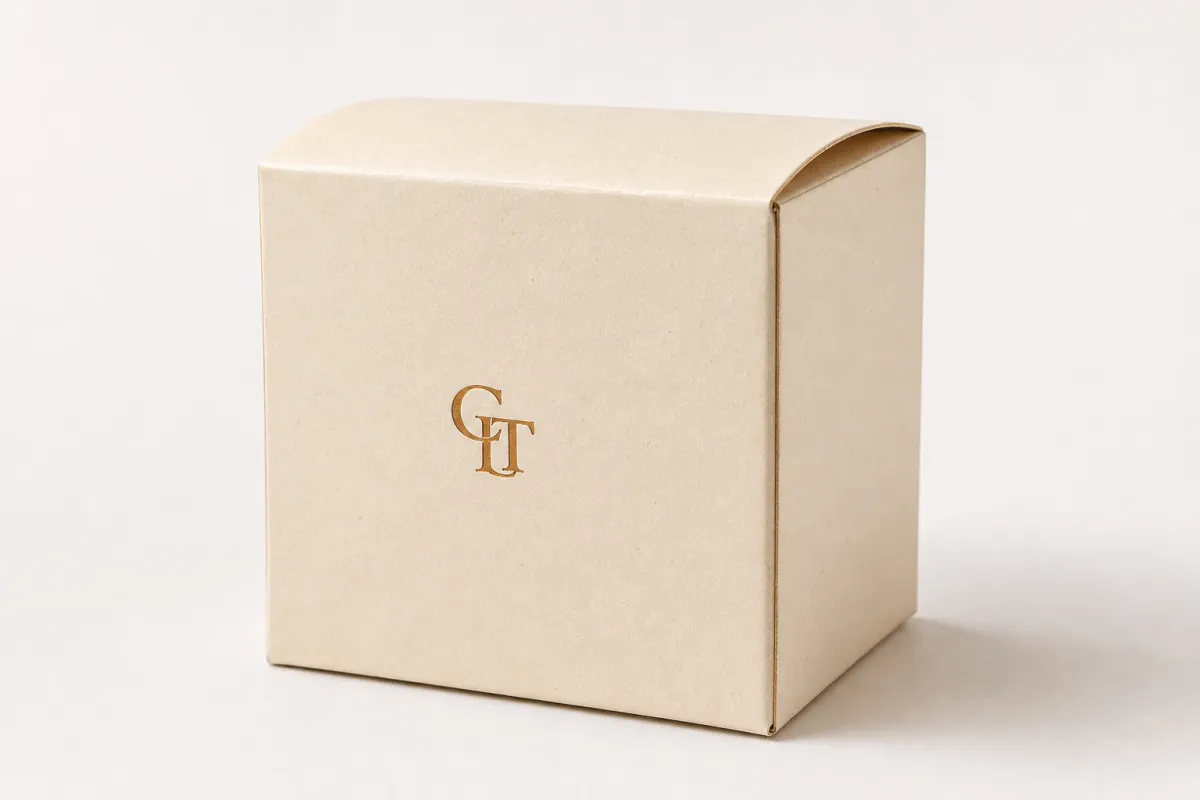
At the simplest level, custom vinyl stickers for cartons are printed labels or decals built on a vinyl face stock with an adhesive designed to bond to carton surfaces. They can be applied by hand, by semi-automatic equipment, or by automated labelers, then held in place through packing, stacking, shipping, and customer handling.
The reason vinyl matters is practical. Paper can work for light-duty labeling, but vinyl brings a tougher face stock, better resistance to scuffing, and more forgiving performance when a carton sees a little moisture or rough storage. Add the right adhesive and, in some cases, an overlaminate, and custom vinyl stickers for cartons can hold up far better than most buyers expect.
Think about the carton jobs they cover:
- Shipping cartons that need a branded outer face or handling instruction.
- Retail-ready cartons that move from fulfillment to store display.
- Sample boxes where presentation matters as much as protection.
- Subscription packaging that benefits from a repeatable look without changing the carton structure.
- Temporary overlays for seasonal campaigns, co-branded offers, or short-term SKU changes.
- Compliance labels carrying lot numbers, barcodes, or handling notes.
That range is why people in packaging design often treat custom vinyl stickers for cartons as a bridge solution. They let a team move quickly, test a look, and keep inventory under control. A company can run one carton size across several products, then change the outer message by changing the sticker, which is a practical way to protect cash flow while still improving package branding.
The biggest mistake buyers make is assuming the sticker is only decorative. A good carton sticker often does three jobs at once: it brands, it identifies, and it helps the box behave better inside the warehouse. I have seen projects where the branding was fine, but the barcode placement or adhesive choice caused headaches later. That part is not glamorous, but it is where real packaging work lives.
How Custom Vinyl Stickers for Cartons Work in Production
To understand custom vinyl stickers for cartons, it helps to break the label into layers. There is the face stock, which carries the print; the adhesive, which determines how well it bonds; the release liner, which protects the adhesive before application; and often a protective overlaminate that improves abrasion resistance and visual finish.
Each layer changes how the sticker behaves. A gloss laminate can make colors pop, but it can also show fingerprints more easily on dark artwork. A matte finish can feel more restrained and professional, especially on kraft cartons, while a clear overlaminate can improve durability when boxes rub against pallets or other cartons. The point is simple: custom vinyl stickers for cartons are not one fixed product, but a family of constructions chosen around the use case.
Carton surface matters just as much. Smooth coated board is easier to work with because the adhesive makes more consistent contact. Corrugated kraft board is common, yet if the surface is dusty or highly recycled, the bond can be less predictable. Textured or fibrous board may need a higher-tack adhesive or a test run before full production. That is one reason real-world sampling matters so much for custom vinyl stickers for cartons.
Application can happen in several ways:
- Hand application for short runs, mixed SKUs, and fulfillment teams that need flexibility.
- Semi-automatic applicators for consistent placement at moderate volumes.
- Fully automated labelers for higher output and tighter placement control.
The adhesive does not reach full performance the instant the sticker touches the carton. Initial tack comes first, then the bond builds as pressure and dwell time do their work. For many permanent constructions, the label is usable right away, but full adhesive build can take 24 to 72 hours depending on the film, adhesive chemistry, carton finish, and temperature. That matters if the boxes are going straight into a cold room, a humid warehouse, or a shipping lane with a lot of vibration.
Custom vinyl stickers for cartons make the most sense when you have mixed carton inventories, short to mid-length production runs, or a need to refresh branding without reordering every box. If your volumes are high and the carton artwork stays stable, direct print or preprinted cartons may fit better. If your inventory changes often, stickers usually win on flexibility and control.
In practice, I have watched a label that looked perfect on screen fail on a dusty recycled board because the adhesive was chosen for a smoother carton. That kind of mismatch is common enough that I always tell teams to treat the sticker and the carton as one system, not two separate purchases.
Key Materials, Adhesives, and Finishes to Compare
Material choice drives a lot of the performance you get from custom vinyl stickers for cartons. Standard vinyl is often enough for general carton branding, but tougher films can make sense when you expect abrasion, cold storage, or repeated handling. If the carton is going into a chilled environment, ask whether the adhesive is designed to bond at lower temperatures and whether condensation could affect edge hold.
Adhesives are where many carton projects succeed or fail. Permanent adhesive is the default for most shipping cartons because it stays put under normal handling, while removable or repositionable adhesive fits temporary campaigns, reusable cartons, or situations where the label must come off later with less residue. A lot of teams ask for a stronger adhesive, but stronger is not always better. If the carton stock is rough, dusty, or recycled, a high-tack adhesive may help. If the box needs to be reused or recycled cleanly, a lighter or removable construction can be the better tradeoff.
Finishes shape both appearance and daily use. Gloss can deepen color and create a polished, retail-ready look, but it can reflect light harshly under warehouse lamps. Matte reduces glare and often reads better when the carton is on a shelf or in a receiving area. Soft-touch or specialty laminates can add a premium feel, though they do increase cost. If your brand style leans toward clean, confident package branding, matte vinyl often fits better than a high-gloss surface, and it is kinda easier on the eyes in bright receiving bays.
Size and die-cut shape deserve real attention, too. A simple rectangle is efficient and easy for operators to place. Custom die-cuts can improve presentation, especially on retail packaging or sample boxes, but they usually add tooling complexity and can extend lead time. For many buyers, custom vinyl stickers for cartons perform best when the shape is bold and readable, not overdesigned.
Barcode legibility also belongs in the design conversation. Carton stickers often carry logos, product names, ship-to information, lot numbers, and scan-ready codes. A barcode needs strong contrast, enough quiet space around it, and a print method that stays crisp. If the code will be scanned in receiving or distribution, test it before the whole run prints. A label that looks attractive but slows receiving is not doing the job.
For teams focused on standards and repeatability, transit and material testing references help. The ISTA transit testing standards are useful when you want to think about handling, vibration, and shipping stress, and the FSC certification framework is worth reviewing if carton sourcing and chain-of-custody claims are part of the packaging conversation. Those references do not replace a carton test, but they give useful context when choosing custom vinyl stickers for cartons.
Sustainability deserves a straightforward answer. Label construction, adhesive residue, and carton recovery practices all matter. Smaller labels are usually easier to manage in recycling streams than full-panel coverage, and some removable constructions are cleaner than aggressive permanent ones. Still, there is no single answer that fits every recovery system. If recyclability is a priority, ask for a carton-and-label test before production starts.
One more practical point: if you are comparing sticker options against custom printed boxes, do not only compare unit price. Compare inventory flexibility, write-off risk, storage space, and the cost of making multiple carton versions. That is where custom vinyl stickers for cartons can quietly save money even when the sticker itself is not the cheapest line item.
Process and Timeline: From Artwork Approval to Delivery
The production path for custom vinyl stickers for cartons usually starts with carton measurements and artwork. The carton dimensions determine safe placement zones, and the artwork needs to account for bleed, trim, barcode placement, and any required text. If the label will land on multiple box sizes, the artwork should be built around a consistent visual system so the brand still looks coherent across the range.
From there, the printer creates or checks the dieline, then issues a proof. A digital proof confirms layout, copy, and placement, but it does not tell you everything about real-world performance. That is why a sample or test run is valuable when the sticker will be used on unfamiliar board, on a specific carton coating, or in a warehouse that sees temperature swings. A proof can be technically correct and still be the wrong choice for the actual box.
Most delays happen for ordinary reasons, not dramatic ones. Missing bleed can stall a file. Unclear placement notes can create confusion. Barcode artwork may need cleanup. A carton sample might arrive late, which means nobody can verify the fit until the last minute. If a team changes the art after approval, the clock resets. With custom vinyl stickers for cartons, those extra back-and-forth steps are the difference between a predictable launch and a scramble.
Production itself usually includes press setup, printing, curing or drying, lamination if specified, die-cutting, slitting or sheet finishing, and quality checks before shipping. A simple stock-size job with final artwork can move fairly quickly, sometimes within 5 to 7 business days after proof approval. Custom shapes, specialty finishes, multiple SKUs, or kitting work can push that into the 10 to 15 business day range, and more complex programs may need longer. If the order depends on a launch date, build in cushion. You are gonna need it once samples, approvals, and packing schedules all start moving at the same time.
Application planning matters just as much as printing. Cartons should be staged so the surface is clean and dry before the labels go on. Rolls or sheets should be stored away from heat and high humidity. Operators should know whether the sticker goes centered, offset, or aligned to a panel edge. On a busy line, that kind of instruction sounds small, but it prevents crooked placements and returns. Good custom vinyl stickers for cartons start with good line discipline.
For larger programs, I like to see a simple checklist that covers artwork approval, carton sample signoff, print approval, application method, pack-out sequence, and post-application inspection. It sounds basic, yet basic is what keeps packaging design from turning into rework.
Cost and Pricing: What Affects the Quote
Pricing for custom vinyl stickers for cartons depends on more variables than most buyers expect. Material grade, adhesive type, label size, number of colors, finish, die-cut complexity, and whether the job is sheeted or rolled all influence the quote. Quantity matters, too, because setup time gets spread across fewer or more pieces depending on the run size.
Small runs usually cost more per piece. That is not a markup trick; it is simply how setup works. A press still has to be prepared, files still have to be checked, and finishing still takes labor whether you order 500 stickers or 10,000. Once volumes rise, the unit price usually falls. For custom vinyl stickers for cartons, that curve often matters more than people realize when they are budgeting a launch.
Most clear quotes should separate artwork setup, proofs or samples, printing, finishing, shipping, and any application support. If one vendor lumps everything together, it becomes harder to compare options. If you can see the pieces, you can make better decisions about what to simplify and what to keep.
There are also hidden costs that catch teams off guard. Rush fees are one. Version changes are another. Inventory carrying costs matter if you overorder labels for a carton style that may change later. Hand application has a labor cost, especially if the box count is high. A sticker that saves money on carton inventory may still cost more overall if it slows down packing.
Here is a practical comparison for common sticker choices:
| Option | Typical Use | Approx. Unit Cost at 1,000 | Approx. Unit Cost at 5,000 | Notes |
|---|---|---|---|---|
| Standard vinyl sticker | General carton branding, shipping cartons, short runs | $0.18-$0.35 | $0.08-$0.18 | Good balance of cost and durability |
| Laminated vinyl sticker | Higher abrasion, retail packaging, premium presentation | $0.24-$0.45 | $0.12-$0.26 | Better scuff resistance, stronger visual finish |
| Removable vinyl sticker | Temporary promotions, reusable cartons, seasonal overlays | $0.20-$0.38 | $0.10-$0.22 | Choose carefully if residue must stay low |
| Paper label | Dry storage, lower wear, budget-conscious internal use | $0.10-$0.22 | $0.05-$0.12 | Less durable than vinyl on rough cartons |
The table is only a planning guide, not a quote. Still, it shows why custom vinyl stickers for cartons often sit in a sweet spot: they cost more than basic paper labels, but they usually deliver better durability, fewer handling complaints, and a more professional look for branded packaging.
If you are comparing carton stickers against direct print, think in systems. Printed cartons can be excellent for stable, high-volume product packaging, but they are less forgiving when designs change often. Labels are easier to revise, and that flexibility can save a project that is still getting its footing.
It also helps to separate the sticker conversation from the carton conversation. A carton may be plain, but if the sticker is the visible branding layer, it carries a lot of burden. That is one reason a good custom vinyl stickers for cartons quote should include real material details instead of only a final price.
Common Mistakes That Hurt Carton Label Performance
The first mistake is choosing the wrong adhesive for the board. Dusty recycled stock, very rough kraft, and cartons with heavy fiber texture can all reduce grip. A label may look fine for the first hour and then lift at the corners after stacking or shipping. If the board is unusual, test it. That advice saves more reprints than any other single habit with custom vinyl stickers for cartons.
The second mistake is bad placement. A sticker should not bridge a seam, wrap over a fold, or sit where the carton crushes under load. Those spots flex, and flexing works against adhesion. The safest zone is a flat, clean panel with enough margin from edges and folds that the label can sit without stress.
The third mistake is trusting the screen more than the box. Artwork can look perfect on a monitor and still be too busy for the actual carton. Tiny text disappears. Low contrast weakens the message. Barcode placement can interfere with receiving scans. If the label needs to carry operations data as well as branding, readability must win every time. That is especially true for custom vinyl stickers for cartons used in distribution and retail packaging.
The fourth mistake is underestimating the effects of handling. A carton that looks clean on the pack line can still suffer rubbing, pallet compression, or exposure to humidity during shipping. If the project will be tested against vibration, compression, or transit stress, ask for a trial that mimics the real movement the box will see. A useful carton sticker should stand up to the same conditions the box faces in production, not just the conditions in the proof room.
The fifth mistake is timing. Teams often finish artwork and then discover they still need samples, internal approvals, or a second version for another SKU. That is how lead times get squeezed. Custom vinyl stickers for cartons are relatively flexible, but the process still has steps, and each step needs room.
The sixth mistake is poor carton handling before application. Dust, moisture, and temperature swings all interfere with bonding. If cartons come in from a cold truck and go straight onto a hot line, condensation can create problems. If the warehouse is dirty, the adhesive may never get the clean contact it needs. Good packaging design is not just artwork; it is also handling discipline.
Most label failures are avoidable. They are not caused by one dramatic defect. They happen because the box, the adhesive, the environment, and the line process were never tested together. That is why custom vinyl stickers for cartons should always be judged as part of the full packaging system, not as a standalone print job.
Expert Tips and Next Steps Before You Order
Start by testing on the exact carton stock you plan to use. Not a similar box. Not a sample from another supplier. The actual board, the actual finish, and the actual temperature conditions matter. If the carton surface is kraft, test it. If it is coated, test that too. Custom vinyl stickers for cartons behave differently on each one, and the differences show up fastest when the board is dusty or rough.
Then run a small pilot. Apply a few labels, wait a day, and inspect edge hold. Move the cartons around the warehouse. Put them through the same handling the real order will see. If possible, look again after shipping or vibration exposure. That second inspection is often where you learn whether the adhesive, laminate, and board truly match.
Standardize size and placement wherever you can. If one label can work across several carton families, operators work faster and the brand looks more consistent. That consistency is a big part of good package branding. It also reduces the chance that someone applies the label half an inch too high on one carton and half an inch too low on another.
A simple spec sheet helps a lot. Include carton dimensions, surface type, expected handling, storage conditions, quantity, artwork files, barcode requirements, and compliance notes. The better the spec, the cleaner the quote. If you are ordering custom vinyl stickers for cartons for multiple SKUs, that sheet also makes it easier to compare versions without guessing.
Ask for a quote that separates material, print, finish, and shipping. If you need application help, ask for that as a separate line too. It is much easier to compare vendors and spot over-specification when each piece is visible. If one version uses laminated vinyl and another uses standard vinyl, you should be able to see the value difference clearly.
There is also a broader packaging strategy question worth asking. If your cartons, inserts, and exterior presentation all need to feel connected, it may make sense to coordinate custom vinyl stickers for cartons with matching Custom Labels & Tags or other Custom Packaging Products. That keeps the brand language consistent without locking you into a more expensive carton inventory before the design is proven.
My practical advice is simple: measure the cartons, gather the files, ask for a sample, and define exactly where the sticker will sit on each carton version. That one step removes a lot of guesswork. Once the first run is approved, custom vinyl stickers for cartons can become one of the most useful tools in the packaging kit because they keep inventory flexible while the outside still looks deliberate.
Are custom vinyl stickers for cartons better than paper labels?
Vinyl is usually the better option when cartons will see abrasion, light moisture, stacking pressure, or long shipping routes. The film face stock and finish tend to hold up more reliably than paper, especially when the box is handled by multiple people.
Paper labels can still work well for dry storage, short runs, and lower-cost internal packaging. If the carton is going to customers, though, custom vinyl stickers for cartons usually give a cleaner and longer-lasting result.
What carton surfaces do custom vinyl stickers for cartons stick to best?
They usually perform best on clean, dry, fairly smooth corrugated or coated carton surfaces. A consistent panel gives the adhesive the best chance to make full contact.
Dusty, oily, rough, or heavily recycled board may need testing before a full run is placed. If the carton has seams or folds close to the label zone, test the placement first so custom vinyl stickers for cartons do not lift or tunnel during handling.
How do I choose the right size for custom vinyl stickers for cartons?
Start with the flat panel dimensions and leave enough margin so the label does not cross a fold, edge, or crush zone. That keeps the sticker flat and readable.
Make sure the size can carry the logo, any required text, and any scan area without feeling crowded. If the same label will be used on multiple cartons, choose a proportion that works on both the smallest and largest box.
Do custom vinyl stickers for cartons affect recyclability?
They can, depending on the carton recovery process, the adhesive, and the amount of coverage. Smaller labels and removable constructions are usually easier to manage than heavy full-panel coverage.
If recyclability matters, ask about adhesive choice and carton compatibility before production starts. That simple check can make custom vinyl stickers for cartons a better fit for your sustainability goals.
How long should I plan for proofing and production?
Simple orders move faster when artwork is final and the carton surface is already known. More complex projects need more time because they include proofing, sampling, and sometimes multiple versions.
Custom shapes, special finishes, and carton testing can add days before the order is ready to ship. The safest move is to confirm artwork, sampling, and application timing early so custom vinyl stickers for cartons arrive before the packing run begins.
For teams building branded packaging across multiple box sizes, custom vinyl stickers for cartons stay useful because they let the carton inventory remain flexible while the outside still looks deliberate. If you want the cleanest path forward, test the exact board, confirm the placement zone, and lock the spec before the full order goes to print. That is the step that keeps the carton, the label, and the packing line working together instead of fighting each other.

