Buyer Fit Snapshot
| Best fit | Branded Shipping Envelopes Bulk projects where brand print, material claims, artwork control, MOQ, and repeat-order consistency need to be specified before quoting. |
|---|---|
| Quote inputs | Share finished size, material target, print colors, finish, packing count, annual reorder estimate, ship-to region, and any compliance wording. |
| Proofing check | Approve dieline scale, logo placement, barcode or warning zones, color tolerance, closure strength, and carton packing before bulk production. |
| Main risk | Vague material claims, crowded artwork, missing packing details, or unclear freight terms can make a low unit price expensive after revisions. |
Fast answer: Branded Shipping Envelopes Bulk: Specs, Pricing, Process should be specified like a repeatable production item. The safest quote records material, print method, finish, artwork proof, packing count, and reorder notes in one written spec.
Production checks before approval
Compare the actual filled-product size with the drawing, then confirm tolerance on folds, seals, hang holes, label areas, and retail display edges. Reserve space for logos, QR codes, warning copy, and material claims before decorative graphics fill the panel.
Quote comparison points
Review material grade, print process, finish, sampling route, tooling charges, carton quantity, and freight assumptions side by side. A quote is only useful when the supplier can repeat the same color, closure quality, and packing count on the next order.
Branded Shipping Envelopes bulk orders do more than move a parcel from one dock to another. They shape the first impression a customer gets before the product is even touched. The envelope is often the first thing pulled from a mailbox, stacked on a packing table, or handed over at a front desk. If the print is crisp and the closure holds, the shipment already feels organized. That matters more than people think.
I have seen packaging teams treat the envelope as an afterthought, then spend weeks trying to fix the story the package tells. That is usually backward. The envelope is one of the few packaging elements a customer sees immediately and often remembers later. With Branded Shipping Envelopes bulk, the branding is not decorative noise; it is a signal that the order was planned, packed, and handled with a bit of discipline.
Teams buying branded Shipping Envelopes Bulk usually want the same three things: cleaner presentation, fewer pack-out variables, and a unit cost that does not wobble every time volume changes. Those goals are connected. A stable envelope spec reduces confusion on the line, trims the number of loose packing components, and gives purchasing a repeatable item to forecast. For ecommerce shipping, subscription programs, and wholesale distribution, that kind of consistency can save real money.
A shipping envelope should protect the contents, survive transit, and carry the brand without slowing the pack-out.
Branded Shipping Envelopes Bulk: The Brand Signal Customers Notice
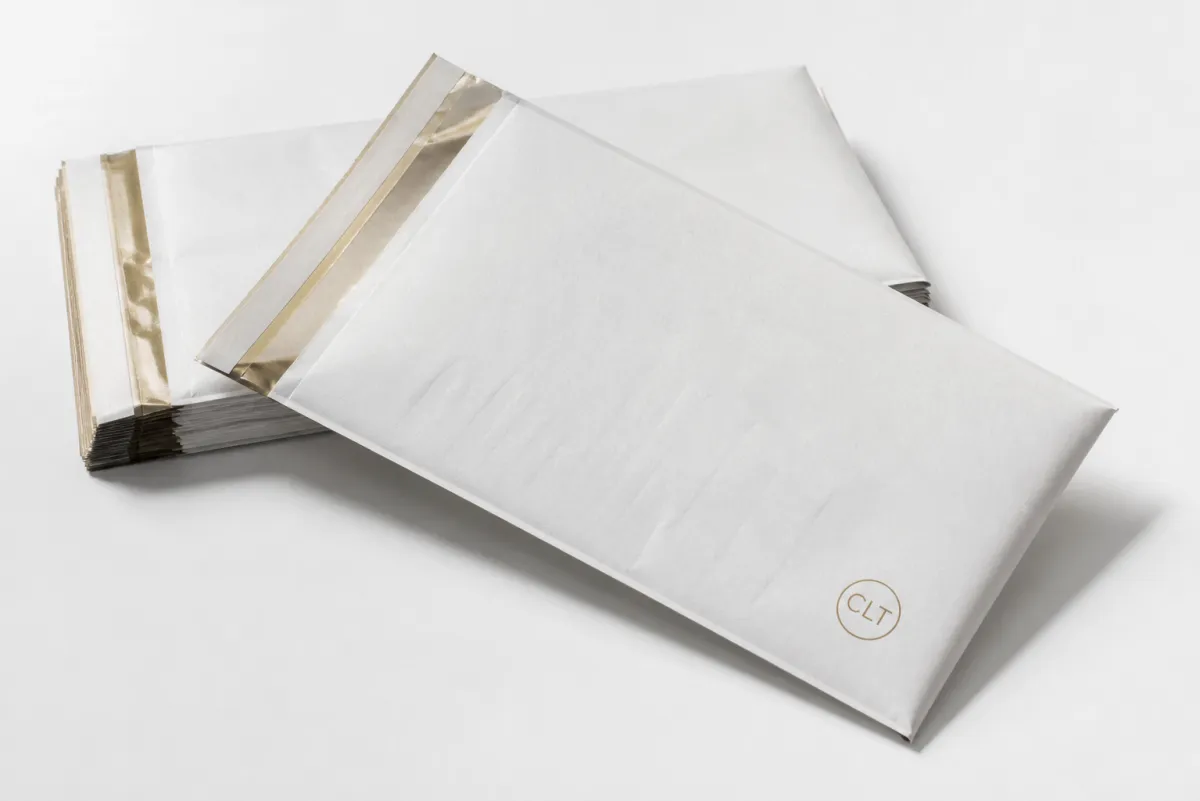
Customers read packaging before they read the return label. That is a tiny behavior, but it has outsized impact. A branded envelope lands as a cue, not a footnote. With branded shipping envelopes bulk, the logo, color, closure style, and surface finish all help the shipment look deliberate. A plain mailer can do the practical job, sure, but it rarely says anything useful about the company behind it.
Repeat shipments make the effect even clearer. Subscription brands lean on familiarity, and wholesale accounts remember the supplier that keeps materials consistent from one cycle to the next. Branded shipping envelopes bulk supports that consistency when more than one person touches fulfillment or when orders move between warehouses. A stable spec removes guesswork, and guesswork is expensive in a packing area. I have watched a three-minute spec change turn into a half-day sorting problem. It was kinda ridiculous, and entirely avoidable.
There is also a quieter operational benefit. A branded envelope can carry a logo, QR code, short message, routing note, or return information without adding an insert. That reduces clutter inside the package and can make final assembly simpler. Fewer components usually means fewer mismatches, fewer checks at the table, and less time spent fixing preventable mistakes. In high-volume ecommerce shipping, those saved seconds stack up fast.
For packaging buyers, branded shipping envelopes bulk sits right where presentation meets efficiency. The best envelope is not the fanciest one. It is the one that fits the route, the contents, and the line speed without making the team work harder than it should. Once the spec is locked, the same envelope can be reordered with little friction, and that predictability helps planning far beyond the packaging budget.
Warehouse teams notice the difference too. A fixed envelope format gives packers a visual cue, gives purchasing a clearer reorder target, and gives brand managers a more accurate view of what the customer actually receives. That sounds modest, but small format decisions often ripple through shipping materials, labor, and overall presentation in a way that is easy to miss until something breaks.
Branded Shipping Envelopes Bulk Product Details and Material Options
Branded shipping envelopes bulk can be made from several substrates, and the right one depends on the shipment, not the artwork mockup. Paper-based envelopes suit brands that want a natural or retail-friendly feel, especially when kraft texture or matte finish fits the rest of the identity. Poly-based options work better when routes are damp, the contents can scuff, or the shipment needs more tear resistance. Padded and reinforced versions make sense when the contents need extra protection but a box would be overkill.
The face stock changes the impression as much as the category does. Smooth white stock usually handles fine typography and sharp logos with more precision, while kraft creates a warmer, less formal look. Gloss can punch up color contrast, but it also shows handling marks more easily. For branded shipping envelopes bulk, artwork and substrate should be chosen together. A strong file on the wrong surface can still produce a weak result.
Technical details matter here. Paper envelopes are often discussed in GSM or basis weight, while poly mailers and poly envelopes are usually compared by thickness, often in mil. Seal construction matters too: peel-and-seal strips, tamper-evident adhesives, and tear lines all affect how the envelope behaves once it leaves the warehouse. If the route includes heat, humidity, or long dwell times in transit, the closure system deserves as much attention as the print.
Decoration options usually include one-color logos, two- or three-color branding, full-bleed coverage, and print placement on the front, back, flap, or address panel. Some brands want a quiet mark in one corner. Others want the envelope to function like a moving billboard. The right choice depends on how visible the parcel will be in transit, how much handling it will take, and how assertively the brand wants to occupy that space. For heavier-use programs, branded shipping envelopes bulk can be specified so the print area avoids folds, seams, and closure zones.
Security and closure details matter just as much. Peel-and-seal strips, tear strips, tamper-evident seals, liners, and reinforced seams all change how the envelope performs in the real world. Those are functional features, not decoration. They affect opening experience, seal integrity, and survival through sorting equipment or courier handling. Delicate goods, sharp edges, humid climates, and long-distance routes often justify a stronger construction for branded shipping envelopes bulk.
Brands comparing envelope families should also keep adjacent formats in view. Some pack-outs perform better in Custom Poly Mailers, while rigid or unusually thick contents may belong in Custom Shipping Boxes. The smartest packaging choice is the one that matches the product and the route, not the one that merely looks inexpensive on paper. Transit packaging should be built around the item, the carrier, and the handling pattern.
Material decisions can also be tied to sourcing and testing standards. Brands that care about responsible fiber sourcing may want materials verified through the FSC system. Shipment performance is often evaluated against common distribution-test expectations, and the ISTA framework is a useful reference point for that conversation.
Branded Shipping Envelopes Bulk Specifications: Sizes, Print Coverage, and Add-Ons
Size should start with the item, not the catalog. Documents, flat apparel, sample kits, and small retail goods all behave differently in transit. A snug envelope usually looks cleaner and shifts less, while an oversized one can feel loose and may create avoidable postage exposure. For branded shipping envelopes bulk, the finished dimensions should be checked against the real insert or product, not estimated from a category name.
The quote process moves faster when the buyer sends the full spec set early: finished dimensions, material or caliper, closure style, gusset depth if there is one, and usable print area. Those details shape the artwork, the production method, and the shipping footprint. They also influence dimensional weight in ecommerce shipping. Even a small increase in depth or padding can push a parcel into a more expensive band, which is one reason envelope sizing deserves more attention than it usually gets.
Print coverage needs the same precision. Some programs only need front-side branding because that is the only face the customer sees in transit. Others want front and back print for added visibility or regulatory copy. Full-coverage artwork creates a stronger visual field, yet it also raises the stakes for proofing and registration. If the envelope will pass through a busy fulfillment operation, keep art away from seams and folds whenever possible.
Here is a practical way to think about the specifications:
- Front-only branding keeps the layout simple and supports fast identification.
- Front and back printing expands brand exposure and gives room for instructions or legal text.
- Full-coverage layouts create a stronger shipping presence but require tighter proof control.
- Spot-color work is usually less expensive than full-process artwork.
- Custom dimensions should be checked against the product and the carrier's handling limits.
Add-ons can improve the envelope without making the build messy. Barcode placement, QR codes, return details, security tint, tear notches, and organized pack quantities all help the order move through the system with less friction. For branded shipping envelopes bulk, those details matter because the envelope has to serve both the brand team and the fulfillment team. A beautiful envelope that slows packing is a poor trade, no matter how good the mockup looked on screen.
Artwork prep should mirror any other production print job. Send logo files, target quantities, print colors, delivery timing, and brand rules for color or placement. If a particular white point matters, include it. If the logo must keep a certain clear space, say so early. A clean brief reduces proof revisions and keeps the job from drifting after it has already been scoped.
Teams building a wider packaging system should compare related categories before placing the order. The same buyer often needs envelopes, mailers, cartons, inserts, and retail-ready shipping supplies. Our Custom Packaging Products page is a practical place to compare those options side by side and see where branded shipping envelopes bulk fits in the larger program.
Branded Shipping Envelopes Bulk Pricing, MOQ, and Quote Factors
Pricing for branded shipping envelopes bulk usually depends on a handful of variables: material, size, print coverage, color count, finishing steps, and freight. Specialty stock, custom sizing, and more complex artwork generally raise the quote. Standard materials and simple branding usually keep the number easier to manage. The useful quote is the one that matches the actual spec, line by line, not the one that looks attractive before freight or setup are added.
Minimum order quantity exists because press setup and material sourcing create fixed costs. Very small runs can be inefficient for both sides, especially when custom colors or special closures are involved. As quantity rises, the unit price often falls, but only if the spec stays steady. That is why buyers should compare multiple quantity tiers before choosing a final run size for branded shipping envelopes bulk.
Here is a realistic comparison framework for planning purposes. These are directional estimates based on common U.S. short-run and mid-volume envelope programs I have seen; specialty inks, overseas freight, rush work, and unusual dimensions can move the numbers quickly.
| Envelope Type | Typical Use | Estimated Unit Price at 5,000 | Key Cost Driver |
|---|---|---|---|
| Kraft paper mailer | Flat apparel, documents, lightweight retail goods | $0.18-$0.32 | Stock choice and print coverage |
| White poly envelope | Moisture-prone routes, higher tear resistance, ecommerce shipping | $0.22-$0.40 | Material and sealing method |
| Padded envelope | Samples, small accessories, added package protection | $0.35-$0.65 | Padding, caliper, and format complexity |
| Custom-size printed envelope | Fit-to-product pack-outs or branded kits | $0.28-$0.55 | Tooling, dimensions, and setup |
Those figures are directional, not universal. Their value is in the pattern they reveal: material and artwork complexity drive the price, while quantity spreads fixed costs across more units. Freight can change the landed cost just as much, especially if the order is bulky relative to its weight or if the destination is far from the production site. For branded shipping envelopes bulk, the real number is always the landed number.
Quote comparison is cleaner when the specs match exactly. A 9 x 12 envelope with one-color front print is not the same product as a slightly larger envelope with front-and-back coverage, even if the headline price lands close. Check dimensions, material, print method, proofing process, lead time, and freight inclusion. Missing one of those pieces usually means the quote is incomplete.
Larger orders can make sense even when the immediate need looks smaller. Brands with predictable usage, seasonal spikes, or multiple fulfillment sites often save money by locking in a bigger production run. That lowers repeat setup charges, keeps the envelope style stable, and reduces the risk of running out during a busy season. In a steady program, branded shipping envelopes bulk is less about chasing the lowest visible unit price and more about avoiding repeated stop-start purchasing.
Wholesale planning matters too. If the same envelope supports direct-to-consumer shipments and distributor samples, a larger run can unify presentation across channels. Many teams pair envelope purchasing with broader Wholesale Programs so the packaging strategy stays consistent across order types.
Process and Timeline for Branded Shipping Envelopes Bulk Orders
The order process for branded shipping envelopes bulk should feel straightforward once the spec is defined. It usually begins with size, material, closure, print coverage, and quantity. The next steps are artwork review, proofing, production scheduling, printing, finishing, packing, and freight booking. Each stage depends on the one before it, so the cleanest jobs are usually the ones with the best information at the start.
Lead time depends on more than the production queue. Print method matters because some approaches set up faster than others. Material availability matters because custom or specialty stocks may need extra time. Color matching matters because tight brand standards often require a more careful proof cycle. Delivery distance matters too, since moving a large bulk order across the country is different from shipping it within a short freight lane. With branded shipping envelopes bulk, the calendar should account for all of those variables.
Most delays can be traced to preventable issues: missing artwork files, late copy edits, unclear dielines, or a request for a nonstandard material after proofing has already started. Legal copy, recycling marks, and QR destinations should be resolved before the run begins. A pre-production proof is especially useful when the print must match a house color, when the envelope includes a return address block, or when the artwork sits close to the cut line.
Planning backward from usage usually gives the best result. A brand that burns through 2,000 envelopes a month and wants room for growth may choose a 10,000-piece run to cover several months without overfilling storage. That leaves space for a reorder window instead of a last-minute panic order. In ecommerce shipping, stable pack-out is often the hidden profit center because it keeps labor and materials from bouncing around when volume rises.
Reorder timing should be set before the first purchase order is issued. If the current run will last six months, the next quote should start earlier than month six, not after inventory reaches zero. The risk rises when the same envelope supports a launch, a seasonal campaign, or a special insert schedule. Better forecasting gives the buyer more control, and control matters more than urgency when the goal is a consistent shipment program.
One more practical point: ask for a staged timeline, not just a single delivery date. Proof approval, production, packing, transit, and receiving each have their own clock. If a launch date is fixed, there is no room to pretend those stages happen instantly. They do not. The plan should absorb a little slack so one late approval does not turn into a warehouse fire drill.
Why Choose Us for Branded Shipping Envelopes Bulk
Buyers rarely need a pitch. They need a supplier who understands what the envelope has to do and can explain the build without jargon. That is the practical value behind branded shipping envelopes bulk at Custom Logo Things. We focus on material guidance, print recommendations that fit the structure, and clear confirmation of what can be produced at the chosen spec. Shipping materials should be specified for the route, the product, and the brand standard, not guessed after the deadline is already close.
Repeatability matters more than novelty. The first run may look excellent, yet the real test is whether the second and third runs match it in color, size, finish, and closure quality. Growing brands need the next order to behave like the last one. That is why production-ready artwork, proofing, and final spec confirmation deserve attention before anything enters production. Branded shipping envelopes bulk should feel repeatable from one replenishment cycle to the next.
Real-world function matters just as much as appearance. A shipping envelope should stack well, run cleanly through the pack-out process, and arrive looking professional instead of bent, scuffed, or overdesigned. Brands balancing presentation with speed feel that difference immediately. A clean envelope can separate a polished outbound experience from one that feels improvised, and order fulfillment lives or dies on that kind of detail.
If you are still comparing formats, it helps to place envelopes beside the rest of the packaging stack. Some brands need mailers, some need cartons, and some need both. Others are better served by a mix of Custom Packaging Products and targeted envelope runs. The goal is to build a system that fits the SKU, the handling route, and the business model. Branded shipping envelopes bulk works best inside a broader packaging plan that already makes sense.
Trust usually comes from fewer surprises. Clear communication, spec discipline, and a realistic production timeline matter more than inflated claims. Buyers want a result they can reorder, not a sample that cannot be reproduced. That standard is especially important for envelope programs that support ongoing ecommerce shipping and wholesale replenishment.
There is also a practical sourcing advantage. A good envelope supplier can flag where a request is easy, where it is risky, and where a change will quietly alter cost or lead time. That kind of straight talk is boring in the best way. It keeps the program honest.
Next Steps for Branded Shipping Envelopes Bulk Orders
If you are ready to move forward, start with the essentials: desired size, estimated monthly volume, print colors, logo files, target delivery date, and any finish preferences that affect the quote. Those details let a supplier see the job clearly and keep the recommendation tied to the actual shipment. For branded shipping envelopes bulk, better input produces a better quote and a better proof.
Ask for two or three quantity scenarios. That gives you a practical read on unit price, inventory coverage, and reorder cadence before you commit to one number. A larger run can make sense if the design is stable and storage space is available. A smaller run can be the smarter choice if the artwork is still changing or demand has not settled yet. The right answer is the one that fits the operation, not just the spreadsheet.
If tactile feel or closure style will influence the purchase decision, ask for sample photos or a material sample. Paper texture, print sharpness, and seal feel are hard to judge from a screen alone. That matters for any transit packaging, and it matters even more for branded shipping envelopes bulk because the envelope is touched, stacked, seen, and opened so often. Small differences become obvious fast.
If your team is building a larger packaging program, review the related categories at the same time and compare how the envelope will interact with inserts, boxes, and mailers. A balanced packaging mix often reduces labor, protects the product better, and presents more cleanly to the customer. Once the spec is confirmed, the next move is simple: share the artwork, compare pricing, and lock the production window before inventory gets tight.
Branded shipping envelopes bulk works best when the order is specific. Confirm the dimensions, send the files, compare quantity options, and ask for the timeline in writing. That gives you a real basis for decision-making and helps keep the next run on track. The clearest takeaway is also the most practical: build the envelope around the product, the route, and the reorder rhythm, not around whatever the cheapest line item happens to be this week.
How many branded shipping envelopes bulk should I order for a first run?
Start with monthly usage, then add a buffer for growth, seasonal demand, and a small allowance for damaged pieces. A larger run can lower unit cost and reduce repeated setup if shipments are steady, but only if storage space and cash flow support it. For uncertain demand, compare two or three quantity tiers and choose the one that balances inventory risk with per-piece pricing. If the brand is still testing formats, I usually tell buyers not to get too clever here; keep it simple, then tighten the spec later.
What print method works best for branded shipping envelopes bulk orders?
The best method depends on the substrate, artwork complexity, and quantity. Simple single-color branding is usually handled differently than multi-color coverage, and some materials hold detail better than others. If the design includes fine type, close registration, or tight color matching, ask for proofing guidance before approving the full order so the finished result matches the brand standard.
Can I order branded shipping envelopes bulk in a custom size?
Yes, custom sizes are possible when the envelope needs to fit a specific insert, document set, or retail item more closely than a stock format would allow. Custom sizing can affect tooling, MOQ, and Pricing, so it helps to compare it with the nearest standard size before deciding. Share exact internal dimensions and pack-out details so the envelope is sized for both appearance and shipping performance.
What affects the price of branded shipping envelopes bulk the most?
Material type, print coverage, number of colors, size, and finishing steps usually have the largest impact on unit cost. Setup charges and freight can shift the landed cost significantly, especially when the order is small or the destination is far away. The cleanest comparison is to match the specs exactly across every quote so you are not comparing different products.
How long do branded shipping envelopes bulk orders usually take?
Lead time depends on artwork approval, material availability, print method, and the complexity of the envelope build. Orders move faster when files are ready, specs are confirmed early, and there are no late changes after proof approval. If timing is critical, ask for the full process timeline up front, including proofing, production, packing, and freight.
For brands that want a repeatable program, branded shipping envelopes bulk is a practical place to begin. It gives you control over presentation, helps protect the shipment, and keeps the outbound process organized. If the goal is a program that holds together after the first reorder, the best move is plain enough: define the spec, check the materials, confirm the quantities, and make sure the envelope fits the way your team actually ships.


