Buyer Fit Snapshot
| Best fit | Recycled Shipping Envelopes Bulk Order projects where brand print, material claims, artwork control, MOQ, and repeat-order consistency need to be specified before quoting. |
|---|---|
| Quote inputs | Share finished size, material target, print colors, finish, packing count, annual reorder estimate, ship-to region, and any compliance wording. |
| Proofing check | Approve dieline scale, logo placement, barcode or warning zones, color tolerance, closure strength, and carton packing before bulk production. |
| Main risk | Vague material claims, crowded artwork, missing packing details, or unclear freight terms can make a low unit price expensive after revisions. |
Fast answer: Recycled Shipping Envelopes Bulk Order: Pricing & Specs should be specified like a repeatable production item. The safest quote records material, print method, finish, artwork proof, packing count, and reorder notes in one written spec.
Production checks before approval
Compare the actual filled-product size with the drawing, then confirm tolerance on folds, seals, hang holes, label areas, and retail display edges. Reserve space for logos, QR codes, warning copy, and material claims before decorative graphics fill the panel.
Quote comparison points
Review material grade, print process, finish, sampling route, tooling charges, carton quantity, and freight assumptions side by side. A quote is only useful when the supplier can repeat the same color, closure quality, and packing count on the next order.
Recycled Shipping Envelopes Bulk Order: Pricing & Specs
A recycled Shipping Envelopes Bulk order starts to make sense the moment purchasing shifts from one-off cartons to actual usage patterns. The invoice is only part of the story. Freight, reorders, storage, and the cost of fixing a bad size choice tend to show up later, usually when the packing area is already busy. Brands do not get hurt by one envelope. They get hurt by a thousand small decisions that were never compared against a real plan.
Cheap packaging often becomes expensive in the warehouse. The extra cost shows up as labor, damaged goods, and rush reorders long before it appears as a line item on the packing slip.
For ecommerce shipping, subscription kits, retail samples, and document delivery, recycled mailers sit in a useful middle zone. They are lighter than boxes, tidier than loose wrapping, and usually less wasteful than oversized transit packaging. The challenge is not finding an envelope. The challenge is Choosing the Right construction, then buying enough of it to reduce unit cost without paying for features that never get used.
For buyers comparing shipping materials, the business case is straightforward. A well-planned bulk order reduces per-unit cost, keeps branding consistent across locations, and cuts down on the scramble that happens every time operations notices stock running low. If your team buys packaging on a recurring schedule, compare these envelopes with the broader options in our Custom Packaging Products lineup and settle the format before the next replenishment cycle turns into a fire drill.
Why a recycled shipping envelopes bulk order makes sense
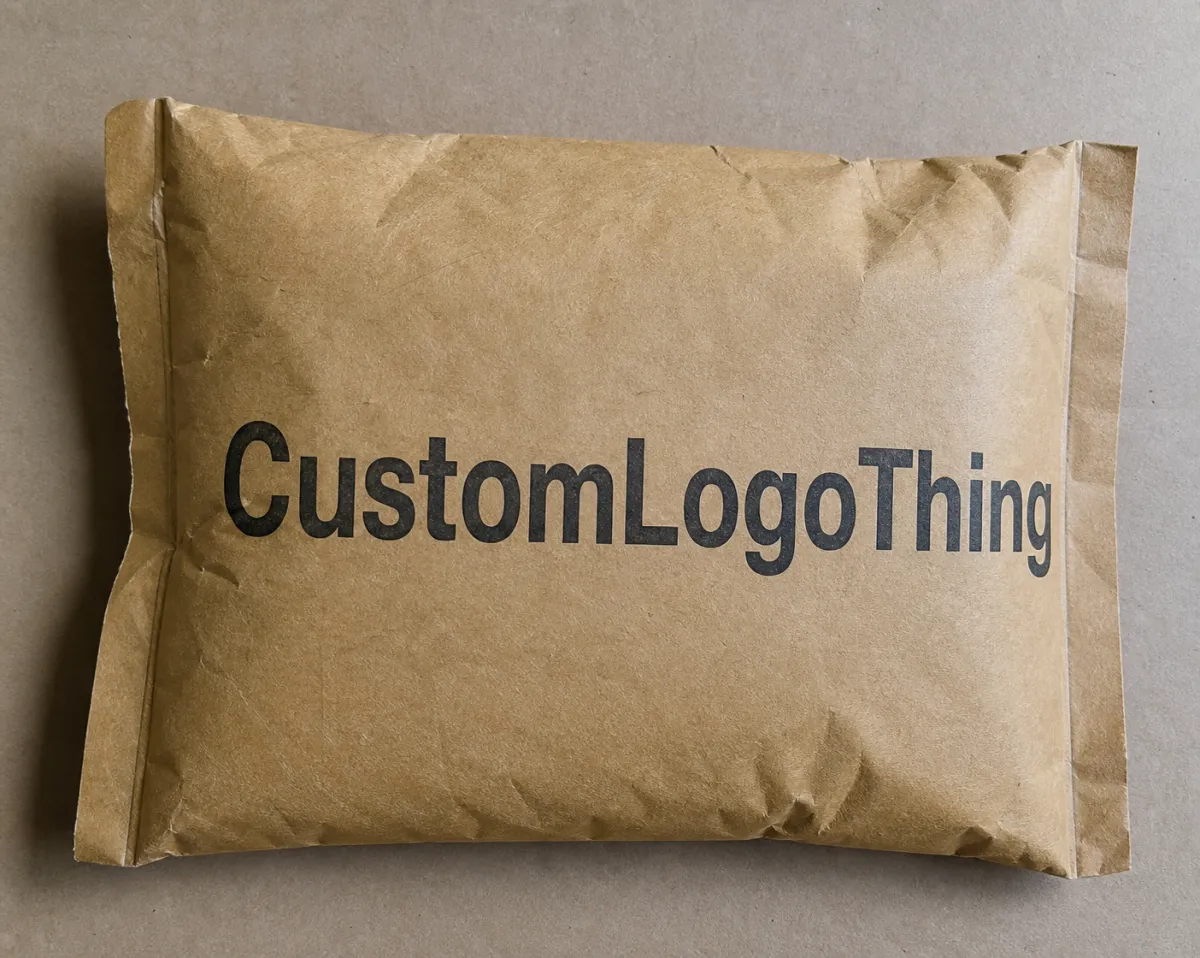
Bulk buying is not about optimism. It is about arithmetic. A recycled shipping envelopes bulk order usually lowers the unit price because the supplier can run longer batches, trim setup waste, and pack freight more efficiently. That matters most when packaging volume stays steady month after month. A team shipping 5,000, 10,000, or 20,000 units a month does not need a new quote every Friday. It needs a spec that holds and a landed cost that does not wander.
Consistency is the other half of the equation. Spot buys often create a patchwork of sizes, paper weights, and closure styles. One warehouse gets a 10 x 13 envelope. Another gets 9 x 12. A third location receives a cheaper substitute with thinner seams and slightly different adhesive behavior. Sorting that mess takes time. In a fulfillment environment, time is money with a barcode scanner attached.
Recycled fiber content matters, but right-sizing matters just as much. A mailer that is too large uses more paper, more adhesive, more carton space, and more freight. The greener option is not always the one with the biggest recycled-content number printed on the panel. The better choice is the one that protects the item without triggering dimensional weight penalties or wasting material around empty air.
That is why recycled shipping envelopes are a strong fit for flat or semi-flat products that need clean presentation and light protection rather than the structure of corrugated packaging. Apparel, printed inserts, stationery, small accessories, and subscription materials are common matches. Sharp, heavy, or fragile products need a tougher package. If the shipment is likely to be crushed, punctured, or bent, move to Custom Shipping Boxes instead of asking a paper mailer to do a job it was never built for.
There is a sustainability angle that gets overlooked. Recycled content reduces demand for virgin fiber, but the paper still has to come from somewhere, move somewhere, and survive shipping without being replaced. Buyers should look for clear recycled-content claims, responsible sourcing, and, where applicable, FSC chain-of-custody documentation. For a baseline on recycling and recovery, the EPA remains a useful reference: EPA recycling information. For product validation, ISTA standards are worth reviewing: ISTA standards.
One practical disclaimer belongs here: a recycled paper envelope is not automatically curbside recyclable in every market. Heavy inks, plastic windows, film laminations, pressure-sensitive liners, and some moisture-resistant coatings can change how a local recycler handles the material. If recyclability is a core buying criterion, ask for the exact construction, not just a recycled-content claim on a sales sheet.
Retail and subscription teams also benefit from less packaging drift. That sounds dull until the wrong envelope size lands at a warehouse, the print color shifts, or a thinner substitute tears during packing. A recycled shipping envelopes bulk order keeps those small failures from turning into customer complaints. The cost of a mistake rarely shows up in one place; it leaks through labor, returns, and customer service.
Product details: what recycled shipping envelopes are built for
Recycled shipping envelopes are designed for lightweight to medium-risk shipments that need a neat presentation and dependable package protection without the bulk of corrugated packaging. They work well for flat products, slim retail items, insert packs, documents, and ecommerce shipping jobs where the contents are not likely to be crushed by heavy stacking or damaged by sharp edges in transit.
Material options vary more than many buyers expect. Some recycled mailers use kraft paper with a high recycled fiber content, while others rely on multi-layer paper construction for added tear resistance. Common finishes include natural kraft, bleached kraft, and heavier recycled paperboard. Closure options typically include peel-and-seal adhesive, self-adhesive strips, or tuck-style closures for document and retail uses. In recurring programs, closure choice matters because weak seals slow the line and create returns. Strong seals do the opposite.
Most buyers want a mailer that looks clean on arrival and holds up through sorting, bagging, stacking, and basic carrier handling. That is especially true for apparel, stationery, and subscription kits where presentation matters but a full box would be overkill. A good recycled envelope should survive normal parcel movement without shredding, popping open, or collapsing into something that looks like it lost a fight with a conveyor belt. Not every recycled envelope can do that. The construction has to match the shipment.
One mistake keeps repeating across packaging programs: recycled does not mean weak, and durable does not mean bulky. A stronger paper mailer can come from better seam reinforcement, better adhesive, and the right GSM, not from vague “eco” language that sounds nice in a pitch deck. Buyers should look at the structure itself, not just the recycled label on the spec sheet.
If your program uses multiple packaging types, compare the envelope order against the rest of the sourcing stack. Some SKUs belong in paper mailers. Some need moisture resistance. Some need the rigidity of a box. A quick review of Custom Poly Mailers can make that distinction clearer, especially when stretch tolerance or water resistance is part of the shipping lane.
Typical use cases include:
- Apparel shipments that are folded flat and do not need rigid corner protection.
- Printed materials such as catalogs, brochures, and sales kits.
- Stationery, notebooks, and office supplies.
- Small accessories, samples, and lightweight retail items.
- Subscription inserts and promotional packs that need tidy presentation.
Heavy, pointed, glass, or highly fragile items usually need another format. A recycled paper envelope can work only if the product already has enough internal protection and the envelope itself includes extra reinforcement. Otherwise, the smarter move is to choose a different package rather than force a weak structure into a hard job.
Specifications to compare before you place an order
Spec sheets often look clean right up until they hide a costly mistake. Before a recycled shipping envelopes bulk order moves forward, start with internal dimensions instead of the outside size printed on the quote. A 9 x 12 envelope that looks perfect on paper can turn awkward once a folded insert, a sleeve, and a bit of sealing clearance enter the picture. In the warehouse, usable fill space matters more than the label.
Material details come next. GSM, fiber mix, recycled-content percentage, and seam reinforcement all affect how the mailer performs once it leaves the sample table. A thinner envelope with a strong seal may outlast a heavier one with poor construction. That is why buyers should ask for actual paper weight and build details rather than broad language like “premium grade” or “heavy duty.” Without numbers, those words float around the quote without saying much.
Core specs that deserve attention
Confirm these items before production starts:
- Internal dimensions: make sure the item fits after folding, sleeving, or inserting collateral.
- Gusset depth: important for bulging contents or multi-piece kits.
- GSM or paper weight: common recycled mailers often fall in the 120-180 GSM range, depending on build and use.
- Recycled content: confirm the stated percentage and whether it is post-consumer, post-industrial, or a blend.
- Seam construction: reinforced seams reduce split risk under pressure and in carrier sorting.
- Closure type: peel-and-seal is common for speed; self-adhesive strips can work well for repeat workflows.
- Print area: leave enough safe margin so logos, warnings, and return information do not land too close to the edge.
Performance details deserve equal attention. Ask about tear resistance, puncture resistance, moisture behavior, and closure strength. If the mailer will move through high-volume parcel networks, sorting resistance should be part of the conversation. A mailer that looks fine on a table can fail once it is packed tight in a tote, stacked under heavier parcels, and pushed through a rough handling lane.
For teams that want a more formal benchmark, ASTM and ISTA testing are useful references, especially when the product is sensitive or the shipping lane is rough. Not every order needs a lab-style spec sheet, but the buyer still needs enough data to avoid guessing. Shipping materials that fail in transit do not count as a sustainability win. They count as a repeat problem.
Branding and compliance also belong on the checklist. Confirm color limits, print method, ink coverage, and whether the recycled-content claim needs support on the packaging or invoice. If a retailer or marketplace has labeling rules, put those on the table before proofing starts. Fixing artwork later always costs more than fixing it now.
Dimensional weight deserves its own line item. A slightly larger mailer can raise freight charges even when the contents weigh almost nothing. In high-volume ecommerce shipping, a few millimeters of excess can become real money over a year. The cheapest spec is often the one that fits properly, even if the first quote does not look glamorous.
Pricing, MOQ, and quote breakdown for bulk orders
Pricing for recycled shipping envelopes is not linear, and pretending otherwise wastes time. The unit cost usually drops as quantity rises, but the biggest savings tend to appear at supplier breakpoints. A run at 2,500 pieces may price one way, while 5,000 pieces lands in a better band, and 10,000 pieces may drop again because the factory can run a cleaner batch with less setup loss. That pattern is normal. The mistake is ordering too little because the first quote looked acceptable.
For a plain recycled paper mailer, common bulk pricing can sit roughly in the range of $0.10-$0.22 per unit at mid-volume, depending on size, paper weight, and closure. Custom printed runs often land in the $0.18-$0.40 range, while larger sizes, reinforced construction, or specialty finishes can go higher. Those are working ranges, not guarantees. Freight, duties, and regional surcharges can shift the landed price enough to matter.
Main cost drivers
When a quote lands higher than expected, one or more of these factors usually changed:
- Size: larger envelopes consume more material and often increase freight cost through dimensional weight.
- Material grade: heavier paper, more recycled content, or reinforced construction costs more.
- Print method: one-color print is generally cheaper than multi-color or full-coverage branding.
- Adhesive and closure: better seal performance can raise the unit cost, but it usually pays back in fewer failures.
- Custom color or finish: special tones and coatings add setup and production complexity.
- Carton packing format: case counts and palletization affect handling and freight efficiency.
- Delivery location: shipping to a single warehouse is easier than splitting freight across multiple sites.
MOQ logic depends on the order type. Plain stock mailers usually carry lower minimums because they are easier to produce and move. Custom sizes and Printed Recycled Shipping envelopes bulk order programs usually need higher quantities to stay economical. Suppliers are not being difficult for sport. Short runs cost more because the setup work is nearly the same whether the order is 1,000 pieces or 20,000.
Tiered pricing helps expose the real breakpoints. Ask for quotes at 3,000, 5,000, and 10,000 pieces so you can see where savings begin. Sometimes the jump from 3,000 to 5,000 barely changes the total spend, which makes the larger quantity the better buy. Other times the break is not worth it because warehouse space is tight or the product line changes too often. A good buyer weighs storage, usage, and cash flow alongside unit price.
| Option | Typical MOQ | Common unit price range | Lead time | Best for |
|---|---|---|---|---|
| Plain stock recycled mailer | 500-1,000 | $0.10-$0.18 | 5-10 business days | Simple document or apparel shipping |
| Custom size recycled mailer | 2,000-5,000 | $0.14-$0.28 | 10-15 business days | Brands with a fixed product footprint |
| Custom printed recycled mailer | 3,000-10,000 | $0.18-$0.40 | 12-20 business days | Retail, ecommerce, and subscription branding |
| Reinforced or heavy-duty recycled mailer | 5,000+ | $0.24-$0.60 | 15-25 business days | Heavier contents or rougher transit routes |
Ask for the landed cost, not just the unit price. A low-cost envelope with expensive freight is still an expensive envelope. Buyers need the delivered number, plus any duties, repacking fees, or case-pack charges. That is the difference between budget-friendly and deceptively cheap.
If order volume stays steady, a standing supply arrangement through our Wholesale Programs can keep reorder timing cleaner and help pricing stay stable when usage is predictable.
Process and timeline: from quote to delivery
The process should stay simple. Request specs first. Confirm quantity, artwork, and delivery destination next. Then review pricing, approve the proof or sample, and move into production. If a supplier cannot explain that sequence in plain English, the project will probably take longer than it should.
Lead time depends on whether the order is stock or custom. Stock items can move quickly, often within 5-10 business days once everything is confirmed. Custom sizes and printed runs take longer, commonly 12-20 business days after proof approval. Freight can add another 2-7 business days depending on distance, carrier choice, and whether the shipment is going to one dock or multiple locations. Production is only part of the calendar. Shipping takes its share too.
Sampling is where many projects slow down. That usually happens when the buyer has not locked the spec. The bigger delays tend to come from missing artwork files, vague size requests, and late changes after the proof is already moving around internally. One extra color change can push the schedule more than people expect. So can a last-minute switch from standard closure to a custom adhesive format.
How to keep the project moving
A clean project flow usually looks like this:
- Lock the product dimensions and confirm what will go inside the envelope.
- Choose the paper weight, recycled-content target, and closure type.
- Send print-ready artwork or request layout support early.
- Review the sample or digital proof and sign off quickly.
- Schedule reorders before inventory gets dangerously low.
That last step matters more than most teams admit. A reorder point should not come from instinct. It should come from usage rate, supplier lead time, and a buffer for freight delays or production hiccups. If a team burns through 2,000 units a month and the lead time is 15 business days, waiting until the last carton is empty is how rush freight enters the budget.
Proof approval and production start are not the same thing. Slow approval costs calendar time. Spec changes after approval cost both calendar time and cash. Either way, the bill shows up. Tight specs up front remain the cheapest move in the whole order.
Mixed packaging programs benefit from a quick comparison across the full shipping materials budget. If some SKUs keep moving into boxes because the mailer is too thin or too small, the problem is not the supply chain. It is the spec. Fix that before the next production run starts.
Need a place to check common ordering questions before sending files? Our FAQ page covers proofing, ordering, and packaging support without wrapping the answer in marketing copy.
The fastest project usually has the fewest assumptions. Clear specs, clean artwork, and a realistic lead-time buffer outperform urgency every time. That holds for recycled mailers, custom inserts, and most transit packaging programs that stay on budget.
Why choose us for recycled shipping envelopes
Buyers do not need poetry. They need material consistency, dependable supply, and plain communication. That is the point of a recycled shipping envelopes bulk order: fewer surprises and a packaging program that does not wobble every time inventory tightens. If mailers arrive with inconsistent paper stock, sloppy printing, or weak seams, the savings disappear quickly.
What matters most in a bulk program is controlled sourcing, repeatable output, and quality checks that catch defects before the order leaves the dock. Custom sizing should be available when standard formats do not fit. Print support should be straightforward, whether the job is a one-color logo or a more detailed branded layout. The supplier should also be able to explain the spec without hiding behind recycled buzzwords.
From a buyer’s point of view, the benefits are practical:
- Fewer replacement orders because the mailer spec is right the first time.
- Less time spent explaining packaging exceptions to warehouse staff.
- Cleaner branding across ecommerce shipping and retail fulfillment.
- Lower risk of damage from weak seams, bad closures, or undersized formats.
- Better cost control through bulk pricing and predictable replenishment.
That is also why many brands do better with a packaging partner that has a supply plan rather than a one-off quote machine. There is a difference between “we can print a mailer” and “we can keep your mailer program running.” One is a transaction. The other supports order fulfillment over time.
If paper envelopes still feel like a maybe, compare them against the rest of the packaging mix. Some programs need paper mailers. Some need more water resistance. Some need the structure of a box. The best answer is usually not the flashiest one. It is the one that protects the product, controls freight, and avoids unnecessary waste.
Buyers looking for packaging support usually start with a broad sourcing conversation and narrow the spec after that. If the envelope fits, great. If it does not, the cheaper decision is the one made before production begins, not after a customer complaint lands in support.
Next steps for your recycled shipping envelopes bulk order
For an accurate quote, gather four details first: product dimensions, monthly usage, print requirements, and shipping destination. With that information, a supplier can give you a real number instead of a guess dressed up as pricing. If you already have a sample envelope or an old spec sheet, send that too. Photos help. So do measurements that show usable fill space, not just the outer label size.
Next, compare two or three options side by side. One should focus on price. One should focus on durability. One should balance recycled content and print quality. That is usually enough to show the tradeoffs clearly. Do not assume the cheapest option is the best. Do not assume the highest recycled-content number is the right one either. The right spec depends on what is inside the mailer and how hard the package will be handled.
If branding matters, request a sample or proof before approving a larger run. That matters especially for custom printed orders. Ink coverage, color tolerance, and print placement can all look fine on screen and disappoint in hand. Five minutes spent reviewing a proof now can prevent a 5,000-piece headache later.
Set a reorder point that matches usage and lead time. Many teams skip this step, then pay for it later. A good replenishment plan keeps stock healthy, protects the packaging budget, and prevents emergency freight from wiping out the savings that bulk buying was supposed to create.
For teams ready to move, the clean sequence is simple: confirm specs, request a landed quote, approve the sample, and set the next reorder point for the next recycled shipping envelopes bulk order. That is how packaging gets purchased with discipline instead of luck.
FAQ
What is the typical MOQ for a recycled shipping envelopes bulk order?
MOQ depends on size, material, and whether the order is plain stock or custom printed. Standard unprinted runs usually start lower, often around 500 to 1,000 pieces, while custom sizes and branded programs tend to start at 2,000 to 5,000 pieces because setup costs need room to spread out. If you want the best price band, ask for tiered quotes so you can see where the real breakpoints sit.
Are recycled shipping envelopes durable enough for ecommerce shipping?
Yes, if the construction matches the product and the shipping lane. A recycled envelope with the right GSM, reinforced seams, and a strong closure can handle light apparel, stationery, documents, and small accessories without issue. If the item is sharp, heavy, fragile, or likely to be crushed, the envelope should be upgraded or replaced with another format. Package protection has to fit the risk.
Can I print my logo on recycled shipping envelopes bulk order runs?
Yes. Most bulk programs can support logo printing, spot colors, and simple branded layouts. One-color print is usually the lowest-cost and fastest route, while larger coverage or multiple colors increase both cost and lead time. Send print-ready artwork early so you do not lose time in proofing. That is one of the easiest ways to keep the project moving.
How much do recycled shipping envelopes bulk order prices usually change by volume?
Unit price usually drops as quantity rises, but the biggest savings tend to appear at production breakpoints rather than in a smooth slide. Size, recycled content, closure type, print method, and freight all affect the final landed cost. A low unit price can still be a bad deal if freight is high or the mailer causes damage in transit.
What should I send to get an accurate quote for recycled shipping envelopes bulk order?
Send internal dimensions, desired material, quantity, print needs, destination ZIP or port, and target delivery date. If you already have a sample or current envelope, include photos or a spec sheet so the quote is based on something real instead of a best guess. Clear input gets you a useful quote faster. Messy input gets you email ping-pong.
Recycled packaging only works as a business decision when the spec, volume, and freight all line up. Get those pieces right and a recycled shipping envelopes bulk order can lower unit cost, simplify replenishment, and keep your ecommerce shipping program looking clean without wasting material. Miss the spec, and you are just buying expensive paper with better branding. Start with the internal dimensions, verify the closure and seam construction, then ask for landed quotes at two or three volume tiers before you commit to production.


