Buyer Fit Snapshot
| Best fit | Branded Shipping Labels on Rolls projects where brand print, material claims, artwork control, MOQ, and repeat-order consistency need to be specified before quoting. |
|---|---|
| Quote inputs | Share finished size, material target, print colors, finish, packing count, annual reorder estimate, ship-to region, and any compliance wording. |
| Proofing check | Approve dieline scale, logo placement, barcode or warning zones, color tolerance, closure strength, and carton packing before bulk production. |
| Main risk | Vague material claims, crowded artwork, missing packing details, or unclear freight terms can make a low unit price expensive after revisions. |
Fast answer: Branded Shipping Labels on Rolls: Material, Adhesive, Artwork, and MOQ should be specified like a repeatable production item. The safest quote records material, print method, finish, artwork proof, packing count, and reorder notes in one written spec.
Production checks before approval
Compare the actual filled-product size with the drawing, then confirm tolerance on folds, seals, hang holes, label areas, and retail display edges. Reserve space for logos, QR codes, warning copy, and material claims before decorative graphics fill the panel.
Quote comparison points
Review material grade, print process, finish, sampling route, tooling charges, carton quantity, and freight assumptions side by side. A quote is only useful when the supplier can repeat the same color, closure quality, and packing count on the next order.
Branded Shipping Labels on rolls look like a small packaging decision. They are not. Once a shipping table is moving, the label format affects speed, scan success, labor, and how polished the parcel looks when it leaves the building. Choose the wrong setup and you get jams, misprints, wasted stock, and a team that starts treating label day like a minor act of punishment. Choose well and the whole station feels calmer.
For a lot of brands, the real question is not whether the label looks good. It is whether it fits the printer, the carton surface, the packing pace, and the budget that actually exists, not the budget someone hoped existed. A label is the last brand touch a parcel gets before it enters the carrier network. That is a small surface with a lot of jobs.
If you want to compare label programs with other packaging formats, it helps to look at Custom Labels & Tags, broader Custom Packaging Products, and real-world Case Studies from similar shipping setups.
Branded Shipping Labels on Rolls: What They Are and Why They Work
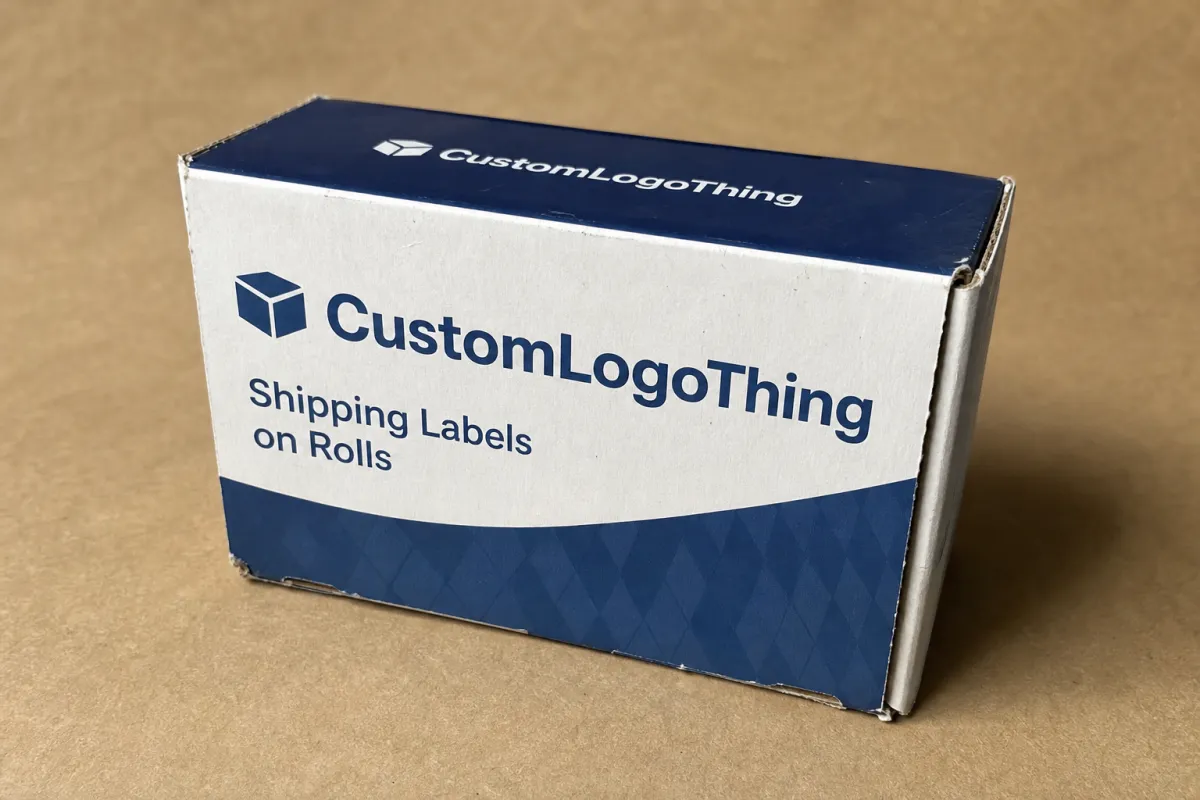
Branded shipping labels on rolls are pressure-sensitive labels wound onto a core so they can be printed and dispensed in batches. The roll feeds through a compatible printer, the shipping data prints, and the label lands on the box or mailer without the stop-and-start handling that comes with sheets. That is the simple version. The useful version is that roll labels keep fulfillment moving with less fuss.
The biggest advantage is throughput. Sheet labels require more handling, more alignment, and more time spent managing paper instead of orders. Roll-fed labels reduce those interruptions. If a team ships 200 orders a day, shaving even a few seconds off each label application turns into real labor savings over a week. Multiply that across peak season and the difference gets harder to ignore.
Roll labels also tend to improve consistency. The printer pulls the next label in sequence, so the operator is not dealing with corners, partial sheets, or missed feeds. That helps keep barcodes, return information, and branding in the same place from order to order. Repetition sounds boring because it is. Boring is good in fulfillment.
The branding value is straightforward. A plain shipping label does the job. A branded one does the job and carries some visual identity with it. That matters most for subscription boxes, DTC ecommerce, warehouse pick-and-pack programs, and growing teams that want the parcel to look deliberate instead of generic. The logo does not need to be loud. It just needs to show that the package came from a real brand, not from a printer having a lonely afternoon.
A shipping label still has one priority: survive transit and scan correctly. If it also carries your logo and looks clean on the box, good. That is the baseline, not a bonus round.
For buyers who are moving from plain labels or handwritten labels, this is often the first packaging upgrade that feels operational instead of decorative. That instinct is usually right. The label sits at the intersection of package protection, transit handling, and packing speed. Ignore any one of those pieces and the system starts wobbling.
There is one more point worth making plainly. Branded shipping labels on rolls are most useful when the shipping process is repeatable. If your team is shipping a mix of standard cartons, mailers, and occasional special orders, the roll format can still work. You just need a spec that fits the equipment and the surfaces the labels will actually touch.
How the Roll Format Works in Real Fulfillment
The workflow is simple enough. The printer pulls a label from the roll, prints shipping data and branding in one pass, and the operator applies it to the carton or mailer. If the stock, printer settings, and artwork line up, the station keeps moving. If they do not, everything slows down in the most irritating ways possible.
Roll labels are not universal, which is where some buyers get tripped up. Core size, outer diameter, unwind direction, label gap, printer model, and sensor type all need to match. A roll can look correct and still be useless on the bench. Thermal printers are especially unforgiving about this. They do exactly what they are told, not what someone meant to order. That is why a vendor should ask for the printer model before quoting branded shipping labels on rolls. If they do not, that is not efficiency. It is a warning sign.
There are two common print methods: direct thermal and thermal transfer. Direct thermal uses heat-sensitive stock and no ribbon, which keeps setup simple and works well for short-life shipping labels. Thermal transfer uses a ribbon and usually gives better resistance to smudging, abrasion, and heat. If the parcel may sit in staging for a while, move through rough handling, or face less-controlled transit conditions, thermal transfer can be the better choice. If you want fast, low-maintenance printing for ordinary shipping, direct thermal often makes more sense.
In a real packing station, the label roll usually sits beside the printer and the scale. Orders are batched, printed, checked, scanned, applied, and sent out. Good setups reduce friction at each step. Bad setups create tiny delays: the operator reloads too often, the barcode prints too close to the edge, the adhesive struggles on a textured box, or the unwind direction keeps forcing a manual adjustment. None of that sounds dramatic. It still burns time.
Branded labels on rolls fit best where volume and repeatability matter: ecommerce shipping, 3PL operations, subscription kits, and ship-from-store programs. They also work well when the label needs to coordinate with other packaging pieces like Custom Poly Mailers or Custom Shipping Boxes. Anywhere a parcel leaves your hands often enough to justify a standardized system is fair game.
Cost, Pricing, and MOQ: What Actually Affects Your Quote
Pricing for branded shipping labels on rolls depends on more than size. Label dimensions, facestock, adhesive, finish, print coverage, barcode requirements, die-cut complexity, and roll configuration all affect the quote. Color count matters too. A simple one-color black label is usually easier to produce than a full-color branded label with multiple graphic elements and tighter registration. The visible design is only part of the bill.
MOQ can be confusing because suppliers define it differently. Some quote by total labels, some by rolls, and some by setup bands or print runs. Two offers can look similar and still hide very different economics. One vendor may appear cheaper until you notice a larger setup charge, more waste, or an awkward roll count. Ask direct questions before you sign anything. The people who skip this step are usually the same people who later say the labels were “fine” in a tone that means absolutely not.
Unit cost usually drops as volume rises, but not in a perfectly smooth line. On smaller orders, setup, proofing, and prepress work can dominate the price. On larger orders, material and production efficiency matter more. As a rough buying frame, a custom roll label program might land around $0.10-$0.22 per label at low-to-mid quantities, then fall into the $0.04-$0.10 range at higher volumes depending on stock, finish, and print coverage. Those numbers are broad ranges, not promises. Anyone pretending otherwise is selling fog.
There is also a real tradeoff between branded labels and plain labels plus a separate branding step. Plain labels can look cheaper upfront, but they often leave the package feeling unfinished. Separate branding steps, like stamping or added stickers, create more labor and more placement variation. If a branded label saves 10 to 15 seconds per order and reduces relabeling, the premium can pay for itself quickly. If it forces a more expensive printer spec or extra handling, the math gets less friendly.
Do not overfocus on the label’s physical weight when dimensional weight is what drives shipping charges. The label is not what moves carrier pricing. Box size, void fill, and package geometry do that. A label can improve handling and storage, but it will not rescue an oversized carton. Nice try, though.
| Option | Typical Use | Relative Cost | Durability | Best For |
|---|---|---|---|---|
| Paper direct thermal | Short-life shipping labels, dry environments | Lowest | Moderate | Fast, simple fulfillment with low maintenance |
| Paper thermal transfer | Labels needing better smudge resistance | Low to medium | Good | Shipping labels that must stay readable longer |
| Synthetic direct thermal | Moisture-prone or rough-handling shipments | Medium | Very good | Package protection in harsher transit conditions |
| Synthetic thermal transfer | Longer-life, higher-abuse applications | Highest | Excellent | Cold rooms, abrasion, and tougher carriers |
If you want to compare vendors honestly, ask each one to quote the same exact spec: label size, material, adhesive, finish, core size, roll diameter, unwind direction, printer model, and quantity breakpoints. Otherwise the comparison is noise dressed up as shopping. If sustainability matters, ask about recycled content or FSC-certified paper options through FSC. For transit testing and shipping durability context, ISTA has useful standards and methods that help frame what “holds up in transit” actually means.
Process and Timeline: From Artwork Approval to Delivery
The cleanest production path starts with spec gathering. You need the label dimensions, printer model, artwork files, barcode or compliance data, and the quantity you want to test. After that comes artwork setup, proofing, sample approval, production, quality check, packing, and delivery. That is the normal sequence. The project tends to go sideways when buyers skip the boring parts and expect the supplier to guess the rest.
Timeline depends on file readiness and how many edits happen before approval. Smaller sample runs can move quickly, sometimes in a few business days once the art is settled. Full production usually takes longer, especially if the label has multiple colors, specialty stock, or custom finishing. For a standard custom roll label order, a practical expectation is often 10-15 business days after proof approval, plus shipping. Add time if the artwork is still changing. Add more time if the barcode is wrong. Barcode mistakes are the packaging version of stepping on the same rake twice.
The biggest delay points are predictable. Missing printer specs is one. Unclear dielines is another. Barcode size or contrast issues can stall proofing because nobody wants to discover unreadable labels after the order is printed. File format matters too. A clean vector file and print-ready artwork save time. A blurry logo pulled from a website image does not. I wish that were more rare than it is.
To keep the schedule tight, send the supplier everything upfront: printer model, core size, roll diameter, unwind direction, label dimensions, logo files, barcode requirements, and any special handling notes. If the labels need to work with cold storage, rough cartons, or glossy mailers, say so early. The same goes for fulfillment workflow notes. A label that behaves on a desk setup might act very differently at a busy warehouse station.
Rush orders can make sense if a launch date is fixed or stock is running low. They do not make sense if you are still deciding the label size or debating the logo placement. Faster turnaround usually narrows material choices and raises cost. That is not a hidden fee. It is the price of compressing steps that normally need room to breathe. If you are buying branded shipping labels on rolls for the first time, leave space for at least one proof review and one real test on your own packing line.
How to Choose Materials, Adhesive, and Finish
Material choice should start with the environment, not the logo. Paper is usually cheaper and works well for clean, dry parcels. Synthetic stocks like polypropylene or polyester handle moisture, abrasion, and rough handling better. If parcels can get damp, stack hard, or move through cold-chain or dusty conditions, synthetic labels are often the smarter choice. For ordinary office-based shipping, paper is often enough and easier on the budget.
Adhesive choice matters just as much. A permanent adhesive is the standard for normal shipping because nobody wants the label sliding off halfway through transit. A removable adhesive makes sense for temporary markings, internal routing, or applications where the label should peel away cleanly. There are also specialty adhesives for textured cartons, recycled corrugate, cold rooms, and surfaces that are less than cooperative. The carton surface matters more than people think. A glossy mailer and a rough recycled box are not the same thing.
Finish affects appearance and scan behavior. Matte stock usually cuts glare and can scan more reliably under bright warehouse lights. Gloss and satin can look richer, but they may reflect light and make barcodes harder to read in some settings. If scanners work under harsh overhead lighting, test the finish there. Not in a design mockup. On the actual packing line. That is the difference between “looks nice on screen” and “works in the building.”
Durability testing is worth the time. A label should survive handling, temperature swings, friction, and carrier sorting without smearing, curling, or peeling. A barcode that fails to scan turns into extra labor and, sometimes, package delays. That stops being a branding issue and becomes an operational one. Test on the actual shipping materials you use, including the boxes, poly mailers, and any coated or recycled surfaces. Real packaging behaves differently than mockups.
On the sustainability side, there is no prize for choosing an eco-friendly stock that fails in transit. Use recycled content or FSC-certified paper where it fits your spec, but do not sacrifice performance just to sound responsible. A label that falls off in the carrier network is not sustainable in any useful sense. If you need help aligning shipping labels with broader packaging goals, this is where Case Studies help because they usually show the tradeoffs people actually made instead of the polished brochure version.
The simplest rule is this: choose the lightest material that still survives your shipping environment. That sounds blunt because it is. Overbuilding labels wastes money quietly. Underbuilding them wastes money later, and louder.
Step-by-Step: Ordering Branded Shipping Labels on Rolls
Start with a workflow audit. Count daily and weekly volume, note peak periods, and watch where the line slows down. A label purchase should remove a bottleneck, not create a nicer-looking bottleneck. If your team ships 80 orders on a slow day and 400 on a peak day, that range affects roll length, reorder timing, and how much inventory you want sitting around. Inventory is not free just because it is small.
Next, lock the equipment details. Get the printer model, core size, roll diameter, label orientation, and unwind direction. If the labels need to work with a dispenser or a linerless setup, say that now. A quote without equipment details is only half a quote. That is how people end up with rolls that technically exist but do not fit anything in the building.
Then define the label spec carefully. Exact dimensions matter. So does logo placement, barcode zone, and whether the shipping data is static or variable. If the design needs a clean area for scanning, say so in writing. If you want brand marks visible but not crowding the return address, map that out in the proof. Do not make the vendor guess. Guessing gets expensive fast in printing.
Before you place the full order, request a proof or sample run and test it on your actual boxes, mailers, and lighting conditions. Check whether the adhesive grabs quickly enough, whether the barcode scans on the first pass, and whether the label looks balanced after application. If it fails, fix the spec now. A small change before production is painless. A correction after 10,000 labels are printed is where people start saying “lesson learned” with too much feeling in it.
Finally, approve, reorder, and document the final spec. Save the exact printer settings, label dimensions, artwork file version, and supplier notes. The best reorders are boring. Boring is good here. If your team later expands into other transit packaging or wants to coordinate labels with custom shipping boxes and custom poly mailers, that documentation keeps the whole system tidy instead of turning every purchase into a fresh argument.
A practical buying rhythm helps too. If you are still tuning artwork or changing box sizes, do not overbuy. A first order that covers two to four weeks of typical volume is usually enough to validate fit without trapping cash in the wrong spec. Once the label works, scale up. Before that, caution is cheaper than confidence.
Common Mistakes, Expert Tips, and Next Steps for Smarter Ordering
The most common mistake is picking the wrong core size or roll diameter. It sounds basic because it is basic. Yet it still happens constantly. The second mistake is overdesigning the label. Too much art around the barcode or too many visual elements near the shipping data can make the label harder to scan and uglier in practice. A label is not a poster. It has a job to do.
Another easy way to waste money is ignoring barcode contrast. Dark barcodes on a light field are the safe move. Busy backgrounds, low contrast, or glossy finishes in a bright warehouse can create scan failures. If the scanner has to work harder, someone has to work harder, and that someone is usually your team. A clean quiet zone around the barcode is not optional. It is the point.
From a buyer’s point of view, a smart order usually comes down to three habits: compare at least two or three vendors, make them quote the same spec, and ask for pricing at multiple volume breaks. You want to know what happens at 1,000 labels, 5,000 labels, and 10,000 labels. Sometimes the real savings show up in the next tier. Sometimes they do not. That is why quotes should be compared on the same basis, not just the lowest headline number.
Here are a few expert tips that save headaches:
- Keep the logo small enough to protect scan space and routing information.
- Standardize on one or two label sizes if your equipment allows it.
- Test adhesive on the actual carton finish, not just a sample sheet.
- Choose finishes based on warehouse light, not just design preference.
- Document the approved spec so reorders stay consistent.
If you are building a broader packaging program, do not separate the label decision from the rest of the box. Labels, mailers, cartons, inserts, and tape all shape the customer’s first impression and the shipping experience. Brands that treat labels as one piece of the packaging stack usually get cleaner results than brands that chase a single shiny detail and ignore the rest.
There is also a useful sanity check: if the label saves time, reduces relabeling, keeps barcodes readable, and still fits your equipment, it is earning its place. If it creates jams, pushes you into a weird printer spec, or makes the fulfillment team mutter under their breath every afternoon, the branding premium is not doing enough. Pretty simple, really.
Frequently Asked Questions
How many branded shipping labels on rolls should I order first?
Start with enough for about 2 to 4 weeks of normal volume. That gives you room to test the real workflow without locking too much cash into inventory. Add a buffer for setup waste, misprints, and sample checks. If your artwork or fulfillment process is still changing, a smaller first run is usually the safer move.
Are branded shipping labels on rolls compatible with thermal printers?
Yes, as long as the roll spec matches the printer. Core size, roll diameter, unwind direction, and label dimensions all need to fit the machine. Direct thermal stock does not use a ribbon. Thermal transfer does, and the ribbon has to match the stock. If a supplier does not ask for printer details, that is not convenience. That is carelessness.
What is better for shipping, branded shipping labels on rolls or sheets?
Rolls are usually better for higher volume, faster packing, and cleaner automation because they reduce handling and reloading. Sheets can work for lower volume or office-based shipping, but they usually slow repeated pack-out work. If your team ships every day, rolls generally win on speed and consistency.
How do I keep logos and barcodes readable on branded shipping labels on rolls?
Use strong contrast, leave clear quiet zones around the barcode, and keep decorative graphics away from the scan area. Test the label on the actual printer, stock, and lighting conditions used in your packing area. If a label looks stylish but scans badly, it is a bad label. Full stop.
How long does production usually take for branded shipping labels on rolls?
Production time depends on proof approval, quantity, finishing, and how many file revisions happen before production starts. Samples and smaller runs usually move faster than larger custom jobs, but every extra proof round adds time. Rush orders can work, though they usually cost more and leave less flexibility on materials or finishes.
If you want branded shipping labels on rolls to earn their keep, lock the printer spec, test the adhesive on your actual cartons or mailers, and make sure the barcode zone stays clean. That is the practical takeaway. A label only works when the roll, the printer, and the package surface agree with each other. If one of those three is wrong, the pretty version of the label will not matter for long.


