Buyer Fit Snapshot
| Best fit | branded shipping tubes for posters packaging for packaging buyers comparing material specs, print proof, MOQ, unit cost, freight, and repeat-order risk where brand print, material, artwork control, and repeat-order consistency matter. |
|---|---|
| Quote inputs | Share finished size, material target, print colors, finish, packing count, annual reorder estimate, and delivery region. |
| Proofing check | Approve dieline scale, logo placement, barcode or warning zones, color tolerance, and any recyclable or compostable wording before bulk production. |
| Main risk | Vague material claims, crowded artwork, or missing packing details can create delays even when the unit price looks attractive. |
Fast answer: Branded Shipping Tubes for Posters Packaging: Dieline, Finish, Proof, and Buyer Review should be specified like a repeatable production item. The safest quote includes material, print method, finish, artwork proof, carton packing, and reorder notes in one written spec.
What to confirm before approving the packaging proof
Check the product dimensions against the actual filled item, not only the sales mockup. Ask for tolerance on folds, seals, hang holes, label areas, and retail display edges. If the package carries a logo, QR code, warning copy, or legal claim, reserve that space before decorative graphics fill the panel.
How to compare quotes without losing quality
Compare board or film grade, print process, finish, sampling route, tooling charges, carton quantity, and freight assumptions side by side. A lower quote is only useful if the supplier can repeat the same color, closure quality, and packing count on the next order.
Branded Shipping Tubes for posters do more than hold a rolled print in place. They are often the first object a customer touches, and in many orders they are the only packaging element that survives long enough to be remembered. If you ship posters, art prints, or merch on a regular schedule, branded shipping tubes for posters can turn a plain delivery into part of the product rather than a forgettable wrapper.
The upside is easy to see. The harder part is that branded shipping tubes for posters still have to do unglamorous work: protect artwork, survive ecommerce shipping, fit inside order fulfillment workflows, and stay inside a budget that does not punish every sale. Good tubes mix package protection, transit packaging, and branding space in one cylinder. Bad ones are expensive cardboard with a logo and a dent.
For a packaging buyer, the smartest way to read branded shipping tubes for posters is pretty simple. They are not just shipping materials. They are a small billboard that travels, gets handled, gets opened, and often gets reused. That changes perceived value, customer recall, cost per shipment, and the amount of risk you are willing to absorb while the poster moves through the carrier network.
Here is the part most buyers miss: the tube is not only about what you send. It is about what the recipient feels before the poster comes out. A generic tube makes the whole experience feel generic. A well-specified tube makes branded shipping tubes for posters feel like a deliberate product choice instead of a mailing cylinder that happened to be available.
I have watched teams obsess over poster paper weight and then throw the artwork into a tube spec that was basically guesswork. That is backwards. The packaging is not an afterthought; it is the part the customer sees first, and in transit it is the part that takes the hits.
What branded shipping tubes for posters actually do
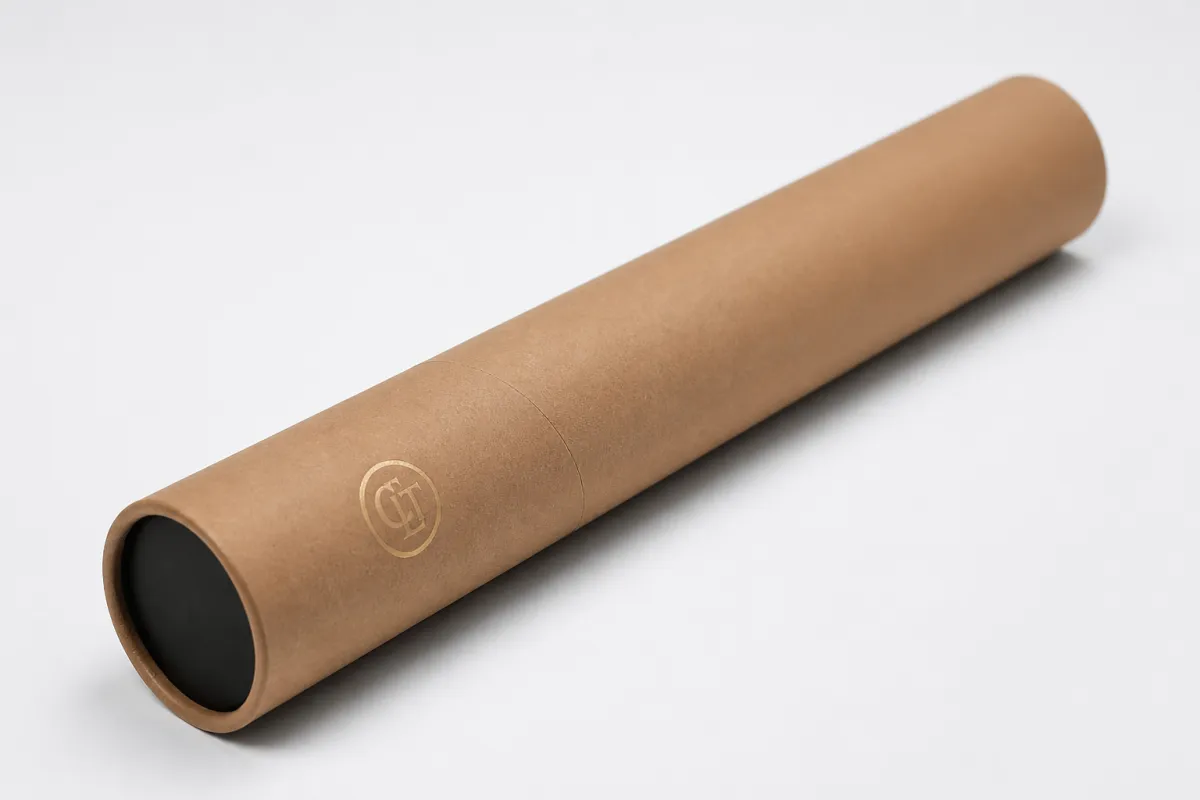
Branded shipping tubes for posters protect rolled artwork from bending, edge crush, and the small disasters that show up between a pack bench and a front door. They also do something less obvious: they signal that the contents were worth designing for. That signal matters for artists, galleries, design studios, museums, merch brands, and anyone shipping prints as part of a premium line.
A plain tube says, "We needed something round." Branded shipping tubes for posters say, "This shipment was planned." That difference shows up in unboxing photos, repeat orders, and how long the brand stays in memory after the poster is hung. Packaging memory is underrated. People forget a product faster than they forget the tube that made the product feel considered.
The use cases are broad. An art seller may use branded shipping tubes for posters to keep a limited-edition print consistent across every order. A merch brand may use them for seasonal drops. A museum store may want a clean, archival-looking tube for exhibition posters. A design studio may need the tube to survive domestic and cross-border transit packaging without looking like a warehouse leftover.
If you want a good starting point, look at the packaging stack around the tube, not only the tube itself. A print sleeve, tissue wrap, insert card, or cap label can change perceived value without blowing up cost. That is why branded shipping tubes for posters belong in the same conversation as other custom packaging products, not in a separate corner.
The business side is just as real. The questions are not only "Does it look good?" They are "What diameter do we need?", "What print method makes sense?", "How much does it add to dimensional weight?", and "Will the branding still look acceptable after a carrier has treated it like baggage?"
Good packaging is not decoration first. It is protection first, then presentation, then cost control. If those three are out of order, the pretty part gets expensive very quickly.
There is also a psychology angle that gets overlooked. A tube is a container, yes, but it is also a cue. A customer who receives a well-made, branded tube tends to expect care inside the package. That expectation can make the entire purchase feel more valuable before the print is even unrolled. That is not marketing fluff; it is how people infer quality from physical objects.
How branded shipping tubes for posters work in the real world
Most branded shipping tubes for posters start with spiral-wound paperboard, because it gives decent crush resistance without making the package absurdly heavy. The common build is a cylindrical body with friction-fit end caps, though telescoping tubes, reinforced ends, and inner liners appear when the route is rougher or the poster stock is more valuable. For tighter fits, some brands add inserts or cradles so the artwork does not rattle inside.
The branding itself can happen in a few ways, and the ladder is easy to read. Labels are the lowest-cost option. Printed sleeves are the middle step. One-color print on the tube body starts to feel more intentional. Full-wrap print is where branded shipping tubes for posters start to look like a real campaign asset. Embossing and special finishes sit at the premium end, but they are not always worth the extra lead time and cost unless the packaging is part of the product story.
In practice, the customer sees the tube in four moments: when it arrives, when it is opened, when the poster comes out, and when the tube is kept for something else. A surprising number of branded shipping tubes for posters end up reused for storage, transport, or desk clutter. That is not failure. That is extended brand exposure, which is more than most shipping materials can claim.
Print placement matters more than people expect. Areas that get handled first will scuff first. End zones, seams, and high-friction touch points usually take the abuse, so the cleanest branding should sit where the hand naturally lands and where a scuff will not ruin the whole design. If you are paying for branded shipping tubes for posters, do not waste your strongest artwork on a spot that gets scraped during sorting.
Testing matters too. A good tube should hold up through drop tests, crush force, humidity swings, and the occasional lazy toss across a facility. If you are shipping through a rough network, ask how the tube behaves under ISTA-style transit testing. For a practical reference, the International Safe Transit Association has packaging test materials at ISTA. That kind of validation is not glamorous, but it saves money faster than replacing damaged orders.
Branded shipping tubes for posters also need to fit into the rest of your logistics setup. If your team already uses standardized boxes, inserts, or Custom Poly Mailers for some product lines, the tube spec should match how your pack station actually works. A beautiful tube that slows down order fulfillment is just a prettier bottleneck.
Print durability is another pressure point. Heavy coverage, dark solids, and rich spot colors can look excellent on proofs and then show wear after a few hundred handoffs. That is why many brands keep the artwork cleaner than they first imagined. For branded shipping tubes for posters, the goal is usually sharp recognition, not a color storm that starts shedding at the first transfer point.
In one launch I reviewed, the team chose a matte black full-wrap design because it looked expensive in mockups. It did look expensive. It also showed every scuff from the conveyor, every fingerprint from packing, and every rub mark from stacked cartons. The final rework was simpler, cheaper, and far better in the real world. That kind of lesson is common, and a little annoying, but it usually saves money in the long run.
Key factors that change protection and presentation
Size comes first, and it is where a lot of avoidable mistakes happen. For branded shipping tubes for posters, you need the rolled diameter, not only the flat poster size. A 24 x 36 poster can roll very differently depending on paper weight, coating, and how tightly your pack team curls it. If the clearance is too tight, the print can crease at the edge. If the tube is too loose, the poster shifts and gets battered inside.
Material choice follows close behind. Lighter board costs less, but thicker board usually gives better crush resistance. Recycled board can be a practical middle path if you want branded shipping tubes for posters with stronger sustainability credentials without moving into premium territory. A common range is roughly 1.5 mm to 3 mm wall thickness, depending on protection needs and the shipping route.
Closure style changes the experience more than most buyers expect. Friction-fit caps are simple and cheap. Threaded or reinforced ends feel more secure and work better for longer routes or higher-value prints. If customers are opening branded shipping tubes for posters in a retail setting, the cap should feel deliberate, not fiddly. Nobody wants to wrestle packaging before they even see the artwork.
Visual tradeoffs are real. Full-coverage graphics look premium, but they can raise print cost and make wear more obvious on smaller diameters. Simpler art can look sharper after shipping. That is especially true when the tube has to survive repeated handling during ecommerce shipping. Clean typography, one strong brand color, and a well-placed mark often do more than a noisy design that tries to do too much.
Sustainability works best as a specification, not a slogan. Recyclable construction, water-based inks, and minimal plastic closures can all make branded shipping tubes for posters easier to defend internally and easier to explain to customers. If you want to validate material choices, FSC-certified fiber sources are worth asking about; the Forest Stewardship Council has clear standards at FSC. That does not make a tube perfect, but it does make the sourcing conversation more precise.
It also helps to compare the tube against the rest of your packaging stack. A poster tube that costs a little more may still be the cheapest answer if it reduces returns, reprints, or damage claims. That is the part many teams skip. They compare unit price and ignore the replacement print, the reshipment, and the customer complaint sitting behind it.
One more practical point: dimensional weight can sting. Long cylindrical packaging can push carrier pricing up faster than a flat mailer or box. Branded shipping tubes for posters need to be sized carefully so you are not paying oversize charges for empty space. The best design is usually the smallest tube that still protects the artwork properly.
For brands shipping internationally, fit becomes even more important. A tube that barely works on a local route can fail once it gets compressed, repacked, or stored in a hot warehouse. Heat can soften adhesives, and humidity can change how paperboard behaves. That is not theory. It is the kind of boring physical reality that ruins otherwise good packaging choices.
| Option | Best For | Typical Unit Range | Pros | Tradeoffs |
|---|---|---|---|---|
| Stock tube + label | Low-volume runs, fast launches | $0.65-$1.40 | Fast, flexible, low setup cost | Less premium, label wear can show |
| One-color printed tube | Mid-range branding, repeat orders | $0.90-$1.95 | Cleaner look, better recall | Limited visual impact compared with full-wrap |
| Full-wrap printed tube | Premium unboxing, campaign packaging | $1.35-$2.85 | Strong presentation, better shelf presence | Higher setup, more sensitive to scuffing |
| Premium finish tube | Luxury editions, gallery programs | $2.10-$4.00 | High perceived value, better gift feel | Longer lead time, higher MOQ pressure |
Production steps, timeline, and lead time
Production for branded shipping tubes for posters usually starts with dimensions, not artwork. Confirm the poster size, rolled diameter, length, and whether the print needs tissue, a sleeve, or an insert card. If you skip that step and jump straight to design, you are building packaging on a guess. That is a very expensive habit.
The next step is choosing the tube style and approving the dieline. At this stage, the vendor should tell you where seams land, where the print safe zone sits, and how the cap area is treated. For branded shipping tubes for posters, the dieline is not just a technical file. It is the map that keeps logos off cut lines and slogans away from the cap edge.
Proofing usually has two layers. First, you may need a structural sample if the size is new or the print needs to fit a special insert. Then you move to a printed proof or preproduction sample. Do not rush that stage. A cheap mistake on proof approval is still expensive if the run is 5,000 units and the branding is off by 4 mm across the entire order.
- Confirm poster dimensions and rolled diameter.
- Choose tube board thickness, length, and cap style.
- Approve the dieline and print placement.
- Review a structural sample if needed.
- Approve the printed proof.
- Run full production and inspect the first cartons off the line.
Lead time depends heavily on the route you choose. A stock tube with a label can move quickly, sometimes in about 7-12 business days once artwork is finalized. Custom printed branded shipping tubes for posters often sit in the 12-20 business day range after proof approval. Fully custom builds, special finishes, or complex inserts can push beyond that, especially when the factory is already balancing other packaging materials and seasonal volume.
Delays usually come from the same predictable places: artwork revisions, wrong bleeds, color matching, dieline mistakes, tooling changes, and production backlog. None of that is exotic. It is just the usual mess, and it is why you plan backward from your ship date instead of asking for packaging two days before launch. That stunt only works in fairy tales and broken spreadsheets.
If you need help comparing packaging formats across a larger product line, it is worth looking at related options like Custom Packaging Products and Custom Shipping Boxes. A lot of brands discover that the best answer is not one packaging type, but a matched system: tubes for posters, boxes for kits, mailers for flat items.
I also recommend building a small safety buffer into the timeline, even if the vendor sounds confident. A two-day cushion can absorb a proof correction, a color issue, or a freight delay that nobody saw coming. It is not glamorous, but it keeps launch day from turning into a panic sprint.
Cost and pricing for branded shipping tubes for posters
Pricing for branded shipping tubes for posters is driven by size, board thickness, print coverage, cap style, quantity, finishes, and whether you need custom tooling. If a quote looks suspiciously cheap, something is usually missing. Freight. Proofing. Setup. Reorder fees. Storage. The cheerful version of a quote is not always the accurate one.
The unit cost curve is predictable. Small runs carry more setup cost per piece, so the per-unit price is higher. Once the line is running, larger quantities usually pull the cost down fast. A 500-piece run may feel expensive, but a 5,000-piece run can cut the unit price enough to make the branding option worthwhile. That is why branded shipping tubes for posters often make more sense at scale.
MOQ is another detail people should ask about directly. Some suppliers set minimums by size, some by print method, and some by order value. If you are buying branded shipping tubes for posters for a product launch, ask for the minimum in plain English. If the vendor can only answer in riddles, that is not a great sign.
Here is the practical budget view:
- Low cost: stock tube + label or sleeve, good for testing demand and keeping cash tied up in check.
- Mid-range: one-color or limited-color print, good for regular ecommerce shipping and branded presentation.
- Premium: full-wrap print with special finishes, good for gallery programs, merch drops, and higher-margin prints.
For branded shipping tubes for posters, I usually tell buyers to think in terms of total landed cost, not just factory price. If a tube saves one damaged print every few hundred shipments, it can justify a higher unit cost quickly. If it adds enough dimensional weight to push every parcel into a more expensive carrier band, that cost might erase the branding upside. Both outcomes are real.
One more thing: compare the quote against your actual product mix. If your business also ships flat items in mailers, the tube may only be needed for certain SKUs or regions. That kind of split strategy keeps packaging from bloating into a one-size-fits-all expense. Good packaging decisions are rarely dramatic. They are usually just matched to the route, the item, and the customer value.
For brands shopping around, it helps to compare suppliers against a checklist rather than a price column. Ask for board spec, cap style, print method, quantity breakpoints, and proofing charges. If one quote is 18% cheaper but excludes a structural sample and freight, it is not cheaper. It is just better at hiding the bill.
There is a hidden cost many teams miss: labor. If a custom tube takes even 10 seconds longer to assemble or pack than a stock option, that difference compounds across hundreds or thousands of orders. A small change in pack speed can matter as much as a small change in unit cost. That is the kind of detail procurement people and operations managers should talk about together, not separately.
Common mistakes that waste money or damage prints
The worst mistake is sizing the tube too tight. People think tighter means safer. Not always. A tube that is too narrow can curl the poster too aggressively and make the edges harder to remove cleanly. With branded shipping tubes for posters, the fit should be secure but not jammed. If the customer has to fight the print out, the packaging has failed one of its core jobs.
Another common error is ignoring shipping realities. Carrier abuse happens. Moisture happens. Oversize handling happens. If your route is rough, the tube board, cap fit, and wrap all need to reflect that. Package protection is not a theory exercise. It is a response to how parcels actually move through the system. For high-risk routes, test against the roughest likely scenario, not the nicest one.
Artwork timing causes plenty of expensive problems too. Sending design files before the dieline is locked is how logos wander into trims and QR codes land where nobody can scan them. For branded shipping tubes for posters, the print area must be built around the tube geometry, not around whatever the graphic designer thought looked balanced on a flat screen. The screen does not care about seam placement. The factory does.
Design overcomplication also burns money. Too many colors, gradients, metallic effects, or delicate finishes can look impressive in mockups and weak in transit. The cleanest branded shipping tubes for posters often use fewer elements, more breathing room, and stronger contrast. If the tube is supposed to sell the brand, it does not need to host a visual circus.
Skipping real-world tests is the final classic mistake. Use actual rolled posters, actual caps, and actual carriers. Check how the tube opens. Check whether the cap loosens. Check whether the poster scuffs when pulled out. This is the point where many teams discover that the "perfect" concept design is useless in the hands of an impatient customer.
If you want a broader comparison across packaging styles, review your performance against existing Case Studies. The best lessons usually come from the jobs where the packaging had to hold up under real order fulfillment pressure, not from the mockup that looked handsome on a white background and then failed on a loading dock.
Branded shipping tubes for posters also need a realistic sustainability story. Do not overclaim. If the tube is recyclable but the cap is not, say so. If the design uses recycled fiber but still needs a plastic liner for moisture control, that tradeoff should be acknowledged. Buyers are much more tolerant of honest tradeoffs than glossy nonsense.
One more mistake is treating the tube as a standalone decision. If your poster arrives in a branded tube but the insert card is generic, the experience feels half-finished. If the branding is beautiful but the closure is annoying, the customer remembers the annoyance first. Packaging is a system, and the weak link tends to define the memory.
Expert tips and what to do next
If you want branded shipping tubes for posters to earn their keep, use the outer surface like a second brand layer. Add a QR code that points to a collection page, a care note, a short thank-you line, or a reuse prompt. That small detail can make the tube feel alive after the poster is unrolled, which is better than letting it become anonymous waste in the corner.
Design for keeping, not only shipping. Strong typography, clean color blocks, and a closure that feels intentional all increase the odds that the tube gets reused. That matters because branded shipping tubes for posters often stay in studios, closets, and offices long after the shipping label is gone. Reuse is not just sustainable. It is repeated exposure.
Ask for two samples before you commit to a larger run: one structural sample and one printed proof. If your poster sizes vary, test the worst-case fit, not the average one. A lot of packaging problems hide in edge cases, and branded shipping tubes for posters are no exception. A tube that works for one paper stock may fail for another.
A simple decision stack keeps the process manageable:
- Confirm poster dimensions and rolled diameter.
- Choose the print method that fits your quantity.
- Compare at least three quotes on the same spec.
- Review proofing, freight, and MOQ details.
- Approve the sample before the full run.
That sequence is dull. It is also cheaper than reprinting a thousand tubes because the seam landed on the front panel or the caps were too loose. Branded shipping tubes for posters are one of those packaging choices where good process is the real luxury item.
If you are building a broader packaging lineup, match the tube to the rest of the system instead of treating it as a one-off. A brand that ships posters in branded shipping tubes for posters, smaller items in custom mailers, and premium sets in rigid boxes usually reads as more deliberate than a brand that uses whatever happened to be in stock that week.
If you are still deciding whether the upgrade is worth it, ask one very plain question: will the branded shipping tubes for posters help the customer remember the product, trust the brand, and receive the artwork intact without adding avoidable waste or expensive freight? If the answer is yes, you probably have a real packaging asset, not just a container.
My practical rule is this: choose the smallest tube that protects the print, the simplest artwork that still feels unmistakably yours, and the proofing path that lets you sleep the night before launch. That combination is boring in the best way. It keeps the poster safe, keeps the numbers honest, and keeps the brand looking like it knows what it is doing.
FAQ
What size should branded shipping tubes for posters be?
Measure the rolled poster diameter, not just the flat sheet size, and leave enough clearance so the print slides in without crimping. Match tube length to the artwork plus cap depth, insert space, and any protective sleeve or tissue you plan to include. For branded shipping tubes for posters, the safest spec is the one based on the actual rolled item, not the number printed on the product page.
Are branded shipping tubes for posters expensive?
Plain stock tubes are the cheapest option; adding custom print, caps, or special finishes raises the unit cost quickly. The biggest price swings usually come from quantity, print coverage, and setup fees, so small runs cost more per tube. If you are buying branded shipping tubes for posters for a test drop, expect the per-unit price to be higher than a larger repeat order.
How long does it take to produce branded shipping tubes for posters?
Stock tubes with labels move fastest, while custom printed tubes need more time for proofing and production. Lead time also depends on artwork approval, factory schedule, and whether you need a structural sample before the run. Branded shipping tubes for posters can be quick enough for a campaign, but only if the spec is locked early.
Do branded shipping tubes for posters protect artwork well?
Yes, if the board thickness, cap fit, and tube diameter are matched to the poster size and shipping route. They are not automatically waterproof or crush-proof, so add liners, sleeves, or stronger board when the route is rough. Branded shipping tubes for posters are protective packaging, but they are not magic.
What branding method works best for poster tubes?
For small runs, labels or sleeves usually make the most sense because they keep costs down and let you change designs easily. For premium unboxing, full-wrap print is stronger visually, but keep the artwork simple so it still looks clean after shipping wear. Branded shipping tubes for posters look best when the branding matches the budget, quantity, and handling conditions.
Branded shipping tubes for posters are worth specing carefully because they sit right at the intersection of protection, cost, and brand perception. Get the fit right, keep the graphics honest, and avoid paying for features your route does not need. Done well, branded shipping tubes for posters protect the print, support the sale, and make the package feel intentional instead of disposable.

