Buyer Fit Snapshot
| Best fit | Branded Tissue Paper for Boutiques projects where brand print, material claims, artwork control, MOQ, and repeat-order consistency need to be specified before quoting. |
|---|---|
| Quote inputs | Share finished size, material target, print colors, finish, packing count, annual reorder estimate, ship-to region, and any compliance wording. |
| Proofing check | Approve dieline scale, logo placement, barcode or warning zones, color tolerance, closure strength, and carton packing before bulk production. |
| Main risk | Vague material claims, crowded artwork, missing packing details, or unclear freight terms can make a low unit price expensive after revisions. |
Fast answer: Branded Tissue Paper for Boutiques: Design, Cost, Impact should be specified like a repeatable production item. The safest quote records material, print method, finish, artwork proof, packing count, and reorder notes in one written spec.
Production checks before approval
Compare the actual filled-product size with the drawing, then confirm tolerance on folds, seals, hang holes, label areas, and retail display edges. Reserve space for logos, QR codes, warning copy, and material claims before decorative graphics fill the panel.
Quote comparison points
Review material grade, print process, finish, sampling route, tooling charges, carton quantity, and freight assumptions side by side. A quote is only useful when the supplier can repeat the same color, closure quality, and packing count on the next order.
A customer buys a $24 silk scrunchie, leaves happy, and later tells a friend about the wrapping instead of the product specs. That is exactly where Branded Tissue Paper for boutiques earns its keep: small material cost, outsized memory impact, and a subtle price-confidence signal before the product is even used.
From a packaging buyer’s point of view, this isn’t fluff. Visual and tactile cues shape quality perception fast, often in seconds. Retail behavior studies repeatedly show that first impressions heavily influence value judgment, and packaging is usually the first controlled touchpoint. For boutiques, branded tissue paper for boutiques functions like a quiet script: logo rhythm, color confidence, and reveal pacing all tell the customer, “this brand is intentional.”
Why Branded Tissue Paper for Boutiques Punches Above Its Weight
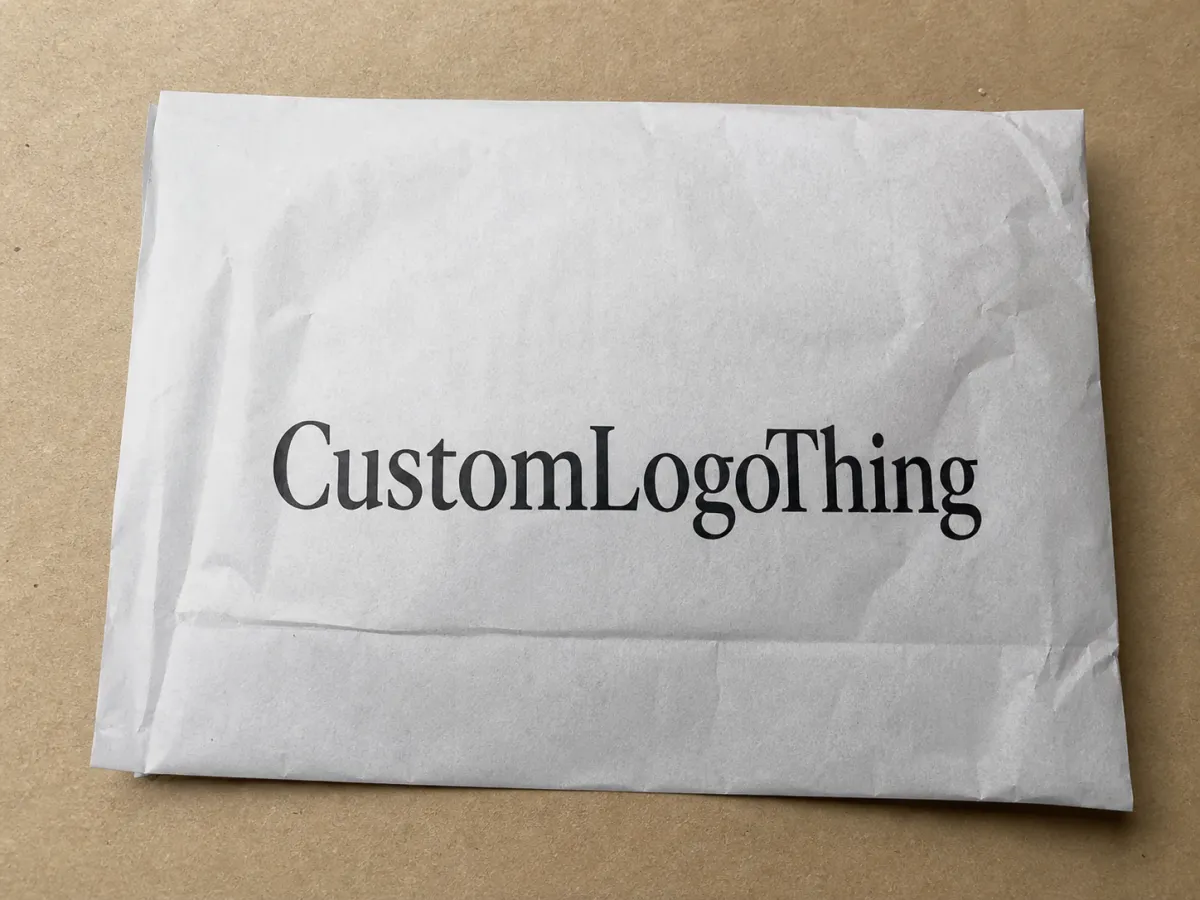
Here’s the counterintuitive part. The lighter the product, the bigger the packaging memory can become. Accessories, lingerie, cosmetics, candles, and jewelry often have low physical footprint but high emotional positioning. In those categories, branded tissue paper for boutiques can carry more narrative weight per square inch than many larger packaging components.
In plain language, branded tissue paper for boutiques is lightweight wrapping tissue printed with your logo, color system, or repeat motif. It protects surfaces from minor scuffs and separates items during handling, but its real role is emotional framing. Customers perceive care before they inspect stitching, metal finish, or ingredient list.
Think of the boutique packaging stack as layers: bag or mailer outside, tissue in the middle, product against tissue, and a closure element like a sticker or ribbon controlling reveal. This middle layer touches utility and emotion at once. That dual function is why branded tissue paper for boutiques performs above its cost bracket.
Mass retail can dilute impact with huge SKU counts and standardized wrap routines. Boutiques work differently. Order volume is lower, storytelling pressure is higher, and every variable line item gets scrutiny. A cents-level shift matters. Still, the right branded tissue paper for boutiques frequently lands at roughly $0.06 to $0.24 per wrapped order depending on sheet count, size, and print coverage, which is often less than 1% of average order value for many specialty stores.
There is another angle people miss: consistency compounds. If your shopper buys once every six weeks and sees the same tissue pattern each time, recognition builds almost automatically. That’s brand recall without extra ad spend. If you want concrete proof points, reviewing presentation strategies inside retail packaging Case Studies on boutique brand packaging outcomes can help benchmark what changed after standardizing wrap systems.
This guide walks through design mechanics, cost math, supplier conversations, production realities, common errors, and a practical 30-day rollout. You’ll see where branded tissue paper for boutiques genuinely moves outcomes, where claims are overstated, and how to keep quality high without eroding margin.
How Branded Tissue Paper for Boutiques Works in the Unboxing Psychology
Unboxing is not one moment. It is a sequence of micro-moments.
Visual cue first, then hand feel
The first signal is visual: color field, logo spacing, and contrast. Then comes tactile confirmation: softness, drag, and crinkle tone. Yes, sound matters. A crisp but not harsh unfold can feel “premium” in ways hard to describe but easy to sense. Good branded tissue paper for boutiques controls this sequence intentionally.
Reveal pacing anchors memory
If the tissue tears instantly, reveal pacing collapses. If it is too stiff, the interaction feels mechanical. A practical target for many boutiques is 17gsm to 28gsm depending on product type. In that range, branded tissue paper for boutiques usually balances drape with enough integrity for one clean reveal motion.
Repetition creates recognition
Brand recall is rarely about one dramatic element. It is often repeated small cues. Consistent repeat intervals on branded tissue paper for boutiques (for example, logo every 90mm to 140mm) make the mark visible across both compact and bulky folds. That way, customers still notice brand identity whether they bought earrings or a knit set.
Hierarchy across assets keeps it coherent
Sticker seals, ribbons, insert cards, and bags should not compete. Usually, tissue carries the repeating identity, sticker provides closure, and card handles messaging. If all elements shout equally, perception drops. The best branded tissue paper for boutiques systems are surprisingly restrained.
Less print can look better
Overworked graphics on thin stock can muddy quickly. One-color logo runs, step-and-repeat patterns, and disciplined negative space often look more expensive than dense multi-color fills. I’ve seen many teams reduce ink coverage by 30% to 50% and improve perceived quality at the same time. With branded tissue paper for boutiques, restraint often beats complexity.
Function still matters
Presentation is only half the job. Tissue can reduce abrasion, separate hardware from fabric, and absorb minor humidity exposure during short transit windows. It is not a moisture barrier substitute, but branded tissue paper for boutiques can lower light-contact damage events, especially for coated metal trims and polished accessories.
For brands selling both in-store and online, this is a major unifier. The same branded tissue paper for boutiques pattern can bridge checkout wrap and shipped parcel experience, tightening brand consistency across channels with very little operational complexity.
Key Design and Material Factors That Drive Results
Material choice decides whether the concept survives contact with reality. The visual on screen is only the start. Real lighting, quick hands at checkout, and mixed product edges expose weak specs fast.
GSM, softness, opacity, and tear behavior
Typical custom tissue ranges from 17gsm to 35gsm. At 17gsm, you get airy drape and lower unit cost, but show-through increases and tear resistance drops. Around 22gsm to 28gsm is a common sweet spot for branded tissue paper for boutiques: better opacity, cleaner folds, and fewer accidental tears under moderate tension. Above 30gsm, durability rises, yet some teams report slower wrapping because fold memory becomes stiffer.
Print method basics: flexographic vs digital
Flexographic print usually wins on medium to large runs due to lower per-sheet economics once setup is amortized. Digital can be useful for smaller trials or intricate variable graphics, but line consistency on lightweight tissue can vary by press calibration and substrate behavior. For most boutiques, one-color flexo on standard sheet sizes remains a practical baseline for branded tissue paper for boutiques.
Color management under real store lighting
Boutique environments often run warm LEDs around 2700K to 3000K, which can shift perceived whites and pinks. A brand color that looks perfect under neutral daylight can appear muted or yellowed in-store. Always check printed swatches under actual fixtures before approving full runs of branded tissue paper for boutiques.
Logo scale and repeat interval
Too small, and identity disappears in folds. Too large, and clutter takes over. A practical starting grid is logo widths of 20mm to 45mm with repeats every 90mm to 140mm, then adjust by product size distribution. If 70% of your orders are compact items, tighten repeat spacing slightly on branded tissue paper for boutiques so at least one full mark is visible in a standard fold.
Sustainability specs that hold up under scrutiny
Claims need backing. FSC chain-of-custody options are widely available for tissue grades, and water-based inks can reduce certain solvent-related concerns. If sustainability is part of your value proposition, align procurement with certifiable standards rather than vague messaging. The FSC framework is a useful reference point for sourcing conversations, and branded tissue paper for boutiques can support this narrative credibly when documentation is clean.
Operational fit: sheet size and wrap speed
Standard sheet dimensions (for example, 15x20 in, 20x30 in, or regional equivalents) usually reduce cost and lead time. But the cheapest sheet is not always the best landed decision. If staff trim constantly, labor creep eats savings. Right-sized branded tissue paper for boutiques can cut wrap time by 3 to 10 seconds per order in busy windows, which adds up quickly over a week.
Good design is measurable. If you want directional benchmarks, compare material and fold systems against similar specialty brands through visual documentation and performance notes in Case Studies focused on boutique packaging execution.
Production Steps, Process, Timeline, and Lead Time to Launch
Most delays are not caused by printing itself. They are caused by indecision before printing starts.
End-to-end production map
- Define objective and constraints (budget cap, wrap speed goal, brand look).
- Submit artwork files (vector logo, color references, repeat pattern spacing).
- Prepress checks and proof generation.
- Approve physical or press proof.
- Production run and in-line quality checks.
- Packing, freight booking, and receiving QC.
For straightforward one-color branded tissue paper for boutiques, typical production plus delivery often lands in a 12 to 20 business day window after proof approval. Complex runs with custom sheet sizes or multi-ink patterns can extend to 20 to 35 business days depending on queue and shipping mode.
Where projects stall
Three bottlenecks show up repeatedly: delayed artwork signoff, Pantone mismatch debates, and late size changes after proof approval. Each restart can add several business days. For first-time branded tissue paper for boutiques orders, build extra buffer for color tuning and fold testing.
Pilot before full rollout
A pilot run is not wasted spend; it is risk insurance. Test at least one week in-store and one batch in e-commerce fulfillment. Measure tear rate, wrap speed, and customer comments. Even 2,000 to 5,000 sheets of branded tissue paper for boutiques can reveal whether your selected GSM and print density behave as expected.
Reorder cadence and stock logic
Calculate weekly usage from transaction volume multiplied by average sheets per order. Add 8% to 15% buffer for miswraps, gift requests, and damaged sheets. If lead time is 4 weeks and weekly usage is 1,200 sheets, reorder point might sit near 5,500 to 6,000 sheets for a stable branded tissue paper for boutiques program.
Buffer rules for launches and peaks
Planning influencer drops or holiday campaigns? Add a time buffer of at least 30% above normal lead time assumptions, and increase on-hand safety stock by 20% to 40% depending on demand volatility. Predictable systems beat heroic last-minute rushes every time.
Transit validation is also overlooked. If orders ship nationally, check handling assumptions against published guidance from ISTA for transit testing frameworks. While tissue itself is not the primary protective component, consistency in inner wrap contributes to repeatable packout behavior.
Cost, Pricing, MOQ, and Unit Cost: What Boutiques Should Actually Calculate
Unit price alone is a trap. The useful number is landed cost per wrapped order.
For branded tissue paper for boutiques, total cost structure usually includes setup or plate fees, per-sheet print cost, freight, receiving handling, storage footprint, and spoilage allowance. Add rush premiums when timelines get compressed. Ignore any of these, and margin math becomes fiction.
Typical cost bands
Across many small-to-mid runs, realistic bands might look like this: setup fees from $90 to $380 depending on complexity; per-sheet cost from $0.03 to $0.14 depending on MOQ, GSM, size, and print method; freight adding 6% to 18% on top depending on distance and carton density. Wrapped-order cost for branded tissue paper for boutiques often lands around $0.06 to $0.24.
| Scenario | MOQ | Print Style | Estimated Per-Sheet Cost | Estimated Cost Per Wrapped Order | Lead Time Range |
|---|---|---|---|---|---|
| Pilot run, standard sheet | 2,000-5,000 sheets | 1-color repeat logo | $0.08-$0.14 | $0.12-$0.24 (1-2 sheets) | 12-20 business days |
| Core run, optimized spec | 10,000-25,000 sheets | 1-color repeat logo | $0.04-$0.08 | $0.06-$0.14 (1-2 sheets) | 15-25 business days |
| Custom size + multi-ink | 10,000+ sheets | 2-color pattern | $0.06-$0.12 | $0.10-$0.20 (1-2 sheets) | 20-35 business days |
MOQ reality and cash tie-up
Lower MOQ generally means higher unit cost. No surprise there. The real decision is whether higher MOQ improves margin enough to justify inventory cash lock. If your turnover is steady and style shelf-life is long, scaling branded tissue paper for boutiques volume can make sense. If your branding is mid-refresh, conservative quantities are safer even at a higher per-sheet rate.
Cost per transaction vs value lift
Suppose average order value is $82 and gross margin is 58%. If tissue cost per wrapped order is $0.11, that is roughly 0.13% of order value. A tiny shift. Even modest improvements in perceived quality, repeat behavior, or social mentions can cover that spend quickly. Not guaranteed, but often plausible with disciplined branded tissue paper for boutiques execution.
Simple packaging cost framework
A practical method: set a packaging spend ceiling as a percentage of item gross margin by category tier. Example: basics at 3% to 5% of gross margin contribution, premium capsules at 5% to 8%. Then allocate a small fixed slice to branded tissue paper for boutiques and track results monthly.
Hidden costs to watch
- Rush production surcharges, often 10% to 35%.
- Color correction reruns if proof discipline is weak.
- Partial reprints from artwork spacing errors.
- Labor drag if sheets are the wrong size for real wrap flow.
Negotiation levers that actually work
Better terms usually come from simplification: standard sheet sizes, fewer ink colors, consolidated SKUs, and a predictable reorder cadence. Suppliers price confidence. If they can forecast your branded tissue paper for boutiques demand with reasonable stability, you often get better economics than with sporadic rush orders.
If your team needs visual proof of economics over time, review long-horizon packaging adjustments in Case Studies that compare pilot costs against scaled reorder pricing.
Common Mistakes Boutiques Make With Branded Tissue Paper
Most failures are preventable. They happen because design intent and floor reality never meet before launch.
Overdesigning beyond print limits
Ultra-thin lines, tiny text, and heavy fills can break down on lightweight stocks. What looks sharp in a digital mockup may blur or offset on press. Strong branded tissue paper for boutiques design is not maximalist; it is calibrated to substrate behavior.
Ignoring wrap station workflow
Beautiful tissue that slows checkout by 12 seconds per order becomes expensive fast during peak traffic. Staff fatigue rises, lines grow, consistency drops. Test with real transactions, not only tabletop demos, before locking branded tissue paper for boutiques specs.
Buying only on lowest unit price
Cheaper sheets can tear, requiring double-wrap or rewrap. Labor cost then cancels material savings. A $0.02 difference per sheet may look big on quote sheets but small against cumulative labor friction. The best branded tissue paper for boutiques decision is usually balanced, not absolute cheapest.
Mismatched brand voice
A minimalist label using loud, high-density graphics creates cognitive dissonance. Packaging should amplify brand tone, not conflict with it. Subtle one-color branded tissue paper for boutiques often aligns better with premium minimal aesthetics than dense multi-color patterns.
Weak proof discipline
Approving from screen-only previews is risky. Physical proof under store lighting catches color shift, line gain, and fold behavior issues early. First runs of branded tissue paper for boutiques should include this step unless your tolerance for variance is high.
No KPI tracking after launch
Many teams treat tissue as a one-time procurement checkbox. That leaves value unmeasured. Track repeat purchase signals, packaging mentions in social posts, gift referral behavior, and wrap-time metrics. Without this, you cannot tell whether branded tissue paper for boutiques is performing or merely existing.
Callout: The fastest way to waste packaging budget is to optimize print cost while ignoring labor and customer response. Measure all three: material, handling, and perception.
Expert Implementation Plan: Your Next 30 Days With Branded Tissue Paper for Boutiques
If you want progress in one month, keep the scope narrow and measurable. Pick one SKU family first, then scale.
Week 1: Define outcome and guardrails
Set one primary goal: faster wrap flow, stronger presentation, or improved repeat behavior. Then set numeric boundaries: max landed cost per wrapped order, target wrap-time range, and acceptable tear rate. This keeps branded tissue paper for boutiques decisions objective.
Week 2: Lock design rules and supplier shortlist
Create a concise spec sheet: GSM target, sheet size options, logo size, repeat interval, color references, and acceptable variance notes. Request comparable quotes from at least three suppliers using the exact same brief. Apples-to-apples only. This is where branded tissue paper for boutiques projects either stay clear or become messy.
Week 3: Score and test
Build a weighted scorecard with four core factors: print quality consistency, lead-time reliability, MOQ fit, and landed cost per wrapped order. Run a controlled in-store split test by day or shift. Capture direct customer comments and staff feedback on handling. Effective branded tissue paper for boutiques rollout depends on floor usability as much as design fidelity.
Week 4: Decide, train, reorder trigger
Select one spec and train staff on a standard fold sequence. Define reorder point based on average weekly consumption and supplier lead time plus safety buffer. A clear trigger prevents emergency buys that inflate branded tissue paper for boutiques costs.
Practical metrics to track monthly
- Average wrap time per order (seconds).
- Sheet waste rate (% of damaged or discarded sheets).
- Packaging mentions in social posts or reviews.
- Repeat purchase rate among wrapped-order customers.
- Stockout incidents and rush-order premiums.
Here’s what most people get wrong: they expect packaging changes to deliver overnight revenue jumps. Sometimes they do not. Usually, branded tissue paper for boutiques works through cumulative effects: stronger memory, better giftability, cleaner brand coherence, and higher confidence in price fairness. Slow burn, real impact.
Final next step is simple. Choose one product category, place a pilot order, test with staff for two weeks, review data, and scale only after evidence. That is the disciplined path to making branded tissue paper for boutiques a profit-aware brand asset rather than a decorative expense.
FAQ
How much branded tissue paper do boutiques typically need per month?
Start with transaction count, then multiply by average items per order and the average sheets used per item or order. Most boutiques add an 8% to 15% buffer for damaged sheets, gift-wrap requests, and sudden demand spikes. A practical planning window is 6 to 10 weeks of branded tissue paper for boutiques coverage so cash flow stays manageable while stockout risk remains low.
What is a realistic MOQ for custom tissue paper for small boutiques?
MOQ varies by printer, substrate, and print method, but smaller runs usually carry higher per-sheet pricing. If you need a lower entry point, ask for standard sheet sizes and one-color print specs first. Many boutiques phase in branded tissue paper for boutiques by top-selling categories before committing to larger volume programs.
Is branded tissue paper worth it for boutiques with lower average order values?
Measure cost per wrapped order rather than cost per sheet, then compare that number with gross margin and repeat behavior trends. Simplified designs can keep spend low while still improving presentation and brand recall. For cautious teams, a short pilot of branded tissue paper for boutiques with pre/post tracking is the cleanest decision model.
How long does custom boutique tissue paper production usually take?
Turnaround depends on artwork readiness, proof approvals, print complexity, and shipping distance. First orders typically take longer because color matching and physical proof checks add steps. You can shorten cycle time by submitting print-ready files early and approving branded tissue paper for boutiques proofs without delay.
What file setup is best for printing logo tissue paper for boutiques?
Use vector logo files, defined brand colors, and clearly documented repeat spacing. Avoid ultra-thin lines and tiny typography that can disappear on lightweight tissue stocks. If color fidelity is critical, request a physical proof before full production of branded tissue paper for boutiques.