Buyer Fit Snapshot
| Best fit | Branded Tube Mailers with Logo projects where brand print, material claims, artwork control, MOQ, and repeat-order consistency need to be specified before quoting. |
|---|---|
| Quote inputs | Share finished size, material target, print colors, finish, packing count, annual reorder estimate, ship-to region, and any compliance wording. |
| Proofing check | Approve dieline scale, logo placement, barcode or warning zones, color tolerance, closure strength, and carton packing before bulk production. |
| Main risk | Vague material claims, crowded artwork, missing packing details, or unclear freight terms can make a low unit price expensive after revisions. |
Fast answer: Branded Tube Mailers with Logo: Film, Print, MOQ, and Carton Packing should be specified like a repeatable production item. The safest quote records material, print method, finish, artwork proof, packing count, and reorder notes in one written spec.
Production checks before approval
Compare the actual filled-product size with the drawing, then confirm tolerance on folds, seals, hang holes, label areas, and retail display edges. Reserve space for logos, QR codes, warning copy, and material claims before decorative graphics fill the panel.
Quote comparison points
Review material grade, print process, finish, sampling route, tooling charges, carton quantity, and freight assumptions side by side. A quote is only useful when the supplier can repeat the same color, closure quality, and packing count on the next order.
Branded tube mailers with logo are usually the first physical thing a customer sees, which is mildly unfair to the product inside but very good for the brand. The tube hits the doorstep before the poster, print, textile, or specialty item gets a chance to do its job. So the package is doing more than protecting what is inside. It is carrying the first impression, the unboxing moment, and the very unglamorous job of keeping something delicate from arriving bent, crushed, or looking like it spent the week in a freight depot.
For a packaging buyer, the real question is not whether a branded tube can look good. Of course it can. The actual question is whether it protects the product, survives parcel handling, works in the warehouse, and stays inside budget once print method, board choice, closure style, and freight enter the room. That is where the better tube mailers earn their keep.
What Are Branded Tube Mailers With Logo?
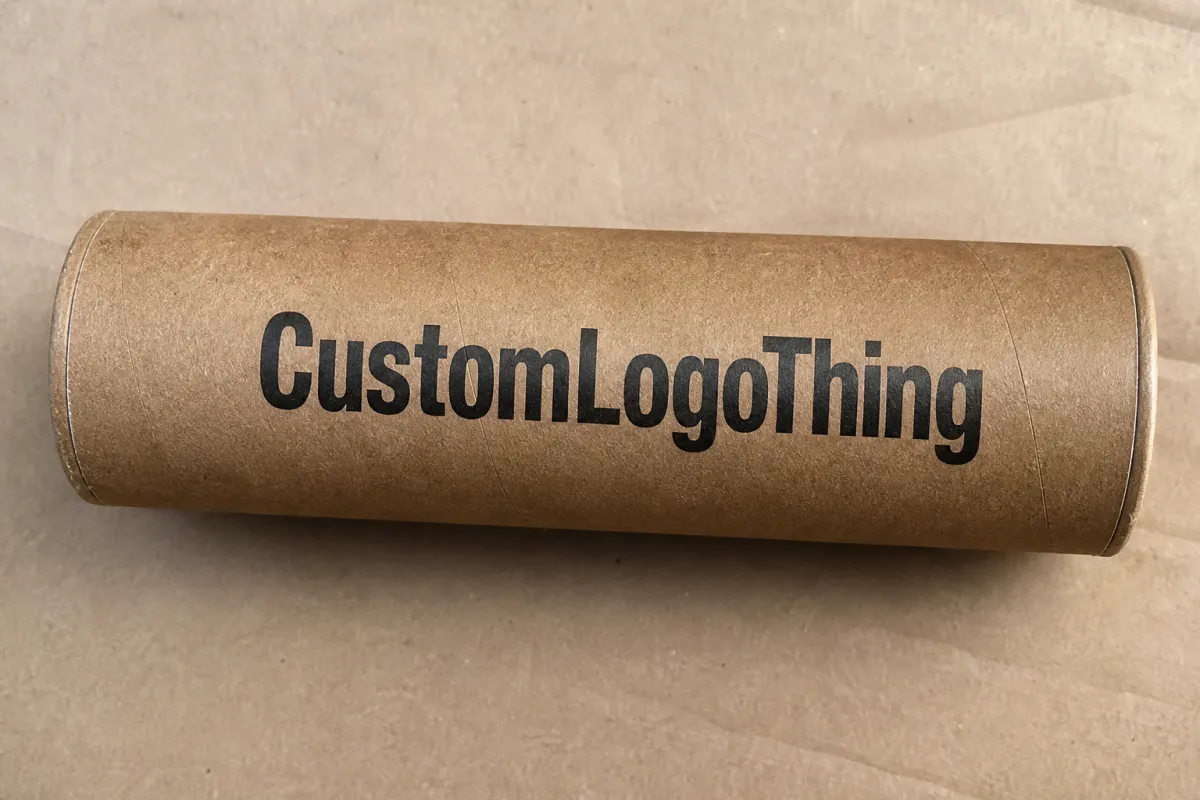
Branded tube mailers with logo are cylindrical or square mailing containers marked with your company identity through print, labels, or another applied finish. They show up on posters and art prints, architectural plans, product inserts, textiles, retail promos, and other lightweight specialty goods that need edge protection and a more intentional presentation than a loose wrap can provide. In plain English, they are shipping tubes that do two jobs at once: they protect what is inside, and they stop the package from disappearing into a sea of generic brown boxes.
The format matters for a simple reason. A flat carton works well for plenty of products, but once you are shipping rolled prints, narrow goods, or items that should never be folded, a tube reduces the risk of creases and corner damage. Square tubes resist rolling around on conveyors and in parcel bins. Round tubes can be efficient for wrapping, packing, and storage. Either way, the logo turns the tube into branded packaging instead of a forgettable shipper nobody remembers five seconds later.
From a logistics angle, that matters more than some teams expect. A recognizable tube is easier to sort on a fulfillment line, easier to identify at receiving, and less likely to vanish into a pile of identical mailers. It also looks more deliberate in direct-to-consumer and retail settings, which is why many brands treat the tube as part of the product story instead of a random container they tolerated because operations said it was close enough.
There is a perception benefit too. When the shipping package itself is branded, the customer gets the sense that someone actually paid attention. That does not mean the tube needs graphics from end to end like a cereal box with a caffeine problem. It does mean the logo, color, and finish should feel intentional. A plain tube can protect a print, sure. A branded one can make the shipment feel worth opening carefully.
For buyers comparing options, the decision usually comes down to four questions:
- How much protection does the product need during parcel transit?
- How visible should the branding be at delivery and unboxing?
- What unit cost makes sense at the planned quantity?
- How fast does the packaging need to move from approval to production?
That is why teams often review tube mailers alongside other formats such as Custom Packaging Products and, for softer or less rigid items, Custom Poly Mailers. The right call depends on the product, the shipping lane, and the kind of first impression you want to leave behind.
How Branded Tube Mailers With Logo Work in Transit
A tube mailer sounds simple until a carrier throws it into the real world. Most branded tube mailers rely on a rigid board or corrugated body that resists crush pressure, while end caps, friction-fit closures, or locking systems keep the contents centered. The point is to survive the ugly middle of shipping: warehouse handling, truck transfers, sortation centers, and the final drop at the door.
Inside dimensions are the first thing to get right. A tube that is too tight can scuff the product, make loading annoying, or squeeze rolled items so hard they hold a memory after unrolling. A tube that is too loose lets the contents shift, which means more edge wear and more stress on the closure. In practice, the inside diameter and length should account for the finished product plus tissue, protective wrap, a poly sleeve, an insert card, or a desiccant packet if one is part of the pack-out.
Decoration can happen several ways. Some brands print directly on the tube body when they want a built-in look that stays consistent across runs. Others use a full-wrap label, which makes sense for shorter runs or artwork that changes often. Flexographic print is common for simpler repeat graphics and steady-volume programs. Digital print fits better when the design has more variation or the quantity does not justify heavier setup. Spot-color branding is often enough if the goal is recognition instead of a full retail display treatment.
Tube mailers protect contents in a few real-world ways:
- Crush resistance: the wall structure absorbs pressure better than a loose wrap or poly sleeve.
- Edge control: rolled items stay centered instead of drifting and rubbing against a carton wall.
- Handling stability: square tubes stack better and are less likely to roll off a packing bench.
- Presentation: the outer surface can be printed so the shipment feels deliberate at delivery.
There is another operational win that gets ignored because it is not flashy enough for a mood board: consistency. A fulfillment team can pack the same product in the same tube, with the same insert, and the same closure sequence every time. That cuts variation. Less variation means fewer packing errors. Boring? Yes. Useful? Absolutely.
A tube that looks premium on a screen can still fail in a truck. Test the actual product, the actual insert, and the actual closure before you approve the run.
If your packaging has to survive parcel abuse, ask for transit validation that reflects common parcel distribution methods. Many teams use ISTA testing standards as a practical framework for vibration, drop, and compression checks. That does not replace common sense, but it does give the project a measurable baseline instead of a polite guess.
For paper-based tubes, board weight, liner quality, and glue performance all matter. A kraft-facing tube sends a different signal than a white-printed tube with a matte finish, even when the structural performance is close to the same. If your brand is retail-facing, that visual detail matters. If the tube is mostly a logistics tool, durability may matter more than decoration. The right answer depends on what the package has to do after it leaves the warehouse.
Cost, Pricing, MOQ, and Quote Factors
Pricing for branded tube mailers with logo is driven by more than print. Substrate choice, wall thickness, diameter, length, closure style, decoration method, and order quantity all move the final number up or down. Freight can also become a bigger line item than buyers expect, especially with oversized tubes that eat more cubic space than a flat mailer or carton.
The easiest mistake is comparing quotes that do not describe the same thing. One supplier may quote a 3-inch diameter tube with a simple one-color print. Another quotes a heavier wall, a larger cap, and a full-wrap label. Those are not equal offers, even if the headline price looks close enough to fool a rushed spreadsheet.
Here is a practical comparison of common tube mailer options. These are planning ranges, not fixed market prices. Final quotes depend on dimensions, print coverage, and volume.
| Tube Mailer Type | Typical Structure | Common Use | Approx. Unit Range at 5,000 Pieces | Buyer Notes |
|---|---|---|---|---|
| Kraft board round tube | Single-wall or reinforced paper tube with friction caps | Posters, prints, lightweight inserts | $0.55-$1.10 | Often the most economical option when print coverage stays simple |
| Corrugated square tube | Converted corrugated body with locking ends | Plans, art prints, retail promotions | $0.70-$1.35 | Stacks well, ships cleanly, and resists rolling |
| Premium rigid tube | Heavier board body with printed wrap and upgraded closure | Gift sets, premium print programs, branded launches | $1.20-$2.40 | Best when presentation matters as much as protection |
| Special-finish branded tube | Printed body with soft-touch, matte, foil, or textured effect | Retail packaging, collector items, special releases | $1.60-$3.25 | Higher setup and finish cost, but strong shelf appeal |
Minimum order quantity matters because setup costs get spread across the run. A small order usually carries a higher per-unit cost because tooling, proofing, color matching, and press setup do not shrink just because the quantity is low. At larger volumes, the per-unit price usually drops, especially if the design stays stable and the material spec does not change from one reorder to the next.
Print coverage also changes cost in a direct way. A one-color logo on a kraft surface is usually simpler than a full-coverage print with multiple colors, white ink, or a special coating. If you are comparing a small brand mark against a fully wrapped visual design, expect the latter to require more time for setup, calibration, and inspection. Special finishes such as matte lamination, soft-touch coating, foil accents, or textured varnish can push the budget higher still.
There is one more place where costs like to hide: storage and shipping. Large tubes occupy more warehouse cube than flat mailers, which matters if your operation has tight rack space or a high receiving cost per pallet position. If the tubes are shipped to multiple fulfillment points, pallet configuration and case count become part of the math. In some programs, freight changes the equation as much as the unit price. Packaging procurement is thrilling like that.
For sustainability-minded buyers, material sourcing can affect both cost and positioning. If recycled-content board or FSC-certified stock is required, ask for documentation early. The FSC system is often used when chain-of-custody matters, especially for brands that need a paper trail behind recycled or responsibly sourced claims. That conversation should happen before artwork is approved, not after the order is already moving.
If the goal is to compare suppliers accurately, ask each one to quote the same package of details:
- Exact inside diameter, length, and wall thickness.
- Material type and whether the board is kraft, white, recycled-content, or coated.
- Print method, number of colors, and coverage area.
- Closure style and whether end caps are included.
- Expected production lead time and freight assumptions.
That level of detail makes quotes comparable. Without it, the lowest price may just be the least complete spec.
Production Steps and Timeline for Custom Orders
Most custom tube projects follow a predictable path, even when the artwork or structure is unique. The process usually starts with dimensions, product details, and brand artwork, then moves into proofing, sample review, production, inspection, and shipment. The timeline depends on how ready the files are and how much structural development the job needs.
The intake stage is where the most useful time gets saved. If the buyer can provide product dimensions, pack-out requirements, color targets, and any special handling concerns up front, the rest of the job moves faster. If the tube has to fit a rolled print plus tissue plus a protective sleeve, that should be clear before the dieline gets finalized. Guessing is not a strategy.
A practical production flow looks like this:
- Specification review: confirm size, board type, print area, closure, and quantity.
- Artwork prep: place the logo, required copy, and any barcodes on the approved layout.
- Proofing: review digital proofs for color, placement, bleed, and safe area.
- Sample stage: check fit, feel, color, and closure if the job calls for it.
- Make ready: prepare printing plates, digital files, or converting tools.
- Production: print, convert, form, trim, assemble, and pack.
- Final inspection: verify count, print quality, and structural consistency before shipout.
Simple branded tube mailers with logo can often move from proof approval to shipment in roughly 10 to 15 business days, assuming the specs are stable and no physical sample is required. More complex jobs, especially those with special finishes or custom tooling, can take 15 to 25 business days or longer. Add time if the design team is still adjusting the artwork, because each revision pushes the schedule farther out than anyone wants to admit.
Samples are worth the time when the packaging has to do a specific job. A sample can show whether the closure is too tight, whether the logo sits in the right panel, whether the color reads too warm under warehouse lights, and whether the tube is pleasant to handle during pack-out. That last one sounds minor until a fulfillment team has to close hundreds of tubes in a row and starts developing opinions.
If you need to align packaging with a launch or seasonal drop, build a buffer into the schedule. Product teams often forget that receiving windows, warehouse holidays, and carrier cutoff dates can matter just as much as manufacturing lead time. A tube that arrives two days late can interrupt a launch in ways no design revision can fix later.
For teams that want to document the process, it helps to keep one internal sheet with the approval date, sample date, production start, and expected inbound arrival. That simple record makes reorder planning much easier. It also cuts down on confusion when the project repeats three or six months later and different staff members are touching the same packaging spec.
If you are collecting examples from prior programs, the Case Studies page is a useful place to compare packaging approaches, finish choices, and production priorities before you finalize a new spec. That kind of reference helps when the tube has to balance presentation and shipper performance without becoming a mess.
Step-by-Step Guide to Choosing the Right Tube Mailer
Choosing the Right branded tube mailer is mostly about matching the package to the product and the route it will travel. Buyers sometimes start with the logo treatment, but the better order is usually product first, structure second, decoration third. That keeps the tube from turning into an expensive graphic exercise that does not actually fit the item inside. A nice logo on the wrong tube is still the wrong tube.
Step 1: Measure the finished item, not the raw material. A rolled poster, a textile, and a set of plans may all look similar on paper, but the final pack-out dimensions can differ once tissue, sleeves, or inserts are added. Measure the finished packaged form, not just the flat original.
Step 2: Decide how much protection the item needs. If the contents are resale-ready and have to arrive pristine, you may need a heavier wall, tighter closure, or an inner sleeve. If the product is lower risk and mostly needs organization, a lighter tube may be enough. Moisture exposure, temperature swings, and long carrier chains can all change the answer.
Step 3: Match the branding level to the job. A subtle one-color logo on kraft board may be exactly right for a professional print program, while a full-surface graphic may be better for a retail launch or seasonal campaign. You do not need to shout to look considered.
Step 4: Test the pack-out in real conditions. Pack a few tubes the way the warehouse will pack them, then move them through handling that resembles the real trip. Check for scuffing, shifting, end-cap stress, and visible abrasion. Packaging teams that want a more structured validation path can borrow ideas from ISTA-style transit testing and compare the result to their shipping lane.
Step 5: Lock the spec before ordering volume. Once the tube fits, looks right, and survives handling, document the exact size, print method, color targets, and closure style. That one-page spec saves time on reorders and helps keep quality stable across seasons.
Many brands also benefit from thinking about the broader packaging mix. A tube mailer is not the answer for every product, and a paper tube is not always better than a carton, sleeve, or Custom Poly Mailers. The right format is the one that supports the item, the shipping method, and the customer experience without dumping extra waste into the lane for no good reason.
Another detail that matters more than people expect is finish. A glossy tube can look sharp, but it may show scuffs more easily. A matte or soft-touch finish can hide small marks better, though it may add cost and demand more careful handling during production. In a high-touch retail program, finish choice can influence perceived quality as much as the logo placement itself.
Finally, think about the receiving experience. If the tube will be opened by the end customer, the opening method should feel manageable and not irritating. If the tube will be handled mostly by warehouse staff, the closure should be quick, repeatable, and easy to verify. That difference seems small until it starts affecting every box on the dock.
Common Mistakes to Avoid With Tube Mailer Projects
Tube mailer projects tend to go sideways in predictable ways. Most of those problems are avoidable, but only if the buyer looks beyond the mockup. A good rendering can hide a weak closure, a tight pack-out, or a finish that does not survive transit all that well. Pretty slides do not protect products.
- Ordering by appearance alone: the package may look right in a proof, yet fail once the actual product, insert, and seal are loaded inside.
- Ignoring packed dimensions: a half-inch of extra space or a slightly oversized print roll can change fit more than expected.
- Choosing a fragile finish: a coating that looks refined on a sample can show fingerprints, corner rub, or scuffing after parcel handling.
- Over-branding the surface: too many graphic elements can compete with shipping labels, barcodes, and handling marks.
- Skipping transit testing: a sample approval without shipping abuse is only a visual check, not real validation.
- Leaving sustainability claims vague: recycled content, recyclability, and compostability are not the same thing, and the adhesive or coating can change the answer.
Over-branding deserves special attention. A logo should support the package, not fight with the shipping label or safety marking. If every inch of the tube is busy, the package becomes harder to read on the line and less elegant in hand. Clean placement usually ages better than heavy graphics, especially on smaller tube diameters where the visible panel area is limited.
Another common issue is choosing the wrong finish for the route. A soft-touch wrap might look excellent in a controlled setting, yet show wear after stacking, pallet wrap, or parcel abrasion. That does not mean the finish is bad. It means the finish should match the handling environment. A premium appearance still has to survive transportation, which is apparently still a thing packaging has to do.
From a buyer’s point of view, sustainability is best treated as a specification question, not a marketing slogan. If the tube is intended to support a recycled-content story, ask whether the board contains recycled fiber, whether inks are compatible with your recycling goals, and whether any laminate or foil layer changes end-of-life behavior. If the brand wants a strong paper-based claim, check the structure against supplier documentation and internal sustainability policy before the order is released.
For teams comparing tube mailers with softer packaging formats, a good rule is to ask what the product actually needs. If the item is flexible, lightweight, and not sensitive to bending, a different format may cost less and ship more efficiently. If the item must stay flat, rolled, or pristine, then the tube may be the better answer even if the unit cost is slightly higher. The goal is not to use the fanciest package. The goal is to use the right one.
Documentation also matters. Keep the approved artwork file, dieline, color values, finish notes, and closure spec in one place. The next time the item is reordered, the team should not have to rebuild the job from memory. That kind of recordkeeping protects brand consistency and lowers the chance of a changed tube sneaking into the wrong product run.
Expert Tips and Next Steps for a Smooth Launch
The smoothest tube mailer programs usually start with a clear one-page spec. That spec should list the finished dimensions, board or corrugated structure, print method, color targets, closure style, pack-out contents, shipping constraints, and any sustainability requirements. If a supplier can quote from that document, the process gets cleaner right away.
It also helps to request two or three comparable quotes and insist that each one use the same assumptions. That sounds basic, but it is one of the easiest ways to avoid fake savings. A quote that leaves out finish, end caps, or freight may look attractive until the missing pieces get added back in and the “deal” starts looking expensive.
Before signing off, review the sample the way the customer will experience it. Look at it under warehouse light, handle it with ordinary packaging gloves if your team uses them, and open it with the same motion a recipient would use. A branded tube mailer should feel stable, legible, and intentional in the hand, not just pretty in a photo with flattering light and no reality in it.
It also pays to coordinate the packaging schedule with inventory and launch timing. If the first outbound shipment is tied to a campaign date or seasonal peak, the tube order should arrive early enough to allow receiving, inspection, and a small buffer for issues. That buffer matters more than most teams expect, especially when other product components are arriving at the same time and everyone is pretending calendars are optional.
Good packaging planning is usually quiet. The carton arrives on time, the print matches, the tube fits, and nobody has to improvise on a busy dock.
For brands building a broader packaging system, it can be useful to review Custom Packaging Products alongside the tube spec so the outer package, inner protection, and fulfillment workflow all point in the same direction. The best programs are not built around one format alone. They are built around a standard that holds up everywhere it touches the business.
My practical recommendation is simple: compare a sample of branded tube mailers with logo against your current packaging, then refine the spec before the first full run. That one comparison usually shows whether the tube improves protection, presentation, and handling enough to justify the spend. If it does, document the winning structure and keep it stable. If it does not, adjust the material, size, or finish Before You Order volume. Either way, the final choice should support the product, the brand, and the way the package moves through the real shipping lane.
Frequently Asked Questions
Are branded tube mailers with logo good for posters and art prints?
Yes, especially for rolled prints, posters, and blueprints that need edge protection. The tube keeps the sheet from folding and usually handles parcel transit better than a loose wrap. For best results, choose a diameter and wall strength that prevent overly tight curling or crush damage, and add tissue or an inner sleeve if the print surface can scuff.
What drives the price of branded tube mailers with logo?
Material thickness, print coverage, and total quantity are usually the biggest drivers. Custom closures, special finishes, and rush production can raise the cost quickly, especially if the job needs a unique structure. Freight can matter as much as unit price for bulky tube shipments, so it is smart to compare landed cost instead of only the per-piece number.
How long does production usually take?
Simple orders move faster, while custom print, proofing, and samples add time. In many cases, production may take around 10 to 15 business days after final approval for a straightforward job, while more complex projects can need 15 to 25 business days or more. Artwork approval is often the biggest variable in the schedule, so build buffer time if the packaging launch is tied to a product drop or seasonal peak.
What file should I send for the logo on tube mailers?
Vector artwork is best, such as AI, PDF, or EPS files, because it holds crisp edges during print setup. Confirm spot colors or CMYK values before proof approval so the output matches the brand as closely as possible. It also helps to ask for a print-ready dieline so the logo lands on the right panel and does not wrap into an awkward seam or closure area.
Can branded tube mailers with logo be made with recycled materials?
Yes, many tube structures can use recycled-content board or kraft-facing materials. The important part is to check whether inks, adhesives, and finishes also support your sustainability goals, since those details can affect recycling behavior. If recycling matters to your customers, keep mixed-material add-ons to a minimum and ask for documentation on the board and coating system.


