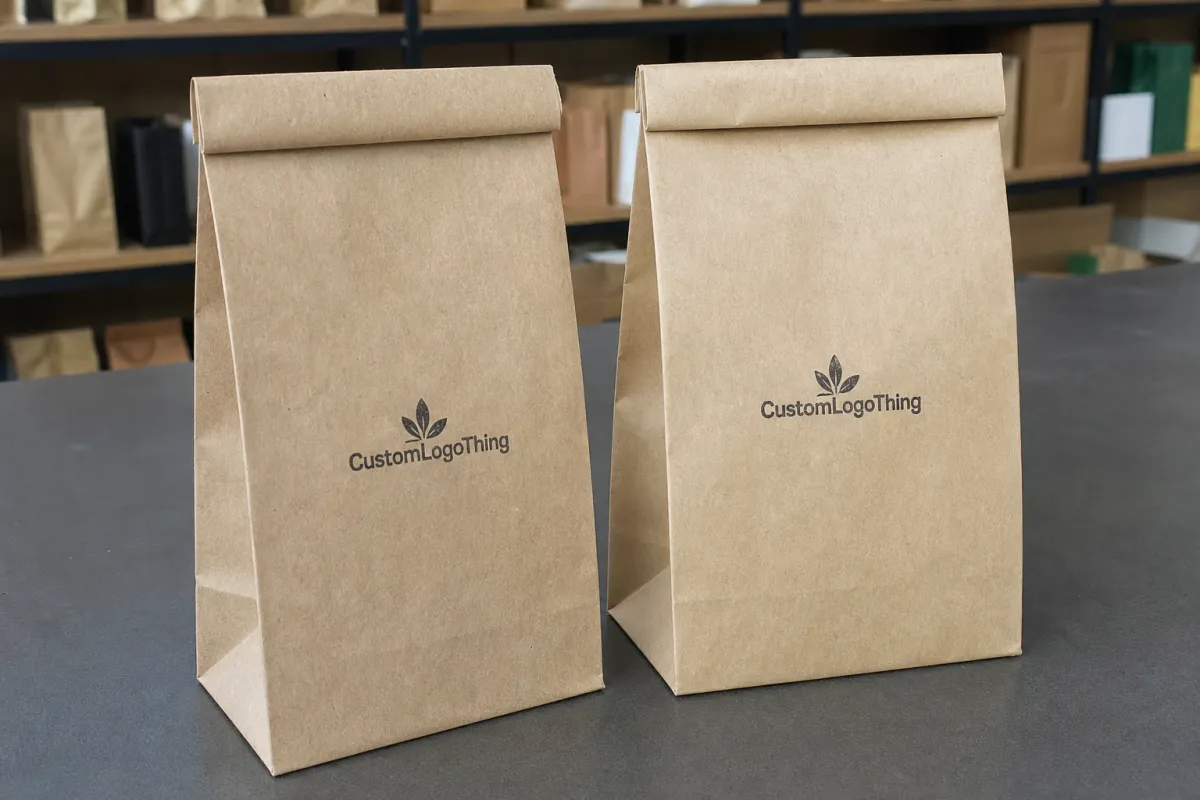
Buyer Fit Snapshot
| Best fit | printed kraft paper bags for packaging buyers comparing material specs, print proof, MOQ, unit cost, freight, and repeat-order risk where brand print, material, artwork control, and repeat-order consistency matter. |
|---|---|
| Quote inputs | Share finished size, material target, print colors, finish, packing count, annual reorder estimate, and delivery region. |
| Proofing check | Approve dieline scale, logo placement, barcode or warning zones, color tolerance, and any recyclable or compostable wording before bulk production. |
| Main risk | Vague material claims, crowded artwork, or missing packing details can create delays even when the unit price looks attractive. |
Fast answer: Printed Kraft Paper Bags: What Matters Before You Order should be specified like a repeatable production item. The safest quote includes material, print method, finish, artwork proof, carton packing, and reorder notes in one written spec.
What to confirm before approving the packaging proof
Check the product dimensions against the actual filled item, not only the sales mockup. Ask for tolerance on folds, seals, hang holes, label areas, and retail display edges. If the package carries a logo, QR code, warning copy, or legal claim, reserve that space before decorative graphics fill the panel.
How to compare quotes without losing quality
Compare board or film grade, print process, finish, sampling route, tooling charges, carton quantity, and freight assumptions side by side. A lower quote is only useful if the supplier can repeat the same color, closure quality, and packing count on the next order.
If you have ever picked up a bag that looked calm, natural, and eco-conscious on the shelf, then watched it split at the handles before the customer reached the door, you already know the awkward truth about printed Kraft Paper Bags: appearance arrives first, performance arrives later, and sometimes performance never shows up at all. A bag gets judged in three seconds. It still has to survive the walk to the car, the ride home, and the moment the customer sets it on a counter full of keys, receipts, and a half-full coffee.
I have seen this play out in real sourcing reviews, including a bakery order that looked perfectly fine in proof and kinda embarrassing in hand. The bag had a beautiful brown kraft texture and a crisp logo, but the bottom fold was underbuilt, so the first heavy pastry box made it sag like a wet envelope. That is the part most buyers miss: printed Kraft Paper Bags are not just branding surfaces. They are small pieces of carrying equipment.
In practice, printed kraft paper bags are plain paper carrier bags made from kraft paper and customized with logos, colors, copy, or patterns. Retailers use them, cafes use them, event teams use them, and e-commerce brands tuck them into orders because they are relatively affordable and carry a stronger brand signal than a blank bag. Yet "kraft" is not a synonym for tough, and "printed" is not a synonym for premium. The paper grade, construction, handles, and print process decide whether the bag feels dependable or flimsy.
The useful part is this: once the structure, pricing, and failure points are clear, ordering printed kraft paper bags stops feeling like a gamble. The right spec prevents weak handles, wasted artwork, and quotes that look attractive until the hidden charges appear.
Printed Kraft Paper Bags: The Packaging Trap That Looks Simple
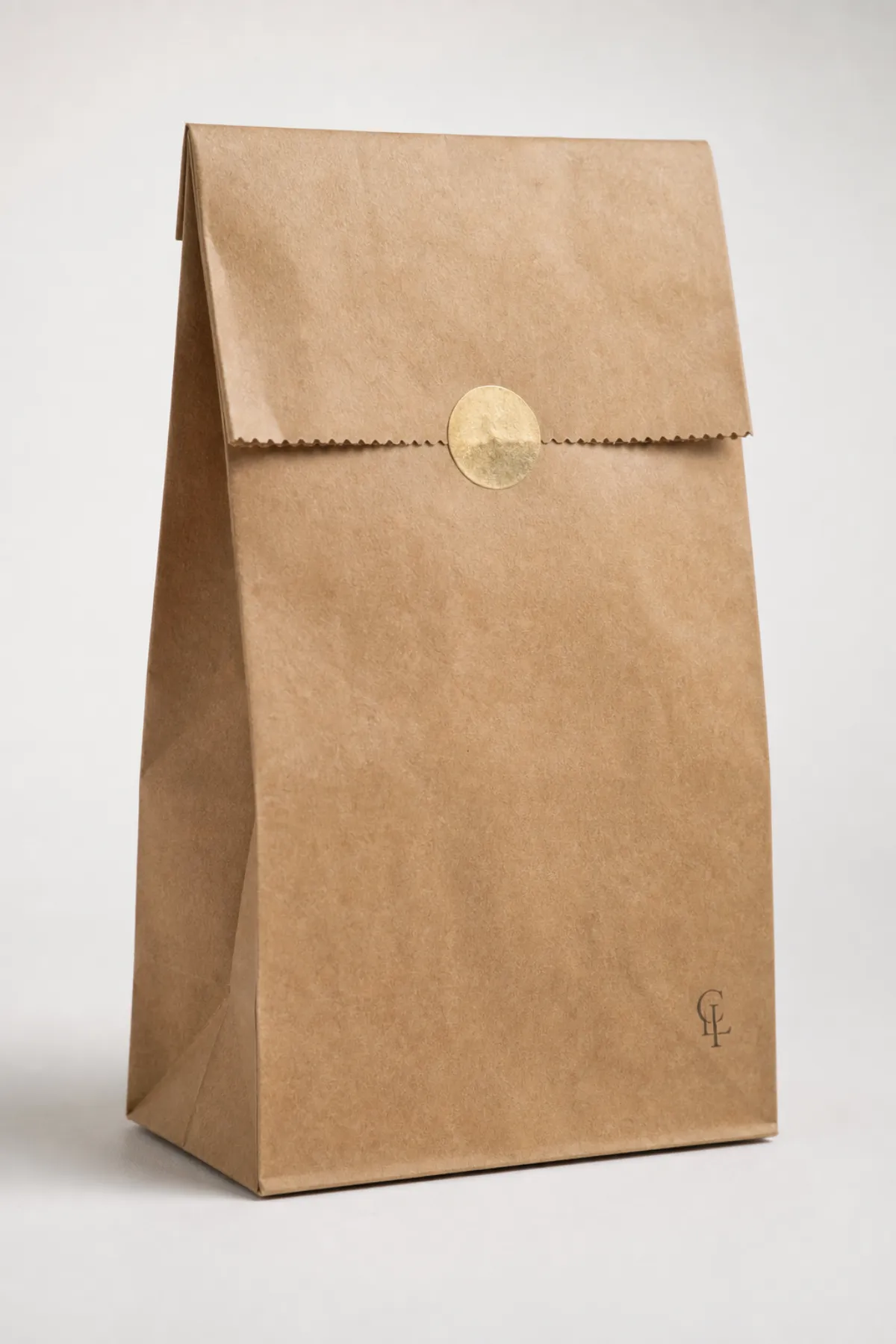
Most buyers underestimate printed kraft paper bags because the product looks obvious. Paper. Handle. Logo. Finished. That assumption causes more trouble than most procurement teams admit. A bag can look tidy in a mockup and still fail in the store because the paper is too light, the seams are poorly glued, or the handle attachment is not reinforced. None of that is a branding problem. It is a spec problem.
The reason printed kraft paper bags keep winning orders is that they do several jobs at once. They carry product, carry branding, and carry a sustainability cue, whether that cue is fully earned or merely implied. In retail, they help a brand feel deliberate without jumping straight to rigid boxes. In takeaway, they offer the carrier customers expect. At events, they become a moving ad. In e-commerce, they make a shipment feel less like freight and more like a brand moment.
Paper reputation can mislead buyers. Kraft paper is a material category, not a guarantee of performance. One kraft bag can feel soft and underbuilt. Another can handle real weight and still look refined. A beautiful print on a weak body just produces an expensive-looking failure. The brand does not get credit for intent. It gets judged on the bag's behavior.
Smart buyers treat printed kraft paper bags as construction first, graphics second. Logo placement matters. Color choice matters. Load rating, handle style, gusset depth, and glue lines matter more. If a customer has to hold the bag carefully like it contains a live animal, the packaging has already missed the point.
The sustainability question deserves a clear answer instead of a soft one. People want bags that feel lighter on the planet, which helps explain why printed kraft paper bags continue to replace plastic carriers in many categories. That claim only holds if the paper source is honest, the coatings are sensible, and the construction lasts long enough to do the job. A bag that tears immediately is not sustainable. It is waste with a nicer story attached.
There is also a business reason the category keeps growing. In many retail settings, the bag is the last physical brand contact after the sale. That makes a paper carrier more like a receipt with a handle than a disposable extra. It is doing quiet marketing work long after the cashier has moved on.
That frame is the right one for the rest of the discussion: how printed kraft paper bags are built, what changes quality, what drives price, and how to avoid specs that look fine in a quote and collapse in practice. Packaging buyers do not need a speech. They need a bag that survives shelf, handoff, and home.
How Printed Kraft Paper Bags Work
At the basic level, printed kraft paper bags have five main components: the paper grade, the bag shape, the handle style, the glue and fold construction, and the print method. Each one changes the feel of the bag and the final price. Leave one of them vague in the quote request and the supplier will gladly return something that is "similar" in the way that two different suits are similar because both have sleeves.
The paper is usually measured by weight and thickness, often described in gsm or basis weight. Lighter retail goods may be fine in the 80-100 gsm range, while heavier products often need 120-150 gsm or more, depending on the build. A more rigid bag may also use a bottom board or reinforcement patch. That is the first detail many buyers miss: printed kraft paper bags are not one material. They are a stack of choices that work together or fail together.
The bag body is usually formed by cutting kraft paper, folding the panels, gluing the seams, shaping the gussets, and attaching the handles. Gusset depth matters because it controls how much volume the bag can hold before it bulges or tears. A narrow gusset suits apparel or lighter items. A wider gusset fits boxed goods or food containers. The bottom structure matters too. A bag with a weak base can look polished and still fail the moment the customer sets it on the floor.
Printing gets attention because it is the visible part, but the visible part is not the whole story. Common methods for printed kraft paper bags include flexographic printing for larger runs, offset printing for sharper detail and cleaner artwork, and digital printing for shorter runs or quicker sampling. Flexo usually makes sense at volume when the artwork is simple. Offset works well when the brand wants finer detail or better image quality. Digital is often the quickest way to test a concept without committing to a large run.
The tradeoff is simple. More ink coverage, more colors, and more finishing effects push cost upward and can extend lead time. A single-color logo on natural kraft paper is often the cleanest and cheapest path. Full-bleed graphics, metallic inks, or layered effects can look excellent, but they also increase setup complexity. That is sensible when the packaging needs that kind of presence. It is wasteful when the customer is carrying a folded T-shirt out of a mid-market shop.
Sustainability claims deserve scrutiny. Some printed kraft paper bags use virgin kraft, some contain recycled content, and some mix recycled fibers with fresh pulp. FSC Certified Paper can signal responsible sourcing, but certification does not make every bag equal. A coated or laminated bag may still be harder to recycle depending on the finish and the local waste system. PEFC is another sourcing standard buyers may see. The important questions are direct: what is the paper, what is the coating, and what does the end-of-life claim actually rest on?
A useful comparison is to think about corrugated cardboard. Nobody buys a carton without asking about flute profile, board grade, and load requirements. The same discipline applies here. Printed kraft paper bags need the same attention to specification.
"The cheapest-looking bag is often the one that was spec'd cheapest, not the one that was printed cheapest."
For a grounded view of sourcing and material recovery, established references help more than marketing copy. The EPA's sustainable materials guidance is useful for understanding recovery and material flow, and FSC explains what certification actually covers. That matters when a brand wants printed kraft paper bags positioned as recyclable, FSC certified, or simply paper-based with limited environmental claims.
Printed Kraft Paper Bags Cost, Pricing, and MOQ
If you compare printed kraft paper bags only by unit price, half the cost picture disappears. Real pricing sits in paper weight, bag dimensions, handle style, number of print colors, special finishes, and total quantity. A quote that looks low on a spreadsheet can turn expensive once setup, freight, and artwork corrections are added. Suppliers often prefer tidy unit prices; buyers should prefer complete math.
For basic retail bags, a practical range might sit around $0.12-$0.25 per unit at higher quantities for simple single-color printed kraft paper bags, depending on size and handle style. Mid-range branded bags often land around $0.18-$0.35 per unit once better paper, more colors, or reinforcement enter the spec. Premium bags with heavier stock, rope handles, or special finishes can move into the $0.35-$0.80 range or higher. Those are not universal numbers. They are working ranges, and they move with quantity and construction.
MOQ changes unit economics fast. Higher minimums usually reduce cost per bag, while smaller runs make sense for testing but often cost more per piece. A 2,000-bag launch order can cost much more per unit than a 10,000-piece order. That does not make the smaller run wrong. It may be the smarter choice while you are still checking size, print layout, or customer response.
Hidden charges create the nastiest surprises. Setup fees, plate fees, sample fees, freight, packaging, and artwork revision fees can shift the real number enough to change the decision. If a supplier hands you a neat unit price and leaves out the rest, ask for a full landed estimate. Otherwise you are comparing theater, not cost.
Size affects price more than many buyers expect. A small increase in width or height can require more material, more labor, and sometimes a different reinforcement strategy. That is why printed kraft paper bags are not priced like office stationery. They are priced like engineered packaging. Two bags that look almost identical can separate once the dimensions change.
Here is a comparison that makes the tradeoffs easier to see:
| Bag Type | Typical Use | Relative Cost | Common Strength Level | Best For |
|---|---|---|---|---|
| Lightweight twisted-handle kraft bag | Apparel, brochures, giveaways | Lower | Light to medium | Budget-conscious branding |
| Reinforced retail kraft bag | Gift items, boxed products, boutique retail | Medium | Medium to strong | Balanced presentation and performance |
| Premium rope-handle kraft bag | Luxury retail, gifting, high perceived value | Higher | Strong | Upscale branding and heavier contents |
| Simple flat-handle food bag | Takeaway, bakery, deli | Lower to medium | Light to medium | Fast service and cost control |
Buying advice changes with the use case. If you need low-cost giveaway bags, keep the artwork simple and use standard handles. If you need mid-range retail bags, spend on stiffness, handle comfort, and print registration. If you need premium printed kraft paper bags for boutique or gifting use, the paper feel and handle quality matter almost as much as the logo. A luxury-looking bag with a weak base fold is still a failure, just a better dressed one.
Lead time belongs in the price discussion too. A cheaper quote with a slow schedule can cost more if it misses a launch date, event, or seasonal promotion. Late packaging becomes expensive very quickly. Customers remember the bag they did not receive.
Process and Timeline: From Artwork to Delivery
The workflow for printed kraft paper bags tends to be predictable, provided the buyer stays organized. It begins with a quote request, moves through spec confirmation, then artwork submission, proof approval, sample production if needed, full production, packing, and shipment. The process sounds simple until someone decides the bag should be "just a little bigger" three days before production. That is where schedules start bleeding money.
The fastest orders are the ones with clear dimensions, clean artwork, and a locked quantity. If you send print-ready files and decide the handle style, finish, and bag size before requesting pricing, time gets shaved off immediately. If you send a vague logo and ask the supplier to "make it feel premium," delays are almost guaranteed. Suppliers are not reading minds; they are building physical objects.
Delays tend to show up in the same places. Artwork approval slows down when the logo is low-resolution or the file needs cleanup. Color matching takes longer when the brand wants exact tones but provides no usable reference. Spec changes near the end can force revised samples or retooling. Even simple printed kraft paper bags can get stuck if the buyer changes dimensions after the proof is already in motion.
For straightforward repeat orders, turnaround often lands in the 10-15 business day range after final proof approval, not counting transit. Custom jobs with special inks, handles, finishes, or structural changes may take 15-25 business days or more. Samples can add several days or a couple of weeks depending on the process. Imported bags make shipping part of the production equation. Sea freight is slower but cheaper for large volumes; air freight is faster and can wreck the economics in a hurry.
Transit time is part of the job, not a side note. If your launch date is fixed, the production schedule needs buffer time and the shipping schedule needs even more. Imported printed kraft paper bags can look cost-effective right up until the freight quote reminds everyone that geography charges rent.
A practical workflow looks like this:
- Confirm product weight and intended use.
- Lock bag size, handle style, and print method.
- Request pricing with the exact quantity and destination.
- Submit artwork in the correct format.
- Approve the proof only after checking dimensions, colors, and placement.
- Request a sample if the order is new or the product is heavy.
- Release production and track the shipping window.
That sequence saves money because it cuts down on rework. It also avoids the familiar moment when everyone realizes the bag is too small for the product it was meant to carry. That happens more often than anyone likes to admit with printed kraft paper bags.
Key Factors That Decide Quality and Performance
The quality of printed kraft paper bags comes down to a handful of practical factors, and none of them are mysterious. Paper weight, handle style, print quality, finish, and reinforcement all affect how the bag behaves in the hand and under load. If a quote does not spell these out, you are not buying a bag. You are buying an assumption.
Paper weight is the first thing to check. Lighter bags save money, but they are poor candidates for heavier merchandise. A bag carrying folded apparel is not doing the same job as a bag carrying a boxed candle, a jar, or stacked takeaway containers. Heavier items need stronger seams, better bottom support, and usually a more substantial stock. The paper should suit the product, not the other way around.
Handles deserve more attention than they usually get. Twisted paper handles are common and economical. Flat handles can work well for food service and quick-service use. Rope handles deliver a more premium feel and often improve comfort, but they increase cost. Die-cut handles can look clean, though they are not always the best choice for weight or comfort. With printed kraft paper bags, the handle is not decoration. It is the part the customer actually touches.
Print quality is the most obvious visual factor, but it is also where many brands overreach. A simple one-color logo on natural kraft can look extremely sharp if placement and contrast are correct. Full-coverage artwork can look bold, yet it also increases the risk of registration issues and can make the bag feel less natural. If precise brand colors matter, ask how the supplier handles matching and whether a proof or sample will show the final result. The gap between a clean print and a muddy one is not subtle.
Finish and structure change the customer experience more than most people expect. Matte paper feels restrained and clean. Gloss coating makes graphics pop but may reduce the natural look. Water resistance helps in food service and wet weather, though coatings and laminations can affect recyclability. Internal reinforcement and bottom boards make a bag feel more trustworthy in hand. For printed kraft paper bags, that feeling matters. A customer notices when a bag bends in a way that says, "I was not built for this."
The comparison below shows the tradeoffs clearly:
| Spec Choice | What It Improves | What It Costs You | Good Fit For |
|---|---|---|---|
| Heavier kraft paper | Strength, stiffness, load handling | Higher material cost | Retail goods, boxed items |
| Twisted paper handles | Low cost, familiar feel | Less premium appearance | Budget retail and events |
| Rope handles | Comfort, premium perception | Higher unit cost | Boutique and gifting |
| Simple one-color print | Lower cost, cleaner production | Less visual complexity | Most practical branding |
| Full-coverage artwork | High shelf impact | Higher print risk and cost | Launches, campaigns, premium positioning |
Performance also changes under real abuse. Grease, moisture, sharp corners, and repeated carrying all stress a bag differently. A bag that holds a blouse may fail with a boxed dessert. A bag that is fine for five minutes may soften badly after fifteen if damp conditions get involved. That is where buyers need to think beyond appearance. Printed kraft paper bags are judged in use, not on a screen.
For brands that care about transport testing or distribution quality, references such as ISTA help explain package performance and handling expectations. Even without a formal test program, the mindset is valuable: specify for the way the bag will actually be carried, stacked, and shipped, not the way it looks in a mockup.
Common Mistakes With Printed Kraft Paper Bags
The most common mistake with printed kraft paper bags is choosing by appearance alone. Natural brown kraft feels honest and low-key, which is exactly why buyers trust it too quickly. Then the handles tear, the seams split, or the bag slumps under ordinary use. A pretty bag is not a load test.
Artwork mistakes come next. Low-resolution logos, tiny text, and weak contrast make a bag look amateur even when the stock is decent. Buyers also forget the printable area. The logo may sit too close to folds, handles, or the gusset. Once the bag is assembled, that placement can distort or disappear. With printed kraft paper bags, print space is not unlimited. The structure defines it, and the structure always wins.
Wrong sizing causes another round of unnecessary spending. People guess dimensions based on the product alone and ignore packaging, inserts, and hand clearance. The bag arrives and the product fits only if the customer tips it at an angle like a retail puzzle with bad instructions. Then they reorder. Twice the freight. Twice the frustration. A bag that is slightly generous usually works better than one that barely qualifies.
The MOQ trap can go both ways. Some buyers order too many bags before testing them, which is an efficient way to sit on inventory that no longer matches the brand direction six months later. Others order too few and pay a painful unit price for a short run. A short pilot is usually the smarter move when the design is new, then a larger run makes sense once the spec is proven. That is especially true for printed kraft paper bags used in launches, seasonal promotions, or new store formats.
Sustainability claims are another place where people get sloppy. Recycled content helps. FSC certified paper is useful. Post-consumer waste content can be a strong signal when the supply chain is documented. None of those facts excuse a weak bag. A biodegradable claim is only meaningful if the whole product and end-of-life path support it. Add heavy lamination or a non-recoverable coating, and the claim gets shaky fast. Buyers need specifics, not mood music.
There is a subtle brand risk here too. When a retailer says its packaging is sustainable but uses a bag that fails after one trip, customers notice the mismatch immediately. That disconnect does more damage than a plain, honest bag ever could. The lesson repeats because it keeps being true: the wrong printed kraft paper bags cost money in production, in freight, and in brand perception. Cheap specs are often the most expensive choice wearing a lower price tag. That trick rarely gets old.
Expert Tips and Next Steps for Printed Kraft Paper Bags
If you want printed kraft paper bags that actually do the job, start with a plain checklist: product weight, bag size, handle style, print colors, finish, quantity, and delivery deadline. That is the minimum useful brief. Without it, the quote drifts and the sample comes back with avoidable compromises.
A sample or short pilot run is worth asking for, especially if the bag will carry heavier products or represent a new brand look. One sample is cheap insurance. It tells you whether the paper feels right, whether the handle is comfortable, and whether the logo reads from a distance. Those details matter more than a polished render ever will.
When you request quotes, ask for the exact paper grade, MOQ, unit cost breakpoints, and whether setup fees or freight are included. If the supplier can only offer a vague "competitive price," that is not a quote. It is a dodge. Good suppliers can explain where the cost sits and what changes it. That matters with printed kraft paper bags because small spec changes can create real cost swings.
Compare construction, not just price. A slightly better bag can reduce damage rates, improve customer perception, and cut complaints. If a sturdier handle adds a few cents but prevents product drop-outs, the cheaper option was never cheaper. Packaging buyers know that lesson. The challenge is remembering it when a low quote is sitting there looking friendly.
A practical buying sequence looks like this:
- Review one physical sample or a proofed sample pack.
- Confirm artwork placement and color expectations.
- Verify lead time and shipping method.
- Lock the final spec before production.
- Reorder only after the bag has proven itself in real use.
That process keeps printed kraft paper bags aligned with the product and the brand. It also keeps you out of the usual cycle where the packaging looks fine online, fails in hand, and gets blamed on the supplier when the brief was the real problem.
For brands that care about sourcing, ask whether the paper is FSC certified, whether recycled materials are included, and whether the finish still allows recovery at end of life. If you want more background on material sourcing, FSC is a sensible starting point. If you need a wider view of materials management and waste implications, the EPA resource above is worth reading. None of that replaces a real product spec, but it helps you make better decisions about printed kraft paper bags that are meant to support a cleaner brand story.
The final rule is straightforward: the best printed kraft paper bags are not the prettiest samples in the inbox. They are the ones that match the product, survive handling, stay within budget, and hold up long enough to make the brand look competent. If you need a single decision rule, use this one: spec the bag from the inside out, starting with load, then dimensions, then finish, and only then the artwork. That order saves money and prevents the kind of packaging surprise nobody wants on a Friday afternoon.
FAQ
What are printed kraft paper bags best used for?
They work well for retail purchases, takeaway packaging, event giveaways, and branded inserts where presentation matters. They are strongest as a fit-for-purpose carrier, not a universal answer for every product. If the item weight matches the bag construction, printed kraft paper bags usually do the job well without pushing costs into fancier packaging formats.
Are printed kraft paper bags actually eco-friendly?
They can be, but only if the paper source, coatings, inks, and end-of-life claims are honest and documented. Recycled content helps, and FSC certified sourcing can strengthen the claim, but heavy lamination or non-recyclable finishes can reduce recyclability. The greenest printed kraft paper bags are usually the simplest ones that still perform properly.
How much do printed kraft paper bags cost per unit?
Unit cost depends on size, paper weight, handle type, print colors, finish, and total quantity. In many practical cases, simple printed kraft paper bags can fall in the low cents to mid-cents range at volume, while premium builds can move significantly higher. Always compare the full landed cost, not just the bag price, because freight and setup can change the real number fast.
What is the usual turnaround time for printed kraft paper bags?
Turnaround varies by spec, quantity, and whether samples or revisions are needed. Simple repeat orders can move faster, while custom shapes, special colors, or heavy artwork take longer. The quickest printed kraft paper bags jobs are the ones with finished artwork, confirmed dimensions, and no last-minute changes.
What should I check before approving a quote for printed kraft paper bags?
Confirm the exact bag size, paper grade, handle type, print method, finish, quantity, and MOQ. Ask whether tooling, sampling, freight, and packaging are included or billed separately. Make sure the quote matches the use case, because the cheapest spec is not always the cheapest outcome for printed kraft paper bags.