Buyer Fit Snapshot
| Best fit | Branded Tuck Boxes for Cosmetics projects where brand print, material claims, artwork control, MOQ, and repeat-order consistency need to be specified before quoting. |
|---|---|
| Quote inputs | Share finished size, material target, print colors, finish, packing count, annual reorder estimate, ship-to region, and any compliance wording. |
| Proofing check | Approve dieline scale, logo placement, barcode or warning zones, color tolerance, closure strength, and carton packing before bulk production. |
| Main risk | Vague material claims, crowded artwork, missing packing details, or unclear freight terms can make a low unit price expensive after revisions. |
Fast answer: Branded Tuck Boxes for Cosmetics: Board, Finish, Dieline, and Unit Cost should be specified like a repeatable production item. The safest quote records material, print method, finish, artwork proof, packing count, and reorder notes in one written spec.
Production checks before approval
Compare the actual filled-product size with the drawing, then confirm tolerance on folds, seals, hang holes, label areas, and retail display edges. Reserve space for logos, QR codes, warning copy, and material claims before decorative graphics fill the panel.
Quote comparison points
Review material grade, print process, finish, sampling route, tooling charges, carton quantity, and freight assumptions side by side. A quote is only useful when the supplier can repeat the same color, closure quality, and packing count on the next order.
Branded Tuck Boxes for Cosmetics: Design & Print Basics
Branded tuck boxes for cosmetics do more than hold a product. They set the tone before a shopper ever twists a cap, reads a label, or compares ingredients. In skincare, lip care, and travel-size beauty, that first impression is often the difference between a product that looks considered and one that feels like it was kind of thrown together.
From a production standpoint, branded tuck boxes for cosmetics are popular because they do several jobs at once. They ship flat, store efficiently, and give brands room for claims, instructions, ingredients, branding, and compliance text. For launches that need to look polished without drifting into rigid-box pricing, tuck cartons usually sit in a useful middle ground. A supplier such as the Custom Packaging Products catalog and the finished examples in the Case Studies section can help when you are comparing structure, print, and finish choices side by side.
That combination of shelf presence, print space, and efficient manufacturing keeps branded tuck boxes for cosmetics in steady demand for lip balms, creams, soaps, compacts, droppers, and small kit formats. Ingredient-led brands use them to look precise. Boutique skincare labels use them to look cared for. Private-label programs use them to keep a family of SKUs visually consistent, even when formulas differ under the hood. In practice, the carton becomes a fit decision, a print decision, a finish decision, and a logistics decision all at once.
Why branded tuck boxes for cosmetics stand out on shelf
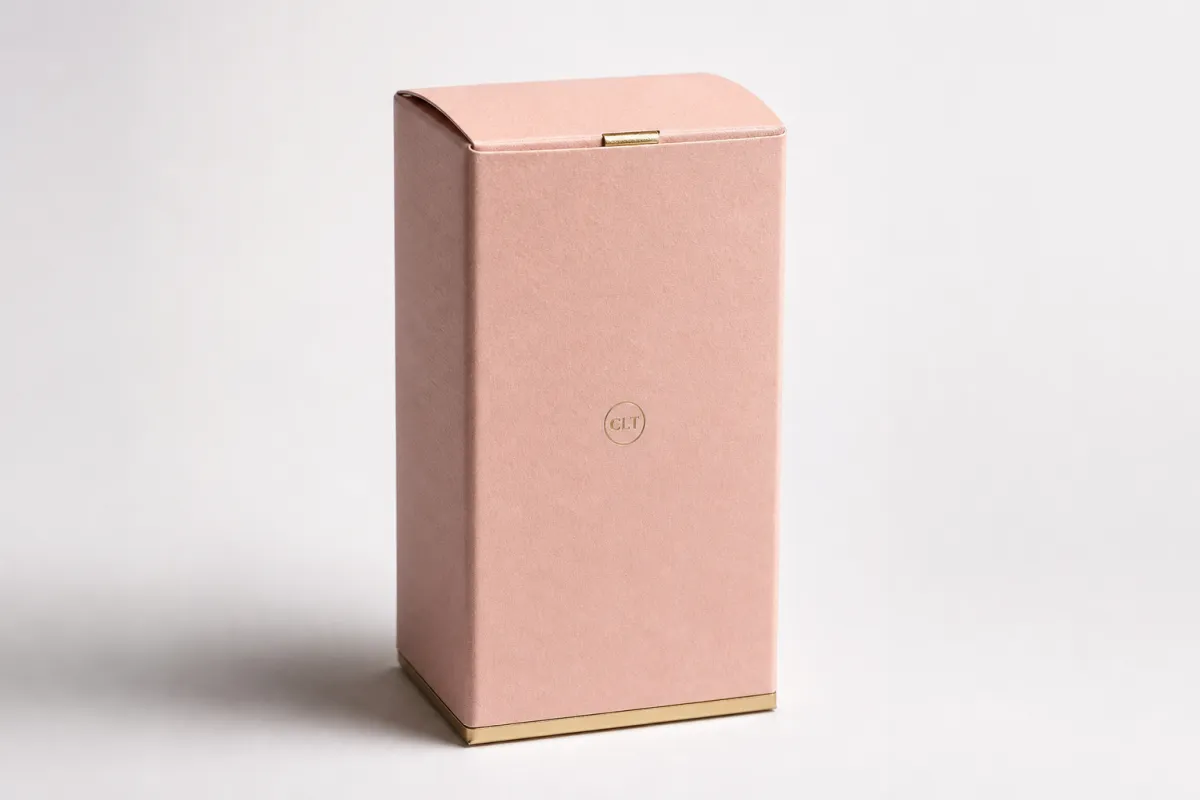
Many first-time buyers underestimate how much selling power sits in the outer box. Branded tuck boxes for cosmetics usually meet the customer before the product does, and that first look matters when the item is small, the shelf is crowded, and the shopper has seconds rather than minutes. A carton with disciplined color, clean proportions, and the right finish can make a $12 cream feel closer to prestige pricing before the jar is even opened.
Structurally, branded tuck boxes for cosmetics are folding cartons with tuck-flap closures. Paperboard is die-cut into a flat blank, printed, creased, and then glued or shipped flat for later assembly. The format suits lightweight beauty items that do not need corrugated strength or the formality of a rigid box wrapped in boards. Lip balms, facial masks, travel serums, cleansing bars, and sample sets all fit naturally into that structure.
Branded tuck boxes for cosmetics can carry three kinds of value at once. They protect the product from scuffing and minor handling damage, they present a clean retail face, and they organize the brand story in a compact layout. One panel can carry ingredients or directions, another can hold a benefit statement, and the back can support origin notes, usage guidance, or sustainability language. That is a lot of information for a carton that still folds flat and keeps freight efficient.
Trust is part of the equation too. Ingredients-led brands tend to want a calm, precise package. Boutique skincare labels often need tactile finishes that suggest care instead of clutter. Private-label lines may need branded tuck boxes for cosmetics to signal consistency across a wide range of products. Muddy print, sloppy folds, or hard-to-read copy can make a formula feel careless even when the product inside is excellent. Packaging shapes that judgment faster than most teams expect.
Packaging people often separate structure, print, and logistics, but the shopper reads the combined effect in one glance. A straight tuck carton with a crisp die line can feel modern and efficient. A Reverse Tuck Carton may assemble faster on the line. A matte surface with one foil accent can look far more polished than a glossy box covered in effects. Branded tuck boxes for cosmetics stand out because they give a brand enough room to speak clearly without turning the pack into expensive baggage.
Retail operations matter here too. Shelves, display trays, and e-commerce fulfillment all prefer cartons that are square, stackable, and easy to count. When branded tuck boxes for cosmetics are sized correctly, they help the retailer keep facings tidy and help the warehouse pack and ship with fewer wasted movements. That part is not glamorous, but it keeps a product dependable once it leaves the design stage.
A carton can feel plain in the hand and still be exactly right. The strongest branded tuck boxes for cosmetics are rarely the loudest on shelf; they fit the product cleanly, print sharply, and make the brand look deliberate from six feet away.
I have seen small skincare brands spend too much on visual effects and too little on fit. The box looked exciting in the mockup, then arrived with a pump that pressed against the top panel. That kind of mismatch does not just annoy the production team; it quietly undermines the brand story. For distribution testing, industry references like ISTA are useful when the carton has to survive real shipping conditions instead of a tidy studio table.
How branded tuck boxes for cosmetics are built and printed
Board selection comes first, and that choice shapes nearly everything that follows. Branded tuck boxes for cosmetics are usually built from folding carton stock in the 12pt to 18pt range, with SBS, C1S, C2S, or kraft selected according to the product weight and brand look. A lightweight lip balm can sit comfortably in a 14pt carton, while a heavier cream jar or boxed set may need 16pt or 18pt board for more stiffness and a cleaner feel during packing.
Structure follows close behind. A tuck-top and tuck-bottom carton may be designed as straight tuck, reverse tuck, auto-bottom, or a crash-lock variation when the pack needs extra support. The carton can ship flat to reduce freight and storage volume, then be erected at the filling line. For branded tuck boxes for cosmetics, the aim is a stable shape that opens and closes predictably without tearing at the panels or over-stressing the scores.
Artwork wraps the carton in a specific way. The front panel usually serves as the hero face, so the logo, product name, and a short benefit message belong there. Side panels often hold ingredients, weight, barcode space, batch code space, or regulatory text. The back panel can carry a brand story, usage directions, warnings, or certification marks. Every panel should earn its place. Empty space that feels accidental weakens the design, while overstuffed panels make even a premium product look rushed.
Print choices matter as much as the layout. CMYK is the default for full-color work, especially when photography or gradients enter the design. PMS spot colors help when a brand needs strict color control, which is common for logos and highly defined identities. Matte coatings soften the surface and can make a box feel more restrained. Gloss adds brightness and punch. Soft-touch is popular for branded tuck boxes for cosmetics because the velvety finish often signals higher-end skincare. Foil stamping and spot UV can sharpen emphasis, though too many effects can push the carton into busy territory.
Special effects always come with tradeoffs. A small foil mark on the logo can feel refined. A full foil field can raise costs quickly, create registration headaches, and scuff more easily in transit. Spot UV can make a key mark stand out, yet on dark coatings it may show fingerprints or uneven coverage if the board and ink setup are not tuned properly. Restraint usually wins: one focal effect, one clear message, and enough white space to let the eye rest.
Internal fit decides whether branded tuck boxes for cosmetics feel finished or frustrating. Jars need room for the lid and shoulder curve. Tubes need clearance for the cap and seam line. Droppers may need extra height so the bulb does not crush the top panel. Compacts and sample sets sometimes need inserts so the contents do not rattle during transit. A carton can be technically correct on paper and still feel wrong if the product bangs around inside it.
That is why structural samples and print proofs are worth the time. A structural sample shows the physical size, fold behavior, and clearances before the run is committed. A print proof shows how the artwork, color values, and panel layout will look on the chosen stock. With branded tuck boxes for cosmetics, those two checkpoints catch expensive mistakes early, especially when the launch window is tight or the retail program has strict shelf dimensions.
Brands that care about sustainability should treat board and finish choices as part of the same conversation. Recyclable paperboard with minimal mixed materials often makes more sense than a heavily laminated design that looks attractive but complicates end-of-life handling. The Forest Stewardship Council remains a useful reference for responsibly sourced paperboard, and many buyers also ask how coatings and adhesives affect recyclability before approving branded tuck boxes for cosmetics.
The build process looks simple from the outside and gets more nuanced under the hood. The strongest branded tuck boxes for cosmetics are not just printed cartons; they are tuned combinations of board choice, crease strength, artwork flow, and functional fit.
Cost, pricing, MOQ, and quote factors for cosmetic tuck boxes
Pricing for branded tuck boxes for cosmetics depends on a handful of variables, and the fastest way to get a useful quote is to list them clearly. Size leads the list. Larger cartons use more board and more ink, so even a small dimensional change can nudge unit pricing upward. Board thickness matters too, because moving from 14pt to 18pt stock changes material use, folding behavior, and sometimes tooling. Print coverage, coatings, foil, embossing, windows, and inserts all add cost.
MOQ has a strong effect on the final number. Lower quantities usually carry a higher per-unit price because setup, proofing, die cutting, and press preparation are spread across fewer boxes. Larger runs often lower the unit cost, though they also need more storage and tighter quality checks. With branded tuck boxes for cosmetics, the real question is rarely only, “What is the cheapest price?” It is more often, “What quantity fits launch, reorder timing, and shelf life?”
As a planning range, a simple short-run cosmetic tuck box might land around $0.35-$0.75 per unit at modest quantities, depending on size and print complexity. A fuller-color branded tuck box for cosmetics with a matte finish might fall in the $0.18-$0.42 range at larger quantities such as 5,000 pieces or more. Premium treatment, foil, spot UV, specialty board, or inserts can push the range toward $0.45-$0.90 or higher. Those are working estimates, not fixed quotes, because every dieline, finish stack, and production run behaves a little differently.
Here is a practical comparison buyers can use when they are weighing options for branded tuck boxes for cosmetics:
| Option | Typical Build | Approx. Unit Cost | Best Fit |
|---|---|---|---|
| Simple tuck box | 14pt SBS, CMYK, aqueous coating | $0.18-$0.28 at 5,000+ units | Balms, soap bars, trial sizes, budget launches |
| Mid-range retail box | 16pt board, CMYK or PMS, matte or soft-touch | $0.26-$0.42 at 3,000+ units | Skincare creams, serums, private-label retail |
| Premium carton | Thicker board, foil, spot UV, insert or window | $0.45-$0.90+ depending on finish stack | Gift sets, luxury skincare, high-visibility launches |
The cleanest quotes come from exact inputs. A supplier usually needs carton dimensions, product weight, closure style, artwork status, finish targets, insert requirements, shipping destination, and quantity. If you can add details about a pump, dropper, cap extension, shrink band, or secondary insert, the estimate gets tighter. That matters for branded tuck boxes for cosmetics because the pack often looks simple while hiding many small dimensional decisions.
There are cost traps worth watching. Last-minute artwork changes after proof approval can trigger rework. Complex assembly may slow line speed. Specialty coatings can need more inspection. Oversized cartons raise board usage and freight. Window patches add another operation and another material layer. None of those choices is automatically wrong, but they should be deliberate instead of bolted on after the estimate lands.
Short-run and large-volume production both have their place. A small launch can justify a cleaner design with fewer finishes, especially if the brand is testing the market or updating a seasonal SKU. A larger run can support more refined effects because the setup cost gets spread over more branded tuck boxes for cosmetics. The best cost decision usually matches sales velocity rather than chasing the lowest headline number.
Comparing supplier specifications line by line gives a clearer picture than comparing totals alone. A lower quote may rely on thinner board, a simpler coating, or a narrower quality allowance. Another quote may include sturdier stock or better proofing support. That difference matters when branded tuck boxes for cosmetics are going onto a shelf where first impressions are visible and repeat orders depend on consistency.
Process, timeline, lead time, and production steps
The production path for branded tuck boxes for cosmetics usually follows a fixed sequence, and the fewer changes that appear late in the process, the smoother the run. It starts with product specs: exact dimensions, product weight, closure type, and any insert or protective feature. From there, the supplier creates or confirms the dieline, the flat template that sets every panel, fold, and glue area. Once that file is ready, artwork is placed, reviewed, proofed, and then sampled before mass production begins.
Lead time stretches when the project gets complicated. Structural revisions add days because the dieline has to be adjusted and rechecked. Proof corrections can add another round if colors, panel text, or barcode placement need cleanup. Finish changes can push the schedule too, especially when foil, spot UV, or specialty coatings require a new setup. With branded tuck boxes for cosmetics, the fastest route usually starts with locked product dimensions and a disciplined approach to late changes.
A straightforward timeline often looks like this: one to three business days for quote and structure review, two to five business days for proofing, five to ten business days for sample review if a structural sample is needed, and about 12 to 15 business days for manufacturing after final approval. More complex branded tuck boxes for cosmetics can move into the three- to four-week range when a large run, multiple finishes, or custom inserts are part of the order. Shipping time then adds its own layer depending on distance and carrier mode.
A simple sequence keeps most projects organized:
- Measure the product, including cap height, overhangs, and any insert.
- Confirm the box style and board requirement.
- Request a dieline and place artwork on it.
- Review the proof for text, color, and barcode placement.
- Approve a sample or structure check if needed.
- Release branded tuck boxes for cosmetics to production.
The sequence looks basic, yet it prevents the delays that show up most often. A wrong measurement at step one ripples through every later stage. An early proof approval can lock in a missing ingredients line. A sample that fits too loosely or too tightly can move a launch date. That is standard packaging behavior when several teams touch the same file.
Shipping validation deserves attention as well. Cosmetic cartons do not always need the same level of distribution testing as heavy consumer goods, but rough supply chains and direct-to-consumer routes benefit from more scrutiny. Drop, vibration, and compression expectations should be discussed early. The ISTA testing family is a practical reference when evaluating how branded tuck boxes for cosmetics will perform in transit, especially if the outer pack also carries the retail presentation.
One detail improves timing more than most teams expect: freezing the product size before the graphics are finalized. A change of even a few millimeters can affect tuck depth, panel proportions, and insert fit. Updating the dieline before the proof is far easier than discovering a mismatch after the boxes are on press. Predictable production starts with carton dimensions treated as a locked spec, not a moving target.
Branded tuck boxes for cosmetics reward organized buyers. The more complete the spec sheet, the fewer clarification rounds the printer needs, and the easier it is to hold the promised window. Cost stays steadier, quality stays more consistent, and the launch plan stays intact.
Key design and material factors that change performance
Board choice is the first material decision that changes how branded tuck boxes for cosmetics perform. Thicker stock adds stiffness and can make a carton feel more substantial, yet it also increases material cost and may require more precise scoring. A lighter board can work for a small soap or balm, but it may feel weak around a heavier cream jar or a product with a tall cap. The best match depends on the package load, not just the visual ambition of the brand.
Internal dimensions matter just as much as the outside look. If the product sits too loosely inside the box, it can shift, create noise, or wear through the interior corners during transit. If the fit is too tight, the user may struggle to remove it, and the carton can bulge or split at the panels. Branded tuck boxes for cosmetics need enough clearance for the closure, but not so much extra room that the item feels improvised. A fit test with the actual product is the safest route.
Typography, color, and image discipline translate brand voice. Luxury skincare usually needs cleaner type, fewer claims on the front panel, and tighter color control. A more playful beauty line may use stronger color blocks or illustration. The finish stack should match the price point. A carton with multiple effects can feel disconnected if the formula is entry-level. A box that is too plain can undersell a premium serum before the bottle is even handled. Branded tuck boxes for cosmetics sit right in that tension.
Information hierarchy can make or break a design. Ingredients, warning text, directions, barcode placement, and claims all need to stay legible. In cosmetics, that often means reserving panel space carefully so the brand story does not crowd the compliance copy. Some teams try to make the front panel do everything, then discover there is nowhere left for the mandatory text. A better layout gives the logo room, keeps product identity clear, and leaves the practical information readable under normal shelf lighting.
Right-sizing deserves more attention than it gets. A carton that is only slightly larger than the product wastes board, increases freight, and can look careless. A carton that is too small may force the product into the cavity or require awkward packing. Branded tuck boxes for cosmetics should be sized as tightly as the product and filling line allow, because each extra millimeter compounds across thousands of units.
Sustainability decisions should stay grounded. Recyclable paperboard, minimal mixed materials, and water-based or low-impact coatings can all support a cleaner package story. The key is to avoid adding features just to signal responsibility if they do not help the product. A well-sized carton with responsible board sourcing often does more to reduce waste than a flashy structure full of layered materials. Teams chasing FSC-certified substrates or lower-waste design choices should ask detailed questions about board origin, coating selection, and adhesive use before approving branded tuck boxes for cosmetics.
Visual performance matters under store lighting too. A matte finish can soften reflections and make text easier to read. A gloss finish can increase brightness, though it may reflect badly on dark colors or dense imagery. Soft-touch can feel expensive, but it may show marks more easily if the carton gets handled a lot. Channel matters, because branded tuck boxes for cosmetics in a clean skincare boutique do not need to behave exactly like cartons on a discount endcap.
When those choices line up, the carton performs in the real world rather than only on the screen. That is the difference between a package that looks good in a mockup and one that protects the product, sells the brand, and stays consistent from pilot run to reorder.
Common mistakes when ordering cosmetic tuck boxes
The most common mistake is designing around artwork before the product size is actually locked. Branded tuck boxes for cosmetics should be built from the real item dimensions, not from a guess or a catalog assumption. Teams often create beautiful cartons, then discover that the cap is taller than expected or the insert needs more room than planned. Once that happens, the artwork has to be stretched, shifted, or rebalanced, and the project starts bleeding time.
Finish assumptions cause trouble too. A mockup may show a soft neutral gray, but the printed carton on actual board can look darker, flatter, or more reflective depending on coating and ink load. Heavy coverage can also change the feel of the board and make folded corners show wear sooner. Branded tuck boxes for cosmetics need proofing on the correct material, not only on a monitor or a generic paper sample, because the tactile result matters almost as much as the color.
Measurement errors show up constantly with jars and bottles. A cosmetic jar may have a base size that looks fine, yet the lid shoulder, pump neck, or applicator cap adds height the carton must accommodate. Droppers are especially easy to misjudge because the bulb and neck change the clearance above the bottle body. If those details are ignored, branded tuck boxes for cosmetics can arrive too short, too tight, or too fragile around the closure area.
Proof approval is another place where problems slip through. When the team is moving quickly, it is easy to skim the proof and sign off on a typo, a color mismatch, or a missing compliance note. Once the carton is on press, those mistakes get expensive. A careful proof review should check spelling, ingredient order, barcode size, unit conversion, panel orientation, and any regulatory copy required by the market. That is standard discipline for cosmetic packaging.
Choosing the lowest quote without comparing specs can backfire as well. One vendor may be quoting thinner board, another may be excluding certain finishes, and another may be assuming a simpler dieline. On paper, the lowest number looks attractive. In production, weak board, rough print, or inconsistent scoring can create waste, rework, or returns. Branded tuck boxes for cosmetics are one place where a small increase in unit cost can pay for itself by protecting the product and keeping shelf presentation intact.
There is also a less obvious mistake: adding too many effects. Foil, emboss, spot UV, full-color photography, and a dense coating stack can make a carton feel busy and expensive at the same time. That is not always wrong, but it needs discipline. If the branding message is already strong, a cleaner finish may help the box feel more credible. A package does not earn points for using every available effect; it earns points for being clear and memorable.
When buyers avoid those traps, branded tuck boxes for cosmetics usually move through production with fewer delays and fewer surprises. The box improves, the launch stays calmer, and the second order gets easier because the spec is already proven.
Expert tips and next steps for your packaging order
Start with the actual sample product in your hand. Measure the item exactly, including the cap, pump, applicator, shrink band, or insert, and build the carton around that physical unit. One honest measurement step prevents more packaging problems than any other. Branded tuck boxes for cosmetics are straightforward to spec when the product dimensions are complete and accurate.
Use one strong visual idea and one clear selling message. That approach usually works better than trying to cram every benefit onto the front panel. If the box is for a hydrating cream, the front can lead with the brand and one concise claim, while side panels handle ingredients, directions, or certifications. The package will feel more deliberate, and branded tuck boxes for cosmetics tend to read better at retail distance when the eye gets a clear focal point.
A final checklist helps before approval. Confirm the box style, material thickness, internal dimensions, print method, finish, MOQ, unit estimate, delivery window, and artwork status. If any of those pieces are still changing, the quote should be treated as a working estimate rather than a locked number. That is where many buyers save money: they slow down just long enough to confirm the basics.
- Dimensions: Product size, closure height, insert needs, and clearance.
- Material: Board grade, thickness, and whether FSC sourcing matters.
- Print: CMYK, PMS, foil, spot UV, matte, gloss, or soft-touch.
- Quantity: Trial run, launch run, or reorder volume.
- Timing: Proof date, sample date, production window, and shipping plan.
When comparing suppliers, ask for structure recommendations, proofing support, and realistic lead times instead of only the lowest line item. A good packaging partner will explain where a heavier board is worth it, where a finish can be simplified, and where the design should shift to lower risk. That kind of guidance helps branded tuck boxes for cosmetics look sharp and run cleanly at scale.
For brands that want to study finished work, the Case Studies page shows how different product categories are handled, from retail cartons to display-ready packaging. If the structure is still under review, browsing the Custom Packaging Products lineup can help you compare carton styles before you ask for a formal quote.
Branded tuck boxes for cosmetics deserve careful planning because the carton is doing real work: it protects the product, supports the brand, and helps the item earn trust before the first use. When the size, board, print, and finish all fit the product, the box feels natural in the hand and credible on the shelf. The most useful next step is not chasing a trendier effect; it is locking the spec to the real item, then ordering a sample that proves the fit before full production begins.
What are branded tuck boxes for cosmetics usually made from?
Most are made from folding carton paperboard, often SBS, C1S, C2S, or kraft stock, because those materials balance print quality, crease performance, and shelf presentation. For branded tuck boxes for cosmetics, heavier creams or boxed sets may need thicker board or an insert so the package feels stable in handling and shipping.
How do I choose the right size for branded tuck boxes for cosmetics?
Start with the exact product dimensions and include every feature that adds height or width, such as caps, pumps, droppers, closures, and protective inserts. Then leave just enough clearance for easy packing without allowing the item to rattle. A sample fit test is the safest way to confirm the size before full production of branded tuck boxes for cosmetics.
What affects the price of branded tuck boxes for cosmetics the most?
The biggest cost drivers are quantity, board choice, print coverage, finishing options, and whether the box needs a custom die or insert. Lower quantities usually cost more per unit because setup is spread across fewer cartons, which is why branded tuck boxes for cosmetics should be quoted with the final quantity in mind.
How long does production usually take for branded tuck boxes for cosmetics?
Timelines depend on proof approvals, sample revisions, finishing complexity, and order volume. Straightforward runs can move through proofing and production in a few weeks, while more complex branded tuck boxes for cosmetics may take longer if artwork changes or specialty finishes are added after the first review.
Can branded tuck boxes for cosmetics be made recyclable?
Yes, many can be produced with recyclable board and print choices that support lower-waste packaging. The best approach is usually to avoid unnecessary mixed materials unless they serve a real structural or brand purpose. If recyclability is a priority, ask about coatings, windows, adhesives, and board sourcing before approving branded tuck boxes for cosmetics.
Branded tuck boxes for cosmetics work best when the package is built around the real product, the real shelf, and the real production schedule. If those three pieces stay aligned, the carton does its job quietly and well, which is usually exactly what a strong cosmetic package should do.