Buyer Fit Snapshot
| Best fit | Reverse Tuck Carton Branding projects where brand print, material claims, artwork control, MOQ, and repeat-order consistency need to be specified before quoting. |
|---|---|
| Quote inputs | Share finished size, material target, print colors, finish, packing count, annual reorder estimate, ship-to region, and any compliance wording. |
| Proofing check | Approve dieline scale, logo placement, barcode or warning zones, color tolerance, closure strength, and carton packing before bulk production. |
| Main risk | Vague material claims, crowded artwork, missing packing details, or unclear freight terms can make a low unit price expensive after revisions. |
Fast answer: Reverse Tuck Carton Branding: Design, Cost, and Process should be specified like a repeatable production item. The safest quote records material, print method, finish, artwork proof, packing count, and reorder notes in one written spec.
Production checks before approval
Compare the actual filled-product size with the drawing, then confirm tolerance on folds, seals, hang holes, label areas, and retail display edges. Reserve space for logos, QR codes, warning copy, and material claims before decorative graphics fill the panel.
Quote comparison points
Review material grade, print process, finish, sampling route, tooling charges, carton quantity, and freight assumptions side by side. A quote is only useful when the supplier can repeat the same color, closure quality, and packing count on the next order.
Reverse tuck carton branding often looks restrained on a mockup. Then the carton is printed, folded, stacked beside five competing products, and the entire personality of the package changes. That shift is the point. Reverse tuck carton branding is not just a logo sitting on paperboard. It is the combined effect of structure, print, finish, typography, and panel logic in the first few seconds a shopper sees the pack.
For Custom Logo Things, the practical lesson is simple: structure gives the carton its frame, while the artwork, substrate, coating, and fold behavior decide whether the package reads as premium, practical, or forgettable. A carton can do more than hold a product. It can make the product feel established before the seal is broken. In a category where buyers compare options in seconds, that perception is not cosmetic. It is commercial.
Brands turn to Reverse Tuck Cartons across supplements, cosmetics, over-the-counter items, small electronics, and specialty foods because the format is efficient, familiar, and easy to scale. The print area is manageable. The build is clean. The branding space is better than many teams expect, especially once the dieline is used properly. Small details still matter, because reverse tuck carton branding has to survive retail display, packing, shipping, and hand-to-hand handling without losing its shape or its message.
This piece breaks down what the format means in practice, how it changes shelf behavior, what drives cost, how proofing usually moves, and where the expensive mistakes hide. I also call out a few production-minded choices that protect brand consistency and keep the final carton close to the design rather than a compromised version of it. That tension between design intent and factory reality is where the best packaging decisions are made.
What Reverse Tuck Carton Branding Really Means
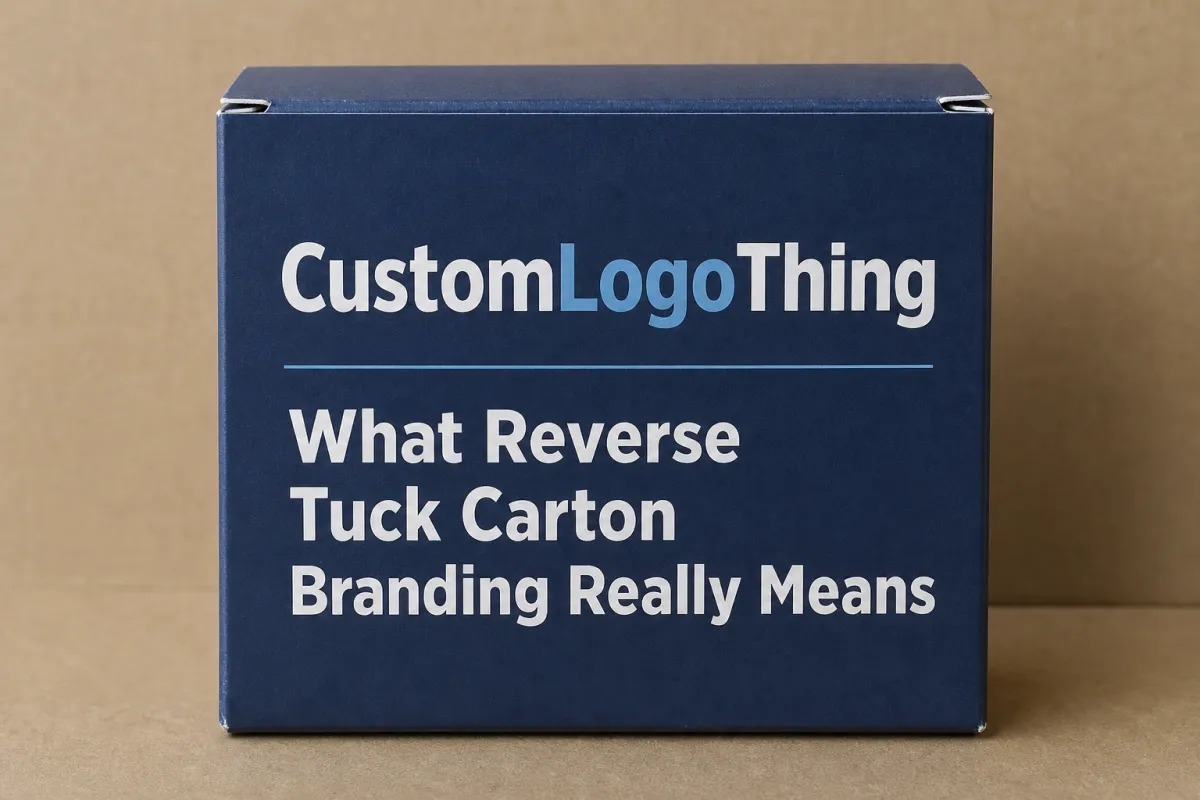
Reverse tuck carton branding begins with the structure itself. A reverse tuck carton uses top and bottom closures that tuck in opposite directions, which affects the way the package opens, closes, stacks, and presents the printed face. That mechanical choice changes the safe zones, the visual balance, and the way the front panel reads once the carton is built. Design and engineering are tied together here, whether a brand treats them that way or not.
In plain terms, the carton is a folded paperboard package with front, back, side panels, glue flap, and tuck flaps. Each of those surfaces can carry brand information. The front panel usually gets the biggest visual role, yet reverse tuck carton branding works best when the side panels, closure zones, and sometimes even the inside of the carton support the story instead of interrupting it. Empty space often does more for clarity than another decorative element.
Teams get tripped up when they treat the carton like a poster. A carton is not a poster. It is a three-dimensional object with folds, pressure points, and movement during packing and shipping. Strong reverse tuck carton branding respects those physical constraints, so the artwork is built around the dieline instead of being forced onto it after the fact. The difference is easy to see in the finished pack and even easier to feel in the approval stage.
The difference shows up quickly. A carton can feel expensive even when the board is ordinary if the graphics breathe, the typography stays legible, and the finish serves the message rather than fighting it. I have seen simple cartons outperform louder designs because they were organized better. That is the line between decoration and reverse tuck carton Branding That Actually helps a product sell.
From a packaging buyer's point of view, the format is attractive because it can stay efficient without looking generic. A well-planned carton can control costs and still deliver a sharp identity, especially when a product family needs several SKUs that share the same visual language. If you want to compare finished work, our Case Studies page shows how that plays out across different jobs.
Reverse tuck carton branding also supports growth. One carton size may hold a single SKU now, then expand into a full line later. If the system is disciplined, that growth feels intentional. If the system is loose, every new size becomes a redesign, and the brand starts drifting from one package to the next. That is where packaging systems quietly unravel: not in the launch, but in the second and third product extensions.
How Reverse Tuck Carton Branding Works on the Shelf
On the shelf, reverse tuck carton branding has one job: get noticed fast without becoming hard to read. Shoppers do not linger in front of a wall of cartons. They scan, compare, and move. In many retail settings, they make a choice in under ten seconds, which means hierarchy, contrast, and typography matter more than decorative complexity. A pack can look refined and still fail if the product name, variant, or main claim disappears at arm's length.
The front panel is the obvious focal point, but reverse tuck carton branding cannot ignore the closures. When cartons are displayed upright, side by side, or slightly tilted from handling, the top tuck and bottom tuck change what the eye sees first. If a closure area carries a heavy color block, a foil band, or a key claim, that element needs to be placed with care so it does not appear chopped off once the carton is folded. That problem shows up more often than teams expect, especially with tight layouts.
Side panels are often left underused. That is a missed opportunity. In reverse tuck carton branding, side panels can hold support claims, icon systems, dosage or usage notes, QR codes, ingredient callouts, or color coding for a product family. The rule is restraint. Side-panel information should support the front panel, not compete with it. If the front says what the product is, the side can explain why it matters.
Fold lines and glue flaps shape the visual outcome in ways that are easy to miss during the first design pass. A type rule that looks polished on screen can sit too close to a crease and distort after folding. A full-bleed color may shift slightly at the edge of a panel. A logo that lands beside a tuck tab can feel off-center once the carton is built. That is why reverse tuck carton branding needs review in flat form and in a folded mockup. One proof is a design file. The other is the actual package.
Lighting changes the whole reading experience. Under bright retail fixtures, matte inks, aqueous coatings, soft-touch films, foil, and spot varnish behave differently. A finish that looks quiet in a studio proof may jump forward in store, while a delicate pastel can lose force if the contrast is too low. Reverse tuck carton branding has to survive that context change, because shelf lighting is rarely forgiving. I have watched a soft ivory board look elegant in hand and nearly vanish under a harsh fluorescent case.
The unboxing moment matters too, even on a carton that spends most of its life in retail. Customers may not describe the structure in technical terms, but they notice whether the carton opens cleanly, whether the print holds up, and whether the brand feels deliberate. Good reverse tuck carton branding gives the impression that the product was designed carefully from first glance to first use.
A carton does not win shelf space by shouting from every surface. It wins by making the front panel legible, the closure lines tidy, and the brand easy to read in a few seconds.
If you are deciding where the visual emphasis belongs, start with the most visible face, then build outward. That sounds plain, yet it sits at the center of effective reverse tuck carton branding. Everything else supports that first read: color, iconography, finish, and panel flow should strengthen the main message rather than pull attention away from it.
For brands that need another printed piece to match the carton, related items such as Custom Labels & Tags can keep the system consistent across the shelf, the shipper, and the product itself.
Reverse Tuck Carton Branding Cost, Pricing, and Quote Factors
Reverse tuck carton branding pricing comes down to a handful of predictable inputs, and the more clearly those inputs are defined, the more accurate the quote will be. Size comes first because larger cartons use more board. Board grade follows, then print coverage, color count, coatings, and any finish work such as embossing, foil, or spot UV. A simple structure can still become expensive if the artwork calls for heavy coverage and multiple special effects.
Quantity matters just as much. Setup, plate or digital setup, prepress, make-ready, and press calibration do not vanish on a small run, so low quantities carry more cost per unit. At 5,000 pieces, a straightforward reverse tuck carton may land around $0.18-$0.28 per unit for a modest four-color design on a standard board. At 10,000 or 25,000 pieces, that same carton may slide closer to $0.12-$0.20 per unit, depending on coverage and finishing. The format looks simple, but the economics are not guesswork.
Specialty coatings and premium tactile finishes change the price faster than many first-time buyers expect. Foil stamping, embossing, debossing, soft-touch lamination, and spot varnish all alter the process. That does not make them poor choices. It means reverse tuck carton branding should assign those effects to the panels that need the impact, not spread them everywhere because the budget can absorb it.
Artwork complexity also affects pricing. A custom dieline, dense copy, barcode placement that needs careful control, or a legal panel with several compliance statements all increase prepress time. That labor shows up in the quote. Reverse tuck carton branding can be cost-conscious, but only when the file is organized, the copy is final, and the layout is not being rebuilt after every revision. A tidy file is not just easier to print; it is cheaper to approve.
These decisions change the number on a quote:
- Board stock - 14pt C1S, 16pt C2S, or 18pt SBS each behave differently in cost and print quality.
- Print method - digital runs, offset press work, and specialty processes all price differently.
- Coverage - a light front-only design is cheaper than a full-coverage wrap with high ink density.
- Finishing - aqueous coating is usually more economical than foil, embossing, or soft-touch film.
- Quantity - the higher the count, the more the setup cost spreads out.
- Revisions - late copy changes and new proof rounds add time and cost.
The table below gives a useful pricing snapshot for reverse tuck carton branding. These are illustrative ranges, not promises, because board choice, artwork coverage, and finishing choices can move the numbers quite a bit. Regional labor rates and shipping can move them too.
| Option | Typical Use | Approx. Unit Cost at 5,000 | Notes |
|---|---|---|---|
| 16pt C1S, CMYK only | Cost-sensitive retail cartons | $0.18-$0.28 | Good for clean graphics and lighter coverage. |
| 18pt SBS, CMYK + aqueous coating | Premium white-board presentation | $0.24-$0.38 | Stronger print base, brighter shelf presence, and better scuff resistance. |
| 18pt SBS + spot UV or foil | Higher-impact retail packaging | $0.42-$0.85 | Best for premium cues, but the finish budget rises quickly. |
| Custom board + specialty finish | Luxury or niche product lines | $0.60 and up | Often used when brand recognition depends on tactile and visual detail. |
One budget line gets ignored more often than it should: samples, proof rounds, freight, and any change request after artwork approval. A folded mockup shipped to multiple teams adds cost. A barcode rework after the first proof adds time. Reverse tuck carton branding is easiest to control when the approval chain is tight and the file is complete before production is booked.
If sustainability belongs in the brief, ask about FSC-certified paperboard early instead of treating it as a late add-on. You can review the basics at the FSC website. If the cartons need to survive distribution testing, the carton structure and shipper should be checked against a suitable protocol such as the ones listed by ISTA. Both matter when reverse tuck carton branding must look good after transit, not just on press day.
From a buyer's point of view, the cleanest way to manage reverse tuck carton branding pricing is to lock in three things early: the exact carton size, the final board grade, and the finish level. Once those are set, the quote stops drifting. Serious packaging programs treat reverse tuck carton branding as a controlled production decision, not a last-minute graphic layer.
Reverse Tuck Carton Branding Process, Timeline, and Proofing
The process usually starts with a brief that defines the carton dimensions, product weight, intended retail channel, and all required copy. If any of those inputs are fuzzy, reverse tuck carton branding becomes harder to control later. A strong brief tells the production team what the carton must fit, what it must say, and what it must survive once it enters the warehouse and store environment.
After the brief comes the dieline. That file is not optional. It shows the folds, glue area, safe zones, bleed, and finished size, which makes it the map for the whole design. Reverse tuck carton branding works best when the art team places the logo, barcode, regulatory copy, and finish callouts against that map instead of guessing panel positions by eye. A small shift in panel placement can make a sharp design look off-center after folding.
Proofing usually moves through a clear sequence. First is the flat artwork review, where spelling, copy flow, color notes, and panel balance are checked. Then comes a digital proof, which catches placement and technical issues. After that, many brands ask for a folded sample or physical mockup, because reverse tuck carton branding can look perfect in a PDF and still need adjustment once the carton is actually folded and tucked. That last step is often the one that saves the most money.
That folded sample step is where practical problems show up. A claim may sit too close to a crease. A side panel may feel too empty. A barcode may be too near a fold to scan cleanly. A foil band may stop too abruptly at the closure line. Those are not design failures so much as three-dimensional realities, and reverse tuck carton branding should be adjusted for them before the press run starts.
Timeline depends on how prepared the files are. If the dieline is approved, the copy is final, and no specialty finishes are involved, a straightforward run can often move from proof approval to production in about 12-15 business days. Add custom finishing, extra proof rounds, or specialty board sourcing, and the lead time stretches. Reverse tuck carton branding projects are delayed more often by late content than by the press itself.
Here is a realistic sequence most teams can work from:
- Brief and measurements - define product size, carton dimensions, regulatory text, and shelf requirements.
- Dieline review - confirm folds, glue flap, bleed, and safe areas before artwork starts.
- Flat artwork proof - check layout, type, copy, and brand colors.
- Folded mockup - confirm how reverse tuck carton branding looks in three dimensions.
- Final approval - sign off only after the carton behaves correctly in hand.
- Press and finishing - run the job, coat or finish it, then inspect the output.
The best approvals are uneventful for a reason. The technical work was already done. That is the result you want with reverse tuck carton branding. A calm proof cycle usually means fewer surprises, cleaner manufacturing, and less back-and-forth after the job is already scheduled.
A good production partner will also check whether the artwork supports the intended use. If the carton needs to open repeatedly, the tuck flap areas should hold up to repeated handling. If the pack rides in a shipper, scuff resistance matters more than a delicate finish. Reverse tuck carton branding is about visual appeal, but it is also about making the carton behave in the real world.
One more detail deserves attention: coordination between design and production. A designer may want the carton to feel expansive, while the press and folding stages need clean control points. If the artwork includes spot colors, varnish areas, or foil stops, those callouts should be documented clearly in the file. Reverse tuck carton branding goes smoother when those notes are visible before the first proof is sent.
Common Reverse Tuck Carton Branding Mistakes to Avoid
The most common mistake is simple: placing critical copy too close to a fold line, tuck flap, or glue area. That can hide the message, distort the type, or cause artwork to disappear once the carton is assembled. Reverse tuck carton branding should assume that a flat panel will behave differently after folding. If the message matters, give it room.
A second problem is weak contrast. Many designs look elegant on screen and then lose their punch under production lighting. Thin type, pale type on mid-tone backgrounds, and fine-line graphics can become hard to read once printed. Reverse tuck carton branding needs to be judged by shelf visibility, not by how delicate it looks on a monitor.
Another mistake is assuming the carton will always face the customer in the same way. In reality, cartons get stocked fast, rotated, handled, and occasionally left half-open. If the front panel depends on perfect orientation, the pack can look inconsistent on shelf. Strong reverse tuck carton branding anticipates those shifts and still reads clearly from multiple angles.
Brands also get into trouble when they design one SKU beautifully and then try to stretch the system across a full line. That usually leads to uneven hierarchy, mismatched colors, or crowded side panels. If the plan is growth, the reverse tuck carton branding system should be built like a family from the start. That keeps brand consistency intact as sizes and flavors change.
Compliance issues are another expensive source of rework. Barcode placement, ingredient copy, warnings, legal text, and country-of-origin details all need space. If they are squeezed into the layout after the visual concept is locked, the carton often becomes crowded. Reverse tuck carton branding works better when required information is treated as part of the structure, not as an afterthought.
Skipping a folded mockup is probably the fastest way to miss a problem. Flat artwork tells you what the design should look like. The folded carton tells you what it will actually look like. Those are not the same thing. A solid reverse tuck carton branding review includes both, because the physical object is what the customer sees and touches.
Here are a few practical watch-outs I mention often:
- Keep key copy away from folds and closure tabs.
- Do not rely on very thin type for essential information.
- Test the design in both bright and neutral lighting.
- Check barcode placement against the folded shape, not only the flat file.
- Plan for a family of cartons if the line may expand later.
These are not flashy mistakes. They are ordinary production issues that can make reverse tuck carton branding feel less polished than it should. Most of them are avoidable if the team slows down long enough to verify the dieline, the mockup, and the final copy before approval. Packaging rarely fails in dramatic ways; it fails through a handful of small, repeated oversights.
Expert Tips for Stronger Reverse Tuck Carton Branding
Start with hierarchy. That is the backbone of reverse tuck carton branding. Decide what the shopper must see first, second, and third, then assign the panels accordingly. Usually that means brand name, product name, and variant or benefit message, in that order. Once that is clear, supporting graphics can reinforce the message instead of competing with it.
Use finishes with intention. A spot UV highlight can make a logo or product name stand out without covering every panel. A matte aqueous coating can keep a carton from feeling too shiny, while a bright white SBS board can help colors read cleaner. Reverse tuck carton branding gets stronger when the finish has a reason to exist. If the effect does not improve shelf impact or tactile appeal, it is probably dead weight.
Design the system, not just the carton. If the product line will grow, create a repeatable structure for color, typography, icon placement, and side-panel information. That makes it easier to add new SKUs later without losing the look. Reverse tuck carton branding performs better over time when the family logic is built in from the beginning.
Choose stock based on how the ink should look and how the carton will be handled. A clean white board gives a brighter print base, while a more natural board can feel softer and more earthy. If the pack will move through several touch points, scuff resistance matters more than a delicate surface. Reverse tuck carton branding should match the product, the channel, and the handling conditions, not just the mood board.
Production-minded teams also test readability at real distance. Stand back six or eight feet and ask what disappears first. If the product name is too small or the color contrast is too weak, the fix is usually simpler than people think. Reverse tuck carton branding is strongest when the design still reads under quick, imperfect viewing conditions. A package is judged in motion, not in a calm design review.
Good packaging is rarely the loudest thing in the aisle. It is the carton that stays clear, calm, and credible even after the print, fold, and finish steps have done their work.
One practical habit saves a lot of grief: print a folded sample, then inspect it under the kind of lighting the product will actually face. That sounds basic, but it catches problems that screen proofs never show. If the carton still looks balanced in hand, reverse tuck carton branding is on the right track.
Another useful habit is to keep the brand language consistent across the wider package set. If the carton is part of a kit, pair it with matching inserts, labels, or accessory tags so the message feels connected. The more aligned the touchpoints are, the stronger the brand recognition becomes. You can see examples of that thinking across different categories in our Case Studies library.
Reverse tuck carton branding is not supposed to solve every communication problem at once. It should make the product easier to identify, easier to trust, and easier to choose. That is a modest-sounding goal, but it is a serious one. The best cartons do exactly that without looking overworked.
Next Steps to Turn Reverse Tuck Carton Branding Into a Plan
The cleanest way to begin is with a packaging audit. Gather the exact carton dimensions, product weight, fill method, required copy, barcode format, and a photo of the shelf or display context. That gives reverse tuck carton branding a real starting point instead of a guess. Once those inputs are assembled, the design team can make smarter choices about hierarchy, panel flow, and finish level.
Ask for a proper dieline early. The earlier the team sees the folds, the safer the layout decisions become. A good dieline keeps reverse tuck carton branding aligned with the physical carton instead of trying to fix it after the concept is already approved. That one step saves a surprising amount of time, and it also prevents avoidable revision cycles.
Build a simple approval checklist before the quote is accepted. It should cover copy, barcode placement, brand colors, finish notes, folded orientation, and any regulatory text that must appear on the carton. Reverse tuck carton branding runs much smoother when everyone signs off on the same details at the same time. Shared expectations prevent expensive surprises later.
If budget is tight, compare at least two production approaches. For example, you might test a cleaner single-pass design against a more decorated version with a premium finish. The goal is not to strip the branding down until it is weak. The goal is to protect shelf impact while staying inside a workable cost range. Reverse tuck carton branding should make the product easier to sell, not harder to approve.
It also helps to think about the carton as part of a broader packaging system. If the line needs matching inserts, tags, or supporting labels, the visual rules should be shared across all of them so the brand identity feels consistent. That is one reason teams often pair carton work with other components from the same supplier family.
If you want a simple practical order of operations, use this:
- Review the current carton against the shelf.
- Collect the dieline, copy, and print spec.
- Set the board grade and finish level.
- Check a folded mockup before final approval.
- Move to production only after the carton reads correctly in hand.
That sequence keeps the work grounded. It also protects customer perception, because the finished carton looks intentional rather than patched together late in the process. Reverse tuck carton branding works best when the design, the structure, and the budget are all speaking to each other from the start.
For brands ready to move forward, the next step is simple: review the current carton against the shelf, the dieline, and the print spec, then move to proof. That is how reverse tuck carton branding turns from a concept into a package that supports the brand, the product, and the unboxing experience without wasting time or money.
Frequently Asked Questions
What is reverse tuck carton branding in practical terms?
It is the full visual strategy applied to a reverse tuck carton, not just a logo on the front panel. Reverse tuck carton branding includes hierarchy, color, typography, finishes, panel flow, and the way the artwork behaves across folds and closures. The strongest plans also account for shelf visibility, handling, and the carton’s actual opening direction.
How do I keep reverse tuck carton branding aligned after folding?
Use a manufacturer-provided dieline with clear live, bleed, and safe areas. Keep important copy away from creases, tuck flaps, and glue zones. Review both flat artwork and a folded sample before approving production so reverse tuck carton branding can be checked in the form customers will actually see.
What affects reverse tuck carton branding pricing the most?
Quantity, board stock, and print coverage usually have the biggest impact. Extra finishes such as foil, embossing, or specialty coatings raise the price quickly. Artwork revisions, proofing, and complex dielines can also add cost, especially when the approval process changes late.
How long does reverse tuck carton branding production usually take?
The timeline depends on how quickly artwork is approved and whether the dieline is already finalized. Simple runs can move faster, while custom finishes and multiple proof rounds add time. Material availability and press scheduling can also shift the lead time, so it is smart to leave room for review.
What files should I prepare for reverse tuck carton branding?
Send an editable vector file or a print-ready PDF with outlined fonts and packaged linked images. Include the dieline, copy deck, barcode artwork, and any finish callouts. Make sure the file clearly marks spot colors, varnish areas, and any required legal text so the production team can quote accurately.