Buyer Fit Snapshot
| Best fit | Branded White Corrugated Boxes projects where brand print, material claims, artwork control, MOQ, and repeat-order consistency need to be specified before quoting. |
|---|---|
| Quote inputs | Share finished size, material target, print colors, finish, packing count, annual reorder estimate, ship-to region, and any compliance wording. |
| Proofing check | Approve dieline scale, logo placement, barcode or warning zones, color tolerance, closure strength, and carton packing before bulk production. |
| Main risk | Vague material claims, crowded artwork, missing packing details, or unclear freight terms can make a low unit price expensive after revisions. |
Fast answer: Branded White Corrugated Boxes: Board, Finish, Dieline, and Unit Cost should be specified like a repeatable production item. The safest quote records material, print method, finish, artwork proof, packing count, and reorder notes in one written spec.
Production checks before approval
Compare the actual filled-product size with the drawing, then confirm tolerance on folds, seals, hang holes, label areas, and retail display edges. Reserve space for logos, QR codes, warning copy, and material claims before decorative graphics fill the panel.
Quote comparison points
Review material grade, print process, finish, sampling route, tooling charges, carton quantity, and freight assumptions side by side. A quote is only useful when the supplier can repeat the same color, closure quality, and packing count on the next order.
Branded White Corrugated Boxes: A Practical Shipping Guide
Most packaging earns its keep twice: first at the dock, then again during unboxing. That is why Branded White Corrugated boxes carry so much weight before the customer ever touches the product. The outer carton is not just a shell; it is the first visible signal that a shipment was planned, protected, and presented with care. Branded white corrugated boxes also affect how warehouse teams read labels, scan codes, and spot damage, which makes the finish more important than many buyers expect.
From a packaging buyer's standpoint, white is not only a cosmetic step up from kraft. It creates contrast. Logos stand out more cleanly. Handling icons read faster. QR codes print with better clarity. Even small defects become easier to see during inspection, which can help or hurt depending on how disciplined the production process is. That tradeoff matters. Branded white corrugated boxes usually demand tighter artwork approval, more careful handling, and a clear understanding of the board construction beneath the print.
For a packaging team, that practical tension is what makes the format interesting. A shipping carton still has to move through parcel networks, stack safely on pallets, and look intentional when the customer opens it. Branded white corrugated boxes can handle all three jobs, but only when the box structure, print method, and order volume match the use case. If one of those pieces is off, the whole project starts wobbling a bit.
I have seen brands spend more energy on the artwork than on the carton spec, and that usually gets expensive fast. A beautiful file on screen does not tell you whether the board will crush under load or whether the seam will cut through a logo. Experience has taught me that the better projects begin with the shipping conditions, not the color palette. White comes later, after the structure makes sense.
Branded White Corrugated Boxes: Why White Changes the Shipping Experience
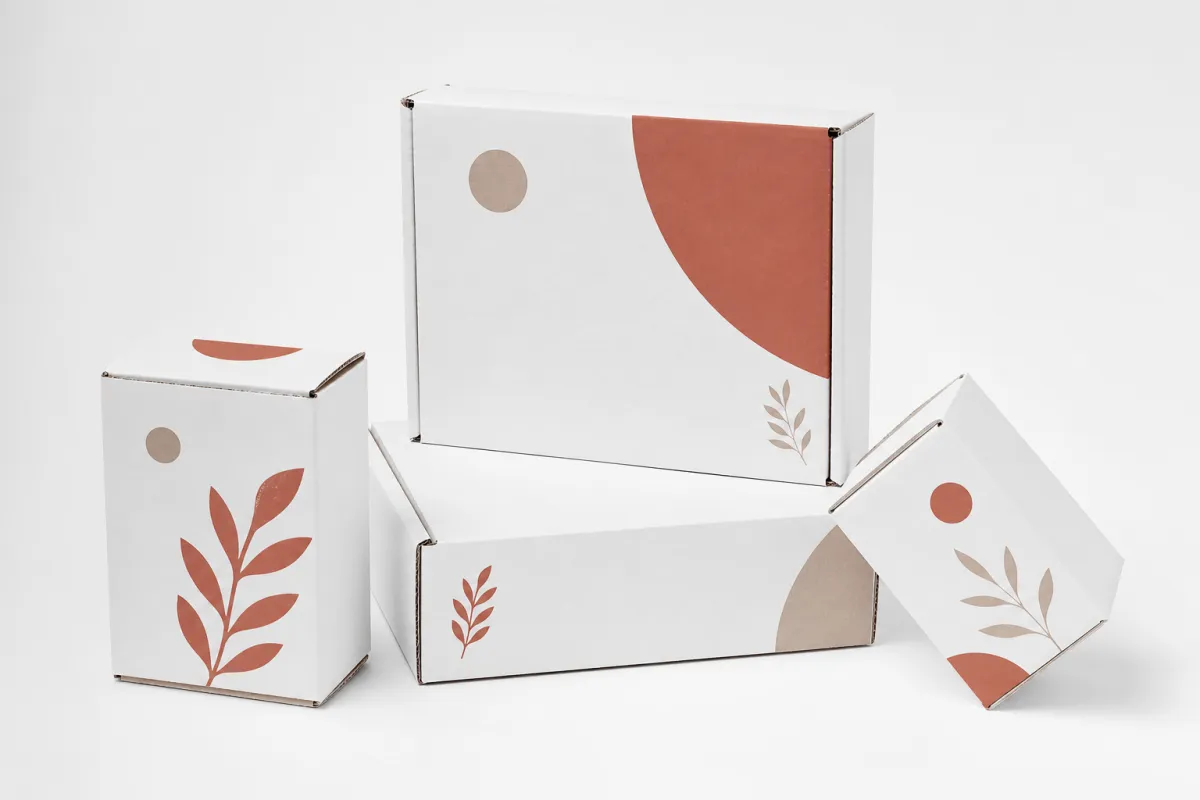
White changes perception quickly. A clean white liner makes branded white corrugated boxes feel more exact, even before graphics enter the picture. Part of that comes from contrast and part from simple readability. A black logo on white is easier to read than the same mark on natural kraft, especially under warehouse lights or on a porch at dusk. QR codes, warning labels, and secondary handling marks all benefit from that sharper contrast.
The biggest shift is not luxury; it is legibility. Many teams choose branded white corrugated boxes because the carton becomes easier to sort, identify, and photograph. That helps with receipt checks, returns, and customer service follow-up. A tracking label stands out. A tamper-evident note stands out. Even a small brand mark looks more deliberate. The box starts doing useful work before the product is visible.
Quality control changes too. On a white surface, scuffs, crushed corners, ink variation, and adhesive marks show up earlier. That can feel unforgiving, yet it is often useful. A packaging manager who wants consistency across 500 cartons benefits from seeing defects before the boxes ship. Kraft can hide minor flaws. Branded white corrugated boxes reveal them, which pushes production teams toward cleaner registration and better handling discipline.
"A white shipping carton tells the truth faster. If the print is off, the corner is crushed, or the label sits crooked, you see it immediately."
That honesty comes with a cost. White liners show dirt and abrasion more readily than kraft, especially when a carton passes through multiple touchpoints. Parcel networks can be rough. Conveyors, stack pressure, stretch wrap, and manual sorting all leave a mark. The real question is not whether branded white corrugated boxes look better. The question is whether the cleaner presentation is worth the extra sensitivity.
White also improves print contrast for fine elements. Small type, line art, and scannable marks are usually easier to read. That matters if the box includes a customer service QR code, a return portal, or a simple "inspect before signing" instruction. On a busy dock, clarity saves time. On a doorstep, clarity prevents confusion. Branded white corrugated boxes support both when the design stays disciplined.
There is another effect that brand teams notice over time. The outer carton stops feeling disposable and starts acting like a managed touchpoint. That shift tends to improve the full packout, because once the outside becomes part of the brand system, the tape, inserts, and interior messaging usually become more coherent too.
White can also be a little unforgiving in a good way. If the logo placement is sloppy or the file has a weak bleed, the issue jumps out fast. That is annoying during prepress, sure, but it saves embarrassment later. A cleaner surface asks for cleaner work, and that is not a bad trade for brands that care about consistency.
How Branded White Corrugated Boxes Work in Warehousing and Transit
The structure under the print matters more than most first-time buyers realize. Branded white corrugated boxes still rely on the familiar corrugated construction: an outer liner, fluting, and an inner liner. The difference sits in the face sheet. A white top liner gives ink a better canvas, but the board grade still controls compression strength, puncture resistance, and how much abuse the carton can take before it loses shape.
Single-wall cartons usually use B flute, C flute, or E flute depending on product weight and the desired print surface. B flute offers a thinner profile and decent print resolution. C flute adds more cushioning and stacking strength. E flute often shows up in smaller retail-style cartons because the flatter profile can improve graphics and keep panel edges neat. For heavier shipments, outer color matters less than the board spec. Branded white corrugated boxes are only as good as the structure behind them.
In a warehouse, a carton needs to move quickly through pick-and-pack, labeling, staging, and palletization. A box that is even slightly oversized lets the product shift, raises void fill, and scuffs or bows the outer panels. A box that is too tight slows assembly and creases the corners. Fit and structure belong together. A white shipper can look premium, yet if the sizing is off, the product rattles or the build line bogs down. Branded white corrugated boxes need to fit the product, not just the brand palette.
Transit adds another layer. Parcel carriers and LTL networks expose cartons to compression, vibration, drop events, humidity swings, and repeated handling. Many packaging teams validate performance using methods aligned with ISTA testing standards, especially when the shipment will pass through several handling points. That is not excess caution for a premium box. It is a practical way to avoid rework, replacements, and a rough first impression. When branded white corrugated boxes fail, they tend to fail visibly.
Kraft liners often hide dust, fiber marks, and minor rubs better. White liners show more, but they also make brand marks easier to read. The question is not which finish is universally stronger. It is which finish supports the shipping scenario. A direct-to-consumer apparel carton has different needs than a 25-pound parts shipper. Branded white corrugated boxes do their best work when the presentation matters and the transit profile is controlled enough to protect that presentation.
Print method changes the supply chain behavior too. Flexographic printing is usually efficient for larger repeat runs with simpler artwork. Digital printing can be useful for shorter runs, personalized graphics, or frequent design changes. Lithographic or litho-lam solutions can deliver a polished look, though they usually require more planning and often raise minimums. If the artwork includes fine registration, reversed type, or multiple brand colors, the print method matters just as much as the board. The wrong method can make branded white corrugated boxes look inconsistent even when the design is strong.
A warehouse test I like is simple: can a picker identify the SKU in two seconds? If yes, the box is doing useful work. If no, the outer carton may be attractive but inefficient. Good packaging lowers friction. Branded white corrugated boxes should help the warehouse move faster, not slower.
Cost, Pricing, and MOQ: What Drives the Quote
Pricing is where the conversation gets concrete. Branded white corrugated boxes are shaped by board caliper, carton dimensions, print coverage, number of colors, finishing, inserts, and whether the project uses stock tooling or a fully custom dieline. Small changes can move the quote more than buyers expect. A larger footprint uses more board. Extra print colors add setup and registration complexity. Special coatings and custom inserts push the price again.
Board grade usually sets the floor. A lighter duty mailer can cost much less than a heavy-duty shipping carton, but the wrong grade can backfire fast if it damages product or crushes in transit. If the carton is meant for 3-pound apparel shipments, one spec makes sense. If it is carrying a 15-pound consumable pack, a different one is needed. Branded white corrugated boxes should be priced against the actual load, not against a generic box category.
Volume matters, but landed cost matters more. Unit cost typically falls as the order size rises because setup gets spread across more pieces. That part is familiar. What is less obvious is that freight, storage, damage reduction, and reorder timing can move the total cost in the opposite direction. A cheaper carton that arrives damaged or fails QC is not cheaper. Branded white corrugated boxes should be compared on total delivered value, not only factory pricing.
MOQ is another tradeoff. Lower minimums help teams test a new design, launch a seasonal pack, or pilot a different board grade without locking into a large commitment. The tradeoff is a higher per-box price and, often, less favorable freight economics. If the carton will be reused across several SKUs, a larger run can make sense. If not, a modest MOQ may be the safer starting point. Either way, branded white corrugated boxes deserve a quote that spells out setup, tooling, and sample terms clearly.
| Print Option | Typical Run Range | Approx. Unit Cost | Best For | Watch-Outs |
|---|---|---|---|---|
| Digital print on white corrugated | 250-2,000 units | $0.85-$1.65 | Short runs, fast artwork changes, multiple SKUs | Higher per-unit cost, color may vary slightly by batch |
| Flexographic print | 2,500-20,000 units | $0.28-$0.62 | Repeat orders, simpler graphics, dependable throughput | Plate setup and limited fine-detail reproduction |
| Litho-laminated finish | 5,000+ units | $0.70-$1.40 | High-end presentation, retail-ready branding | More lead time, higher approval sensitivity |
| Plain white corrugated with label branding | Any volume | $0.20-$0.48 | Fast rollout, minimal artwork, operational clarity | Less integrated brand impact than full print |
That table is directional, not absolute. A supplier with in-house die cutting can price differently from one that outsources every step. Freight lanes matter. Board market changes matter. Even carton nesting efficiency can change the number if the supplier packs boxes flat in bundles. Good quote comparison starts with matching the spec line by line: dimensions, board grade, flute, print coverage, sample approval, and whether tooling is included. Branded white corrugated boxes are easiest to compare when the quote removes guesswork.
Packaging buyers often focus on unit price because that number is easy to repeat in a meeting. A more useful metric is cost per successful shipment. If a slightly better carton cuts damage claims, speeds the warehouse, and reduces customer complaints, it may win even when the invoice is higher. That is especially true for branded white corrugated boxes, where presentation and logistics are tied together.
One honest caution: glossy-looking quotes can hide freight, plate, or sample charges that only show up late. That is not exactly rare. Ask for the whole cost picture upfront, and if a line item seems fuzzy, get it written out before you approve anything. A clean quote is worth more than a cheap headline number.
Production Process and Timeline: From Artwork to Delivery
A clean production schedule starts with the brief. If the supplier does not know the product weight, shipping method, insert requirements, or print goals, the rest of the process gets noisy. The best branded white corrugated boxes projects begin with a clear spec sheet: internal dimensions, target board grade, closure style, print area, and any branding restrictions. That small amount of discipline saves days later.
The workflow is straightforward on paper, but each step has its own delay points. First comes the dieline. Then artwork prep. Then proofing. Then a sample or pre-production mockup. Then approval. Then manufacturing, finishing, packing, and shipment. The longest delays usually happen where someone assumes "it looks fine" instead of checking the physical sample. A box can look perfect on screen and still fold badly, hide a logo under a seam, or leave too much white space on one panel. Branded white corrugated boxes reward careful proofing.
Color matching is another common slow spot. White backgrounds make tone differences more obvious than kraft because the eye compares every print element against a clean field. A red logo that feels acceptable on a monitor may look slightly dull or slightly warm in print. If the brand follows strict color standards, that conversation needs to happen early. Otherwise, the project can lose days chasing a correction that should have been caught in the first proof.
Lead time depends heavily on order size and print method. A simple stock-style shipper with restrained branding can move faster than a fully custom carton with multiple inks and inserts. For many buyers, a practical planning range looks like this: proof approval plus production for a simple run often lands around 12-15 business days, while more complex custom work can stretch to 20-30 business days or more. Overseas production adds transit time on top of that. If the packaging supports a launch or seasonal spike, branded white corrugated boxes need a buffer, not a guess.
The schedule should really be tracked on three clocks: artwork clock, production clock, and freight clock. The freight clock is the one people forget. A box can finish on time and still arrive late if the shipping lane is crowded or weather interrupts movement. Packaging planning works best when it is counted backward from the customer-facing date, not forward from the order date. Branded white corrugated boxes are never just a packaging purchase; they are part of the launch calendar.
"The project was not late because the press ran slowly. It was late because the proof sat untouched for four days."
That line is blunt, but it reflects reality. Slow decisions create slow packaging. If one person owns artwork approval, one person owns structural approval, and one person owns final signoff, the timeline becomes more predictable. If approval floats around a team, the schedule drifts. Buyers who want dependable branded white corrugated boxes usually get there by controlling the approval chain.
For validation, many teams also ask for a drop-test or compression reference before they commit to a full order. That is sensible. The box has to survive the trip, not just the sample table. A small test run can expose issues with fit, print placement, or assembly speed that would be expensive to discover at scale. A decent sample package now saves a whole lot of headaches later.
If the launch date is fixed, build backward with one extra cushion for revisions. That buffer is not pessimism; it is how experienced teams avoid panic. The final few days always seem to collect the most tiny changes, and those tiny changes can move a production slot if nobody is paying attention.
Key Factors That Decide Performance and Brand Impact
Fit comes first. If the carton is oversized, the product shifts, internal dunnage increases, and the outer box takes more abuse. If it is too tight, packing slows down and the board can scuff during insertion. For branded white corrugated boxes, fit is not only a logistics issue; it changes how the finished carton looks after handling. A box that bulges or creases will not present well, no matter how polished the print is.
Durability under real conditions comes next. A carton that looks ideal on a design sheet may still fail if the shipment sees humidity, stacking pressure, or repeated conveyor contact. Heavier shipments usually need stronger board, sometimes a different flute, and a more conservative print area so the artwork does not sit where the carton gets stressed. Branded white corrugated boxes should protect the product first and impress the buyer second, never the reverse.
Visual consistency matters just as much. Brand impact depends on where the logo lands, how much white space remains visible, whether the tape matches the outer design, and whether the insert reinforces the same tone. A box that is visually clean but paired with clashing tape or a random internal message feels half-finished. Strong packaging systems feel coordinated. That is true for branded white corrugated boxes as much as for retail cartons.
Operational speed matters too. Warehouse teams need packaging that assembles quickly, stacks neatly, and labels cleanly. A complicated closure may look elegant but slow the line. A highly decorated carton may look premium but make barcodes harder to place. The best cartons support labor, not just branding. That is why many operators prefer a design that leaves one or two panels intentionally quiet.
There is also a sustainability layer, and here honesty matters. Paper-based packaging can support recovery and recycling goals, but the result depends on local systems, contamination levels, and how the box is printed or laminated. If sustainability is part of the brand story, ask for FSC-certified fiber where appropriate and confirm the claim language carefully. The FSC site explains certification in plain terms. For some buyers, that matters as much as the print itself. Branded white corrugated boxes can be a cleaner choice, but only if the material story is accurate.
Returns are another operational factor that gets underestimated. If the carton will be reused for reverse logistics, the white finish may reveal dirt and wear sooner. That does not make it wrong. It just means the team should test resealability, adhesive removal, and second-trip appearance before locking the spec. A returnable branded white corrugated boxes program needs a different standard from a one-way shipper.
Carrier acceptance belongs in the same conversation. Most parcel carriers care about dimensions, weight, and labeling. Still, a carton that is overprinted, heavily coated, or awkwardly sized can create handling friction. The goal is a box that a carrier can move without hesitation and a customer can recognize instantly. That balance is where branded white corrugated boxes do their best work.
There is a practical truth here that gets missed in polished deck presentations: packaging only matters if it survives enough hands to reach the door in decent shape. Fancy graphics do not cancel out poor board selection. If you have to choose, protect the product first and polish the surface second. Ideally, of course, you get both.
Step-by-Step Guide to Choosing Branded White Corrugated Boxes
Start with the product, not the box. Measure the item, note its weight, and decide how it will ship. Parcel, LTL, or mixed distribution? Fragile or stable? Single-unit or multi-pack? Those answers shape the spec before branding even enters the discussion. Branded white corrugated boxes should be built around the shipment profile, because the wrong carton size can create damage long before any logo is seen.
Next, define the role of the box. Is it meant to be a premium reveal, a purely functional shipper, a retail-ready carton, or a hybrid? That answer changes everything from print coverage to closure style. A full-color exterior with interior messaging makes sense for some brands. For others, a restrained mark on a white shipper is enough. The right version of branded white corrugated boxes depends on how much the outer carton should speak.
Then choose the board and flute. A lighter mailer may be fine for apparel or accessories, while heavier products may need a stronger single-wall construction or even a different grade entirely. Ask for compression data if the carton will stack on pallets. Ask for puncture resistance if the product has sharp edges. Ask for sample assembly time if the warehouse is high-volume. These are not abstract questions. They are the questions that keep branded white corrugated boxes from becoming a problem after launch.
- Confirm the exact internal dimensions and target weight.
- Choose the board grade and flute profile that match transit risk.
- Decide whether the white surface should stay mostly clean or carry full branding.
- Request a physical sample or mockup before approving print.
- Run a fit check, a stacking check, and a quick transit trial.
- Set reorder points so the next batch lands before stock gets tight.
That sequence sounds simple because it is. The challenge is discipline. Many teams skip the sample stage, then discover that the logo sits too close to a crease or the seam cuts through an instruction panel. A mockup costs less than a production mistake. For branded white corrugated boxes, the mockup is often the cheapest insurance in the project.
Reorder planning matters more than many brands expect. If demand is seasonal, the packaging should be ordered with a buffer for production and freight. If the carton supports multiple SKUs, keep the dieline consistent so reorders do not need requalification each time. Standardizing a few dimensions can save money and simplify forecasting. That is one reason many buyers pair Custom Shipping Boxes with a broader packaging system rather than treating each SKU as a one-off project.
It also helps to review real examples. A look at Case Studies can show how other teams balanced box size, print coverage, and transit durability without drifting into overdesign. If you need to compare materials or add inserts, browsing Custom Packaging Products can clarify what belongs inside the shipper and what should be left off the outer carton. Branded white corrugated boxes work best when the whole system is planned together.
If the box must serve more than one role, say so early. A carton that looks polished on camera but fails on a carrier belt is not a good trade. A carton that protects well but prints poorly is also a miss. The best choices are usually the ones that keep the design restrained, the board strong, and the approval process orderly. That is the practical sweet spot for branded white corrugated boxes.
One more point: document the exact spec once it is approved. Save the dieline, the ink references, the board callout, the closure method, and the sample photo. Reorders go smoother when the details are written down. Brand consistency depends on repeatability as much as on aesthetics, and branded white corrugated boxes are no exception.
Takeaway: If you want cleaner presentation, clearer labeling, and a carton that works harder for the brand, branded white corrugated boxes are worth serious consideration. Start with product weight, transit conditions, and board grade, then approve a physical sample before you commit to production. That one habit keeps the project grounded and usually leads to a better box.
FAQ
Are branded white corrugated boxes stronger than kraft boxes?
Strength depends more on board grade, flute type, and carton size than on the outer color alone. White liners can be just as durable as kraft liners when the same corrugated construction is used. For heavy or fragile items, compare compression, puncture resistance, and moisture exposure before choosing the finish. In other words, branded white corrugated boxes are not automatically stronger or weaker; the structure underneath decides that.
What printing method works best for branded white corrugated boxes?
Flexographic printing is often efficient for larger repeat runs with simpler graphics and fewer colors. Digital printing can be better for shorter runs, variable artwork, or faster sample-to-production cycles. The best method depends on volume, color accuracy needs, and whether the design will be reused across SKUs. For many teams, branded white corrugated boxes are easiest to manage when the print method matches the reorder pattern.
What is a typical MOQ for branded white corrugated boxes?
MOQ varies by printer, box style, and print complexity, so there is no universal minimum. Custom sizes and multi-color printing usually push minimums higher than stock-size boxes with simple branding. Ask whether the quote includes tooling, setup, and sample approval so the MOQ is easier to evaluate fairly. That context matters because branded white corrugated boxes can look inexpensive on paper and costly once hidden fees are added.
How long do branded white corrugated boxes usually take to produce?
A simple stock-style order can move faster than a fully custom box with new artwork and inserts. Proofing, sample approval, and design revisions are the stages most likely to extend the timeline. Ask for lead time, transit time, and a separate buffer for reorders if the boxes support a launch or seasonal window. For branded white corrugated boxes, the schedule is usually won or lost before the press ever starts running.
Can branded white corrugated boxes handle return shipping?
Yes, if the board grade, closure method, and print durability are chosen with multiple trips in mind. A white exterior can still look good after one trip, but scuffs and dirt are more visible than on kraft. If returns matter, test the carton for resealability, abrasion resistance, and label remnant removal. That is the difference between a carton that merely ships and branded white corrugated boxes that keep working after the first delivery.