Buyer Fit Snapshot
| Best fit | Branded Window Boxes for Retail projects where brand print, material claims, artwork control, MOQ, and repeat-order consistency need to be specified before quoting. |
|---|---|
| Quote inputs | Share finished size, material target, print colors, finish, packing count, annual reorder estimate, ship-to region, and any compliance wording. |
| Proofing check | Approve dieline scale, logo placement, barcode or warning zones, color tolerance, closure strength, and carton packing before bulk production. |
| Main risk | Vague material claims, crowded artwork, missing packing details, or unclear freight terms can make a low unit price expensive after revisions. |
Fast answer: Branded Window Boxes for Retail: Design, Cost, and Fit should be specified like a repeatable production item. The safest quote records material, print method, finish, artwork proof, packing count, and reorder notes in one written spec.
Production checks before approval
Compare the actual filled-product size with the drawing, then confirm tolerance on folds, seals, hang holes, label areas, and retail display edges. Reserve space for logos, QR codes, warning copy, and material claims before decorative graphics fill the panel.
Quote comparison points
Review material grade, print process, finish, sampling route, tooling charges, carton quantity, and freight assumptions side by side. A quote is only useful when the supplier can repeat the same color, closure quality, and packing count on the next order.
Branded window Boxes for Retail do one thing very well: they let the product speak before the shopper opens the carton. That sounds simple because it is simple. The catch is that simple packaging is usually the hardest to execute cleanly. A window has to show the right amount, protect what matters, and still leave the brand with enough room to do its job.
Buyers run into trouble when they treat the window as a decorative cutout instead of a structural decision. The opening affects print layout, board strength, assembly, shipping, and even how the box reads under store lighting. I have seen attractive concepts fall apart because the product sat too low, the film distorted the view, or the panel became too weak once the window was added. A good package does not just look finished. It performs like it was planned that way from the start.
This format shows up across cosmetics, candles, bakery goods, small electronics, apparel accessories, premium soaps, and gift sets for a reason. The customer can judge color, texture, shape, or finish without opening the package. That reduces hesitation. It also changes the kind of trust the box has to earn. A closed carton asks for faith. A window box gives people evidence.
When teams compare options, it helps to look at Custom Packaging Products alongside real-world examples in the Case Studies library. The best decisions usually come from looking at both structure and outcome. The mockup is not the job. The shelf is the job.
What branded window boxes for retail are and why they stand out
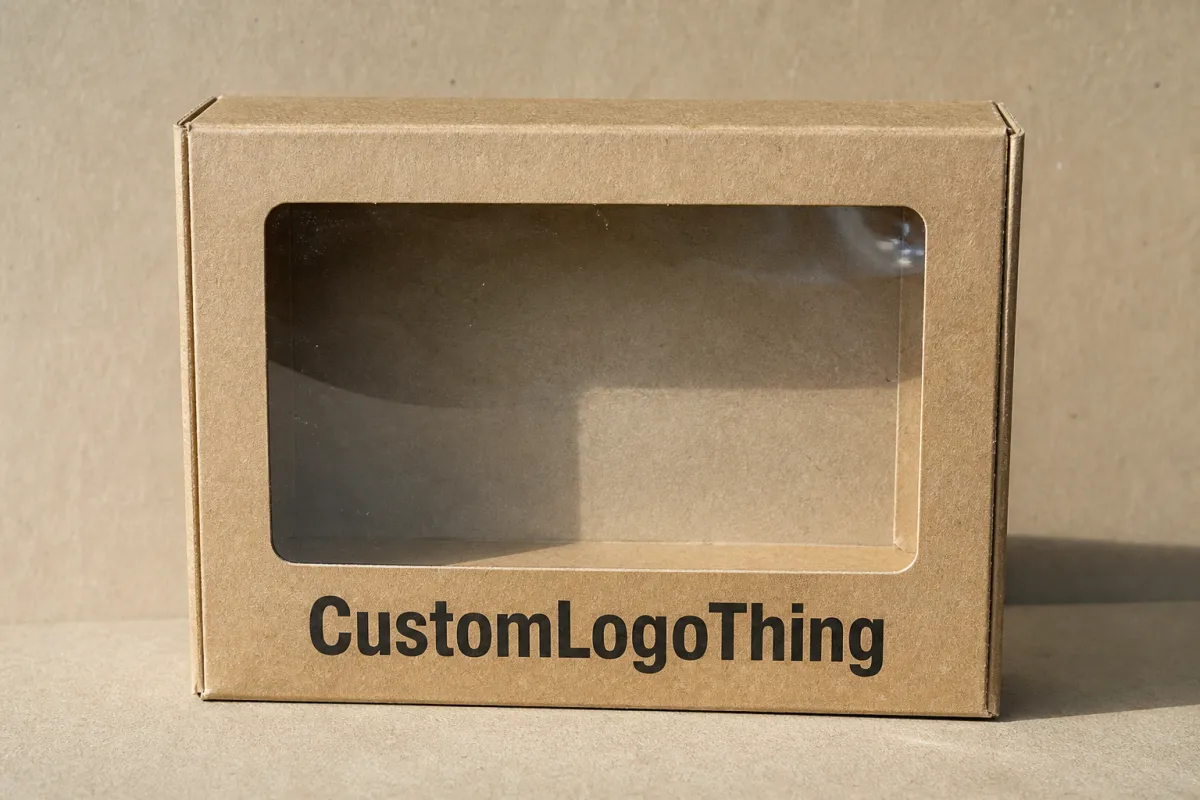
At a basic level, a window box is a printed folding carton or rigid-style package with a die-cut opening. That opening may be backed with a clear film, or it may be left open depending on the product and channel. The opening can be small and selective, or it can reveal a large portion of the item. Either way, the box is doing two jobs at once: protecting the product and helping sell it.
That matters because most retail decisions are made quickly. Shoppers scan, compare, and decide in seconds. They do not read every claim. They do not study the packaging like a compliance auditor. They look for clarity, quality, and a reason to trust what is inside. A well-designed window lowers uncertainty, especially when color, texture, or form drives the purchase.
In practice, branded window boxes for retail work best when the product already has something worth showing and the packaging frames it with discipline. A textured candle jar, a cosmetic kit with visible components, a stack of soft accessories, or a bakery item presented neatly all benefit from a partial reveal. More transparency is not always better. A controlled view often does more work because it keeps the brand in charge of what the shopper notices first.
Merchandising teams like window packaging for another reason: it helps products read consistently across a shelf. Similar SKUs often differ only by shade, scent, or ingredient mix. A clear view makes those differences obvious without forcing the customer to decode a wall of copy. In impulse-buy displays and specialty retail, that kind of speed matters.
These packages are not tied to one material family. A folding carton made from 14pt to 24pt SBS, C1S, or kraft board can carry a window. Higher-end presentation packs may use rigid board with a wrapped printed sheet. Some programs use clear PET or rPET film to keep dust out and preserve a polished opening. Others skip the film when airflow, freshness, or cost matters more than a sealed display. There is no universal answer here. The right construction depends on the product, the channel, and how the box moves through the supply chain.
The real question is not whether a window looks attractive. It usually does. The question is whether the package can sell the product, protect it, and still run efficiently at the volume the business needs.
A window has to earn its place. If it does not improve selling power, reduce uncertainty, or support the brand story, it is taking board, labor, and budget without giving much back.
How the box structure, window, and print work together
A strong retail window box is not one design choice. It is a stack of decisions that have to line up cleanly. Start with the board stock, because stiffness and print quality begin there. Add the printed surface, whether offset, digital, or flexographic depending on quantity and finish needs. Then comes the die-cut window, the optional clear film, the insert or tray if the product needs restraint, and the closure style that determines how the carton opens, folds, and ships. Each layer affects the others. Packaging rarely gives second chances.
The window is more than a hole in the front panel. Its placement changes how the entire box reads. A centered window creates a balanced, direct look and suits products that benefit from symmetry. A corner window can highlight a shape, ingredient, or detail while leaving more room for branding. A shaped cutout can feel more premium or playful when it echoes the product silhouette, though it adds design complexity and can reduce press-sheet efficiency. There is no free aesthetic upgrade here. Every choice costs something.
Print design should support the viewing area instead of fighting it. That means thinking about color blocking, typography, and hierarchy around the cutout from the start. Dark panels can frame a light product beautifully. A clean white field can make a colored item look precise and controlled. Metallic accents or spot UV can draw attention to the logo without overpowering the product itself. Crowded graphics turn the window into an afterthought. That is usually a mistake.
The film choice matters more than many teams expect. A clear PET or rPET window can add polish and help keep out dust, but it changes production behavior. Film can wrinkle if the adhesive pattern is sloppy. It can interfere with folding if glue lands too close to a score line. For dry goods or products that need airflow, film may be the wrong answer. For cosmetics, candles, or gift items, it often keeps the retail look crisp and consistent.
Structural details deserve the same attention as the graphics. Tuck flaps, lock bottoms, dust flaps, glue seams, and folding direction all affect line speed and how the box feels in the hand. A straight tuck end may be easy to assemble. A reverse tuck can close better for some formats. Locking bottoms support heavier items. Pre-glued cartons save labor during packing, but they can raise freight cube if the box ships assembled instead of flat. None of that is abstract. It affects cost, handling, and turnaround in the real world.
Here is the simplest way to think about the structure:
- Board stock sets strength, stiffness, and print surface.
- Window size controls how much of the product is visible and how much panel space remains for branding.
- Film or no film changes dust protection, clarity, and assembly steps.
- Insert design keeps the product centered and prevents damage in transit.
- Closure style affects packing speed, shelf presentation, and carton integrity.
Structural approval should happen before the artwork gets locked. If the dieline is off, the design may still look fine on screen and then land in production with an off-center window, an awkward fold, or a product sitting too low in the cavity. In packaging, structure is not a side note. It is the frame that makes the design work at all.
Key factors that affect appearance, protection, and shelf impact
Board grade is one of the first decisions that affects both appearance and protection. A 16pt or 18pt SBS carton can be enough for lightweight retail products where print quality matters more than crush resistance. A 20pt or 24pt board feels more substantial and holds shape better, especially when the window removes some front-panel material. For heavier items or premium presentation, rigid board with a wrapped printed sheet can deliver a more luxurious feel, though it also raises material and assembly costs.
Window size is a tradeoff, not a free upgrade. A larger opening shows more of the product and can build trust, but it also reduces the panel area available for graphics and may weaken the structure if the cutout gets too close to folds, scores, or edges. A smaller window gives the designer more room to build a brand message and preserve stiffness, though it may not reveal enough for the shopper to feel confident. The right answer depends on how much the product needs to explain itself.
Protection needs should be judged product by product. A window box for a stable glass jar is not the same as one for loose accessories, fragile ornaments, or items that can shed powder or crumbs. Inserts, partitions, trays, or paperboard collars can keep the product from shifting during transit and make the reveal feel more deliberate. If a product can rub against the film or front panel, the box should be adjusted before production starts, not after the first sample arrives scratched.
Finishing choices shape the shelf story more than many buyers expect. Matte coatings create a quiet, modern feel and keep type easy to read under bright store lighting. Gloss makes color pop and can work well for beauty or confectionery packaging. Soft-touch lamination adds a velvety hand feel that buyers often read as premium. Foil stamping and spot UV should be used with discipline. A little can sharpen the focal point around the logo or window frame. Too much makes the package look noisy and a bit desperate.
Store conditions matter too. Shelf height changes how much of the box a shopper actually sees. Lighting can wash out pale graphics or create glare on film. Nearby competitor packaging may be loud, crowded, or oddly shaped, which means your box has to earn attention without becoming chaotic. If the product sells in a channel with harsh fluorescent lighting, transparent windows and high-gloss finishes need extra scrutiny because reflection can hide the product instead of helping it.
For sustainability-minded programs, material selection also carries brand weight. FSC-certified board is widely used for paper-based cartons when responsible sourcing matters, and clear films may be chosen with recyclability goals in mind where local systems allow it. If a claim needs to be defensible, the team should verify the actual substrate, coating, and local recovery realities instead of assuming the package is recyclable because the carton contains paper. That caution saves embarrassment later. For broader reference, the International Safe Transit Association and the Forest Stewardship Council are useful starting points for testing expectations and certified fiber sourcing. Public environmental guidance from the EPA can also help teams sanity-check waste and recovery claims.
One practical note: the best-looking box on a render is not always the best-performing box in a store. A design that feels elegant on screen may be too delicate in actual handling, or the product may sit too low behind the window. Sample evaluation should include real light, real touch, and real stacking pressure. Retail packages are judged in motion, not in a vacuum.
Cost, pricing, MOQ, and quote drivers for retail window boxes
Pricing for retail window packaging usually comes down to a handful of repeat offenders. Board choice is one. Thicker stock and specialty boards cost more and often need different converting steps. Print coverage matters too; full-coverage ink, multiple spot colors, metallic ink, and high-detail art all add production time or setup. Window complexity affects tooling and labor, especially when the shape is unusual or the film application needs tighter control. Coatings and finishing add more steps, and any insert or custom tray increases both material usage and assembly complexity.
Die-cut tooling can raise the first-run cost even when the unit price improves later. That is normal. A custom knife, window punch, or glue pattern is an upfront investment in repeatability. Once the tooling exists, it can support better efficiency across larger quantities. The same idea applies to film windows: a simple rectangular opening is usually easier and cheaper to run than a decorative cutout with narrow bridges or tight corners. More complexity can be worth it, but it should be earned rather than added because the mockup looked flashy in a slide deck.
MOQ usually reflects setup economics, material yield, and machine efficiency. It is not just a supplier preference. If the line needs press setup, board calibration, die cutting, glue application, and packing time, a tiny order may not absorb those costs well. That is why short-run digital programs and larger offset programs often sit in different quantity bands. For many retail projects, short runs land around 500 to 1,000 units, more common custom offset quantities sit around 2,500 to 5,000, and higher-volume retail programs move above 10,000 where the price per box can improve noticeably.
When requesting a quote, clarity saves everyone a headache. A complete quote should include:
- Exact box dimensions, including internal product fit.
- Board type and thickness.
- Print method, number of colors, and any special finishes.
- Window shape, whether film is included, and film material if known.
- Insert or tray requirements.
- Quantity, proofing method, and shipping assumptions.
Missing details are where hidden costs show up. An oversized box can waste board and raise freight charges. A last-minute artwork change may trigger new plates, new proofs, or extra prepress time. A window placed too close to the edge may force a structural revision and slow the project down. Even a small change in dimensions can affect nesting, carton yield, and palletization. That is why the cheapest quote is not always the best value when the box has to perform at retail.
Here is a practical comparison of common options for branded retail window packaging:
| Option | Typical Use | Approx. Unit Cost at 5,000 pcs | Strength and Shelf Impact |
|---|---|---|---|
| 18pt SBS folding carton with clear window film | Cosmetics, soaps, small gifts, lightweight accessories | $0.22-$0.42 | Clean print surface, moderate stiffness, good for moderate visibility |
| 20pt-24pt SBS or C1S carton with shaped window | Premium retail, candles, higher-value consumer goods | $0.34-$0.58 | Stronger feel, better shelf presence, more room for custom branding |
| Kraft carton with die-cut window | Natural, artisan, eco-positioned products | $0.28-$0.50 | Warm look, good for simple graphics, depends heavily on print coverage |
| Rigid box with laminated wrap and window | Gift sets, luxury packaging, presentation kits | $0.85-$1.75 | High perceived value, strong shelf impact, more assembly labor |
Those numbers are directional, not universal. Freight, finish selection, board market conditions, and labor availability can move them in either direction. Still, they give a useful starting point for internal budgeting. If a project is quote-sensitive, the fastest cost reductions usually come from simplifying the window shape, limiting special finishes, choosing a standard board, and keeping the carton dimensions tight around the product.
For brands that need to balance cost and presentation, it helps to decide early whether the box is mainly a selling tool, a shipping tool, or both. A retail carton that only sits on shelf can be optimized differently from one that has to survive e-commerce fulfillment or club-store handling. The more jobs one package has to do, the more carefully the structure needs to be priced and tested.
Process and timeline: production steps from dieline to delivery
Good packaging projects start with the product, not the artwork. Before anyone opens design software, the team should confirm product dimensions, weight, surface sensitivity, and the amount of visibility needed through the window. A box for a hard container can tolerate a different fit than a package for something soft, irregular, or fragile. If the product needs to sit at a specific height behind the opening, that belongs in the brief from day one.
The next step is the dieline. This structural map defines folds, panels, glue tabs, and the window position. The dieline should be approved against the actual product before the design is locked. That is where many avoidable mistakes get caught, like a window that lands too low, a flap that conflicts with the logo, or an insert cavity that is too generous and lets the item rattle. Once the artwork is built on a bad structure, every revision gets more expensive.
After structural approval comes artwork prep and prepress checks. This stage covers bleed, safe areas, image resolution, color setup, and the relationship between printed elements and the die-cut area. If the design uses foil, embossing, or spot UV, those layers need to be built separately and checked against the structural line. If the box carries a product barcode or regulatory panel, those elements should be placed where they remain readable after folding and gluing.
Sampling is worth the time. A printed prototype or white sample can reveal whether the window framing feels balanced, whether the product sits securely, and whether the closure behaves as expected. If a carton is supposed to ship flat, the sample should confirm that it folds cleanly and does not spring open. If the box includes a film window, the prototype should show how the film reflects light and whether the glue line leaves any visible distortion.
For products that will face rough distribution conditions, testing should be realistic. Many teams use ISTA testing methods or ASTM-style distribution protocols to simulate drops, vibration, compression, and handling stress depending on the channel. A shelf-ready retail carton may not need the same test plan as a parcel shipper, but it should still be checked for crush resistance, window integrity, and how well the insert protects the product under load.
A typical production sequence looks like this:
- Brief and measurements - define the product, retail channel, and desired visibility.
- Dieline development - map the structure, window, and closures.
- Artwork approval - confirm color, finishes, and print placement.
- Proofing or sampling - check fit, structure, and appearance.
- Print and convert - run the chosen stock through press, die-cut, and finishing.
- Window application and assembly - add film if required, then fold and glue.
- Quality control and packing - inspect the boxes, pack them flat or assembled, and prepare shipment.
Lead times vary with complexity and approval speed. A straightforward folding carton with a simple window may move through production in roughly 12 to 18 business days after final proof approval, while a more custom structure, rigid format, or project that needs multiple revisions can take three to five weeks or more. The schedule stretches when tooling changes, specialty coatings, or insert adjustments arrive late. Early decisions save the most time. Not glamorous, but true.
Shipping and storage should not be an afterthought either. Flat-packed cartons save space but require more packing labor later. Pre-assembled cartons speed up packing on site but take more room in transit. If a buyer is comparing those options, the right answer usually depends on labor cost, warehouse space, and whether the package is being filled at a plant, a co-packer, or a retail fulfillment center.
Common mistakes and expert tips for better retail results
One of the most common mistakes is making the window too large. A broad opening can look attractive in a mockup, but it may weaken the panel, expose too much of the product, or leave too little room for branding. In some cases, the box ends up looking unfinished because there is not enough graphic structure around the opening. A selective window often feels more confident than a full cutout.
Another common issue is designing the artwork before the structure is settled. That usually creates trouble. Product size, insert depth, and shelf viewing angle should guide the layout. If the box is built first and the design comes later, the logo may sit too close to a fold, the product may hide behind a visual element, or the window may cut through a key message. Structure-first thinking saves time and avoids expensive revisions.
There is also a habit of overdecorating the panel around the window. Foil, embossing, gloss, and multiple typographic styles can all look good on their own, but together they crowd the viewing area. Strong retail packaging usually has one clear focal point. The eye should know where to go in the first second. If everything is shouting, the product gets quieter.
For fragile items, test with the actual product inside the actual box. A carton can look perfect when empty and behave very differently once the contents are added. If the insert is too loose, the item may tilt and touch the window. If the cavity is too tight, assembly workers may slow down or damage the product during packing. Real-world handling exposes those problems quickly.
Do not ignore the retail environment. A package that looks elegant in a studio may disappear under harsh fluorescent lights or busy competitor signage. It can also fail to photograph well if the film reflects too much glare. Packaging buyers often need to think like merchandisers: will this carton stack cleanly, read clearly in a thumbnail image, and communicate value in a few seconds? If the answer is shaky, the design deserves another pass.
Here are a few practical tips that usually improve results:
- Keep the product close to the window so the shopper sees the relevant feature immediately.
- Use the board surface to frame the view instead of crowding every inch with copy.
- Choose finishes based on retail lighting, not only on how they look in a render.
- Ask for a white sample or prototype before committing to large print quantities.
- Check the box in hand, because touch and stiffness affect perceived value as much as color does.
The packaging team should also think about how the carton ages through the supply chain. Scuff resistance, glue clarity, and edge crush matter if the box is handled repeatedly. A shelf-ready package may look great at shipment, then arrive with minor abrasion if the coating is too soft or the carton is packed tightly against hard goods. That is not glamorous work. It is, however, the difference between a polished retail program and a disappointing one.
Window packaging often performs best when it is disciplined rather than flashy. A thoughtful cutout, clean print hierarchy, and a stable insert can do more for conversion than a crowded package stuffed with claims. The shopper does not need to decode the box. The box should make the product easy to trust.
Actionable next steps for branded window boxes for retail
If you are planning a new package, start with a short product brief. Include the exact product dimensions, the weight, the retail channel, any handling concerns, and how much visibility you want through the window. One page is enough if it is specific. That one page can save days of back-and-forth because it gives designers and structural engineers the same target.
Next, gather a few reference packages. Three is usually enough. Look at what works in each one: the size of the window, the finish, the way the product is framed, the closure style, or the brand tone. You are not copying those boxes. You are identifying the choices that made them effective so your own version can be more deliberate.
Then request a dieline and review it against the actual product before artwork is finalized. This is the point where fit issues are easiest to correct. If the product needs a lift, an insert, or a deeper cavity, those changes are far cheaper before print than after tooling and plates are already underway. A good supplier should be willing to walk through that structural review carefully.
For fragile, premium, or high-traffic retail items, ask for a sample or prototype. That matters even more if the product has an unusual shape or the window placement is doing a lot of visual work. A sample can reveal real-world issues like glare, loose movement, glue visibility, or a logo that feels too close to the viewing area. Those are the details that are hard to judge from a PDF alone.
Before placing the order, confirm the essentials in writing:
- Stock - board grade, thickness, and whether it is FSC-certified.
- Finish - matte, gloss, soft-touch, foil, or spot UV.
- Quantity - final count, overage, and acceptable tolerance.
- Lead time - proof approval date, production window, and shipping method.
- Assembly - flat-packed or pre-assembled, with any insertion requirements.
When those details are aligned, branded window boxes for retail become much easier to manage. The quote is cleaner, the timeline is more predictable, and the finished box is more likely to perform the way the merchandiser and buyer both expect. The takeaway is straightforward: start with structure, keep the window intentional, and verify the sample against the real product before production begins. That is how a nice-looking carton turns into packaging that actually earns shelf space.
Frequently Asked Questions
What makes branded window boxes for retail different from standard folding cartons?
They expose part of the product, which helps shoppers judge color, texture, and quality without opening the package. They also need more structural planning around the cutout, film, and panel placement than a closed carton. That extra planning is why they are chosen when shelf appeal matters as much as product protection.
Are branded window boxes for retail a good choice for fragile products?
Yes, if the box includes a proper insert, tray, or partition that keeps the item from shifting. The window should not remove so much board that the carton loses stiffness or crush resistance. For fragile items, the best result usually comes from testing the structure with the actual product inside.
What affects the cost of branded window boxes for retail the most?
Material choice, window complexity, print coverage, and finishing options usually have the biggest impact. Higher quantities often reduce unit cost because setup and tooling are spread across more boxes, and artwork changes after proofing can add cost by creating extra prepress or production work.
How long does it take to produce branded window boxes for retail?
Timing depends on design complexity, proof approval, finishing, and whether tooling or samples are needed. Simple runs can move quickly once the dieline and artwork are approved, while more custom structures take longer. Planning early is the best way to avoid delays caused by revisions or material changes.
What should I check before approving branded window boxes for retail?
Confirm the product fits correctly, the window reveals the right area, and the insert holds the item securely. Review print accuracy, finish quality, fold lines, glue areas, and how the box looks under store lighting. Make sure the final spec matches the order quantity, shipping method, and required lead time. That last check matters because branded window boxes for retail only work well when the structure, print, and production plan all line up.