Buyer Fit Snapshot
| Best fit | Custom Display Boxes for Retail Shelves projects where brand print, material claims, artwork control, MOQ, and repeat-order consistency need to be specified before quoting. |
|---|---|
| Quote inputs | Share finished size, material target, print colors, finish, packing count, annual reorder estimate, ship-to region, and any compliance wording. |
| Proofing check | Approve dieline scale, logo placement, barcode or warning zones, color tolerance, closure strength, and carton packing before bulk production. |
| Main risk | Vague material claims, crowded artwork, missing packing details, or unclear freight terms can make a low unit price expensive after revisions. |
Fast answer: Custom Display Boxes for Retail Shelves: Board, Finish, Dieline, and Unit Cost should be specified like a repeatable production item. The safest quote records material, print method, finish, artwork proof, packing count, and reorder notes in one written spec.
Production checks before approval
Compare the actual filled-product size with the drawing, then confirm tolerance on folds, seals, hang holes, label areas, and retail display edges. Reserve space for logos, QR codes, warning copy, and material claims before decorative graphics fill the panel.
Quote comparison points
Review material grade, print process, finish, sampling route, tooling charges, carton quantity, and freight assumptions side by side. A quote is only useful when the supplier can repeat the same color, closure quality, and packing count on the next order.
Custom Display Boxes for Retail Shelves: A Practical Guide
Watch a shopper for ten seconds in a crowded aisle and the pattern becomes plain. Eyes dart. Hands hover. The product that looks easiest to read, easiest to reach, and easiest to trust usually gets the first chance. I have stood in enough stores with a tape measure and a clipboard to know that the shelf is not a neutral place; it is a contest for attention, and it is usually decided fast. That is the real purpose of Custom Display Boxes for retail shelves: not decoration, but a structure that makes buying feel immediate.
The best display packaging does several jobs at once. It supports retail packaging, package branding, replenishment speed, shelf organization, and product protection without asking the store team to wrestle with it. Strong custom display boxes for retail shelves act like a small retail system. They frame the item, keep facings tidy, show inventory at a glance, and help the brand hold its place after a long day of stocking, browsing, and being handled by people who are in a hurry.
For a brand working with Custom Logo Things, the first question is not whether a box can be printed. Almost anything can be printed. The sharper question is whether custom display boxes for retail shelves can fit the shelf plan, survive shipping, hold up under repeated handling, and still look intentional after a store associate has moved the tray more than once. That balance is where the work actually is.
Retail research has long shown that many purchase decisions are made at shelf, not before the shopper enters the store. That is why a display needs to earn its keep in seconds, not minutes. If the structure is awkward, the graphics are muddy, or the tray looks tired after the first refill, the packaging has already started losing money.
Why Custom Display Boxes for Retail Shelves Win Attention Fast
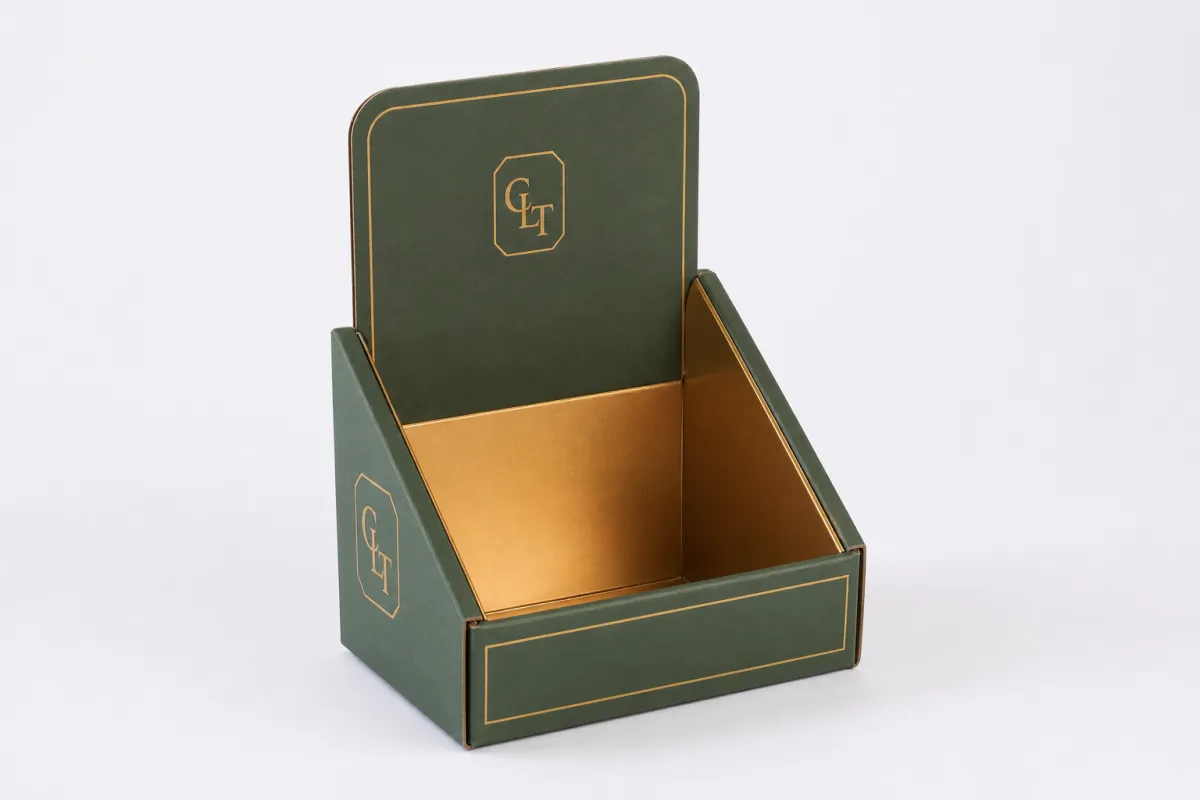
Retail shelves are crowded in a way that feels almost physical. Color, contrast, and shape compete long before a shopper reads a single line of copy. A well-built display turns a cluttered row into one readable block. A weak one disappears into the background, even if the product itself is good.
Custom display boxes for retail shelves are shelf-ready or display-ready packaging formats built to present product neatly in a retail environment. They are not shipping cartons dressed up for a photo shoot. They are not generic counter displays pulled from a warehouse catalog. A display box may arrive flat, fold into place on site, and become a facing-ready unit that supports product on the shelf while carrying branding, product information, and, in some designs, a tear-away front for quick access.
That distinction matters because the box is part of the selling mechanism. A cleaner structure means less time spent by the retailer opening, sorting, and resetting. It also means the brand appears more consistently from store to store. Good custom display boxes for retail shelves help with inventory control too. A counted tray or partitioned unit makes it easier to see what is full, what is low, and what needs replenishment before the shelf looks tired.
The part many buyers miss is simple: shelf packaging has to survive the route before it ever reaches the aisle. Warehouse stacking, shipping vibration, case opening, shelf loading, and repeated handling all leave marks. A display that looks perfect on a render but collapses when pushed into place is not a finished solution. It is a problem with a nice picture.
A display that helps the store team stock faster is usually worth more than one that only looks good in a presentation.
From a practical view, custom display boxes for retail shelves are strongest when they solve three tasks together:
- Visibility: They make the brand easy to spot from a short distance.
- Protection: They keep product upright, aligned, and less prone to scuffs or tipping.
- Efficiency: They let the retailer stock, face, and replenish without wasted motion.
That is why many brands move away from generic retail packaging once an item needs a stronger shelf story. A shelf-ready carton or display tray is not decoration. It is a sales tool that carries product packaging, inventory logic, and package branding in one piece of board.
For brands comparing formats, a broader look at Custom Packaging Products can help clarify where display trays, folding cartons, or corrugated shelf units fit in the line. The right choice usually depends on product weight, the rate of replenishment, and how much visual interruption the aisle can handle before the display starts looking cluttered instead of clear.
How Custom Display Boxes for Retail Shelves Work on the Sales Floor
The process usually begins in the warehouse, not on the shelf. Custom display boxes for retail shelves should be planned for pack-out first, transport second, store handling third, and final shopper interaction after that. Reverse those priorities and the result is packaging that may look polished in a mockup while slowing every step of the real retail flow.
Think of the box as a connector between systems. Product gets packed, stacked, shipped, opened, and set into the shelf or display area. The best custom display boxes for retail shelves make each handoff easier. They often ship flat to reduce freight and storage costs, then fold into a defined structure with enough stiffness to hold shape without extra tape, loose fill, or improvised repairs at store level.
Several structural elements show up again and again in effective shelf-ready packaging:
- Front lips: These help hold product in place and create a clean visual edge.
- Tear-away panels: These allow quick retail opening without damaging the full tray.
- Partitions or inserts: These keep bottles, tubes, or cartons upright and separated.
- Die-cut windows or openings: These can improve access and visibility while reducing board weight.
- Raised back panels: These support branding, signage, and product identification above the shelf line.
Not every feature belongs on every display. A small personal care item may need little more than a tray with a front lip and a printed header. Heavier goods, including glass containers or multi-packs, need more board strength and more internal support. The design of custom display boxes for retail shelves should follow the product. The product should not be forced to bend around the design.
Planograms shape the result too. Shelf depth, facing count, clearance above the product, and the width of neighboring items all influence the final structure. A display that runs too tall can block sightlines. One that runs too deep can overhang the shelf and invite damage. One that is too narrow can waste premium space and make the brand look understocked. Good shelf packaging works with those constraints instead of pretending they are optional.
Graphics have a job beyond decoration. Color blocking, typography, and hierarchy should help the customer identify the product family, flavor, scent, size, or variant at a glance. Clarity beats ornament every time. If the name cannot be read under retail lighting, or the key cue is buried in visual noise, the box is asking the shopper to work harder than the product deserves.
For materials and construction language, the Packaging School and industry resources at packaging.org provide useful background on packaging categories, while ISTA is worth reviewing if the display needs to pass distribution testing. Neither source replaces a real structure check, but both are helpful reference points when a brand wants to speak the same language as its converter.
One more thing I tell clients after a site visit: the shelf is not a showroom. Fluorescent lighting, hurried stocking, and uneven product pull can make a smart design look rough in a day. Build for that reality, not the comp image.
Key Factors That Shape Custom Display Boxes for Retail Shelves
The starting point for custom display boxes for retail shelves is the product itself. Weight, dimensions, closure style, pack count, and surface finish all affect what the box must do. A light carton for lip balm does not need the same board caliper or internal support as a display carrying glass bottles or dense snack multipacks. That sounds obvious. It still gets missed because an empty sample can look fine long after a loaded unit would have failed.
Product exposure matters too. A display sitting on a high-traffic endcap may need stronger board, a more durable coating, or better corner protection. A unit tucked into a calmer aisle with limited handling can often use a lighter structure and save cost. The point is to match the packaging design to the environment instead of copying a generic spec sheet. Custom display boxes for retail shelves are only as strong as the assumptions behind them.
Material choice is one of the biggest decisions. In plain terms:
- SBS paperboard: Good print quality, crisp folds, and a cleaner premium look for lighter items.
- Corrugated board: Better structure and crush resistance for heavier product or longer distribution routes.
- Laminated paperboard or wrapped board: Useful when the brand wants sharper graphics with more surface durability.
There is no universal winner. A cosmetic line may prefer the cleaner edge of paperboard, while a beverage accessory or snack item may need the durability of corrugated construction. The most successful custom display boxes for retail shelves usually choose the lightest build that still passes handling, transport, and shelf-life requirements. That keeps freight down, reduces board waste, and makes the display easier to assemble.
Finish and print treatment change how the box reads under retail lighting. Matte coatings can look refined and cut glare. Gloss can help color pop from a distance. Soft-touch coatings feel upscale, though they can show scuffing if the display gets heavy handling. Spot varnish, foil accents, and embossing can add emphasis, yet they should support the message rather than distract from the product. On shelf, the customer needs to understand the item in seconds, not solve a visual puzzle.
Retailer requirements are another practical filter. Some chains set strict rules for dimensions, tray count, packaging materials, or the way shelf edge space is used. Sustainability goals may also steer the build toward recyclable fiber-based structures, FSC-certified board, or simpler ink coverage. The Forest Stewardship Council is a useful reference when chain-of-custody sourcing matters, but the real question is always whether the chosen structure fits the launch plan and the retailer’s rules.
For many buyers, the challenge is not choosing between “nice” and “cheap.” It is balancing package branding with practical performance. Custom display boxes for retail shelves need enough visual authority to earn attention, but not so much material or embellishment that the package becomes costly to ship, hard to stock, or awkward to recycle.
How to think about the design brief
A strong brief changes the process immediately. Include product dimensions, total weight per display, target facings, shelf measurements, pallet or shipper constraints, and whether the box must be opened by warehouse staff or by store staff. If the structure has to collapse and reclose, say so upfront. If the display must survive multiple refill cycles, say that too. Those details shape the die line, the locking tabs, and even the print placement on custom display boxes for retail shelves.
There is a practical reason to be that specific. A box that is off by even a fraction of an inch can look fine in CAD and then fight the real shelf once the actual product is loaded. I have seen a tray that was a quarter inch too tall force a complete merchandising adjustment on launch day. Nobody had time to be philosophical about it.
Custom Display Boxes for Retail Shelves: Cost, Pricing, and MOQ
Pricing for custom display boxes for retail shelves depends on more variables than most buyers expect. Board type, print coverage, die-cut complexity, finishing, internal inserts, and assembly method all influence cost. A simple printed tray is not priced the same way as a fully custom shelf-ready carton with partitions, tear-away sections, and specialty coating. Two quotes can look similar and still represent very different value.
MOQ, or minimum order quantity, changes the math too. Larger runs usually lower unit cost because setup is spread across more pieces. Smaller runs can still make sense for test markets, seasonal products, or launch programs with uncertain sell-through, but the Price Per Unit is almost always higher. With custom display boxes for retail shelves, the important question is whether the run is meant to prove a concept, support a national launch, or keep an established item moving at shelf speed.
Shipping and storage matter just as much as the printed quote. A box that ships flat can save freight and warehouse space, but if it needs extra assembly labor later, that labor belongs in the total cost picture. A display that saves board weight but arrives prone to crush damage may cost more in the end because of rejects, rework, or weak presentation at retail. Good buyers look at landed cost, not carton price alone.
Here is a practical comparison for a simple 6 x 4 x 12 inch shelf display concept, assuming moderate print coverage and a 5,000-piece run. Real pricing will move with size, artwork coverage, and tooling, but this gives a useful planning range. Treat it as a guide, not a promise.
| Material / Build | Typical Use | Approx. Unit Cost | Strength | Best Fit |
|---|---|---|---|---|
| SBS paperboard | Light product, premium print feel | $0.22-$0.40 | Light to moderate | Small cartons, lighter product packaging, crisp retail packaging |
| E-flute corrugated | Shelf-ready trays, better crush resistance | $0.28-$0.52 | Moderate to strong | Heavier items, shipping stress, repeated stocking |
| Laminated corrugated | High-graphics retail display | $0.35-$0.65 | Strong | Branded packaging that needs sharper shelf impact |
| Custom board with inserts | Special packs, uneven or fragile product | $0.40-$0.85 | Depends on design | Products that must stay separated or upright |
The table is not a promise. It is a planning tool. A short-run seasonal launch can land above those ranges, and a large repeat order may come in lower. Still, it helps buyers ask better questions. Is the added cost coming from a structural need, or from graphics and finishing? Does the shelf actually need the premium laminate, or would a cleaner paperboard build do the job? Those are the questions that separate smart purchasing from guesswork.
Another cost point that gets overlooked is assembly. If the display requires hand folding, adhesive, or a more complex pack sequence, that labor can matter just as much as the unit price. For some programs, the better answer is a slightly simpler structure that is easier to erect and faster to load. For others, the extra steps are worth it because the display creates better facings and lowers product damage. That is why custom display boxes for retail shelves should always be compared on performance, not sticker price alone.
If you are building a request for quote, send complete product specs, shelf dimensions, quantity targets, and any known retailer rules. That alone improves pricing accuracy and helps the converter recommend the right materials for your custom printed boxes instead of guessing at a structure that may not survive the retail environment.
Custom Display Boxes for Retail Shelves: Process, Timeline, and Production Steps
The process for custom display boxes for retail shelves usually starts with a brief, then moves to dielines, artwork, sampling, and production. It sounds tidy on paper. In practice, timing shifts fast if the structure changes, the retailer asks for revisions, or the artwork team is still refining messaging. A good project manager keeps the product, shelf, and supply chain details moving together so the display does not become the last item holding up the launch.
The first step is dimensional planning. That means measuring the usable shelf area, not just the shelf itself. You need the real height under signage, the actual depth after any shelf lip or rail, and the width available after neighboring items and dividers are considered. A display that fits the nominal shelf size can still fail if there is a front rail or an in-store stop strip stealing half an inch. On custom display boxes for retail shelves, half an inch can decide whether the pack sits cleanly or jams.
After that comes structural development. The converter creates or adjusts a dieline, then the design team places graphics around the real folds, flaps, and opening points. This is where many late-stage issues show up. A headline can be cut by a fold. A barcode can sit too close to a seam. A UPC or product callout can disappear once the front panel is torn away. The earlier the team reviews the structural sample, the fewer surprises appear later.
Sampling is worth the time. A plain mockup, a digital proof, and a fully printed prototype each reveal different things. A mockup shows fit and fold behavior. A printed sample shows color, contrast, and text size. A full prototype shows how the finished custom display boxes for retail shelves behave with real product weight. If the box bows, leans, or hides part of the label, that is useful information, not a setback.
Production usually follows a predictable sequence:
- Prepress checks artwork, resolution, bleed, and dieline alignment.
- Printing lays down the graphics on the chosen substrate.
- Die cutting shapes the tray, display openings, and fold points.
- Folding and gluing create the finished structure.
- Quality control verifies dimensions, print registration, and assembly consistency.
- Packaging and shipment prepare the units for flat delivery or pre-assembled delivery, depending on the order.
For distribution-heavy programs, transit testing should enter the conversation early. ISTA protocols and ASTM-style distribution thinking help confirm that the display can handle vibration, drops, and compression during shipping. That matters more when the product is fragile, the retail shelf is far from the warehouse, or the program passes through multiple hands before it reaches the floor. Custom display boxes for retail shelves do not need to be overbuilt, but they should be built for the route they will travel.
Timing depends on complexity. A straightforward shelf tray with existing artwork can move faster than a new structural build with several proof rounds. In practice, a well-planned job may take around 12-15 business days after proof approval for production, while a more involved launch with sampling, material sourcing, and retailer approvals can take longer. Rushing the process usually creates more problems than it solves, especially if the product packaging has to meet a fixed launch date and a fixed shelf plan.
Common Mistakes With Custom Display Boxes for Retail Shelves
The most common mistake with custom display boxes for retail shelves is designing for appearance first and use second. A display can look excellent on a screen and still fail once it is loaded, stacked, and pushed into a narrow shelf opening. If the board flexes, the front lip bends, or the product leans forward after the first refill, the design has already lost part of its value.
Overcrowded graphics create another problem. Brands often try to say everything at once: ingredient claims, flavor notes, category benefits, certifications, and a full visual story. The result is clutter. Shelf packaging needs hierarchy. One primary message. One supporting message. A clean read of the brand. Good custom display boxes for retail shelves guide the shopper’s eye in order instead of shouting from every surface.
Small text causes trouble too. Store lighting, glare, distance, and shelf angle can turn a technically readable font into something that disappears in real life. The problem gets worse below eye level, where shoppers bend down only briefly. If the product name, count, or flavor cue is too small, polish in the studio does not help much on the shelf.
Replenishment behavior is another weak spot. Some displays work only for the first fill. After that, the front edge collapses, the partition shifts, or the opening becomes too tight for easy restocking. Store teams are not going to baby the packaging, and they should not have to. Custom display boxes for retail shelves need to accept repeated handling without turning into a maintenance task.
Material mismatch creates avoidable pain. Too-thin board can sag at the front after only a short time on shelf. Too-heavy a board can raise cost, increase freight, and make the tray harder to fold or close at the warehouse. In some cases, a better coating or a smarter insert does more than simply making the board thicker. The right choice is the one that keeps the product looking fresh through the expected sell-through window.
Sustainability and end-of-life handling matter too. If the display uses mixed materials, extra plastic pieces, or unnecessary coatings, recycling gets more complicated. Many brands now prefer fiber-based, FSC-aligned structures that fit current retail packaging expectations. That does not mean every display has to be plain. It means the design should respect both the selling job and the material reality.
I have seen good packaging lose a lot of credibility because of one avoidable detail, like a glued insert that made stocking slower than the buyer expected. The box itself was fine. The process around it was not. That distinction matters more than most presentation decks admit.
Expert Tips and Next Steps for Custom Display Boxes for Retail Shelves
If you want stronger results from custom display boxes for retail shelves, start with measurement discipline. Measure the shelf opening, the usable depth, the height under signage, and any hardware that cuts into the real display area. Then measure the product again in its finished pack state, not just as a loose sample. That one habit prevents a lot of late-stage redesign.
Request a structural sample early. Even a plain prototype shows load behavior, product fit, and whether the display feels sturdy enough to support the brand. A printed sample adds another layer of insight, especially for color, legibility, and how the packaging reads under store lighting. On shelf, a structure can look clean on a monitor and still feel awkward in hand; a sample reveals that difference quickly.
Before asking for a quote, gather the details that affect the build:
- Product dimensions and unit weight
- Total count per display
- Shelf measurements and any known retailer limits
- Preferred finish, coating, or special print treatment
- Whether you need flat shipment, pre-assembly, or insertion support
- Artwork files and any mandatory legal copy or barcode data
That information speeds up the quote and cuts down on guesswork. It also helps the supplier recommend better custom display boxes for retail shelves instead of forcing a one-size-fits-all answer. The best box is rarely the fanciest one; it is the one that fits the route to market, the shelf plan, and the stock-handling reality.
If you are choosing between a few structures, test them in a real retail setting if you can. Put them under the same lighting, at the same shelf height, with the same product count. Watch how easy they are to stock. Watch whether the front edge stays square. Watch whether the graphics still read at a distance. That kind of practical test often reveals more than a design review ever will.
For brands comparing formats, the strongest move is usually simple: compare two or three structural options, confirm the board and finish choices, and check them against the merchandising goal before placing a full run. That is how custom display boxes for retail shelves become a useful part of retail packaging instead of just another box in the system.
At Custom Logo Things, the strongest programs are the ones that treat packaging as part of selling, not just part of shipping. If your product needs shelf visibility, repeatable stocking, and clear package branding, custom display boxes for retail shelves deserve careful planning from the start rather than repair work after the launch date is already set.
The most useful takeaway is also the simplest: lock the shelf measurements, the loaded product weight, and the retailer rules before you finalize the dieline. Do that, and the display has a real chance of doing what it is supposed to do instead of just looking polished in approval rounds.
FAQ
What are custom display boxes for retail shelves used for?
They present products neatly on the shelf while helping the brand stand out in a crowded aisle. Custom display boxes for retail shelves can improve stocking speed, protect product presentation, and make it easier for shoppers to identify the right item quickly. They are especially useful for multi-pack goods, small items, and products that benefit from a stronger visual frame.
How much do custom display boxes for retail shelves usually cost?
Cost depends on size, board choice, print coverage, finishes, and how complex the structure is. Higher quantities typically lower unit cost, while shorter runs may cost more per box because setup work is spread across fewer units. Shipping, assembly time, and special inserts can also change the final landed price for custom display boxes for retail shelves.
What materials are best for retail shelf display boxes?
Light paperboard works well for smaller, lighter items where print quality and crisp presentation matter most. Corrugated board is usually better for heavier products or displays that need more structural support during shipping and handling. The best material for custom display boxes for retail shelves depends on product weight, shelf exposure, and whether the display needs to survive multiple replenishment cycles.
How long does the process take for custom display boxes for retail shelves?
Timing depends on whether you need new structural development, how many artwork revisions are required, and whether samples are approved quickly. A simple order can move faster than a fully custom design, but every step still needs enough time for proofing and production checks. Planning early is the easiest way to avoid rush fees and reduce the risk of missed launch dates for custom display boxes for retail shelves.
What should I send when requesting a quote for custom display boxes for retail shelves?
Share product dimensions, weight, target quantity, shelf measurements, and any retailer requirements you already have. Include brand artwork, printing preferences, and whether you need a sample, assembly service, or flat-shipped packaging. The more complete the brief, the more accurate the quote and timeline will be for custom display boxes for retail shelves.
Good shelf packaging rarely tries to be flashy for its own sake. It stays disciplined, practical, and tied to what the product actually has to do once it reaches the store. Keep the shelf, the stocking routine, the print hierarchy, and the transport path in view from the beginning, and custom display boxes for retail shelves can do a great deal of work for a brand without asking the retailer to do extra work in return.

