Bulk drawstring Bags with Logo solve a practical packaging problem: they keep small items together, make a kit look finished, and add branding without much added labor. That is why they show up in event kits, retail bundles, onboarding packs, and promotional handouts. The format is simple, but the choices behind it affect cost, fit, and production speed.
The main value is workflow. A properly sized drawstring bag can replace a second layer of packaging, reduce loose components, and make packing faster. That matters when the contents are light but need to look organized, such as sample sets, folded apparel, notebooks, cables, or small accessory bundles. When the bag size and print spec are right, the result is cleaner from pack-out to handoff.
Why One Printed Bag Can Replace Two Layers of Packaging
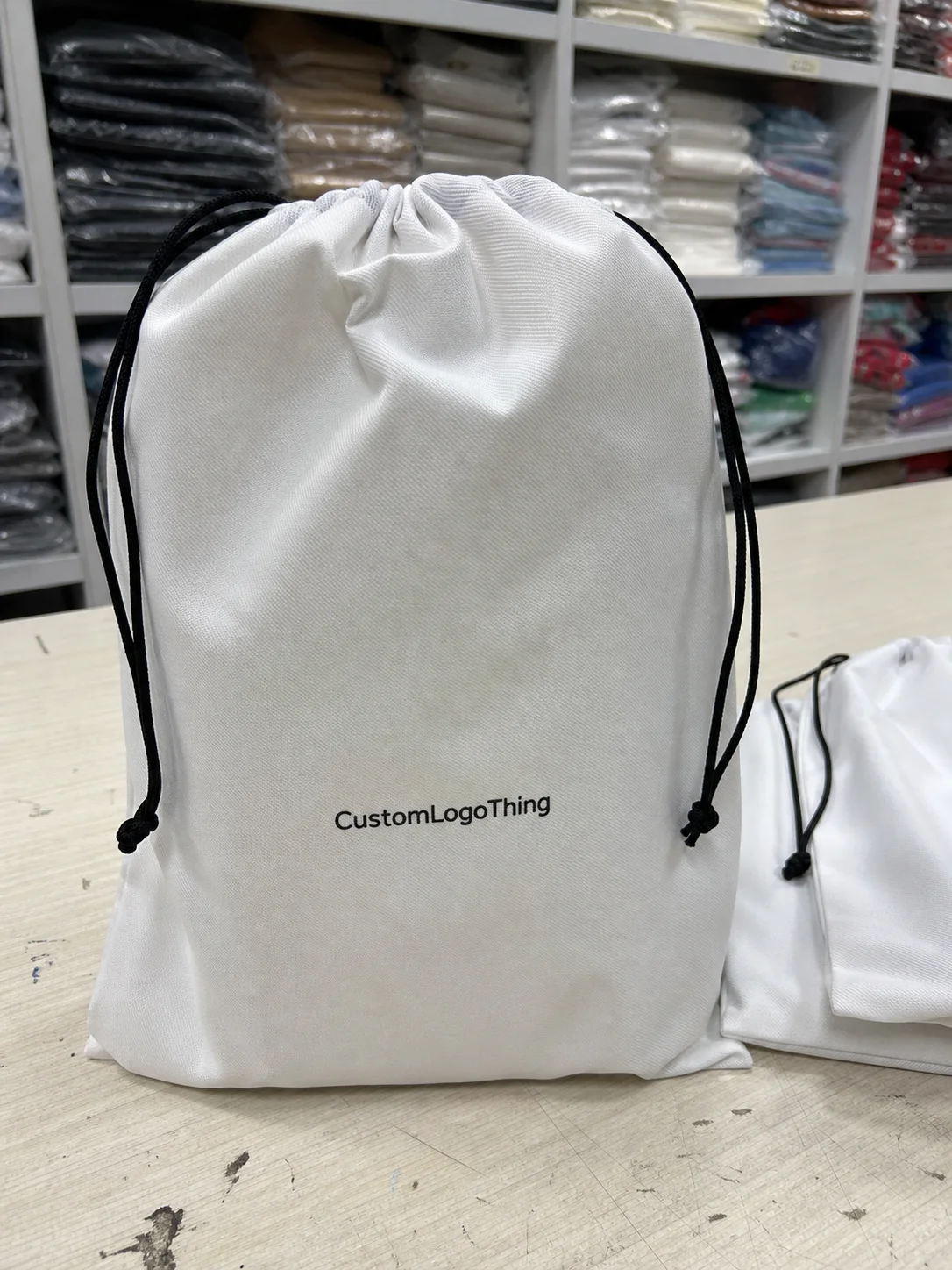
Many packaging plans start with an outer mailer and an inner pouch because it feels safer. In practice, that can add touches, material, and time. A printed drawstring bag can often do both jobs at once by containing the product and keeping the presentation tidy.
This works best with compact assortments. A flat insert, a folded garment, a small product box, or a grouped sample set usually sits well in a bag if the size is chosen correctly. The bag keeps pieces from drifting during handling, which helps the contents look organized the first time the end user opens it.
Labor is often the hidden cost. A bag that is slightly more expensive than a plain secondary pouch may still lower total cost if it shortens packing time, reduces tape use, and avoids rework from messy presentation. On larger runs, small time savings add up quickly.
This format fits event kits, welcome packs, sample sets, lightweight giveaways, onboarding materials, and retail handouts. It is not the right answer for every product, especially bulky or fragile items, but it is a practical option for organized small-item packaging.
For repeat orders and standard sizing, buyers can start with the Wholesale Programs page.
Material and Build Options That Change the Look and Feel
The base material controls most of the first impression. Clear PE film gives a clean, functional look and keeps the contents visible. Translucent film softens that look and can feel more polished. Colored or opaque material shifts the focus toward brand presence and away from visibility. The right choice depends on whether the contents should remain visible or whether the bag itself should carry the presentation.
Thickness affects both appearance and handling. A lighter gauge can work for brochures, folded inserts, or flat accessories. Heavier film usually feels sturdier and performs better when the contents have corners, edges, or a little weight. The empty bag is only a partial check; the filled bag shows whether the material and seam strength are actually appropriate.
Closure style matters as well. Simple drawstring closures are fast to use and easy for the end user to reopen, but cord quality and seam reinforcement determine whether the opening slides smoothly or binds. If the bag will be reused, handled multiple times, or included in a travel kit, those details matter more than they appear to on a spec sheet.
These are the practical material comparisons buyers usually make before quoting:
| Material / Build | Look and Feel | Best Use | Typical Cost Impact |
|---|---|---|---|
| Clear PE film | Clean, simple, highly visible contents | Sample packs, kit bundles, retail handouts | Usually the most economical |
| Translucent PE film | Soft visibility with a slightly more premium feel | Brand kits, onboarding packs, event materials | Moderate |
| Colored or opaque film | Stronger brand presence, contents less visible | Promotions, giveaways, privacy-sensitive items | Higher, depending on color and print coverage |
| Heavier gauge with reinforced seams | More durable, better for repeated handling | Travel kits, heavier bundles, shipment inserts | Higher, but often worth it for durability |
Transit conditions should be part of the material decision. If the bag is only a handout piece, a lighter build may be enough. If it will move through distribution, sit inside a mailer, or be handled several times before reaching the end user, then seam strength and film stability deserve more attention. References such as ISTA can help frame the discussion around real handling conditions instead of appearance alone.
If the kit includes paper inserts or a printed card, paper sourcing can also matter. The FSC system is relevant for the paper side of the package even when the bag itself is a separate material.
Size, Print Area, and Artwork Specs to Lock Down Early
Bag size should start with the finished contents, not with a catalog dimension. A flat insert, a folded garment, a rigid product box, and a loose assortment of small items all sit differently inside the same bag shape. The fit needs enough room for the contents to settle naturally, but not so much excess that the bag looks empty or the drawstring area closes awkwardly.
Three measurements usually matter most: the finished bag size, the usable fill space, and the opening area around the closure. If the contents are tall or rigid, depth becomes critical because a bag that looks fine on paper may pinch the product once packed. For mixed kits, a sample assembly is worth reviewing before finalizing dimensions.
Artwork setup should be settled early. One-color print is usually the cleanest and most economical choice on simple bags. Multi-color print can look stronger, but registration and ink coverage matter more, especially on thinner film where heavy ink build can change the surface appearance. Keep the logo away from the seam line and leave enough blank space so the mark still reads clearly once the bag is filled.
Vector artwork is the safest starting point. If the logo arrives as a low-resolution file, it usually needs cleanup before proofing. A useful spec sheet includes the finished size, print area, number of colors, preferred placement, and brand color references. If the bag needs to match an existing program, PMS references should be supplied up front.
Reorders become easier when the spec stays stable. Once the size, print area, and material are set, the same information can be reused across multiple runs with far less back-and-forth. That is one reason bulk drawstring Bags With Logo work well for recurring programs: the product is simple, but the process becomes predictable when the inputs are consistent.
Bulk Drawstring Bags with Logo: Cost, MOQ, and Quote Drivers
Price is usually driven by quantity, size, material thickness, print complexity, and freight destination. Quantity matters most because setup costs are spread across more units as the run gets larger. A simple one-color bag at 5,000 pieces might fall somewhere around $0.18-$0.28 per unit, while smaller runs, heavier film, additional colors, or special construction push the number upward. That range is only a working reference; the actual quote depends on the full specification.
MOQ changes by construction and print method. A basic printed bag may be available at lower quantities than a custom version with special film or extra reinforcement. If a supplier offers pricing without asking for dimensions, color count, or delivery details, treat it as a placeholder until the production variables are defined.
Buyers usually have the most control over the quote by locking the spec early. These are the main cost drivers:
- Quantity tier: higher volume usually improves unit price quickly.
- Finished size: larger bags use more material and often cost more.
- Print coverage: a simple logo is cheaper than broad or multi-panel coverage.
- Film gauge: heavier material improves handling but adds cost.
- Packaging and freight: retail packing, split shipments, and rush freight all affect landed cost.
Freight deserves more attention than it usually gets. A lower unit price can disappear quickly if the order ships in a costly way or misses a target date and has to move by air. For a fair comparison, every quote should reflect the same size, construction, quantity, and delivery requirement.
“The best quote matches the actual use case, not just the lowest number on the page.”
For planning purposes, runs below 1,000 pieces are usually less efficient because setup costs weigh heavily on the unit price. Mid-volume orders often give the best balance between cost and flexibility. At higher volumes, buyers benefit most from stable specs and repeat purchasing.
Production Steps and Lead Time You Should Plan Around
The production path is straightforward: spec review, proofing, scheduling, printing, finishing, packing, and shipment. If the buyer has already settled the dimensions and artwork, the job moves quickly. If the details are still shifting, the order slows down before it reaches production.
Lead time depends on quantity and decoration complexity, but a common planning window is 12-15 business days after proof approval for standard production. Rush work may be possible, but only when the materials, schedule, and shipping method allow it. More print colors, custom packaging, or a large quantity can extend the timeline.
Most delays are predictable: incomplete artwork, unresolved logo placement, an unconfirmed ship-to address, or a size change after quoting. Each one adds time, and all of them are avoidable if the request is complete before proofing starts.
For recurring programs, the production process is easier when the spec sheet stays fixed. That reduces the chance of changing the bag shape, print position, or artwork between runs and makes bulk drawstring Bags With Logo easier to reorder on schedule.
How to Compare Suppliers on Quality and Consistency
Sample quality tells you a lot, but only if you inspect the right details. Start with the print edges. They should be crisp, with no blur, smearing, or uneven ink build. Then look at the seams. A good bag should be straight and secure, without waviness or weak spots near the closure. The drawstring should move smoothly and close without binding or pulling the seam out of line.
The bigger question is consistency across the full run. A single approved sample is useful, but the real test is whether the supplier can hold that result across thousands of pieces. That requires stable film thickness, repeatable print placement, and finishing that does not drift as production continues.
Service signals matter too. A supplier’s response to proof questions often shows how the rest of the job will go. Do they state tolerances clearly? Do they flag artwork issues early? Do they explain what happens if the spec is incomplete? Those practical answers help separate a low-friction production partner from a seller that only wants to quote quickly.
When comparing options, ask for three things before approval:
- A sample or photo showing actual print quality on the chosen material.
- Written confirmation of size, print area, and closure style.
- A lead time that starts after proof approval, not before.
Buyers can overvalue the promotional side of the bag and underweight repeatability. The better test is whether the same result can be produced again next month or next quarter without reworking the spec. That is especially important for retail programs, recurring events, and brand kits that need the same look across multiple orders.
What to Send for a Fast Quote and a Clean Production Start
A clean quote request saves time on both sides. The most useful package includes quantity, finished size, artwork file, number of print colors, delivery ZIP code, and the in-hands date. If there is a target event or launch date, say that directly. That gives the supplier a chance to check capacity before sending a number that may not hold once the schedule is reviewed.
Proof approval should be treated as a production gate, not a formality. Check the logo placement, spelling, artwork scale, and any color notes before release. If the bag needs to match an existing brand package, include that reference early so the proof reflects the real intent rather than a rough approximation.
For internal use, keep the order details in one spec sheet. That makes reorders easier and reduces the risk of reopening the same decisions every cycle. If multiple kits or locations are involved, consistency becomes more valuable than a small difference in unit price.
Send the full spec sheet first, then ask for the quote against the exact size, artwork, and delivery need. That is the cleanest way to move bulk drawstring Bags with Logo into production without avoidable back-and-forth.
What is the minimum order for logo drawstring bags?
MOQ depends on the material, size, and print method, so it should be confirmed against the exact specification rather than assumed from a catalog listing. Larger quantities usually improve unit pricing because setup costs are spread across more pieces. Send the bag size, artwork, and quantity range to get a realistic minimum and pricing tier.
How do I choose the right size for bulk drawstring bags with logo?
Match the bag to the finished contents first, then leave room for closure, inserts, and normal product variation. If the contents are rigid or stacked, allow extra depth so the bag closes neatly without stressing the seam or drawstring. A good supplier should help translate the product dimensions into a finished bag size before production starts.
What affects the price of branded drawstring bags the most?
Quantity is usually the biggest driver, but material thickness, print coverage, and color count also move the price quickly. Freight can change the landed cost more than buyers expect, especially on heavier or rush shipments. To compare quotes fairly, make sure each supplier is pricing the same size, construction, and decoration details.
How long does production usually take?
Lead time starts after proof approval, so artwork readiness matters more than many buyers expect. Standard timing depends on workload, order size, and shipping method, while rush options are only available when the schedule allows. If the bags are needed for a hard date, share that date upfront so the production window can be checked before quoting.
Can I use my existing logo artwork for custom drawstring bags?
Vector artwork is preferred because it prints more cleanly and scales better across different bag sizes. If the file is not production-ready, it can often be cleaned up or redrawn before the proof stage. Confirm any brand color requirements early so the proof reflects the final print intent, not just the screen version.