If you need a printed printed zip lock Bags with Logo quote, the real question is not whether the bag can be printed. It is whether the bag protects the product, presents the brand cleanly, and lands at a unit cost that still makes sense after freight, setup, and waste. A decent zip lock bag keeps working after checkout. It sits in a drawer, on a counter, or in a lunch kit, which means the logo keeps getting seen long after the sale.
That matters for snack samples, coffee, cosmetics, supplements, hardware kits, and retail bundles. Buyers are not paying for plastic alone. They are paying for convenience, shelf presence, reclosability, and fewer complaints about damaged or messy packaging. If the bag is part of the product presentation, the quote should account for print clarity, closure strength, and how the material feels in the hand.
Why printed zip lock bags with logo keep working after checkout
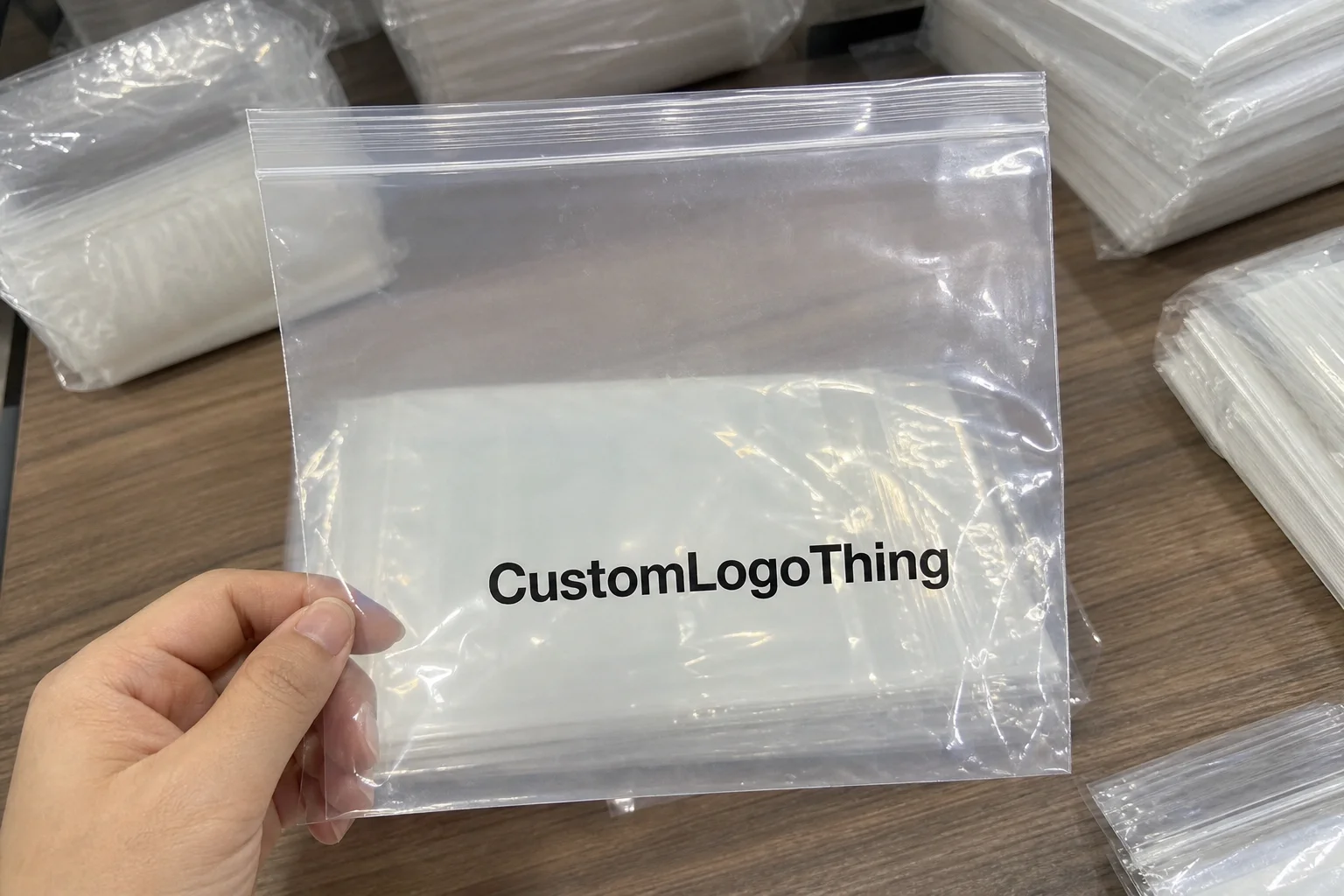
Printed Zip Lock Bags do something a flat carton cannot do as well: they travel. A resealable bag stays useful after the first opening, so the package keeps carrying the brand while the product is in use. That is why these bags work for tea samples, trail mix, powders, bath salts, screws, fasteners, and small retail assortments. The bag is not just a container. It is part of the product experience.
From a packaging buyer’s point of view, that changes the spec conversation. The logo has to stay readable. The zipper has to close cleanly. The film has to resist scuffs and pinholes during shipping. A sloppy bag sends the wrong signal fast, even if the contents are good. A clean one does the opposite: it makes a modest product look intentional.
If the bag is going to sit on a counter or inside a drawer for weeks, quality becomes visible every time someone opens it.
That is why a printed printed Zip Lock Bags with logo quote should never start with price alone. Start with use case. Is the product greasy, fragile, dry, powdery, or food-contact sensitive? Is it a sample pack, a retail SKU, or a shipping bundle? Those answers change the best material, the zipper style, and the print method. Skip that step and the quote will be cheap in all the wrong ways.
For brands that ship repeat orders, the bag also becomes a consistency test. When the print drifts, the seal fails, or the material changes without warning, buyers notice. Suppliers who understand packaging do not just price the job. They help protect the repeat experience.
There is also a resale effect. A bag that looks good enough to keep around keeps advertising without another ad spend line item. That is not magic. It is just packaging doing part of the marketing job that people already paid for.
Bag styles, film choices, and print methods that hold up
There are several bag structures worth comparing before you Request a Quote. A flat zip pouch is the simplest and usually the cheapest. A stand-up pouch costs more, but it gives better shelf presence and more printable area. Clear bags show the product well. Matte bags look more premium and reduce glare. Thicker retail-grade structures handle better in shipping and feel less flimsy in hand.
Material choice matters more than most buyers expect. Polyethylene is common for straightforward packaging because it is flexible and economical. Multi-layer films add barrier performance and better puncture resistance, which matters for food, powders, and products that need odor control or moisture protection. If the contents are sharp, oily, or heavy, a thin film is a false economy.
Print method affects both cost and appearance. Simple one- or two-color printing can work well for utility packaging. Higher coverage, more colors, and tighter registration raise the price and can lengthen setup. For stronger branding, buyers often choose flexographic or gravure printing, depending on quantity and artwork complexity. Digital printing can make sense for shorter runs, but the economics change quickly as quantities climb.
| Option | Best For | Typical Buyer Tradeoff | Price Impact |
|---|---|---|---|
| Clear flat zip bag | Samples, hardware, simple retail packs | Lowest cost, least shelf drama | Lowest |
| Matte stand-up pouch | Premium food, cosmetics, specialty goods | Better shelf look, higher material cost | Medium to high |
| Heavy-duty printed zip bag | Industrial kits, shipping bundles, repeat use | Better durability, thicker feel | Medium |
| Short-run digital print | Launches, seasonal SKUs, test orders | Flexible, but unit cost rises at volume | Medium to high |
For a lot of buyers, the smart move is not the fanciest structure. It is the one that balances product protection, branding, and inventory risk. If you are selling sample packs or low-weight products, a clean flat pouch may do the job. If the bag sits on retail shelves, a stand-up format can justify the added cost because it presents better and usually photographs better too.
For shipment testing and packaging quality checks, standards matter. If the bag is part of a packaged system that ships through distribution, ask whether the supplier can reference common test methods like those from ISTA. That is not overkill. It is how you avoid discovering weak seals after the boxes are already moving.
Size, thickness, seal quality, and compliance specs to lock down
Dimensions need to be practical, not theoretical. Buyers often give outer dimensions when what really matters is the usable interior size. If the product has a wide label, a rigid insert, or a rounded shape, the bag needs extra allowance. A few millimeters can decide whether the closure seals cleanly or fights the product every time it is packed.
Thickness is another place where cheap quotes can hide a problem. Thin bags may look fine on paper, but they wrinkle more, tear more easily, and make the print look less refined. For light samples, a thinner film can be acceptable. For sharp-edged items, thicker materials usually pay for themselves through fewer rejects and less damage.
The zipper or seal style should also be specified clearly. A basic press-to-close zipper works for most resealable bags. A stronger dual-track closure is better when the bag will be opened and closed repeatedly. Buyers should ask whether the zipper engages evenly across the full width, because weak seal consistency is one of those little annoyances that customers remember.
Compliance is not optional in the wrong category. Food-contact packaging may require declarations or tests depending on the market and application. Odor resistance matters for coffee, herbs, and certain cosmetics. If you are packaging consumer goods that touch skin or food, ask for the relevant compliance documentation upfront. For paper-based components or secondary materials, FSC certification may matter, but only if the structure includes paper or board. Do not pay for certifications you do not need. Do demand the ones your channel or category requires.
- Interior size: fit the product, not just the nominal bag dimensions.
- Thickness: match it to weight, sharp edges, and handling.
- Zipper quality: test closing force and repeat opening.
- Odor and barrier needs: especially for food, coffee, and scent-sensitive goods.
- Proofing: request a sample when tolerances are tight or branding is critical.
If the artwork or dimensions are even slightly off, ask for a pre-production sample or proof. That small step costs far less than redoing a run of 5,000 bags because the logo sat too close to the seal or the product bulged the side gusset more than expected.
In practical buyer terms, the spec sheet should answer three questions before anyone talks about price: will it fit, will it close, and will it survive normal handling. If the answer to any of those is fuzzy, the quote is not ready.
Cost, pricing, MOQ, and quote drivers for custom orders
A printed printed zip lock Bags with Logo quote is usually driven by the same few variables: bag size, film type, print sides, color count, finish, and total quantity. Add one more variable and the pricing moves again. That is normal. What is not normal is getting a quote that hides those drivers in a lump sum and leaves the buyer guessing where the money went.
Lower minimum order quantities usually cost more per bag. That is not a scam; it is how setup, plates, proofing, and run time get spread across fewer units. For small launches, that higher unit cost can still make sense because it limits inventory risk. For established SKUs, larger runs usually produce a much better landed cost.
Here is the practical way to compare offers: do not look only at the unit price. Compare freight, setup, sample charges, and any plate or tooling fees together. A quote that looks cheaper by two cents can turn into the more expensive option once shipping and prepress are included. Buyers get burned when they compare headline pricing and ignore the rest. Very avoidable, very common.
| Quote Driver | How It Affects Price | What to Ask the Supplier |
|---|---|---|
| Quantity | Higher volume lowers unit cost | Ask for tiered pricing at 1,000, 5,000, and 10,000 units |
| Print coverage | More ink and more passes increase cost | Ask whether full coverage is actually needed |
| Material structure | Barrier films and thicker gauges cost more | Ask which structure fits the product, not just the brand look |
| Finish | Matte, soft-touch, and specialty finishes add cost | Ask whether finish changes durability or just appearance |
| Proofing and tooling | May add fixed costs upfront | Ask for these as separate line items |
For a rough planning range, simple printed zip lock bags often land in the low cents to low tens of cents per unit at scale, while premium structures with heavier material, multiple colors, or special finishes will sit higher. That range depends on quantity and artwork. If a supplier gives a flat number without asking about these inputs, that quote is probably too shallow to trust.
Ask for tiered pricing so you can see where cost drops at higher quantities. That makes inventory planning easier and helps you avoid the false economy of reordering too often in tiny batches. If you are unsure which build makes the most sense, a quick discussion with Contact Us can usually narrow it down before any artwork gets touched.
One more thing: unit cost is not the same as landed cost. A bag that is a penny cheaper but arrives later, prints badly, or fails seal checks is not cheaper. It is just cheaper on paper, which is a cute way to lose money.
Process and turnaround: artwork, proofing, and production steps
The process should be straightforward. First, the supplier collects specs: dimensions, quantity, material preference, print sides, and target use. Then the artwork is reviewed for resolution, color space, and placement. After that comes the proof. Once the proof is approved, production starts. Inspection, packing, and shipment follow. Simple on paper. Delays usually come from missing details, not from the actual manufacturing step.
Turnaround depends on artwork readiness, material availability, print complexity, and whether the order needs extra approval cycles. A clean order with final vector art can move faster than a messy one with three logo versions and no confirmed dimensions. Buyers often confuse proof time with production time. They are not the same. The clock does not really start on the factory floor until the proof is approved.
Here is the pattern that shows up over and over: the buyer sends a logo file that looks fine on screen but is too low resolution for clean printing. The supplier asks for a vector file. The buyer searches for it. Two days pass. Then color changes arrive late, followed by a size correction. Every one of those steps adds delay. Clean input, fewer changes, faster delivery. Fancy? No. Effective? Yes.
Revision control matters. One sharp proof cycle is better than five sloppy ones. Each change increases the chance that a seal line shifts, a color drifts, or text gets too close to the edge. If the packaging supports a launch date or seasonal run, lock the specs early and keep approvals tight.
For most orders, the useful checkpoints are simple: artwork received, preflight completed, proof approved, production scheduled, in-process inspection, final QC, and shipment. If a supplier cannot describe that sequence clearly, expect avoidable delays later.
For buyers who want a reference point on packaging quality and transit durability, the Packaging School and industry resources can be useful for basic terminology and structure. The point is not to overcomplicate the job. It is to avoid weak assumptions that cost money later.
Why Custom Logo Things is a safer bet for repeatable packaging
For repeat packaging work, consistency beats hype every time. The approved sample should match the reorder. The print should hold color across runs. The zipper should feel the same next month as it did on the first order. That sounds basic because it is basic, and too many suppliers still miss it.
Custom Logo Things makes sense for buyers who want spec checking that catches mistakes early, pricing that is realistic instead of decorative, and communication that does not drift once the order is placed. That matters for brands with recurring SKUs, private-label bundles, subscription kits, and seasonal packaging that cannot afford surprises.
Strong packaging vendors also help you Choose the Right structure instead of pushing the most expensive one by default. That is the difference between a vendor and a problem. If the product is light and dry, you should not be pushed into an overbuilt film. If it is fragile or food-sensitive, you should not be talked out of the right material just to shave pennies off the quote.
There is also a practical business case. Fewer surprises means fewer reprints. Fewer reprints means less lost time. Better packaging means fewer customer complaints about damaged contents or sloppy presentation. That is the actual value here, not marketing fluff.
Repeatability also comes down to documentation. A good supplier keeps the approved artwork, dieline, film spec, zipper style, and finish on file so reorder discussions do not start from zero. That is boring. It is also exactly what buyers want when they are trying to keep one packaging SKU from turning into three slightly different versions.
Next steps to request a quote and move into production
To get an accurate quote, send the essentials: bag dimensions, quantity, intended product, print area, color count, finish, and target ship date. If the product is sensitive, mention food contact, odor control, or retail display requirements. If you already have a packaging sample, include a photo or note the current structure. That alone can save a round of back-and-forth.
Attach the logo in vector format if possible. AI, EPS, or PDF are the cleanest options. If the art is raster only, send the highest-resolution version available and ask for a preflight check. Also include any color standards, because “make it blue” is not a spec. If you want a close match, say so clearly.
Ask the supplier to separate the quote into unit price, setup, freight, and sample or proof charges. That makes the comparison honest. Then confirm the proof and production timeline in writing before you approve anything. If the bags support a launch or promotion, you want dates, not hope.
Useful details to include with the first request:
- Finished bag size: width, height, and gusset if applicable.
- Estimated fill weight: helps match film


