Buyer Fit Snapshot
| Best fit | Buy Branded Mailing Bags projects where brand print, material claims, artwork control, MOQ, and repeat-order consistency need to be specified before quoting. |
|---|---|
| Quote inputs | Share finished size, material target, print colors, finish, packing count, annual reorder estimate, ship-to region, and any compliance wording. |
| Proofing check | Approve dieline scale, logo placement, barcode or warning zones, color tolerance, closure strength, and carton packing before bulk production. |
| Main risk | Vague material claims, crowded artwork, missing packing details, or unclear freight terms can make a low unit price expensive after revisions. |
Fast answer: Buy Branded Mailing Bags: Specs, Pricing, and Process should be specified like a repeatable production item. The safest quote records material, print method, finish, artwork proof, packing count, and reorder notes in one written spec.
Production checks before approval
Compare the actual filled-product size with the drawing, then confirm tolerance on folds, seals, hang holes, label areas, and retail display edges. Reserve space for logos, QR codes, warning copy, and material claims before decorative graphics fill the panel.
Quote comparison points
Review material grade, print process, finish, sampling route, tooling charges, carton quantity, and freight assumptions side by side. A quote is only useful when the supplier can repeat the same color, closure quality, and packing count on the next order.
Buy Branded Mailing Bags: Specs, Pricing, and Process
If you buy Branded Mailing Bags for shipments that leave your warehouse every day, you are making two decisions at once: one about protection and one about presentation. The bag is often the first thing a customer touches, so the print, seal, and size need to do more than look neat. They need to protect the order, speed packing, and make the parcel feel considered from the moment it lands on the doorstep.
That is why experienced buyers do not start with artwork. They start with the shipment profile, the weight of the item, the route it will travel, and the cost target they can actually live with. A plain mailer protects a parcel. A branded one does that too, while also reinforcing recognition and cutting down on the generic feel that can make a shipment seem anonymous. That part matters more than some teams expect.
A branded mailer should earn its place in the budget twice: once by holding the product safely, and again by making the brand look organised the moment it reaches the customer.
Why buy branded mailing bags for everyday shipping?
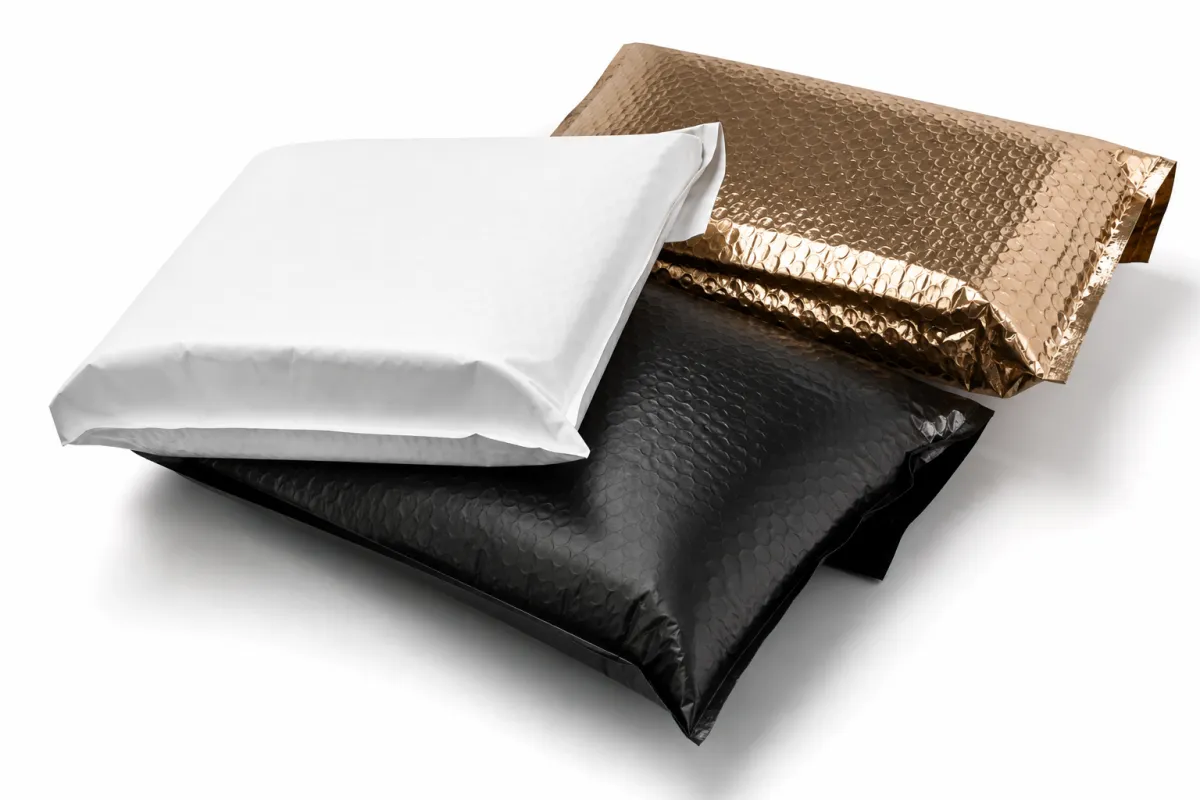
For apparel, beauty, subscription, and accessory brands, the mailing bag is not a filler item. It is the first visible signal that the order came from a real business with a plan behind it. If you buy branded mailing bags with a clear logo or web address, that signal lands before the package is opened. In practice, customers read care, speed, and trust from the outer pack long before they inspect the product inside.
There is also a practical business case. Thousands of parcels move through the system each month, and small improvements repeated at that scale compound fast. A mailer that looks deliberate can help a brand feel established even when the product line is still growing. I have seen that shift happen on the packing floor: once the outer packaging stops looking improvised, the whole operation feels more settled. That is one reason many teams buy branded mailing bags instead of relying on plain stock mailers and stickers. The bag becomes part of the shipping system, not a decorative afterthought.
From a packaging buyer's point of view, the smarter question is not "Should we print the bag?" but "How much branding can we add before we compromise utility or budget?" The seal still has to close properly. The film still has to survive handling. The dimensions still have to fit the packed item without excess slack. If you buy branded mailing bags that fail on those basics, the branding ends up carrying a bad product experience instead of supporting a good one. Nobody wants that, and it is kinda avoidable.
That is why the strongest orders are usually simple and direct: a logo on the front, a web address on the back, one or two colours, and a material specification that matches the item weight. You do not need a complicated design to make a parcel look professional. You need consistency, the right size, and a bag that behaves well on the packing line. In other words, the finish should support the operation, not slow it down.
Here is the real comparison: a plain mailer says "we shipped it." A branded one says "we planned it." For many sellers, that difference is enough to justify the extra spend, especially when a team ships at volume and wants every outgoing parcel to support repeat purchase behavior. If you buy branded mailing bags in the right spec, the branding works quietly in the background while the bag does the hard work up front.
For a broader look at how packaging choices affect handling and presentation, see our Case Studies. The pattern is consistent: brands that standardise packaging early usually see fewer mistakes, cleaner fulfilment, and less drift across reorders.
Product details: what branded mailing bags are made to do
Most branded mailing bags are built around a simple structure: polyethylene film, a pressure-sensitive adhesive seal, a tamper-evident closure, and an exterior that can carry print cleanly. That sounds basic, but each part changes performance. If you buy branded mailing bags without checking film gauge or adhesive strength, you can end up with bags that look good in a proof and behave badly in dispatch.
The outer film is usually where the branding lives. Some brands choose front-only print because it keeps the layout clean and cost controlled. Others want wraparound coverage, especially if the bag will be handled in transit and seen from multiple angles. A simple logo plus web address is often enough for a strong visual impression. That is not a compromise; it is often the most efficient way to buy branded mailing bags without wasting print area on details that never get seen.
Finish matters too. Matte film usually reads more premium and reduces glare under warehouse lighting or in customer photos. Gloss can make colours pop, but it may show scuffs sooner. Neither finish is automatically better. The right choice depends on the brand tone, the price point, and the kind of wear the parcel will see. If you buy branded mailing bags for high-volume apparel orders, a finish that hides minor handling marks may be more useful than one that photographs perfectly in a mock-up.
Functional add-ons can be just as valuable as the print. Dual-seal strips support returns. Tear strips help the customer open the bag without damaging the product. Perforations can improve tear behavior on thicker films. Recycled-content film can reduce virgin material use. These features do not always change the appearance much, but they can change the customer experience a great deal. That is why sophisticated buyers buy branded mailing bags with the functional spec in mind, not just the logo placement.
These bags suit lightweight apparel, folded textiles, soft goods, promotional kits, and direct-to-consumer shipments that do not need rigid protection. They are not the right answer for fragile items, sharp components, or goods that can puncture thin film. In those cases, a stronger mailer structure or a different format is safer. A packaging professional will say it plainly: if the item has hard edges, you are kinda asking for trouble with a thin mailer.
For broader mailer options, our Custom Poly Mailers page shows how different constructions compare across thickness, print coverage, and closure style. That comparison matters because a branded mailing bag is only one part of the shipping toolkit.
Specifications to compare before you buy branded mailing bags
If you want to buy branded mailing bags intelligently, start with size. Flat width, usable depth, and seal allowance all matter. A bag that is too tight slows packing and can strain seams. A bag that is too large wastes film, increases postage risk on some routes, and makes the shipment look under-filled. Measure the packed item first, then add space for folding and sealing. That simple step avoids a lot of expensive guesswork.
Film thickness is the next comparison point. Thinner film lowers material cost and can help keep parcel weight down. Heavier gauges improve puncture resistance and confidence for denser products. Many brands choose a middle range for routine apparel and accessory shipping, then specify a heavier option for thicker or more expensive items. If you buy branded mailing bags without matching gauge to product weight, you are essentially guessing at durability.
Print variables also change the outcome. The number of colors affects setup cost. Artwork complexity affects registration risk. Coverage area affects ink use and the time needed to make the job run cleanly. A single-color logo on one side is usually the simplest route. A full-coverage design with multiple spot colors is more striking, but it raises both cost and production complexity. Buyers who regularly buy branded mailing bags often keep a standard design system so the print stays predictable across reorders.
Seal and closure details deserve equal attention. Adhesive strength has to hold during transport, not just on the packing table. Tamper evidence matters because it signals whether the bag has been opened. Return-strip compatibility can be useful for e-commerce brands that want to reduce friction on exchanges. If you buy branded mailing bags for high-volume fulfilment, these small features become part of operational reliability rather than marketing decoration.
Compliance and sustainability options are worth checking before approval. Recycled-content film, recyclable material choices, and supplier documentation can all influence the final specification. If a supplier says the bag is recyclable, ask how the material structure and adhesive affect disposal routes. The EPA recycling guidance is a useful reference point for understanding how material choices are handled in practice, especially when internal teams need to verify claims before launch. Teams that buy branded mailing bags for sustainability reporting should ask for evidence, not assumptions.
For quality control, many buyers also refer to transit testing expectations such as ISTA methods. That is not a fancy extra. It is a useful way to validate whether a package can survive distribution handling rather than just sit well on a mock-up table. For brands shipping through parcel networks, the basic question is simple: does the spec match the journey? If you buy branded mailing bags that cannot survive the journey, the print never gets a chance to do its job.
One more technical detail: film performance can be benchmarked with standards such as ASTM D882 for tensile properties. Not every supplier will quote that standard upfront, but it is a sensible reference if your product manager wants more than a marketing description. From a buying perspective, standards reduce ambiguity. They turn "strong enough" into a measurable conversation. That is useful when you buy branded mailing bags for a brand that ships every weekday and cannot afford packaging drift.
| Option | Typical spec | Indicative unit price | Best fit | Main trade-off |
|---|---|---|---|---|
| Basic branded poly mailer | 50-60 micron, one-color print, standard seal | $0.14-$0.24 at 10,000 pieces | Simple apparel and accessories | Lower cost, less premium finish |
| Mid-range branded mailer | 60-80 micron, two-color print, return strip | $0.18-$0.32 at 5,000 pieces | Most e-commerce shipping programs | Higher setup complexity |
| Premium branded mailer | 80+ micron, wraparound print, matte finish | $0.28-$0.45 at 5,000 pieces | Brand-heavy launches and higher-value goods | Higher spend and longer lead time |
| Recycled-content mailer | Post-consumer or post-industrial content, printed logo | $0.20-$0.38 at 5,000 pieces | Brands with sustainability targets | Material availability can vary |
Those figures are directional, not a promise. They move with quantity, freight, artwork coverage, and the exact film structure. Still, they are useful because they reveal the real buying pattern: if you buy branded mailing bags at a higher quantity tier, the unit price often drops enough to offset the larger commitment. The trick is knowing whether the inventory risk is worth the discount.
Pricing for branded mailing bags: what changes the cost?
Price is usually the first number buyers ask for, but it is not the first number that matters. If you buy branded mailing bags, the cost is shaped by size, material gauge, print colors, quantity, and any special features such as return strips or matte finish. A larger bag uses more film. A heavier film uses more resin. More print colors increase setup and production complexity. Every one of those variables changes the quote in a measurable way.
What often gets missed is the difference between unit price and landed cost. A low per-bag quote can look attractive until artwork setup, sample production, freight, and any plate or cylinder charges are added. That is why experienced teams buy branded mailing bags by looking at the full order economics rather than the headline number alone. The cheapest quote is not automatically the best value if it creates delays or quality issues later.
MOQ plays a big role too. Lower volumes usually cost more per unit because the fixed setup cost is spread across fewer bags. That said, a lower minimum can be a smart choice if you are testing a new design, launching a new product line, or running a limited promotion. Many brands that buy branded mailing bags compare at least two or three quantity tiers before they approve the order, because the best value often appears just above a threshold rather than exactly at it.
The table below gives a practical comparison of the economics buyers usually face:
| Order size | Typical unit price trend | Cash tied up | Risk level | Best use case |
|---|---|---|---|---|
| 1,000-2,500 pieces | Highest | Low to moderate | Lower inventory risk, higher unit cost | Trials, launches, short campaigns |
| 5,000 pieces | Mid-range | Moderate | Balanced price and flexibility | Growing e-commerce brands |
| 10,000 pieces or more | Lower | Higher | Better pricing, more storage commitment | Repeat SKUs and steady shipping volume |
That table is useful because it shows the hidden trade-off: a larger order can lower the unit rate, but it also locks cash into stock. If you buy branded mailing bags for multiple product lines, standardising on one or two core sizes can make that trade-off easier to manage. Fewer SKUs means less duplication, simpler storage, and fewer ordering mistakes.
Another factor is turnaround. Fast production can carry a premium, especially if the schedule needs priority tooling or a compressed proof cycle. Do not assume a rush order is automatically bad value, though. If a launch date is fixed and stock-outs are costly, paying slightly more to buy branded mailing bags on time can be a better commercial decision than saving a few cents and missing the ship window.
From a buyer's point of view, the real question is whether the packaging cost supports the margin model. If the bag is only used once and the product sells on low margin, the print needs to be restrained and the spec tight. If the mailer is part of a premium brand experience, spending a little more on finish or film thickness may be justified. That is why people who buy branded mailing bags regularly rarely ask for a generic quote; they ask for a quote against a defined spec.
Process and timeline: from artwork to delivery
The ordering process is straightforward, but each step matters. First, request a quote with the size, quantity, print colors, material preference, delivery postcode, and target ship date. Then confirm the specification before artwork begins. If you buy branded mailing bags without locking those basics, the proof can look right while the actual production spec drifts away from your plan.
Artwork is where many orders slow down. Suppliers usually want vector files, color references, and a clear note on logo placement. If there are legal marks, barcodes, recycling icons, or website details, those should be supplied early. Clean artwork reduces proof rounds. It also reduces the chance that production will need a late correction. The brands that buy branded mailing bags successfully tend to have one person own artwork sign-off so the approval path does not sprawl across departments.
Timing is usually measured in business days rather than calendar weeks. Simple repeat orders can move quickly because the spec is already approved and the print setup is known. New print jobs take longer, especially if the artwork needs adjustments or the film structure is different from the previous order. A reasonable planning assumption is often 12-15 business days from proof approval for standard custom work, plus shipping time. If you buy branded mailing bags with a complex design, additional sampling, or special material, add more buffer.
The most common delay points are predictable: missing files, vague dimensions, color uncertainty, and last-minute copy changes. They are not dramatic problems, but they are expensive because they happen after the order is already in motion. That is why many experienced buyers keep a spec sheet on file and reuse it. If you buy branded mailing bags repeatedly, a documented spec is worth as much as a price list. It protects the reorder from quiet mistakes.
Packaging validation also matters. If the shipment is moving through parcel networks, testing against transit expectations such as ISTA test methods is a sensible way to reduce surprises. You do not need to over-engineer every order, but a basic test run can confirm that the seal holds, the seams survive handling, and the product stays protected after typical distribution shocks. Teams that buy branded mailing bags for recurring fulfilment should treat validation as insurance, not as a luxury.
If the shipment date is fixed, build in approval time before production starts. That sounds obvious, but it is where many launches slip. A supplier can only print what has been approved. If your internal review happens late, production cannot magically compress without consequences. The cleanest path is simple: final artwork first, proof sign-off second, production third, delivery fourth. That discipline is why brands that buy branded mailing bags at scale tend to run smoother logistics than brands that improvise every order.
Why choose us when you buy branded mailing bags
Reliability is the first reason. If you buy branded mailing bags, you need print registration that stays consistent, material quality that does not drift, and proofing that is clear enough for a buyer to approve without decoding jargon. A flashy promise is not useful if the bag arrives with the wrong dimensions or a seal that does not match the intended use. Consistency is the commercial advantage.
Packaging knowledge matters just as much. A supplier that understands mailing bags can advise on seal strength, film gauge, print placement, and the point at which extra branding stops adding value. That kind of advice can save real money. It can also prevent a common mistake: specifying more print coverage than the product actually needs. If you buy branded mailing bags with practical guidance, you often get a cleaner result at a lower cost than if you design in isolation.
Support is part of the offer, not an afterthought. Fast quotes help buying teams compare options while the campaign is still live. Transparent MOQ guidance helps finance teams understand the inventory commitment. Mock-up checks reduce errors before production begins. These are not dramatic benefits, but they are the kind that matter when orders repeat every month. Brands that buy branded mailing bags successfully usually value that support more than a sales pitch.
Repeat ordering is another advantage. Once the spec is documented, reorders become faster and safer. The approved version can be matched against the new run, which reduces drift. That matters because packaging usually changes gradually, not suddenly. A one-millimetre dimension shift, a color mismatch, or a seal change may not be obvious on paper, but it can create packing issues in live fulfilment. Buyers who buy branded mailing bags repeatedly know that the value is in stability.
If you want a better sense of the kinds of packaging decisions that hold up under real scrutiny, our Case Studies page shows how practical choices affect outcomes across different product types. The pattern is clear: the right spec saves time, the wrong spec costs money, and the best suppliers help you see the difference before the order is placed.
For brands comparing formats, our Custom Poly Mailers page is also useful because it shows how branded mailing bags sit alongside other shipping options. Sometimes the answer is obvious. Sometimes a different mailer style protects the product better. Either way, the decision should be driven by the shipment, not by habit.
Put simply, the best reason to buy branded mailing bags from a supplier like Custom Logo Things is that the order is handled as a packaging system, not as a print job. That difference shows up in the proof, in the warehouse, and in the customer's hands.
Next steps to order branded mailing bags with confidence
Before you request a quote, prepare the basics: bag size, print colors, quantity, material preference, delivery postcode, and target ship date. That information lets a supplier price the job accurately the first time. If you buy branded mailing bags with incomplete data, you usually end up in a slower back-and-forth that adds friction for everyone involved.
The next step is approval discipline. Review a digital proof, confirm the dimensions against the packed product, and sign off only after branding, seal position, and placement line up with the shipment plan. If a logo sits too close to the seal or the bag is a little tight around the product, correct that before production starts. Buyers who buy branded mailing bags carefully know that most expensive mistakes happen after approval, not before it.
It is also smart to ask for a side-by-side cost view. One quote at the minimum order. One quote at a higher quantity. That comparison shows where the unit price breaks, which in turn shows whether a larger commitment is genuinely worthwhile. A lot of teams that buy branded mailing bags discover that a modest increase in quantity produces a better cost curve than expected.
Keep a short internal checklist as well:
- Final artwork approved and exported in the correct format
- Packaging specification confirmed against the product dimensions
- Lead-time buffer built around proofing and production
- Internal sign-off completed before the supplier books the run
- Storage plan checked so the finished bags have space on arrival
That checklist sounds basic, but it prevents the majority of avoidable delays. If you buy branded mailing bags with a clear spec and a clean approval path, the order is much more likely to land on time and perform as intended. And if you are still deciding whether the quantity or construction is right, ask for guidance before approving the design. A good supplier should be able to show you where the spec is efficient and where it is overbuilt.
For brands that ship every week, the final decision is rarely about the artwork alone. It is about fit, cost, and confidence. If the goal is to buy branded mailing bags that protect shipments and look professional, lock the specification, compare the pricing tiers, and request the quote with enough lead time to avoid a rushed approval.
What is the minimum order when I buy branded mailing bags?
MOQ depends on size, print complexity, and material choice. Simpler designs usually allow smaller runs, while more complex print coverage tends to push the minimum higher. A lower minimum is possible, but the unit price is usually higher because setup costs are spread across fewer bags. If you plan to buy branded mailing bags, ask for pricing at two or three quantities so you can see where the best value starts.
How do I choose the right size for branded mailing bags?
Measure the packed item first, then add space for folding, insertion, and a clean seal. Do not choose a bag that is too tight, because that can stress seams and slow down packing. If your product range is broad, standardise on one or two sizes so purchasing and storage stay simple. Buyers who buy branded mailing bags this way usually avoid unnecessary SKU sprawl.
Are branded mailing bags strong enough for apparel shipments?
Yes, for most folded apparel orders, as long as the film gauge and seal strength match the product weight. Heavier items need a stronger specification, especially if they are stacked, routed through busy parcel networks, or handled repeatedly in transit. If the item has sharp edges or rigid components, ask for a heavier-duty option or a different mailer style before you buy branded mailing bags.
How long does it take to produce branded mailing bags?
Timeline depends on proof approval, print setup, production queue, and shipping distance. Simple repeat orders usually move faster than first-time custom work because the spec is already approved. A common planning window is around 12-15 business days from proof sign-off for standard jobs, plus transit time. Build in buffer if your launch date is fixed and you plan to buy branded mailing bags for that shipment.
Can I buy branded mailing bags with recycled or recyclable materials?
Yes, depending on the film structure and print requirements, recycled-content and recyclable options are often available. Ask how print coverage, adhesive, and any finish treatment affect the recycling path before confirming the spec. If sustainability claims need to be shared with customers or internal teams, request documentation before you buy branded mailing bags so the messaging stays accurate.
If you want a mailer that protects the order, supports the brand, and does not create headaches in fulfilment, the practical move is to buy branded mailing bags against a defined spec, compare the unit price at a few quantity tiers, and approve the proof only after size, gauge, seal, print coverage, and delivery timing are all lined up.


