Coffee Roaster Twisted Handle Paper Bags Unit Cost Review
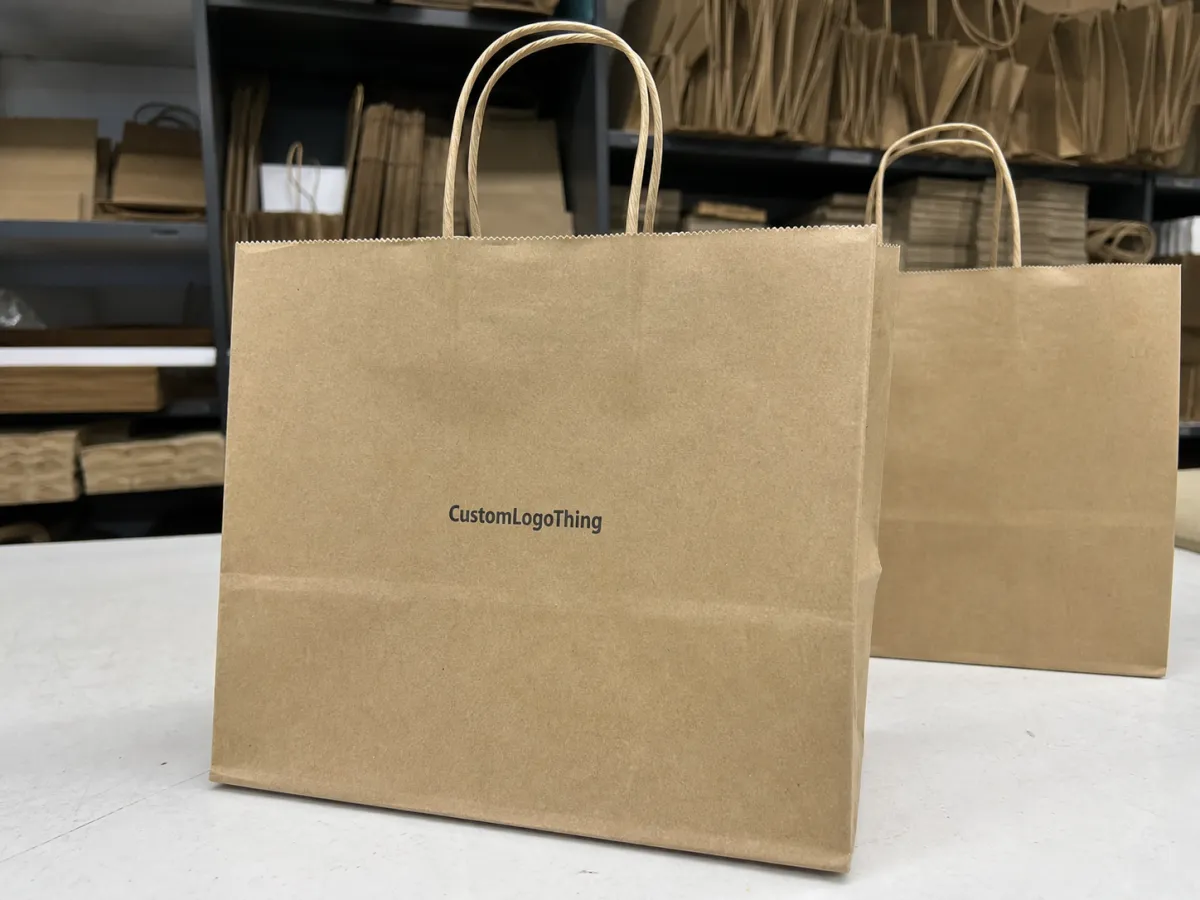
A coffee roaster twisted handle paper bags Unit Cost Review should begin with how the bag will actually be used. Will it carry beans, merch, or gift sets without looking flimsy? Will it hold up on a counter, at a market, and in transit? If the answer is yes, the bag may be worth more than the lowest line item on the quote.
Twisted Handle Paper Bags sit in a practical middle ground. They look more polished than a plain carry bag, but they do not carry the cost of heavy-laminate gift packaging. For coffee roasters, that balance matters because the bag affects the retail shelf, takeaway experience, and wholesale presentation.
The common mistake is chasing unit cost before the spec is stable. A 12 oz coffee bag, a 1 lb bag, and a mug bundle do not belong in the same packaging conversation. Each one changes the load, handle stress, and print area. Set the use case first, then compare quotes.
A bag that looks finished on day one usually saves arguments on day ten.
The point of this review is practical: repeatable quality, believable cost, and fewer surprises after production starts. The cheapest option is not a savings if it leads to repacking, damage, or a reprint.
Paper Grades, Handle Reinforcement, and Carry Strength
Paper grade changes more than appearance. It affects how the bag folds, stands, and holds up under load. Natural kraft gives a warmer, more grounded look that suits roasted coffee well. White kraft reads cleaner and gives sharper print contrast, but it can show scuffs faster when bags are handled often.
Most retail Twisted Handle Paper bags land around 120-160 gsm, with heavier builds used for bulky contents or extra stiffness. That range is a starting point, not a rule. A 140 gsm bag with a proper bottom board can outperform a thicker bag if the reinforcement is better and the folds are cleaner.
Handle attachment matters a lot. Twisted paper handles are usually glued into reinforcement patches, so patch size, glue coverage, and alignment are worth checking. If the anchor is narrow or the adhesive is uneven, the bag can feel weak even when the main sheet looks fine.
Bottom structure matters too. A block-bottom build with an insert board spreads load, keeps the bag upright, and reduces stress at the side seams. That helps when one order is a single 1 lb bag and the next includes a mug, sticker pack, or card.
Carry strength should match the contents, not the sales pitch. If the order will travel beyond a local handoff, think about carton compression, vibration, and rough handling. The ISTA framework is a useful reference when checking whether the bag and pack-out are realistic for distribution stress.
Sizing, Print Area, and Finish Specs Buyers Should Lock In
Size comes first because it decides whether the bag works at all. Width, gusset, height, and handle drop affect fit and carry feel. A bag that is too shallow crowds the top, while one that is too tall can feel wasteful or floppy. A short handle drop can make a full bag pinch the hand.
For coffee roasters, the most useful sizes usually fall into three groups: a compact bag for one item and a small accessory, a medium bag for a 1 lb roast plus a card or sample, and a larger retail bag for bundles or seasonal sets. The goal is not to make the bag look large. It is to make it look intentional.
Print area needs the same discipline. The front and back panels are the obvious brand spaces, but handles, fold lines, and the bottom seam reduce usable space. Keep important artwork away from those zones. Logos can survive almost anywhere; fine text and web addresses usually cannot.
- Width and gusset: match the product first, especially for boxed coffee or bundled items.
- Handle drop: test the full bag, not the empty sample.
- Print zone: leave safe margins around seams, handles, and the bottom board.
- Finish choice: decide whether natural kraft texture, a cleaner white face, or a coated surface fits the brand.
- Extras: windows, liners, and specialty coatings should solve a problem, not just sound premium.
Decoration is where costs start to creep. One-color printing is often the most efficient route for a reusable coffee retail bag, especially if the brand already relies on strong typography and a clean mark. Two-color and multi-color work can be worth it, but every added color means more setup and more room for registration drift.
Finish also changes the perceived value. A natural matte kraft bag can look high-end if the design is tight. A glossy coating can resist smudges, but it also changes the tactile feel and may not suit an earthy coffee brand. Ask what problem the finish solves before approving it.
Unit Cost, MOQ, and Pricing Variables for Coffee Bags
The unit cost equation is straightforward: bag size, paper weight, handle style, print count, finishing steps, carton configuration, and freight all affect the number. Quantity matters too, but not in a perfect line. The first run carries setup, artwork prep, tooling, and changeover time. Reorders are easier because those costs have already been paid.
That is why first-order pricing and reorder pricing should be treated separately. A quote that looks high on the opening job may become sensible when the spec is locked and the same bag is produced again. A low introductory price can hide a weak spec that raises the real cost later through waste, damage, or inconsistent output.
| Bag Spec | Typical MOQ | Indicative Cost Per Piece | Best Fit |
|---|---|---|---|
| Natural kraft, one-color print, standard twisted handle | 3,000-5,000 | $0.18-$0.32 | Beans, lightweight merch, simple retail carry-out |
| White kraft, two-color print, reinforced handle patches | 5,000-8,000 | $0.24-$0.40 | Sharper brand presentation and stronger contrast |
| Heavier kraft, larger format, upgraded bottom board | 8,000-10,000 | $0.22-$0.36 | 1 lb coffee, bundled sets, and fuller retail packs |
| Premium retail build, window or coating, multi-color print | 10,000+ | $0.35-$0.65 | Gift sets, seasonal releases, and higher-margin presentation |
Those ranges are broad because paper prices, freight, labor, and carton packing can all move. Use them for planning, not as fixed law. Ask for both ex-works and landed pricing so the comparison includes freight and destination fees, not just the factory-side number.
Minimum order quantity should be discussed with the print method and bag structure in mind. Smaller runs are possible, but per-piece cost rises quickly when setup is spread across too few units. If the bag will reorder often, a slightly higher first MOQ may be cheaper over six or twelve months. If the design changes every season, a giant run is the wrong fit.
A useful quote request is specific enough to remove guesswork: 5,000 bags, standard kraft, one-color print, flat-packed, with a target lead time after proof approval. That gives the supplier enough detail to price properly and gives the buyer something real to compare.
Process, Lead Time, and Production Steps From Proof to Ship
A clean production process matters because packaging jobs fail in the margins. The sequence is usually simple: confirm the spec, review the dieline, approve the proof, source material, print, cut, form, attach handles, fold, pack cartons, and ship. It only feels simple when the paperwork is complete.
Most delays come from avoidable issues: missing artwork files, last-minute color changes, a dimension update after the proof is in motion, or someone realizing too late that the print area was never checked against the handle zone. These are normal problems caused by rushed approvals.
Lead time should be stated in business days and tied to proof approval, not vague “about two weeks” language. For a straightforward one-color custom bag, 12-15 business days after approval is a workable planning range. More complex artwork, specialty materials, or larger volumes can push that toward 18-30 business days. If the order is imported, transit time becomes its own variable.
Handle attachment and die-cut accuracy are worth checking during production. The body should fold cleanly, the bottom board should sit flat, and the handles should be aligned and evenly anchored. Glue squeeze-out, crooked folds, or uneven gussets are signs that process control is loose.
Carton packing deserves attention because a good bag can still arrive damaged if it is packed badly. Flat-packed bags need enough protection to survive freight without edge damage, creasing, or bent handles. If the bags are headed to a warehouse that also handles food or glass, moisture protection and pallet wrapping should be discussed early.
How to Vet a Supplier for Consistency and Retail Readiness
Photos are convenient, but they are easy to polish. A mockup tells you almost nothing about how the bags behave in a real run. Request physical samples if possible. If not, ask for close images of the handle anchors, side seams, fold lines, bottom insert, and carton labels.
Color consistency is one of the first quality issues to show up on reorder. The first batch may look fine, but if the kraft shade shifts or the print registration drifts between runs, the brand starts to feel inconsistent. That is especially visible when the bag is used across shelf, takeaway, and wholesale channels.
Alignment matters too. Edges should be straight, handles should sit level, and glue should be clean, not smeared. None of that is glamorous, but it is what separates an organized supplier from one that is only moving paper around. Warehouse teams notice crooked stacks and damaged corners long before customers do.
Documentation is another good sign. A reliable supplier should provide a clear spec sheet, an accurate carton count, a written defect policy, and a usable reorder record. If sustainability claims are part of the pitch, verify them. For forest-based paper claims, ask for the certificate number and check it through fsc.org. If the supplier cannot support the claim in writing, do not print it on the bag.
It also helps to know whether the supplier can handle small changes without rebuilding the entire order. Coffee roasters tend to evolve quickly, with new blends, seasonal lines, and wholesale accounts that want different sizes. A supplier that can update artwork, tweak dimensions, or adjust pack-out without turning every reorder into a new project is easier to work with and less likely to create delays.
Next Steps for an Accurate Quote and Smooth Reorder
The fastest way to get a useful quote is to stop leaving gaps. Send exact dimensions, paper preference, handle style, print colors, quantity, shipping destination, and intended product weight. If the bag is meant for beans, merch, or gift sets, say so. A supplier can only recommend the right structure if the use case is clear.
For a first order, ask for a sample, a production proof, and a written spec sheet. Those three items create a record you can reuse later and reduce the classic reorder problem where nobody remembers which version was approved.
A short quote checklist keeps things focused:
- Bag size: width, gusset, height, and handle drop
- Material: brown kraft, white kraft, or a heavier board weight
- Decoration: number of colors, print sides, and any special finish
- Volume: first order quantity plus expected annual volume
- Logistics: carton count, packing style, and delivery location
That list keeps the conversation on the real drivers of cost and timing. It also makes supplier comparisons fair. Comparing quotes without matching the spec is how buyers end up choosing the wrong bag for the right reason.
For a coffee roaster, the best purchase balances brand presence with repeatable production. Good packaging should carry product, support the shelf, and reorder without drama. A strong coffee roaster twisted handle paper bags Unit Cost Review ends with that reality: lock the spec, confirm the MOQ, check the landed price, and choose the version that will still make sense after the first batch is gone.
These are the questions buyers usually ask before placing an order for custom Twisted Handle Paper bags.
What affects coffee roaster twisted handle paper bags unit cost the most?
Bag size, paper weight, handle reinforcement, print complexity, and order quantity are the biggest cost drivers. Setup fees, tooling, freight, and carton packing can shift the landed price even when the factory quote looks similar at first glance.
What MOQ is typical for custom twisted handle paper bags for coffee roasters?
MOQ usually depends on the print method, paper selection, and whether the bag uses a standard or custom die. Smaller runs are possible, but unit cost is usually higher until the order reaches a more efficient production volume.
How much weight can twisted handle paper bags carry?
Carry strength depends on paper grade, handle attachment, and bottom construction, not just the bag size. A well-built bag can handle retail coffee, accessories, and bundled items, but the contents should always match the tested spec.
What is the usual production timeline after proof approval?
Lead time varies by complexity, but once the proof is approved, production moves through printing, cutting, assembly, and packing. Artwork delays, material changes, and larger quantities can extend the schedule, so it helps to lock the spec early.
What details should I have ready before requesting a quote?
Prepare bag dimensions, paper choice, handle style, print colors, quantity, and shipping destination. If possible, include the product weight and intended use so the supplier can recommend a spec that matches real retail needs.