The soap Twisted Handle Paper bags material thickness guide most buyers need is not a single number. One bag can look crisp on a screen and still sag the moment a soap gift set, a glass jar, or a heavy bundle of bars goes inside, which is why thickness has to be judged with size, handle build, and real load together.
That is the part people miss. A twisted handle bag does not carry weight like a flat mailer or a simple paper sack; the force travels through the handle twist, into the top fold, down the side panels, and finally into the bottom seam. If any one of those points is underspecified, the bag can fail even when the paper itself sounds “thick enough.”
A bag that feels sturdy in the hand can still be the wrong choice if the soap pack-out is dense, tall, or uneven. In practice, the safest spec is the one that matches the real product, not the prettiest sample.
Soap Twisted Handle Paper Bags Material Thickness Guide: Why Thickness Changes Everything
Soap packaging creates a strange kind of pressure test. A small bar in tissue barely loads the bag, but a boxed soap trio, a glass pump bottle, or a bundled holiday set can concentrate weight in ways that pull hard on the mouth fold. That is why a soap Twisted Handle Paper Bags material thickness guide has to look beyond a “thicker is better” mindset and focus on how the bag behaves once it is filled.
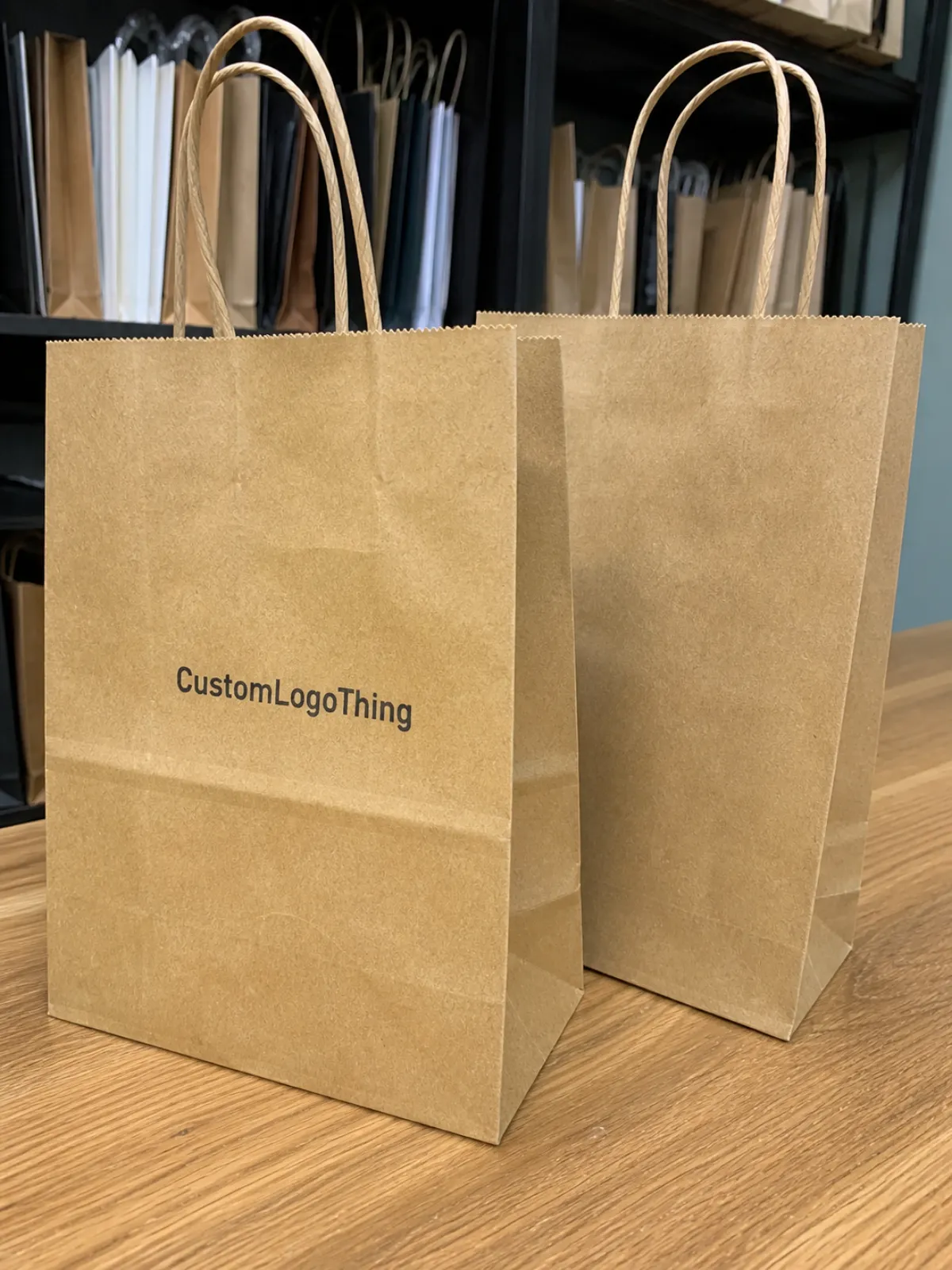
The handle design matters as much as the stock itself. Twisted paper handles are usually glued to the inside or stitched through reinforcement patches, and the stress path is very different from a rope handle or die-cut grip. If the reinforcement is too small, the glue line weak, or the top fold too narrow, the bag can tear at the mouth before the main panel ever shows distress.
Product mix also changes the answer. A 120g soap bar wrapped in paper sits differently from a 350g bath salt jar, and both behave differently from a boxed soap set with an insert. Buyers often compare 100% material terms, but a spec-based view is more useful: GSM, caliper, fiber mix, finish, handle patch size, and tested carry load.
That is especially true for brands shipping soaps inside larger corrugated cardboard cartons before retail use. The outer shipper protects transit, but the bag is what customers see and feel at the counter, so the paper needs to balance appearance, stiffness, and carry strength without overbuilding the spec and inflating cost.
How Paper Weight Becomes Carry Strength
Buyers often use GSM and caliper as if they mean the same thing. They do not. GSM tells you how much a sheet weighs per square meter, while caliper tells you how thick it is. A sheet can feel bulky in the hand yet still flex too much under load, while a denser kraft paper can feel leaner but perform better because the fibers are packed and oriented more efficiently.
Fiber structure matters. Longer kraft fibers usually bring better tensile strength, which is why many retail bags use kraft paper rather than a soft, low-density sheet that looks thick but tears early. If recycled materials are part of the build, the quality of the fiber stream matters a lot; post-consumer waste content can be a positive story, but only if the sheet still has enough strength and fold memory for repeated handling.
The load path is simple to picture if you think of the bag as a system. The handle twist takes the lift, the reinforcement patch spreads that load, the top fold resists tearing, and the side gussets stabilize the body. A small increase in paper weight can help, but a better reinforcement design often delivers more useful performance than chasing the highest GSM on the quote sheet.
For retail testing, I like to see real carry trials that mirror daily use rather than a hand-wave about “strong enough.” If the bag is meant to travel home with the customer, ask for a test protocol that resembles common shipping and retail abuse, and if the bags will be part of a broader packaged assortment, compare them with the kind of handling used in ISTA distribution testing. The point is not to certify a cosmetic bag as a transit shipper; the point is to find where it starts to fail.
Choosing the Right Material Build for Soap Packaging
The right bag build depends on what is going inside it and where the bag will be used. A lightweight bar soap sold at boutique checkout can often live happily in a lighter kraft structure, while a boxed gift set, glass jar, or bundled promotion usually needs more paper weight, a larger handle patch, and a more controlled fold line. This is where the soap twisted Handle Paper Bags material thickness guide becomes practical instead of theoretical.
For most soap brands, the common choices are uncoated kraft, bleached white kraft, and coated or laminated finishes. Uncoated kraft gives a natural feel and pairs well with recycled materials or a stripped-back brand story. White kraft can take sharper graphics and cleaner color, which helps premium soap lines. Coated and laminated finishes improve scuff resistance and print pop, but they can also change how the bag folds and how the handle area feels in the hand.
If sustainability is part of the buying brief, look for FSC certified paper and ask how much post-consumer waste is in the sheet. That does not automatically make the bag better, but it does make the story easier to defend. Paper-based bags can support biodegradable packaging goals more naturally than mixed plastic formats, yet heavy lamination, foil, or non-paper coatings can make disposal more complicated, so the finish choice should match the environmental claim you plan to make.
Here is the way I usually frame it for buyers:
- Light retail soap: 170-190 GSM kraft, simple print, moderate handle patch.
- Gift sets and boxed bars: 200-230 GSM kraft or white kraft, reinforced mouth fold.
- Heavier bundles or premium retail: 230-250 GSM, stronger patching, more careful fold control.
That last point matters because a premium surface does not automatically create a premium carry experience. A good-looking bag that slips in the hand or cracks at the top fold is a bad bag, no matter how sharp the printing looks on press sheets. The material build has to fit the retail setting, whether that is a soap counter, a subscription insert, or a trade show handout.
For buyers who want to be careful about sourcing language, the FSC standard is one of the cleanest ways to talk about managed fiber supply. It does not replace performance testing, but it does give procurement teams a clearer footing when they are comparing paper options.
Material Cost, MOQ, and Unit Price Tradeoffs
A soap Twisted Handle Paper bags material thickness guide should always include cost, because the right spec on paper may not be the right spec for the budget. The biggest drivers are fairly predictable: higher GSM or caliper, specialty kraft paper, larger bag size, heavy print coverage, foil, lamination, handle reinforcement, and extra finishing steps. Each one adds material or labor, and that cost shows up quickly in lower-volume orders.
MOQ changes the math just as much as the material choice. A 1,000-piece run has to absorb setup, make-ready, proofing, and tooling across a small quantity, so the per-unit price climbs fast. At 5,000 pieces or more, the same setup cost gets spread out and the unit price usually settles into a more usable range.
For soap buyers, the right question is usually not “What is the cheapest bag?” It is “What is the cheapest bag that will not fail in the customer’s hand?” Sometimes the answer is a simpler print layout, a standard size, or a slightly different handle style rather than jumping up one more paper grade.
| Build Option | Typical Use | Indicative Price at 5,000 pcs | Performance Notes |
|---|---|---|---|
| 170-190 GSM uncoated kraft | Light soap bars, small checkout bags | $0.18-$0.28 per unit | Good for lighter loads; basic print and moderate carry use |
| 200-230 GSM FSC certified kraft | Boxed soaps, gift sets, boutique retail | $0.24-$0.38 per unit | Better stiffness and handle support; strong everyday option |
| 230-250 GSM white kraft with premium print | High-visibility branding and retail gifting | $0.32-$0.52 per unit | Sharper graphics; needs careful fold and glue control |
| 250 GSM+ reinforced build | Heavier bundles, jars, or premium presentations | $0.45-$0.75 per unit | Strongest feel, but cost rises with reinforcement and finishing |
Those numbers are only directional, because carton size, print coverage, and freight assumptions can move the quote in either direction. Still, side-by-side pricing is useful. When buyers see the jump between a standard build and a reinforced build, they can decide whether the extra cost is really buying better performance or just a heavier-looking sheet.
Production Steps and Lead Time: From Spec to Shipment
Production is usually straightforward once the spec is clear. The factory confirms dimensions and target load, the artwork and dieline get approved, paper is sourced, the sheets are printed, then cut, folded, glued, and fitted with handles. After that, the bags need drying or curing time, inspection, packing, and shipment. On a clean order, that flow is easy to manage.
Lead time starts stretching when the spec gets complicated. Specialty paper can take longer to source, especially if the buyer wants a narrow shade match, a particular fiber story, or a nonstandard finish. New handle placements, complex print coverage, and unusual thickness combinations also add sampling time because the first prototype often tells a better story than the drawing.
In practice, a simple, already-proven bag can move fairly fast, often around 12-15 business days from proof approval for production alone. More customized soap bags, especially if they involve new tooling or premium finishing, can run longer. I would rather see a buyer build in a few extra days than approve a weak sample just to hit an optimistic schedule.
Ask the supplier a few direct questions before you sign off: Does the lead time include sample approval? Is freight included to the distribution center or only to port? Will the bags arrive flat-packed, cartonized, or pre-bagged in smaller retail bundles? Those details determine when the bags are actually usable, not just when they leave the factory floor.
Common Thickness Mistakes That Cause Bag Failure
The first mistake is choosing by feel alone. A stiff sample can seem reassuring, but if the fold lines crack, the glue line opens, or the handle patch is undersized, the bag can still fail in real use. That is why the soap twisted Handle Paper Bags material thickness guide has to be tested with actual product, not just with empty samples on a table.
The second mistake is ignoring weight distribution. A flat bundle of soap bars is not the same as a single dense jar sitting low in the bag, and neither one behaves like several items stacked high under the top fold. The taller the load, the more the bag needs body support and a stable mouth structure, especially at the gusset and the handle attachment.
Humidity creates more trouble than many buyers expect. Paper stored too long in damp conditions can soften, lose some stiffness, and feel less dependable when the customer picks it up. This is one reason sample approval should happen under realistic storage conditions, not just fresh out of a clean carton.
The final mistake is testing the wrong thing. Empty bags rarely tell the full story. A real carry test should use the actual soap assortment, lifted by the handle, moved a few times, and inspected for stretching at the top fold, bottom seam strain, or early delamination around the patch. That is where failures usually show up.
Honestly, I think the smartest buyers treat thickness as one variable in a system. The bag, the product, the storage environment, and the retail journey all have to line up. That is the difference between a bag that looks fine and a bag that keeps its shape for the customer.
Expert Ordering Tips and Next Steps for a Better Quote
Start with a clean spec sheet. Include exact dimensions, product weight, finish, handle style, print colors, target quantity, and whether the bag is meant for premium gifting or everyday take-home retail. The more complete the brief, the easier it is for a supplier to give a quote that actually matches the job.
Then ask for a sample that reflects the real load. If the bag will hold soap bottles, box them the way you plan to ship them. If it will carry stacked bars, use that pack-out. A sample that only looks good empty does not answer the main question, and it is not much help when you are trying to choose between two thickness levels.
When comparing quotes, line them up on the same basis: paper grade, GSM, caliper, reinforcement, print method, packaging format, and freight assumptions. A lower unit price sometimes hides lighter paper, smaller handle patches, or a less durable finish. A better quote is not always the cheapest one; it is the one that balances cost with real use.
If you want a quick buyer’s rule, choose the lightest build that survives the actual load, stack, and carry distance with room to spare. That is the practical heart of the soap twisted handle paper bags material thickness guide, and it is the easiest way to avoid paying for paper you do not need or under-specifying a bag that will come back as a complaint.
FAQ
What thickness is best for soap twisted handle paper bags?
The best thickness depends on product weight, bag size, and handle reinforcement, not on a single number by itself. Light soap bundles may work on a lighter kraft build, while heavier boxed sets usually need a higher GSM and stronger top-fold support.
How do I compare GSM and caliper for twisted handle bags?
GSM tells you paper weight, while caliper tells you thickness. Both matter, but neither one guarantees carry strength alone. A denser sheet can outperform a bulkier sheet if the fiber structure and reinforcement are better.
Do coated or laminated bags need less paper thickness?
Not always. Coatings improve print appearance and scuff resistance more than they improve structure. If the soap pack-out is heavy, a coated bag may still need the same or greater paper weight to carry well.
What drives the cost of custom soap twisted handle paper bags the most?
Paper grade, bag size, print coverage, handle reinforcement, finishing steps, and order quantity usually have the biggest impact on price. Lower MOQ raises the per-unit cost quickly because setup costs are spread across fewer bags.
How can I test whether the bag thickness is strong enough?
Load the bag with the actual soap assortment, lift it from the handle, and carry it the way a customer would. Check for stretching at the handle, tearing at the mouth fold, soft spots in storage, and bottom seam strain. That is the real test behind the soap twisted handle paper bags material thickness guide.