The toy twisted handle paper bags material thickness guide is really a buying guide for structure. Once a toy is boxed, wrapped, or shaped into an awkward pack, the bag has to do more than carry it. It has to hold shape, protect corners, and survive handling without making the product look cheap.
That is why print comes second. A strong logo cannot rescue weak stock, a soft bottom, or handles that pull through the top edge. For toy packaging, thickness is a functional choice with cost, freight, and presentation consequences.
The right bag feels simple in use because the spec is doing the work. The wrong one sags, bows, or shows stress before the customer even leaves the store. The goal is not the thickest possible bag. It is the smallest spec that still performs cleanly for the real toy inside.
A bag should disappear into the purchase, not become the weakest part of it.
Why Thickness Matters More Than Print for Toy Bags
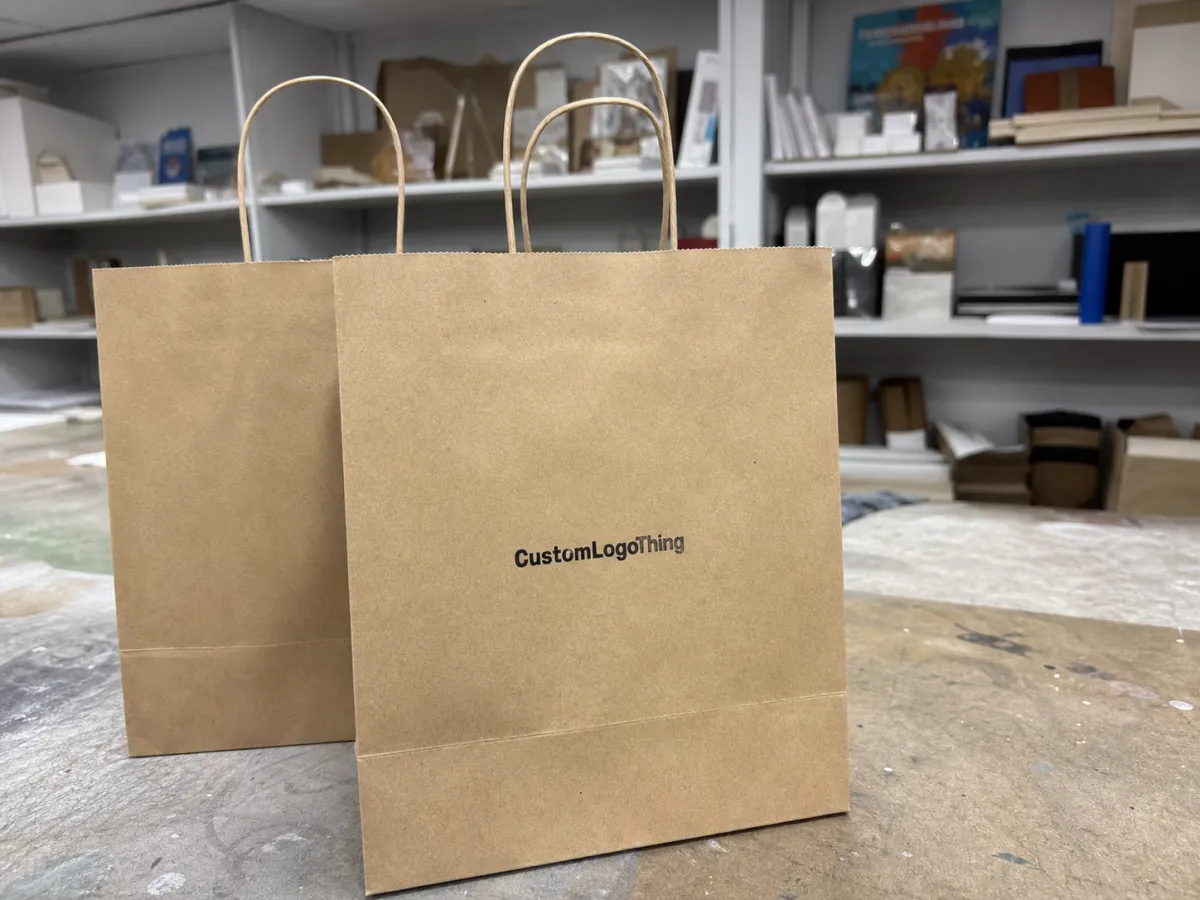
Finish can improve appearance, but it cannot fix poor structure. In toy retail, bags are handled, stacked, loaded, and sometimes reused. A bag that looks strong in a mockup but fails under a real toy load is not premium; it is a product risk.
Thickness affects GSM, caliper, stiffness, tear resistance, and bottom support. GSM measures paper mass, caliper measures sheet thickness, and stiffness determines whether the bag stands up or collapses. Tear resistance matters at folds and handle cutouts, while bottom support decides whether the bag stays flat under load.
The common failure points are easy to predict. Box corners press into the gusset, heavy inserts pull on the handles, and weak paper softens in humidity. None of that is fixed by adding more ink. It is fixed by matching the stock, reinforcement, and handle attachment to the actual product.
Perception matters too. A toy with a decent retail price can look underbuilt if the carrier feels flimsy. Customers notice crushed edges, warped walls, and a bag that looks tired before checkout. That is especially true for seasonal gifts, where the bag is part of the presentation.
Use one simple rule: if the toy is rigid, boxed, or valuable, treat the bag as structure first and decoration second. If the item is soft and light, there is more room to save on paper without hurting the experience.
How Paper Weight Changes Hold, Shape, and Feel
Paper weight and bag performance are related, but not identical. Higher GSM usually gives more body and better load handling, yet the final result still depends on paper grade, fiber mix, glue quality, and handle attachment. A bag is a system, not a single number.
- Lightweight range — suits tiny plush toys, blind-box items, party favors, and small accessories; useful when budget and freight weight matter most.
- Midweight range — common for boxed toys, craft kits, and seasonal gift bags; this is the safest starting point for most retail programs.
- Heavier range — better for premium sets, multiple items, or rigid packs with sharp corners; it adds durability but increases material and shipping cost.
Kraft paper and coated paper behave differently even at similar GSM. Kraft paper usually feels tougher and hides handling marks well. Coated stock prints brighter and smoother, but it can show creasing sooner and may feel less forgiving on folds. Recycled content can also change stiffness and color consistency, so a sample matters more than a spec sheet.
Caliper deserves attention because two papers with the same GSM can still feel very different. One may be dense and springy, while another feels bulkier but weaker under load. If a buyer compares weight alone, they can end up with a bag that feels substantial empty and unreliable once filled.
Gusset width and bottom reinforcement often make more difference than people expect. A wider gusset gives boxed toys room and reduces pressure on the side panels. A reinforced bottom helps the bag stay upright and prevents the base seam from opening after repeated lifts. For heavier bundles, that reinforcement can be more effective than jumping straight to a much thicker outer sheet.
Key Factors That Set the Right Thickness
Start with the packed product, not the marketing description. Measure the filled weight, dimensions, and shape of the actual item. Hard corners, tall boxes, and irregular parts push the bag harder than soft goods do. If the toy has a plastic shell or rigid insert, assume the bag needs more structure than the weight alone suggests.
Print coverage matters too. Dense graphics, spot UV, foil, and lamination add process steps and can reduce flexibility at the folds. That does not make them a bad choice, but they belong in the same decision as GSM, not in a separate design conversation later.
Channel changes the stress pattern. A gift shop bag, an e-commerce insert bag, and an event giveaway bag are used differently. Retail bags are judged in hand, e-commerce bags must survive packing and transit, and event bags can sometimes run lighter if the contents are controlled and the use window is short.
Budget is the last filter. Small runs magnify the cost of paper upgrades, reinforcements, and special finishes because setup is spread across fewer units. Larger runs can absorb a sturdier spec more easily, especially if it reduces damage or returns. The wrong move is paying for thickness that adds no value; the other wrong move is saving so much that the bag fails in use.
| Use case | Typical paper range | Best fit | Risk if under-spec'd |
|---|---|---|---|
| Small toy gift | 120-150 GSM | Light plush, tiny sets, party items | Sagging, soft handles, poor shelf shape |
| Boxed toy retail bag | 150-180 GSM | Standard toy boxes, medium kits | Bottom strain, corner stress, handle pull |
| Heavy multi-item bundle | 180-250 GSM | Premium gifts, multiple items, rigid packs | Split seams, collapsed base, warped walls |
Those ranges are a starting point, not a rule. A 150 GSM kraft bag with good glue and a proper base can outperform a badly built 180 GSM bag. Structure still matters as much as sheet weight.
If you want outside benchmarks, packaging.org is useful for material context, ISTA helps with transport testing, and fsc.org is the place to verify fiber claims when certification matters.
Step-by-Step Bag Spec Selection
If the order is for a real toy, start with the real toy. Not a category name. Not a guess.
- Measure the packed product — record length, width, height, and filled weight.
- Check the stress points — note corners, edges, shells, and anything that presses into sidewalls.
- Choose a paper range — select a GSM band that fits the weight and presentation goal.
- Match the structure — set gusset width, handle style, and bottom reinforcement together.
- Request a sample with the real toy — dummy weights hide problems.
- Approve structure before artwork — print cannot fix a weak bag.
The sample stage is where many projects save or lose money. Check for curl, crease memory, handle pull, bottom bowing, and scuff resistance. Fill the bag, lift it, set it down, and lift it again. If the handles cut into the paper or the bottom starts to lean after a few lifts, the structure is wrong.
For sharp or heavy toy packaging, ask for a wider gusset and a stronger bottom card. For multiple items, a slightly thicker sheet plus reinforcement often costs less than replacing damaged bags later. That is especially true when the bag is part of a retail display and has to look neat on arrival.
Recycled content and FSC-certified stock are both workable, but they can change the look and hand feel. Post-consumer fiber may reduce brightness and slightly alter stiffness. Coated recycled stocks can also behave differently on the fold line, so sample approval should include fold performance, not only print color.
Pricing, MOQ, and Unit Cost Tradeoffs
Thickness affects cost in several places. Thicker paper costs more, reinforced bottoms cost more, stronger handles cost more, and special finishes add even more. That is normal. The real question is whether the added cost improves performance enough to justify itself.
For custom toy bags, small runs usually carry a higher unit cost because setup, die-cutting, and sampling are spread across fewer pieces. As a rough market guide, simple custom twisted-handle bags in larger runs often sit in the low cents to a few tenths of a dollar per bag, while smaller or more complex orders can move into the higher cents or low-dollar range depending on size, print, and finish. Treat every quote as project-specific.
| Spec choice | Cost effect | Best reason to choose it |
|---|---|---|
| Lighter GSM | Lower material cost, lower freight weight | Small toys, tight budgets, short use cycle |
| Midweight GSM | Moderate cost increase | Best balance for most toy retail bags |
| Heavier GSM + reinforcement | Higher material and labor cost | Heavy or premium products, better durability |
Compare landed cost, not just factory price. Freight weight, carton count, pallet space, and damage risk all affect the real number. A slightly stronger bag can be cheaper overall if it reduces crush damage or repacking. The reverse is also true: a thick bag for a light toy can waste money without improving the customer experience.
MOQ changes the math as well. Common custom minimums often start around 1,000 to 3,000 units for a straightforward printed bag. Special finishes, unusual sizes, or heavier board can push that higher. First orders are rarely the cheapest because setup is spread across a smaller batch and sampling takes time.
Production Steps and Lead Time You Should Plan For
The usual production flow is straightforward: spec confirmation, paper sourcing, printing, die-cutting, handle attachment, inspection, and packing. In practice, a change in thickness can affect scoring, folding, glue coverage, and the way the bottom closes. Small changes can have large effects on the final bag.
Lead time is extended by artwork revisions, late sample approvals, paper shortages, and spec changes after the quote is already approved. A simple order may move through production in roughly two to three weeks after sign-off. More complex orders, or a first run for a new size, usually need more time. Special finishes, new paper grades, and custom reinforcement layers should always get extra buffer.
Quality control should focus on the points that fail first. Check caliper against the approved sample, glue coverage on the handle patch and bottom fold, and die-cut accuracy so the gusset folds cleanly. If the bags are for retail display, ask for carton compression protection too. A bag that looks good before shipping but warps in transit is not a successful order.
For recycled or FSC materials, confirm the exact stock spec before production begins. Fiber mix changes stiffness, coating changes scuff resistance, and humidity during storage can affect folding behavior. None of this is dramatic, but it is enough to cause avoidable variation if it is not checked early.
Common Thickness Mistakes That Waste Money
The first mistake is choosing by hand feel alone. An empty bag can feel stiff and still fail under load. A bag that feels light can perform well if the structure is right. Sample with the actual toy or the buying decision is only half informed.
The second mistake is pairing premium paper with weak construction. Thick stock and a flimsy handle attachment is a common mismatch. So is a strong front panel and a weak bottom seam. Buyers often focus on what is visible, but the bag fails where it is folded and glued.
The third mistake is ignoring storage and shipping conditions. Paper absorbs moisture. Tight cartons, damp warehouses, and long transit times can warp even a decent bag. Coated stock often shows that warping sooner than kraft, so humidity should be part of the spec if the bags will sit in storage.
The fourth mistake is oversizing the spec for a tiny giveaway item. Some orders get built as if they are carrying bricks when the product inside weighs almost nothing. That is money spent to satisfy caution rather than need. Match the bag to the use case and keep the margin intact.
The toy twisted Handle Paper Bags material thickness guide works only when thickness is treated as one part of a complete structure. Paper, handle, gusset, bottom card, print finish, and storage conditions all shape the final result. Pull one lever in isolation and the bag usually finds a way to disappoint somewhere else.
Expert Picks and Final Ordering Next Steps
The easiest decision order is this: packed weight first, presentation goal second, budget ceiling third. If those three are clear, the rest of the spec becomes much easier to settle.
If you are deciding between two adjacent paper weights, request both samples. Side by side, the difference is usually obvious. One may hold shape better. The other may fold more cleanly or print more crisply. That comparison is worth doing before you lock the order.
Before requesting pricing, confirm the basics:
- Bag size and filled weight
- Paper type and target GSM
- Handle style and attachment method
- Print coverage and any special finish
- MOQ and target lead time
- Any sharp corners, heavy inserts, or unusual shapes
If a toy has an odd profile, send a real packed sample reference instead of dimensions alone. That gives the supplier a better chance of matching the structure on the first pass and reduces revision loops.
For most toy retail programs, the right bag is not the heaviest one. It is the one that carries the product cleanly, holds shape in use, and does not waste money on paper the buyer will never notice.
What GSM works best for toy twisted handle paper bags?
For light toys, 120-150 GSM is often enough. Boxed toys usually land closer to 150-180 GSM, and heavier multi-item packs may need 180 GSM or more with reinforcement. The real answer comes from the actual filled weight and a sample test, because structure changes the result as much as the paper number.
Can toy twisted handle bags hold boxed toys safely?
Yes, if the bag has the right gusset, a secure handle attachment, and a bottom built for the load. Box corners can punch through weak stock, so the base and side structure matter as much as the front panel. Test the real boxed item, not a generic weight block.
How do I compare kraft thickness to coated paper?
Use both GSM and caliper. Kraft often feels tougher and handles minor scuffs well, while coated paper prints brighter and can feel smoother. The same GSM can behave differently across the two, so judge stiffness, fold memory, and appearance together.
Does thicker paper always mean a better toy bag?
No. Extra thickness can raise cost, make folding harder, and feel bulky for small gifts. A bag that is too heavy for the product can also be awkward in hand. The better choice is the smallest spec that still protects the toy and keeps the bag upright.
What should I confirm before I request a quote?
Confirm bag size, filled weight, paper type or GSM, handle style, print coverage, MOQ, and Lead Time. If the toy has sharp edges, a rigid insert, or an unusual shape, mention it early. That saves revisions and usually produces a cleaner quote.