Buyer Fit Snapshot
| Best fit | Buy Branded Reusable Tote Packaging projects where brand print, material claims, artwork control, MOQ, and repeat-order consistency need to be specified before quoting. |
|---|---|
| Quote inputs | Share finished size, material target, print colors, finish, packing count, annual reorder estimate, ship-to region, and any compliance wording. |
| Proofing check | Approve dieline scale, logo placement, barcode or warning zones, color tolerance, closure strength, and carton packing before bulk production. |
| Main risk | Vague material claims, crowded artwork, missing packing details, or unclear freight terms can make a low unit price expensive after revisions. |
Fast answer: Buy Branded Reusable Tote Packaging: Specs & Pricing should be specified like a repeatable production item. The safest quote records material, print method, finish, artwork proof, packing count, and reorder notes in one written spec.
Production checks before approval
Compare the actual filled-product size with the drawing, then confirm tolerance on folds, seals, hang holes, label areas, and retail display edges. Reserve space for logos, QR codes, warning copy, and material claims before decorative graphics fill the panel.
Quote comparison points
Review material grade, print process, finish, sampling route, tooling charges, carton quantity, and freight assumptions side by side. A quote is only useful when the supplier can repeat the same color, closure quality, and packing count on the next order.
Buy branded reusable tote packaging when the bag has to keep earning its place after checkout. A solid tote does more than carry a purchase out the door; it stays visible on a train platform, in a grocery line, at the office, and at the next event. For a packaging buyer, that repeat exposure is where the real value sits. It only shows up when the material, stitching, print method, and size all fit the way the bag will actually be used.
Buy branded reusable tote packaging and the decision starts to look less like a bag purchase and more like a retail packaging choice. The tote becomes part of the handoff, part of the product experience, and part of the package branding people remember after the receipt is gone. A flimsy tote sends the wrong signal fast. A sturdy one with crisp print and a useful shape gives the brand a second life every time someone carries it again.
Custom Logo Things works with buyers who need direct answers: which material will hold up, which print will stay readable, how much the order should cost, and how long production will really take once artwork is approved. That is the territory covered here. No fluff. Just the practical details that help you buy branded reusable tote packaging with a better spec, a cleaner quote, and fewer surprises.
Why should you buy branded reusable tote packaging for retail launches?
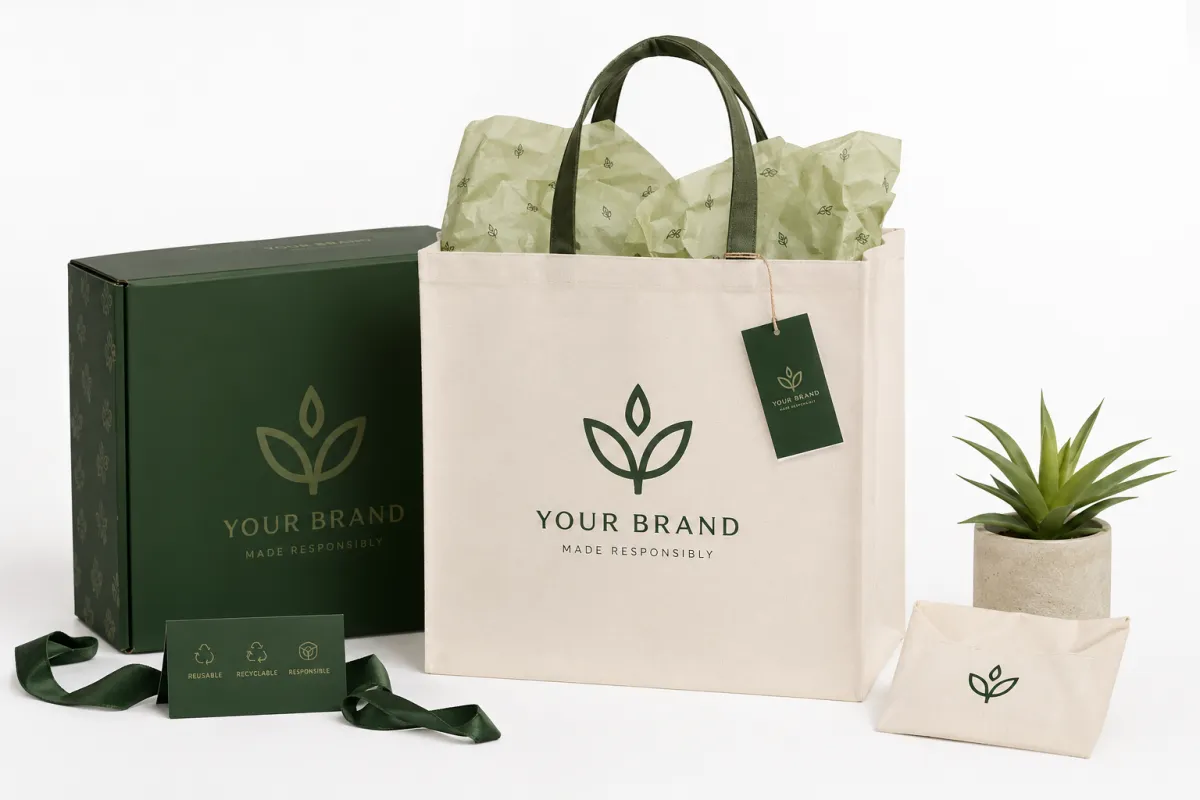
The strongest reason to buy branded reusable tote packaging is plain enough: the tote keeps working long after the original purchase disappears from view. Customers may forget the price of the item inside, yet they keep seeing the logo on the bag for weeks or months if the construction holds up. That turns the tote into more than a carrier. It becomes moving advertising, and in retail that kind of repetition is expensive to buy through other channels.
This format fits retail promotions, trade shows, subscription boxes, welcome kits, promotional tote bags, and event giveaways where durability and perceived value matter. A disposable paper bag handles one handoff. A reusable tote can handle a commute, a second shopping trip, a lunch run, or a stack of brochures. That difference is not cosmetic. The customer is judging the product and the package branding at the same time, and the tote quietly shapes both impressions.
Many teams underprice the effect a tote has on memory. Thin fabric, crooked seams, or print that cracks after a few uses makes the whole presentation feel temporary. Clean stitching, even handles, and a logo that reads from a few feet away do the opposite. The tote supports the product packaging instead of competing with it. Buyers who buy branded reusable tote packaging for launches often treat it like part of the merchandising plan because it changes how the entire offer feels.
The protection angle matters too. Reusable tote packaging can reduce scuffing, handle odd-shaped items better, and create a more structured handoff for bottles, boxes, apparel, and kits. That means fewer complaints about damaged goods and a more polished retail packaging experience. It is not the right answer for every program, yet when the contents need a strong, visible, reusable carrier, it earns its keep quickly.
There is a simple business case here: if you want the package to keep advertising for you, buy branded reusable tote packaging instead of a one-time-use bag. The tote enters the customer's daily routine, and the brand message stays present without requiring another sale.
Packaging buyer tip: Judge the tote the way you would judge a carton — by fit, strength, print clarity, and consistency across the whole run. Attractive artwork cannot rescue weak construction.
For teams comparing different branded packaging formats, it helps to view totes alongside other Custom Packaging Products rather than in isolation. A launch may need custom printed boxes for the core product, inserts for protection, and a reusable bag for carry-out or gifting. The right mix depends on the channel, not just the logo.
And if you want a sense of how package decisions play out across real projects, the Case Studies page gives useful context. Tote specs are easier to judge when you can compare them with other production outcomes.
Reusable tote materials, print methods, and finishing details
Material choice is where most of the performance difference shows up when you buy branded reusable tote packaging. Cotton feels soft and familiar, canvas gives more body and a more premium hand, non-woven polypropylene often wins on volume and budget, and recycled blends can support sustainable packaging goals when the buyer wants a lower-impact story. None of them is automatically the right answer. The best choice depends on what the tote has to carry, how often it will be reused, and what impression the brand wants to leave behind.
Soft cotton works well for lifestyle branding, artisan retail, museum shops, and gift programs because it drapes nicely and feels approachable. Heavier canvas is usually better when the tote needs stronger structure or more carrying strength. Non-woven polypropylene is common in retail packaging and event programs because it keeps cost controlled while still giving the customer a reusable carrier with a decent print surface. When the order needs a more sustainable angle, recycled-content fabrics can be a smart middle ground, but the buyer should confirm the actual fiber content and request documentation before approving the spec. Recycled claims vary more than people expect, and that part is kinda messy unless you ask for proof.
Print method matters just as much as fabric. Screen printing is often the most efficient choice for solid logos, one- or two-color artwork, and bold shapes that need high contrast. Heat transfer can handle more detailed graphics or gradients, though the feel and durability depend on the material and application. Embroidery gives a premium look and a tactile finish, but it adds cost and is not always the right choice for light fabrics. Full-color print works when the art demands more detail, yet it should be checked carefully for clarity on textured surfaces.
I once reviewed a run where a logo looked perfect on screen and nearly disappeared on unbleached cotton because the ink tone was too close to the fabric. The fix was simple: darken the print, enlarge the safe zone, and move the mark up a half inch. That kind of adjustment is why proofs matter so much. They reveal problems that mockups politely hide.
Finishing details are where a tote either feels thought through or rushed. Gussets create more usable space. Reinforced seams keep handles from tearing out under load. Hemmed edges clean up the top line and help the tote keep its shape. Stitch density matters more than many buyers expect, because a few extra rows of thread can change how the bag performs over time. Handle length deserves attention too, since a short drop may feel fine in a showroom and awkward in real use when the tote is full.
- Gussets: better volume and easier packing for boxed goods.
- Reinforced seams: important for bottles, catalogs, and heavier retail items.
- Handle drop: affects comfort when the tote is carried by hand or over the shoulder.
- Bottom inserts: useful when the tote needs a flatter base and cleaner presentation.
- Closure or lining: adds a more finished feel for premium gifting or kits.
For buyers who want a neutral source on packaging terminology, material behavior, and general structure language, the trade resources at packaging.org are worth a look. The goal is not to turn a tote into a lab project. The goal is to understand enough of the material and print language to make a clean buying decision.
Design teams also need to remember that packaging design is not just artwork placement. A tote for groceries, a tote for a fashion launch, and a tote for a conference handout each call for different construction. If the bag is expected to carry heavier items, prioritize seam strength and handle reinforcement. If it is mainly a visual brand piece, focus on print clarity, fabric color, and overall finish. That is the difference between a tote that merely exists and one that supports product packaging in a meaningful way.
Size, weight capacity, and specification checks
Before you buy branded reusable tote packaging, get the measurements in writing. The numbers that matter are body width, height, gusset depth, handle drop, and any added features such as pockets, zippers, closures, or internal compartments. Those dimensions decide whether the tote fits the product, sits correctly in the customer's hand, and stacks efficiently during packing and shipment. One inch can matter more than people think when the tote has to hold catalog sets, bottles, or boxed merchandise.
Weight capacity deserves a direct conversation, especially if the bag will hold dense retail goods. A lightweight lifestyle tote may be fine at 8 to 12 pounds, while a heavier cotton or canvas build may be the better fit at 15 to 25 pounds or more. That number is not only about the fabric. Handle stitching, seam reinforcement, gusset construction, and the way the load sits inside the bag all affect real performance. A tote can look strong and still fail early if the stress points are not built well.
Artwork placement should be mapped before approval. Some buyers want front-only decoration. Others want double-sided print for maximum visibility. The visible print area may be interrupted by seams, handles, or a gusset fold, so the logo scale and safe margin need to be checked against the actual pattern. If the brand mark sits too close to the edge, it can look cramped once the bag is sewn. If it is too small, it can disappear in real-world use. That mistake shows up often in branded packaging programs, and a measured proof solves it early.
Color accuracy is another point where careful specification work pays off. Pantone targets help keep the logo consistent across reorders, but the fabric color, print opacity, and surface texture still affect how the final piece reads. A natural cotton tote will not look the same as a dyed canvas tote, even if the ink match is good. Buyers who buy branded reusable tote packaging for a multi-location rollout should ask for approval against the exact material, not just a digital mockup.
A sample or pre-production unit is often the smartest step because a real tote reveals the issues that artwork alone cannot show. The sample tells you whether the body is too small, whether the handles sit too high, whether the fabric feels too thin, and whether the logo looks crisp when held at arm's length. In packaging terms, that sample is the fit check. It protects the launch.
If the tote ships inside a master carton, ships with other product packaging, or needs to survive a distribution chain before it reaches the customer, transit testing should not be ignored. The standards framework at ISTA is a sensible reference for buyers who want to think through handling, vibration, and distribution stress in a structured way. Not every tote needs formal testing, but every tote benefits from disciplined thinking about how it will move.
From a specification standpoint, the safest way to buy branded reusable tote packaging is to define the use case first and the decoration second. Size, load, structure, and carrying style should drive the build. Artwork should fit the build, not fight it.
Buy branded reusable tote packaging: pricing, MOQ, and reorder math
Pricing gets much clearer once you understand the main cost drivers behind buy branded reusable tote packaging. Material weight is one. Tote size is another. Print colors matter, and so do the number of decorated locations, the stitching pattern, the handle reinforcement, and any extras such as lining, lamination, or closures. The more the tote feels like a custom retail piece, the more those details shape the final quote.
Minimum order quantity, or MOQ, follows the same logic. Simpler stock-style totes usually allow lower minimums because the production setup is easier and the material is more common. Fully custom sizes, premium fabrics, embroidery, or unusual finishing often push the MOQ higher because the factory needs enough volume to make the run efficient. Buyers sometimes ask for the lowest possible order, but there is a tradeoff: the smaller the run, the higher the per-unit cost usually climbs.
| Material / Build | Typical Use | Approx. Unit Cost at 5,000 pcs | Common Notes |
|---|---|---|---|
| Non-woven polypropylene | Retail promotions, event giveaways, high-volume handouts | $0.28 - $0.55 | Good for simple logos, controlled budgets, and lighter loads |
| Recycled blend fabric | Sustainability-driven retail packaging and membership kits | $0.40 - $0.85 | Ask for fiber documentation and confirm actual recycled content |
| Cotton tote | Lifestyle branding, gift programs, retail carry-outs | $0.60 - $1.20 | Soft hand, good print surface, moderate structure |
| Heavy canvas with reinforcement | Premium retail packaging, bottles, kits, repeated daily use | $0.85 - $2.25 | Higher perceived value, stronger construction, more sewing labor |
Those numbers are directional, not fixed. They assume a reasonably standard production run, normal artwork setup, and factory pricing before freight and local handling. A small order can move above those ranges quickly, especially if it needs special sewing, multiple print locations, or embroidery. A larger order can bring the unit cost down, but only if the buyer is confident the volume will move through inventory. The cheapest piece is not always the best buy if it leaves a launch overstocked.
The hidden numbers deserve attention too. Sample fees, proofing charges, freight, import handling, and the cost of a reprint if the first run sells out faster than expected all belong in the math. A tote that looks inexpensive on paper can turn costly if the freight lane is long or if the buyer has to rush a reorder under pressure. That is why experienced buyers compare landed cost, not just factory price, before they decide to buy branded reusable tote packaging.
Practical rule: compare the total landed cost against the sales window. A slightly higher unit price is often the smarter purchase if it gives better construction, fewer defects, and less risk of a rushed second order.
When you request a quote, keep the inputs complete and specific. Quantity, dimensions, material, print method, artwork color count, destination, and delivery date should all be on the table. The cleaner the brief, the fewer assumptions the supplier has to make. That matters especially in branded packaging programs, where a small wording change in the spec can shift the entire cost structure.
For buyers comparing totes against other formats, think in the same way you would compare Custom Printed Boxes and premium bags. How much value does the customer feel? How much protection does the product need? How long should the packaging last in the market? Those answers shape whether the tote should be basic and economical or heavier and more presentation-driven.
Production process and timeline from proof to delivery
The production path is straightforward when everyone stays aligned. First comes the quote. Then artwork review. Then proof approval. After that, the order may move into a sample or pre-production check if the spec is complex or if color accuracy matters a great deal. Once approval is locked, the factory starts production, followed by inspection, packing, and shipment. That sequence is normal for buy branded reusable tote packaging orders, and each step affects the final in-hand date.
- Quote and spec review: quantity, material, dimensions, decoration, and destination are confirmed.
- Artwork check: file format, logo placement, print colors, and safe margins are reviewed.
- Proof approval: the buyer signs off on the visual layout and any key notes.
- Production: fabric cutting, printing, sewing, and finishing are completed.
- Inspection and packing: the order is checked for quantity, print quality, and construction consistency.
- Shipment: freight is booked and the order moves to the destination.
Where do delays usually happen? Incomplete artwork files. Unclear color targets. Late approvals. Last-minute changes to quantity or construction after the quote is already out. These are the most common problems, and they are predictable. A buyer who wants to buy branded reusable tote packaging without schedule stress should treat proof approval like a release gate, not a loose suggestion.
The timeline depends on the build, but a straightforward run is often completed in roughly 12 to 18 business days after proof approval, with more complex sewing, embroidery, or custom sizing pushing longer. Freight has to be counted separately. Ocean, ground, and expedited options all change the true arrival date, and the fastest factory schedule is not useful if the shipping lane is not planned correctly. That is why packaging buyers should ask for both production time and transit time before they commit.
A practical buffer is always smart before a launch, event, or store opening. If the totes are needed for a campaign rollout, plan enough time to inspect the first cartons, verify the print, and distribute the inventory internally. A tote order that arrives a week early is useful. One that arrives a day late is a problem, even if the factory built it perfectly.
Good communication keeps the schedule from slipping. When buyers keep the approval process tight and answer questions quickly, the calendar usually holds. When they pause for days between revisions, the production clock stretches. The order itself has not changed, but the timeline has. Buyers who buy branded reusable tote packaging with that in mind usually end up with a cleaner result and fewer surprises.
If the tote is part of a broader product packaging system, the entire timeline should be mapped against other components too. Boxes, inserts, tissue, and outer mailers may all have different lead times. Coordinating them early keeps the launch from turning into a rush order.
Why choose us for branded reusable tote packaging
The best reason to work with a supplier on buy branded reusable tote packaging is not a glossy promise. It is the ability to get straight answers on materials, print quality, and construction without decoding vague sales language. Buyers Need to Know what the tote will feel like, how the logo will reproduce, and where the cost changes if the spec changes. That kind of clarity saves time and usually saves money too.
Custom Logo Things approaches branded packaging as a production decision, not just a visual one. The conversation starts with use case, expected load, and distribution channel. Is the tote going into a retail launch? A trade show kit? A premium welcome package? A seasonal promotion? The right answer depends on the job. A good supplier should be able to explain the tradeoffs clearly, especially when the buyer is trying to balance appearance, durability, and budget.
Consistency matters as much as initial quality. When a retail team plans a rollout across multiple locations, they need the same print, the same color behavior, and the same construction from one batch to the next. They also need communication that keeps them informed if a proof changes, a freight lane shifts, or a material substitute becomes necessary. That is part of good package branding support, and it is one reason buyers come back to suppliers that keep notes organized and specs precise.
Here is the sort of working mindset that helps most:
Choose the tote that fits the job. Not the most expensive one. Not the cheapest one. The one that holds the product properly, presents the logo well, and lands within the budget without creating operational headaches.
That approach applies whether the buyer is comparing tote options, reviewing Case Studies, or building a broader branded packaging program that includes custom printed boxes and Product Packaging Inserts. Practical guidance reduces guesswork. Buyers do not need jargon. They need a clear path to a tote that performs.
For teams that want a broader view of available formats, Custom Packaging Products gives a useful sense of how reusable tote packaging sits alongside cartons, mailers, and other presentation pieces. That comparison helps the buyer choose a system instead of a single item. In packaging, the system is often what makes the customer experience feel finished.
So, if your goal is to buy branded reusable tote packaging with fewer risks and fewer assumptions, the right partner should be able to speak plainly about stitch strength, print behavior, order quantity, and lead time. That is the real service. Everything else is decoration.
How do you buy branded reusable tote packaging with confidence?
The fastest way to move from interest to approval is to gather the spec before you request the quote. If you want to buy branded reusable tote packaging without going back and forth for days, prepare quantity, tote dimensions, intended product weight, logo files, preferred material, decoration method, and the delivery date that actually matters. A supplier can work much faster when the brief is complete on the first pass.
- Quantity: know the expected order size and the next price break.
- Dimensions: confirm body width, height, gusset, and handle drop.
- Load: identify what the tote must carry and how often it will be reused.
- Artwork: send vector files and note any Pantone targets.
- Material: decide whether cotton, canvas, non-woven, or a recycled blend fits the job.
- Timing: include the actual in-hand date, not just the quote request date.
It also helps to compare options using landed cost rather than unit price alone. Freight, sample fees, setup charges, and handling can change the real total enough to alter the buying decision. If one tote costs a little more but arrives on time and holds up better in use, that is often the better commercial choice. The lower figure on paper is not always the better value in the warehouse.
Request a proof or sample before final approval whenever the tote has to match a retail presentation, a color standard, or an existing branded packaging system. That one step can catch issues with logo size, fabric tone, handle length, or seam placement before the whole run is committed. It is a small checkpoint with a very large upside.
Confirm the production plan in writing. Proof approval. Lead time. Shipment method. Final sign-off contact. Those details sound basic, but they prevent the kind of confusion that turns a simple order into a delayed one. If the order is part of a launch, the schedule should be treated with the same care as any other product packaging element.
If you are ready to buy branded reusable tote packaging, the next move is straightforward: send the specs, review the quote, approve the proof, and move the order forward with confidence. That is the cleanest path to a tote that looks right, carries well, and keeps your brand visible long after the original purchase is gone.
FAQs
What is the minimum order when I buy branded reusable tote packaging?
Minimums depend on material, print method, and whether the tote is stock-sized or fully custom. Simpler constructions usually allow lower quantities, while custom shapes, premium fabrics, or multi-color decoration often need higher MOQs. The best approach is to quote the exact quantity needed first, then compare the price break at the next tier before deciding to buy branded reusable tote packaging.
Which material is best for branded reusable tote packaging with heavier items?
Canvas and heavier-weight cotton are strong choices when the tote must carry bottles, boxes, or dense retail goods. Reinforced non-woven options can also work well for high-volume distribution when budget and durability both matter. Ask for a load-focused spec check, because handle stitching, seam strength, and gusset design matter as much as fabric choice when you buy branded reusable tote packaging.
Can I match my logo colors when I buy branded reusable tote packaging?
Yes, color matching is usually possible, but the method depends on the fabric and print process. Pantone targets are helpful for keeping logos consistent across multiple reorders. A proof or sample is the safest way to confirm how the color reads on the selected tote material when you buy branded reusable tote packaging.
How long does production usually take for branded reusable tote packaging?
Timeline depends on artwork approval, sample needs, order size, and the complexity of the construction and print. Fast approvals keep the schedule moving, while late changes are one of the most common causes of delay. Freight time should be counted separately from manufacturing time so the in-hand date is realistic when you buy branded reusable tote packaging.
What should I prepare before requesting a quote for branded reusable tote packaging?
Prepare quantity, dimensions, material preference, logo files, color count, and any special features like gussets or closures. Include the target delivery date and destination so the quote reflects the true production and freight plan. If possible, share the product the tote will carry, because that helps confirm the right strength and size before you buy branded reusable tote packaging.


