For a cold-weather cafe, custom beanies for coffee shops often beat heavier apparel. People reach for them when the temperature drops. Early rushes, patio shifts, delivery runs, and winter sidewalk lines all create moments where a beanie feels useful first and branded second. Who wants a promo item that only works on paper? That makes it an easy fit for staff uniforms and retail merch without feeling forced.
Cold mornings help.
They also work for a simple reason: coffee shop branding depends on repeated, small touchpoints. A hat worn behind the counter gets seen more often than a shirt logo hidden by an apron. A folded beanie on a shelf can also make the shop look organized and seasonal. Small item. Clear signal.
Why Beanies Outperform T-Shirts on Busy Cafe Floors
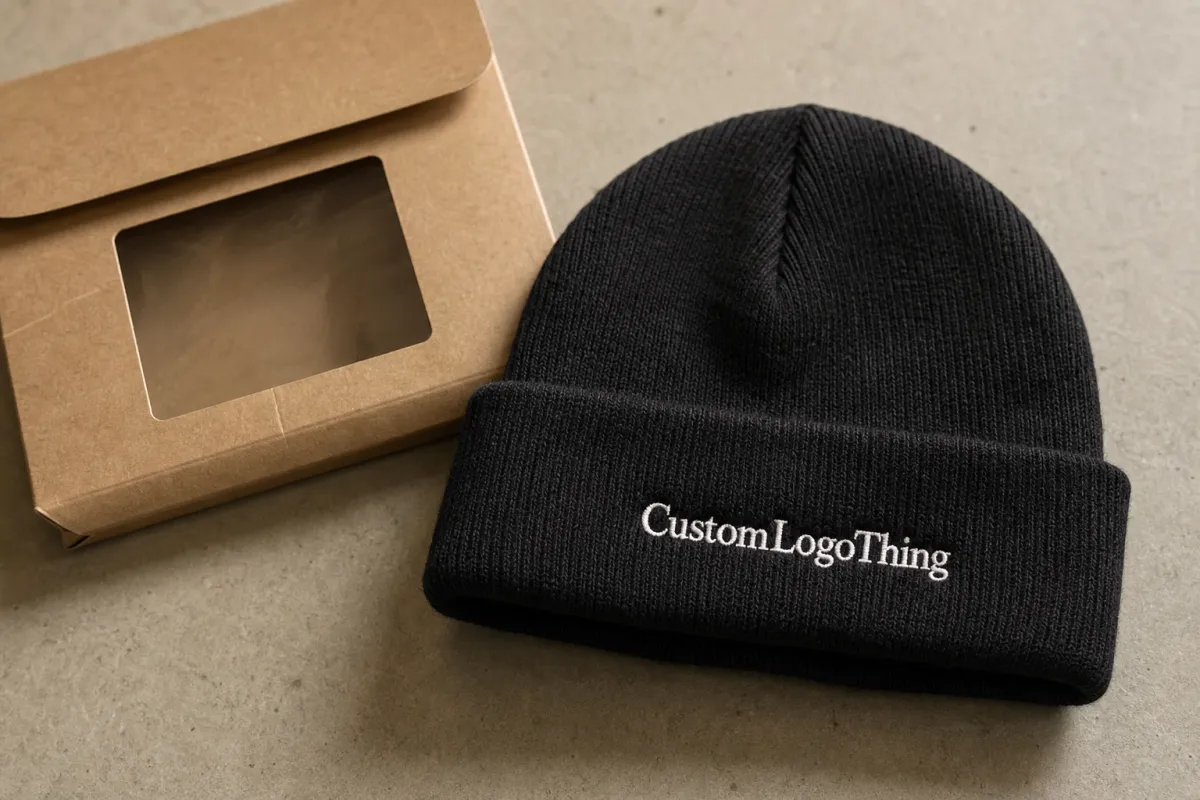
Beanies show up at the right time. Mornings are cold, doors open constantly, and staff move between the bar, the patio, and storage. In that setting, a knit cap stays visible longer than a shirt graphic that disappears under layers. Even a small logo can read well on a cuff because the eye lands on the face, then the hat, then the brand.
That matters in smaller cafes where people stand close to the counter. Oversized graphics are not necessary. The logo only needs enough contrast to register quickly. Why hide the mark under layers? That is one reason custom beanies for coffee shops often outperform more decorative apparel: the visual job is simpler, and the product is harder to hide.
One-size headwear also keeps operations simpler. There are fewer sizing issues, fewer exchanges, and fewer questions about fit. For small teams, that keeps uniform planning straightforward while still giving the shop a coordinated look.
A cafe beanie should feel like part of the uniform, not a branding stunt the team has to tolerate.
What Custom Beanies Usually Include
Most orders start with four decisions: knit density, cuff height, silhouette, and decoration method. Those choices decide whether the final piece looks premium or cheap. A tighter knit usually holds embroidery more cleanly and keeps the logo surface flatter. A looser knit feels softer but can blur small details.
Cuff height matters more than many buyers expect. A deeper cuff leaves more room for decoration and usually reads better from across the counter. A shallower cuff looks lighter and more casual. Neither is wrong; they simply serve different goals.
Decoration is the biggest practical decision. Embroidery is the standard because it is durable and easy to understand. Woven patches work when the logo has fine lines or too much detail for thread. Sew-on labels are quieter and suit shops that want a softer, more minimal look. Each method changes the hand feel, and that matters because beanies sit directly against skin.
Presentation is part of the product. Folded retail sleeves, hang tags, belly bands, and simple size cards can make the beanie feel shelf-ready. That helps when the shop sells gift bundles or pairs hats with mugs and tote bags.
Shelf-ready sells.
Common build choices
- Knit density: tighter for sharper logos, looser for a softer feel.
- Cuff height: deeper cuffs leave more room for decoration.
- Silhouette: cuffed, mid-slouch, or relaxed retail style.
- Decoration: embroidery, woven patch, or sew-on label.
- Packaging: folded, tagged, sleeved, or ready for shelf display.
Material, Fit, and Branding Factors That Change the Result
Material choice affects more than warmth. Acrylic is common because it is affordable, color-consistent, and easy to produce in volume. Acrylic-wool blends usually feel warmer and less plastic in the hand. Premium blends can improve comfort, but they also raise cost. If the beanie will be worn all day, softness and breathability matter as much as insulation.
Fit should match the use case. Staff wear usually needs a secure fit so the beanie stays put during service. Retail merch can lean more relaxed and photogenic. A deeper cuff helps bridge both goals by adding structure without making the hat feel stiff.
Branding details decide whether the hat reads polished or messy. Thread color needs enough contrast to be legible from a few feet away. Placement on the cuff usually works better than dropping the logo too low on the body. Tiny artwork can work, but once a design gets too detailed, knit texture and stretch start to blur the message. Why make the logo fight the fabric?
Simplified logos usually beat elaborate graphics. A strong icon, wordmark, or short line of text survives wear and washing better than a crowded layout. It also photographs more cleanly, which helps if the beanie will be sold online. Ask about stitch density, yarn quality, and colorfastness. If the supplier cannot explain those clearly, keep looking.
Durability is worth asking about too. Some lower-grade fibers pill quickly, especially in dry climates or under daily wear. A sample may look fine on day one and tired by week three, so many buyers choose a practical blend instead of chasing the softest possible hand feel without testing longevity.
| Decoration style | Typical fit and feel | Visual result | Best use |
|---|---|---|---|
| Embroidery | Firm, slightly textured | Classic and durable | Staff uniforms and core merch |
| Woven patch | Smoother against the knit | Sharper for fine details | Premium retail packaging and complex logos |
| Sew-on label | Low-profile, comfortable | Subtle and modern | Minimal branding or fashion-forward shops |
Custom Beanie Production Steps and Turnaround
Production starts with artwork review and proofing. Delays usually begin when the logo file is low resolution, poorly organized, or hard to translate into knit decoration. Vector files help. Clean shapes help. So does a clear note about placement and scale.
After proof approval, the order moves into sourcing. Depending on the style, that may involve blank stock, yarn colors, patch materials, or packaging components. Larger orders sometimes need a sample or pre-production check, especially if the artwork is detailed or the brand cares about exact color matching.
Once production starts, the work is mechanical: knit or source the hats, decorate them, trim loose threads, inspect the pieces, fold them, and pack them. If the order includes sleeves, tags, or shelf-ready packaging, those parts need to be added cleanly so the final box can go straight into staff distribution or retail display.
A realistic planning range for many straightforward orders is about 12-20 business days after proof approval. More complex embroidery, special packaging, or sample-dependent runs can take longer. The exact timeline depends on quantity, decoration method, and stock availability.
For buyers who care about shipping and sourcing standards, it helps to think like a packaging buyer. Transport testing references like ISTA and responsible fiber sourcing frameworks like FSC can be useful comparison points when evaluating vendors or sustainability claims.
How Pricing, MOQ, and Quote Structure Actually Work
Pricing comes down to a few variables. Quantity has the biggest impact because setup and decoration costs spread out better on larger runs. Material weight matters too, along with knit quality, patch style, thread count, and whether the logo appears once or in multiple places. If a quote looks vague, it probably is.
MOQ, or Minimum Order Quantity, is simply the smallest run a supplier will make at a workable price. For a small cafe, that usually means choosing whether the first order covers staff, retail, or both.

