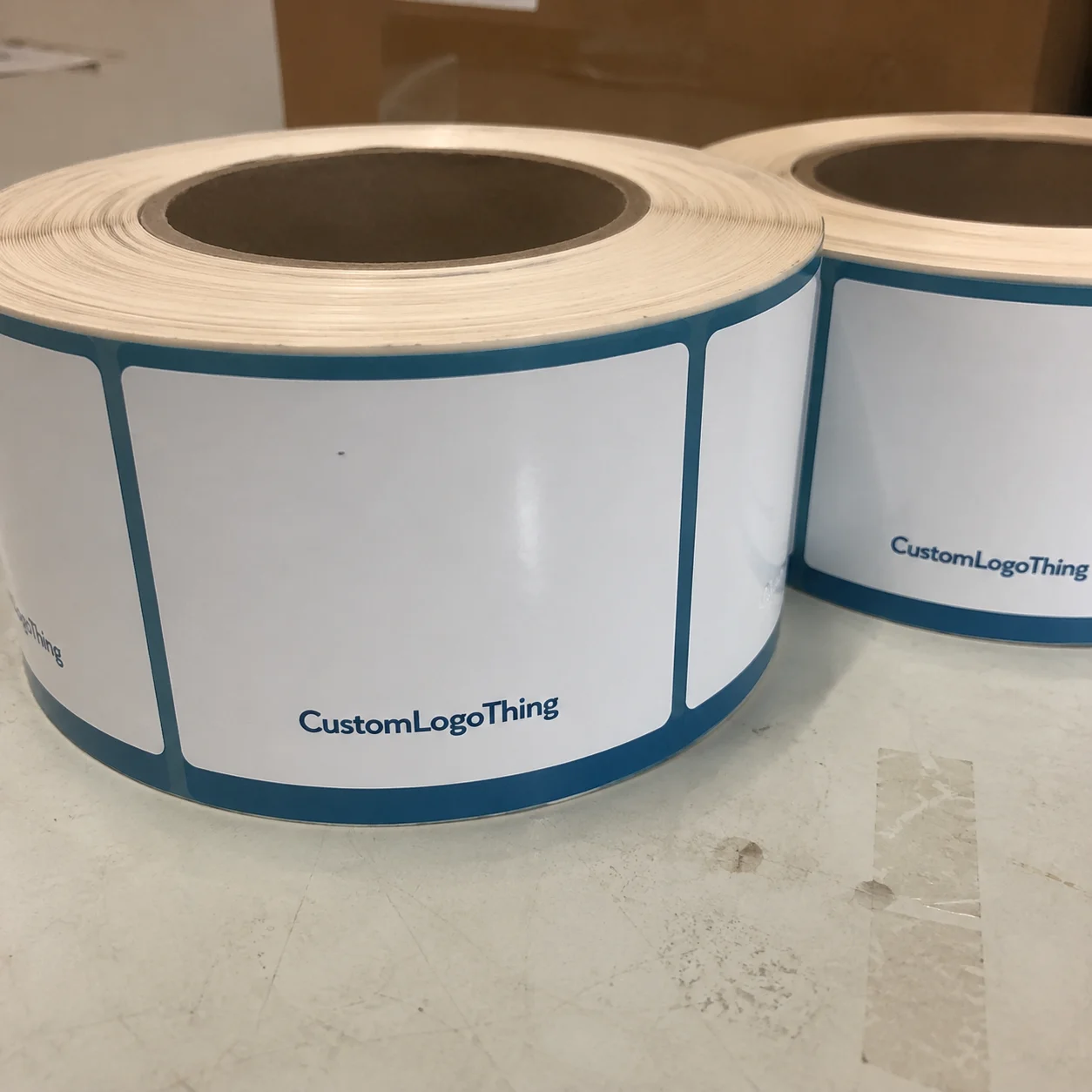
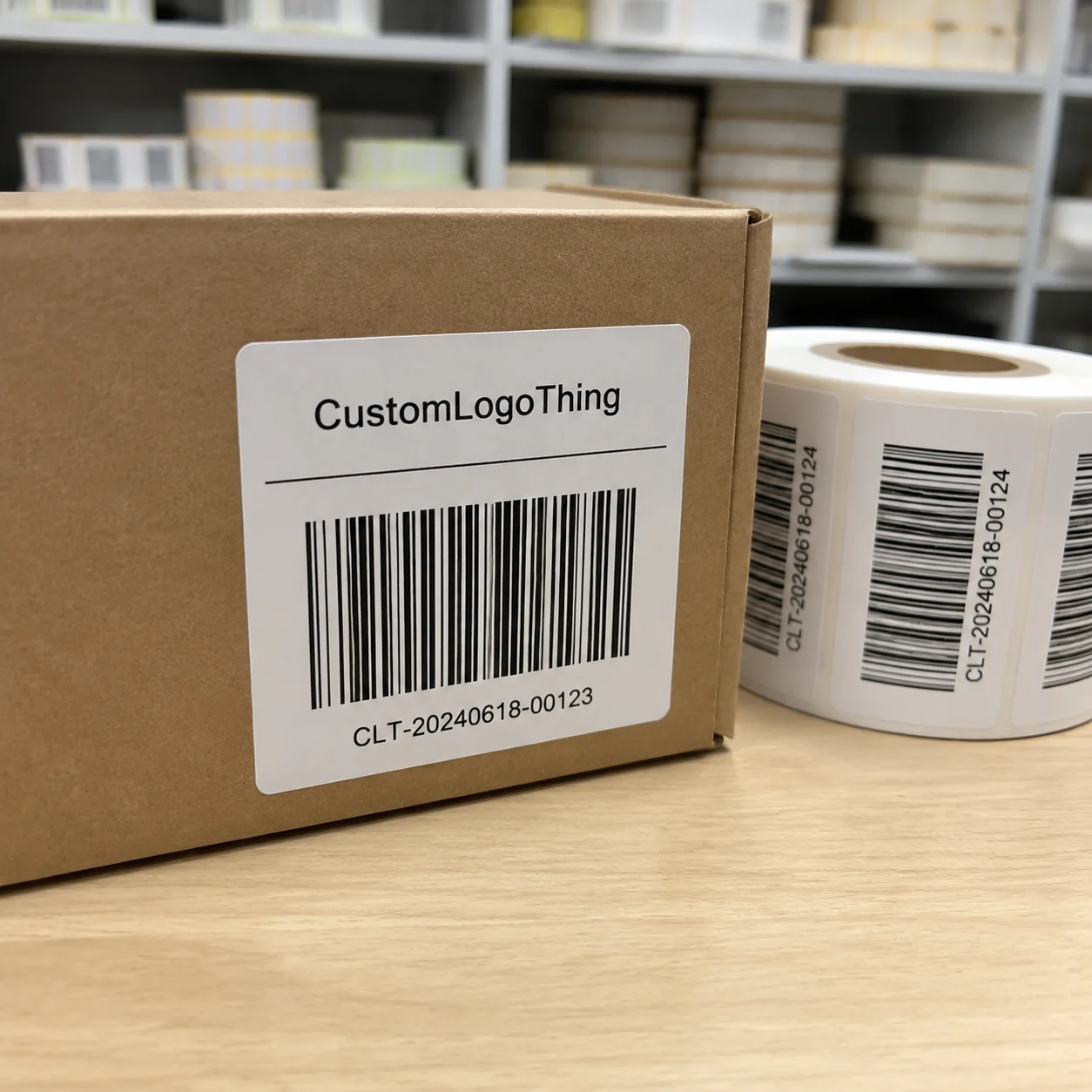
For clothing brands, Custom Printed Shipping Labels sit in a strange but useful position. They are operational parts, yet they are also brand signals. A parcel moves through fulfillment, carrier handoff, sorting, and delivery with one small label doing most of the identification work. If that label is poorly specified, the problems show up fast: scan failures, lifted edges, relabeling, and avoidable delays. If it is specified well, nobody thinks about it, which is the mark of good packaging engineering.
That small square or rectangle can carry a logo, a ship-from address, routing data, barcode information, and warning copy while still surviving the friction of shipping. Clothing brands care because apparel fulfillment is repetitive and unforgiving. Garments are folded, bagged, stacked, and moved at speed. Packaging that slows the line by even a few seconds per order becomes expensive once the order count climbs.
There is also the perception side. A plain thermal shipping label says the parcel is functional. A branded label says the brand has thought through the full outer package, not just the garment inside. That difference is subtle, but apparel buyers notice it. The outer parcel is the first physical point of contact, and in ecommerce that first contact often does more work than the website header ever will.
Not every brand needs a custom-printed solution. If a warehouse runs high-volume, variable-data shipments and wants maximum speed, standard thermal labels may be the better fit. Custom printing makes more sense when the package exterior matters, the shipment volume is predictable enough to justify setup, or the brand wants to reduce manual steps at the pack station. The tradeoff is simple: presentation and process control versus basic utility.
What custom printed shipping labels do for clothing brands
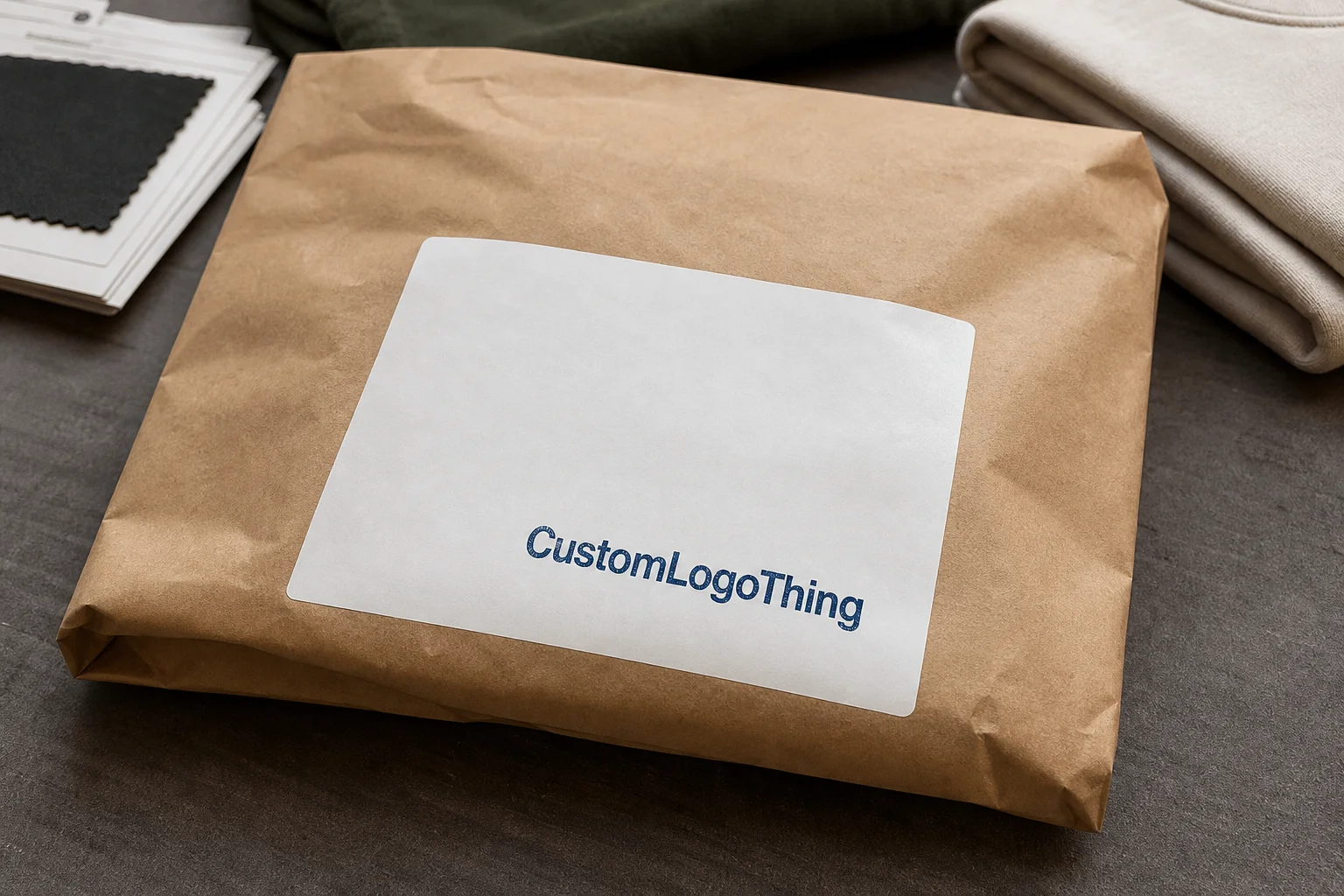
Shipping labels are often treated as admin work. That is usually a mistake. In practice, they do three jobs at once: identify the parcel, support warehouse flow, and extend brand presentation beyond the carton or mailer. If any one of those jobs is ignored, the result is usually more expensive than the label itself.
In practical terms, Custom Printed Shipping labels are pressure-sensitive labels printed with a brand mark and shipping data. Depending on the operation, they may include a logo, return address, barcode, QR code, routing zone, compliance language, or a blank area for variable fields. They are used on corrugated boxes, poly mailers, folding cartons, and sometimes on overwraps or outer sleeves. They are part of package branding, but they are also part of the mechanical system that keeps parcels moving.
That dual role matters most in apparel because the order profile is often fragmented. A brand may ship small single-item orders, multi-SKU bundles, gift orders, and seasonal collections from the same warehouse. Labels need to remain legible and scannable across all of those cases. A design that looks fine on a monitor can fail once it meets a recycled mailer, a humid packing room, or a dusty conveyor lane.
There is a reason experienced buyers ask about label performance before they ask about artwork polish. A label that carries the right information but fails in transit creates more waste than a plain one ever would. Reprints, reroutes, and customer-service follow-up are all hidden costs. In comparison, a well-made branded label can reduce friction while preserving a cleaner presentation. That is especially useful for brands already investing in Custom Labels & Tags and other branded packaging components.
It helps to separate the label’s visual role from its operational role. A clean logo treatment and a restrained layout can improve the parcel’s appearance. But the label also has to scan, stick, and survive handling. A good spec balances those goals without asking the warehouse to slow down.
Packaging buyer’s rule of thumb: if a shipping label has to do more than identify a parcel, it should be treated as a production component, not a generic sticker.
For brands using custom printed boxes, the shipping label can either reinforce the box design or interrupt it. The best results usually come from a label that respects the outer package rather than fighting it. That means planning for contrast, clear zones, and placement before artwork is approved.
How the printing and application process works
The production path is straightforward, but each stage has a failure point. It starts with artwork setup, then proofing, then print method selection, then adhesive and application planning. Skip one, and the label may still look polished on screen while underperforming in the warehouse.
For shorter runs, digital printing is usually the practical choice. It handles lower quantities well and is useful when a brand wants to test packaging changes, print multiple variants, or avoid large setup commitments. Flexographic printing tends to make more sense on longer repeat orders because the economics improve as volume rises. For operations that print variable information at the pack station, thermal transfer is still common because it is fast and durable for logistics use.
Application method matters just as much as print method. Some teams apply labels by hand at a packing table. Others use desktop printers. Larger facilities may use applicators that place labels on cartons automatically or with minimal manual handling. The right setup depends on the order volume, the package type, and how much labor the warehouse can spare for each parcel.
Before production starts, a buyer should be ready with a few concrete details:
- Logo files in vector format, ideally AI, EPS, or print-ready PDF
- Final label size and shape, including bleed and safe area
- Barcode requirements, including symbology and quiet zone rules
- Ship-from address, return address, and any routing fields
- The actual substrate, such as corrugated board, kraft mailer, gloss poly, or recycled mailer stock
That last item causes more trouble than most design issues. A label that performs on a smooth coated carton may fail on a textured recycled mailer. Adhesive is not interchangeable. It needs to match the package surface, the shipping environment, and the way the parcel will be handled after application.
Quality control should focus on three checks: barcode scannability, adhesion, and contrast. Under warehouse lighting, low-contrast designs can disappear. In colder or dustier environments, weak adhesion can lift at the corners. The best label is the one that still works after handling, stacking, and transit, not just the one that passes a mockup review.
Many clothing brands pair shipping labels with Custom Poly Mailers or Custom Shipping Boxes so the outer package feels coordinated. That approach is useful when the label is part of a broader product packaging system rather than a standalone logistics item.
Key specs that affect performance and appearance
Four specifications usually decide whether a shipping label performs well: size, stock, adhesive, and finish. Shape matters too, but these four carry most of the risk.
Size should be determined by the package face, not by the design file alone. A label that is too large can crowd seams, folds, or printed graphics. One that is too small may leave no room for scan bars, routing data, or the return address. In apparel shipping, 4" x 6" remains a common format because it fits standard logistics workflows, but custom dimensions are often better when the mailer or carton has a narrow printable area.
Stock can be paper, film, or thermal-compatible material. Paper stocks are usually sufficient for standard indoor shipping. Film options such as polypropylene hold up better against moisture and abrasion. If parcels may rub against other cartons, sit in damp conditions, or move through a rough parcel network, a more durable stock is worth the extra cost. The same logic applies to labels used in retail packaging, where appearance often needs to last longer than a single delivery cycle.
Adhesive is where many buyers underestimate risk. Permanent adhesive is common, but not universal. Recycled mailers, textured corrugate, coated cartons, and cold-chain packaging all behave differently. A label that seems fine in the packing room can fail after temperature changes or pressure during transit. If the operation handles chilled goods, humid storage, or rough transport, ask for performance data instead of assuming one adhesive fits every surface.
Finish affects how the label reads visually. Matte tends to look more controlled and premium. Gloss can make color pop, but it also reflects more light, which can make small text harder to read. Many brands prefer matte because it sits comfortably beside other elements of packaging design without shouting for attention.
Temperature swing is another quiet variable. A label may perform well in a climate-controlled pack room and behave differently on a cold dock or in a hot delivery vehicle. Friction matters too. Labels get rubbed against other parcels, straps, conveyor surfaces, and packing tape. These are mundane conditions, but they are the conditions that decide whether a label survives the trip.
A practical comparison helps separate the options:
| Label option | Best for | Typical MOQ | Indicative unit cost | Notes |
|---|---|---|---|---|
| Plain thermal label | High-speed fulfillment, variable data, low branding priority | Low | $0.02-$0.06 | Fast and simple, but limited visual branding |
| Digital custom label | Short runs, seasonal tests, multiple designs | Moderate | $0.10-$0.25 | Useful for flexibility and smaller batches |
| Flexographic custom label | Repeat orders, steady volume, lower long-run cost | Higher | $0.06-$0.18 | More setup upfront, better unit economics at scale |
These figures are directional rather than fixed. Artwork coverage, material grade, adhesive type, and roll configuration can move pricing materially. That is why the better question is not “What is the cheapest label?” but “Which label costs less to operate over time?”
The second question is the useful one. A cheaper label that fails during shipping or jams the printer can cost more after relabeling, delays, and support tickets are counted. Unit price matters, but total cost matters more.
Process and timeline: from proof to production
The most predictable workflow looks like this: Request a Quote, submit artwork, review a proof, approve the specifications, produce a sample or pilot, then move into full production. The sequence is ordinary. The risk comes from missing details, not from the process itself.
Artwork issues are the most common source of delay. Missing barcode data, incorrect dielines, too-small legal text, and improperly prepared logo files all create back-and-forth. Size changes can also slow a job because they affect layout, barcode clearance, and roll configuration. A label that is “close enough” on a screen often needs rework once it is mapped to a real package.
Lead time varies with complexity. Simple digital runs can move quickly after proof approval. Special materials, custom dies, laminated finishes, and multi-SKU assortments add time because each introduces another setup step or inspection point. A useful planning window for many custom label orders is 12-15 business days from final approval, though larger or more complex runs can take longer.
That timing matters in clothing. Apparel launches usually spend the first stretch of planning on product, photography, and inventory allocation. Shipping labels often get treated as an afterthought, even though they are one of the first items the warehouse needs on launch day. If the labels are late, the pack line becomes the bottleneck.
Repeat orders should be easier. If the size, stock, adhesive, and artwork do not change, the vendor should not need to rebuild the job from zero. That is one of the fastest ways to shorten lead times without changing the label itself.
For brands that care about sustainability or material traceability, it also helps to ask whether label components align with recognized standards or certifications. The FSC framework is useful for paper-based components, while ISTA testing methods are relevant when you want to understand how the package behaves in transit rather than only how it looks on a desk.
Cost, pricing, and MOQ factors to compare
Pricing usually comes down to five variables first: quantity, print coverage, stock choice, adhesive, and whether the label uses a standard or custom dimension. After that come finishing steps, roll setup, and any special requirements such as variable data or sequential numbering. Once those variables are visible, quotes become much easier to compare.
MOQ is not just a supplier rule. It is a tradeoff between unit cost and inventory risk. A lower MOQ gives a brand more flexibility, but the per-label price is usually higher. A larger MOQ can reduce the unit price, but it ties up cash and storage space. Clothing brands with stable weekly volume can often justify larger runs. Seasonal launches and test drops usually should not.
The part people miss is landed cost. A quote that looks cheaper per label may still cost more once setup fees, proof revisions, freight, and internal labor are included. If the label fails in cold weather, lifts on textured mailers, or slows the pack station, the true cost rises again. A simple quote comparison rarely captures that.
For apparel fulfillment, a useful working frame looks like this:
- Short-run test orders: useful for new launches, packaging changes, and design trials
- Mid-volume branded runs: often the best balance for growing clothing brands
- High-volume repeat runs: best when label specs are stable and order flow is predictable
Standardizing formats across product lines can improve pricing and reduce mistakes. If every collection uses the same label size and finish, the operation is easier to manage. That same logic applies across custom packaging products more broadly: fewer unique SKUs usually means fewer handling errors, simpler replenishment, and less dead inventory.
Print coverage also affects cost more than many buyers expect. A full-bleed design with heavy ink coverage costs more than a restrained layout with a logo, barcode, and small text. Clean design is not only an aesthetic choice; it is often a cost-control decision as well.
In other words, price should be judged against what the label saves or creates downstream. A label that is easy to scan, easy to apply, and stable across the shipping path can be cheaper overall than a lower-priced option that introduces avoidable labor.
Common mistakes that create waste and delays
The most common mistake is ordering the wrong size. Not approximately wrong. Actually wrong. The gap between a label that fits the visible panel and one that crosses a fold line is enough to ruin scanability and force the pack team to work around the issue.
Barcode problems come next. Codes that are too small, too close to the edge, or printed in low contrast can fail at scan time. That seems minor until a shipping wave starts backing up. A barcode is not decoration; it is a machine-readable instruction. That means contrast, placement, and quiet zone all matter.
Another error is designing for a perfect warehouse instead of the one that actually exists. Dust happens. Humidity happens. Recycled mailers vary more than standard virgin substrates. Pack stations get busy. A label that only works in a clean mockup may fail in a live fulfillment line.
Overdesign causes its own trouble. Dense graphics, tiny legal text, and oversized color blocks can make production more fragile. They can also slow proofing and increase the chance of registration issues. A good shipping label usually looks simpler than a buyer first expects. That is not a compromise; it is a sign that the label is doing its job efficiently.
A short preflight checklist prevents more waste than most revisions do. Before approval, confirm:
- The label size fits the actual carton or mailer face
- The adhesive matches the packaging surface
- The barcode scans cleanly in the proof
- The artwork includes only the information that needs to be printed
- The layout leaves enough quiet space around machine-readable elements
That kind of check reduces reprints, relabeling, and launch-day bottlenecks. It also keeps Custom Printed Shipping labels connected to a real process instead of a one-off design decision.
There is a waste angle as well. Misprints, relabeling, and damaged cartons all consume material and labor. The EPA has long treated source reduction as the first step in reducing packaging waste, and the same logic applies to labels. The cheapest waste stream is the one that never gets created.
Next steps for choosing the right label spec
The cleanest way to choose a label spec is to start with three questions: what surface will it stick to, how much volume will it carry, and does the label need to do both branding and operations? The answers narrow the field quickly.
After that, build a sample request with exact dimensions, adhesive preference, artwork files, and a short note on where the label sits in the packing flow. If the label goes on a carton by hand, that is relevant. If it is applied to a poly mailer at a fast pack station, that is also relevant. The more specific the use case, the better the recommendation.
Ask for a proof that checks both appearance and function. A label that looks good is not enough. Barcode readability, peel performance, and edge lift on the actual mailer or carton should be part of approval. If possible, run a pilot order before committing to a larger production run, especially if the clothing line uses more than one packaging type.
For many brands, the right answer is not a single label spec forever. It is a spec that fits the current shipping model and can scale as order volume grows. That may mean a branded outer label now and a more automated logistics setup later. It may also mean pairing labels with other packaging components so the shipment feels deliberate rather than assembled from unrelated parts.
The packaging decision should be judged the same way any operational purchase is judged: on material, durability, production time, and total cost. Choose the version that protects the brand without slowing the warehouse. That is the actual job of custom printed shipping labels.
Frequently Asked Questions
What size should custom printed shipping labels be for clothing shipments?
Choose the size based on the package face rather than the artwork alone. Leave room for scan bars, return address details, and routing information. The safest approach is to test the label on the actual mailers and cartons before full production.
Are custom printed shipping labels better than plain thermal labels?
They are better when branding matters at the shipping stage. Plain thermal labels usually win on speed and simplicity for high-volume fulfillment. Many clothing brands use both: branded labels for the outer parcel and plain thermal labels for internal logistics.
How do I know which adhesive to choose for shipping labels?
Match the adhesive to the packaging surface. Corrugated, coated, recycled, and poly mailers can behave differently. If the label may face moisture or cold storage, ask for performance data, then confirm it with a test run on the actual packaging.
What affects the turnaround time for custom printed shipping labels?
Artwork approval is often the biggest variable, especially if the barcode or layout needs correction. Special materials, custom sizes, and larger quantities also add lead time. Repeat orders with unchanged specs are usually faster because the setup is already approved.
How can I reduce the cost of custom printed shipping labels without hurting quality?
Standardize the label size and finish across product lines where possible. Order in volumes that improve unit cost without creating excess inventory. Keep the design restrained so you avoid unnecessary print coverage, revisions, and rework.
If the shipping label has to be either branded or operational, the better answer is usually both. For Clothing Brands That want the outer parcel to feel intentional without slowing fulfillment, custom printed shipping labels are often the smallest change with the largest operational payoff.