A plain brown carton and a custom printed shipping box may be only a few cents apart once volume climbs, but they do different jobs on a doorstep. One says, “Here is your order.” The other says, “This brand thought about the trip, not just the sale.”
That trip is not gentle. Boxes move through conveyors, scanners, trucks, sort centers, warehouse carts, rain, dust, and rushed delivery routes. If the carton arrives crushed, oversized, muddy-looking, or off-brand, the customer sees the problem before touching the product. If it arrives clean, fitted, and legible, the package quietly builds confidence.
What a Custom Printed Shipping Box Really Does
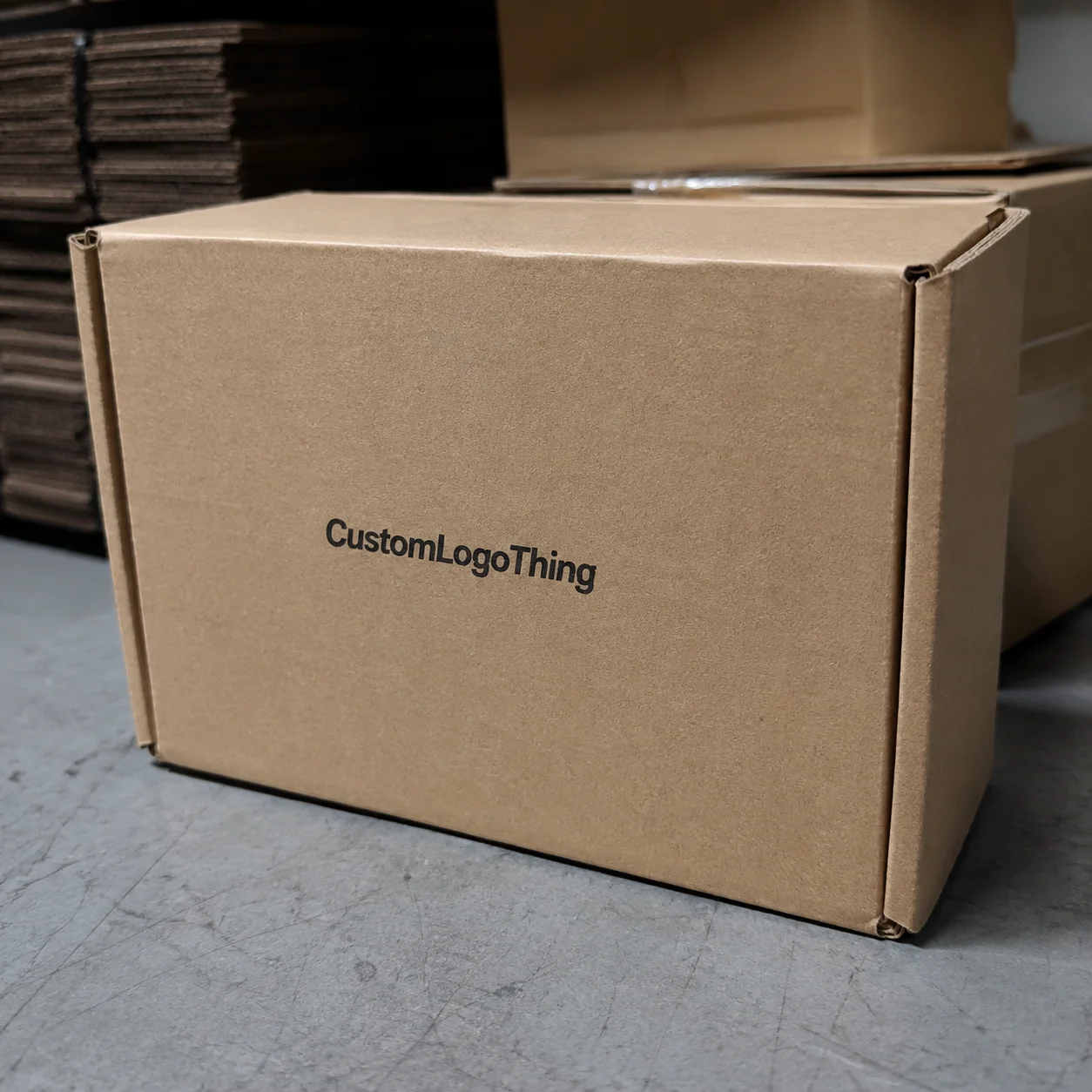
A custom printed shipping box is a corrugated mailer, regular slotted carton, die-cut shipper, or other transport-ready structure printed with brand artwork, handling marks, product messaging, QR codes, campaign graphics, or simple identification. It is not just a small billboard. It is transit packaging first.
The box has two jobs. It must protect the order through ecommerce shipping: stacking, vibration, drops, compression, sliding, and repeated handling. It also has to present the brand clearly when the customer receives it. A beautiful box that fails in transit is expensive decoration. A strong box with muddy print misses an easy communication point.
Buyers often blur a few terms. A shipping box is built to move through parcel or freight systems. A retail folding carton, often made from SBS or CCNB paperboard, is usually designed for shelf display and may still need an outer shipper. A rigid gift box creates a premium hand-feel but is heavier, costlier, and rarely efficient as the only shipping container. A mailer box is a die-cut corrugated structure with a tuck or front-lock closure, commonly used for subscription kits, cosmetics bundles, apparel shipments, and promotional product deliveries.
Common applications include apparel orders, skincare sets, food-safe outer shippers, influencer kits, subscription boxes, small electronics accessories, and branded packaging for promotional merchandise. If you are comparing structures, Custom Logo Things groups related options under Custom Shipping Boxes, which is a practical starting point before deciding on board grade, closure style, and print coverage.
Shop-floor rule: the box is part of the product experience, but it still has to behave like transport packaging. Solve protection first. Then refine the brand presentation.
Good results come from balancing six variables: board grade, print method, box style, order quantity, artwork, and timeline. Change one, and the others usually move with it.
How Printed Corrugated Boxes Are Built and Printed
Corrugated board looks simple until you start specifying it. It has linerboard on one face, a fluted medium in the center, and another liner on the opposite face. The fluted layer acts like a row of tiny arches. Those arches create cushioning and stiffness, helping the sheet resist compression and absorb shock better than flat paperboard of similar weight.
Flute choice changes strength and print appearance. E-flute, roughly 1/16 inch thick, is common for compact mailers and cleaner graphics because the surface is relatively smooth. B-flute, around 1/8 inch, gives stronger cushioning and puncture resistance for many parcel applications. C-flute, around 3/16 inch, is often used for general shipping strength, especially regular slotted cartons. Double-wall combinations exist for heavier loads, but they can be excessive for light ecommerce orders.
Liner choice controls much of the visual result. Brown kraft feels natural and practical, though it darkens ink and makes bright brand colors harder to match. White kraft gives better contrast while keeping a corrugated texture. Coated white liners can make graphics sharper, especially for colorful Custom Printed Boxes, but coatings may affect recyclability depending on the construction and local recovery stream.
Printing method should match the run size and artwork. Flexographic printing is economical for repeat orders and simple spot colors, but plates and setup matter. Digital printing fits lower quantities, variable artwork, and colorful designs without the same plate cost. Litho-lamination bonds a printed sheet to corrugated board, producing premium photographic graphics for high-end product packaging. It also adds cost, time, and material complexity.
| Print Method | Typical Best Fit | Common Cost Pattern | Watchout |
|---|---|---|---|
| Flexographic | Repeat orders, 1–3 spot colors, shipping cartons | Lower unit cost at higher volume after plates | Fine gradients and photo detail can be limited |
| Digital | Short runs, colorful art, test launches | Higher unit cost, fewer setup charges | Heavy coverage can still raise price |
| Litho-laminated | Premium graphics, retail-style presentation | Higher setup and material cost | Longer lead time and more complex recycling profile |
Print can sit outside, inside, or on both sides. Outside print carries the brand through the delivery moment. Inside print creates the reveal after opening, especially for mailer boxes. Two-sided print can look polished, but it may require more ink, extra setup, or another production pass depending on equipment and structure.
Finishing choices include matte coating, gloss coating, spot color matching, water-based inks, and scuff-resistant coatings. For transit boxes, restraint usually performs better than full saturation. Parcel networks are rough. Large black flood coats and heavy ink panels show rub marks quickly, while a well-placed logo and medium coverage often look cleaner after handling.
For broader packaging education and industry context, the Packaging Machinery Manufacturers Institute publishes useful material on packaging systems and production considerations.
Key Specs That Control Strength, Fit, and Brand Look
Dimensions should be written in the correct order: length by width by depth. They should also be measured from the inside of the box unless the supplier asks for outside dimensions. Inside measurements tell you what the product, tissue, inserts, bubble, air pillows, or molded pulp actually have room to do.
Oversized boxes create costs that do not appear on the box quote. A carton that is 2 inches too long, 2 inches too wide, and 1 inch too deep may need more void fill, take longer to pack, increase dimensional weight, and let the product move during vibration. For parcel carriers, dimensional weight can matter more than scale weight. A light but bulky box can cost more to ship than expected.
Strength is usually specified through ECT or burst strength. ECT, or edge crush test, measures stacking strength along the board edge. Common single-wall ratings include 32 ECT and 44 ECT, though the right choice depends on product weight, box size, stacking conditions, and carrier handling. Burst strength measures resistance to puncture and rupture. Many ecommerce shippers buy by ECT, but fragile items and sharp-cornered products may need closer review.
Box style affects packing speed as much as presentation. A regular slotted carton, often called an RSC, is efficient for bulk shipping and taped closure. A front-lock mailer gives a neater unboxing experience for subscriptions and apparel. A tuck-top mailer is compact and clean. Literature mailers work well for flat goods. Custom die-cut shippers can hold inserts, dividers, or special product arrangements, though tooling cost has to be included in the decision.
Artwork needs the same operational discipline. Keep logos away from fold lines unless the wrap is intentional. Leave room for shipping labels, barcodes, tape, and carton certification stamps. QR codes need clean contrast and quiet space around the code; for small codes, 0.25 inch is a practical minimum, and textured board may need more. Do not place critical text on bottom panels, tape zones, or high-scuff corners.
Sustainability starts with specs, not slogans. Right-sizing reduces board use and filler. Recycled content can be requested, although availability varies by liner and board grade. Corrugated is widely curbside recyclable in many regions, but waxes, plastic laminates, and heavy specialty coatings can complicate recovery. If sustainability claims matter to your brand, review guidance from the U.S. Environmental Protection Agency and avoid claims the actual package cannot support.
Cost, Pricing, MOQ, and Unit Cost Drivers
The price of a printed corrugated shipper is shaped by board grade, size, print coverage, number of colors, print method, tooling, coatings, quantity, packing method, and destination. Freight can be a real line item because empty boxes contain a lot of air. Even flat-packed cartons take pallet space.
Unit cost usually drops as quantity rises because setup time, plate charges, die costs, and press makeready are spread across more boxes. A 250-piece digital run may be sensible for a launch test, but the per-box price can feel high. At 2,500 or 5,000 pieces, the math often changes. At 10,000 pieces and above, flexographic production may become more attractive if the art is suitable.
Broad price ranges help frame expectations, though every quote depends on the actual specification. Small digitally printed mailers may land around $1.20–$3.50 each at low quantities. Mid-volume flexo printed shippers might run $0.45–$1.40 each for common ecommerce sizes. Larger RSC cartons with simple one-color printing can fall below that at volume, while litho-laminated premium mailers may cost several dollars each. Freight, storage, and reorder assumptions can move those numbers.
One-time or semi-fixed costs deserve attention. Custom structures may need cutting dies. Flexo jobs usually require print plates. Color-sensitive work may need proofing or a press target. Specialty coatings can carry setup charges. These costs are not automatically bad; they are part of repeatable packaging. The mistake is comparing only unit price while ignoring tooling, freight, sampling, or reorder conditions.
| Cost Driver | Why It Matters | Buyer Tip |
|---|---|---|
| Box size | Controls board use, pallet count, and dimensional freight | Right-size before requesting final pricing |
| Print coverage | More ink and slower production can raise cost | Use strong design without full flood coverage unless needed |
| Order quantity | Setup costs spread across more units | Ask for 500, 1,000, 2,500, and 5,000 tiers if storage allows |
| Tooling | Dies and plates support repeatability | Separate tooling from unit price in the quote |
| Freight | Flat boxes still ship bulky | Compare landed cost, not just production cost |
MOQ is mostly about setup efficiency. Small runs may be possible, especially with digital printing, but very low quantities carry a higher unit cost because corrugated converting is built around sheet flow, setup, stacking, bundling, and pallet movement. If demand is still unproven, a small digital run can be smart. If the box is stable and reorderable, larger production runs usually make better financial sense.
Ask for tiered pricing, estimated freight, tooling charges, proof costs, sample options, and reorder pricing. Also ask whether the quote assumes the same artwork and same structure on future runs. That detail prevents a surprising number of purchasing arguments later.
Process and Timeline From Artwork to Delivered Boxes
A clean order follows a practical sequence. Confirm the product dimensions and packed weight. Choose the box style and board grade. Build or request the dieline. Place artwork on the dieline. Review the proof. Approve the structure and print. Produce, bundle, pack, palletize, and ship.
The timeline often depends less on printing alone and more on artwork approval, sampling, tooling, and material availability. A reorder with approved plates, die, board, and art may move quickly. A first order with a new die-cut mailer, interior print, color matching, and a physical sample needs more buffer.
A dieline is the technical map of the box. It shows cut lines, crease lines, glue areas, tuck panels, dust flaps, bleed, safe zones, and panel orientation. It also shows where artwork wraps around corners. A logo that looks centered on a flat PDF can land awkwardly once the box is folded, locked, taped, or stacked.
Digital proofs are useful for checking layout, copy, barcode placement, QR code links, spelling, and general color direction. Physical pre-production samples are better for new structures, tight-fitting products, luxury presentation, or color-sensitive brands. A sample can add several days or more, but it can prevent a full reprint. Skipping a sample on a first-time custom die-cut structure is one of the riskier ways to save money.
Lead time factors include print method, custom die creation, plate production, coating, holiday order peaks, freight method, and multi-location delivery. As a broad planning range, simple reorders may take 10–15 business days after proof approval. First-time Custom Printed Boxes with sampling or tooling can take 20–35 business days or longer. Material availability and production capacity can shift those windows.
The best planning habit is plain: lock the specs before final artwork. If the box size changes after design, the dieline changes. If the dieline changes, panels shift. If panels shift, artwork may need rework. Approve proofs quickly, but not casually. A proof is the last clean checkpoint before production.
Common Mistakes That Create Damage, Delays, or Reprints
The most common mistake is choosing a box based only on exterior appearance while ignoring product weight, fragility, void fill, and parcel carrier conditions. Good packaging design starts with the product. A candle jar, folded hoodie, vitamin bottle, ceramic mug, and printed catalog all need different protection, even if they could technically fit inside the same mailer.
Dimension errors come next. Buyers sometimes mix inside and outside measurements, forget room for inserts, or fail to account for SKU variation. If one version of a product is 0.4 inch taller because of a cap, pump, or gift wrap, the pack-out may fail at the warehouse table. Small differences become large problems across 2,000 orders.
Artwork placement creates its own traps. Do not place important graphics, QR codes, legal copy, or campaign text across folds, glue seams, locking tabs, tape zones, or areas likely to be covered by shipping labels. A strong top-panel message is wasted if a 4-by-6 inch carrier label covers it every time.
Color expectations need care. Brown kraft changes ink appearance. Screen colors are not a reliable match for ink on corrugated board. Even white liners absorb ink differently than coated paper used for retail packaging. If the brand color is strict, request a color target, printed sample, or clear tolerance before production. Pantone references help, but substrate still matters.
Overprinting can backfire. Heavy ink coverage increases cost, slows drying, shows scuffs, and may make a shipping box look worn after one trip through a carrier network. A restrained design with a strong logo, clear message, and smart panel use often holds up better than full-coverage art on every face.
Operational mistakes are just as costly. Ordering too close to a launch removes time for sampling and corrections. Underestimating storage space can crowd a fulfillment area. Skipping a pack-out test can add 10 or 15 seconds to every order, which becomes real labor once fulfillment reaches hundreds of shipments per day. Test the box at the packing station, not only on a conference table.
Next Steps Before You Request a Box Quote
Before requesting a quote, gather the details that affect structure and price. Measure the product. Weigh the packed order. Note fragile points, sharp corners, leak risks, or surfaces that scratch easily. Decide whether the box ships alone or goes inside another carton. Estimate monthly order volume, not just the first order quantity.
Then collect artwork assets. Send vector logos, brand colors, required copy, QR links, barcode requirements, recycling marks, handling icons, and any compliance language. If the product packaging already has strong branding, the outer shipper may only need a logo and short message. If the shipper is the main unboxing moment, interior print or a stronger exterior campaign may be worth pricing.
Choose a starting structure, but stay open to better options. A front-lock mailer may look good, yet an RSC with printed tape might reduce board use for larger items. A die-cut insert may protect a fragile kit better than loose void fill. For soft goods, Custom Poly Mailers may be more efficient than corrugated, especially for lightweight apparel that does not need crush protection. For broader branded options, review Custom Packaging Products before locking the format.
- Send the basics: product dimensions, packed weight, target quantity, delivery region, and deadline.
- Define the look: brown kraft, white kraft, coated white, inside print, outside print, or both.
- Clarify the artwork: number of colors, approximate coverage, QR codes, barcodes, and label zones.
- Ask for options: two or three quantity tiers, tooling costs, sample costs, and landed freight.
- Plan the reorder: confirm whether dies, plates, dielines, and approved specs will be kept on file.
The Best Custom Printed shipping box is not simply the prettiest one. It protects the order, fits the budget, supports packing speed, and reinforces the brand at the final customer touchpoint. That balance separates smart ecommerce shipping from costly decoration.
Frequently Asked Questions
What is the best material for a custom printed shipping box?
Corrugated board is the standard choice because the fluted layer gives cushioning and compression strength for parcel shipping. E-flute works well for cleaner graphics and smaller ecommerce mailers, while B-flute or C-flute may be better for heavier, larger, or more fragile shipments. White liners make colors appear brighter, while brown kraft gives a natural look but can mute ink colors.
How much does a printed shipping box usually cost?
Unit cost depends on size, board grade, print method, ink coverage, order quantity, tooling, coatings, and freight. Small digital runs may cost more per box but avoid some setup costs, while larger flexographic runs usually reduce unit cost after setup. Ask for tiered pricing and landed cost so you can compare the real cost of each quantity.
What information do I need to order custom printed boxes?
You need inside box dimensions or product dimensions, packed weight, product fragility, target order quantity, shipping destination, and preferred box style. For artwork, provide vector logos, brand colors, copy, QR codes, barcode needs, and any required recycling or handling marks. If the box supports a new product launch, share the deadline early so sampling and production can be planned properly.
Can I print on the inside of a shipping box?
Yes, many mailer boxes and die-cut shippers can be printed inside, outside, or on both sides. Inside print can improve the unboxing experience, but it may increase cost because it adds ink coverage, setup, or a second print pass depending on the method. Keep interior artwork simple if the goal is a premium feel without pushing the budget too high.
How long does custom shipping box production take?
Timing depends on artwork readiness, sampling needs, tooling, print method, material availability, order size, and freight. First orders usually take longer because the dieline, proof, and structure need to be confirmed before production. Reorders are often faster when the same box size, artwork, board, and print specifications are already approved.