Custom Roll Labels Cheap: How to Lower Cost Without Creating Problems Later
Custom Roll Labels cheap is a search phrase that usually comes from a practical place, not a branding exercise. Apparel teams need labels that move quickly at the packing table, stick cleanly, and stay readable through shipping. No one wants to pay extra for a label that slows down fulfillment or fails on the first application.
The lowest quote is not always the lowest cost. A roll label that feeds correctly through a dispenser, uses the right adhesive for the surface, and arrives with accurate roll specs can save labor across thousands of units. A bargain order that needs rework, rewinding, or replacement does the opposite. The difference is often bigger than buyers expect, especially on busy apparel packaging lines where seconds matter.
For brands that also order hang tags, tissue stickers, or carton seals, label specs should fit the broader packaging system. That is where Custom Labels & Tags and wider Custom Packaging Products planning start to affect cost. A label does not live alone; it has to work with the rest of the order.
Custom roll labels cheap: where the savings actually come from
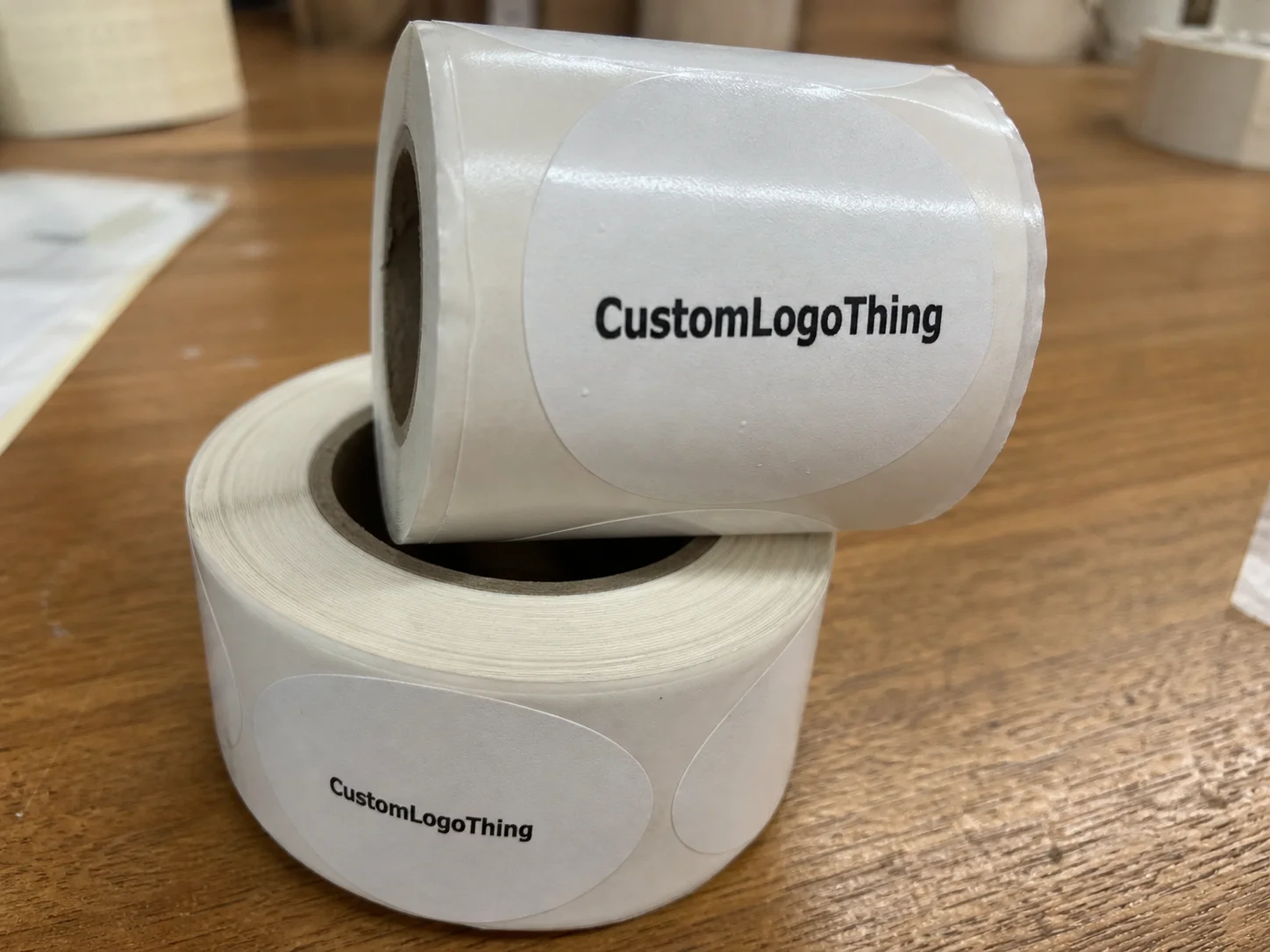
The roll format is the first place savings usually show up. Labels on a roll dispense in a steady rhythm, which reduces hand placement time and keeps the packing table moving. That matters for polybags, tissue wraps, shipping cartons, and retail packaging. If a worker has to peel and place labels one by one from sheets, the labor cost climbs quickly even if the label price looks attractive on paper.
Production quantity matters just as much. Setup, die cutting, press calibration, and roll conversion all carry fixed costs. Once those costs are spread across a larger run, the unit price drops. That is why a 10,000-piece order can price very differently from a 1,000-piece run even if the artwork is the same. The press time does not change much, but the math behind each label does.
There is also a workflow angle that gets missed in quote comparisons. A label with the wrong unwind direction or core size can interrupt the packing line. A roll that is technically cheaper can still cost more if operators need to stop and correct the feed. Buyers tend to focus on the label itself; the real expense sits in the surrounding process.
The best label is not the one with the lowest unit price on paper. It is the one that disappears into the packing flow and still looks clean when the customer opens the parcel.
That is why a cheap-looking spec is not always a cheap result. A simple paper stock may be enough for dry indoor packaging. A film stock may be better if the label is likely to scuff, smear, or encounter moisture in transit. Paying a little more for the right construction often protects the order from hidden costs later.
Materials and finishes that hold up on clothing packaging
Most clothing packaging jobs rely on three broad material types: paper, BOPP, and thermal-compatible stock. Paper is usually the most economical and gives a clean, familiar look for branded packaging. BOPP, a polypropylene film, holds up better against rubbing, moisture, and handling. Thermal-compatible stock is useful when the job depends on barcodes, variable text, or logistics codes more than decorative print.
Adhesive choice is as important as face stock. A label can look right on a flat carton and still fail on a coated box, polybag, or glossy mailer if the adhesive is not matched to the surface. On tissue wrap, edge lift is a common issue. On coated cartons, the label may appear secure at first and start to lift after a few hours in a warm packing area. Permanent acrylic adhesives are common because they are stable and economical, but high-tack or removable versions may be the better fit depending on the surface and removal needs.
Finish changes both appearance and resistance to wear. Matte gives a quieter, softer look. Gloss makes color feel sharper and more saturated. A protective coating can improve scuff resistance, which matters when labels travel inside a shipping box and rub against other packed goods. If the label is part of the brand presentation, the finish should match the tone of the rest of the packaging instead of feeling like a separate add-on.
Print method should match the quantity and the stock. Digital printing makes sense for shorter runs, multiple artwork versions, and orders that need faster changeovers. Flexographic printing becomes more efficient as quantities rise and repeat setups become stable. Thermal transfer is the practical choice when the label needs crisp variable data or barcodes that survive handling. The wrong print process can make a low-cost order look expensive in a hurry.
For buyers comparing durability across shipping conditions, testing references such as ISTA packaging test standards are useful. If sourcing policy matters, FSC-certified paper options may also be relevant. Those are not marketing details; they affect what can actually be specified and approved.
| Material | Best fit | Cost position | Practical note |
|---|---|---|---|
| Paper | Dry indoor apparel packaging, carton seals, tissue wraps | Lowest | Good for simple branding and short handling cycles |
| BOPP | Polybags, shipped retail packaging, scuff-prone surfaces | Mid-range | Better moisture and abrasion resistance than paper |
| Thermal-compatible stock | Barcodes, variable data, logistics labels | Varies by construction | Useful when readability matters more than decorative print |
Size, core, and roll specs buyers should confirm
Most production mistakes start with a vague spec sheet. Before ordering, confirm the finished width, height, corner shape, gap between labels, and whether the artwork needs bleed. If the artwork is too tight, trimming can look uneven. If the bleed is wrong, the cut edge can expose a white border or clip part of the design. Small errors here tend to create waste that is far more expensive than the original fix.
Core size and outer diameter are not secondary details. They determine whether the roll fits the dispenser, handheld applicator, or automated station. A roll that is wound for the wrong core can stop production. A roll that is too large for the applicator can force operators to pause and rework the setup. Unwind direction matters too, because the label has to present correctly as the roll feeds into the applicator.
Buyers sometimes underestimate how a simple seal label can slow a line if the roll specs are wrong. A 1-inch round or square label looks easy to buy, but if it is wound backward or packed too tightly, operators spend time correcting the feed instead of applying labels. That is a production issue, not a print issue.
Confirm the application method before approving the final build. Hand-applied labels, desktop dispensers, and machine-applied rolls do not all need the same construction. Manual packing favors simplicity. Automated application favors precision. If the team is already using a set dispenser or labeler, the specs should match the machine rather than forcing the machine to adapt to the label.
Pricing, MOQ, and quote drivers that change unit cost
Custom roll labels cheap pricing comes down to a limited number of variables: size, material, color count, finish, adhesive, die shape, and quantity. A standard rectangle on paper stock with one or two colors will usually price below a custom die-cut BOPP label with a specialty coating and custom winding. That is not a supplier trick. It is the cost of setup, tooling, and production complexity.
MOQ exists because fixed costs are real. Plates, dies, proofing, press setup, trimming, and roll conversion all take labor and materials. If the order is small, those costs are spread over fewer labels. If the same job is repeated later with the same specs, the setup becomes more efficient and the unit cost usually improves. Repeat orders are often where the best pricing shows up.
Short-run jobs are where buyers feel the price swings most sharply. A 1,000-label order may not look much different from a 5,000-label run on the proof, yet the per-piece cost can be several times higher because the setup cost is not diluted. That is normal. It is also why buyers should compare more than the headline price. A quote that looks cheap can still be expensive if it causes problems in the packing room.
The quote itself changes depending on how clearly the job is described. If the supplier knows the size, surface, finish, and application method, the pricing is usually tighter. If the brief is vague, the supplier has to guess at adhesive behavior, winding, and production risk. That uncertainty shows up in the number.
| Option | Typical cost effect | Lead-time impact | Best use |
|---|---|---|---|
| Standard size, paper stock | Lowest unit price | Usually fastest | Basic branded packaging, carton seals, simple promos |
| Custom die-cut BOPP | Mid-range | Moderate | Polybags, mailers, scuff-prone retail packaging |
| Special adhesive or finish | Higher | Longer if stock is limited | Challenging surfaces, premium presentation, transit-heavy orders |
The cheapest quote is not always the cheapest order. If the adhesive lifts, if the roll jams the dispenser, or if the finish wears too quickly, the business pays again in labor, replacement labels, or delayed fulfillment. That is why total order cost matters more than unit price alone.
Process and turnaround from proof to shipment
The production path is straightforward: file review, proof approval, printing, finishing, cutting, rewinding, inspection, and packing. Each step can add time if the spec is incomplete. A clean artwork file speeds up proofing. A quick approval keeps the job moving. A simple construction reduces the chances of delay in finishing or roll conversion.
Buyers influence turnaround more than they usually realize. Correct dimensions, clear notes about adhesive and surface, and a fast proof response can save more time than a rush fee. The opposite is true as well. Missing fonts, incorrect bleed, unclear unwind direction, or a vague application method can hold up the order before it reaches the press.
For straightforward paper roll labels, proofing may move in a day and production may finish within a few business days after approval. Specialty materials, custom adhesives, or unusual die shapes can take longer. That is not a sign of poor service; it reflects what has to be sourced, tested, and inspected before shipment. Buyers with fixed launch dates should build the delivery window into the schedule early rather than assuming the order will compress later.
Quality control should be more than a visual glance. Good suppliers check print registration, cut accuracy, adhesive performance, and roll consistency before packing. On more demanding orders, a sample roll or proof can reveal issues that are hard to spot on a screen. That is especially helpful for apparel packaging that needs to look clean on arrival, not just pass an approval email.
Packaging teams that coordinate Custom Labels & Tags with custom printed boxes tend to see the same pattern repeat: stable specs, short approval cycles, and an application method that is already decided make the whole job easier to manage. The more the order changes, the more the timeline stretches.
How to keep total order cost low without cutting spec quality
The simplest way to keep label costs under control is to reduce variation. Standardizing one or two sizes across product lines lowers the number of setups and makes reorders easier. If every SKU uses a different shape, finish, and adhesive, the order becomes harder to price and harder to repeat efficiently. That variety can look flexible in planning meetings and expensive in production.
Saved specs matter more than they first appear. Once a label is approved, the repeat order can move faster because the art, dimensions, winding, and core size are already documented. That reduces the odds of preventable mistakes and shortens the path back to production. For seasonal apparel brands, this can be the difference between an orderly reorder and a last-minute scramble.
Supplier transparency matters as well. A low quote from a vendor who cannot explain adhesive choices, proof revisions, or roll orientation is not really a bargain. A supplier who can explain tradeoffs clearly often saves money by preventing unnecessary complexity. Sometimes the cheaper label is simply a simpler label, and that is fine if the application does not demand more.
It also helps to think of the label as part of the packaging family. If the label has to work with tissue, mailers, hang tags, or custom printed boxes, those items should be designed together instead of in isolation. That does not mean every element needs to match exactly. It means the materials, finish, and application method should make sense as one system. A packaging system that behaves consistently is cheaper to run.
Watch for the hidden costs that do not show up on the first quote. A wrong roll width can force hand rewinding. A poor adhesive can create returns. A label that peels during transit can damage package branding and create a reprint. Those are the expenses that make a cheap order expensive after the fact.
What to send before requesting a quote
A useful quote starts with complete information. Send the artwork file, finished size, quantity, material preference, adhesive requirement, finish, roll orientation, and core size. If the label will be hand applied, dispensed, or machine applied, say so plainly. That one detail can change the construction and the price.
Include the surface the label will stick to. Paper, film, coated carton, and polybag surfaces behave differently, and the adhesive needs to match. If the label is going on tissue wrap or a glossy mailer, say that directly. A supplier cannot recommend the right stock without knowing what the label will touch.
Also include the in-hand date and whether a sample or digital proof is required. Scheduling changes immediately if the job has a hard deadline. If a buyer wants custom roll labels cheap pricing on a repeat order, the fastest path is usually a clean spec, a stable setup, and a quick proof approval. That combination avoids the hidden costs that show up when details are still moving.
Keep the request practical. The cleaner the brief, the fewer surprises in production, and the more likely the quote reflects the real job instead of a padded estimate. For apparel packaging, that usually means less back-and-forth and a better fit between the label and the actual packing flow.
FAQ
Are custom roll labels cheap for small apparel orders?
They can be economical, but the per-label price is usually higher on small runs because setup costs are spread across fewer pieces. A small order still benefits from the roll format if the labels are applied during packing, but the best price usually comes from standard sizes, common materials, and artwork that does not need extra revisions. For a short run, ask for the true unit cost and not just the headline quote.
What changes custom roll label pricing the most?
Quantity is the biggest driver, followed by size, material, adhesive, finish, and die shape. Color count and specialty winding can also change the number. A simple paper label on a standard roll will usually cost less than a custom die-cut BOPP label with a special coating or a demanding adhesive spec.
Which roll label material is best for clothing packaging?
Paper is usually the lowest-cost choice for dry, indoor packaging and simple branded presentation. BOPP is better when the label has to resist abrasion or moisture during shipping. The adhesive matters just as much as the face stock, especially for polybags, coated cartons, and glossy mailers.
How fast can roll labels ship after proof approval?
Turnaround depends on quantity, construction, and stock availability. Simple orders can move quickly after proof approval, while specialty adhesive or custom die-cut work takes longer. The fastest schedules usually come from complete specs, a clean file, and immediate proof sign-off.
What should I confirm before ordering labels for apparel?
Confirm the finished size, core size, outer diameter, unwind direction, label gap, and adhesive type. Also confirm the surface the label will stick to and the application method the packing team uses. Those details prevent most of the problems that create waste or slow the line.