Custom Roll Labels for Clothing: Order Smarter Today
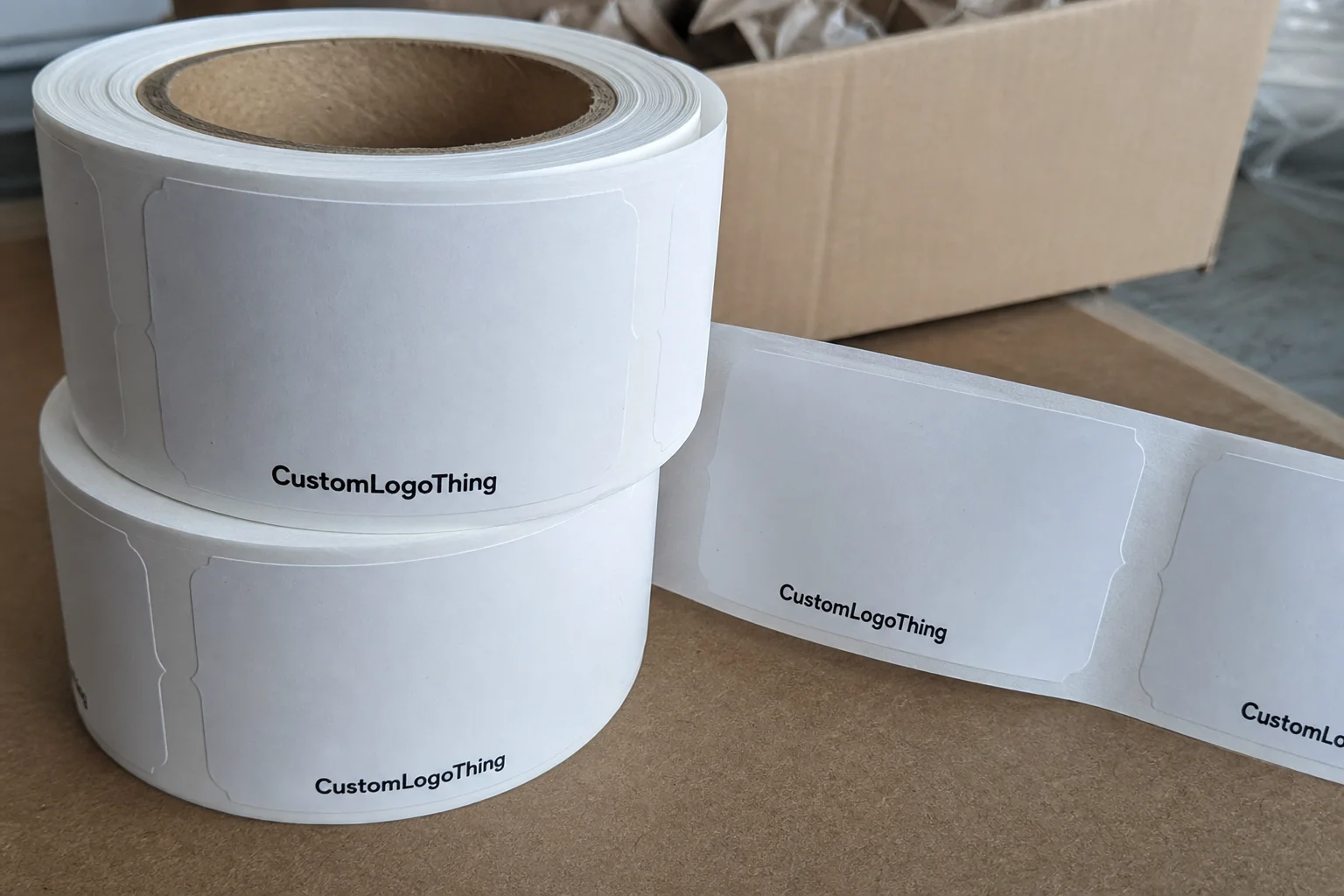
Custom Roll Labels give clothing brands a practical way to package consistently without slowing down fulfillment. They work well on garment bags, tissue wrap, mailers, inserts, and package seals because the roll format is easy to dispense, easy to store, and consistent from one unit to the next.
For apparel buyers, the important questions are usually not about the label concept itself. They are about whether the label will stick to the right surface, what it will cost at the needed quantity, how long production will take, and whether the finished rolls will run correctly on your application method.
Why custom roll labels matter for clothing packaging
Picture a folded tee inside a poly bag, a branded seal on the flap, and a fulfillment team moving through hundreds of units in a single shift. In that setting, the label has a simple job: stick cleanly, look consistent, and hold up long enough to reach the customer in good condition.
That is the main advantage of custom roll labels for apparel packaging. They support quick application by hand or by dispenser, and they keep spacing, orientation, and placement consistent across a run. That matters when you are packing multiple sizes, colors, or seasonal drops and want the presentation to look intentional.
The use cases are broader than many buyers expect. Roll labels can be used on garment bags, tissue wrap, shipping mailers, hang tags, care inserts, size identifiers, and retail seals. They also fit into a wider branded packaging system alongside Custom Labels & Tags and other Custom Packaging Products.
What buyers notice most is not just speed. It is whether the material, adhesive, and finish match the way the package is handled. A good roll label should support the package, not create extra work on the line or distract from the product presentation.
How the roll-label process works from file to finished rolls
The process starts with artwork review. That means checking bleed, die lines, font size, barcode legibility, and whether fine detail will reproduce cleanly at print size. Clothing brands often use small logos or compact copy, so a screen-only mockup is not enough to judge the final result.
Next comes Material and Print method selection. Digital printing is usually best for shorter runs, detailed artwork, and projects with multiple versions. Flexographic printing often makes more sense for larger quantities with repeatable colors and simpler layouts. If your team prints sizes, lot codes, or barcodes later, thermal compatibility becomes its own decision.
After printing, the labels are die-cut or cut to shape, slit to the right width, wound onto the requested core, and inspected before shipping. Roll direction and core size are not minor details. If they are wrong, labels can feed backward, jam, or waste time on the packing table.
Proof approval is where most avoidable mistakes get caught. This is the time to check color balance, registration, and the readability of small text. For packaging flow and transit-related testing, some teams also reference standards from ISTA when labels are part of a wider shipping or kitting process.
Key material, finish, and adhesive factors for apparel use
Material choice is usually the biggest performance decision. Paper is a common option for dry indoor use, especially on tissue wrap, inserts, and light-duty seals. It is typically the most economical choice and can still look polished with a matte or uncoated finish.
BOPP, a polypropylene film, is better when moisture resistance or scuff resistance matters. Polyester is the tougher option and is often used when the label needs higher durability, chemical resistance, or a cleaner look under repeated handling.
Finish changes both appearance and readability. Matte reduces glare and fits understated branding. Gloss gives more visual contrast and can help the label stand out on retail packaging. Soft-touch coatings add a premium feel, but they are not always the best fit if the label will be handled heavily during fulfillment.
Adhesive should match the surface, not just the design. Permanent adhesive works for most mailers and garment bags. Removable adhesive is useful when you want clean removal from certain surfaces. Freezer-grade adhesive may be needed for cold storage, while high-tack adhesive can help on rougher or recycled materials.
| Option | Typical Use | Common Price Range | Notes |
|---|---|---|---|
| Paper, matte finish | Tissue wrap, inserts, light-duty seals | $0.04-$0.08 per label at 5,000 pcs | Good for dry surfaces and simple branding |
| BOPP, gloss or matte | Poly mailers, garment bags, retail seals | $0.06-$0.12 per label at 5,000 pcs | Better moisture and scuff resistance |
| Polyester | Durable product packaging, higher-wear labels | $0.12-$0.25 per label at 5,000 pcs | Stronger performance, higher cost |
| Specialty textured stock | Premium apparel branding, limited editions | $0.18-$0.40 per label at 2,500 pcs | Distinctive feel, usually slower and pricier |
If you want paper-based sourcing, ask whether the supplier can document FSC-certified stock through FSC. It is not necessary for every order, but it can matter if sustainability claims are part of your packaging program.
Cost, pricing, and MOQ factors to compare before you quote
Pricing is driven by a few basic variables. Quantity is usually the biggest one. A 2,500-piece order almost always has a higher unit cost than a 10,000-piece order because setup and finishing labor are spread across fewer labels. Size matters as well because larger labels use more material and reduce how many fit on each roll.
Print complexity changes the price quickly. More colors, heavy ink coverage, metallic accents, white ink, and specialty varnishes all add cost. Die-cut complexity matters too, because unusual shapes and tight corners can increase waste and slow production.
MOQ deserves a close look. Smaller brands often want the lowest possible minimum, but the cheapest MOQ is not always the best value if the unit price rises sharply. Compare total spend, expected reorders, and whether the same label can cover more than one SKU or drop.
Use the same checklist on every quote so you can compare them fairly:
- Size and shape
- Face stock and adhesive
- Print colors and finish
- Core size and roll direction
- Quantity per SKU
- Shipping method and destination
If one quote is lower but uses weaker adhesive, a thinner stock, or a roll format your applicator cannot handle, it is not a better deal. It is just a less complete one.
Timeline, turnaround, and production steps you can expect
A normal order moves through quote, artwork review, proof approval, production, finishing, inspection, and delivery. If the files are clean and the specification is clear, the schedule is usually straightforward. If the artwork needs structural fixes, the order slows down, which is better than discovering problems after print.
For standard jobs, production is often around 8 to 15 business days after proof approval, though specialty materials or complex finishing can push that longer. Rush service is sometimes available when the material is in stock and the artwork is simple. Shipping time still matters, so a fast press schedule does not guarantee a fast arrival.
The best way to avoid delays is to be specific. Send print-ready vector art, call out exact colors, and note the actual application surface. If the label will go on coated paper, recycled kraft, textured carton, or film, say so clearly. If it will run on a packing line, include the applicator type and roll specs up front.
For restocks and seasonal launches, it helps to plan a reorder point before inventory gets tight. A 10% to 20% cushion is often enough to cover spoilage, samples, and a small sales spike without tying up unnecessary cash.
Common mistakes when ordering roll labels for garments
The most common mistake is choosing adhesive for the wrong surface. A label that performs well on glossy film may lift or curl on recycled kraft, textured cardboard, or a low-energy plastic surface. The practical fix is to test on the actual packaging material, not a substitute.
File issues are next. Low-resolution artwork, missing bleed, tiny legal copy, and font weights that are too light can all create expensive corrections. If the label includes sizing, care notes, or barcodes, readability matters more than decorative detail.
Another frequent problem is ignoring applicator specs. A roll wound in the wrong direction or built on the wrong core size can jam a dispenser and slow fulfillment. Even manual application benefits from a sensible roll width and outer diameter.
Price-only buying creates its own problems. A cheaper quote can hide a weaker finish, poorer registration, or a material that will not hold up in shipping. That is especially risky when the label sits beside custom printed boxes, tissue, and inserts, because the whole package can look less polished if the label is off.
Inconsistent branding across SKUs is another avoidable issue. If every size or colorway uses a different stock or finish without a clear system, the packaging line becomes harder to manage. Standardizing the basics keeps production simpler and presentation more coherent.
Expert tips for ordering custom roll labels with fewer surprises
Start with one master spec sheet and use it for every SKU. Include size, shape, stock, adhesive, finish, roll direction, core size, and quantity in one place. That keeps purchasing, design, and fulfillment aligned and cuts down on back-and-forth.
Ask for samples or test prints if the label will face friction, moisture, or repeated handling. A sample on the exact mailer, bag, or carton surface tells you far more than a generic swatch. If the label will be applied manually, semi-automatically, or inline, say that before the quote is finalized.
Match the finish to the experience you want the customer to have. Matte usually reads calmer and more premium, gloss has more visual energy, and soft-touch should be chosen for a reason, not just because it sounds premium. That same logic applies across product packaging, retail packaging, and broader package branding.
Next steps: build your label spec and request accurate samples
Before requesting a quote, gather the basics: size, shape, material, adhesive, finish, roll direction, core size, quantity, and application surface. If you already have artwork, send the exact file format and note whether the supplier should expect one version or several. If the label is part of a larger launch, mention how it fits with inserts, tissue, and Custom Labels & Tags.
Also note the packaging surface. A label on a coated poly mailer behaves differently than one on rough kraft or a garment bag. If that surface is unclear, the sample may not be useful because the adhesive recommendation can change.
Ask for a proof or sample that reflects the real use case. If the order will be used on a packing line, say so. If it is being matched to a launch kit or bundled with Custom Packaging Products, include that too. That context is what turns a rough estimate into a usable quote.
What are custom roll labels used for in clothing packaging?
They are used for sealing tissue, closing garment bags, labeling mailers, marking inserts, and adding branding to apparel packaging. The roll format makes them easy to apply quickly by hand or with labeling equipment.
What material should I choose for clothing roll labels?
Paper works well for short-term branding on dry surfaces, while BOPP or polyester is better when durability or moisture resistance matters. The right choice depends on the surface, handling conditions, and the look you want.
How much do custom roll labels usually cost?
Pricing depends on quantity, size, material, adhesive, finish, print colors, and whether the shape requires a custom die. Unit cost usually drops as quantity increases, so MOQ has a big effect on budget planning.
How long does production usually take for roll labels?
Timeline depends on proof approval speed, material choice, print complexity, and whether the order is standard or rush. Standard lead time is often faster when artwork is ready and specifications are clearly defined.
How do I make sure my custom roll labels will stick properly?
Match the adhesive to the surface, such as coated paper, plastic mailers, textured packaging, or recycled materials. If possible, test a sample on the exact packaging surface before full production.